


Global Ovarian Germ Cell Tumor Market Segmentation, By Type (Dysgerminoma, Teratoma, Endodermal Sinus Tumor (Yolk Sac Tumor), Embryonal Carcinoma, Choriocarcinoma), Treatment (Chemotherapy, Surgery, Radiotherapy, Targeted Therapy, Immunotherapy), Diagnosis Method (Imaging Techniques, Biopsy, Blood Tests), End User (Hospitals, Clinics, Cancer Research Institutes) – Industry Trends and Forecast to 2032
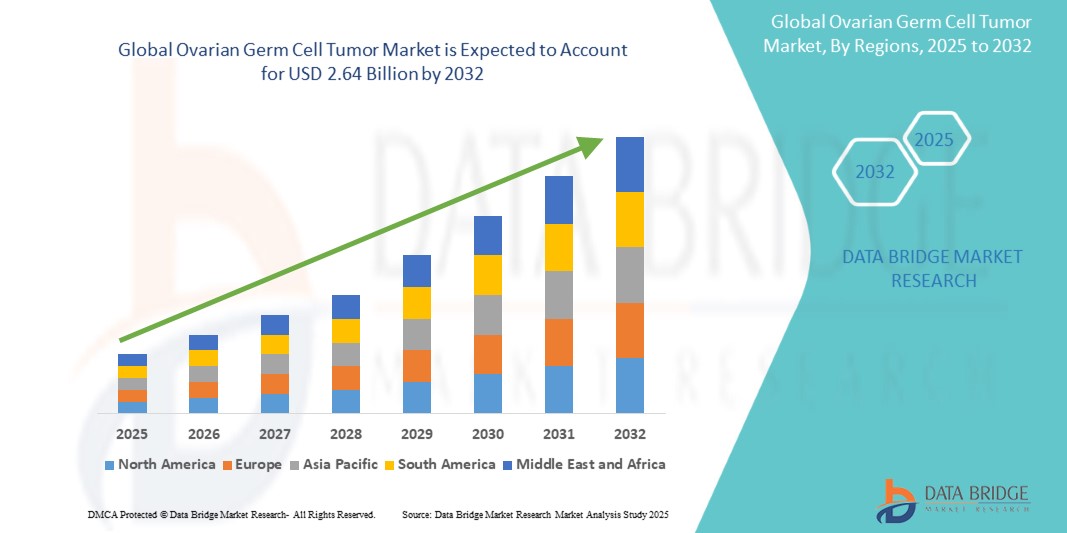
Ovarian Germ Cell Tumor Market Analysis
The global ovarian germ cell tumor (OGCT) market is driven by the rising prevalence of these tumors, which account for approximately 2-5% of all ovarian cancers. Ovarian germ cell tumors predominantly affect women during their reproductive years, with a peak incidence observed in adolescents and young adults aged 15-25 years. Studies indicate that the annual incidence rate of ovarian germ cell tumors is around 1 to 2 cases per 1 million women worldwide. In terms of geographic distribution, the highest prevalence is reported in North America and Europe, with notable differences in diagnosis and treatment outcomes across regions. The increasing awareness of early detection and advancements in diagnostic technologies are improving survival rates, with 5-year survival rates exceeding 90% for early-stage tumors. However, challenges remain in treating advanced and recurrent cases, highlighting the need for continued research and the development of more effective therapies.
Ovarian Germ Cell Tumor Market Size
Global ovarian germ cell tumor market size was valued at USD 1.14 billion in 2024 and is projected to reach USD 2.64 billion by 2032, with a CAGR of 11.10% during the forecast period of 2025 to 2032. In addition to the insights on market scenarios such as market value, growth rate, segmentation, geographical coverage, and major players, the market reports curated by the Data Bridge Market Research also include depth expert analysis, patient epidemiology, pipeline analysis, pricing analysis, and regulatory framework.
Global Ovarian Germ Cell Tumor Market Trends
“Growing Adoption of Personalized Medicine”
The growing adoption of personalized medicine in the ovarian germ cell tumor market reflects a shift towards treatment strategies tailored to the genetic and molecular characteristics of individual patients. Personalized treatment approaches, including targeted therapies and immunotherapies, are becoming more prevalent as they focus on specific biomarkers or mutations, leading to treatments that are more effective and less toxic than traditional chemotherapy. This trend is influencing clinical practice by offering patients treatment options that are better suited to their unique genetic profiles, resulting in improved outcomes and reduced side effects. The rise of precision medicine is fostering greater collaboration between oncologists, researchers, and biotechnology companies to develop customized therapies that align with the patient’s specific tumor characteristics.
Report Scope and Global Ovarian Germ Cell Tumor Market Segmentation
|
Attributes |
Global Ovarian Germ Cell Tumor Key Market Insights |
|
Segments Covered |
|
|
Countries Covered |
U.S., Canada, Mexico, Germany, France, U.K., Netherlands, Switzerland, Belgium, Russia, Italy, Spain, Turkey, Rest of Europe, China, Japan, India, South Korea, Singapore, Malaysia, Australia, Thailand, Indonesia, Philippines, Rest of Asia-Pacific, Saudi Arabia, U.A.E., South Africa, Egypt, Israel, Rest of Middle East and Africa, Brazil, Argentina, Rest of South America |
|
Key Market Players |
Bristol Myers Squibb Company (U.S.), Eli Lilly and Company (U.S.), F. Hoffmann-La Roche Ltd (Switzerland), Merck & Co., Inc. (U.S.), Johnson & Johnson (U.S.), Novartis AG (Switzerland), AstraZeneca PLC (UK), Pfizer Inc. (U.S.), Amgen Inc. (U.S.), Sanofi S.A. (France), Bayer AG (Germany), GSK plc (UK), AbbVie Inc. (U.S.), Boehringer Ingelheim International GmbH (Germany), Bristol Myers Squibb (U.S.), Horizon Therapeutics PLC (Ireland), Vertex Pharmaceuticals Incorporated (U.S.), Exelixis, Inc. (U.S.), Regeneron Pharmaceuticals, Inc. (U.S.) among others. |
|
Market Opportunities |
|
|
Value Added Data Infosets |
In addition to the insights on market scenarios such as market value, growth rate, segmentation, geographical coverage, and major players, the market reports curated by the Data Bridge Market Research also include depth expert analysis, patient epidemiology, pipeline analysis, pricing analysis, and regulatory framework. |
Global Ovarian Germ Cell Tumor Market Definition
Ovarian Germ Cell Tumor (OGCT) refers to a type of tumor that originates from the germ cells of the ovary, which are the cells responsible for producing eggs. These tumors are typically rare and can develop in young women, including adolescents and those in their reproductive years. OGCTs can be benign or malignant and are classified into different subtypes, including dysgerminomas, yolk sac tumors, teratomas, and choriocarcinomas. While most ovarian germ cell tumors are diagnosed at an early stage, they can present with symptoms such as abdominal pain, bloating, and changes in menstrual cycles. Treatment often involves surgery and may include chemotherapy, depending on the tumor’s type and stage.
Global Ovarian Germ Cell Tumor Market Dynamics
Drivers
- Rising Prevalence of Ovarian Cancer
The rising prevalence of ovarian cancer, including ovarian germ cell tumors (OGCTs), is significantly contributing to the expansion of the global market. Ovarian cancer is one of the most common types of gynecological cancer, and while OGCTs are rare, they represent a critical subset that primarily affects young women. As the number of diagnosed cases increases globally, the demand for effective treatments, early detection methods, and diagnostic tools has surged. This growth is particularly notable in regions with improving healthcare infrastructure, where there is greater access to diagnostic services and specialized treatments. Advances in imaging techniques, genetic testing, and molecular profiling are enhancing early detection, thus enabling better management of the disease. Additionally, the growing awareness and understanding of ovarian cancer are prompting more women to seek timely medical attention. Consequently, the increased prevalence of ovarian cancer is directly influencing the demand for more comprehensive and innovative healthcare solutions.
- Government Initiatives and Funding
Government initiatives and funding are vital drivers of the global ovarian germ cell tumor market. Many governments provide financial support for research programs dedicated to ovarian cancer and rare cancers such as OGCTs, aiming to advance scientific understanding and improve treatment options. This funding helps foster the development of innovative therapies, including targeted treatments and personalized medicine. Moreover, government-backed awareness campaigns are crucial in educating the public about the signs and symptoms of ovarian cancer, and encouraging early detection and diagnosis. Early diagnosis significantly improves treatment outcomes, making these initiatives essential for better patient prognoses. Additionally, governments often allocate resources to improve healthcare infrastructure, ensuring more women, particularly in underserved regions, have access to quality diagnostic and treatment services. These combined efforts not only raise awareness but also fuel ongoing research, ultimately leading to more effective therapies for ovarian germ cell tumors, thus supporting market growth.
Opportunities
- Expansion of Immunotherapy and Targeted Treatment Options
The growing opportunity in the expansion of immunotherapy and targeted treatment options for ovarian germ cell tumors (OGCTs) is transforming the landscape of cancer treatment. Immunotherapies work by stimulating the body's immune system to recognize and attack cancer cells, offering a more targeted and less toxic alternative to traditional chemotherapy. This approach is particularly beneficial for OGCT patients, as it reduces side effects while improving treatment effectiveness. Targeted therapies, on the other hand, focus on specific molecular pathways that drive the growth of the tumor, allowing for a more precise treatment approach. As research advances, new immunotherapy drugs and targeted treatments are being developed, increasing the potential to improve patient outcomes and survival rates. This shift towards more personalized therapies enhances the treatment options available for OGCT patients, expanding the market and offering hope for better management and cure of these tumors in the future.
- Increase in Public and Private Sector Collaborations
The increase in public and private sector collaborations presents a valuable opportunity for the ovarian germ cell tumor (OGCT) market. Partnerships between public health organizations, pharmaceutical companies, and research institutions are driving significant innovations in drug development, clinical trials, and patient support programs. These collaborations enable the pooling of resources, expertise, and funding, accelerating progress in creating novel therapies and diagnostic solutions for OGCTs. By addressing the unique challenges of rare cancers like OGCTs, these partnerships are fostering advancements in treatment options that may otherwise be delayed or overlooked. Additionally, joint efforts in conducting large-scale clinical trials help ensure that new therapies undergo rigorous testing, improving their effectiveness and safety. The growing collaboration between sectors is likely to enhance the quality, accessibility, and affordability of treatments, ultimately expanding the market for OGCT therapies and improving patient outcomes in the process.
Restraints/Challenges
- High Treatment Costs
High treatment costs represent a significant restraint on the global ovarian germ cell tumor (OGCT) market. Therapies such as chemotherapy, immunotherapy, and targeted treatments, which are essential for treating advanced or recurrent OGCTs, can be prohibitively expensive. The costs are not limited to just the drugs but also include the need for ongoing monitoring, follow-up care, and hospitalizations. This financial burden impacts both patients and healthcare systems, especially in low- and middle-income countries where access to these advanced therapies is limited. Many patients in these regions may not be able to afford the necessary treatments, leading to delayed or inadequate care. As a result, the adoption of cutting-edge treatment options is restricted, slowing the overall market growth and affecting patient outcomes. In wealthier countries, although insurance may mitigate some costs, the overall financial burden remains a concern for long-term healthcare sustainability.
- Lack of Standardized Treatment Protocols
The lack of standardized treatment protocols poses a significant challenge in the global ovarian germ cell tumor (OGCT) market. OGCTs are rare and diverse, with variations in tumor type, stage, and the patient’s overall health influencing treatment approaches. This results in a lack of universally accepted guidelines for managing OGCTs, leading to inconsistency in treatment regimens. While chemotherapy is the most commonly used treatment, the absence of standardized protocols means that clinicians often make decisions based on individual experience or local practices, which can result in suboptimal outcomes, particularly in less experienced medical centers. Additionally, the variability in treatment approaches makes it difficult to compare clinical trial results, hindering the development of more effective therapies. As research in this area is still evolving, the lack of uniform treatment practices complicates both clinical decision-making and market growth, delaying advancements in treatment options and improving patient care.
Ovarian Germ Cell Tumor Market Scope
The market is segmented on the basis of type, treatment, diagnosis method, and end user. The growth amongst these segments will help you analyze meagre growth segments in the industries and provide the users with a valuable market overview and market insights to help them make strategic decisions for identifying core market applications.
Type
- Dysgerminoma
- Teratoma, Endodermal Sinus Tumor (Yolk Sac Tumor)
- Embryonal Carcinoma
- Choriocarcinoma
Treatment
- Chemotherapy
- Surgery
- Radiotherapy
- Targeted Therapy
- Immunotherapy
Diagnosis Method
- Imaging Techniques
- Biopsy
- Blood Tests
End User
- Hospitals
- Clinics
- Cancer Research Institutes
Ovarian Germ Cell Tumor Market Regional Analysis
The market is analyzed and market size insights and trends are provided by country, type, treatment, diagnosis method, and end user as referenced above.
The countries covered in the market are U.S., Canada, Mexico, Germany, France, U.K., Netherlands, Switzerland, Belgium, Russia, Italy, Spain, Turkey, rest of Europe, China, Japan, India, South Korea, Singapore, Malaysia, Australia, Thailand, Indonesia, Philippines, rest of Asia-Pacific, Saudi Arabia, U.A.E., South Africa, Egypt, Israel, rest of Middle East and Africa, Brazil, Argentina, and rest of South America.
North America is expected to dominate the market due to advanced healthcare infrastructure, high healthcare spending, strong research and development capabilities, and increased awareness, leading to early diagnosis and better treatment access.
Asia-Pacific is expected to be the fastest growing due to the increasing prevalence of ovarian cancer, improving healthcare infrastructure, rising awareness, and growing investments in medical research and treatment options.
The country section of the report also provides individual market impacting factors and changes in regulation in the market domestically that impacts the current and future trends of the market. Data points like down-stream and upstream value chain analysis, technical trends and porter's five forces analysis, case studies are some of the pointers used to forecast the market scenario for individual countries. Also, the presence and availability of global brands and their challenges faced due to large or scarce competition from local and domestic brands, impact of domestic tariffs and trade routes are considered while providing forecast analysis of the country data.
Ovarian Germ Cell Tumor Market Share
The market competitive landscape provides details by competitor. Details included are company overview, company financials, revenue generated, market potential, investment in research and development, new market initiatives, global presence, production sites and facilities, production capacities, company strengths and weaknesses, product launch, product width and breadth, application dominance. The above data points provided are only related to the companies' focus related to market.
Ovarian Germ Cell Tumor Market Leaders Operating in the Market Are:
- Bristol Myers Squibb Company (U.S.)
- Eli Lilly and Company (U.S.)
- F. Hoffmann-La Roche Ltd (Switzerland)
- Merck & Co., Inc. (U.S.)
- Johnson & Johnson (U.S.)
- Novartis AG (Switzerland)
- AstraZeneca PLC (UK)
- Pfizer Inc. (U.S.)
- Amgen Inc. (U.S.)
- Sanofi S.A. (France)
- Bayer AG (Germany)
- GSK plc (UK)
- AbbVie Inc. (U.S.)
- Boehringer Ingelheim International GmbH (Germany)
- Bristol Myers Squibb (U.S.)
- Horizon Therapeutics PLC (Ireland)
- Vertex Pharmaceuticals Incorporated (U.S.)
- Exelixis, Inc. (U.S.)
- Regeneron Pharmaceuticals, Inc. (U.S.)
Latest Developments in Global Ovarian Germ Cell Tumor Market
- In October 2024, Chugai Pharmaceutical Co., Ltd. announced that Verastem Oncology presented updated RAMP 201 data on the RAF/MEK clamp, Avutometinib, for recurrent low-grade serous ovarian cancer at the IGCS 2024 Annual Meeting. Developed by Chugai, the clinical development of Avutometinib by Verastem enhances Chugai’s oncology portfolio and strengthens its presence in cancer therapeutics
- In June 2024, The FDA granted approval for Tepylute (formerly SH-105), a ready-to-dilute formulation designed to treat adenocarcinoma of the breast and ovary. This approval will significantly enhance the company's portfolio, opening new market opportunities and potentially expanding its presence in oncology therapeutics.
- In February 2024, BioNTech SE and Autolus Therapeutics plc formed a strategic partnership to advance their autologous CAR-T programs toward commercialization, subject to regulatory approvals. This collaboration strengthens both companies’ oncology pipelines and accelerates their entry into the CAR-T therapy market
- In February 2024, AbbVie successfully completed its acquisition of ImmunoGen, making ImmunoGen a part of AbbVie. This acquisition strengthens AbbVie’s oncology portfolio and accelerates its research and development capabilities in targeted cancer therapies
- In October 2023, BioNTech SE shared follow-up data from its Phase 1/2 trial (NCT04503278; 2019-004323-20) on the safety and efficacy of its Claudin-6-directed CAR-T therapy, BNT211, for CLDN6-positive refractory/relapsed solid tumors. This progress boosts BioNTech’s CAR-T pipeline and advances its position in the immuno-oncology market
SKU-
세계 최초의 시장 정보 클라우드 보고서에 온라인으로 접속하세요
- 대화형 데이터 분석 대시보드
- 높은 성장 잠재력 기회를 위한 회사 분석 대시보드
- 사용자 정의 및 질의를 위한 리서치 분석가 액세스
- 대화형 대시보드를 통한 경쟁자 분석
- 최신 뉴스, 업데이트 및 추세 분석
- 포괄적인 경쟁자 추적을 위한 벤치마크 분석의 힘 활용
연구 방법론
데이터 수집 및 기준 연도 분석은 대규모 샘플 크기의 데이터 수집 모듈을 사용하여 수행됩니다. 이 단계에는 다양한 소스와 전략을 통해 시장 정보 또는 관련 데이터를 얻는 것이 포함됩니다. 여기에는 과거에 수집한 모든 데이터를 미리 검토하고 계획하는 것이 포함됩니다. 또한 다양한 정보 소스에서 발견되는 정보 불일치를 검토하는 것도 포함됩니다. 시장 데이터는 시장 통계 및 일관된 모델을 사용하여 분석하고 추정합니다. 또한 시장 점유율 분석 및 주요 추세 분석은 시장 보고서의 주요 성공 요인입니다. 자세한 내용은 분석가에게 전화를 요청하거나 문의 사항을 드롭하세요.
DBMR 연구팀에서 사용하는 주요 연구 방법론은 데이터 마이닝, 시장에 대한 데이터 변수의 영향 분석 및 주요(산업 전문가) 검증을 포함하는 데이터 삼각 측량입니다. 데이터 모델에는 공급업체 포지셔닝 그리드, 시장 타임라인 분석, 시장 개요 및 가이드, 회사 포지셔닝 그리드, 특허 분석, 가격 분석, 회사 시장 점유율 분석, 측정 기준, 글로벌 대 지역 및 공급업체 점유율 분석이 포함됩니다. 연구 방법론에 대해 자세히 알아보려면 문의를 통해 업계 전문가에게 문의하세요.
사용자 정의 가능
Data Bridge Market Research는 고급 형성 연구 분야의 선두 주자입니다. 저희는 기존 및 신규 고객에게 목표에 맞는 데이터와 분석을 제공하는 데 자부심을 느낍니다. 보고서는 추가 국가에 대한 시장 이해(국가 목록 요청), 임상 시험 결과 데이터, 문헌 검토, 재생 시장 및 제품 기반 분석을 포함하도록 사용자 정의할 수 있습니다. 기술 기반 분석에서 시장 포트폴리오 전략에 이르기까지 타겟 경쟁업체의 시장 분석을 분석할 수 있습니다. 귀하가 원하는 형식과 데이터 스타일로 필요한 만큼 많은 경쟁자를 추가할 수 있습니다. 저희 분석가 팀은 또한 원시 엑셀 파일 피벗 테이블(팩트북)로 데이터를 제공하거나 보고서에서 사용 가능한 데이터 세트에서 프레젠테이션을 만드는 데 도움을 줄 수 있습니다.











