



Global Peptide Supplements Market Segmentation, By Product Type (Bioactive Peptides, Collagen Peptides, Whey Protein Peptides, Muscle-building Peptides, Anti-aging Peptides and Immune-enhancing Peptides), Source (Animal-Derived, Plant-Derived and Synthetic Peptides), Functionality (Muscle Recovery, Weight Management, Skin Health, Immune Support, Cognitive function, Anti-Inflammatory and Cardiovascular Health), Product Format (Powder, Tablets / Capsules, Chews / Soft Gels, Liquid and Oral Strips), Distribution Channel (Online Retail, Pharmacies, Specialty Nutrition Stores, Supermarkets, Direct Sales and Healthcare Institutions) – Industry Trends and Forecast to 2032
Peptide Supplements Market Analysis
The peptide supplements market has seen significant advancements in methods and technology, particularly in peptide synthesis and delivery mechanisms. Precision fermentation is emerging as a cutting-edge method, enabling sustainable production of bioactive peptides. Advanced encapsulation technologies, such as liposomal and nanoencapsulation, enhance the bioavailability of peptides, ensuring efficient absorption by the body.
These advancements support the development of specialized peptide formulations targeting muscle repair, anti-aging, and immune support. The integration of artificial intelligence (AI) and data analytics in research has accelerated peptide discovery, ensuring formulations cater to specific health requirements.
Usage of peptide supplements has grown, driven by increased awareness of their benefits in fitness, skin health, and chronic disease management. Athletes and aging populations are key consumers, benefiting from peptides’ role in improving recovery and vitality.
The market is projected to grow robustly, fueled by expanding product portfolios and rising demand for natural and functional health products. Innovations in plant-based peptide sources further align with the trend toward sustainability, bolstering market expansion globally.
Peptide Supplements Market Size
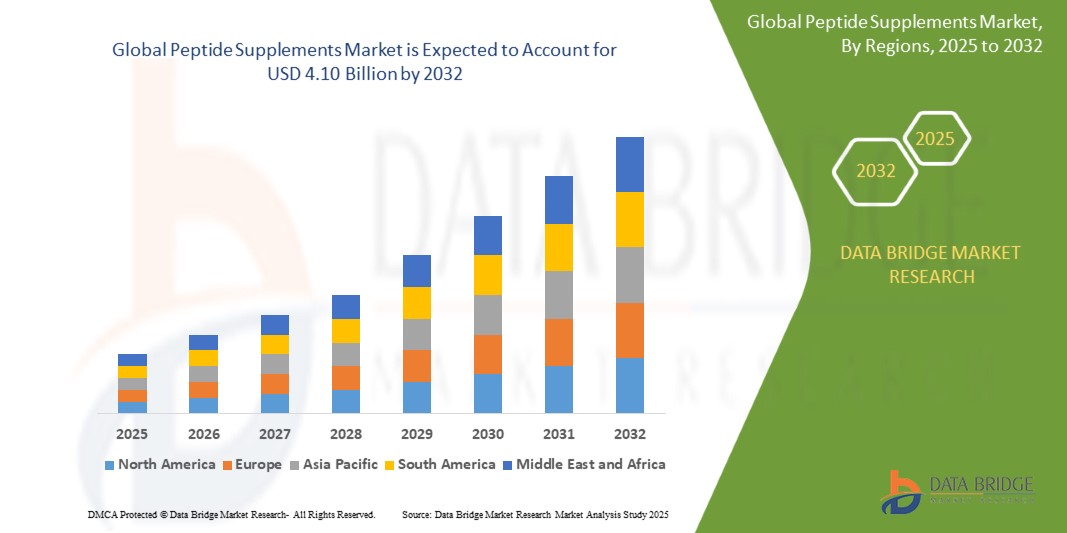
The global peptide supplements market size was valued at USD 2.67 billion in 2024 and is projected to reach USD 4.10 billion by 2032, with a CAGR of 5.5% during the forecast period of 2025 to 2032. In addition to the insights on market scenarios such as market value, growth rate, segmentation, geographical coverage, and major players, the market reports curated by the Data Bridge Market Research also include in-depth expert analysis, pricing analysis, brand share analysis, consumer survey, demography analysis, supply chain analysis, value chain analysis, raw material/consumables overview, vendor selection criteria, PESTLE Analysis, Porter Analysis, and regulatory framework.
Peptide Supplements Market Trends
“Rising Popularity of Collagen-Based Peptide Supplements”
A key trend driving growth in the peptide supplements market is the increasing demand for collagen-based peptide products. Collagen peptides, known for their benefits in improving skin elasticity, promoting joint health, and boosting hair and nail strength, are gaining traction among health-conscious consumers. This surge is further supported by endorsements from fitness influencers and growing awareness about anti-aging solutions. For instance, brands such as Vital Proteins and Sports Research are expanding their product lines with collagen powders and ready-to-drink options. The convenience of these formats coupled with scientific backing has amplified their adoption, positioning collagen peptides as a cornerstone of the peptide supplements market's growth trajectory.
Report Scope and Peptide Supplements Market Segmentation
|
Attributes |
Peptide Supplements Key Market Insights |
|
Segments Covered |
|
|
Countries Covered |
U.S., Canada and Mexico in North America, Germany, France, U.K., Netherlands, Switzerland, Belgium, Russia, Italy, Spain, Turkey, Rest of Europe in Europe, China, Japan, India, South Korea, Singapore, Malaysia, Australia, Thailand, Indonesia, Philippines, Rest of Asia-Pacific (APAC) in the Asia-Pacific (APAC), Saudi Arabia, U.A.E, South Africa, Egypt, Israel, Rest of Middle East and Africa (MEA) as a part of Middle East and Africa (MEA), Brazil, Argentina and Rest of South America as part of South America |
|
Key Market Players |
Thorne Research (U.S.), Life Extension (U.S.), NOW Foods (U.S.), Designs for Health (U.S.), Nootropics Depot (U.S.), Peptides Sciences (U.S.), American Peptide Company (U.S.), Pure Encapsulations (U.S.), BioMed Nutrition (U.S.), Vitamin Research Products (U.S.), Hammer Nutrition (U.S.), Source Naturals (U.S.), Kirkman Laboratories (U.S.), Douglas Laboratories (U.S.), and Vitabase (U.S.) |
|
Market Opportunities |
|
|
Value Added Data Infosets |
In addition to the insights on market scenarios such as market value, growth rate, segmentation, geographical coverage, and major players, the market reports curated by the Data Bridge Market Research also include in-depth expert analysis, pricing analysis, brand share analysis, consumer survey, demography analysis, supply chain analysis, value chain analysis, raw material/consumables overview, vendor selection criteria, PESTLE Analysis, Porter Analysis, and regulatory framework |
Peptide Supplements Market Definition
Peptide supplements are dietary products containing short chains of amino acids, known as peptides, which are smaller versions of proteins. These supplements are designed to support various health benefits, including muscle growth, skin health, improved digestion, and faster recovery. Commonly derived from sources such as collagen, whey, or soy, peptide supplements are easily absorbed by the body, making them highly effective for targeted benefits. For instance, collagen peptides are popular for enhancing skin elasticity and joint health. Athletes and fitness enthusiasts often use peptide supplements for muscle repair and performance. These supplements come in forms such as powders, capsules, and liquids.
Peptide Supplements Market Dynamics
Drivers
- Expanding Sports Nutrition Sector
The growing sports nutrition sector significantly drives the peptide supplements market as athletes and fitness enthusiasts increasingly prioritize recovery and performance enhancement. Peptides such as creatine peptides are popular for boosting muscle recovery, reducing fatigue, and improving endurance. For instance, professional athletes and gym-goers often incorporate collagen peptides into their diets to strengthen tendons and ligaments, reducing injury risk during intense training. This demand is further amplified by sports events such as marathons, where participants seek rapid muscle recovery solutions. In addition, the rise of fitness influencers promoting peptide supplements on social media contributes to awareness, making peptides a staple in sports nutrition routines worldwide.
- Clean Label and Natural Trends
The rising demand for clean-label products with minimal additives significantly drives the peptide supplements market. Consumers increasingly prefer natural, non-GMO, and organic supplements due to heightened awareness of health and sustainability. Peptide supplements marketed as free from artificial preservatives, colors, and flavors resonate with these preferences. For instance, brands such as Vital Proteins promote their collagen peptide supplements as all-natural and ethically sourced, attracting a wide consumer base focused on transparency and quality. This trend is particularly strong among millennials and health-conscious individuals seeking trustworthy products. As clean-label formulations gain traction, manufacturers are investing in sustainable sourcing and minimal processing to meet evolving demands.
Opportunities
- Increased E-commerce Penetration
The growing penetration of e-commerce creates significant opportunities in the peptide supplements market by making products more accessible to a global audience. Online platforms provide a convenient shopping experience, enabling consumers to explore a wide variety of peptide-based products tailored to specific health needs. The integration of personalized recommendations, subscription models, and discounts further drives consumer engagement and repeat purchases. In addition, e-commerce platforms facilitate direct-to-consumer (DTC) marketing strategies, allowing smaller brands to compete alongside established players. With the rising prevalence of mobile commerce and digital payments, companies can capitalize on this trend to reach untapped markets, fostering global market expansion and driving revenue growth.
- Advancements in Biotechnology
Biotechnological advancements in peptide synthesis and delivery methods are revolutionizing the peptide supplements market. Improved techniques, such as solid-phase peptide synthesis (SPPS) and recombinant DNA technology, enable the production of high-purity peptides at scale. Enhanced delivery systems, including liposomal encapsulation and nano-formulations, significantly boost peptide bioavailability, ensuring better absorption and efficacy. These innovations cater to the growing consumer demand for effective health solutions, particularly in fitness, skincare, and chronic disease management. With biotechnology enabling tailored formulations and multifunctional benefits, market players have opportunities to introduce differentiated products targeting specific health concerns, thus driving customer interest and expanding the market scope globally.
Restraints/Challenges
- High Production Costs
High production costs are a significant restraint in the peptide supplements market. The manufacturing of peptide-based products involves complex biotechnological processes, such as peptide synthesis, purification, and stabilization. These processes require specialized equipment, skilled labor, and raw materials, which drive up production expenses. As a result, the final product is often priced higher than traditional supplements, limiting its accessibility to a broader consumer base. The high cost makes it challenging for manufacturers to achieve mass-market adoption, restricting the growth potential of the market. In addition, consumers may be deterred by the price, further hindering the expansion of peptide supplements in the wellness and nutritional sectors.
- Storage and Stability Concerns
Peptides are highly sensitive to environmental conditions such as temperature, humidity, and light, which can lead to degradation or loss of potency. This sensitivity complicates storage and transportation, requiring specialized facilities with controlled conditions. The need for refrigeration or other specific storage methods increases operational costs for manufacturers and distributors. In addition, maintaining the integrity of peptide supplements throughout the supply chain can be challenging, leading to potential product quality issues and reducing shelf life. These storage and stability concerns can limit the availability and accessibility of peptides, ultimately hindering the growth of the peptide supplements market as it adds complexities to logistics and increases costs for both producers and consumers.
This market report provides details of new recent developments, trade regulations, import-export analysis, production analysis, value chain optimization, market share, impact of domestic and localized market players, analyses opportunities in terms of emerging revenue pockets, changes in market regulations, strategic market growth analysis, market size, category market growths, application niches and dominance, product approvals, product launches, geographic expansions, technological innovations in the market. To gain more info on the market contact Data Bridge Market Research for an Analyst Brief, our team will help you take an informed market decision to achieve market growth.
Impact and Current Market Scenario of Raw Material Shortage and Shipping Delays
Data Bridge Market Research offers a high-level analysis of the market and delivers information by keeping in account the impact and current market environment of raw material shortage and shipping delays. This translates into assessing strategic possibilities, creating effective action plans, and assisting businesses in making important decisions.
Apart from the standard report, we also offer in-depth analysis of the procurement level from forecasted shipping delays, distributor mapping by region, commodity analysis, production analysis, price mapping trends, sourcing, category performance analysis, supply chain risk management solutions, advanced benchmarking, and other services for procurement and strategic support.
Expected Impact of Economic Slowdown on the Pricing and Availability of Products
When economic activity slows, industries begin to suffer. The forecasted effects of the economic downturn on the pricing and accessibility of the products are taken into account in the market insight reports and intelligence services provided by DBMR. With this, our clients can typically keep one step ahead of their competitors, project their sales and revenue, and estimate their profit and loss expenditures.
Peptide Supplements Market Scope
The market is segmented on the basis of product type, source, functionality, product format, distribution channel. The growth amongst these segments will help you analyze meagre growth segments in the industries and provide the users with a valuable market overview and market insights to help them make strategic decisions for identifying core market applications.
Product Type
- Bioactive Peptides
- Collagen Peptides
- Whey Protein Peptides
- Muscle-building Peptides
- Anti-aging Peptides
- Immune-enhancing Peptides
Source
- Animal-Derived
- Plant-Derived
- Synthetic Peptides
Functionality
- Muscle Recovery
- Weight Management
- Skin Health
- Immune Support
- Cognitive function
- Anti-Inflammatory
- Cardiovascular Health
Product Format
- Powder
- Tablets / Capsules
- Chews / Soft Gels
- Liquid
- Oral Strips
Distribution Channel
- Online Retail
- Pharmacies
- Specialty Nutrition Stores
- Supermarkets
- Direct Sales
- Healthcare Institutions
Peptide Supplements Market Regional Analysis
The market is analysed and market size insights and trends are provided by country, product type, source, functionality, product format, distribution channel as referenced above.
The countries covered in the market report are U.S., Canada, Mexico in North America, Germany, Sweden, Poland, Denmark, Italy, U.K., France, Spain, Netherland, Belgium, Switzerland, Turkey, Russia, Rest of Europe in Europe, Japan, China, India, South Korea, New Zealand, Vietnam, Australia, Singapore, Malaysia, Thailand, Indonesia, Philippines, Rest of Asia-Pacific (APAC) in Asia-Pacific (APAC), Brazil, Argentina, Rest of South America as a part of South America, U.A.E, Saudi Arabia, Oman, Qatar, Kuwait, South Africa, Rest of Middle East and Africa (MEA) as a part of Middle East and Africa (MEA)
North America is expected to dominate the peptide supplements market due to its advanced research infrastructure, health-conscious consumers, and supportive regulatory environment. The region benefits from strong research and development investments, particularly in peptide-based interventions, alongside rigorous quality assurance standards. The growing demand for clinically backed nutritional products, coupled with established distribution networks, creates a robust foundation for market growth. In addition, generous financing for nutrition science further accelerates the sector's maturity, driving innovation and consumer adoption.
Asia Pacific is expected to show significant growth in the peptide supplements market, driven by the rapidly aging population in Japan. Japanese consumers, known for their meticulous selection of nutraceutical and cosmetic products, favor scientifically backed solutions. Companies such as Fukujuen Intl Corp are addressing this demand by developing advanced peptide formulations targeting age-related issues. The growing preference for high-quality, effective products in this technologically advanced market is propelling the popularity of peptide supplements.
The country section of the report also provides individual market impacting factors and changes in regulation in the market domestically that impacts the current and future trends of the market. Data points such as down-stream and upstream value chain analysis, technical trends and porter's five forces analysis, case studies are some of the pointers used to forecast the market scenario for individual countries. Also, the presence and availability of global brands and their challenges faced due to large or scarce competition from local and domestic brands, impact of domestic tariffs and trade routes are considered while providing forecast analysis of the country data.
Peptide Supplements Market Share
The market competitive landscape provides details by competitor. Details included are company overview, company financials, revenue generated, market potential, investment in research and development, new market initiatives, global presence, production sites and facilities, production capacities, company strengths and weaknesses, product launch, product width and breadth, application dominance. The above data points provided are only related to the companies' focus related to market.
Peptide Supplements Market Leaders Operating in the Market Are:
- Thorne Research (U.S.)
- Life Extension (U.S.)
- NOW Foods (U.S.)
- Designs for Health (U.S.)
- Nootropics Depot (U.S.)
- Peptides Sciences (U.S.)
- American Peptide Company (U.S.)
- Pure Encapsulations (U.S.)
- BioMed Nutrition (U.S.)
- Vitamin Research Products (U.S.)
- Hammer Nutrition (U.S.)
- Source Naturals (U.S.)
- Kirkman Laboratories (U.S.)
- Douglas Laboratories (U.S.)
- Vitabase (U.S.)
Latest Developments in Peptide Supplements Market
- In October 2023, Biosynth acquired Pepceuticals Limited, a leading British synthetic peptide manufacturer, to bolster its peptide division. This strategic acquisition aims to enhance Biosynth's capabilities in the peptide market, expand its product offerings, and improve its competitive position in the growing peptide therapeutics and bioactive peptide space
- In June 2023, Italian contract research organization IRBM and Merck & Co. Inc. renewed their collaboration in the peptide therapeutics field. This partnership allows Merck to leverage IRBM’s expertise and resources, including clinical trial design and execution, to accelerate the development of innovative peptide-based therapies for a variety of diseases
- In March 2023, Ono Pharmaceuticals and PeptiDream entered a partnership focused on drug discovery and the development of Macrocyclic Constrained Peptide Therapeutics. This collaboration aims to explore new therapeutic opportunities using advanced peptide technologies, with the goal of creating innovative treatments for various diseases, including cancer and neurological disorders
- In January 2021, Darling Ingredients Inc. launched Peptan® Marine collagen peptides sourced from wild-caught marine white fish. This move was designed to help beauty and nutrition brands expand their product offerings, enabling them to cater to the increasing demand for premium dietary supplements that promote skin health, joint function, and overall wellness
- In January 2021, Gelita AG introduced new collagen peptides as part of its proprietary Bioactive Collagen Peptides (BCP) portfolio. The launch aims to meet the rising consumer demand for improved immunity, offering a solution to consumers seeking to enhance their immune system through bioactive collagen peptides and addressing health and wellness trends
- In February 2020, Tessenderlo Group-owned PB Leiner expanded its production capacity by opening a new site in Argentina. This expansion enables the company to significantly increase the production of SOLUGEL collagen peptides, meeting the growing global demand for high-quality collagen products in the food, health, and nutrition sectors
SKU-
세계 최초의 시장 정보 클라우드 보고서에 온라인으로 접속하세요

- 대화형 데이터 분석 대시보드
- 높은 성장 잠재력 기회를 위한 회사 분석 대시보드
- 사용자 정의 및 질의를 위한 리서치 분석가 액세스
- 대화형 대시보드를 통한 경쟁자 분석
- 최신 뉴스, 업데이트 및 추세 분석
- 포괄적인 경쟁자 추적을 위한 벤치마크 분석의 힘 활용
연구 방법론
데이터 수집 및 기준 연도 분석은 대규모 샘플 크기의 데이터 수집 모듈을 사용하여 수행됩니다. 이 단계에는 다양한 소스와 전략을 통해 시장 정보 또는 관련 데이터를 얻는 것이 포함됩니다. 여기에는 과거에 수집한 모든 데이터를 미리 검토하고 계획하는 것이 포함됩니다. 또한 다양한 정보 소스에서 발견되는 정보 불일치를 검토하는 것도 포함됩니다. 시장 데이터는 시장 통계 및 일관된 모델을 사용하여 분석하고 추정합니다. 또한 시장 점유율 분석 및 주요 추세 분석은 시장 보고서의 주요 성공 요인입니다. 자세한 내용은 분석가에게 전화를 요청하거나 문의 사항을 드롭하세요.
DBMR 연구팀에서 사용하는 주요 연구 방법론은 데이터 마이닝, 시장에 대한 데이터 변수의 영향 분석 및 주요(산업 전문가) 검증을 포함하는 데이터 삼각 측량입니다. 데이터 모델에는 공급업체 포지셔닝 그리드, 시장 타임라인 분석, 시장 개요 및 가이드, 회사 포지셔닝 그리드, 특허 분석, 가격 분석, 회사 시장 점유율 분석, 측정 기준, 글로벌 대 지역 및 공급업체 점유율 분석이 포함됩니다. 연구 방법론에 대해 자세히 알아보려면 문의를 통해 업계 전문가에게 문의하세요.
사용자 정의 가능
Data Bridge Market Research는 고급 형성 연구 분야의 선두 주자입니다. 저희는 기존 및 신규 고객에게 목표에 맞는 데이터와 분석을 제공하는 데 자부심을 느낍니다. 보고서는 추가 국가에 대한 시장 이해(국가 목록 요청), 임상 시험 결과 데이터, 문헌 검토, 재생 시장 및 제품 기반 분석을 포함하도록 사용자 정의할 수 있습니다. 기술 기반 분석에서 시장 포트폴리오 전략에 이르기까지 타겟 경쟁업체의 시장 분석을 분석할 수 있습니다. 귀하가 원하는 형식과 데이터 스타일로 필요한 만큼 많은 경쟁자를 추가할 수 있습니다. 저희 분석가 팀은 또한 원시 엑셀 파일 피벗 테이블(팩트북)로 데이터를 제공하거나 보고서에서 사용 가능한 데이터 세트에서 프레젠테이션을 만드는 데 도움을 줄 수 있습니다.











