Global Triple Agonist Glp 1gipglucagon Drug Market
Market Size in USD Billion
CAGR :
%
USD
2.68 Billion
USD
10.42 Billion
2025
2033
| 2026 –2033 | |
| USD 2.68 Billion | |
| USD 10.42 Billion | |
|
|
|
|
Triple Agonist (GLP-1/GIP/Glucagon) Drug Market Size
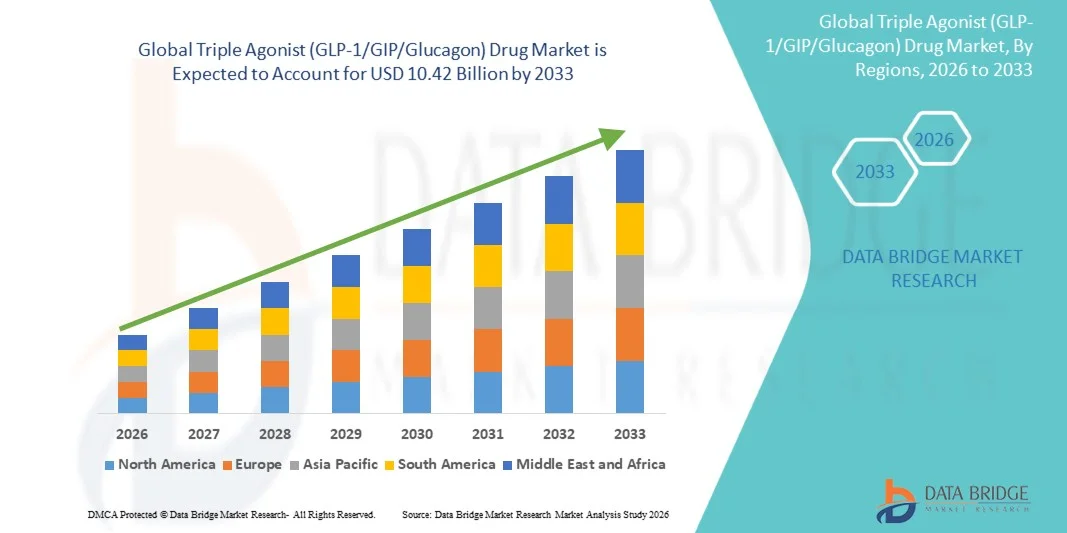
- The global triple agonist (GLP-1/GIP/Glucagon) drug market size was valued at USD 2.68 billion in 2025and is expected to reach USD 10.42 billion by 2033, at a CAGR of 18.50% during the forecast period
- The market growth is largely fueled by the increasing prevalence of obesity, type 2 diabetes, and metabolic disorders, along with growing clinical interest in next-generation multi-receptor therapies for enhanced metabolic control and weight reduction
- Furthermore, rising pharmaceutical investments in innovative peptide therapeutics, expanding late-stage clinical pipelines, and growing demand for highly effective obesity management treatments are establishing triple agonist drugs as a promising advancement in metabolic disease therapy. These converging factors are accelerating the development and adoption of triple agonist therapies, thereby significantly boosting the industry's growth
Triple Agonist (GLP-1/GIP/Glucagon) Drug Market Analysis
- Triple agonist (GLP-1/GIP/Glucagon) drugs, designed to simultaneously target multiple metabolic pathways for improved glucose regulation, weight reduction, and energy balance, are emerging as highly promising therapies in the treatment of obesity, type 2 diabetes, and other metabolic disorders due to their superior efficacy compared to traditional single-receptor therapies
- The escalating demand for triple agonist drugs is primarily fueled by the rising global prevalence of obesity and diabetes, increasing awareness regarding advanced metabolic therapies, and growing demand for more effective long-term weight management solutions
- North America dominated the triple agonist (GLP-1/GIP/Glucagon) drug market with the largest revenue share of 55.2% in 2025, characterized by strong pharmaceutical research activities, high healthcare expenditure, and rapid adoption of innovative obesity and diabetes treatments, with the U.S. experiencing substantial growth in clinical development and commercialization efforts driven by major biopharmaceutical companies focusing on next-generation incretin-based therapies
- Asia-Pacific is expected to be the fastest growing region in the triple agonist (GLP-1/GIP/Glucagon) drug market during the forecast period due to increasing obesity prevalence, expanding healthcare infrastructure, and rising access to advanced metabolic disease treatments
- Obesity segment dominated the triple agonist (GLP-1/GIP/Glucagon) drug market with an estimated market share of 48.9% in 2025, driven by increasing demand for highly effective anti-obesity therapeutics and strong clinical outcomes associated with multi-receptor agonist therapies
Report Scope and Triple Agonist (GLP-1/GIP/Glucagon) Drug Market Segmentation
|
Attributes |
Triple Agonist (GLP-1/GIP/Glucagon) Drug Key Market Insights |
|
Segments Covered |
|
|
Countries Covered |
North America · U.S. · Canada · Mexico Europe · Germany · France · U.K. · Netherlands · Switzerland · Belgium · Russia · Italy · Spain · Turkey · Rest of Europe Asia-Pacific · China · Japan · India · South Korea · Singapore · Malaysia · Australia · Thailand · Indonesia · Philippines · Rest of Asia-Pacific Middle East and Africa · Saudi Arabia · U.A.E. · South Africa · Egypt · Israel · Rest of Middle East and Africa South America · Brazil · Argentina · Rest of South America |
|
Key Market Players |
|
|
Market Opportunities |
· Expansion of triple agonist therapies into metabolic dysfunction–associated steatohepatitis · Increasing development of oral and long-acting triple agonist formulations |
|
Value Added Data Infosets |
In addition to the insights on market scenarios such as market value, growth rate, segmentation, geographical coverage, and major players, the market reports curated by the Data Bridge Market Research also include in-depth expert analysis, patient epidemiology, pipeline analysis, pricing analysis, and regulatory framework |
Triple Agonist (GLP-1/GIP/Glucagon) Drug Market Trends
“Increasing Focus on Next-Generation Multi-Receptor Metabolic Therapies”
- A significant and accelerating trend in the global triple agonist (GLP-1/GIP/Glucagon) drug market is the growing development of advanced multi-receptor therapies designed to deliver superior weight reduction, glucose control, and metabolic benefits compared to traditional single-target treatments. This advancement in metabolic drug innovation is significantly improving treatment outcomes for obesity and type 2 diabetes patients
- For instance, Eli Lilly’s retatrutide, a leading triple agonist candidate, has demonstrated substantial weight reduction and glycemic control benefits in clinical studies, positioning it as one of the most promising next-generation obesity therapies. Similarly, several biotechnology companies are advancing pipeline candidates focused on combined incretin and glucagon receptor activity for enhanced metabolic regulation
- Integration of triple agonist mechanisms enables simultaneous targeting of GLP-1, GIP, and glucagon receptors, improving energy expenditure, appetite suppression, and insulin sensitivity. For instance, clinical-stage therapies are being designed to achieve greater weight loss efficacy and improved cardiovascular and liver health outcomes compared to earlier incretin-based therapies. Furthermore, the development of long-acting formulations is providing patients with more convenient dosing schedules and improved treatment adherence
- The increasing incorporation of triple agonist therapies into broader obesity and metabolic disease treatment strategies is supporting more comprehensive patient management across healthcare systems. Through integrated therapeutic approaches, healthcare providers can address obesity, diabetes, and related cardiometabolic conditions using a single advanced treatment platform, creating a more effective and streamlined care experience
- This trend toward more effective, durable, and multifunctional metabolic therapies is fundamentally reshaping treatment expectations for obesity and diabetes Consequently, companies such as Eli Lilly and several emerging biotechnology firms are expanding investments in triple agonist research programs with a focus on enhanced efficacy, long-term metabolic control, and broader therapeutic applications
- The demand for triple agonist drugs offering superior efficacy and broader metabolic benefits is growing rapidly across global healthcare markets, as healthcare providers and patients increasingly prioritize advanced therapies for chronic weight management and metabolic disease treatment
- Increasing collaborations between pharmaceutical companies, biotechnology firms, and research institutions are accelerating pipeline expansion and clinical trial activities for triple agonist therapies, contributing to stronger commercialization prospects and broader therapeutic applications
Triple Agonist (GLP-1/GIP/Glucagon) Drug Market Dynamics
Driver
“Rising Global Obesity Burden and Demand for Advanced Weight Management Therapies”
- The increasing prevalence of obesity, type 2 diabetes, and related metabolic disorders, coupled with the growing demand for highly effective long-term weight management therapies, is a significant driver for the heightened demand for triple agonist (GLP-1/GIP/Glucagon) drugs
- For instance, in 2025, Eli Lilly continued advancing late-stage clinical development programs for retatrutide to expand treatment options for obesity and metabolic disorders. Such strategies by key pharmaceutical companies are expected to drive the triple agonist drug industry growth in the forecast period
- As healthcare systems become more focused on reducing obesity-related complications and chronic disease burdens, triple agonist therapies offer advanced metabolic benefits such as substantial weight reduction, improved glycemic control, and enhanced cardiovascular risk management, providing a compelling improvement over conventional obesity and diabetes treatments
- Furthermore, the growing clinical acceptance of incretin-based therapies and the increasing emphasis on personalized metabolic disease treatment are making triple agonist drugs an integral component of next-generation obesity care strategies, offering strong therapeutic potential across multiple metabolic conditions
- The ability to provide significant weight loss, improved insulin sensitivity, and broader metabolic health benefits through a single therapy platform are key factors propelling the adoption of triple agonist drugs in obesity and diabetes treatment programs. The trend toward expanding reimbursement coverage and increasing investments in metabolic disease innovation further contribute to market growth
- The increasing number of late-stage clinical trials demonstrating favorable efficacy and safety profiles for triple agonist therapies is strengthening physician confidence and encouraging faster adoption across obesity and diabetes treatment settings
- Rising healthcare expenditure and supportive government initiatives focused on chronic disease management and obesity reduction programs are further contributing to the demand for advanced triple agonist metabolic therapies worldwide
Restraint/Challenge
“High Treatment Costs and Regulatory Approval Challenges”
- Concerns surrounding the high cost of advanced metabolic therapies, including triple agonist drugs, pose a significant challenge to broader market penetration. As these therapies involve complex peptide engineering and extensive clinical validation requirements, they are associated with high development and treatment costs, raising affordability concerns among healthcare providers and patients
- For instance, increasing scrutiny regarding the pricing and reimbursement of innovative obesity therapies has made some healthcare systems cautious about the widespread adoption of next-generation metabolic drugs, including triple agonist therapies
- Addressing these affordability and regulatory concerns through broader insurance coverage, scalable manufacturing capabilities, and strong long-term clinical evidence is crucial for supporting market expansion. Companies such as Eli Lilly and Novo Nordisk are emphasizing clinical efficacy, cardiovascular benefits, and long-term weight management outcomes to strengthen commercial adoption. In addition, stringent regulatory approval pathways and concerns regarding long-term safety profiles can delay product commercialization and limit patient accessibility, particularly in emerging healthcare markets. While clinical progress remains strong, achieving global regulatory approvals and reimbursement acceptance often requires substantial investment and extended evaluation timelines
- While awareness regarding advanced obesity treatments is gradually increasing, the premium pricing associated with novel triple agonist therapies can still hinder widespread adoption, especially in cost-sensitive healthcare systems and developing economies where access to specialized metabolic care remains limited
- Overcoming these challenges through expanded clinical evidence, improved affordability strategies, enhanced regulatory collaboration, and broader healthcare access initiatives will be vital for sustained market growth
- Potential gastrointestinal side effects, tolerability concerns, and patient discontinuation risks associated with incretin-based therapies may create additional challenges for long-term treatment adherence and market acceptance
- The limited availability of large-scale manufacturing infrastructure for complex peptide therapeutics can also create supply chain constraints and production scalability challenges for pharmaceutical companies operating in the triple agonist drug market
Triple Agonist (GLP-1/GIP/Glucagon) Drug Market Scope
The market is segmented on the basis of drug type, application, end user, and distribution channel.
- By Drug Type
On the basis of drug type, the global triple agonist (GLP-1/GIP/Glucagon) drug market is segmented into GLP-1/GIP/Glucagon Triple Agonists, GLP-1/GIP Dual Agonists, GLP-1-based combination therapies, and Next-generation multi-agonist peptides. The GLP-1/GIP Dual Agonists segment dominated the market with the largest market revenue share in 2025, driven by the strong commercial adoption of dual incretin therapies for obesity and type 2 diabetes management. These therapies have demonstrated significant clinical success in improving glycemic control and delivering substantial weight reduction outcomes. The growing physician familiarity with dual agonist mechanisms and expanding regulatory approvals have further strengthened segment dominance. Pharmaceutical companies continue to invest heavily in dual agonist production and lifecycle expansion strategies due to increasing global demand for advanced metabolic treatments. In addition, favorable reimbursement coverage and rising awareness regarding obesity therapeutics are supporting broader patient access to these therapies.
The GLP-1/GIP/Glucagon Triple Agonists segment is anticipated to witness the fastest growth rate from 2026 to 2033, fueled by increasing clinical evidence supporting superior metabolic efficacy and enhanced weight loss outcomes compared to earlier incretin therapies. Triple agonists simultaneously target multiple metabolic pathways, improving appetite regulation, insulin sensitivity, and energy expenditure. Rising investments in next-generation obesity therapeutics and expanding late-stage clinical trial pipelines are accelerating segment growth globally. Pharmaceutical companies are actively developing innovative triple agonist candidates to address the increasing burden of obesity and related metabolic disorders. Furthermore, growing healthcare provider interest in highly effective long-term obesity management solutions is expected to strengthen adoption across major healthcare markets.
- By Application
On the basis of application, the global triple agonist (GLP-1/GIP/Glucagon) drug market is segmented into Obesity, Type 2 Diabetes Mellitus, Metabolic Dysfunction–Associated Steatohepatitis, Cardiovascular Risk Reduction, and Other metabolic disorders. The Obesity segment dominated the market with the largest market revenue share of 48.9% in 2025, driven by the rapidly increasing prevalence of obesity and growing demand for highly effective pharmacological weight management therapies. Triple agonist drugs have demonstrated strong clinical outcomes in achieving substantial and sustained weight reduction compared to traditional anti-obesity treatments. Increasing awareness regarding obesity-associated health risks and rising healthcare spending on weight management solutions are further supporting market expansion. Healthcare providers are increasingly adopting advanced incretin-based therapies for chronic obesity treatment due to their improved efficacy profiles. In addition, supportive reimbursement policies and growing patient willingness to seek medical obesity treatments are contributing to segment dominance.
The Metabolic Dysfunction–Associated Steatohepatitis segment is anticipated to witness the fastest growth rate from 2026 to 2033, fueled by the increasing global burden of fatty liver disease and the lack of highly effective approved therapies for MASH treatment. Triple agonist therapies are gaining attention for their potential to improve liver fat reduction, metabolic regulation, and weight management simultaneously. Rising clinical research activities focused on liver-related metabolic disorders are further accelerating segment growth. Pharmaceutical companies are increasingly prioritizing MASH-focused clinical trials to expand the therapeutic applications of triple agonist drugs. Furthermore, growing awareness regarding the long-term complications associated with untreated fatty liver disease is expected to support increased treatment adoption in the coming years.
- By End User
On the basis of end user, the global triple agonist (GLP-1/GIP/Glucagon) drug market is segmented into Obese patients, Type 2 diabetes patients, Cardiometabolic risk patients, and Specialty obesity treatment centers. The Obese patients segment dominated the market with the largest market revenue share in 2025, driven by the substantial increase in obesity prevalence across both developed and developing economies. Triple agonist therapies are increasingly being prescribed for chronic weight management due to their superior efficacy in promoting sustained weight reduction and metabolic improvement. Rising consumer awareness regarding obesity-related health complications and increasing demand for medically supervised weight loss solutions are further supporting segment growth. Healthcare systems are also expanding obesity treatment programs to address the growing public health burden associated with excess weight and related diseases. In addition, strong clinical evidence demonstrating meaningful weight loss outcomes is encouraging greater adoption among obese patient populations worldwide.
The Cardiometabolic risk patients segment is anticipated to witness the fastest growth rate from 2026 to 2033, fueled by the increasing incidence of cardiovascular diseases linked to obesity, diabetes, and metabolic dysfunction. Triple agonist therapies are showing promising benefits in improving cardiovascular risk markers alongside weight and glucose management. Growing emphasis on preventive cardiometabolic healthcare and integrated chronic disease management is accelerating demand within this patient segment. Healthcare providers are increasingly exploring advanced incretin therapies for patients with multiple metabolic risk factors requiring comprehensive treatment approaches. Furthermore, ongoing clinical studies evaluating cardiovascular outcome benefits are expected to strengthen adoption among high-risk patient populations globally.
- By Distribution Channel
On the basis of distribution channel, the global triple agonist (GLP-1/GIP/Glucagon) drug market is segmented into Hospital Pharmacies, Retail Pharmacies, Specialty Clinics, and Online Pharmacies. The Hospital Pharmacies segment dominated the market with the largest market revenue share in 2025, driven by the strong presence of hospital-based obesity and diabetes treatment programs and the increasing administration of advanced metabolic therapies within clinical settings. Hospital pharmacies play a critical role in ensuring access to newly launched and specialty prescription drugs requiring physician supervision. Rising hospitalization rates associated with obesity-related complications and metabolic disorders are further supporting segment growth. Healthcare professionals also prefer hospital pharmacy channels for initiating advanced incretin therapies due to better patient monitoring and treatment management capabilities. In addition, favorable reimbursement structures and direct pharmaceutical supply agreements with hospitals are contributing to segment dominance.
The Online Pharmacies segment is anticipated to witness the fastest growth rate from 2026 to 2033, fueled by increasing digital healthcare adoption and rising consumer preference for convenient medication purchasing platforms. Online pharmacies offer improved accessibility, home delivery services, and competitive pricing for chronic disease management therapies, including obesity and diabetes drugs. The growing use of telemedicine and digital prescription platforms is further accelerating online pharmaceutical distribution trends. Patients increasingly prefer online channels for long-term treatment refills due to convenience and privacy advantages. Furthermore, expanding internet penetration and improving digital healthcare infrastructure across emerging economies are expected to support strong future growth for the online pharmacy segment.
Triple Agonist (GLP-1/GIP/Glucagon) Drug Market Regional Analysis
- North America dominated the triple agonist (GLP-1/GIP/Glucagon) drug market with the largest revenue share of 55.2% in 2025, characterized by strong pharmaceutical research activities, high healthcare expenditure, and rapid adoption of innovative obesity and diabetes treatments
- Healthcare providers and patients in the region highly value the superior weight reduction outcomes, improved glycemic control, and broader metabolic benefits offered by triple agonist therapies for obesity and chronic metabolic disease management
- This widespread adoption is further supported by high healthcare expenditure, favorable reimbursement frameworks, a strong presence of leading biopharmaceutical companies, and increasing demand for innovative obesity and diabetes treatments, establishing triple agonist drugs as a promising next-generation solution for metabolic disease therapy across both clinical and specialty care settings
U.S. Triple Agonist (GLP-1/GIP/Glucagon) Drug Market Insight
The U.S. triple agonist (GLP-1/GIP/Glucagon) drug market captured the largest revenue share within North America in 2025, fueled by the rising prevalence of obesity and type 2 diabetes, along with strong demand for advanced metabolic disease therapies. Patients and healthcare providers are increasingly prioritizing highly effective weight management and glycemic control solutions through next-generation incretin-based therapies. The growing adoption of obesity pharmacotherapy, combined with substantial investments in clinical research and pharmaceutical innovation, further propels the triple agonist drug industry. Moreover, the increasing presence of leading biopharmaceutical companies and expanding reimbursement support for obesity and diabetes treatments are significantly contributing to the market’s expansion.
Europe Triple Agonist (GLP-1/GIP/Glucagon) Drug Market Insight
The Europe triple agonist (GLP-1/GIP/Glucagon) drug market is projected to expand at a substantial CAGR throughout the forecast period, primarily driven by increasing awareness regarding obesity management and the growing demand for advanced metabolic therapies. The rise in obesity prevalence, coupled with expanding healthcare investments, is fostering the adoption of triple agonist drugs across the region. European healthcare systems are also focusing on preventive metabolic healthcare and long-term chronic disease management solutions. The region is experiencing significant growth across obesity, diabetes, and cardiometabolic treatment applications, with triple agonist therapies being increasingly evaluated for integration into standard metabolic care programs.
U.K. Triple Agonist (GLP-1/GIP/Glucagon) Drug Market Insight
The U.K. triple agonist (GLP-1/GIP/Glucagon) drug market is anticipated to grow at a noteworthy CAGR during the forecast period, driven by the increasing burden of obesity and diabetes and rising demand for innovative weight management therapies. In addition, growing public healthcare focus on reducing obesity-related complications is encouraging healthcare providers and patients to adopt advanced incretin-based treatment solutions. The U.K.’s expanding metabolic healthcare infrastructure, alongside increasing access to specialized obesity treatment programs, is expected to continue stimulating market growth.
Germany Triple Agonist (GLP-1/GIP/Glucagon) Drug Market Insight
The Germany triple agonist (GLP-1/GIP/Glucagon) drug market is expected to expand at a considerable CAGR during the forecast period, fueled by increasing awareness regarding metabolic disease management and the demand for technologically advanced therapeutic solutions. Germany’s well-developed healthcare infrastructure, combined with its strong emphasis on pharmaceutical innovation and clinical research, promotes the adoption of triple agonist therapies, particularly for obesity and type 2 diabetes treatment. The integration of advanced metabolic therapies into chronic disease management programs is also becoming increasingly prevalent, with a strong preference for effective and evidence-based treatment approaches aligning with local healthcare priorities.
Asia-Pacific Triple Agonist (GLP-1/GIP/Glucagon) Drug Market Insight
The Asia-Pacific triple agonist (GLP-1/GIP/Glucagon) drug market is poised to grow at the fastest CAGR during the forecast period of 2026 to 2033, driven by increasing obesity prevalence, rising disposable incomes, and improving access to advanced healthcare treatments in countries such as China, Japan, and India. The region's growing focus on chronic disease management, supported by expanding healthcare infrastructure and rising awareness regarding obesity therapies, is driving the adoption of triple agonist drugs. Furthermore, as Asia-Pacific emerges as a major pharmaceutical manufacturing and clinical research hub, the accessibility and availability of advanced metabolic therapies are expanding to a wider patient population.
Japan Triple Agonist (GLP-1/GIP/Glucagon) Drug Market Insight
The Japan triple agonist (GLP-1/GIP/Glucagon) drug market is gaining momentum due to the country’s advanced healthcare system, aging population, and increasing focus on metabolic disease prevention. The Japanese market places a significant emphasis on innovative healthcare solutions, and the adoption of triple agonist therapies is driven by the increasing prevalence of obesity, diabetes, and age-related metabolic disorders. The integration of advanced obesity management therapies with broader chronic disease treatment strategies is fueling growth. Moreover, Japan's strong pharmaceutical research ecosystem is likely to spur demand for highly effective metabolic treatment solutions in both hospital and specialty care settings.
India Triple Agonist (GLP-1/GIP/Glucagon) Drug Market Insight
The India triple agonist (GLP-1/GIP/Glucagon) drug market accounted for the largest market revenue share in Asia Pacific in 2025, attributed to the country's rapidly growing diabetic and obese population, expanding middle class, and improving healthcare accessibility. India stands as one of the largest emerging markets for metabolic disease therapies, and triple agonist drugs are becoming increasingly important in obesity and diabetes management programs. The push towards advanced chronic disease treatment solutions and the increasing availability of innovative metabolic therapies, alongside strong pharmaceutical manufacturing capabilities, are key factors propelling the market in India.
Triple Agonist (GLP-1/GIP/Glucagon) Drug Market Share
The Triple Agonist (GLP-1/GIP/Glucagon) Drug industry is primarily led by well-established companies, including:
- Eli Lilly and Company (U.S.)
- Novo Nordisk A/S (Denmark)
- AstraZeneca (U.K.)
- Pfizer Inc. (U.S.)
- Amgen Inc. (U.S.)
- Boehringer Ingelheim International GmbH (Germany)
- Structure Therapeutics Inc. (U.S.)
- Altimmune, Inc. (U.S.)
- Viking Therapeutics, Inc. (U.S.)
- Sciwind Biosciences Co., Ltd. (China)
- Hanmi Pharmaceutical Co., Ltd. (South Korea)
- Zealand Pharma A/S (Denmark)
- Regeneron Pharmaceuticals, Inc. (U.S.)
- Carmot Therapeutics, Inc. (U.S.)
- Metsera, Inc. (U.S.)
- Eccogene Inc. (China)
- Innovent Biologics, Inc. (China)
- Verdiva Bio Limited (U.K.)
- OPKO Health, Inc. (U.S.)
What are the Recent Developments in Global Triple Agonist (GLP-1/GIP/Glucagon) Drug Market?
- In December 2025, Eli Lilly and Company announced positive Phase 3 trial results for retatrutide, its investigational GLP-1/GIP/Glucagon triple agonist, demonstrating up to 28.7% average body weight reduction in adults with obesity and knee osteoarthritis over 68 weeks. The study also showed significant improvements in physical function and pain reduction, reinforcing retatrutide’s potential as a next-generation obesity and metabolic disorder therapy
- In November 2024, Viking Therapeutics, Inc. presented new clinical data for VK2735 at ObesityWeek 2024, highlighting encouraging efficacy and tolerability results for both oral and injectable formulations of its GLP-1/GIP receptor agonist candidate. The company reported strong weight reduction outcomes and ongoing development efforts aimed at expanding treatment options for obesity and metabolic disorders
- In March 2024, Viking Therapeutics, Inc. announced positive Phase 1 clinical trial results for the oral tablet formulation of VK2735, its investigational GLP-1/GIP dual agonist therapy for obesity and metabolic disorders. The study demonstrated favorable safety and tolerability alongside meaningful weight reduction outcomes, supporting the advancement of the oral candidate into Phase 2 obesity trials
- In February 2024, Viking Therapeutics, Inc. reported positive top-line Phase 2 VENTURE trial results for VK2735 in patients with obesity, achieving up to 14.7% mean weight loss after 13 weeks of treatment. The trial successfully met all primary and secondary endpoints, strengthening the company’s position in the rapidly growing obesity and incretin-based therapeutics market
- In September 2023, Altimmune, Inc. announced the completion of dosing in the Phase 2 MOMENTUM trial evaluating pemvidutide, its GLP-1/glucagon dual receptor agonist candidate for obesity and non-alcoholic steatohepatitis (NASH). The trial completion marked a significant development in advancing multi-receptor metabolic therapies targeting obesity and liver-related metabolic disorders
SKU-
Get online access to the report on the World's First Market Intelligence Cloud
- Interactive Data Analysis Dashboard
- Company Analysis Dashboard for high growth potential opportunities
- Research Analyst Access for customization & queries
- Competitor Analysis with Interactive dashboard
- Latest News, Updates & Trend analysis
- Harness the Power of Benchmark Analysis for Comprehensive Competitor Tracking
Research Methodology
Data collection and base year analysis are done using data collection modules with large sample sizes. The stage includes obtaining market information or related data through various sources and strategies. It includes examining and planning all the data acquired from the past in advance. It likewise envelops the examination of information inconsistencies seen across different information sources. The market data is analysed and estimated using market statistical and coherent models. Also, market share analysis and key trend analysis are the major success factors in the market report. To know more, please request an analyst call or drop down your inquiry.
The key research methodology used by DBMR research team is data triangulation which involves data mining, analysis of the impact of data variables on the market and primary (industry expert) validation. Data models include Vendor Positioning Grid, Market Time Line Analysis, Market Overview and Guide, Company Positioning Grid, Patent Analysis, Pricing Analysis, Company Market Share Analysis, Standards of Measurement, Global versus Regional and Vendor Share Analysis. To know more about the research methodology, drop in an inquiry to speak to our industry experts.
Customization Available
Data Bridge Market Research is a leader in advanced formative research. We take pride in servicing our existing and new customers with data and analysis that match and suits their goal. The report can be customized to include price trend analysis of target brands understanding the market for additional countries (ask for the list of countries), clinical trial results data, literature review, refurbished market and product base analysis. Market analysis of target competitors can be analyzed from technology-based analysis to market portfolio strategies. We can add as many competitors that you require data about in the format and data style you are looking for. Our team of analysts can also provide you data in crude raw excel files pivot tables (Fact book) or can assist you in creating presentations from the data sets available in the report.