


North America Stroke Diagnostics Market Segmentation, By Severity (Moderate, Severe, and Mild), Type (Computed Tomography (CT Scan), Computed Tomography Angiography (CTA), Magnetic Resonance Imaging (MRI), Magnetic Resonance Angiography (MRA), Transcranial Doppler Ultrasound, Video Head Impulse Test (VHIT), and Others), Application (Ischemic Stroke, Hemorrhagic Stroke, and Transient Ischemic Attacks (TIAS)), End User (Hospitals, Clinics, Ambulatory Surgical Centers, and Home Healthcare), Distribution Channel (Direct Tender, Third Party Distributors, and Others), Stage (Pre Operative, Peri Operative, and Post Operative)- Industry Trends and Forecast to 2033
북아메리카 치기 진단 시장 크기 및 성장 비율은 무엇입니까
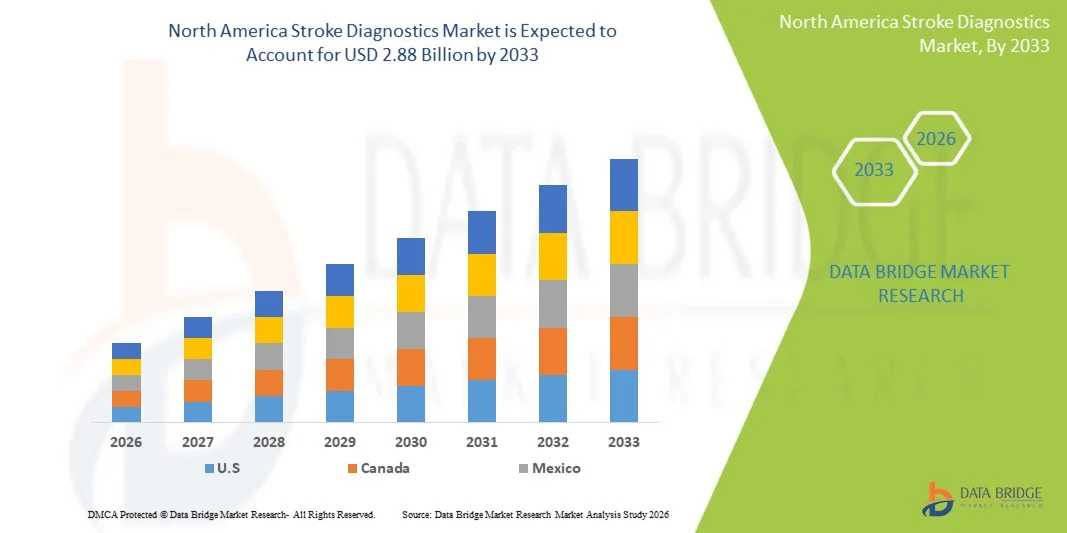
- Data Bridge Market Research 분석 결과 북아메리카 치기 진단 시장 크기는에 평가되었습니다2025년 USD 1.73 억견적 요청2033년 USD 2.88억, 에 의해6.6%의 상승예측 기간
- 시장 성장은 진보 된 이미징 및 진단 기술의 광범위한 채택 및 미국과 캐나다 모두의 의료 지출 증가, 뇌졸중 사례를 강화하는 뇌졸중의 상승률에 의해 크게 연료를 공급합니다.
- 또한, 뇌졸중 증후의 고도화 인식, 자궁화 인구, 호의를 베푸는 reimbursement 정책, 그리고 강한 의료 인프라는 정확하고, 급속하고, 비침범성 진단 해결책에 대한 수요를 몰고 있습니다. 뇌졸중 진단은 비상 관리 통로의 중요한 성분으로 및 지구에 있는 장기 환자 감시의 긴 기간입니다
시장 크기 & Forecast
- 시장 가치 (2025):100억
- 예상 시장 가치 (2033):미화 2억 달러
- 캐스트 CAGR (2026–2033):6.6%
북미 스트로크 진단 시장 분석
- CT, MRI, transcranial Doppler 및 혈액 바이오 마커와 같은 화상 및 실험실 테스트를 통과하는 뇌졸중은 급속한 탐지, 정확한 평가 및 향상된 치료 결과를 가능하게하는 능력으로 인해 응급 치료 및 장기 환자 관리의 더 중요한 구성 요소입니다.
- 뇌졸중 진단을 위한 escalating 수요는 주로 뇌졸중의 상승 전분에 의해 연료를 공급하고, 점차적인 인구를 성장하고, 의학 expenditure를 증가하고, 더 빠른, 비침범성 및 치기 사건의 정확한 평가를 허용하는 진보된 진단 기술의 채택
- 미국은 2025년에 80.9%의 가장 큰 수익 점유율을 가진 북아메리카 치기 진단 시장을 지배하고, 진보된 의료 인프라, 높은 의료 지출 및 AI 보조 이미징, 휴대용 CT 스캐너 및 병원 및 비상사태 배려 센터에 있는 급속한 생물 마인더 테스트 모는 채택에 있는 실질적인 성장과 더불어 주요한 진단 기술 공급자의 강한 존재를 특색짓습니다
- 캐나다는 의료 인프라의 정부 투자 증가로 인해 예측 기간 동안 상당한 성장을 목격 할 것으로 예상되며 뇌졸중 예방 및 조기 진단의 인식 및 현대 이미징 및 진단 기술을 갖춘 병원 네트워크 확장
- Computed Tomography (CT Scan) 세그먼트는 급속한 스트로크 식별, 치료 계획 및 AI 보조 이미징 솔루션과 통합하여 2025에서 45.9%의 시장 점유율을 가진 뇌졸중 진단 시장을 지배하고 급성 뇌졸중 관리에서 빠르고 정확하고, 수명 절약 결정을 가능하게하는 AI 보조 이미징 솔루션과 통합했습니다.
보고 범위와 북아메리카 치기 진단 시장 Segmentation
|
관련 기사 |
북아메리카 치기 진단 열쇠 시장 통찰력 |
|
Segments 적용 |
|
|
국가 덮음 |
북아메리카
|
|
핵심 시장 선수 |
|
|
시장 기회 |
|
|
Value 추가 데이터 Infosets |
시장 가치, 성장률, 세그먼트, 지리적 범위 및 주요 플레이어와 같은 시장 시나리오에 대한 통찰력 외에도 데이터 브리지 시장 연구에 의해 큐레이터 시장 보고서는 심층적 인 전문가 분석, 환자 분석, 파이프라인 분석, 가격 분석 및 규제 프레임 워크를 포함합니다. |
북미 뇌졸중 진단 시장에서 중요한 추세는 무엇입니까
“AI-Enabled Imaging 및 Telemedicine 통합의 장점”
- 북미 뇌졸중 진단 시장에서 중요한 추세는 CT, MRI 및 transcranial Doppler 및 telemedicine 플랫폼뿐만 아니라 진단 정확도 및 속도를 향상시키기 위해 인공 지능 (AI)의 통합입니다.
- 예를 들어, AI-powered CT Imaging 솔루션은 자동적으로 ischemic 지역과 잠재적 인 치환을 감지 할 수 있으며, 실시간 알림을 제공하면서 클라우드 기반 플랫폼은 원격 상담 및 스트로크 센터의 빠른 삼일을 가능하게합니다.
- AI 통합은 예측 분석, 환자의 위험 요소를 평가 할 수있는 시스템을 가능하게하며 중요한 사례를 우선 순위화하고 최적의 진단 통로를 제안합니다. 지속적인 학습은 시간 동안 감지 정확도를 향상시킵니다.
- AI 및 telemedicine의 조합은 뇌졸중 환자의 중앙화 된 모니터링을 촉진하고, 신경 학자를 원격으로 검토 스캔, 트랙 진행 및 병원 및 응급 단위의 조정을 가능하게합니다.
- 지능형, 상호 연결 및 원격 캡처 가능한 스트로크 진단을 향한이 추세는 병원 워크플로우 및 환자 관리 프로토콜을 재구성합니다. Viz.ai와 RapidAI와 같은 회사는 자동화된 경고, CT perfusion 분석 및 teleconsultation 기능을 갖춘 AI-enabled 스트로크 이미징 솔루션을 개발하고 있습니다.
- AI와 통합되는 뇌졸중 진단 시스템의 요구학회소개병원과 외래치료센터 모두에서 빠르게 성장하고 있으며, 의료기관은 속도, 정확도 및 협조적 환자 관리
- 이동할 수 있는 CT 스캐너와 같은 휴대용과 점 관리 화상 진찰 해결책은, 구급차 및 더 작은 진료소에 있는 급속한 현장 진단을 가능하게 하고, 특히 시골 또는 underserved 지역에서
북아메리카 치기 진단 시장 역학
관련 기사
"Rising Stroke Incidence 및 Rapid Diagnosis 필요"
- 뇌졸중의 증가, 특히 노화 인구와 생활 습관 위험 요인을 가진 개인 사이에서, 고급 뇌졸중 진단을 위한 성장 수요를 위한 중요한 운전사입니다
- 예를 들어, 3 월 2025에서 GE Healthcare는 응급실에서 감지 시간을 개선하기 위해 AI-assisted Stroke Imaging 플랫폼을 출시했습니다. 급속한 뇌졸중 진단을 강화하기 위해 업계 노력을 반영합니다.
- 뇌졸중의 인식과 초기 개입 상승의 중요성, 병원은 적시 치료를 시작하고 장기 장애를 줄일 수 있는 clinicians를 허용하는 이미징 기반 진단 및 바이오 마커 테스트 채택
- 또한, 병원 인프라의 성장 투자, 뇌졸중 센터의 확장, 그리고 telemedicine 솔루션의 상승 채택은 미국과 캐나다 전역에 점점 접근 가능한 고급 뇌졸중 진단을하고있다
- AI 보조 이미징, 원격 상담 및 전자 건강 기록과 통합과 결합된 급속하고 정확한 진단을 위한 긴급은 의료 시설의 맞은편에 치기 진단의 채택을 추진하고 있습니다
- 뇌졸중 치료를위한 정부 이니셔티브 및 재투자 프로그램은 최첨단 진단 솔루션을 채택하기 위해 병원 및 클리닉을 격려하고 있습니다.
- 진단 기술 회사 및 의료 제공 업체 간의 협력을 통해 AI-enabled 스트로크 검출 도구를 개발하는 것은 더 가속화 시장 채택
스트레인트/Challenge
"높은 비용 및 규제 Hurdles"
- CT 및 MRI 스캐너와 같은 고급 이미징 modalities의 상대적으로 높은 비용, AI-enabled 진단 소프트웨어와 결합, 특히 더 작은 진료소 또는 농촌 병원에서 넓은 채용에 도전을 포즈
- 예를 들어, 일부 의료 제공 업체는 예산 제약으로 인해 AI 보조 뇌졸중 진단을 지연 할 수 있으며 정확도와 속도의 임상 이점에도 불구하고
- 또한, AI-enabled 진단 도구를 위한 FDA 승인을 포함하여 엄격한 규제 요건은, 특정 지역의 가용성을 제한하는 시장에 새로운 해결책의 소개를 늦출 수 있습니다
- 가격은 점차적으로 감소하고 AI 플랫폼은 더 확장되고, 통합 화상 진찰 체계, 소프트웨어 면허를 위한 상륙 투자되고, 훈련은 많은 의료 제공자를 위한 장벽을 남아 있습니다
- AI 보조 뇌졸중 진단에 대한 비용 효율적인 솔루션, 간소화 된 규제 승인 및 클리닉 교육을 통해 이러한 과제를 극복하고 시장의 성장을 지속하고 환자의 결과를 개선하기위한 것이 중요합니다.
- 환자 영상 및 건강 기록에 대한 데이터 개인 정보 보호 및 사이버 보안에 대한 우려는 병원이 민감한 의료 데이터의 안전한 취급을 보장하기 위해 필요함에 따라 채택을 늦출 수 있습니다.
- 진보된 AI-enabled 치기 진단 체계 및 해석 결과를 정확하게 운영하는 한정된 숙련되는 인원은 또한 더 작은 병원 또는 농촌 건강 관리 센터에서, 특히 제한할 수 있습니다
북아메리카 치기 진단 시장 범위
시장은 severity, 유형, 신청, 최종 사용자, 배급 수로 및 단계의 기초에 분할됩니다.
- 으로 Severity
severity의 기초에, 북아메리카 치기 진단 시장은 온화한, 온건한 및 가혹한 치기로 분류됩니다. 온건한 치기 세그먼트는 즉시 화상 및 개입을 요구하는 온건한 치기 증후로 선물하는 환자의 높은 prevalence에 의해 2025년에 가장 큰 수익 몫을 가진 시장을 지배했습니다. 모더레이트 스트로크 케이스는 종종 CT, MRI 및 Biomarker 기반 테스트를 위해 꾸준한 수요를 창출하는 진행을 방지하기 위해 포괄적 인 진단을 요구합니다. 병원 및 진료소는 이러한 환자의 정확한 평가를 우선적으로 thrombolytic 또는 endovascular 치료, 지속적인 시장 채택 연료를 공급합니다. 또한, 온건한 치기 진단은 급속하고 믿을 수 있는 진단 공구를 위한 필요를 증가하는 장기 disability를 감소시키기 위하여 현저하게 공헌합니다. Advanced AI-assisted Imaging Systems는 적시의 의사결정을 보장하기 위해 온건한 스트로크 케이스에 자주 사용됩니다. 세그먼트는 또한 진단 절차를 위한 reimbursement 적용에서 이득, 그것의 지배를 더 지원하는.
온화한 치기 세그먼트는 2026년에서 2033년 도중 가장 빠른 성장을 목격할 것으로 예상되고, 조기 탐지에 의해 연료를 공급하고 환자와 진료소 사이에서 인식을 성장하기 위하여는 transient ischemic 공격 (TIAs)와 미성년자 치기에 관하여. Mild 치기 진단은 비침범성 화상 진찰, 휴대용 CT 스캐너 및 telemedicine 근거한 평가에, 급속한 개입 및 후속 배려를 가능하게 합니다. 온화한 케이스에 있는 조기 진단은 가혹한 치기, 휴대용과 AI 가능하게 한 해결책의 모는 병원 채택합니다. 또한, 조기 증상 감지를위한 착용 및 홈 모니터링 장치가 인기를 얻고, 세그먼트 성장에 기여합니다. outpatient 치기 진료소와 가정 의료 감시에 증가 초점은 더 온화한 치기 케이스에 있는 채택을 가속합니다.
- 이름 *
유형의 기초에, 북아메리카 치기 진단 시장은 Computed Tomography (CT 검사)로, Computed Tomography Angiography (CTA) 분류됩니다,자기 공명 화상 (MRI), 자석 공명 Angiography (MRA), Transcranial 도풀러 초음파, 비디오 헤드 임펄스 테스트 (VHIT) 및 기타. Computed Tomography (CT Scan) 세그먼트는 2025 년에 45.9%의 가장 큰 수익 점유율을 가진 시장을 지배하고, 그것의 광대한 가용성, 급속한 화상 진찰 기능에 의해 몰고, 이른 ischemic와 치질 치기 탐지에 있는 중요한 역할. CT 스캔은 응급 부서의 첫 번째 라인 화상 진찰으로 간주되며 즉각적인 치료 계획을 허용합니다. AI-assisted CT 솔루션은 검출 정확도와 속도를 향상시키고 CT는 병원 및 뇌졸중 센터에서 매우 선호합니다. telemedicine 플랫폼과 통합은 원격 전문가 해석 및 적시 중재를 보장합니다. 이 부문은 도시 및 농촌 의료 시설의 강력한 재투자 정책과 잘 설립 된 존재로부터 혜택을 제공합니다.
MRI 세그먼트는 2026-2033 년 동안 가장 빠른 성장을 목격 할 것으로 예상되며 우수한 부드러운 조직 대비, 화학 병변을 감지하기위한 높은 감도 및 전문 뇌졸중 센터의 성장 채택. DWI(Diffusion-weighted Imaging, DWI) 및 perfusion Imaging을 포함한 고급 MRI 기술로 뇌졸중 및 조직 생존의 정확한 평가를 가능하게 합니다. AI-assisted MRI 해석은 진단 과실을 감소시키고 임상 결정을 개량하는 견인을 얻는다. MRI 인프라에 투자를 증가시키고 장기적인 스트로크 관리의 MRI의 역할에 대한 인식을 증가시키는 것은 더 많은 운전 채택이다. MRI는 또한 recurrent 치기 평가 및 연구 신청을 위해 선호됩니다, 그것의 성장 잠재력에 추가.
- 회사연혁
신청의 기초에, 북아메리카 치기 진단 시장은 ischemic 치기, hemorrhagic 치기 및 transient ischemic 공격 (TIAs)로 분류됩니다. ischemic 스트로크 세그먼트는 2025 년 가장 큰 수익 점유율로 시장을 지배했으며, ischemic Strokes는 미국과 캐나다의 대다수 사례를 나타냅니다. ischemic 치기의 급속한 ID는 적시 thrombolytic 치료, CT, MRI 및 biomarker 근거한 진단을 위한 모는 수요를 위해 중요합니다. 병원 및 전문 뇌졸중 센터는 정확한 clot 로컬라이제이션 및 치료 계획을위한 고급 이미징 및 AI 보조 진단을 우선합니다. telemedicine와의 통합은 특히 보존 된 영역에서 ischemic Stroke Case에 대한 빠른 원격 상담을 보장합니다. 강력한 정부 이니셔티브 및 조기 탐지 및 치료 보험 적용의 부문 혜택. 이미징 및 AI 기반 예측 도구의 지속적인 혁신은 화학 뇌졸중 진단의 지배력을 더 강화시킵니다.
치명적인 치기 세그먼트는 2026년에서 2033년 도중 가장 빠른 성장을 목격할 것으로 예상됩니다, intracerebral hemorrhage 위험의 인식에 의해 연료를 공급하고 지방 분해를 방지하기 위하여 정확한 급속한 진단을 위한 긴요한 필요. Advanced CT angiography, MRI 및 transcranial Doppler 기술은 점점 더 출혈 사이트를 감지하고 질병 진도를 모니터링하는 데 사용됩니다. AI-assisted 시스템은 화학 및 치질 뇌졸중을 효율적으로 치료하는 데 도움이됩니다. 도시와 반우 지역 지원 세그먼트 성장에 있는 치기 센터 및 비상사태 배려 인프라를 확장하십시오. 갑상선 및 휴대용 화상 진찰을 통해 hemorrhagic 치기 환자의 조기 탐지 그리고 감시는 또한 채택을 몰고 있습니다.
- 최종 사용자
최종 사용자의 기초에, 북아메리카 치기 진단 시장은 병원, 진료소, 구급 외과 센터 및 가정 건강 관리로 분류됩니다. 병원 세그먼트는 고급 이미징 장비의 농도에 의해 구동 2025에서 가장 큰 수익 점유율을 가진 시장을 지배하고, 훈련된 전문가 및 병원 조정에 있는 치기 단위. 병원은 급속한 CT, MRI 및 CTA 진단을 요구하는 심각한 치기 관리를 위한 1 차적인 위치입니다.AI 지원 영상병원에 있는 telemedicine 통합은 진단의 정확도 그리고 속도를 강화합니다. 높은 환자의 볼륨과 종합적인 뇌졸중에 대한 필요는 지속적인 수요에 기여합니다. 병원은 정부의 뇌졸중 프로토콜과 성능 메트릭을 구현하는 역할을 합니다. 병원 인프라에 투자를 더 지원 시장 도민.
홈 의료 부문은 2026-2033 년 동안 가장 빠른 성장을 목격 할 것으로 예상되며 원격 모니터링 장치, telemedicine 상담 및 뇌졸중 증상의 조기 탐지를위한 착용 가능한 센서의 상승 채택에 의해 연료. 휴대용 CT 스캐너, AI 보조 위험 예측 도구 및 홈 기반 바이오 마커 테스트는 초기 개입을 가능하게합니다. 환자의 인식과 뇌졸중 예방 및 자세 모니터링에 대한 배려의 세그먼트 혜택. 홈 헬스케어 및 텔레헬스 솔루션에 대한 보험 재투자 정책은 채택을 개선하고 있습니다. 모바일 건강 앱과 통합은 지속적인 환자 모니터링 및 긴급한 관리, 운전 세그먼트 성장을위한 실시간 알림을 허용합니다.
- 유통 채널
배급 수로의 기초에, 북아메리카 치기 진단 시장은 직접적인 입찰, 제삼자 분배자 및 다른 사람으로 구분됩니다. 직접적인 입찰 세그먼트는 2025년에 가장 큰 수익 몫을 가진 시장을, 병원에 의해 몰고 진료소는 확실한 질, 포스트 판매 서비스 및 주문화를 위한 제조자에서 직접 화상과 진단 장비를 procuring. 직접 조달은 규제 표준 및 AI 보조 솔루션의 빠른 배포에 대한 준수를 보장합니다. CT 및 MRI 스캐너와 같은 높은 가치 장비는 종종 직접 입찰을 통해 구입됩니다. 병원은 교육, 유지 보수 및 소프트웨어 업데이트를위한 공급 업체와 직접 관계를 선호합니다. 기술에 대한 제조업체와의 전략적 파트너십은 이 부문의 지배력을 더욱 강화합니다.
제3자 유통 부문은 멀티 벤더 공급 네트워크의 확장에 의해 연료 2026–2033 동안 가장 빠른 성장을 목격 할 것으로 예상되며 더 작은 클리닉, 홈 의료 제공 업체 및 농촌 병원에 진단 솔루션을 제공해야합니다. 제3자 대리점은 비용 효율적인 조달, 유연한 금융, 그리고 휴대용 및 중거리 진단 도구의 급속한 납품을 가능하게 합니다. 대리점과 제조업체 간의 협업을 통해 AI-enabled Stroke 진단 드라이브 세그먼트 채택을 제공합니다. 이 채널은 또한 telemedicine 통합 및 원격 모니터링 솔루션을 지원, underserved 지역에 대한 접근성 강화.
- 단계별
단계의 기초에, 북아메리카 치기 진단 시장은 사전 수술, 주변 수술 및 수술 후로 분할됩니다. 전동 세그먼트는 2025 년에 가장 큰 수익 점유율을 가진 시장을 지배하고, thrombectomy 또는 neurosurgery와 같은 개입의 앞에 정확한 화상 진찰 그리고 진단을 위한 긴요한 필요에 의해 모는. Pre-operative 치기 진단은 진료소가 lesion 위치, clot 구성 및 잠재적인 위험, 최적의 치료 계획을 평가하는 것을 허용합니다. CT, CTA 및 MRI 이미징에 의존하는 병원. AI 보조 도구는 정밀도와 속도를 향상시키고 절차 관련 합병증을 감소시킵니다. 잘 설치된 임상 의정서 및 강한 reimbursement 적용에서 세그먼트 이익. Pre-operative 진단은 또한 위험 stratification 및 환자 triage, reinforcing 시장 dominance에 있는 중요한 역할을 합니다.
수술 후 세그먼트는 2026년부터 2033년까지 가장 빠른 성장을 목격할 것으로 예상되며, 후속 이미징에 중점을 두고, 반복성 및 장기 환자 관리에 대한 모니터링이 가능합니다. 휴대용 화상 진찰, telemedicine 상담 및 AI-assisted 분석은 clinicians가 복구를 추적하고 합병증을 조기에 감지 할 수 있습니다. 홈 기반 모니터링 도구는 수술 후 환자를위한 견인력을 얻고 있습니다. 뇌졸중 후 재활 및 모니터링의 중요성을 인식하는 것은 채택을 구동한다. 병원 및 클리닉은 EHR 및 환자 관리 플랫폼과 수술 후 진단을 통합하고 시장 성장을 지원합니다.
북미 스트로크 진단 시장 지역 분석
- 미국은 2025년에 80.9%의 가장 큰 매출 점유율을 가진 북아메리카 치기 진단 시장을 지배하고, 진보된 의료 인프라, 높은 의료 지출 및 주요한 진단 기술 공급자의 강한 존재에 의해 특색짓습니다
- 환자 및 의료 제공 업체 지역 높은 가치 급류, 정확 하 고 AI 보조 뇌졸중 진단 적시 치료 결정, 장기 장애를 감소 하 고 응급실, 전문 뇌졸중 단위 및 외래 진료소를 통해 환자의 결과 향상
- 이 광범위한 채택은 정부 이니셔티브, 보험 재투자 정책, 진단 도구의 높은 병원 투자 및 선도적 인 이미징 기술 제공 업체의 존재, 뇌졸중 진단을 설립, 미국의 응급 관리 및 장기 환자 관리의 중요한 구성 요소로 설정
미국 뇌졸중 진단 시장 통찰력
미국 뇌졸중 진단 시장은 북미 내에서 80.9%의 최대 매출 점유율을 차지했으며 고급 이미징 기술 및 AI 보조 진단 도구의 광범위한 채택에 의해 연료를 공급했습니다. 의료 제공 업체는 점점 더 신속 하 고 정확 한 검출 ischemic 및 치질 뇌졸중 환자의 결과를 개선 하 고 장기 장애를 줄일 수 있습니다. 전문 뇌졸중 센터, 강력한 병원 인프라 및 높은 의료 지출의 증가 된 가용성은 시장 성장의 핵심 요소입니다. 또한, telemedicine 플랫폼과 전자 건강 기록과 통합은 적시 진단과 협조한 배려를 강화합니다. 정부 프로그램 및 재투자 지원과 결합 된 조기 탐지 이니셔티브는 도시 및 농촌 의료 시설에서 채택을 가속화하고 있습니다. AI-assisted CT 및 MRI 진단 분야에서 선도적 인 이미징 기술 제공 업체 및 지속적인 혁신의 강력한 존재는 시장 확장을 계속합니다.
Canada Stroke Diagnostics 시장 통찰력
캐나다 뇌졸중 진단 시장은 뇌졸중 예방에 대한 인식과 CT, CTA 및 MRI와 같은 고급 이미징 변조의 채택을 촉진하는 의료 인프라의 정부 투자를 증가하여 꾸준한 성장을 목격하고 있습니다. 캐나다의 병원 및 클리닉은 진단 정확도를 향상시키고 적시 개입을 가능하게하는 AI 보조 이미징 솔루션을 사용하여 점점 더 많습니다. 비상 관리, telemedicine 통합 및 뇌졸중 환자의 원격 모니터링에 대한 국가의 초점은 접근성과 효율성을 개선하기 위해 기여하고 있습니다. 조기 진단을 지원하기 위해 공공 보건 이니셔티브와 결합 된 노후화 인구 중 뇌졸중의 발전은 시장의 성장입니다. 캐나다의 중앙 집중식 의료 시스템은 고급 진단 기술의 효과적인 롤아웃을 허용하고, 도시와 반 우르반 지역에 걸쳐 채택을 강화. 진단 기술 제공자 및 의료 기관 간의 협업은 지속적인 혁신과 시장 확장을 지원합니다.
Mexico Stroke Diagnostics 시장 통찰력
멕시코 뇌졸중 진단 시장은 점차적으로 뇌졸중 위험에 대한 인식, 심혈관 질환의 발전, 병원 및 클리닉에서 현대 이미징 및 실험실 진단의 채택 증가로 인해 확장됩니다. 주요 도시에서 전문 스트로크 단위의 의료 인프라 및 확장 투자는 CT, MRI 및 transcranial Doppler 이미징의 섭취를 지원하고 있습니다. Telemedicine 솔루션 및 AI 보조 진단 플랫폼은 조기 검출 및 치료 계획을 강화하기 위해 천천히 통합됩니다. 뇌졸중 교육 및 예방에 초점을 맞춘 공중 보건 캠페인은 적시 진단에 대한 수요를 올리고 있습니다. 국제적인 진단 기술 회사 및 국부적으로 의료 제공자 사이 또한, 공동체정신은 진보된 화상 진찰 해결책, 모는 시장 성장에 접근을 촉진합니다. 멕시코의 확장 중급 및 도시화 추세는 주거 및 상업용 의료 시설의 뇌졸중 진단에 대한 수요 증가에 기여하고 있습니다.
북미 뇌졸중 진단 시장에서 최고의 기업은 무엇입니까
북미 뇌졸중 진단 산업은 주로 잘 설립 된 회사에 의해 주도됩니다.
- Siemens Healthineers AG (독일)
- Koninklijke 필립스 N.V. (네덜란드)
- GE HealthCare (미국)
- CANON MEDICAL SYSTEMS (일본)
- 심천 Mindray 생물 의학 전자공학 Co., 주식 회사 (중국)
- FUJIFILM Holdings Corporation (일본)
- Analogic Corporation (미국)
- Aspect Imaging Ltd (이스라엘)
- Carestream 건강 (미국)
- Esaote S.p.A (이탈리아)
- (주)호로직
- IMRIS Inc. (캐나다)
- Fonar Corporation (미국)
- Medfield 진단 AB (스웨덴)
- MEDTRON AG (독일)
- SAMSUNG Medison (한국)
- 심천 Anke 하이테크 Co., 주식 회사 (중국)
- Shimadzu Corporation (일본)
- ALPINION MEDICAL SYSTEMS 주식회사
- BPL 의료 기술 (인도)
북미 뇌졸중 진단 시장의 최근 개발은 무엇입니까
- 11월 2025일, AI-Stroke는 전 ‐CT 뇌졸중을 위한 AI “neurologist”를 개발하여, 미국 뇌졸중 센터 전역의 FDA 규제 노력과 다사이트 임상 연구를 지원하기 위해 모세관 4.6백만 달러를 모금하여, 뇌졸중 표지판을 이용한 초기 삼극을 가속화하는 것을 목표로 하고 있습니다.
- 7 월 2025, AiimSense, 캐나다 보건 ‐ 기술 시작, 개발 및 전시 된 BrainScreen, 휴대용 AI 및 전자기 이미징 기반 뇌 검출 시스템, 화학 및 치질 뇌졸중 모두의 신속한 현장 배포 가능한 진단을 가능하게하는, 잠재적으로 병원 도착 전에 조기 치료 결정을 개선
- 4 월 2025에서 Brainomix는 Brainomix 360 스트로크 이미징 소프트웨어에 대한 확장 된 FDA 정리를 받았다. 의사는 널리 사용 가능한 비 대조 CT 스캔에서 화학 코어 볼륨을 평가 할 수 있으며 뇌졸중이 시작된 후 최대 24 시간의 트리니티 및 치료 결정 향상
- 11월 2023일, Brainomix는 미국에 있는 가득 차있는 Brainomix 360 AI 치기 화상 진찰 플래트홈을 발사했습니다, 다수 FDA 맑게 한 단위 (를 포함하여 e‐ ASPECTS, e ‐ CTP, 및 e ‐ MRI) 환자 경로를 통하여 종합적인 치기 화상 진찰 그리고 결정 지원에 있는 진료소를 지원하기 위하여
- 3 월 2023에서 Brainomix의 Brainomix 360 e-ASPECTS 도구는 FDA 정리를 수신하여 비 대조 CT 스캔에서 ASPECTS 점수를 자동으로 평가하고 미국 스트로크 센터에서 더 빠르고 일관성있는 화학적 뇌졸중 평가를 발표했습니다.
SKU-
세계 최초의 시장 정보 클라우드 보고서에 온라인으로 접속하세요

- 대화형 데이터 분석 대시보드
- 높은 성장 잠재력 기회를 위한 회사 분석 대시보드
- 사용자 정의 및 질의를 위한 리서치 분석가 액세스
- 대화형 대시보드를 통한 경쟁자 분석
- 최신 뉴스, 업데이트 및 추세 분석
- 포괄적인 경쟁자 추적을 위한 벤치마크 분석의 힘 활용
연구 방법론
데이터 수집 및 기준 연도 분석은 대규모 샘플 크기의 데이터 수집 모듈을 사용하여 수행됩니다. 이 단계에는 다양한 소스와 전략을 통해 시장 정보 또는 관련 데이터를 얻는 것이 포함됩니다. 여기에는 과거에 수집한 모든 데이터를 미리 검토하고 계획하는 것이 포함됩니다. 또한 다양한 정보 소스에서 발견되는 정보 불일치를 검토하는 것도 포함됩니다. 시장 데이터는 시장 통계 및 일관된 모델을 사용하여 분석하고 추정합니다. 또한 시장 점유율 분석 및 주요 추세 분석은 시장 보고서의 주요 성공 요인입니다. 자세한 내용은 분석가에게 전화를 요청하거나 문의 사항을 드롭하세요.
DBMR 연구팀에서 사용하는 주요 연구 방법론은 데이터 마이닝, 시장에 대한 데이터 변수의 영향 분석 및 주요(산업 전문가) 검증을 포함하는 데이터 삼각 측량입니다. 데이터 모델에는 공급업체 포지셔닝 그리드, 시장 타임라인 분석, 시장 개요 및 가이드, 회사 포지셔닝 그리드, 특허 분석, 가격 분석, 회사 시장 점유율 분석, 측정 기준, 글로벌 대 지역 및 공급업체 점유율 분석이 포함됩니다. 연구 방법론에 대해 자세히 알아보려면 문의를 통해 업계 전문가에게 문의하세요.
사용자 정의 가능
Data Bridge Market Research는 고급 형성 연구 분야의 선두 주자입니다. 저희는 기존 및 신규 고객에게 목표에 맞는 데이터와 분석을 제공하는 데 자부심을 느낍니다. 보고서는 추가 국가에 대한 시장 이해(국가 목록 요청), 임상 시험 결과 데이터, 문헌 검토, 재생 시장 및 제품 기반 분석을 포함하도록 사용자 정의할 수 있습니다. 기술 기반 분석에서 시장 포트폴리오 전략에 이르기까지 타겟 경쟁업체의 시장 분석을 분석할 수 있습니다. 귀하가 원하는 형식과 데이터 스타일로 필요한 만큼 많은 경쟁자를 추가할 수 있습니다. 저희 분석가 팀은 또한 원시 엑셀 파일 피벗 테이블(팩트북)로 데이터를 제공하거나 보고서에서 사용 가능한 데이터 세트에서 프레젠테이션을 만드는 데 도움을 줄 수 있습니다.











