


Asia-Pacific Graphite Market, By Product Type (Synthetic and Natural), Physical Form (Flake Additives, Powder, Expandable Flakes, Pellets, and Film & Sheet), Application (Consumer Electronics, Transportation, Industrial, Building & Construction, Medical Diagnostics, and Defense) - Industry Trends and Forecast to 2030.
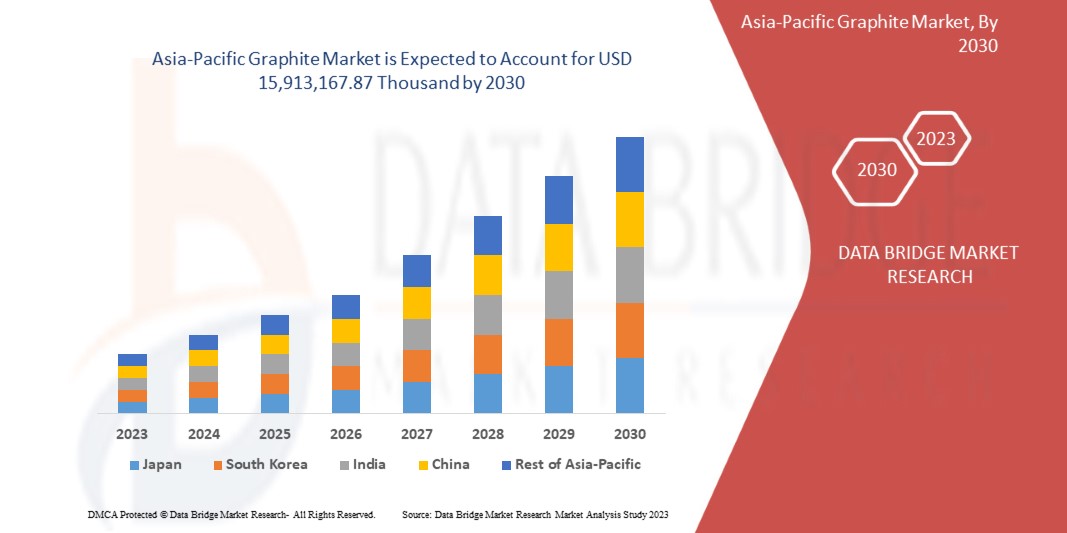
Asia-Pacific Graphite Market Analysis and Size
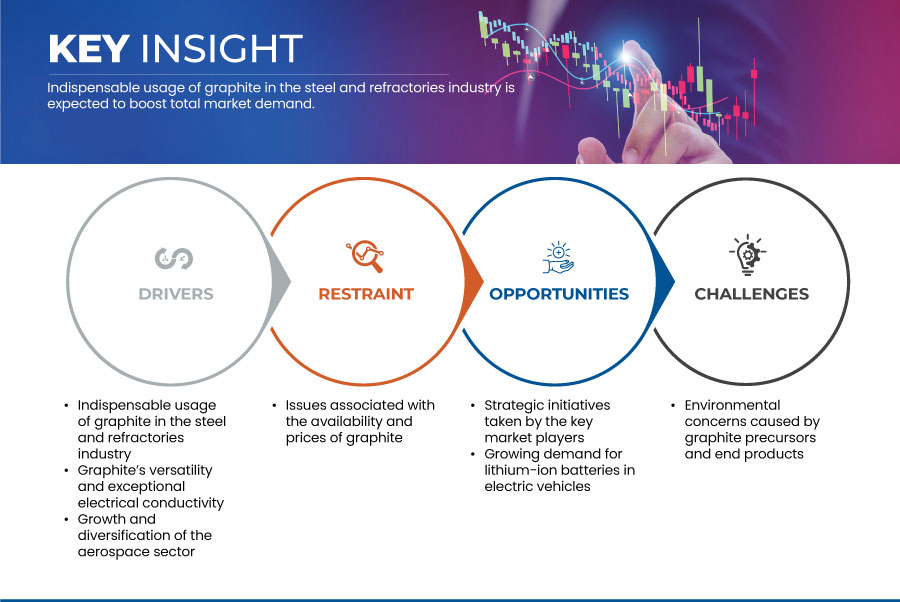
The indispensable usage of graphite in the steel and refractories industry and graphite’s versatility and exceptional electrical conductivity make it a fundamental material in the consumer electronics industry are some of the factors driving the market growth. However, the major restraint negatively impacting the market growth is issues associated with the availability and prices of graphite and its precursors.
Strategic initiatives taken by the key market players are expected to provide opportunities for market growth. However, environmental concerns caused by graphite precursors and end products are projected to challenge the market growth.
Data Bridge Market Research analyzes that the Asia-Pacific graphite market is expected to reach USD 15,913,167.87 thousand by 2030 from USD 8,810,314.29 thousand in 2022, growing with a substantial CAGR of 7.8% in the forecast period of 2023 to 2030.
|
Report Metric |
Details |
|
Forecast Period |
2023 to 2030 |
|
Base Year |
2022 |
|
Historic Year |
2021 (Customizable 2015-2020) |
|
Quantitative Units |
Revenue in USD Thousand |
|
Segments Covered |
Product Type (Synthetic and Natural), Physical Form (Flake Additives, Powder, Expandable Flakes, Pellets, and Film & Sheet), Application (Consumer Electronics, Transportation, Industrial, Building & Construction, Medical Diagnostics, and Defense) |
|
Countries Covered |
China, Japan, India, South Korea, Australia, Thailand, Singapore, Philippines, Malaysia, Indonesia, and Rest of Asia-Pacific |
|
Market Players Covered |
TOKAI CARBON, GrafTech International, SGL Carbon, Mersen, Toyo Tanso Co., Ltd., HEG Limited, Nippon Carbon Co Ltd., Superior Graphite, Qingdao Tennry Carbon Co., Ltd., and Resonac Holdings Corporation, among others |
Market Definition
Graphite is a naturally occurring form of carbon that is a key industrial material used for various purposes. It is primarily composed of carbon atoms arranged in a hexagonal lattice structure. In the market context, graphite is typically defined as a mineral that is mined and processed for its unique properties, which include high conductivity, high-temperature resistance, and lubrication qualities. Graphite is widely used as an essential component in various industries, such as metallurgy, electronics, automotive, aerospace, and energy, where it serves as a crucial material in applications, such as electrodes, lubricants, refractories, and as a structural material in the form of composites.
Asia-Pacific Graphite Market Dynamics
This section deals with understanding the market drivers, advantages, opportunities, restraints, and challenges. All of these are discussed in detail below:
Drivers
- Indispensable Usage of Graphite in the Steel and Refractories Industry
The primary application of synthetic graphite is in manufacturing graphite electrodes, which are capable of handling extremely high electrical currents. These electrodes are formed by shaping synthetic graphite immediately after its production. The graphite electrodes are critical in Electric Arc Furnace (EAF) steelmaking. They serve as conductive materials that transfer electrical energy to the EAF, where they create high-temperature arcs to melt steel scrap and other raw materials. Graphite electrodes must withstand extreme heat and mechanical stress during this process. Graphite is used to line ladles and other vessels used in the steelmaking process. It provides excellent thermal resistance, allowing for the transportation of molten steel from the furnace to the casting area.
Graphite additives are used to produce refractory materials for high-temperature environments such as the linings for furnaces, kilns, incinerators, and reactors. Refractories are the second-largest market for graphite after electrodes. Graphite is used to increase the effectiveness of the final refractory product by increasing thermal conductivity, decreasing the thermal gradient between the hot and cold faces of the product, thereby reducing expansion, repelling molten slag, increasing the working life of the product, increasing the ability of the product to withstand thermal shocks/corrosion thereby, improving performance at higher temperatures, and reducing wettability to molten metals so that they do not affect the end-product.
Graphite's unique properties make it indispensable in the steel and refractories industry, where it contributes to the efficiency, safety, and overall quality of steel production processes and related applications, which is driving the market growth.
- Versatility and Exceptional Electrical Conductivity of Graphite
Graphite emerges as a crucial component in various electronic device design and functionality aspects. Its remarkable properties have enabled the seamless integration of advanced technologies into people’s daily lives from its role in batteries that power smartphones and laptops to its presence in thermal management solutions and even as a fundamental component in touchscreens.
It is used as an anode material in lithium-ion batteries, which are widely used in smartphones, laptops, and other portable electronic devices. The graphite anode helps store and release electrical energy efficiently. It is also used in thermal management solutions such as graphite heat sinks and Thermal Interface Materials (TIMs) to dissipate heat from electronic components, ensuring they operate at optimal temperatures. Electronic devices, especially those with touchscreens or keyboards, use graphite as a lubricant or as a component in conductive inks to facilitate smooth and reliable touch or keypress interactions.
Opportunity
- Growing Demand for Lithium-Ion Batteries in Electric Vehicles
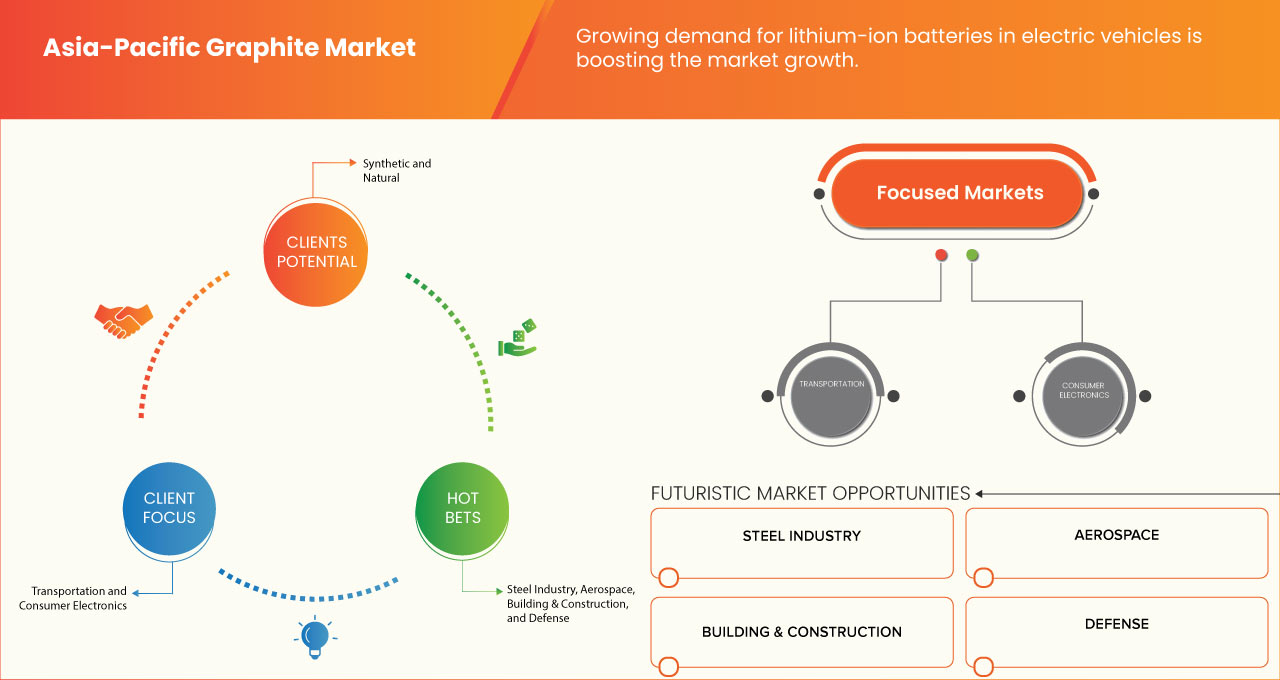
The shift towards cleaner and more sustainable transportation solutions has led to a substantial increase in the adoption of EVs. This trend is driven by environmental concerns, government incentives, and consumer preference for EVs. Lithium-ion battery technology has improved significantly in terms of energy density, charging speed, and overall performance. These advancements have made lithium-ion batteries the preferred choice for EV manufacturers.
Therefore, the growing demand for electric vehicles and their associated lithium-ion batteries is expected to accelerate as these factors continue to evolve, which is expected to create opportunities for market growth.
Restraint/Challenge
- Issues Associated with the Availability and Prices of Graphite
Issues associated with the availability and prices of graphite and its precursors pose significant limitations that are restraining the market growth. Graphite, a critical industrial material with diverse applications, faces several factors affecting its availability and pricing, thereby impacting the overall market dynamics.
One key issue is the geographical concentration of graphite production. A significant portion of the world's natural graphite is sourced from a few countries, primarily China. This concentration creates supply chain vulnerabilities and exposes the Asia-Pacific market to geopolitical and trade-related risks. Disruptions in supply, such as export restrictions or fluctuations in production, can lead to supply shortages and price volatility, affecting industries dependent on graphite, including the automotive, aerospace, and battery manufacturing sectors. Another factor affecting graphite availability is the reliance on precursor materials, primarily flake graphite and synthetic graphite, in various industries. Natural flake graphite is used extensively in battery manufacturing for Electric Vehicles (EVs) and energy storage applications. Meanwhile, synthetic graphite is crucial in the production of electrodes for lithium-ion batteries. The demand for these precursors is surging due to the Asia-Pacific push for clean energy and EV adoption. This heightened demand can strain precursor supply chains, impacting their availability and, in turn, the production of graphite-based products.
Recent Developments
- In July 2023, Mersen, a global leader in electrical power and advanced materials, officially inaugurated its Columbia manufacturing facility in the U.S. This 240,000-square meter site, acquired in 2019, has undergone significant investment totaling nearly USD 70.00 million over the past four years to expand its production capabilities, focusing on extruded and isostatic graphite. The facility is strategically positioned to meet the growing demand, particularly in the semiconductor market. Mersen's 2027 plan includes a target to increase isostatic graphite manufacturing capacity globally to 16,000 tons by the end of 2024. This expansion reinforces Mersen's commitment to sustainable development markets, with a specific focus on the SiC semiconductor market
- In April 2023, GrafTech International Ltd., a prominent producer of top-notch graphite electrode products crucial for electric arc furnace steel production, officially unveiled a new sales office in Dubai, U.A.E. The inauguration of the latest sales office in Dubai underscores their strategic approach to conducting business on a worldwide scale. Equipped with seasoned sales and customer service teams across the globe, the company is focused on providing extensive assistance to GrafTech's global customer base
- In September 2022, Showa Denko K.K. (SDK) and Showa Denko Materials Co., Ltd. (SDMC) merged to create "Resonac," with SDK becoming "Resonac Holdings Corporation" and SDMC transforming into "Resonac Corporation" as of January 1, 2023. This strategic move aims to establish Resonac as a global leader in advanced functional materials within the chemical industry. The newly integrated company will boast substantial net sales, largely driven by semiconductor and electronic materials, particularly in the "back-end process." Resonac seeks to achieve synergy, innovation, and the development of new market values by combining SDK's stable businesses with SDMC's growth potential. Special focus will be placed on the semiconductor and electronic materials sector, ensuring the company maintains net sales exceeding 1 trillion while maintaining an EBITDA margin of over 20%
- In February 2019, according to Axios, the growing demand for graphite in lithium-ion batteries, driven by the expanding electric vehicle market, has raised environmental concerns in China. Graphite mining and production processes generate particulate air pollutants, posing respiratory health risks. In addition, harsh chemicals used in production are often discharged into the environment, potentially disrupting local ecosystems. Since 2010, pollution control inspections have shifted from local authorities to the central government in an effort to address these environmental issues
Asia-Pacific Graphite Market Scope
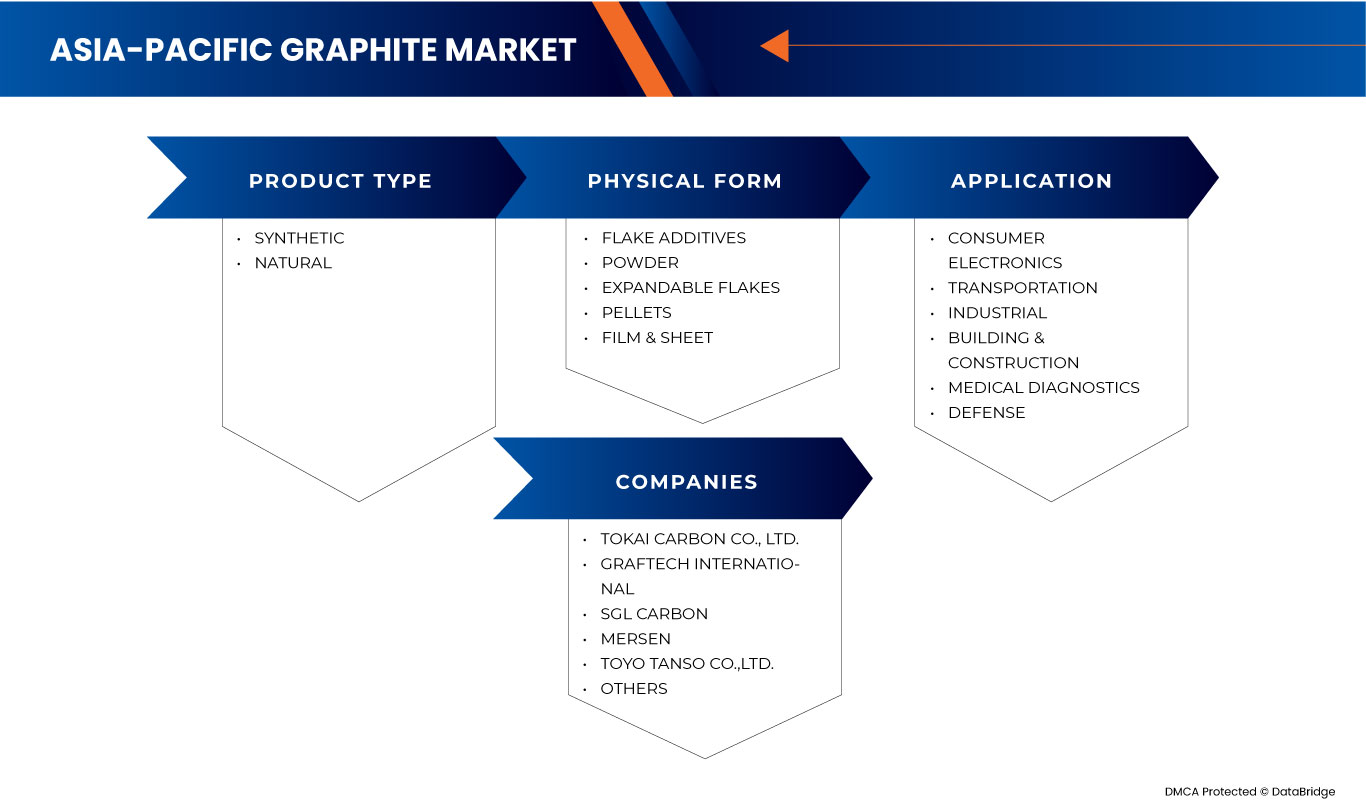
The Asia-Pacific graphite market is segmented into three notable segments based on product type, physical form, and application. The growth amongst these segments will help you analyze major growth segments in the industries and provide the users with a valuable market overview and market insights to help them make strategic decisions for identifying core market applications.
Product Type
- Synthetic
- Natural
On the basis of product type, the market is segmented into synthetic and natural.
Physical Form
- Flake Additives
- Powder
- Expandable Flakes
- Pellets
- Film & sheet
On the basis of physical form, the market is segmented into flake additives, powder, expandable flakes, pellets, and film & sheet.
Application
- Consumer Electronics
- Transportation
- Industrial
- Building & Construction
- Medical Diagnostics
- Defense
On the basis application, the market is segmented into consumer electronics, transportation, industrial, building & construction, medical diagnostics, and defense.
Asia-Pacific Graphite Market Regional Analysis/Insights
The Asia-Pacific graphite market is analyzed and market size insights and trends are provided by product type, physical form, and application as referenced above.
The countries covered in this market report are China, Japan, India, South Korea, Australia, Thailand, Singapore, Philippines, Malaysia, Indonesia, and Rest of Asia-Pacific.
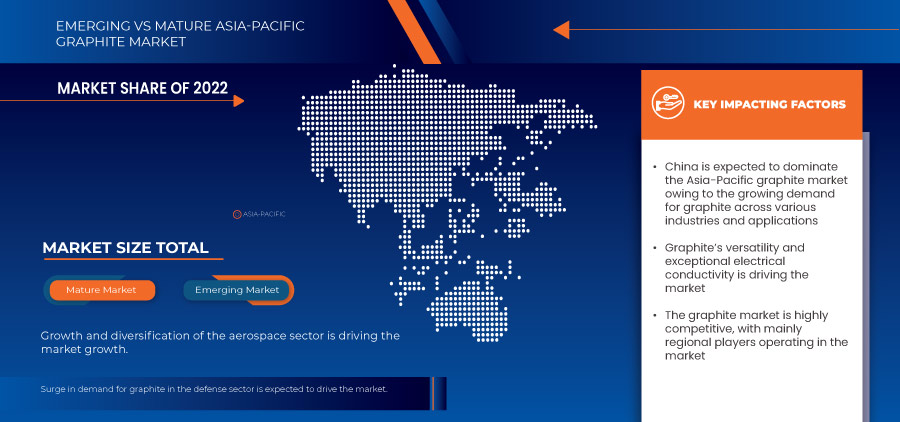
China is expected to dominate the Asia-Pacific graphite market due to its abundant graphite resources, low production costs, and high demand for graphite in industrial applications such as steel production and lithium-ion batteries.
The country section of the report also provides individual market-impacting factors and changes in market regulation that impact the current and future trends of the market. Data points such as downstream and upstream value chain analysis, technical trends, Porter's five forces analysis, and case studies are some of the pointers used to forecast the market scenario for individual countries. Also, the presence and availability of regional brands and their challenges faced due to large or scarce competition from local and domestic brands, the impact of domestic tariffs, and trade routes are considered while providing forecast analysis of the country data.
Competitive Landscape and Asia-Pacific Graphite Market Share Analysis
The Asia-Pacific graphite market competitive landscape provides details of competitors. Details included are company overview, company financials, revenue generated, market potential, investment in research and development, new market initiatives, regional presence, production sites and facilities, production capacities, company strengths and weaknesses, product launch, product width and breadth, and application dominance. The above data points provided are only related to the companies' focus on the market.
Some of the major players operating in the Asia-Pacific graphite market are TOKAI CARBON, GrafTech International, SGL Carbon, Mersen, Toyo Tanso Co., Ltd., HEG Limited, Nippon Carbon Co Ltd., Superior Graphite, Qingdao Tennry Carbon Co., Ltd., and Resonac Holdings Corporation, among others.
SKU-
Obtenha acesso online ao relatório sobre a primeira nuvem de inteligência de mercado do mundo

- Painel interativo de análise de dados
- Painel de análise da empresa para oportunidades de elevado potencial de crescimento
- Acesso de analista de pesquisa para personalização e customização. consultas
- Análise da concorrência com painel interativo
- Últimas notícias, atualizações e atualizações Análise de tendências
- Aproveite o poder da análise de benchmark para um rastreio abrangente da concorrência
Metodologia de Investigação
A recolha de dados e a análise do ano base são feitas através de módulos de recolha de dados com amostras grandes. A etapa inclui a obtenção de informações de mercado ou dados relacionados através de diversas fontes e estratégias. Inclui examinar e planear antecipadamente todos os dados adquiridos no passado. Da mesma forma, envolve o exame de inconsistências de informação observadas em diferentes fontes de informação. Os dados de mercado são analisados e estimados utilizando modelos estatísticos e coerentes de mercado. Além disso, a análise da quota de mercado e a análise das principais tendências são os principais fatores de sucesso no relatório de mercado. Para saber mais, solicite uma chamada de analista ou abra a sua consulta.
A principal metodologia de investigação utilizada pela equipa de investigação do DBMR é a triangulação de dados que envolve a mineração de dados, a análise do impacto das variáveis de dados no mercado e a validação primária (especialista do setor). Os modelos de dados incluem grelha de posicionamento de fornecedores, análise da linha de tempo do mercado, visão geral e guia de mercado, grelha de posicionamento da empresa, análise de patentes, análise de preços, análise da quota de mercado da empresa, normas de medição, análise global versus regional e de participação dos fornecedores. Para saber mais sobre a metodologia de investigação, faça uma consulta para falar com os nossos especialistas do setor.
Personalização disponível
A Data Bridge Market Research é líder em investigação formativa avançada. Orgulhamo-nos de servir os nossos clientes novos e existentes com dados e análises que correspondem e atendem aos seus objetivos. O relatório pode ser personalizado para incluir análise de tendências de preços de marcas-alvo, compreensão do mercado para países adicionais (solicite a lista de países), dados de resultados de ensaios clínicos, revisão de literatura, mercado remodelado e análise de base de produtos . A análise de mercado dos concorrentes-alvo pode ser analisada desde análises baseadas em tecnologia até estratégias de carteira de mercado. Podemos adicionar quantos concorrentes necessitar de dados no formato e estilo de dados que procura. A nossa equipa de analistas também pode fornecer dados em tabelas dinâmicas de ficheiros Excel em bruto (livro de factos) ou pode ajudá-lo a criar apresentações a partir dos conjuntos de dados disponíveis no relatório.











