


Mercado de caulim Ásia-Pacífico, por grau (calcinado, hidratado, delaminado, tratado de superfície e estruturado), processo (lavado com água, flutuador de ar, calcinado, delaminado e modificado de superfície e não processado), aplicação (Papel, Cerâmica, Tintas e Revestimentos, Fibra de Vidro, Plástico,Borracha, Produtos Farmacêuticos e Médicos, Cosméticos e Outros), Tendências da Indústria e Previsão para 2029
Análise e Insights do Mercado de Caulim Ásia-Pacífico
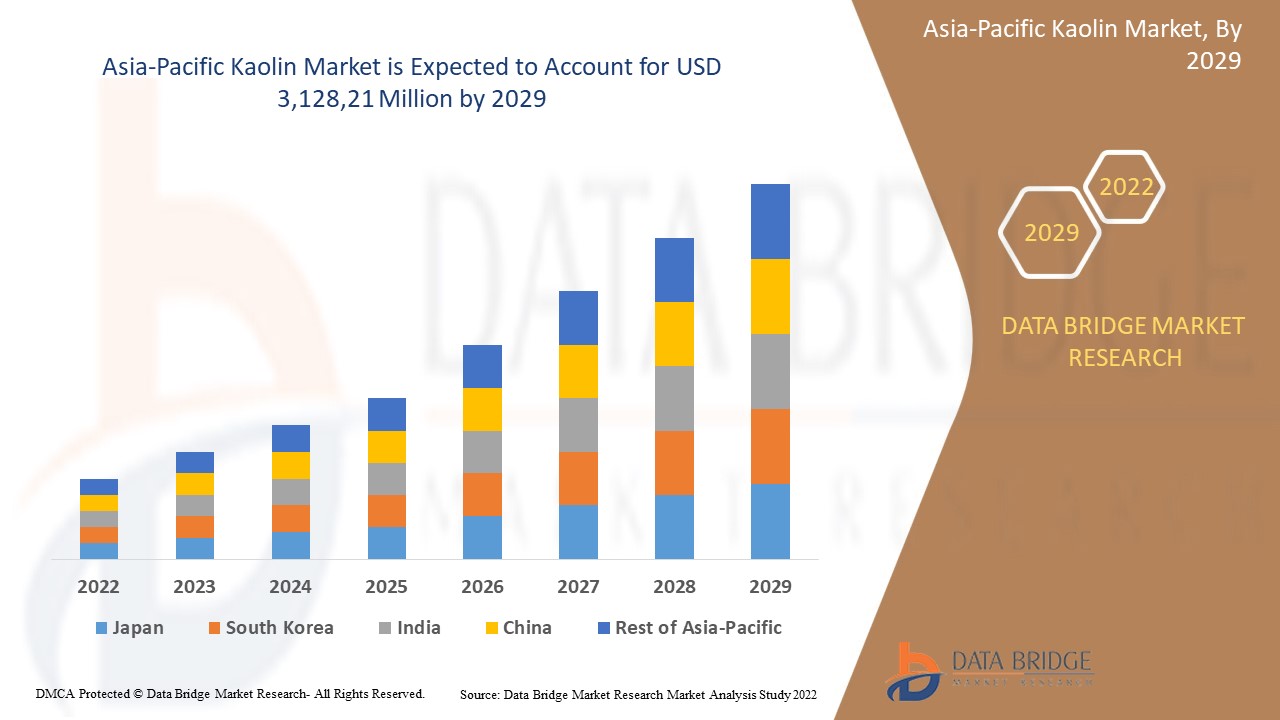
Espera-se que o mercado de caulino Ásia-Pacífico cresça significativamente no período de previsão de 2022 a 2029. Data Bridge Market Research analisa que o mercado está crescendo com um CAGR de 5,3% no período de previsão de 2022 a 2029 e que deverá chegar a USD 3.128,21 milhões até 2029. O principal factor que impulsiona o crescimento do mercado de caulim é o aumento doconstruçãoatividades em todo o mundo, propriedades químicas e físicas favoráveis do caulim, aumento da demanda por caulim de diversas indústrias de uso final, e alta adoção do caulim comorevestimentoaditivo.
As indústrias estão cada vez mais adotando o caulim como matéria-prima para a produção de medicamentos e cosméticos de importância comercial. Além disso, a propriedade química, como a adsorção de proteínas, lipídios e óleos, aumentou o uso de caulim para produzir lavagens faciais, máscaras faciais, sacos de lama, esfregantes corporais e outros produtos cosméticos. Medicamentos, tais como enxaguantes bucais, almofadas cirúrgicas, agentes de secagem e protetores temporários contra a erupção de fraldas, usam o caulim como ingrediente chave devido às suas propriedades químicas favoráveis. Portanto, o uso extensivo de caulim em diversas aplicações e indústrias pode impulsionar o crescimento do mercado de caulim Ásia-Pacífico.
O relatório de mercado de caulim Ásia-Pacífico fornece detalhes de market share, novos desenvolvimentos e o impacto de jogadores de mercado nacionais e localizados, analisa oportunidades em termos de bolsas de receita emergentes, mudanças nos regulamentos de mercado, aprovações de produtos, decisões estratégicas, lançamentos de produtos, expansões geográficas e inovações tecnológicas no mercado. Para entender a análise e o cenário de mercado, entre em contato conosco para um breve analista. Nossa equipe irá ajudá-lo a criar uma solução de impacto de receita para alcançar seu objetivo desejado.
|
Metric de Relatório |
Detalhes |
|
Período de previsão |
2022 a 2029 |
|
Ano de base |
2021 |
|
Anos Históricos |
2020 (Alfândega até 2019 - 2014) |
|
Unidades quantitativas |
Receitas em milhões de dólares |
|
Segmentos Cobertos |
Por grau (Calcinado, Hidros, Delaminado, Tratamento de Superfície e Estruturado), Processo (Washed de Água, Airfloat, Calcinado, Delaminado, e Superfície-Modificada e Não Processada), Aplicação (Papel, Cerâmica, Tintas e Revestimentos, Fibra de Vidro, Plástico, Borracha, Farmacêutica e Médica, Cosméticos e Outros) |
|
Países abrangidos |
Japão, China, Coreia do Sul, Índia, Singapura, Tailândia, Indonésia, Malásia, Filipinas, Austrália e Nova Zelândia, e o resto da Ásia-Pacífico. |
|
Jogadores de mercado cobertos |
Grupo Ashapura, BASF SE, EICL, Imerys S.A., SIbelCO |
Definição do mercado
O caulim, também chamado de argila de porcelana, é uma argila branca macia usada como ingrediente necessário na fabricação de papel, borracha, cosméticos e outros. O caulim é usado como um agente de enchimento na indústria do papel com adesivo, o que melhora a aparência do papel, dando-lhe brilho variado, suavidade, brilho, opacidade e impressão. Além disso, o produto aumenta a impressão do papel, proporcionando absorção de tinta, retenção de pigmento de tinta e maior rugosidade. É altamente utilizado na indústria cerâmica para a fabricação de porcelana e refratária. O caulim melhora a resistência mecânica e à abrasão na indústria da borracha.
Dinâmica do Mercado de Caulim Ásia-Pacífico
Esta seção trata da compreensão dos motoristas de mercado, restrições, oportunidades e desafios. Tudo isso é discutido em detalhes abaixo:
Controladores
- Ascensão em atividades de construção em todo o mundo
O aumento das atividades de construção em economias em desenvolvimento tem sido apoiado por maior migração da população rural para centros urbanos e aumento do investimento no desenvolvimento de infraestrutura. A crescente demanda de produtos devido às crescentes práticas de remodelação residencial em vários países, como os EUA, desviando o foco do consumidor para substituir pisos de madeira por telhas cerâmicas impulsiona o crescimento do mercado de caulim. Além disso, espera-se que a Ásia-Pacífico também testemunhe um ritmo rápido devido ao aumento da produção e consumo de cerâmica em seus países.
- Propriedades químicas e físicas favoráveis do caulim
O caulim é preferido como um metal de escolha em várias indústrias de aplicação e uso final devido às suas propriedades químicas e físicas desejadas e favoráveis que executa quando usado. Há uma demanda crescente de argila de caulim na indústria de plásticos, pois seu uso aumenta seu desempenho elétrico, durabilidade e resistência. Além disso, a crescente adoção de cerâmica se deve à opacidade, inerte química, textura não abrasiva e forma plana de argila de caulim. Além disso, o uso de caulim em concreto e argamassa está aumentando devido à sua estabilidade térmica. Alguns graus de caulim têm tamanhos de partículas finas, alta adsorção e propriedades de suspensão.
- Aumento da procura de caulino de várias indústrias de utilização final
Muitas variáveis e propriedades significativas que atuam em favor do caulim e da crescente demanda por produtos feitos de caulim têm mantido o mercado de caulim crescendo constantemente em todo o mundo. A aplicação mais comum do caulim é no setor de papel, permitindo que ele seja utilizado como um revestimento de papel com uma textura suave e opacidade adequada. O aumento deve-se ao aumento da procura de papel de várias indústrias de utilização final, tais como embalagens e impressão. Além disso, este material é amplamente utilizado para encher e cobrir peças, pois reduz o tamanho das partículas e aumenta a resistência. O caulim é frequentemente utilizado na indústria do papel porque oferece uma variedade de qualidades, incluindo boa receptividade à tinta, suavidade ao papel e a opacidade ideal para a fabricação de papel.
- Alta adoção de caulim como aditivo de revestimento
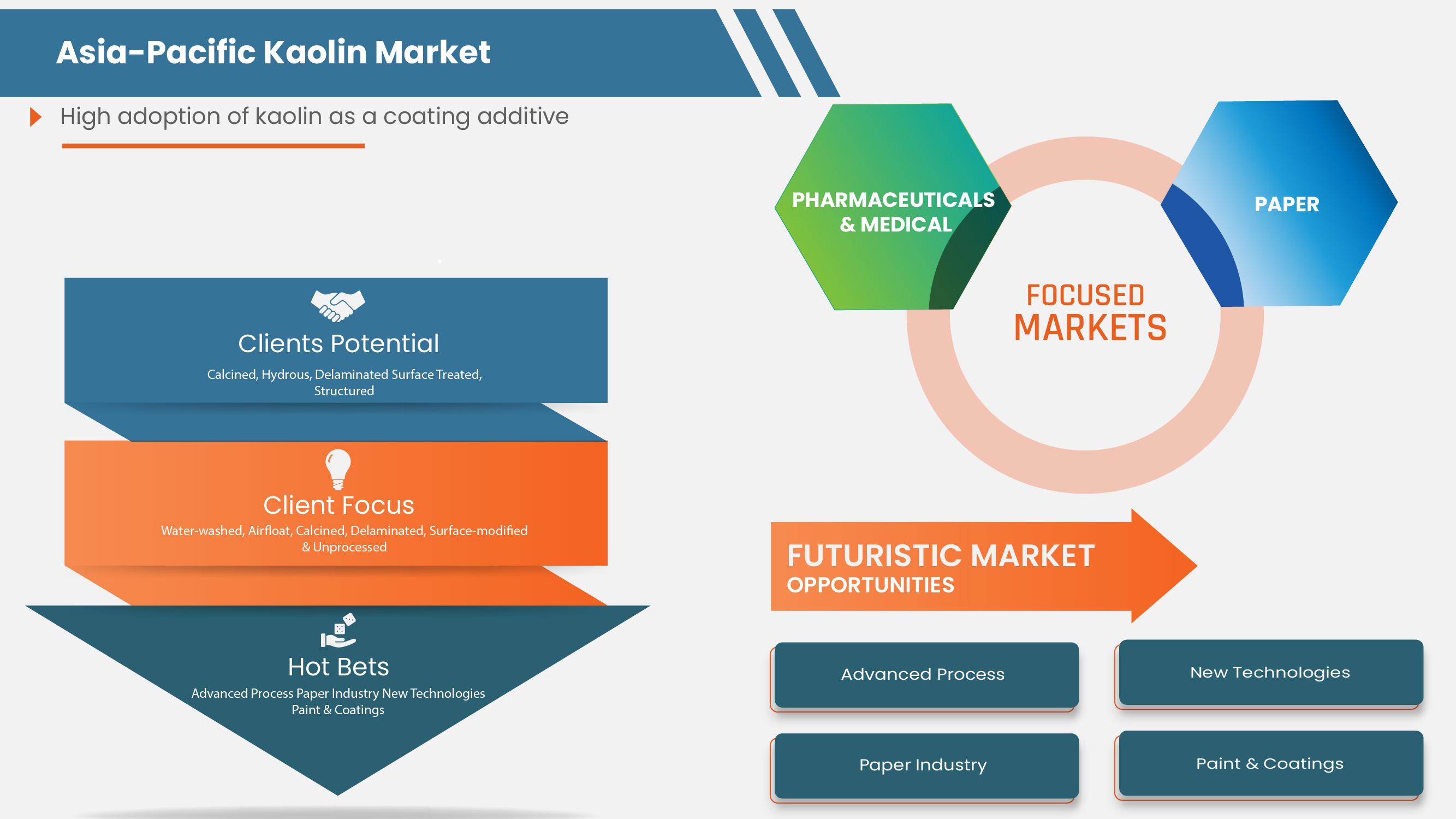
A indústria de papel e tintas e revestimentos estão entre os principais usuários de caulim em seus produtos. O caulim é utilizado para melhorar o desempenho das tintas na forma de melhores propriedades de suspensão, dispersão rápida, resistência à corrosão, resistência à água superior e viscosidades reduzidas. Além disso, o caulim é empregado como agente de revestimento e enchimento quando combinado com adesivos em revestimento de papel para fornecer sua opacidade, cor e impressão. O caulim é o mineral particulado mais utilizado no papel de enchimento e revestimento. Melhora a aparência do papel, caracterizada pelo brilho, suavidade, brilho e opacidade, e de maior importância, melhora a imprimibilidade. O papel também é preenchido com caulim para estender a fibra.
Oportunidades
- Iniciativas estratégicas-chave implementadas por empresas líderes
O mercado de caulino Ásia-Pacífico teve um efeito negativo inesperado devido ao surgimento de COVID-10 e bloqueios nacionais e restrições de movimento. Por conseguinte, os fabricantes concentram-se principalmente em manter o fluxo de liquidez para evitar novas perdas. Além disso, os principais intervenientes no mercado do caulim têm vindo a implementar várias iniciativas estratégicas e desenvolvimentos para ganhar uma quota de mercado importante e dominante e melhorar as suas operações.
- Tecnologias melhoradas nas práticas de mineração de caulim
O desenvolvimento tecnológico para o processamento de caulino é essencialmente o desenvolvimento de uma folha de fluxo sequentilizado para sua beneficiação de modo que todas as impurezas indesejadas sejam removidas, e as propriedades requeridas do material processado são asseguradas por dimensionamento adequado, melhoria de brilho, modificações de superfície e outras operações. Métodos modernos de beneficiação de caulino (via úmida) utilizam técnicas como esmagamento/atrição, blunging, triagem ou classificação mecânica, separações centrífugas, separação magnética, floculação seletiva, flotação por espuma e branqueamento oxidativo e redutor. Técnicas adicionais, como atrito/delaminação, pugging, calcinação, modificação de superfície, etc., também são empregadas para melhorar as propriedades do produto final.
Restrições/Desafios
- Efeito negativo na indústria do papel devido ao surgimento de covid-19
O surto de COVID-19 interrompeu a fabricação e o fornecimento do mercado de caulim, atrasando a expansão da indústria mundial. Muitas empresas de caulino estão empregando formas de evitar perdas de tempo de parada, que são cada vez mais preocupantes à medida que os efeitos da pandemia persistem. O desempenho do caulim em aplicações de enchimento de papel foi corroído pela concorrência de materiais alternativos, particularmente carbonatos de cálcio. O crescimento lento da produção de papel revestido limitará os avanços para o caulim no futuro, restringindo assim o desenvolvimento do mercado de caulim Ásia-Pacífico.
- A mineração de caulim causa inúmeros riscos ambientais e para a saúde
Do ponto de vista ambiental, o problema ambiental mais significativo surge porque as operações extrativas de caulim criam superfícies com alta suscetibilidade ao escoamento superficial e à erosão da água, com alto potencial para efeitos ambientais no local e fora do local. Além disso, o caulim mineiro tem impactos negativos a longo prazo no meio ambiente, como desequilíbrios ambientais e agrícolas, erosão, silting de rios e lagos e desmatamento. Devido à remoção de vegetação para o processo de escavação e remoção de argila, parte do solo local está desprotegida, causando processos de compactação em determinadas situações e lixiviação. Uma vez que o solo lixiviado se torna inadequado para a agricultura, a terra utilizada para extração de argila acaba sendo abandonada pelos proprietários. Portanto, a mineração de caulim resulta na degradação do meio ambiente e da saúde humana, que é esperado para conter o crescimento e desenvolvimento do mercado de caulim Ásia-Pacífico.
- Fácil disponibilidade de substitutos
Alguns outros substitutos facilmente disponíveis no mercado são argila bentonita. A argila bentonita tem poderosas propriedades de absorção de óleo e pode absorver mais do que sua massa corporal em água. Isso o torna um excelente ingrediente para pessoas com pele extremamente oleosa e impulsiona seu uso em produtos cosméticos. A argila bentonita é composta por montmorillonita, um tipo de argila esmecita. Tem alto teor de água e incha quando entra em contato com água. Isto torna-o eficaz para extrair impurezas da pele. Outra alternativa é a terra de Fuller, que também é usada para cuidados com a pele e desintoxicação. Além disso, a argila de rhassoul é uma argila que é minada nas montanhas Atlas em Marrocos. É rico em minerais, tem propriedades de limpeza e condicionamento, e é uma ótima alternativa à argila de caulim.
- Aumento no preço do caulim
As empresas e atores que operam no mercado de caulim Ásia-Pacífico estão focados em aumentar os preços de caulim para garantir a sustentabilidade do negócio a longo prazo. Estes jogadores anunciaram um aumento de preços em 2021 para diferentes aplicações, em que o papel estava entre as principais aplicações. A maioria das empresas experimentou inflação em vários aspectos do negócio, incluindo inflação em produtos químicos e custos de carga. Além disso, a descida causada pela fuga da pandemia dos principais sectores de aplicação afectou directamente os rendimentos dos principais participantes no mercado.
Desenvolvimento recente
- Em julho de 2022, a Thiele Kaolin Company anunciou um aumento de preço de 9% para todas as categorias de produtos devido ao atual clima econômico Ásia-Pacífico, o que resultou em aumento de custos para as operações de fabricação em todo o mundo. Para a empresa, esses aumentos de custos impactaram energia, produtos químicos, mão de obra, mineração, manutenção e outros insumos necessários para produzir produtos de qualidade
- Em novembro de 2021, KaMin LLC / CADAM concordou em adquirir o negócio mineral de caulim da BASF SE. O negócio de minerais de caulim faz parte da divisão de Performance Chemicals da BASF. Isso fortalece muito o negócio de caulim da empresa em todo o mundo
Âmbito do mercado de caulino asiático-pacífico
O mercado de caulim Ásia-Pacífico é categorizado com base em grau, processo e aplicação. O crescimento entre esses segmentos irá ajudá-lo a analisar os principais segmentos de crescimento nas indústrias e fornecer aos usuários uma visão geral de mercado valiosa e insights de mercado para tomar decisões estratégicas para identificar as principais aplicações do mercado.
Grau
- Calcinado
- Hidróxido
- Delaminado
- Superfície tratada
- Estruturado
Com base no grau, o mercado de caulim Ásia-Pacífico é classificado em cinco segmentos, nomeadamente calcinado, hidratado, delaminado, tratado de superfície e estruturado.
Processo
- Wash de água
- Flutuante aéreo
- Calcinado
- Delaminado
- Modificado à superfície e não processado
Com base no processo, o mercado de caulim Ásia-Pacífico é classificado em cinco segmentos lavados a água, flutuado a ar, calcinado, delaminado e modificado à superfície e não processado.
Aplicação
- Papel
- Cerâmica
- Tinta e revestimentos
- Fibra de vidro
- Plástico
- Borracha
- Farmacêuticos e médicos
- Cosméticos
- Outros
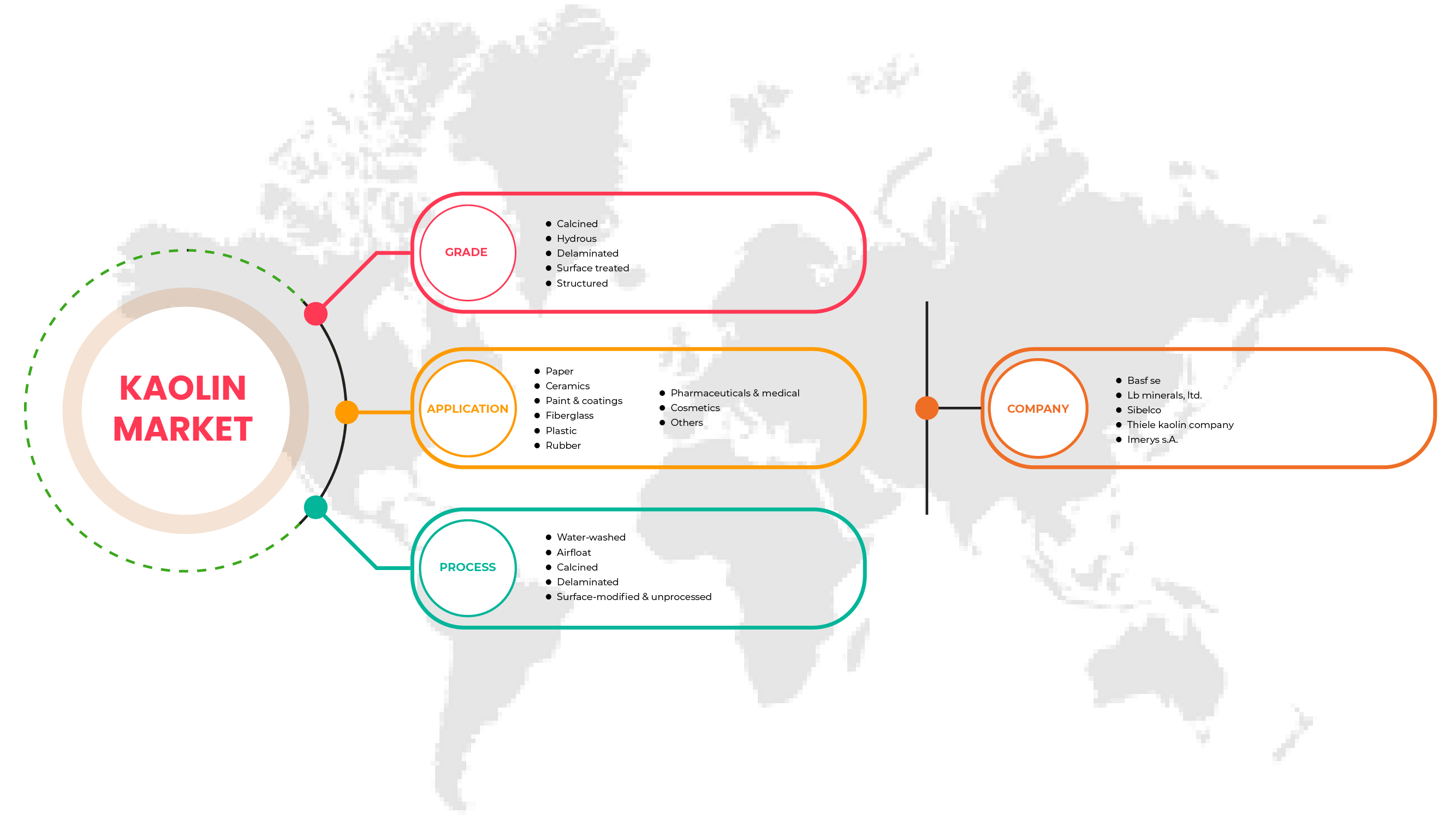
Com base na aplicação, o mercado de caulim Ásia-Pacífico é classificado em nove segmentos de papel, cerâmica, tinta e revestimentos, fibra de vidro, plástico, borracha, produtos farmacêuticos e médicos, cosméticos, entre outros.
Análise/Insights Regionais do Mercado de Caulim Asiático-Pacífico
O mercado de caulim Ásia-Pacífico é segmentado com base em grau, processo e aplicação.
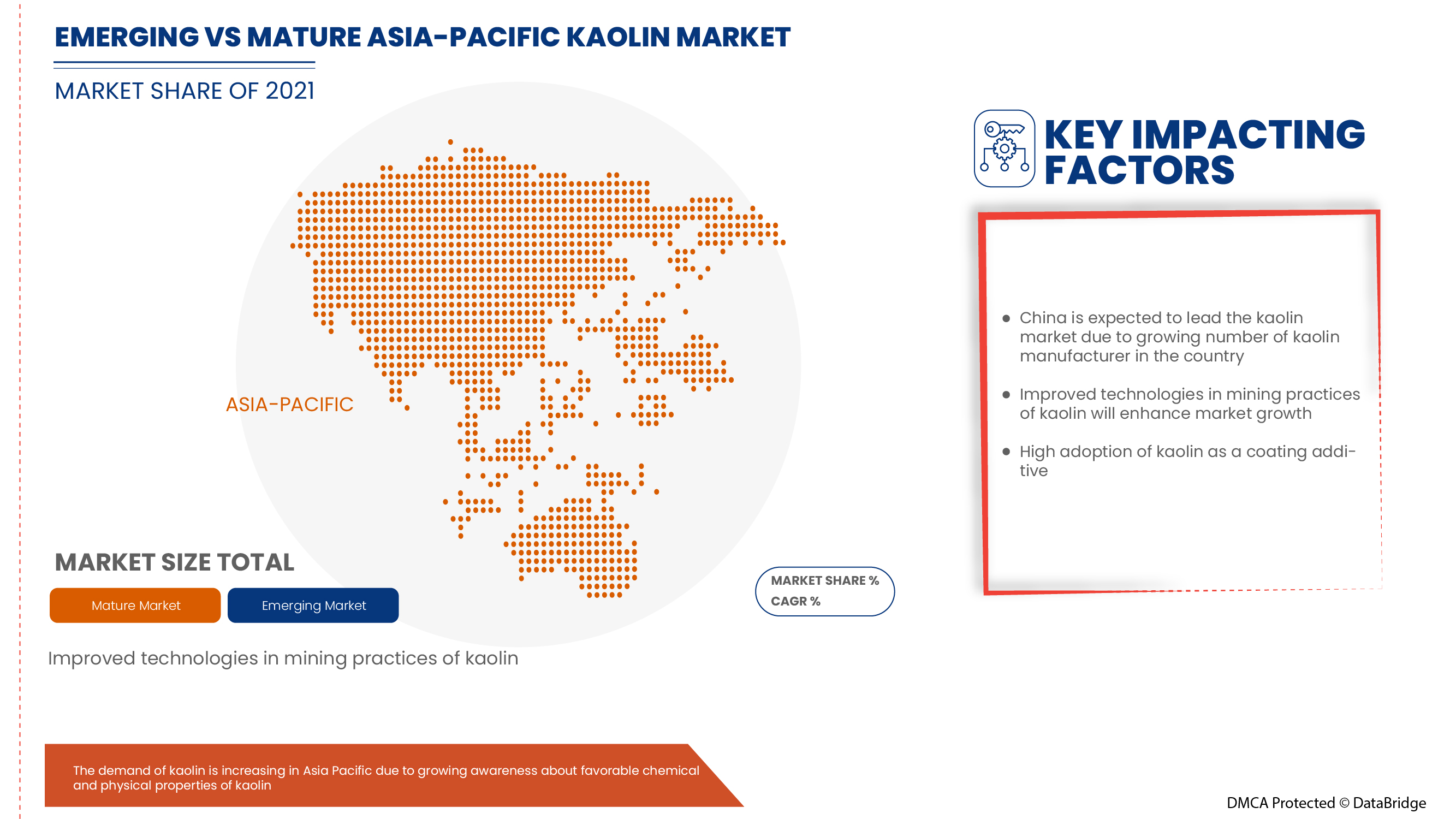
Os países abrangidos pelo mercado do Caulim Asiático-Pacífico são o Japão, China, Coreia do Sul, Índia, Singapura, Tailândia, Indonésia, Malásia, Filipinas, Austrália e Nova Zelândia e o Resto da Ásia-Pacífico. A China está dominando o mercado de caulim asiático-pacífico em termos de parte de mercado e receita devido ao crescente número de empresas de fabricação de cerâmica que contribuíram para o crescimento da indústria de caulim nos últimos anos, e esta tendência é esperada para continuar.
A secção «país» do relatório também fornece factores individuais de impacto no mercado e alterações na regulamentação do mercado que afectam as tendências actuais e futuras do mercado. Análise de dados a jusante e a montante da cadeia de valor, tendências tecnológicas, análise de cinco forças de porter e estudos de caso são alguns indicadores usados para prever o cenário de mercado para cada país. Além disso, a presença e disponibilidade de marcas da Ásia-Pacífico e seus desafios enfrentados devido à grande ou escassa concorrência de marcas locais e nacionais, o impacto das tarifas nacionais e rotas comerciais são considerados ao fornecer a análise de previsão dos dados do país.
Análise competitiva da paisagem e do mercado de caulim asiático-pacífico
Paisagem competitiva do mercado de caulino Ásia-Pacífico fornece detalhes por concorrentes. Detalhes incluídos são visão geral da empresa, finanças da empresa, receita gerada, potencial de mercado, investimento em pesquisa e desenvolvimento, novas iniciativas de mercado, locais e instalações de produção, pontos fortes e fracos da empresa, lançamento de produtos, testes de produtos pipelines, aprovações de produtos, patentes, largura e amplitude do produto, dominância de aplicação, curva de linha de vida tecnológica. Os dados acima referidos estão relacionados apenas com as empresas que se concentram no mercado do caulim Ásia-Pacífico.
Alguns proeminentes participantes do mercado de caulim asiático-pacífico são o Grupo Ashapura, BASF SE, EICL, Imerys S.A., e SIbelCO.
Metodologia da Pesquisa
A coleta de dados e a análise do ano de base são realizadas utilizando módulos de coleta de dados com grandes tamanhos de amostra. Os dados de mercado são analisados e estimados utilizando modelos estatísticos e coerentes de mercado. Além disso, a análise das quotas de mercado e a análise das tendências fundamentais são os principais factores de sucesso do relatório de mercado. A principal metodologia de pesquisa utilizada pela equipe de pesquisa da DBRM é a triangulação de dados que envolve a mineração de dados, análise do impacto das variáveis de dados no mercado e validação primária (perito em indústria). Os modelos de dados incluem grades de posicionamento do fornecedor, análise da linha de tempo do mercado, visão geral do mercado e guia, grades de posicionamento da empresa, análise de market share da empresa, padrões de medição, análise de Vs da Ásia-Pacífico. Por favor, solicite uma chamada de analista em caso de investigação adicional.
SKU-
Obtenha acesso online ao relatório sobre a primeira nuvem de inteligência de mercado do mundo

- Painel interativo de análise de dados
- Painel de análise da empresa para oportunidades de elevado potencial de crescimento
- Acesso de analista de pesquisa para personalização e customização. consultas
- Análise da concorrência com painel interativo
- Últimas notícias, atualizações e atualizações Análise de tendências
- Aproveite o poder da análise de benchmark para um rastreio abrangente da concorrência
Índice
1 INTRODUÇÃO
1.1 OBJETIVOS DO ESTUDO
1.2 DEFINIÇÃO DE MERCADO
1.3 VISÃO GERAL DO MERCADO DE CAULIM DA ÁSIA-PACÍFICO
1.4 LIMITAÇÕES
1,5 MERCADOS COBERTOS
2 SEGMENTAÇÃO DE MERCADO
2.1 MERCADOS COBERTOS
2.2 ÂMBITO GEOGRÁFICO
2,3 ANOS CONSIDERADOS PARA O ESTUDO
2.4 MOEDA E PREÇOS
2.5 MODELO DE VALIDAÇÃO DE DADOS TRIPÉ DBMR
2.6 CURVA DA LINHA DE VIDA DO PRODUTO
2.7 MODELAGEM MULTIVARIADA
2.8 ENTREVISTAS PRINCIPAIS COM PRINCIPAIS LÍDERES DE OPINIÃO
2.9 GRADE DE POSIÇÃO DE MERCADO DBMR
2.1 GRADE DE COBERTURA DE APLICAÇÃO DE MERCADO
2.11 MATRIZ DE DESAFIOS DO MERCADO DBMR
2.12 ANÁLISE DE PARTICIPAÇÃO DE FORNECEDORES DBMR
2.13 DADOS DE IMPORTAÇÃO E EXPORTAÇÃO
2.14 FONTES SECUNDÁRIAS
2.15 PREMISSAS
3 RESUMO EXECUTIVO
4 INSIGHTS PREMIUM
4.1 ANÁLISE PESTLE
4.1.1 FATORES POLÍTICOS
4.1.2 FATORES ECONÔMICOS
4.1.3 FATORES SOCIAIS
4.1.4 FATORES TECNOLÓGICOS
4.1.5 FATORES LEGAIS
4.1.6 FATORES AMBIENTAIS
4.2 AS CINCO FORÇAS DE PORTER:
4.2.1 AMEAÇA DE NOVOS ENTRADANTES:
4.2.2 AMEAÇA DE SUBSTITUTOS:
4.2.3 PODER DE BARGANHA DO CLIENTE:
4.2.4 PODER DE BARGANHA DO FORNECEDOR:
4.2.5 CONCORRÊNCIA INTERNA (RIVALIDADE):
4.3 CRITÉRIOS CRÍTICOS DE SELEÇÃO PARA DECISÃO DE NEGÓCIOS
4.4 CENÁRIO DE IMPORTAÇÃO E EXPORTAÇÃO
4.5 PROCESSO DE FABRICAÇÃO: MERCADO DE CAULIM DA ÁSIA-PACÍFICO
4.6 MUDANÇAS DE MERCADO / EVENTOS ATUAIS
4.7 CAPACIDADE DE PRODUÇÃO DOS FABRICANTES: MERCADO DE CAULIM DA ÁSIA-PACÍFICO
4.8 ANÁLISE DA CADEIA DE SUPRIMENTOS - MERCADO DE CAULIM DA ÁSIA-PACÍFICO
4.8.1 VISÃO GERAL
4.8.2 CENÁRIO DE CUSTOS LOGÍSTICOS
4.8.3 IMPORTÂNCIA DOS PRESTADORES DE SERVIÇOS LOGÍSTICOS
4.9 VISÃO GERAL DAS TECNOLOGIAS
4.1 CRITÉRIOS DE SELEÇÃO DE FORNECEDORES
4.11 CENÁRIO DE ANÁLISE DE PREÇOS
4.11.1 ANÁLISE DE PREÇOS DE MATÉRIAS-PRIMAS
4.11.2 ESTATÍSTICAS DE PREÇOS ATUAIS
4.11.3 PREVISÕES DE PREÇOS
4.12 ANÁLISE DE CONSUMO DE PRODUÇÃO
4.13 COBERTURA REGULAMENTAR
4.14 CENÁRIO DE CUSTOS DE FABRICAÇÃO E IMPACTO FUTURO
5 VISÃO GERAL DO MERCADO
5.1 MOTORISTAS
5.1.1 AUMENTO DAS ATIVIDADES DE CONSTRUÇÃO EM TODO O MUNDO
5.1.2 PROPRIEDADES QUÍMICAS E FÍSICAS FAVORÁVEIS DO CAULIM
5.1.3 AUMENTO DA DEMANDA DE CAULIM POR VÁRIOS INDÚSTRIAS DE USO FINAL
5.1.4 ALTA ADOÇÃO DE CAULIM COMO ADITIVO DE REVESTIMENTO
5.2 ERRO! REFERÊNCIA DE HIPERLINK INVÁLIDA. RESTRIÇÕES
5.2.1 EFEITO NEGATIVO NA INDÚSTRIA DE PAPEL DEVIDO AO SURGIMENTO DA COVID-19
5.2.2 A MINERAÇÃO DE CAULIM CAUSA Inúmeros riscos ao meio ambiente e à saúde
5.3 OPORTUNIDADES
5.3.1 PRINCIPAIS INICIATIVAS ESTRATÉGICAS IMPLEMENTADAS POR EMPRESAS LÍDERES
5.3.2 TECNOLOGIAS MELHORADAS NAS PRÁTICAS DE MINERAÇÃO DE CAULIM
5.4 DESAFIOS
5.4.1 FÁCIL DISPONIBILIDADE DE SUBSTITUTOS
5.4.2 AUMENTO DO PREÇO DO CAULIM
6 MERCADO DE CAULIM DA ÁSIA-PACÍFICO, POR GRAU
6.1 VISÃO GERAL
6.2 CALCINADO
6.3 HIDRADO
6.4 DELAMINADO
6.5 SUPERFÍCIE TRATADA
6.6 ESTRUTURADO
7 MERCADO DE CAULIM DA ÁSIA-PACÍFICO, POR PROCESSO
7.1 VISÃO GERAL
7.2 LAVADO COM ÁGUA
7.3 FLUTUAÇÃO DE AR
7.4 CALCINADO
7,5 DELAMINADO
7.6 SUPERFÍCIE MODIFICADA E NÃO PROCESSADA
8 MERCADO DE CAULIM DA ÁSIA-PACÍFICO, POR APLICAÇÃO
8.1 VISÃO GERAL
8.2 PAPEL
8.3 CERÂMICA
8.4 TINTAS E REVESTIMENTOS
8,5 FIBRA DE VIDRO
8.6 PLÁSTICO
8.7 BORRACHA
8.8 PRODUTOS FARMACÊUTICOS E MÉDICOS
8.9 COSMÉTICOS
8.1 OUTROS
9 MERCADO DE CAULIM DA ÁSIA-PACÍFICO, POR REGIÃO
9.1 ÁSIA-PACÍFICO
9.1.1 CHINA
9.1.2 ÍNDIA
9.1.3 JAPÃO
9.1.4 COREIA DO SUL
9.1.5 TAILÂNDIA
9.1.6 SINGAPURA
9.1.7 INDONÉSIA
9.1.8 AUSTRÁLIA E NOVA ZELÂNDIA
9.1.9 FILIPINAS
9.1.10 MALÁSIA
9.1.11 RESTANTE DA ÁSIA-PACÍFICO
10 MERCADO DE CAULIM DA ÁSIA-PACÍFICO: PANORAMA DA EMPRESA
10.1 ANÁLISE DE AÇÕES DA EMPRESA: ÁSIA-PACÍFICO
10.2 DESINVESTIMENTO
10.3 AUMENTO DE PREÇO
10.4 AQUISIÇÃO
10.5 EXPANSÃO DAS INSTALAÇÕES
11 ANÁLISE SWOT
12 PERFIS DE EMPRESAS
12.1 IMERYS SA
12.1.1 RESUMO DA EMPRESA
12.1.2 ANÁLISE DE RECEITA
12.1.3 ANÁLISE DAS AÇÕES DA EMPRESA
12.1.4 PORTFÓLIO DE PRODUTOS
12.1.5 DESENVOLVIMENTO RECENTE
12.2 SIBELCO
12.2.1 RESUMO DA EMPRESA
12.2.2 ANÁLISE DE RECEITA
12.2.3 ANÁLISE DAS AÇÕES DA EMPRESA
12.2.4 PORTFÓLIO DE PRODUTOS
12.2.5 DESENVOLVIMENTO RECENTE
12.3 BASF SE
12.3.1 RESUMO DA EMPRESA
12.3.2 ANÁLISE DE RECEITA
12.3.3 ANÁLISE DE AÇÕES DA EMPRESA
12.3.4 PORTFÓLIO DE PRODUTOS
12.3.5 DESENVOLVIMENTO RECENTE
12.4 KAMIN LLC. / CADAM
12.4.1 RESUMO DA EMPRESA
12.4.2 ANÁLISE DAS AÇÕES DA EMPRESA
12.4.3 PORTFÓLIO DE PRODUTOS
12.4.4 DESENVOLVIMENTOS RECENTES
12.5 THIELE KAULIN COMPANY
12.5.1 RESUMO DA EMPRESA
12.5.2 ANÁLISE DAS AÇÕES DA EMPRESA
12.5.3 PORTFÓLIO DE PRODUTOS
12.5.4 DESENVOLVIMENTOS RECENTES
12.6 GRUPO ASHAPURA
12.6.1 RESUMO DA EMPRESA
12.6.2 ANÁLISE DE RECEITA
12.6.3 PORTFÓLIO DE PRODUTOS
12.6.4 DESENVOLVIMENTOS RECENTES
12.7 EICL
12.7.1 RESUMO DA EMPRESA
12.7.2 ANÁLISE DE RECEITA
12.7.3 PORTFÓLIO DE PRODUTOS
12.7.4 DESENVOLVIMENTOS RECENTES
12.8 I-MINERALSINC.
12.8.1 RESUMO DA EMPRESA
12.8.2 ANÁLISE DE RECEITA
12.8.3 PORTFÓLIO DE PRODUTOS
12.8.4 DESENVOLVIMENTOS RECENTES
12,9 LB MINERAIS, LTDA.
12.9.1 RESUMO DA EMPRESA
12.9.2 PORTFÓLIO DE PRODUTOS
12.9.3 DESENVOLVIMENTOS RECENTES
12.1 QUARTZ WORKS GMBH
12.10.1 RESUMO DA EMPRESA
12.10.2 PORTFÓLIO DE PRODUTOS
12.10.3 DESENVOLVIMENTOS RECENTES
13 QUESTIONÁRIO
14 RELATÓRIOS RELACIONADOS
Lista de Tabela
TABELA 1 DADOS DE IMPORTAÇÃO DE CAULIM E OUTRAS ARGILAS CAULÍNICAS, CALCINADAS OU NÃO; CÓDIGO SH – 2507 (MIL USD)
TABELA 2 DADOS DE EXPORTAÇÃO DE CAULIM E OUTRAS ARGILAS CAULÍNICAS, CALCINADAS OU NÃO; CÓDIGO SH – 2507 (MIL USD)
TABELA 3 A TABELA A SEGUIR MOSTRA AS CAPACIDADES DE PRODUÇÃO DE VÁRIAS EMPRESAS QUE OPERAM NO MERCADO DE CAULIM DA ÁSIA-PACÍFICO.
TABELA 4 QUADRO REGULAMENTAR
TABELA 5 MERCADO DE CAULIM DA ÁSIA-PACÍFICO, POR GRAU, 2020-2029 (US$ MILHÕES)
TABELA 6 MERCADO DE CAULIM DA ÁSIA-PACÍFICO, POR GRAU, 2020-2029 (QUILO TONELADAS)
TABELA 7 MERCADO DE CAULIM CALCINADO NA ÁSIA-PACÍFICO, POR REGIÃO, 2020-2029 (US$ MILHÕES)
TABELA 8 MERCADO DE CAULIM CALCINADO NA ÁSIA-PACÍFICO, POR REGIÃO, 2020-2029 (QUILO TONELADAS)
TABELA 9 HIDRADO DA ÁSIA-PACÍFICO NO MERCADO DE CAULIM DA ÁSIA-PACÍFICO, POR REGIÃO, 2020-2029 (US$ MILHÕES)
TABELA 10 HIDRADO DA ÁSIA-PACÍFICO NO MERCADO DE CAULIM DA ÁSIA-PACÍFICO, POR REGIÃO, 2020-2029 (QUILO TONELADAS)
TABELA 11 ÁSIA-PACÍFICO DELAMINADO NO MERCADO DE CAULIM DA ÁSIA-PACÍFICO, POR REGIÃO, 2020-2029 (US$ MILHÕES)
TABELA 12 ÁSIA-PACÍFICO DELAMINADO NO MERCADO DE CAULIM DA ÁSIA-PACÍFICO, POR REGIÃO, 2020-2029 (QUILO TONELADAS)
TABELA 13 SUPERFÍCIE TRATADA NO MERCADO DE CAULIM DA ÁSIA-PACÍFICO, POR REGIÃO, 2020-2029 (US$ MILHÕES)
TABELA 14 SUPERFÍCIE TRATADA NO MERCADO DE CAULIM DA ÁSIA-PACÍFICO, POR REGIÃO, 2020-2029 (QUILO TONELADAS)
TABELA 15 ESTRUTURA DO MERCADO DE CAULIM DA ÁSIA-PACÍFICO, POR REGIÃO, 2020-2029 (US$ MILHÕES)
TABELA 16 ESTRUTURAÇÃO DO MERCADO DE CAULIM DA ÁSIA-PACÍFICO, POR REGIÃO, 2020-2029 (QUILO TONELADAS)
TABELA 17 MERCADO DE CAULIM DA ÁSIA-PACÍFICO, POR PROCESSO, 2020-2029 (US$ MILHÕES)
TABELA 18 MERCADO DE CAULIM DA ÁSIA-PACÍFICO, POR GRAU, 2020-2029 (QUILO TONELADAS)
TABELA 19 MERCADO DE CAULIM LAVADO COM ÁGUA NA ÁSIA-PACÍFICO, POR REGIÃO, 2020-2029 (US$ MILHÕES)
TABELA 20 MERCADO DE CAULIM LAVADO COM ÁGUA NA ÁSIA-PACÍFICO, POR REGIÃO, 2020-2029 (QUILO TONELADAS)
TABELA 21 FLUTUAÇÃO AÉREA DA ÁSIA-PACÍFICO NO MERCADO DE CAULIM DA ÁSIA-PACÍFICO, POR REGIÃO, 2020-2029 (US$ MILHÕES)
TABELA 22 FLUTUAÇÃO AÉREA DA ÁSIA-PACÍFICO NO MERCADO DE CAULIM DA ÁSIA-PACÍFICO, POR REGIÃO, 2020-2029 (QUILO TONELADAS)
TABELA 23 CALCINADO NA ÁSIA-PACÍFICO NO MERCADO DE CAULIM DA ÁSIA-PACÍFICO, POR REGIÃO, 2020-2029 (US$ MILHÕES)
TABELA 24 CALCINADO NA ÁSIA-PACÍFICO NO MERCADO DE CAULIM DA ÁSIA-PACÍFICO, POR REGIÃO, 2020-2029 (QUILO TONELADAS)
TABELA 25 ÁSIA-PACÍFICO DELAMINADO NO MERCADO DE CAULIM DA ÁSIA-PACÍFICO, POR REGIÃO, 2020-2029 (US$ MILHÕES)
TABELA 26 ÁSIA-PACÍFICO DELAMINADO NO MERCADO DE CAULIM DA ÁSIA-PACÍFICO, POR REGIÃO, 2020-2029 (QUILO TONELADAS)
TABELA 27 CAULIM DE SUPERFÍCIE MODIFICADO E NÃO PROCESSADO NA ÁSIA-PACÍFICO NO MERCADO DE CAULIM DA ÁSIA-PACÍFICO, POR REGIÃO, 2020-2029 (US$ MILHÕES)
TABELA 28: CAULIM DE SUPERFÍCIE MODIFICADO E NÃO PROCESSADO NA ÁSIA-PACÍFICO, POR REGIÃO, 2020-2029 (QUILO TONELADAS)
TABELA 29 MERCADO DE CAULIM DA ÁSIA-PACÍFICO, POR APLICAÇÃO, 2020-2029 (US$ MILHÕES)
TABELA 30 MERCADO DE CAULIM DA ÁSIA-PACÍFICO, POR APLICAÇÃO, 2020-2029 (QUILO TONELADAS)
TABELA 31 MERCADO DE PAPEL DA ÁSIA-PACÍFICO NO CAULIM, POR REGIÃO, 2020-2029 (US$ MILHÕES)
TABELA 32 MERCADO DE PAPEL DA ÁSIA-PACÍFICO NO CAULIM, POR REGIÃO, 2020-2029 (QUILO TONELADAS)
TABELA 33 CERÂMICAS DA ÁSIA-PACÍFICO NO MERCADO DE CAULIM DA ÁSIA-PACÍFICO, POR REGIÃO, 2020-2029 (US$ MILHÕES)
TABELA 34 CERÂMICAS DA ÁSIA-PACÍFICO NO MERCADO DE CAULIM DA ÁSIA-PACÍFICO, POR REGIÃO, 2020-2029 (QUILO TONELADAS)
TABELA 35 TINTAS E REVESTIMENTOS DA ÁSIA-PACÍFICO NO MERCADO DE CAULIM DA ÁSIA-PACÍFICO, POR REGIÃO, 2020-2029 (US$ MILHÕES)
TABELA 36 TINTAS E REVESTIMENTOS DA ÁSIA-PACÍFICO NO MERCADO DE CAULIM DA ÁSIA-PACÍFICO, POR REGIÃO, 2020-2029 (QUILO TONELADAS)
TABELA 37 FIBRA DE VIDRO NO MERCADO DE CAULIM DA ÁSIA-PACÍFICO, POR REGIÃO, 2020-2029 (US$ MILHÕES)
TABELA 38 FIBRA DE VIDRO NO MERCADO DE CAULIM DA ÁSIA-PACÍFICO, POR REGIÃO, 2020-2029 (QUILO TONELADAS)
TABELA 39 PLÁSTICO DA ÁSIA-PACÍFICO NO MERCADO DE CAULIM DA ÁSIA-PACÍFICO, POR REGIÃO, 2020-2029 (US$ MILHÕES)
TABELA 40 PLÁSTICO DA ÁSIA-PACÍFICO NO MERCADO DE CAULIM DA ÁSIA-PACÍFICO, POR REGIÃO, 2020-2029 (QUILO TONELADAS)
TABELA 41 BORRACHA DA ÁSIA-PACÍFICO NO MERCADO DE CAULIM DA ÁSIA-PACÍFICO, POR REGIÃO, 2020-2029 (US$ MILHÕES)
TABELA 42 BORRACHA DA ÁSIA-PACÍFICO NO MERCADO DE CAULIM DA ÁSIA-PACÍFICO, POR REGIÃO, 2020-2029 (QUILO TONELADAS)
TABELA 43 PRODUTOS FARMACÊUTICOS E MÉDICOS NA ÁSIA-PACÍFICO NO MERCADO DE CAULIM DA ÁSIA-PACÍFICO, POR REGIÃO, 2020-2029 (US$ MILHÕES)
TABELA 44 PRODUTOS FARMACÊUTICOS E MÉDICOS NA ÁSIA-PACÍFICO NO MERCADO DE CAULIM DA ÁSIA-PACÍFICO, POR REGIÃO, 2020-2029 (QUILO TONELADAS)
TABELA 45 COSMÉTICOS DA ÁSIA-PACÍFICO NO MERCADO DE CAULIM DA ÁSIA-PACÍFICO, POR REGIÃO, 2020-2029 (US$ MILHÕES)
TABELA 46 COSMÉTICOS DA ÁSIA-PACÍFICO NO MERCADO DE CAULIM DA ÁSIA-PACÍFICO, POR REGIÃO, 2020-2029 (QUILO TONELADAS)
TABELA 47 OUTROS MERCADOS DE CAULIM DA ÁSIA-PACÍFICO, POR REGIÃO, 2020-2029 (US$ MILHÕES)
TABELA 48 OUTROS MERCADOS DE CAULIM DA ÁSIA-PACÍFICO, POR REGIÃO, 2020-2029 (QUILO TONELADAS)
TABELA 49 MERCADO DE CAULIM DA ÁSIA-PACÍFICO, POR PAÍS, 2020-2029 (US$ MILHÕES)
TABELA 50 MERCADO DE CAULIM DA ÁSIA-PACÍFICO, POR PAÍS, 2020-2029 (QUILO TONELADAS)
TABELA 51 MERCADO DE CAULIM DA ÁSIA-PACÍFICO, POR GRAU, 2020-2029 (US$ MILHÕES)
TABELA 52 MERCADO DE CAULIM DA ÁSIA-PACÍFICO, POR GRAU, 2020-2029 (QUILO TONELADAS)
TABELA 53 MERCADO DE CAULIM DA ÁSIA-PACÍFICO, POR PROCESSO, 2020-2029 (US$ MILHÕES)
TABELA 54 MERCADO DE CAULIM DA ÁSIA-PACÍFICO, POR PROCESSO, 2020-2029 (QUILO TONELADAS)
TABELA 55 MERCADO DE CAULIM DA ÁSIA-PACÍFICO, POR APLICAÇÃO, 2020-2029 (US$ MILHÕES)
TABELA 56 MERCADO DE CAULIM DA ÁSIA-PACÍFICO, POR APLICAÇÃO, 2020-2029 (QUILO TONELADAS)
TABELA 57 MERCADO DE CAULIM DA CHINA, POR GRAU, 2020-2029 (US$ MILHÕES)
TABELA 58 MERCADO DE CAULIM DA CHINA, POR GRAU, 2020-2029 (QUILO TONELADAS)
TABELA 59 MERCADO DE CAULIM DA CHINA, POR PROCESSO, 2020-2029 (US$ MILHÕES)
TABELA 60 MERCADO DE CAULIM DA CHINA, POR PROCESSO, 2020-2029 (QUILO TONELADAS)
TABELA 61 MERCADO DE CAULIM DA CHINA, POR APLICAÇÃO, 2020-2029 (US$ MILHÕES)
TABELA 62 MERCADO DE CAULIM DA CHINA, POR APLICAÇÃO, 2020-2029 (QUILO TONELADAS)
TABELA 63 MERCADO DE CAULIM DA ÍNDIA, POR GRAU, 2020-2029 (US$ MILHÕES)
TABELA 64 MERCADO DE CAULIM DA ÍNDIA, POR GRAU, 2020-2029 (QUILO TONELADAS)
TABELA 65 MERCADO DE CAULIM DA ÍNDIA, POR PROCESSO, 2020-2029 (US$ MILHÕES)
TABELA 66 MERCADO DE CAULIM DA ÍNDIA, POR PROCESSO, 2020-2029 (QUILO TONELADAS)
TABELA 67 MERCADO DE CAULIM DA ÍNDIA, POR APLICAÇÃO, 2020-2029 (US$ MILHÕES)
TABELA 68 MERCADO DE CAULIM DA ÍNDIA, POR APLICAÇÃO, 2020-2029 (QUILO TONELADAS)
TABELA 69 MERCADO DE CAULIM DO JAPÃO, POR GRAU, 2020-2029 (US$ MILHÕES)
TABELA 70 MERCADO DE CAULIM NO JAPÃO, POR GRAU, 2020-2029 (QUILO TONELADAS)
TABELA 71 MERCADO DE CAULIM DO JAPÃO, POR PROCESSO, 2020-2029 (US$ MILHÕES)
TABELA 72 MERCADO DE CAULIM DO JAPÃO, POR PROCESSO, 2020-2029 (QUILO TONELADAS)
TABELA 73 MERCADO DE CAULIM DO JAPÃO, POR APLICAÇÃO, 2020-2029 (US$ MILHÕES)
TABELA 74 MERCADO DE CAULIM DO JAPÃO, POR APLICAÇÃO, 2020-2029 (QUILO TONELADAS)
TABELA 75 MERCADO DE CAULIM DA COREIA DO SUL, POR GRAU, 2020-2029 (US$ MILHÕES)
TABELA 76 MERCADO DE CAULIM DA COREIA DO SUL, POR GRAU, 2020-2029 (QUILO TONELADAS)
TABELA 77 MERCADO DE CAULIM DA COREIA DO SUL, POR PROCESSO, 2020-2029 (US$ MILHÕES)
TABELA 78 MERCADO DE CAULIM DA COREIA DO SUL, POR PROCESSO, 2020-2029 (QUILO TONELADAS)
TABELA 79 MERCADO DE CAULIM DA COREIA DO SUL, POR APLICAÇÃO, 2020-2029 (US$ MILHÕES)
TABELA 80 MERCADO DE CAULIM DA COREIA DO SUL, POR APLICAÇÃO, 2020-2029 (QUILO TONELADAS)
TABELA 81 MERCADO DE CAULIM DA TAILÂNDIA, POR GRAU, 2020-2029 (US$ MILHÕES)
TABELA 82 MERCADO DE CAULIM DA TAILÂNDIA, POR GRAU, 2020-2029 (QUILO TONELADAS)
TABELA 83 MERCADO DE CAULIM DA TAILÂNDIA, POR PROCESSO, 2020-2029 (US$ MILHÕES)
TABELA 84 MERCADO DE CAULIM DA TAILÂNDIA, POR PROCESSO, 2020-2029 (QUILO TONELADAS)
TABELA 85 MERCADO DE CAULIM DA TAILÂNDIA, POR APLICAÇÃO, 2020-2029 (US$ MILHÕES)
TABELA 86 MERCADO DE CAULIM DA TAILÂNDIA, POR APLICAÇÃO, 2020-2029 (QUILO TONELADAS)
TABELA 87 MERCADO DE CAULIM DE SINGAPURA, POR GRAU, 2020-2029 (US$ MILHÕES)
TABELA 88 MERCADO DE CAULIM DE SINGAPURA, POR GRAU, 2020-2029 (QUILO TONELADAS)
TABELA 89 MERCADO DE CAULIM DE SINGAPURA, POR PROCESSO, 2020-2029 (US$ MILHÕES)
TABELA 90 MERCADO DE CAULIM DE SINGAPURA, POR PROCESSO, 2020-2029 (QUILO TONELADAS)
TABELA 91 MERCADO DE CAULIM DE SINGAPURA, POR APLICAÇÃO, 2020-2029 (US$ MILHÕES)
TABELA 92 MERCADO DE CAULIM DE SINGAPURA, POR APLICAÇÃO, 2020-2029 (QUILO TONELADAS)
TABELA 93 MERCADO DE CAULIM DA INDONÉSIA, POR GRAU, 2020-2029 (US$ MILHÕES)
TABELA 94 MERCADO DE CAULIM DA INDONÉSIA, POR GRAU, 2020-2029 (QUILO TONELADAS)
TABELA 95 MERCADO DE CAULIM DA INDONÉSIA, POR PROCESSO, 2020-2029 (US$ MILHÕES)
TABELA 96 MERCADO DE CAULIM DA INDONÉSIA, POR PROCESSO, 2020-2029 (QUILO TONELADAS)
TABELA 97 MERCADO DE CAULIM DA INDONÉSIA, POR APLICAÇÃO, 2020-2029 (US$ MILHÕES)
TABELA 98 MERCADO DE CAULIM DA INDONÉSIA, POR APLICAÇÃO, 2020-2029 (QUILO TONELADAS)
TABELA 99 MERCADO DE CAULIM DA AUSTRÁLIA E NOVA ZELÂNDIA, POR GRAU, 2020-2029 (US$ MILHÕES)
TABELA 100 MERCADO DE CAULIM DA AUSTRÁLIA E NOVA ZELÂNDIA, POR GRAU, 2020-2029 (QUILO TONELADAS)
TABELA 101 MERCADO DE CAULIM DA AUSTRÁLIA E NOVA ZELÂNDIA, POR PROCESSO, 2020-2029 (US$ MILHÕES)
TABELA 102 MERCADO DE CAULIM DA AUSTRÁLIA E NOVA ZELÂNDIA, POR PROCESSO, 2020-2029 (QUILO TONELADAS)
TABELA 103 MERCADO DE CAULIM DA AUSTRÁLIA E NOVA ZELÂNDIA, POR APLICAÇÃO, 2020-2029 (US$ MILHÕES)
TABELA 104 MERCADO DE CAULIM DA AUSTRÁLIA E NOVA ZELÂNDIA, POR APLICAÇÃO, 2020-2029 (QUILO TONELADAS)
TABELA 105 MERCADO DE CAULIM DAS FILIPINAS, POR GRAU, 2020-2029 (US$ MILHÕES)
TABELA 106 MERCADO DE CAULIM DAS FILIPINAS, POR GRAU, 2020-2029 (QUILO TONELADAS)
TABELA 107 MERCADO DE CAULIM DAS FILIPINAS, POR PROCESSO, 2020-2029 (US$ MILHÕES)
TABELA 108 MERCADO DE CAULIM NAS FILIPINAS, POR PROCESSO, 2020-2029 (QUILO TONELADAS)
TABELA 109 MERCADO DE CAULIM DAS FILIPINAS, POR APLICAÇÃO, 2020-2029 (US$ MILHÕES)
TABELA 110 MERCADO DE CAULIM NAS FILIPINAS, POR APLICAÇÃO, 2020-2029 (QUILO TONELADAS)
TABELA 111 MERCADO DE CAULIM DA MALÁSIA, POR GRAU, 2020-2029 (US$ MILHÕES)
TABELA 112 MERCADO DE CAULIM DA MALÁSIA, POR GRAU, 2020-2029 (QUILO TONELADAS)
TABELA 113 MERCADO DE CAULIM DA MALÁSIA, POR PROCESSO, 2020-2029 (US$ MILHÕES)
TABELA 114 MERCADO DE CAULIM DA MALÁSIA, POR PROCESSO, 2020-2029 (QUILO TONELADAS)
TABELA 115 MERCADO DE CAULIM DA MALÁSIA, POR APLICAÇÃO, 2020-2029 (US$ MILHÕES)
TABELA 116 MERCADO DE CAULIM DA MALÁSIA, POR APLICAÇÃO, 2020-2029 (QUILO TONELADAS)
TABELA 117 RESTANTE DO MERCADO DE CAULIM DA ÁSIA-PACÍFICO, POR GRAU, 2020-2029 (US$ MILHÕES)
TABELA 118 MERCADO DE CAULIM DO RESTO DA ÁSIA-PACÍFICO, POR GRAU, 2020-2029 (QUILO TONELADAS)
Lista de Figura
FIGURA 1 MERCADO DE CAULIM DA ÁSIA-PACÍFICO
FIGURA 2 MERCADO DE CAULIM DA ÁSIA-PACÍFICO: TRIANGULAÇÃO DE DADOS
FIGURA 3 MERCADO DE CAULIM DA ÁSIA-PACÍFICO: ANÁLISE DROC
FIGURA 4 MERCADO DE CAULIM DA ÁSIA-PACÍFICO: ANÁLISE DO MERCADO ÁSIA-PACÍFICO VS MERCADO REGIONAL
FIGURA 5 MERCADO DE CAULIM DA ÁSIA-PACÍFICO: ANÁLISE DE PESQUISA DA EMPRESA
FIGURA 6 MERCADO DE CAULIM DA ÁSIA-PACÍFICO: A CURVA DA LINHA DE VIDA DO PRODUTO
FIGURA 7 MERCADO DE CAULIM DA ÁSIA-PACÍFICO: MODELAGEM MULTIVARIADA
FIGURA 8 MERCADO DE CAULIM DA ÁSIA-PACÍFICO: DEMOGRAFIA DA ENTREVISTA
FIGURA 9 MERCADO DE CAULIM DA ÁSIA-PACÍFICO: GRADE DE POSIÇÃO DE MERCADO DBMR
FIGURA 10 MERCADO DE CAULIM DA ÁSIA-PACÍFICO: GRADE DE COBERTURA DE APLICAÇÃO DE MERCADO
FIGURA 11 MERCADO DE CAULIM DA ÁSIA-PACÍFICO: A MATRIZ DE DESAFIOS DO MERCADO
FIGURA 12 MERCADO DE CAULIM DA ÁSIA-PACÍFICO: ANÁLISE DA PARTICIPAÇÃO DOS FORNECEDORES
FIGURA 13 MERCADO DE CAULIM DA ÁSIA-PACÍFICO: SEGMENTAÇÃO
FIGURA 14 O AUMENTO NAS ATIVIDADES DE CONSTRUÇÃO EM TODO O MUNDO DEVE IMPULSIONAR O MERCADO DE CAULIM DA ÁSIA-PACÍFICO NO PERÍODO PREVISTO
FIGURA 15 O SEGMENTO CALCINADO DEVE SER REPRESENTANTE DA MAIOR PARCIALIDADE DO MERCADO DE CAULIM DA ÁSIA-PACÍFICO EM 2022 E 2029
FIGURA 16 CENÁRIO DE IMPORTAÇÃO E EXPORTAÇÃO (MIL USD)
FIGURA 17 ESTATÍSTICAS DE PREÇOS ATUAIS (POR KG)
FIGURA 18 PREVISÕES DE PREÇOS (POR KG)
FIGURA 19 ANÁLISE DE PRODUÇÃO E CONSUMO
FIGURA 20 MOTIVADORES, RESTRIÇÕES, OPORTUNIDADES E DESAFIOS DO MERCADO DE CAULIM DA ÁSIA-PACÍFICO
FIGURA 21 MERCADO DE CAULIM DA ÁSIA-PACÍFICO: POR GRAU, 2021
FIGURA 22 MERCADO DE CAULIM DA ÁSIA-PACÍFICO: POR PROCESSO, 2021
FIGURA 23 MERCADO DE CAULIM DA ÁSIA-PACÍFICO: POR APLICAÇÃO, 2021
FIGURA 24 MERCADO DE CAULIM DA ÁSIA-PACÍFICO: INSTANTÂNEO (2021)
FIGURA 25 MERCADO DE CAULIM DA ÁSIA-PACÍFICO: POR PAÍS (2021)
FIGURA 26 MERCADO DE CAULIM DA ÁSIA-PACÍFICO: POR PAÍS (2022 E 2029)
FIGURA 27 MERCADO DE CAULIM DA ÁSIA-PACÍFICO: POR PAÍS (2021 E 2029)
FIGURA 28 MERCADO DE CAULIM DA ÁSIA-PACÍFICO: POR GRAU (2022-2029)
FIGURA 29 MERCADO DE CAULIM DA ÁSIA-PACÍFICO: PARTICIPAÇÃO DA EMPRESA EM 2021 (%)

Metodologia de Investigação
A recolha de dados e a análise do ano base são feitas através de módulos de recolha de dados com amostras grandes. A etapa inclui a obtenção de informações de mercado ou dados relacionados através de diversas fontes e estratégias. Inclui examinar e planear antecipadamente todos os dados adquiridos no passado. Da mesma forma, envolve o exame de inconsistências de informação observadas em diferentes fontes de informação. Os dados de mercado são analisados e estimados utilizando modelos estatísticos e coerentes de mercado. Além disso, a análise da quota de mercado e a análise das principais tendências são os principais fatores de sucesso no relatório de mercado. Para saber mais, solicite uma chamada de analista ou abra a sua consulta.
A principal metodologia de investigação utilizada pela equipa de investigação do DBMR é a triangulação de dados que envolve a mineração de dados, a análise do impacto das variáveis de dados no mercado e a validação primária (especialista do setor). Os modelos de dados incluem grelha de posicionamento de fornecedores, análise da linha de tempo do mercado, visão geral e guia de mercado, grelha de posicionamento da empresa, análise de patentes, análise de preços, análise da quota de mercado da empresa, normas de medição, análise global versus regional e de participação dos fornecedores. Para saber mais sobre a metodologia de investigação, faça uma consulta para falar com os nossos especialistas do setor.
Personalização disponível
A Data Bridge Market Research é líder em investigação formativa avançada. Orgulhamo-nos de servir os nossos clientes novos e existentes com dados e análises que correspondem e atendem aos seus objetivos. O relatório pode ser personalizado para incluir análise de tendências de preços de marcas-alvo, compreensão do mercado para países adicionais (solicite a lista de países), dados de resultados de ensaios clínicos, revisão de literatura, mercado remodelado e análise de base de produtos . A análise de mercado dos concorrentes-alvo pode ser analisada desde análises baseadas em tecnologia até estratégias de carteira de mercado. Podemos adicionar quantos concorrentes necessitar de dados no formato e estilo de dados que procura. A nossa equipa de analistas também pode fornecer dados em tabelas dinâmicas de ficheiros Excel em bruto (livro de factos) ou pode ajudá-lo a criar apresentações a partir dos conjuntos de dados disponíveis no relatório.











