


Europe Bioplastic Multi-Layer Films Market for Compostable Food Service Packaging, By Material (Starch Blends, Polybutylene Adipate Terephthalate, Polylactic Acid, PBS and Others), End-Use Packaging (Pouches & Sachets, Clamshell, Cups, Trays and Others), End-User (Chain Restaurants, Non-Chain Restaurants, Chain Café, Non-Chain Café, Delivery Catering, Independent Sellers & Kiosks, and Others) - Industry Trends and Forecast to 2029.
Europe Bioplastic Multi-Layer Films Market for Compostable Food Service Packaging Analysis and Insights
Inclinação para o consumo de alimentos de conveniência e a crescente popularidade deembalagem flexívelPrevê-se que as soluções conduzam à procura do mercado europeu de filmes multicamadas bioplásticos para embalagens de serviços alimentares compostáveis. No entanto, os custos elevados associados aos filmes biodegradáveis e à disponibilidade de produtos de substituição podem restringir ainda mais o crescimento do mercado.
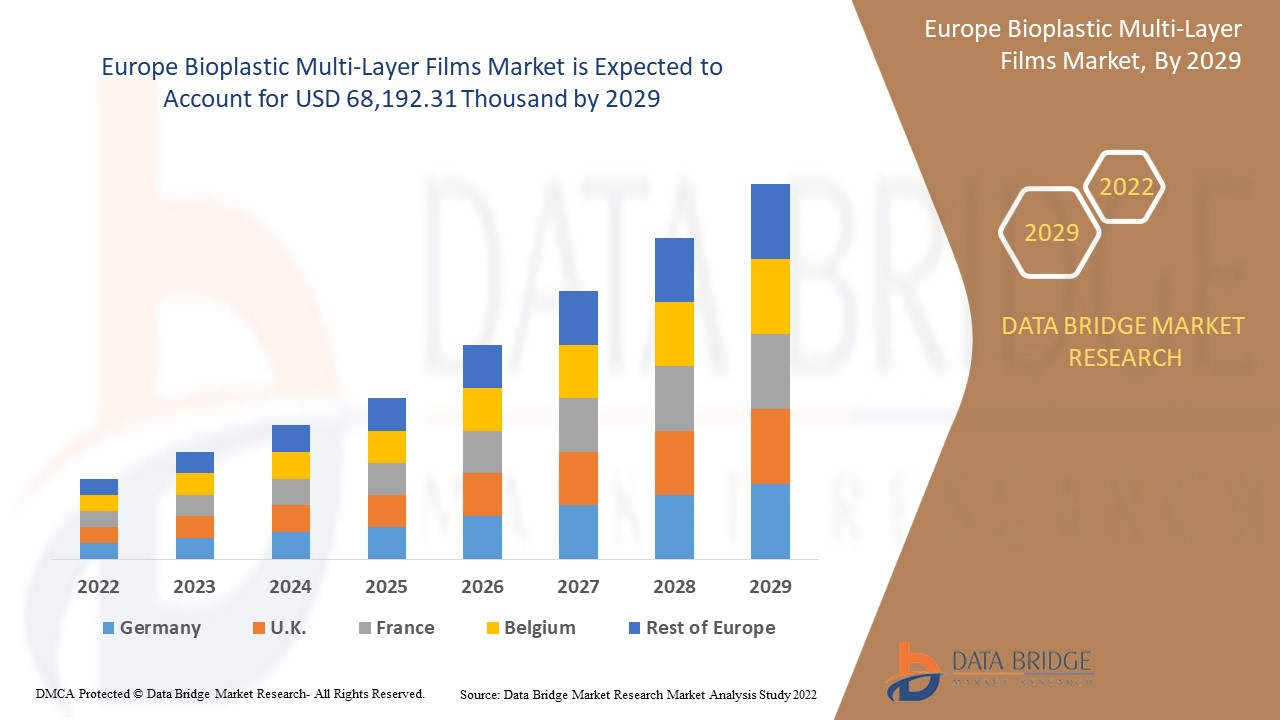
Data Bridge Market Research analisa que o mercado europeu de filmes multicamadas bioplásticos para embalagens de serviços alimentares compostáveis deverá atingir o valor de USD 68.192,31 Mil até 2029, em um CAGR de 7,6% durante o período previsto. "As misturas de amido representam o maior segmento de materiais do mercado europeu de filmes multicamadas bioplásticos para embalagens de serviços alimentares compostáveis. O relatório europeu sobre as embalagens de filmes multicamadas bioplásticos para serviços alimentares compostáveis abrange também análises de preços, análises de patentes e avanços tecnológicos.
|
Metric de Relatório |
Detalhes |
|
Período de previsão |
2022 a 2029 |
|
Ano de base |
2021 |
|
Anos Históricos |
2020 (Alfândega até 2019 - 2014) |
|
Unidades quantitativas |
Receitas em USD 1000, Volumes em toneladas, Preços em USD |
|
Segmentos Cobertos |
Por Material (Blendes de Starch, Tereftalato de Adipato de Polibutileno, Ácido Poliláctico, PBS e Outros), Embalagem de Uso Final (Pouches & Sachets, Clamshell, Cups, Bandejas e Outros), Usuário Final (Restaurantes de Chain, Restaurantes Não Chain, Chain Café, Café Não Chain, Entrega Catering, Vendedores Independentes & Kiosks, e outros) |
|
Países abrangidos |
Alemanha, Reino Unido, Itália, França, Espanha, Rússia, Suíça, Turquia, Bélgica, Países Baixos, Resto da Europa |
|
Jogadores de mercado cobertos |
BASF SE, TIPA LTD, Biome Bioplastics (uma subsidiária da Biome Technologies plc), BioBag International AS., Transcontinental Inc., e Parkside Flexibles Ltd, entre outros |
Definição do mercado
Os bioplásticos originam-se de um recurso renovável, são biodegradáveis, ou são ambos. Os materiais derivados de recursos renováveis e os polímeros biodegradáveis são bioplásticos, tais como misturas de amido,tereftalato de polibutileno, ácido poliláctico, PBS, entre outros. Na tecnologia de filmes multicamadas, dois ou mais materiais com propriedades específicas e complementares são combinados, melhorando assim o desempenho global do bioplástico. Os materiais oferecem desempenho competitivo em termos de embalagens flexíveis e rígidas, minimizando o impacto negativo dos plásticos convencionais à base de petróleo.
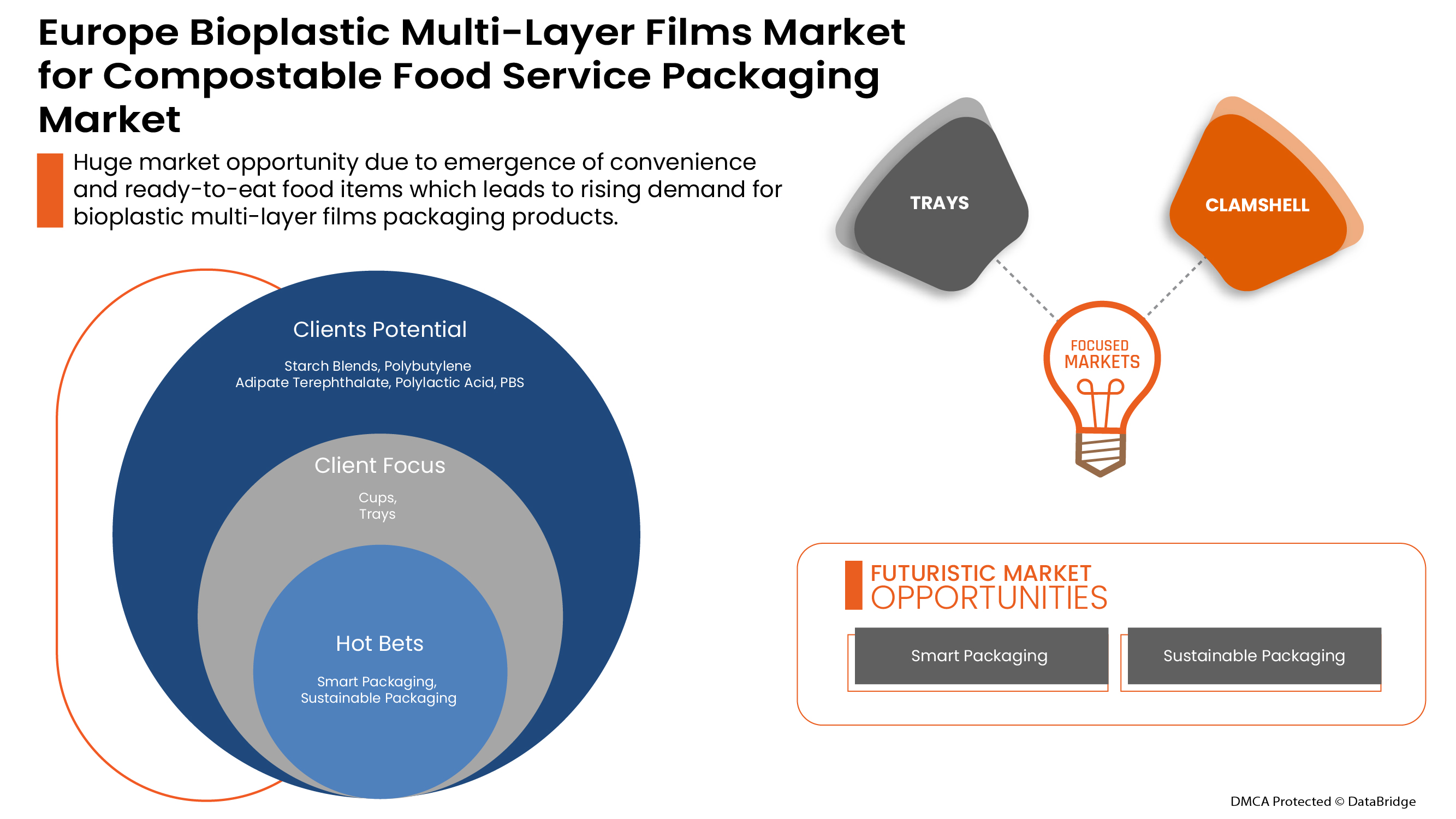
Em embalagens de serviço alimentar, filmes multicamadas compostáveis oferecem uma excelente proteção tanto para produtos frescos como para alimentos secos. Os produtos de embalagem de uso final deste material podem ser facilmente impressos usando tecnologias de impressão tradicionais e digitais. Os filmes multicamadas compostáveis permitem que os prestadores de serviços alimentares se afastem das embalagens convencionais e estejam na vanguarda do impulso para criar uma economia circular.
Europa Mercado de Filmes Multi-Layer Bioplásticos para o Serviço Alimentar Compostável Embalagem Dinâmica
Controladores
- Inclinação ao consumo de alimentos de conveniência
Os alimentos convencionais incluem alimentos pré-lavados, cozidos, em sua maioria embalados, prontos para comer. A cultura ocidental influencia fortemente os consumidores devido a horários apertados. Além disso, mudanças rápidas no estilo de vida têm aumentado o interesse pela saúde e bem-estar, e mudanças nas necessidades dos consumidores têm aumentado a demanda por refeições cozidas. As pessoas querem reduzir o número de vezes que visitam mercearias que as influenciam a comprar alimentos congelados e diferentes bebidas a granel e armazená-los em embalagens flexíveis para manter a vida útil dos produtos alimentares e bebidas. Além disso, o alimento de conveniência requer a temperatura perfeita para proteger o alimento da contaminação biológica e danos físicos. Como resultado, isso aumenta a demanda por produtos de embalagem de filmes multicamadas bioplásticos.
- Aumento da popularidade de soluções de embalagem flexíveis
A indústria de embalagens está adotando soluções inteligentes e sustentáveis para tornar as embalagens de produtos mais consumidores, marcas e ambientalmente amigáveis, permitindo que a indústria de embalagens desenvolva embalagens inteligentes envolvendo a internet de embalagens, embalagens ativas e nanotecnologia. Produtos de embalagem flexíveis feitos de filmes bioplásticos são leves e convenientes, permitindo o movimento livre de problemas, e são econômicos. Os materiais utilizados para fabricar embalagens flexíveis permitem produtos de embalagem de qualquer forma, design e esquema de cores, tamanho e volume. A embalagem flexível compostável é composta por celulose ou outros materiais derivados de plantas. Estes plásticos bio-baseados, ou bioplásticos, são materiais vegetais que substituem os plásticos tradicionais derivados do petróleo.
- Mudando a preferência do consumidor para os produtos de embalagem de alimentos higiênicos
A embalagem de alimentos serve para vários propósitos, pois protege os alimentos de ficarem contaminados ou estragados, faz com que o pacote pareça atraente e permite o transporte de mercadorias. A embalagem mantém a frescura do produto e impede-o de exposição a contaminação química ou biológica. A embalagem de alimentos usa vários materiais, como bioplásticos, filmes e alumínio, que protegem os alimentos de diferentes tipos de exposição, incluindo luz solar, gases e umidade. Um material de embalagem feito de filmes bioplásticos protege os alimentos de patógenos e produtos químicos. Os materiais de embalagem biológicos incluem materiais plásticos e de amortecimento, que impedem que os alimentos se desloquem e sejam esmagados durante a embalagem, transporte e prateleiras.
- Crescente tendência para a eliminação do plástico de uso único
A crescente quantidade de plásticos não recicláveis criou uma enorme quantidade de aterros em todo o mundo. Este tipo de resíduos tem vindo a poluir os recursos naturais da terra na medida em que os ecossistemas aquáticos enfrentam o seu impacto adverso, para além dos outros efeitos nocivos palpáveis dos produtos químicos nela contidos. Os materiais bioplásticos multicamadas são amplamente utilizados em produtos alimentares de embalagem para que os produtos possam ser levados de um lugar para outro. Materiais bioplásticos multicamadas são usados para embalagens flexíveis, incluindo plásticos e polímeros dos quais são feitos diferentes tipos de embalagens flexíveis, como sacos, envelopes, bolsas, celulose e folhas de alumínio. O aumento da população nas regiões e a proibição dos produtos plásticos de uso único resultam na crescente procura de embalagens de materiais bioplásticos.
Oportunidades
- Aumento da procura do sector do comércio electrónico
Vários fatores como a penetração na internet, o aumento dos usuários de smartphones, a influência das mídias sociais e iniciativas governamentais têm impulsionado o setor de comércio eletrônico. A adoção crescente de plataformas de comércio eletrônico destaca a importância das vendas de varejo online para a economia moderna. Caixas de envio de grandes varejistas online e outros varejistas simbolizam o comércio eletrônico. Eles também representam uma das mais importantes fontes de crescimento da demanda por embalagens de filmes multicamadas bioplásticas. Há também uma tendência crescente para tornar as embalagens de filmes multicamadas bioplásticas atraentes e agradáveis para melhorar a experiência do consumidor em plataformas de comércio eletrônico.
- Surge em soluções de embalagem inovadoras com novo design
Novas soluções inovadoras de embalagem, como embalagens impressas digitalmente, oferecem economias potenciais consideráveis sobre outros processos de impressão e baixos custos de configuração. Os fabricantes podem dispensar encomendas a granel com grandes corridas de impressão e estoque. A solução de embalagem avançada permite aos empacotadores mais liberdade na personalização e personalização de opções do que processos mecânicos como digitação. Muitas das principais marcas de produtos exploraram embalagens personalizadas e encontraram um retorno significativo sobre este investimento de marketing inovador. Assim, a adoção de novas e avançadas tecnologias de impressão está em ascensão para oferecer aos consumidores soluções de embalagem personalizadas. Isso ajudou as empresas a aumentar seu valor de marca no mercado e melhorar o engajamento do cliente com a embalagem do produto.
Restrições/Desafios
- Custos elevados associados aos filmes biodegradáveis
O custo da fabricação de produtos bioplásticos à base de película depende da quantidade de matérias-primas utilizadas para a produção, uma vez que as matérias-primas respeitadoras do ambiente são mais caras do que os materiais convencionais. Além disso, fatores como tamanho e características do produto dos produtos de embalagem influenciam o preço dos produtos utilizados no setor de embalagem de alimentos. Devido à quantidade limitada de boas embalagens biodegradáveis no mundo, qualquer produto de embalagem biodegradável será um pouco mais caro do que os produtos de embalagem padrão. Sacos bioplásticos são mais caros do que o plástico tradicional porque as matérias-primas são mais caras, menos facilmente disponíveis e os processos de fabricação custam mais com lotes menores.
- Disponibilidade de produtos de substituição
Os plásticos convencionais são o terceiro derivado de petróleo mais comumente usado que pode ser usado em vez de materiais bioplásticos e são conhecidos como plásticos combustíveis fósseis. Devido ao seu custo relativamente baixo, facilidade de fabricação, versatilidade e impermeabilidade à água, é usado em muitos produtos. Tem sido um bom substituto para madeira, couro, papel, entre outros. Por outro lado, os produtos bioplásticos são materiais produzidos a partir de fontes renováveis de biomassa, como gorduras e óleos vegetais, amido de milho, palha, woodchips e resíduos alimentares reciclados, que são mais caros do que os produtos convencionais. Além disso, em baixas temperaturas, a produção de bioplásticos pode ser afetada pelo uso de diferentes produtos químicos duros, o que perturba a flexibilidade dos produtos.
- Questões relacionadas com filmes biodegradáveis
Bioplásticos têm aumentado o uso para criar produtos de embalagem que funcionam melhor do que os plásticos tradicionais em muitas aplicações. Os bioplásticos muitas vezes acabam em aterros sanitários, e devido à ausência de oxigênio, liberam metano, que é um gás de efeito estufa. Sempre que os bioplásticos não são descartados adequadamente, contaminam lotes de plástico reciclado e prejudicam a estrutura de reciclagem. Diferentes biopolímeros utilizados para produtos de embalagem apresentam desvantagens como permeabilidade ao vapor de alta água, permeabilidade ao oxigênio, fragilidade, baixa resistência térmica, baixas propriedades mecânicas, vulnerabilidade à degradação e baixa processabilidade. Estes, por sua vez, diminuem a procura de produtos de embalagem bioplásticos à base de filmes. Além disso, os filmes bioplásticos têm baixas propriedades de barreira ao ar, água e oxigênio e baixa resistência ao calor em comparação aos filmes plásticos convencionais.
- Incertezas nos processos de produção e opções de fim de vida para bioplásticos
Unidades de fabricação de produtos de embalagem de filme bioplástico são caracterizadas por curtos ciclos de vida do produto com maiores variações de produto e tempos de resposta rápida às demandas dos clientes. Para atender às necessidades dos clientes, os fabricantes precisam de maior flexibilidade em seus processos de produção, o que leva a níveis mais elevados de complexidade e incerteza. Isso requer planejamento e programação eficazes de várias atividades de produção, e, portanto, um plano rígido não é mais válido para atender a todas as restrições e mudanças no processo de fabricação. Além disso, a falta de desenvolvimento tecnológico e o reduzido investimento em capital na fabricação de produtos de embalagem de películas bioplásticas estão a diminuir ainda mais a procura destes produtos nos países em desenvolvimento.
COVID-19 Impacto na Europa Mercado de Filmes Multi-Layer Bioplásticos para Embalagens de Serviços Alimentares Compostáveis
A COVID-19 impactou várias indústrias transformadoras no ano 2020-2021, pois levou ao fechamento de locais de trabalho, ruptura das cadeias de suprimentos e restrições ao transporte. Devido ao bloqueio, o mercado de filmes multicamadas bioplásticos para embalagens de serviços alimentares compostaveis teve um impacto significativo na importação e exportação de produtos de filmes multicamadas bioplásticos nos últimos anos.
No entanto, o crescimento do mercado de filmes multicamadas bioplásticos para embalagens de serviços alimentares compostáveis pós-pandemia é atribuído à abertura de juntas de alimentos e ao aumento dos gastos dos consumidores. Os prestadores de serviços alimentares estão a tomar várias decisões estratégicas para recuperar após COVID-19. Os atores estão realizando várias atividades de pesquisa e desenvolvimento para melhorar seus serviços através de produtos de embalagem de alimentos higiênicos.
Evolução recente
- Em junho de 2022, a BASF SE e a Confoil (um fabricante australiano de embalagens de alimentos) colaboraram para desenvolver uma bandeja de papel compostável e dupla para preparar refeições prontas para o consumo. As bandejas ampliam as opções de fim de vida para embalagens à base de papel por serem recicláveis organicamente. Podem ser compostos comercialmente com os resíduos orgânicos recolhidos em contentores de resíduos orgânicos. Isso ajudará a empresa a obter reconhecimento no mercado australiano
- Em novembro de 2021, a Transcontinental Inc. adquiriu a H.S. Crocker Co., Inc., um fabricante líder em tampas para a indústria de alimentos e rótulos para a indústria farmacêutica na América do Norte. Esta aquisição irá reforçar o portfólio de soluções de embalagem, especialmente nos mercados de laticínios, tampas de café, bem como prateleira estável e refrigerado sobremesas, e proporcionar oportunidades de venda cruzada significativas
Europa Bioplástico Multi-Layer Films Mercado de embalagens para serviços alimentares Compostáveis
O mercado europeu de filmes multicamadas bioplásticos para embalagens de serviços alimentares compostáveis é segmentado com base em materiais, embalagens de utilização final e utilizadores finais. O crescimento entre esses segmentos irá ajudá-lo a analisar os principais segmentos de crescimento nas indústrias e fornecer aos usuários uma visão geral de mercado valiosa e insights de mercado para ajudá-los a tomar decisões estratégicas para identificar aplicações essenciais do mercado.
Material
- Misturas de amido
- Tereftalato de adipato de polibutileno
- Ácido poliláctico
- PBS
- Outros
Com base no material, o mercado europeu de filmes bioplásticos multicamadas para embalagens de serviços alimentares compostáveis é segmentado em misturas de amido, tereftalato de polibutileno, ácido poliláctico, PBS, entre outros.
Embalagem de uso final
- Pouches e saquetas
- Clamshell
- Copos
- Bandejas
- Outros
Com base nas embalagens de uso final, o mercado europeu de filmes multicamadas bioplásticos para embalagens de serviços alimentares compostáveis é segmentado em bolsas e saquetas, conchas, copos, bandejas, entre outros.
Utilizador Final
- Restaurantes em cadeia
- Restaurantes Não-Cain
- Chain Café
- Café Não-Cain
- Catering de entrega
- Vendedores & quiosques independentes
- Outros
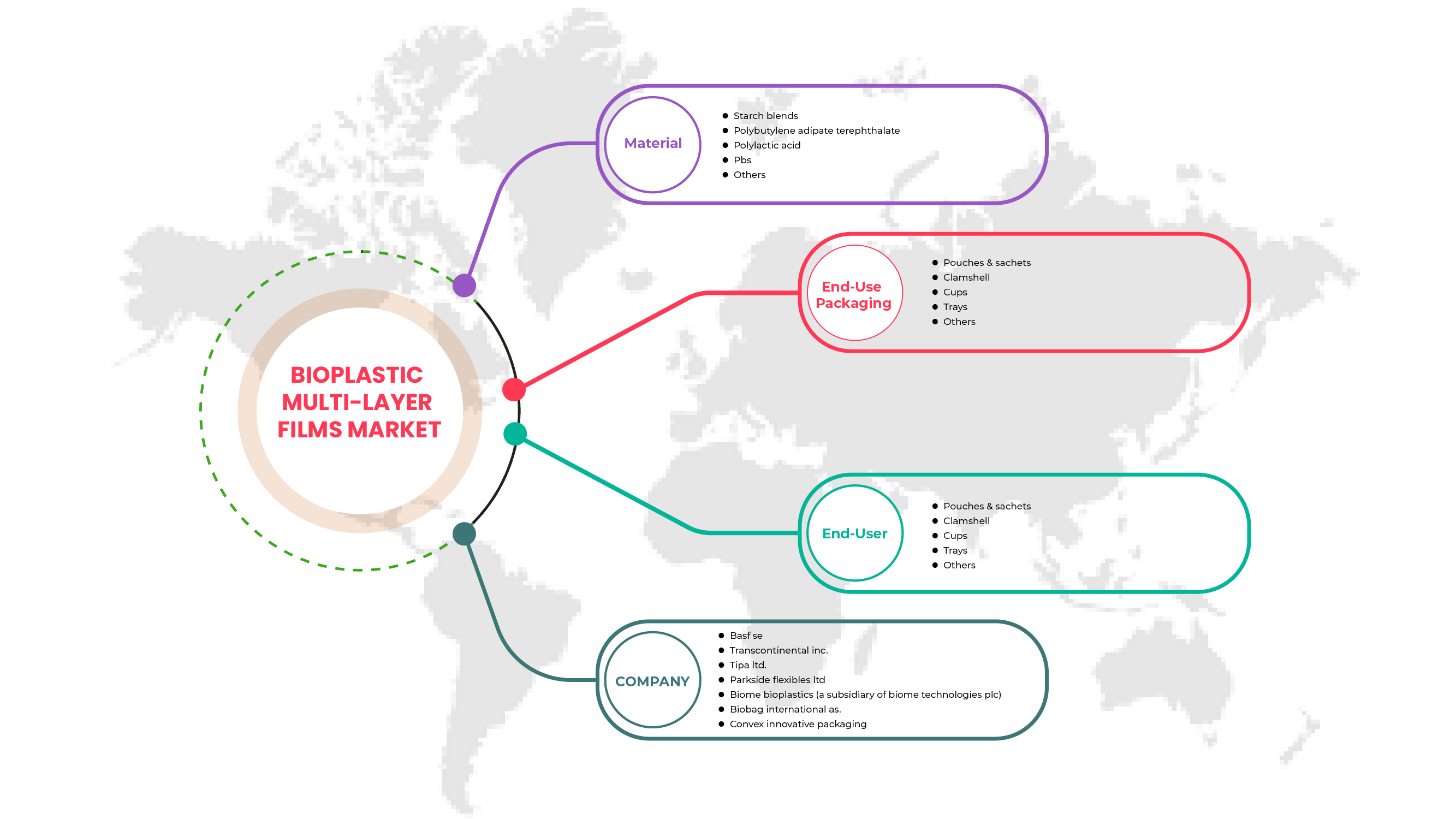
Com base no utilizador final, o mercado europeu de filmes multicamadas bioplásticos para o mercado de embalagens de serviços alimentares compostáveis é segmentado em restaurantes de cadeia, restaurantes sem cadeias, café de cadeia, café sem cadeia, catering de entrega, vendedores independentes e quiosques, entre outros.
Europa Bioplástico Multi-Layer Films Mercado para embalagens de serviços alimentares compostáveis
Analisa-se o mercado europeu de filmes multicamadas bioplásticos para embalagens de serviços alimentares compostáveis e analisam-se as dimensões e tendências do mercado por país, material, embalagem de utilização final e utilizador final, conforme acima referido.
O mercado europeu de filmes multicamadas bioplásticos para embalagens de serviços alimentares compostáveis abrange países como Alemanha, Reino Unido, Itália, França, Espanha, Rússia, Suíça, Turquia, Bélgica, Países Baixos, Resto da Europa.
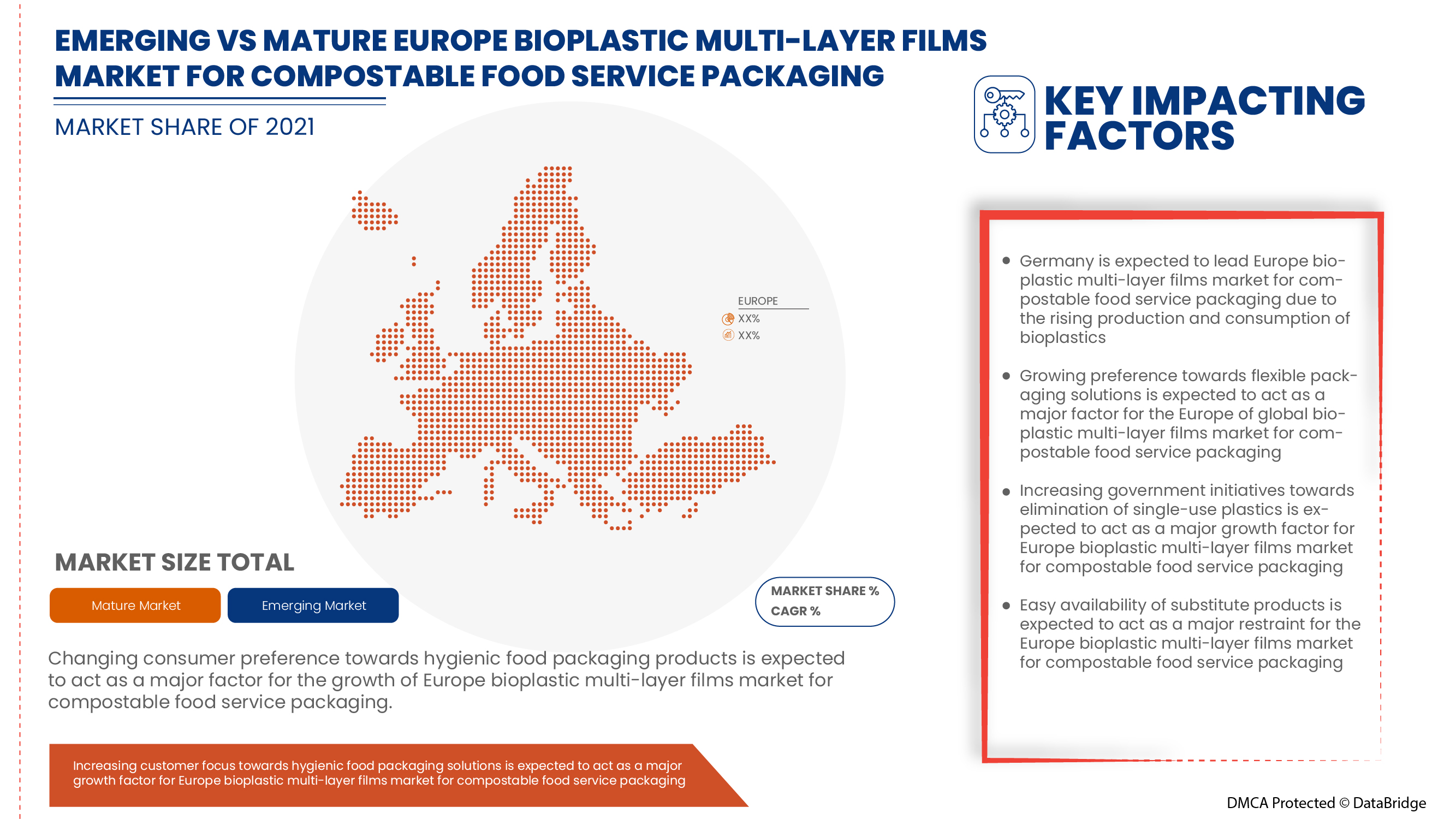
Prevê-se que a Alemanha domine o mercado europeu de filmes multicamadas bioplásticos para embalagens de serviços alimentares compostáveis, devido ao crescente enfoque dos consumidores em produtos de embalagem de alimentos higiénicos. Muitas empresas europeias mudaram o seu foco para nichos de mercado com elevada qualidade e valor acrescentado nos produtos.
A secção nacional do mercado europeu de filmes multicamadas bioplásticos para o relatório sobre embalagens de serviços alimentares compostáveis também fornece factores de impacto individuais no mercado e alterações na regulamentação interna que afectam as tendências actuais e futuras do mercado. Pontos de dados como novas vendas, vendas de reposição, demografia do país, epidemiologia da doença e tarifas de importação-exportação são alguns dos indicadores significativos usados para prever o cenário de mercado para cada país. Além disso, a presença e a disponibilidade das marcas europeias e os seus desafios enfrentados devido à grande ou escassa concorrência das marcas locais e nacionais e ao impacto dos canais de vendas são considerados ao mesmo tempo que fornecem uma análise das previsões dos dados do país.
Paisagem competitiva e Europa Bioplástico Multi-Layer Films Mercado de embalagens para serviços alimentares Compostáveis
O mercado europeu de filmes multicamadas bioplásticos para embalagens de serviços alimentares compostáveis proporciona pormenores sobre o concorrente. Detalhes incluídos são visão geral da empresa, finanças da empresa, receita gerada, potencial de mercado, investimento em pesquisa e desenvolvimento, novas iniciativas de mercado, presença global, locais de produção e instalações, capacidades de produção, pontos fortes e fracos da empresa, lançamento de soluções, largura e amplitude do produto, dominância de aplicação. Os dados acima referidos referem-se apenas à concentração das empresas no mercado europeu de filmes multicamadas bioplásticos para embalagens de serviços alimentares compostáveis.
Alguns dos principais atores que operam no mercado europeu de filmes multicamadas bioplásticos para embalagens de serviços alimentares compostaveis são BASF SE, TIPA LTD, Biome Bioplastics (uma subsidiária da Biome Technologies plc), BioBag International AS., Transcontinental Inc., e Parkside Flexibles Ltd, entre outros.
SKU-
Obtenha acesso online ao relatório sobre a primeira nuvem de inteligência de mercado do mundo

- Painel interativo de análise de dados
- Painel de análise da empresa para oportunidades de elevado potencial de crescimento
- Acesso de analista de pesquisa para personalização e customização. consultas
- Análise da concorrência com painel interativo
- Últimas notícias, atualizações e atualizações Análise de tendências
- Aproveite o poder da análise de benchmark para um rastreio abrangente da concorrência
Índice
1 INTRODUÇÃO
1.1 OBJECTIVOS DO ESTUDO
1.2 DEFINIÇÃO DE MERCADO
1.3 REVISÃO GERAL DA EUROPA MERCADO DE FILMES DE MULTI-LAYER BIOPLÁSTICO PARA O ACONDICIONAMENTO DOS SERVIÇOS ALIMENTÍCIOS COMPOSTÁVEIS
1.4 LIMITAÇÃO
1.5 MERCADOS ABRANGADOS
2 SEGMENTAÇÃO DO MERCADO
2.1 MERCADOS COBERTOS
2.2 ÂMBITO GEOGRÁFICO
2.3 ANOS CONSIDERADOS PARA O ESTUDO
2.4 MOEDA E PREÇOS
2.5 MODELO DE VALIDAÇÃO DE DADOS TRIPOD DBRR
2.6 CURVA MATERIAL DA LINHA DE VIDA
2.7 MODELO MULTIVARIADO
2.8 INTERVENÇÕES PRIMÁRIAS COM OPINIÇÕES-CHAVE
2.9 GRIDE DE POSIÇÃO DO MERCADO DE BMO
2.1 MATRIX DE DESAFIO DO MERCADO DA DBRM
2.11 ANÁLISE DA PARTICIPAÇÃO DOS VENDANTES DA DBRM
2.12 DADOS DE IMPORTAÇÃO-EXPORTAÇÃO
2.13 FONTES SEGUNDAS
2.14 ASSUNTOS
3 RESUMO
4 INSIGHTS PRÉMIO
4.1 MERCADO ALIMENTAR OCIDENTAL
4. 2 ANÁLISE DOS PESTROS
4.2.1 FATORES POLÍTICOS
4.2.2 FATORES ECONÓMICOS
4.2.3 FACTORES SOCIAIS
4.2.4 FATORES TECNOLÓGICOS
4.2.5 FATORES JURÍDICOS
4.2.6 FATORES AMBIENTAIS
4.3 5 FORÇAS DO PORTRO:
4.3.1 AMEAÇA DE NOVAS ENTRADAS:
4.3.2 AMEAÇA DE SUBSTITUTOS:
4.3.3 PODER DE COMERCIALIZAÇÃO DOS CLIENTES:
4.3.4 APOIO AO COMERCIALIZAÇÃO:
4.3.5 CONCORRÊNCIA INTERNA:
4. 4 CENÁRIO DE ALTERAÇÕES CLIMÁTICAS
4.4.1 ALTERAÇÕES CLIMÁTICAS
4.5 LISTA DE COMPRADOR
4.6 EUROPE BIOPLÁSTICO MERCADO DE FILMES DE MULTI-LAYER PARA O ACONDICIONAMENTO DOS SERVIÇOS ALIMENTARES COMOSTÁVEIS
4.6.1 COBERTURA DO REGULAMENTO
4. 7 ANÁLISE DA CHAIN
4.7.1 CONTRATOS MATERIAIS RAW
4.7.2 FABRICAÇÃO E EMBALAGEM
4.7.3 COMERCIALIZAÇÃO E DISTRIBUIÇÃO
4.7.4 Utilizadores finais
4.8 ACONSELHAMENTO TECNOLÓGICO DOS FABRICANTES
4.9 ANÁLISE DA PRODUÇÃO E DO CONSUMO
4.9.1 VISÃO GERAL
4.1 CRITÉRIOS DE SELECÇÃO DE VENDOR
5 RESUMO REGIONAIS
5.1 EUROPA
5.2 ÁSIA-PACÍFICO
5.3 EUROPA
5.4 AMÉRICA DO NORTE
5.5 AMÉRICA DO SUL
5.6 MÉDIO ORIENTE E ÁFRICA
6 VISÃO GERAL DO MERCADO
6. 1 CONDUTORES
6.1.1 INCLINAÇÃO RELATIVA AO CONSUMO DE ALIMENTOS DE CONVENIÊNCIA
6.1.2 POPULARIDADE DAS SOLUÇÕES DE ACONDICIONAMENTO FLEXÍVEL
6.1.3 PREFERÊNCIA DOS CONSUMIDORES PARA OS PRODUTOS DE ACONDICIONAMENTO HÍGICO
6.1.4 CRESCIMENTO DA ELMINAÇÃO DA PLASTICA ÚNICA
6.2 RESTRUÇÕES
6.2.1 Custos elevados associados a películas biodegradáveis
6.2.2 DISPOSIBILIDADE DOS PRODUTOS SUBSTITUTOS
6.3 OPORTUNIDADES
6.3.1 CRIAÇÃO DE DEMANDA DO SECTOR E-COMÉRCIO
6.3.2 RESULTADO EM SOLUÇÕES DE ACONDICIONAMENTO INNOVATIVO COM NOVO DESIGN
6.4 DESAFIOS
6.4.1 QUESTÕES RELACIONADAS COM FILMES BIODEGRADÁVEIS
6.4.2 INCERTIDADES DOS PROCESSOS DE PRODUÇÃO E OPÇÕES DE FIM DA LIFE PARA A BIOPLASTICA
7 EUROPE BIOPLÁSTICO MULTI-LAYER FILMS MERCADO PARA O ACONDICIONAMENTO DOS SERVIÇOS ALIMENTARES COMPOSTÁVEIS, POR MATERIAL
7.1 VISÃO GERAL
7.2 BLENDS ESTRATÉGICOS
7,3 TEREPHALADO DE ADIPATO DE POLIBUTILENO
7.4 ÁCIDO POLÍLÁTICO
7. 5 PBS
7.6 OUTRAS
8 EUROPA BIOPLÁSTICO MULTI-LAYER MERCADO DE FILMES PARA O ACONDICIONAMENTO DOS SERVIÇOS ALIMENTÍCIOS COMPOSTÁVEIS, POR ACONDICIONAMENTO FINAL
8.1 VISÃO GERAL
8.2 POUCHES & SAQUETAS
8. 3 CLAMSHELL
8.4 CUPS
8.5 TRAYS
8.6 OUTRAS
9 EUROPE BIOPLASTIC MULTI-LAYER FILMS MERCADO PARA O ACONDICIONAMENTO DOS SERVIÇOS ALIMENTARES COMPOSTÁVEIS, POR UTILIZADOR FINAL
9.1 VISÃO GERAL
9.2 CATÉRIA DE ENTREGA
9.2.1 CATAGEM DE ENTRADA, POR ACONDICIONAMENTO DE FIM
9.2.1. POUQUES E SAQUETAS
9.2.1.2 CLAMSHELL
9.2.1.3 CUPS
9.2.1.4 TRAYS
9.2.1.5 OUTROS
9.3 RESTAURANTES DE CHAIN
9.3.1 RESTAURANTES DE CHAIN, POR ACONDICIONAMENTO FINAL
9.3.1 POUCHES & SAQUETAS
9.3.1.2 CLAMSHELL
9.3.1.3 CUPS
9.3.1.4 TAXAS
9.3.1.5 OUTROS
9.4 CHAIN CAFÉ
9.4.1 CHAIN CAFÉ, POR ACONDICIONAMENTO DE END-USE
9.4.1.1 POUCHES & SAQUETAS
9.4.1.2 CLAMSHELL
9.4.1.3 CUPS
9.4.1.4 TAXAS
9.4.1.5 OUTROS
9.5 RESTAURANTES NÃO-CHAIN
9.5.1 RESTAURANTES NÃO- CHAIN, POR ACONDICIONAMENTO FINAL
9.5.1.1 POUCHES & SAQUETAS
9.5.1.2 CLAMSHELL
9.5.1.3 CUPS
9.5.1.4 TRAYS
9.5.1.5 OUTROS
9.6 NON-CHAIN CAFÉ
9.6.1 NON-CHAIN CAFÉ, POR ACONDICIONAMENTO DE FIM
9.6.1.1 POUCHES & SAQUETAS
9.6.1.2 CLAMSHELL
9.6.1.3 CUPS
9.6.1.4 TAXAS
9.6.1.5 OUTROS
9.7 Vendedores & KIOSCOS INDEPENDENTES
9.7.1 Sellers & KIOSKS INDEPENDENTES, POR ACONDICIONAMENTO DE FIM
9.7.1.1 POUCHES & SAQUETAS
9.7.1.2 CLAMSHELL
9.7.1.3 CUPS
9.7.1.4 TAXAS
9.7.1.5 OUTRAS
9.8 OUTRAS
9.8.1 OUTROS, POR ACONDICIONAMENTO PRIMÁRIO
9.8.1.1 POUCHES & SAQUETAS
9.8.1.2 CLAMSHELL
9.8.1.3 CUPS
9.8.1.4 TRAYS
9.8.1.5 OUTROS
10 EUROPA BIOPLÁSTICO MULTI-LAYER MERCADO DE FILMES PARA O ACONDICIONAMENTO DOS SERVIÇOS ALIMENTÍCIOS COMPOSTÁVEIS, POR REGIÃO
10.1 EUROPA
10.1.1 ALEMANHA
10.1.2 UK.
10.1.3 ITÁLIA
10.1.4 FRANÇA
10.1.5 ESPANHA
10.1.6 RÚSSIA
10.1.7 SUÍÇA
10.1.8 TURQUIA
10.1.9 BÉLGICA
10.1.10 PAÍSES BAIXOS
10.1.11 REST DA EUROPA
11 EUROPA BIOPLÁSTICO MULTI-LAYER MERCADO DE FILMES PARA O ACONDICIONAMENTO DOS SERVIÇOS ALIMENTÍCIOS COMPOSTÁVEIS, PAISCAPE DA EMPRESA
11.1 ANÁLISE PARTICIPAL DA EMPRESA: EUROPA
11.1.1 COLABORAÇÃO
11.1.2 AQUISIÇÕES
12 ANÁLISE SWOT
13 PROFISSÕES DAS EMPRESAS
13.1 BASF SE
13.1.1 EMPRESA SNAPSHOT
ANÁLISE DAS RECEITAS
13.1.3 ANÁLISE PARTICIPAL
13.1.4 PRODUTO PORTFÓLIO
13.1.5 ACTIVIDADES RECENTES
13.2 INC TRANSCONTINENTAL.
13.2.1 EMPRESA SNAPSHOT
13.2.2 ANÁLISE DAS RECEITAS
13.2.3 A ANÁLISE DA COMPANHIA
13.2.4 PRODUTO PORTFÓLIO
13.2.5 Actualizações recentes
13. 3 TIPA LTD
13.3.1 EMPRESA SNAPSHOT
13.3.2 ANÁLISE PARTICIPAL
13.3.3 PRODUTO PORTFOLIO
13.3.4 ATUALIZAÇÃO RECENTE
13. 4 PARKSIDE FLEXÍVEIS LTD
13.4.1 EMPRESA SNAPSHOT
13.4.2 ANÁLISE PARTICIPAL
13.4.3 PRODUTO PORTFÓLIO
13.4.4 ACTIVIDADES RECEITAS
13.5 BIOPLÁSTICA DE BIOME (SUBSIDIÁRIO DE TECNOLOGIAS DE BIOME PLC)
13.5.1 EMPRESA SNAPSHOT
ANÁLISE DAS RECEITAS
13.5.3 ANÁLISE PARTICIPAL
13.5.4 PRODUTO PORTFOLIO
13.5.5 ACTIVIDADES RECENTES
13.6 BIOBAG INTERNACIONAL AS.
13.6.1 EMPRESA SNAPSHOT
13.6.2 PRODUTO PORTFOLIO
13.6.3 ACTIVIDADES RECEITAS
13.7 ACONDICIONAMENTO INNOVATIVO CONVEX
13.7.1 EMPRESA SNAPSHOT
13.7.2 PRODUTO PORTFÓLIO
13.7.3 ACTIVIDADES RECEITAS
14 QUESTIONÁRIO
15 RELATÓRIOS RELACIONADOS
Lista de Tabela
QUADRO 1 DADOS DE IMPORTAÇÃO DE ÁCIDO LÁCTICO POLÍTICO, EM FORMAS PRIMÁRIAS; CÓDIGO SH – 39077000 (USD MIL)
QUADRO 2 DADOS DE EXPORTAÇÃO DO ÁCIDO LÁCTICO POLÍTICO, EM FORMAS PRIMÁRIAS; CÓDIGO SH – 39077000 (MIL DE USD)
QUADRO 3 LISTA DE COMPRADOR EUROPAMENTE (compradores potenciais/compradores correntes)
QUADRO 4 EUROPE BIOPLASTIC MULTI-LAYER FILMS MERCADO PARA O ACONDICIONAMENTO DOS SERVIÇOS ALIMENTÍCIOS COMPOSTÁVEIS, POR MATERIAL, 2020-2029 (USD MIL)
QUADRO 5 EUROPE BIOPLASTIC MULTI-LAYER FILMS MERCADO PARA O ACONDICIONAMENTO DOS SERVIÇOS ALIMENTÍCIOS COMPOSTÁVEIS, POR MATERIAL, 2020-2029 (TON)
QUADRO 6 BLENDS ESTRATÉGICOS DA EUROPA NO MERCADO DE FILMES DE MULTI-LAYER BIOPLÁSTICO PARA O ACONDICIONAMENTO DOS SERVIÇOS ALIMENTÍCIOS COMPOSTÁVEIS, POR REGIÃO, 2020-2029 (USD MIL)
QUADRO 7 BLENDS ESTRATÉGICOS DA EUROPA NO MERCADO DE FILMES DE MULTI-LAYER BIOPLÁSTICO PARA O ACONDICIONAMENTO DOS SERVIÇOS ALIMENTÍCIOS COMPOSTÁVEIS, POR REGIÃO, 2020-2029 (TONS)
QUADRO 8 EUROPE POLIBUTILENO TEREPHALADO ADIPATO NO MERCADO DE FILMES DE MULTI-LAYER BIOPLÁSTICO PARA O ACONDICIONAMENTO DOS SERVIÇOS ALIMENTÍCIOS COMPOSTÁVEIS, POR REGIÃO 2020-2029 (USD THOUSand)
QUADRO 9 EUROPE POLIBUTILENO TEREPHALADO DE ADIPATO NO MERCADO DE FILMES DE MULTI-LAYER BIOPLASTICOS PARA O ACONDICIONAMENTO DOS SERVIÇOS ALIMENTÍCIOS COMPOSTÁVEIS, POR REGIÃO 2020-2029 (TONS)
QUADRO 10 EUROPA ÁCIDO POLÍLÁTICO NO MERCADO DE FILMES DE MULTI-LAYER BIOPLASTICO PARA O ACONDICIONAMENTO DOS SERVIÇOS ALIMENTÍCIOS COMPOSTÁVEIS, POR REGIÃO, 2020-2029 (USD MIL)
QUADRO 11 ÁCIDO POLILÁTICO EUROPA NO MERCADO DE FILMES MULTI-LAYER BIOPLÁSTICO PARA O ACONDICIONAMENTO DOS SERVIÇOS ALIMENTARES COMPOSTÁVEIS, POR REGIÃO, 2020-2029 (TONS)
QUADRO 12 EUROPE PBS NO MERCADO DE FILMES DE MULTI-LAYER BIOPLÁSTICO PARA O ACONDICIONAMENTO DE SERVIÇOS ALIMENTÍCIOS COMPOSTÁVEIS, POR REGIÃO, 2020-2029 (USD MIL)
QUADRO 13 EUROPE PBS NO MERCADO DE FILMES DE MULTI-LAYER BIOPLASTICOS PARA O ACONDICIONAMENTO DOS SERVIÇOS ALIMENTÍCIOS COMPOSTÁVEIS, POR REGIÃO, 2020-2029 (TON)
QUADRO 14 EUROPA OUTROS EM BIOPLÁSTICO MULTI-LAYER MERCADO DE FILMES PARA O ACONDICIONAMENTO DE SERVIÇOS ALIMENTÍCIOS COMPOSTÁVEIS, POR REGIÃO, 2020-2029 (USD MIL)
QUADRO 15 EUROPA OUTROS NO MERCADO DE FILMES DE EMPRÉSTIMOS BIOPLÁSTICOS PARA O ACONDICIONAMENTO DOS SERVIÇOS ALIMENTÍCIOS COMPOSTÁVEIS, POR REGIÃO, 2020-2029 (TON)
QUADRO 16 EUROPE BIOPLASTIC MULTI-LAYER FILMS MERCADO PARA O ACONDICIONAMENTO DOS PRODUTOS ALIMENTÍCIOS COMPOSTÁVEIS, POR ACONDICIONAMENTO FINAL, 2020-2029 (USD MIL)
QUADRO 17 EUROPE BIOPLASTIC MULTI-LAYER FILMS MERCADO PARA O ACONDICIONAMENTO DOS PRODUTOS ALIMENTÍCIOS COMPOSTÁVEIS, POR ACONDICIONAMENTO FINAL, 2020-2029 (TONS)
QUADRO 18 POUQUES E SAQUETAS EUROPA NO MERCADO DE FILMES MULTI-LAYER BIOPLÁSTICO PARA O ACONDICIONAMENTO DE SERVIÇOS ALIMENTÍCIOS COMPOSTÁVEIS, POR REGIÃO, 2020-2029 (USD MIL)
QUADRO 19 POUQUES E SAQUETAS EUROPA NO MERCADO DE FILMES MULTI-LAYER BIOPLÁSTICO PARA O ACONDICIONAMENTO DOS SERVIÇOS ALIMENTÍCIOS COMPOSTÁVEIS, POR REGIÃO, 2020-2029 (TONS)
QUADRO 20 EUROPE CLAMSHELL IN BIOPLÁSTICO MULTI-LAYER FILMS MERCADO PARA O ACONDICIONAMENTO DE SERVIÇOS ALIMENTÍCIOS COMPOSTÁVEIS, POR REGIÃO, 2020-2029 (USD MIL)
QUADRO 21
QUADRO 22 CUPS EUROPA NO MERCADO DE FILMES DE MULTI-LAYER BIOPLASTICOS PARA O ACONDICIONAMENTO DOS SERVIÇOS ALIMENTÍCIOS COMPOSTÁVEIS, POR REGIÃO, 2020-2029 (USD MIL)
QUADRO 23 CUPS EUROPA NO MERCADO DE FILMES DE MULTI-LAYER BIOPLASTICOS PARA O ACONDICIONAMENTO DOS SERVIÇOS ALIMENTÍCIOS COMPOSTÁVEIS, POR REGIÃO, 2020-2029 (TON)
QUADRO 24
QUADRO 25
QUADRO 26 EUROPA OUTROS EM BIOPLÁSTICO MULTI-LAYER MERCADO DE FILMES PARA O ACONDICIONAMENTO DOS SERVIÇOS ALIMENTÍCIOS COMPOSTÁVEIS, POR REGIÃO, 2020-2029 (USD MIL)
QUADRO 27 EUROPA OUTROS NO MERCADO DE FILMES DE EMPRÉSTIMOS BIOPLASTICOS PARA O ACONDICIONAMENTO COMPÓSTICO DE SERVIÇOS ALIMENTÍCIOS, POR REGIÃO, 2020-2029 (TON)
QUADRO 28 EUROPE BIOPLÁSTICO MERCADO DE FILMES DE MULTI-LAYER PARA O ACONDICIONAMENTO DE SERVIÇOS ALIMENTÍCIOS COMPOSTÁVEIS, POR END-USER, 2020-2029 (USD MILHAS)
QUADRO 29 EUROPE BIOPLASTIC MULTI-LAYER FILMS MERCADO PARA O ACONDICIONAMENTO DOS PRODUTOS ALIMENTÍCIOS COMPOSTÁVEIS, POR END-USER, 2020-2029 (TONS)
QUADRO 30 DE ENTREGA DA EUROPA NO MERCADO DE FILMES DE MULTI-LAYER BIOPLÁSTICO PARA O ACONDICIONAMENTO DOS SERVIÇOS ALIMENTÍCIOS COMPOSTÁVEIS, POR REGIÃO, 2020-2029 (USD MIL)
QUADRO 31
QUADRO 32
QUADRO 33 RESTAURANTES À CHAIN DA EUROPA NO MERCADO DE FILMES DE MULTI-LAYER BIOPLÁSTICO PARA O ACONDICIONAMENTO DOS SERVIÇOS ALIMENTÍCIOS COMPOSTÁVEIS, POR REGIÃO, 2020-2029 (USD MIL)
QUADRO 34 RESTAURANTES À CARACTERÍSTICA DA EUROPA NO MERCADO DOS FILMES MULTI-LAYER BIOPLÁSTICOS PARA O ACONDICIONAMENTO DOS SERVIÇOS ALIMENTÍCIOS COMPOSTÁVEIS, POR REGIÃO, 2020-2029 (TONS)
QUADRO 35 RESTAURANTES À CHAIN DA EUROPA NO MERCADO DE FILMES DE MULTI-LAYER BIOPLÁSTICO PARA O ACONDICIONAMENTO DOS SERVIÇOS ALIMENTÍCIOS COMPOSTÁVEIS, POR ACONDICIONAMENTO FINAL, 2020-2029 (USD MIL)
QUADRO 36 CHAIN CAFÉ DA EUROPA NO MERCADO DE FILMES DE MULTI-LAYER BIOPLÁSTICO PARA O ACONDICIONAMENTO DOS SERVIÇOS ALIMENTÍCIOS COMPOSTÁVEIS, POR REGIÃO, 2020-2029 (USD MIL)
QUADRO 37 CÂMARA DA EUROPA CAFÉ NO MERCADO DE FILMES DE MULTI-LAYER BIOPLÁSTICO PARA O ACONDICIONAMENTO DOS SERVIÇOS ALIMENTÍCIOS COMPOSTÁVEIS, POR REGIÃO, 2020-2029 (TON)
QUADRO 38 EUROPE CHAIN CAFÉ IN BIOPLASTIC MULTI-LAYER FILMS MERCADO PARA O ACONDICIONAMENTO DE SERVIÇOS ALIMENTÍCIOS COMPOSTÁVEIS, POR ACONDICIONAMENTO DE END-USE, 2020-2029 (USD MIL)
QUADRO 39
QUADRO 40 RESTAURANTES À EUROPA NON-CHAIN NO MERCADO DE FILMES MULTI-LAYER BIOPLÁSTICOS PARA O ACONDICIONAMENTO DOS SERVIÇOS ALIMENTÍCIOS COMPOSTÁVEIS, POR REGIÃO, 2020-2029 (TON)
QUADRO 41 RESTAURANTES À EUROPA NON-CHAIN NO MERCADO DE FILMES MULTI-LAYER BIOPLÁSTICOS PARA O ACONDICIONAMENTO DOS SERVIÇOS ALIMENTÍCIOS COMPOSTÁVEIS, POR ACONDICIONAMENTO FINAL, 2020-2029 (USD MIL)
QUADRO 42 EUROPE NON-CHAIN CAFÉ EM BIOPLÁSTICO MULTI-LAYER FILMS MERCADO PARA O ACONDICIONAMENTO DOS SERVIÇOS ALIMENTÍCIOS COMPOSTÁVEIS, POR REGIÃO, 2020-2029 (USD MIL)
QUADRO 43 EUROPA NON-CHAIN CAFÉ NO MERCADO DE FILMES MULTI-LAYER BIOPLÁSTICO PARA O ACONDICIONAMENTO DOS SERVIÇOS ALIMENTÍCIOS COMPOSTÁVEIS, POR REGIÃO, 2020-2029 (TON)
QUADRO 44 EUROPA NON-CHAIN CAFÉ EM BIOPLÁSTICO MULTI-LAYER MERCADO DE FILMES PARA O ACONDICIONAMENTO DE SERVIÇOS ALIMENTÍCIOS COMPOSTÁVEIS, POR ACONDICIONAMENTO FINAL, 2020-2029 (USD MIL)
QUADRO 45 EUROPE INDEPENDENTS SELLERS & KIOSKS IN BIOPLÁSTICO MULTI-LAYER FILMS MERCADO PARA O ACONDICIONAMENTO DE SERVIÇOS ALIMENTÍCIOS COMPOSTÁVEIS, POR REGIÃO, 2020-2029 (USD THOUSAND)
QUADRO 46 EUROPA PROVENIENTES E CIOSCOS INDEPENDENTES NO MERCADO DE FILMES MULTI-LAYER BIOPLÁSTICO PARA O ACONDICIONAMENTO DOS SERVIÇOS ALIMENTÍCIOS COMPOSTÁVEIS, POR REGIÃO, 2020-2029 (TONS)
QUADRO 47 PROTEÇÃO INDEPENDENTE DA EUROPA E KIOSKS NO MERCADO DE FILMES DE MULTI-LAYER BIOPLÁSTICO PARA O ACONDICIONAMENTO DE SERVIÇOS ALIMENTÍCIOS COMPOSTÁVEIS, POR ACONDICIONAMENTO FINAL, 2020-2029 (USD THOUSAND)
QUADRO 48 EUROPA OUTROS EM BIOPLÁSTICO MERCADO DE FILMES EM MULTI-LAYER PARA O ACONDICIONAMENTO DOS SERVIÇOS ALIMENTÍCIOS COMPOSTÁVEIS, POR REGIÃO, 2020-2029 (USD MIL)
QUADRO 49 EUROPA OUTROS EM BIOPLÁSTICO MERCADO DE FILMES PARA O ACONDICIONAMENTO DOS SERVIÇOS ALIMENTÍCIOS COMPOSTÁVEIS, POR REGIÃO, 2020-2029 (TON)
QUADRO 50 EUROPA OUTROS EM BIOPLÁSTICO MULTI-LAYER MERCADO DE FILMES PARA O ACONDICIONAMENTO DE SERVIÇOS ALIMENTÍCIOS COMPOSTÁVEIS, POR ACONDICIONAMENTO FINAL, 2020-2029 (USD MIL)
QUADRO 51
QUADRO 52 EUROPE BIOPLASTIC MULTI-LAYER FILMES PARA O ACONDICIONAMENTO DOS SERVIÇOS ALIMENTARES COMPOSTÁVEIS, POR PAÍS, 2020-2029 (TON)
QUADRO 53 EUROPE BIOPLASTIC MULTI-LAYER FILMS MERCADO PARA O ACONDICIONAMENTO DOS SERVIÇOS ALIMENTÍCIOS COMPOSTÁVEIS, POR MATERIAL, 2020-2029 (USD MIL)
QUADRO 54 EUROPE BIOPLASTIC MULTI-LAYER FILMS MERCADO PARA O ACONDICIONAMENTO DOS PRODUTOS ALIMENTÍCIOS COMPOSTÁVEIS, POR MATERIAL, 2020-2029 (TON)
QUADRO 55 EUROPE BIOPLASTIC MULTI-LAYER MERCADO DE FILMES PARA O ACONDICIONAMENTO DOS PRODUTOS ALIMENTÍCIOS COMPOSTÁVEIS, POR ACONDICIONAMENTO FINAL, 2020-2029 (USD MIL)
QUADRO 56 EUROPE BIOPLASTIC MULTI-LAYER FILMS MERCADO PARA O ACONDICIONAMENTO DOS PRODUTOS ALIMENTÍCIOS COMPOSTÁVEIS, POR ACONDICIONAMENTO FINAL, 2020-2029 (TONS)
QUADRO 57 EUROPE BIOPLASTIC MULTI-LAYER MERCADO DE FILMES PARA O ACONDICIONAMENTO DOS SERVIÇOS ALIMENTÍCIOS COMPOSTÁVEIS, POR END-USER, 2020-2029 (USD MILHAS)
QUADRO 58 EUROPE BIOPLASTIC MULTI-LAYER FILMS MERCADO PARA O ACONDICIONAMENTO DOS PRODUTOS ALIMENTÍCIOS COMPOSTÁVEIS, POR END-USER, 2020-2029 (TONS)
QUADRO 59
QUADRO 60 RESTAURANTES À CHAIN DA EUROPA NO MERCADO DE FILMES DE MULTI-LAYER BIOPLÁSTICOS PARA O ACONDICIONAMENTO DE SERVIÇOS ALIMENTÍCIOS COMPOSTÁVEIS, POR ACONDICIONAMENTO FINAL, 2020-2029 (USD MIL)
QUADRO 61 CÂMARA DA EUROPA CAFÉ NO MERCADO DE FILMES DE MULTI-LAYER BIOPLÁSTICO PARA O ACONDICIONAMENTO DOS SERVIÇOS ALIMENTÍCIOS COMPOSTÁVEIS, POR ACONDICIONAMENTO FINAL, 2020-2029 (USD MIL)
QUADRO 62 RESTAURANTES À EUROPA NON-CHAIN NO MERCADO DE FILMES MULTI-LAYER BIOPLÁSTICOS PARA O ACONDICIONAMENTO DOS SERVIÇOS ALIMENTÍCIOS COMPOSTÁVEIS, POR ACONDICIONAMENTO PRIMÁRIO, 2020-2029 (USD MIL)
QUADRO 63 EUROPA NON-CHAIN CAFÉ EM BIOPLÁSTICO MERCADO DE FILMES MULTI-LAYER PARA O ACONDICIONAMENTO DOS SERVIÇOS ALIMENTÍCIOS COMPOSTÁVEIS, POR ACONDICIONAMENTO FINAL, 2020-2029 (USD MIL)
QUADRO 64 EUROPE INDEPENDENT SELLERS & KISOKS IN BIOPLÁSTICO MULTI-LAYER FILMS MERCADO PARA O ACONDICIONAMENTO DE SERVIÇOS ALIMENTÍCIOS COMPOSTÁVEIS, POR ACONDICIONAMENTO FINAL, 2020-2029 (USD THOUSand)
QUADRO 65 EUROPA OUTROS EM BIOPLÁSTICO MERCADO DE FILMES DE MULTI-LAYER PARA O ACONDICIONAMENTO DE SERVIÇOS ALIMENTÍCIOS COMPOSTÁVEIS, POR ACONDICIONAMENTO FINAL, 2020-2029 (USD MIL)
QUADRO 66 BIOPLÁSTICO DA ALEMANHA MERCADO DE FILMES PARA O ACONDICIONAMENTO DOS SERVIÇOS ALIMENTÍCIOS COMPOSTÁVEIS, POR MATERIAL, 2020-2029 (USD MIL)
QUADRO 67 BIOPLÁSTICO DA ALEMANHA
QUADRO 68 BIOPLÁSTICO DA ALEMANHA MERCADO DE FILMES PARA O ACONDICIONAMENTO DE SERVIÇOS ALIMENTÍCIOS COMPOSTÁVEIS, POR ACONDICIONAMENTO FINAL, 2020-2029 (USD MIL)
QUADRO 69 BIOPLÁSTICO DA ALEMANHA MERCADO DE FILMES PARA O ACONDICIONAMENTO DOS PRODUTOS ALIMENTÍCIOS COMPOSTÁVEIS, POR ACONDICIONAMENTO FINAL, 2020-2029 (TON)
QUADRO 70 BIOPLÁSTICO DA ALEMANHA MERCADO DE FILMES PARA O ACONDICIONAMENTO DOS SERVIÇOS ALIMENTÍCIOS COMPOSTÁVEIS, POR FIM- UTILIZADOR, 2020-2029 (USD MIL)
QUADRO 71 BIOPLÁSTICO DA ALEMANHA MERCADO DE FILMES PARA O ACONDICIONAMENTO DOS PRODUTOS ALIMENTÍCIOS COMPOSTÁVEIS, POR END-USER, 2020-2029 (TON)
QUADRO 72 ALEMANHA DE ENTREGA NO MERCADO DE FILMES MULTI-LAYER BIOPLÁSTICO PARA O ACONDICIONAMENTO DE SERVIÇOS ALIMENTÍCIOS COMPOSTÁVEIS, POR ACONDICIONAMENTO FINAL, 2020-2029 (USD MIL)
QUADRO 73 RESTAURANTES À CARACTERÍSTICA DA ALEMANHA NO MERCADO DE FILMES DE MULTI-LAYER BIOPLÁSTICO PARA O ACONDICIONAMENTO DOS SERVIÇOS ALIMENTÍCIOS COMPOSTÁVEIS, POR ACONDICIONAMENTO FINAL, 2020-2029 (USD MIL)
QUADRO 74 CARACTERÍSTICA DA ALEMANHA CAFÉ EM BIOPLÁSTICA MULTI-LAYER MERCADO DE FILMES PARA O ACONDICIONAMENTO DE SERVIÇOS ALIMENTÍCIOS COMPOSTÁVEIS, POR ACONDICIONAMENTO FINAL, 2020-2029 (USD MIL)
QUADRO 75 RESTAURANTES À ALEMANHA NON-CHAIN NO MERCADO DE FILMES DE MULTI-LAYER BIOPLASTICOS PARA O ACONDICIONAMENTO DOS SERVIÇOS ALIMENTÍCIOS COMPOSTÁVEIS, POR ACONDICIONAMENTO PRIMÁRIO, 2020-2029 (USD MIL)
QUADRO 76 ALEMANHA NON-CHAIN CAFÉ EM BIOPLÁSTICO MULTI-LAYER MERCADO DE FILMES PARA O ACONDICIONAMENTO DOS SERVIÇOS ALIMENTÍCIOS COMPOSTÁVEIS, POR ACONDICIONAMENTO PRIMÁRIO, 2020-2029 (USD MIL)
QUADRO 77 ALEMANHAS E KISOKES INDEPENDENTES DE ALEMANHA NO MERCADO DE FILMES DE MULTI-LAYER BIOPLASTICOS PARA O ACONDICIONAMENTO DOS SERVIÇOS ALIMENTÍCIOS COMPOSTÁVEIS, POR ACONDICIONAMENTO DE FIM, 2020-2029 (USD MIL)
QUADRO 78 OUTROS ALEMANHAS NO MERCADO DE FILMES DE MULTI-LAYER BIOPLÁSTICO PARA O ACONDICIONAMENTO DOS PRODUTOS ALIMENTÍCIOS COMPOSTÁVEIS, POR ACONDICIONAMENTO FINAL, 2020-2029 (USD MIL)
QUADRO 79
QUADRO 80, POR MATERIAL, 2020-2029 (TON)
QUADRO 81 REINO UNIDO BIOPLÁSTICO MULTI-LAYER MERCADO DE FILMES PARA O ACONDICIONAMENTO DE SERVIÇO DE ALIMENTOS COMPOSTÁVEIS, POR ACONDICIONAMENTO FINAL, 2020-2029 (USD MIL)
QUADRO 82 REINO UNIDO BIOPLÁSTICO MULTI-LAYER MERCADO DE FILMES PARA O ACONDICIONAMENTO DOS SERVIÇOS ALIMENTARES COMPOSTÁVEIS, POR ACONDICIONAMENTO FINAL, 2020-2029 (TONS)
QUADRO 83 REINO UNIDO BIOPLÁSTICO MULTI-LAYER FILMS MERCADO PARA O ACONDICIONAMENTO DOS SERVIÇOS ALIMENTÍCIOS COMPOSTÁVEIS, POR END-USER, 2020-2029 (USD MIL)
QUADRO 84 REINO UNIDO BIOPLÁSTICO MERCADO DE FILMES PARA O ACONDICIONAMENTO DOS SERVIÇOS ALIMENTARES COMPOSTÁVEIS, POR END-USER, 2020-2029 (TONS)
TABELA 85 REINO UNIDO DE ENTREGA NO MERCADO DE FILMES DE MULTI-LAYER BIOPLÁSTICO PARA O ACONDICIONAMENTO DE SERVIÇOS ALIMENTÍCIOS COMPOSTÁVEIS, POR ACONDICIONAMENTO FINAL, 2020-2029 (USD MIL)
QUADRO 86 RESTAURANTES À CHAIN NO MERCADO DE FILMES MULTI-LAYER BIOPLÁSTICO PARA O ACONDICIONAMENTO DE SERVIÇOS ALIMENTÍCIOS COMPOSTÁVEIS, POR ACONDICIONAMENTO FINAL, 2020-2029 (USD MIL)
QUADRO 87 REINO UNIDO CAFÉ EM BIOPLÁSTICO MERCADO DE FILMES MULTI-LAYER PARA O ACONDICIONAMENTO DOS SERVIÇOS ALIMENTÍCIOS COMPOSTÁVEIS, POR ACONDICIONAMENTO FINAL, 2020-2029 (USD MIL)
QUADRO 88 RESTAURANTES NON-CHAIN RESTAURANTES NO MERCADO DE FILMES DE MULTI-LAYER BIOPLÁSTICO PARA O ACONDICIONAMENTO DE SERVIÇOS ALIMENTÍCIOS COMPOSTÁVEIS, POR ACONDICIONAMENTO PRIMÁRIO, 2020-2029 (USD MIL)
QUADRO 89 REINO UNIDO NON-CHAIN CAFÉ EM BIOPLÁSTICO MULTI-LAYER FILMS MERCADO PARA O ACONDICIONAMENTO DOS SERVIÇOS ALIMENTÍCIOS COMPOSTÁVEIS, POR ACONDICIONAMENTO FINAL, 2020-2029 (USD MIL)
QUADRO 90 ALTERAÇÕES INDEPENDENTES E KISOKS NO MERCADO DE FILMES MULTI-LAYER BIOPLÁSTICO PARA O ACONDICIONAMENTO DE SERVIÇOS ALIMENTÍCIOS COMPOSTÁVEIS, POR ACONDICIONAMENTO PRIMÁRIO, 2020-2029 (USD MIL)
QUADRO 91 OUTROS NO MERCADO DE FILMES DE MULTI-LAYER BIOPLÁSTICO PARA O ACONDICIONAMENTO DOS SERVIÇOS ALIMENTÍCIOS COMPOSTÁVEIS, POR ACONDICIONAMENTO FINAL, 2020-2029 (USD MIL)
QUADRO 92 BIOPLÁSTICO BIOPLÁSTICO MERCADO DE FILMES PARA O ACONDICIONAMENTO DE SERVIÇOS ALIMENTÍCIOS COMPOSTÁVEIS, POR MATERIAL, 2020-2029 (USD MIL)
QUADRO 93 BIOPLÁSTICO BIOPLÁSTICO MERCADO DE FILMES PARA O ACONDICIONAMENTO DOS SERVIÇOS ALIMENTARES COMPOSTÁVEIS, POR MATERIAL, 2020-2029 (TONS)
QUADRO 94 BIOPLÁSTICO BIOPLÁSTICO MERCADO DE FILMES PARA O ACONDICIONAMENTO DE SERVIÇOS ALIMENTÍCIOS COMPOSTÁVEIS, POR ACONDICIONAMENTO FINAL, 2020-2029 (USD MIL)
QUADRO 95 BIOPLÁSTICO BILTI-LAYER MERCADO DE FILMES PARA O ACONDICIONAMENTO DE SERVIÇOS ALIMENTÍCIOS COMPOSTÁVEIS, POR ACONDICIONAMENTO FINAL, 2020-2029 (TON)
QUADRO 96 BIOPLÁSTICO BIOPLÁSTICO DO MERCADO DE FILMES PARA O ACONDICIONAMENTO DOS SERVIÇOS ALIMENTÍCIOS COMPOSTÁVEIS, POR FIM- UTILIZADOR, 2020-2029 (USD MIL)
QUADRO 97
QUADRO 98 CATERAÇÃO DE ENTREGA DE ITÁLIA NO MERCADO DE FILMES DE MULTI-LAYER BIOPLASTICO PARA O ACONDICIONAMENTO DE SERVIÇOS ALIMENTÍCIOS COMPOSTÁVEIS, POR ACONDICIONAMENTO FINAL, 2020-2029 (USD MIL)
QUADRO 99 RESTAURANTES À CARACTERÍSTICA ITALIANA NO MERCADO DE FILMES MULTI-LAYER BIOPLÁSTICO PARA O ACONDICIONAMENTO DE SERVIÇOS ALIMENTÍCIOS COMPOSTÁVEIS, POR ACONDICIONAMENTO DE FIM, 2020-2029 (USD MIL)
QUADRO 100 CAFÉ DE CHAIN ITALIA NO MERCADO DE FILMES DE MULTI-LAYER BIOPLÁSTICO PARA O ACONDICIONAMENTO DOS SERVIÇOS ALIMENTÍCIOS COMPOSTÁVEIS, POR ACONDICIONAMENTO FINAL, 2020-2029 (USD MIL)
QUADRO 101 RESTAURANTES NÃO-CHAIN NO MERCADO DE FILMES DE MULTI-LAYER BIOPLÁSTICOS PARA O ACONDICIONAMENTO DOS SERVIÇOS ALIMENTÍCIOS COMPOSTÁVEIS, POR ACONDICIONAMENTO FINAL, 2020-2029 (USD THOUSand)
QUADRO 102 ITALY NON-CHAIN CAFÉ NO MERCADO DE FILMES MULTI-LAYER BIOPLÁSTICO PARA O ACONDICIONAMENTO DOS PRODUTOS ALIMENTÍCIOS COMPOSTÁVEIS, POR ACONDICIONAMENTO FINAL, 2020-2029 (USD MIL)
QUADRO 103 INDEPENDENTES DE ITÁLIA E KISOKS NO MERCADO DE FILMES DE MULTI-LAYER BIOPLÁSTICO PARA O ACONDICIONAMENTO DOS SERVIÇOS ALIMENTÍCIOS COMPOSTÁVEIS, POR ACONDICIONAMENTO PRIMÁRIO, 2020-2029 (USD MIL)
QUADRO 104 OUTROS ITALIANOS NO MERCADO DE FILMES DE MULTI-LAYER BIOPLASTICOS PARA O ACONDICIONAMENTO DE SERVIÇOS ALIMENTÍCIOS COMPOSTÁVEIS, POR ACONDICIONAMENTO FINAL, 2020-2029 (USD MIL)
QUADRO 105 FRANÇA BIOPLÁSTICA MULTI-LAYER MERCADO DE FILMES PARA O ACONDICIONAMENTO DE SERVIÇO DE ALIMENTOS COMPOSTÁVEIS, POR MATERIAL, 2020-2029 (USD MIL)
QUADRO 106 BIOPLÁSTICO DA FRANÇA MERCADO DE FILMES DE EMPRÉSTIMOS PARA O ACONDICIONAMENTO DE SERVIÇOS ALIMENTÍCIOS COMPOSTÁVEIS, POR MATERIAL, 2020-2029 (TONS)
QUADRO 107 FRANÇA BIOPLÁSTICO MULTI-LAYER MERCADO DE FILMES PARA O ACONDICIONAMENTO DE SERVIÇOS ALIMENTÍCIOS COMPOSTÁVEIS, POR ACONDICIONAMENTO FINAL, 2020-2029 (USD MIL)
QUADRO 108 FRANÇA BIOPLÁSTICO MULTI-LAYER MERCADO DE FILMES PARA O ACONDICIONAMENTO DOS SERVIÇOS ALIMENTÍCIOS COMPOSTÁVEIS, POR ACONDICIONAMENTO FINAL, 2020-2029 (TONS)
QUADRO 109 FRANÇA BIOPLÁSTICA MULTI-LAYER MERCADO DE FILMES PARA O ACONDICIONAMENTO DOS SERVIÇOS ALIMENTÍCIOS COMPOSTÁVEIS, POR END-USER, 2020-2029 (USD MIL)
QUADRO 110 FRANÇA BIOPLÁSTICA MULTI-LAYER MERCADO DE FILMES PARA O ACONDICIONAMENTO DOS SERVIÇOS ALIMENTÍCIOS COMPOSTÁVEIS, POR END-USER, 2020-2029 (TONS)
QUADRO 111 DE ENTREGA DE FRANÇA NO MERCADO DE FILMES DE MULTI-LAYER BIOPLÁSTICO PARA O ACONDICIONAMENTO DE SERVIÇOS ALIMENTÍCIOS COMPOSTÁVEIS, POR ACONDICIONAMENTO FINAL, 2020-2029 (USD MIL)
QUADRO 112 RESTAURANTES À CARACTERÍSTICA DA FRANÇA NO MERCADO DE FILMES MULTI-LAYER BIOPLÁSTICO PARA O ACONDICIONAMENTO DOS SERVIÇOS ALIMENTÍCIOS COMPOSTÁVEIS, POR ACONDICIONAMENTO PRIMÁRIO, 2020-2029 (USD MIL)
QUADRO 113 CARACTERÍSTICA DE FRANÇA CAFÉ NO MERCADO DE FILMES DE MULTI-LAYER BIOPLÁSTICO PARA O ACONDICIONAMENTO DOS SERVIÇOS ALIMENTÍCIOS COMPOSTÁVEIS, POR ACONDICIONAMENTO FINAL, 2020-2029 (USD MIL)
QUADRO 114 RESTAURANTES À FRANÇA NON-CHAIN NO MERCADO DE FILMES DE MULTI-LAYER BIOPLÁSTICOS PARA O ACONDICIONAMENTO DOS SERVIÇOS ALIMENTÍCIOS COMPOSTÁVEIS, POR ACONDICIONAMENTO PRIMÁRIO, 2020-2029 (USD MIL)
QUADRO 115 FRANÇA NON-CHAIN CAFÉ EM BIOPLÁSTICO MULTI-LAYER MERCADO DE FILMES PARA O ACONDICIONAMENTO DE SERVIÇOS ALIMENTÍCIOS COMPOSTÁVEIS, POR ACONDICIONAMENTO FINAL, 2020-2029 (USD MIL)
QUADRO 116 SELLERS E KISOKS INDEPENDENTES DA FRANÇA NO MERCADO DE FILMES DE MULTI-LAYER BIOPLASTICOS PARA O ACONDICIONAMENTO DE SERVIÇOS ALIMENTÍCIOS COMPOSTÁVEIS, POR ACONDICIONAMENTO DE END-USE, 2020-2029 (USD THOUSAND)
QUADRO 117 FRANÇA OUTROS EM BIOPLÁSTICO MULTI-LAYER MERCADO DE FILMES PARA O ACONDICIONAMENTO DE SERVIÇOS ALIMENTÍCIOS COMPOSTÁVEIS, POR ACONDICIONAMENTO FINAL, 2020-2029 (USD MIL)
QUADRO 118 BIOPLÁSTICO ESPANHA MULTI-LAYER MERCADO DE FILMES PARA O ACONDICIONAMENTO DE SERVIÇOS ALIMENTÍCIOS COMPOSTÁVEIS, POR MATERIAL, 2020-2029 (USD MIL)
QUADRO 119 BIOPLÁSTICO ESPANHA MERCADO DE FILMES DE EMPRÉSTIMOS DE EMPRÉSTIMOS PARA O ACONDICIONAMENTO COMPOSTÁVEL DO SERVIÇO DE ALIMENTOS, POR MATERIAL, 2020-2029 (TONS)
QUADRO 120 ESPANHA BIOPLÁSTICO MULTI-LAYER MERCADO DE FILMES PARA O ACONDICIONAMENTO DE SERVIÇOS ALIMENTÍCIOS COMPOSTÁVEIS, POR ACONDICIONAMENTO FINAL, 2020-2029 (USD MIL)
QUADRO 121 BIOPLÁSTICO ESPANHA DO MERCADO DE FILMES PARA O ACONDICIONAMENTO DOS PRODUTOS ALIMENTÍCIOS COMPOSTÁVEIS, POR ACONDICIONAMENTO FINAL, 2020-2029 (TONS)
QUADRO 122 BIOPLÁSTICO ESPANHA MULTI-LAYER MERCADO DE FILMES PARA O ACONDICIONAMENTO DE SERVIÇOS ALIMENTÍCIOS COMPOSTÁVEIS, POR END-USER, 2020-2029 (USD MIL)
QUADRO 123 BIOPLÁSTICO ESPANHA MERCADO DE FILMES DE EMPRÉSTIMOS PARA O ACONDICIONAMENTO DOS SERVIÇOS ALIMENTÍCIOS COMPOSTÁVEIS, POR END-USER, 2020-2029 (TONS)
QUADRO 124 CATERAÇÃO DE ENTREGA DE ESPANHA NO MERCADO DE FILMES DE MULTI-LAYER BIOPLÁSTICO PARA O ACONDICIONAMENTO DE SERVIÇOS ALIMENTÍCIOS COMPOSTÁVEIS, POR ACONDICIONAMENTO FINAL, 2020-2029 (USD MIL)
QUADRO 125 RESTAURANTES À CARACTERÍSTICA ESPANHA NO MERCADO DE FILMES MULTI-LAYER BIOPLÁSTICO PARA O ACONDICIONAMENTO DOS SERVIÇOS ALIMENTÍCIOS COMPOSTÁVEIS, POR ACONDICIONAMENTO FINAL, 2020-2029 (USD MIL)
QUADRO 126 CARACTERÍSTICA DE ESPANHA CAFÉ EM BIOPLÁSTICA MULTI-LAYER MERCADO DE FILMES PARA O ACONDICIONAMENTO DE SERVIÇOS ALIMENTÍCIOS COMPOSTÁVEIS, POR ACONDICIONAMENTO FINAL, 2020-2029 (USD MIL)
QUADRO 127 RESTAURANTES À ESPANHA NON-CHAIN NO BIOPLÁSTICOS MULTI-LAYER FILMS MERCADO PARA O ACONDICIONAMENTO DE SERVIÇOS ALIMENTÍCIOS COMPOSTÁVEIS, POR ACONDICIONAMENTO PRIMÁRIO, 2020-2029 (USD MIL)
QUADRO 128 ESPANHA NON-CHAIN CAFÉ EM BIOPLÁSTICO MULTI-LAYER MERCADO DE FILMES PARA O ACONDICIONAMENTO DOS SERVIÇOS ALIMENTARES COMPOSTÁVEIS, POR ACONDICIONAMENTO FINAL, 2020-2029 (USD MIL)
QUADRO 129 SELLERS E KISOKS INDEPENDENTES DE ESPANHA NO MERCADO DE FILMES DE MULTI-LAYER BIOPLÁSTICO PARA O ACONDICIONAMENTO DE SERVIÇOS ALIMENTÍCIOS COMPOSTÁVEIS, POR ACONDICIONAMENTO DE FIM, 2020-2029 (USD THOUSAND)
QUADRO 130 OUTROS ESPANHAS NO MERCADO DE FILMES DE MULTI-LAYER BIOPLÁSTICO PARA O ACONDICIONAMENTO DE SERVIÇOS ALIMENTÍCIOS COMPOSTÁVEIS, POR ACONDICIONAMENTO FINAL, 2020-2029 (USD MIL)
QUADRO 131 BIOPLÁSTICO DA RÚSSIA MERCADO DE FILMES PARA O ACONDICIONAMENTO DOS SERVIÇOS ALIMENTÍCIOS COMPOSTÁVEIS, POR MATERIAL, 2020-2029 (USD MIL)
QUADRO 132 BIOPLÁSTICO DA RÚSSIA MERCADO DE FILMES PARA O ACONDICIONAMENTO DOS SERVIÇOS ALIMENTÍCIOS COMPOSTÁVEIS, POR MATERIAL, 2020-2029 (TONS)
QUADRO 133 BIOPLÁSTICO DA RÚSSIA MERCADO DE FILMES DE EMPRÉSTIMOS PARA O ACONDICIONAMENTO DOS PRODUTOS ALIMENTÍCIOS COMPOSTÁVEIS, POR ACONDICIONAMENTO FINAL, 2020-2029 (USD MIL)
QUADRO 134 BIOPLÁSTICO DA RÚSSIA
QUADRO 135 BIOPLÁSTICO DA RÚSSIA
QUADRO 136 BIOPLÁSTICO DA RÚSSIA
QUADRO 137 ENTREGA DE ENTREGA DA RÚSSIA NO MERCADO DE FILMES MULTI-LAYER BIOPLÁSTICO PARA O ACONDICIONAMENTO DE SERVIÇOS ALIMENTÍCIOS COMPOSTÁVEIS, POR ACONDICIONAMENTO FINAL, 2020-2029 (USD MIL)
QUADRO 138 RESTAURANTES À CARACTERÍSTICA DA RÚSSIA NO MERCADO DE FILMES MULTI-LAYER BIOPLÁSTICO PARA O ACONDICIONAMENTO DOS SERVIÇOS ALIMENTÍCIOS COMPOSTÁVEIS, POR ACONDICIONAMENTO FINAL, 2020-2029 (USD MIL)
QUADRO 139 CARACTERÍSTICA DA RÚSSIA CAFÉ NO MERCADO DE FILMES MULTI-LAYER BIOPLÁSTICO PARA O ACONDICIONAMENTO DOS SERVIÇOS ALIMENTÍCIOS COMOSTÁVEIS, POR ACONDICIONAMENTO FINAL, 2020-2029 (USD MIL)
QUADRO 140 RESTAURANTES À RÚSSIA NON-CHAIN NO MERCADO DE FILMES MULTI-LAYER BIOPLÁSTICOS PARA O ACONDICIONAMENTO DOS SERVIÇOS ALIMENTÍCIOS COMPOSTÁVEIS, POR ACONDICIONAMENTO PRIMÁRIO, 2020-2029 (USD MIL)
QUADRO 141 RÚSSIA NON-CHAIN CAFÉ EM BIOPLÁSTICO MULTI-LAYER MERCADO DE FILMES PARA O ACONDICIONAMENTO DOS SERVIÇOS ALIMENTÍCIOS COMPOSTÁVEIS, POR ACONDICIONAMENTO FINAL, 2020-2029 (USD MIL)
QUADRO 142 SELLERS E KISOKS INDEPENDENTES DA RÚSSIA NO MERCADO DE FILMES DE MULTI-LAYER BIOPLÁSTICO PARA O ACONDICIONAMENTO DOS SERVIÇOS ALIMENTÍCIOS COMPOSTÁVEIS, POR ACONDICIONAMENTO DE END-USE, 2020-2029 (USD MIL)
QUADRO 143 OUTROS OUTROS EM BIOPLÁSTICO MULTI-LAYER MERCADO DE FILMES PARA O ACONDICIONAMENTO DOS PRODUTOS ALIMENTÍCIOS COMPOSTÁVEIS, POR ACONDICIONAMENTO FINAL, 2020-2029 (USD MIL)
QUADRO 144 BIOPLÁSTICO DO MERCADO DE FILMES PARA O ACONDICIONAMENTO DE SERVIÇOS ALIMENTÍCIOS COMPOSTÁVEIS, POR MATERIAL, 2020-2029 (USD MIL)
QUADRO 145 BIOPLÁSTICO DA SUÍÇA MERCADO DE FILMES MÚLTI-LAYER PARA O ACONDICIONAMENTO DOS SERVIÇOS ALIMENTÍCIOS COMPOSTÁVEIS, POR MATERIAL, 2020-2029 (TONS)
QUADRO 146 SUÍÇA BIOPLÁSTICA MULTI-LAYER MERCADO DE FILMES PARA O ACONDICIONAMENTO DE SERVIÇOS ALIMENTÍCIOS COMPOSTÁVEIS, POR ACONDICIONAMENTO FINAL, 2020-2029 (USD MIL)
QUADRO 147 BIOPLÁSTICO DA SUÍÇA MERCADO DE FILMES MÚLTI-LAYER PARA O ACONDICIONAMENTO DOS SERVIÇOS ALIMENTÍCIOS COMPOSTÁVEIS, POR ACONDICIONAMENTO FINAL, 2020-2029 (TONS)
QUADRO 148 SUÍÇA BIOPLÁSTICA MULTI-LAYER MERCADO DE FILMES PARA O ACONDICIONAMENTO DOS SERVIÇOS ALIMENTÍCIOS COMPOSTÁVEIS, POR END-USER, 2020-2029 (USD MIL)
QUADRO 149 BIOPLÁSTICO DA SUÍÇA MERCADO DE FILMES PARA O ACONDICIONAMENTO DOS SERVIÇOS ALIMENTÍCIOS COMPOSTÁVEIS, POR END-USER, 2020-2029 (TONS)
QUADRO 150 DESENVOLVIMENTO DA SUÍÇA NO MERCADO DE FILMES DE MULTI-LAYER BIOPLÁSTICO PARA O ACONDICIONAMENTO DE SERVIÇOS ALIMENTÍCIOS COMPOSTÁVEIS, POR ACONDICIONAMENTO FINAL, 2020-2029 (USD MIL)
QUADRO 151 RESTAURANTES À CARACTERÍSTICA DA SUÍÇA NO MERCADO DE FILMES DE MULTI-LAYER BIOPLÁSTICO PARA O ACONDICIONAMENTO DOS SERVIÇOS ALIMENTÍCIOS COMPOSTÁVEIS, POR ACONDICIONAMENTO FINAL, 2020-2029 (USD THOUSAND)
QUADRO 152 CARACTERÍSTICA DA SUÍÇA CAFÉ NO MERCADO DE FILMES MULTI-LAYER BIOPLÁSTICO PARA O ACONDICIONAMENTO DOS SERVIÇOS ALIMENTÍCIOS COMPOSTÁVEIS, POR ACONDICIONAMENTO PRIMÁRIO, 2020-2029 (USD MIL)
QUADRO 153 RESTAURANTES À SUÍÇA NON-CHAIN NO MERCADO DE FILMES DE MULTI-LAYER BIOPLASTICOS PARA O ACONDICIONAMENTO DE SERVIÇOS ALIMENTÍCIOS COMPOSTÁVEIS, POR ACONDICIONAMENTO PRIMÁRIO, 2020-2029 (USD MIL)
QUADRO 154 SUÍÇA NON-CHAIN CAFÉ NO MERCADO DE FILMES DE MULTI-LAYER BIOPLÁSTICO PARA O ACONDICIONAMENTO DOS SERVIÇOS ALIMENTÍCIOS COMPOSTÁVEIS, POR ACONDICIONAMENTO PRIMÁRIO, 2020-2029 (USD THOUSand)
QUADRO 155 SECTORES INDEPENDENTES DA SUÍÇA E KISOKS NO MERCADO DE FILMES DE MULTI-LAYER BIOPLÁSTICO PARA O ACONDICIONAMENTO DOS SERVIÇOS ALIMENTÍCIOS COMPOSTÁVEIS, POR ACONDICIONAMENTO DE FIM, 2020-2029 (USD MIL)
QUADRO 156 SUÍÇA OUTROS EM BIOPLÁSTICO MERCADO DE FILMES MULTI-LAYER PARA O ACONDICIONAMENTO DOS SERVIÇOS ALIMENTÍCIOS COMPOSTÁVEIS, POR ACONDICIONAMENTO FINAL, 2020-2029 (USD MIL)
QUADRO 157 BIOPLÁSTICO DA TURQUIA MERCADO DE FILMES DE EMPRÉSTIMOS PARA O ACONDICIONAMENTO DE SERVIÇOS ALIMENTÍCIOS COMPOSTÁVEIS, POR MATERIAL, 2020-2029 (USD MIL)
QUADRO 158 BIOPLÁSTICO DA TURQUIA MERCADO DE FILMES DE EMPRÉSTIMOS PARA O ACONDICIONAMENTO DE SERVIÇOS ALIMENTÍCIOS COMPOSTÁVEIS, POR MATERIAL, 2020-2029 (TONS)
QUADRO 159 BIOPLÁSTICO DE TURQUIA MERCADO DE FILMES DE EMPRÉSTIMOS PARA O ACONDICIONAMENTO DE SERVIÇOS ALIMENTÍCIOS COMPOSTÁVEIS, POR ACONDICIONAMENTO FINAL, 2020-2029 (USD MIL)
QUADRO 160 BIOPLÁSTICO DA TURQUIA MERCADO DE FILMES PARA O ACONDICIONAMENTO DOS PRODUTOS ALIMENTÍCIOS COMPOSTÁVEIS, POR ACONDICIONAMENTO FINAL, 2020-2029 (TON)
QUADRO 161 TURQUIA BIOPLÁSTICA MULTI-LAYER MERCADO DE FILMES PARA O ACONDICIONAMENTO DE SERVIÇOS ALIMENTÍCIOS COMPOSTÁVEIS, POR FIM- UTILIZADOR, 2020-2029 (USD MIL)
QUADRO 162 BIOPLÁSTICO DE TURQUIA MERCADO DE FILMES DE EMPRÉSTIMOS PARA O ACONDICIONAMENTO DOS PRODUTOS ALIMENTÍCIOS COMPOSTÁVEIS, POR FIM- UTILIZADOR, 2020-2029 (TON)
QUADRO 163 TURQUIA DE ENTREGA NO MERCADO DE FILMES DE MULTI-LAYER BIOPLÁSTICO PARA O ACONDICIONAMENTO DOS SERVIÇOS ALIMENTÍCIOS COMPOSTÁVEIS, POR ACONDICIONAMENTO FINAL, 2020-2029 (USD MIL)
QUADRO 164 RESTAURANTES À CARACTERÍSTICA DE TURQUIA NO MERCADO DE FILMES MULTI-LAYER BIOPLÁSTICO PARA O ACONDICIONAMENTO DOS SERVIÇOS ALIMENTÍCIOS COMPOSTÁVEIS, POR ACONDICIONAMENTO FINAL, 2020-2029 (USD MIL)
QUADRO 165 CARACTERÍSTICA DE TURQUIA CAFÉ EM BIOPLÁSTICA MULTI-LAYER MERCADO DE FILMES PARA O ACONDICIONAMENTO DE SERVIÇOS ALIMENTÍCIOS COMPOSTÁVEIS, POR ACONDICIONAMENTO PRIMÁRIO, 2020-2029 (USD MIL)
QUADRO 166 RESTAURANTES À TURQUIA NON-CHAIN NO MERCADO DE FILMES DE EMPRÉSTIMOS MULTI-LAYER BIOPLASTICOS PARA O ACONDICIONAMENTO DOS SERVIÇOS ALIMENTÍCIOS COMPOSTÁVEIS, POR ACONDICIONAMENTO FINAL, 2020-2029 (USD MIL)
QUADRO 167 TURQUIA NON-CHAIN CAFÉ NO MERCADO DE FILMES DE MULTI-LAYER BIOPLÁSTICO PARA O ACONDICIONAMENTO DOS SERVIÇOS ALIMENTÍCIOS COMPOSTÁVEIS, POR ACONDICIONAMENTO FINAL, 2020-2029 (USD THOUSand)
QUADRO 168 TURKEY INDEPENDENTS SELLERS & KISOKS IN BIOPLÁSTICO MULTI-LAYER FILMS MERCADO PARA O ACONDICIONAMENTO DE SERVIÇOS ALIMENTÍCIOS COMPOSTÁVEIS, POR ACONDICIONAMENTO DE FIM, 2020-2029 (USD MIL)
QUADRO 169 TURQUIA OUTROS NO MERCADO DE FILMES DE MULTI-LAYER BIOPLÁSTICO PARA O ACONDICIONAMENTO DOS PRODUTOS ALIMENTÍCIOS COMPOSTÁVEIS, POR ACONDICIONAMENTO FINAL, 2020-2029 (USD MIL)
QUADRO 170 BÉLGICA BIOPLÁSTICA MULTI-LAYER MERCADO DE FILMES PARA O ACONDICIONAMENTO DOS SERVIÇOS ALIMENTÍCIOS COMPOSTÁVEIS, POR MATERIAL, 2020-2029 (USD MIL)
QUADRO 171 BÉLGICA BIOPLÁSTICA MULTI-LAYER MERCADO DE FILMES PARA O ACONDICIONAMENTO DE SERVIÇOS ALIMENTÍCIOS COMPOSTÁVEIS, POR MATERIAL, 2020-2029 (TONS)
QUADRO 172 BÉLGICA BIOPLÁSTICA MULTI-LAYER MERCADO DE FILMES PARA O ACONDICIONAMENTO DE SERVIÇOS ALIMENTÍCIOS COMPOSTÁVEIS, POR ACONDICIONAMENTO FINAL, 2020-2029 (USD MIL)
QUADRO 173 BÉLGICA BIOPLÁSTICA MULTI-LAYER MERCADO DE FILMES PARA O ACONDICIONAMENTO DOS SERVIÇOS ALIMENTÍCIOS COMPOSTÁVEIS, POR ACONDICIONAMENTO FINAL, 2020-2029 (TON)
QUADRO 174 BÉLGICA BIOPLÁSTICA MULTI-LAYER MERCADO DE FILMES PARA O ACONDICIONAMENTO DOS SERVIÇOS ALIMENTÍCIOS COMPOSTÁVEIS, POR FIM- UTILIZADOR, 2020-2029 (USD MIL)
QUADRO 175 BÉLGICA BIOPLÁSTICA MULTI-LAYER
QUADRO 176 BÉLGICA DE ENTREGA NO MERCADO DE FILMES DE MULTI-LAYER BIOPLÁSTICO PARA O ACONDICIONAMENTO DE SERVIÇOS ALIMENTÍCIOS COMPOSTÁVEIS, POR ACONDICIONAMENTO FINAL, 2020-2029 (USD MIL)
QUADRO 177 RESTAURANTES À CARACTERÍSTICA BÉLGICA NO MERCADO DE FILMES DE MULTI-LAYER BIOPLÁSTICO PARA O ACONDICIONAMENTO DOS SERVIÇOS ALIMENTÍCIOS COMPOSTÁVEIS, POR ACONDICIONAMENTO FINAL, 2020-2029 (USD MIL)
QUADRO 178 CARACTERÍSTICA BÉLGICA CAFÉ EM BIOPLÁSTICA MULTI-LAYER MERCADO DE FILMES PARA O ACONDICIONAMENTO DOS SERVIÇOS ALIMENTÍCIOS COMPOSTÁVEIS, POR ACONDICIONAMENTO FINAL, 2020-2029 (USD MIL)
QUADRO 179 RESTAURANTES À BÉLGICA NON-CHAIN NO MERCADO DE FILMES DE MULTI-LAYER BIOPLÁSTICO PARA O ACONDICIONAMENTO DOS SERVIÇOS ALIMENTÍCIOS COMPOSTÁVEIS, POR ACONDICIONAMENTO PRIMÁRIO, 2020-2029 (USD MIL)
QUADRO 180 BÉLGICA NON-CHAIN CAFÉ NO MERCADO DE FILMES MULTI-LAYER BIOPLÁSTICO PARA O ACONDICIONAMENTO DOS SERVIÇOS ALIMENTÍCIOS COMPOSTÁVEIS, POR ACONDICIONAMENTO FINAL, 2020-2029 (USD MIL)
QUADRO 181 SECTORES INDEPENDENTES DE BÉLGICA E KISOKS NO MERCADO DE FILMES DE MULTI-LAYER BIOPLÁSTICO PARA O ACONDICIONAMENTO DOS SERVIÇOS ALIMENTÍCIOS COMPOSTÁVEIS, POR ACONDICIONAMENTO DE FIM, 2020-2029 (USD MIL)
QUADRO 182 BÉLGICA OUTROS NO MERCADO DE FILMES DE MULTI-LAYER BIOPLÁSTICO PARA O ACONDICIONAMENTO DOS PRODUTOS ALIMENTÍCIOS COMPOSTÁVEIS, POR ACONDICIONAMENTO FINAL, 2020-2029 (USD MIL)
QUADRO 183 PAÍSES BAIXOS BIOPLÁSTICOS MERCADO DE FILMES PARA O ACONDICIONAMENTO DE SERVIÇOS ALIMENTÍCIOS COMPOSTÁVEIS, POR MATERIAL, 2020-2029 (USD MIL)
QUADRO 184 PAÍSES BAIXOS BIOPLÁSTICO DO MERCADO DE FILMES PARA O ACONDICIONAMENTO DOS SERVIÇOS ALIMENTÍCIOS COMPOSTÁVEIS, POR MATERIAL, 2020-2029 (TON)
QUADRO 185 PAÍSES BAIXOS BIOPLÁSTICO MULTI-LAYER FILMS MERCADO PARA O ACONDICIONAMENTO DE SERVIÇOS ALIMENTÍCIOS COMPOSTÁVEIS, POR ACONDICIONAMENTO FINAL, 2020-2029 (USD MIL)
QUADRO 186 PAÍSES BAIXOS BIOPLÁSTICO DO MERCADO DE FILMES PARA O ACONDICIONAMENTO DOS SERVIÇOS ALIMENTÍCIOS COMPOSTÁVEIS, POR ACONDICIONAMENTO FINAL, 2020-2029 (TON)
QUADRO 187 BIOPLÁSTICO DOS PAÍSES BAIXOS MERCADO DE FILMES PARA O ACONDICIONAMENTO DOS SERVIÇOS ALIMENTÍCIOS COMPOSTÁVEIS, POR END-USER, 2020-2029 (USD MIL)
QUADRO 188 BIOPLÁSTICO DOS PAÍSES BAIXOS MERCADO DE FILMES DE FILMES PARA O ACONDICIONAMENTO DOS SERVIÇOS ALIMENTÍCIOS COMPOSTÁVEIS, POR END-USER, 2020-2029 (TONS)
QUADRO 189 CATERIA DE ENTREGA DOS PAÍSES BAIXOS NO MERCADO DE FILMES DE MULTI-LAYER BIOPLÁSTICO PARA O ACONDICIONAMENTO DE SERVIÇOS ALIMENTÍCIOS COMPOSTÁVEIS, POR ACONDICIONAMENTO PRIMÁRIO, 2020-2029 (USD MIL)
QUADRO 190 RESTAURANTES À CARACTERÍSTICA DOS PAÍSES BAIXOS NO MERCADO DE FILMES DE MULTI-LAYER BIOPLASTICOS PARA O ACONDICIONAMENTO DOS SERVIÇOS ALIMENTÍCIOS COMPOSTÁVEIS, POR ACONDICIONAMENTO FINAL, 2020-2029 (USD MIL)
QUADRO 191 CHAIN CAFÉ DOS PAÍSES BAIXOS NO MERCADO DE FILMES MULTI-LAYER BIOPLÁSTICO PARA O ACONDICIONAMENTO DOS SERVIÇOS ALIMENTÍCIOS COMPOSTÁVEIS, POR ACONDICIONAMENTO PRIMÁRIO, 2020-2029 (USD MIL)
QUADRO 192 RESTAURANTES DOS PAÍSES BAIXOS NON-CHAIN NO MERCADO DE FILMES DE MULTI-LAYER BIOPLASTICOS PARA O ACONDICIONAMENTO DOS SERVIÇOS ALIMENTÍCIOS COMPOSTÁVEIS, POR ACONDICIONAMENTO DE FIM, 2020-2029 (USD MIL)
QUADRO 193 PAÍSES BAIXOS NON-CHAIN CAFÉ EM BIOPLÁSTICO MULTI-LAYER FILMS MERCADO PARA O ACONDICIONAMENTO DE SERVIÇOS ALIMENTÍCIOS COMPOSTÁVEIS, POR ACONDICIONAMENTO DE END-USE, 2020-2029 (USD THOUSand)
QUADRO 194 PAÍSES BAIXOS ALIMENTARES INDEPENDENTES E KISOKS NO MERCADO DE FILMES DE MULTI-LAYER BIOPLASTICOS PARA O ACONDICIONAMENTO DOS SERVIÇOS ALIMENTÍCIOS COMPOSTÁVEIS, POR ACONDICIONAMENTO PRIMÁRIO, 2020-2029 (USD MIL)
QUADRO 195 PAÍSES BAIXOS OUTROS NO MERCADO DE FILMES DE MULTI-LAYER BIOPLÁSTICO PARA O ACONDICIONAMENTO DOS SERVIÇOS ALIMENTÍCIOS COMPOSTÁVEIS, POR ACONDICIONAMENTO FINAL, 2020-2029 (USD MIL)
QUADRO 196 REST OF EUROPA MERCADO DE FILMES DE MULTI-LAYER BIOPLASTICOS PARA O ACONDICIONAMENTO DE SERVIÇOS ALIMENTÍCIOS COMPOSTÁVEIS, POR MATERIAL, 2020-2029 (USD MIL)
QUADRO 197 RESTA DA EUROPA MERCADO DE FILMES BIOPLASTICOS DE MULTI-LAYER PARA O ACONDICIONAMENTO DOS SERVIÇOS ALIMENTARES COMPOSTÁVEIS, POR MATERIAL, 2020-2029 (TON)
Lista de Figura
FIGURA 1 EUROPA BIOPLÁSTICA MULTI-LAYER MERCADO DE FILMES PARA O ACONDICIONAMENTO DOS SERVIÇOS ALIMENTARES COMOSTÁVEIS: SEGMENTAÇÃO
FIGURA 2 EUROPA BIOPLÁSTICA MULTI-LAYER MERCADO DE FILMES PARA O ACONDICIONAMENTO DOS SERVIÇOS ALIMENTÍCIOS COMOSTÁVEIS: TRIANGULAÇÃO DE DADOS
FIGURA 3 EUROPA BIOPLÁSTICA MULTI-LAYER MERCADO DE FILMES PARA A EMBALAGEM DE SERVIÇO DE ALIMENTOS COMOSTÁVEIS: ANÁLISE DE DROC
FIGURA 4 EUROPA BIOPLÁSTICA MULTI-LAYER MERCADO DE FILMES PARA O ACONDICIONAMENTO DOS SERVIÇOS ALIMENTARES COMOSTÁVEIS: EUROPA VS ANÁLISE REGIONAL DO MERCADO
FIGURA 5 EUROPA BIOPLÁSTICA MULTI-LAYER MERCADO DE FILMES PARA O ACONDICIONAMENTO DOS SERVIÇOS ALIMENTÍCIOS COMOSTÁVEIS: ANÁLISE DE INVESTIGAÇÃO EM SOCIEDADE
FIGURA 6 EUROPA BIOPLÁSTICA MULTI-LAYER FILMS MERCADO PARA O ACONDICIONAMENTO DE SERVIÇO DE ALIMENTOS COMOSTÁVEIS: A CURVA MATERIAL DA LINHA DE VIDA
FIGURA 7 EUROPA BIOPLÁSTICA MULTI-LAYER MERCADO DE FILMES PARA O ACONDICIONAMENTO DE SERVIÇOS ALIMENTARES COMOSTÁVEIS: MODELIZAÇÃO MULTIVARIADA
FIGURA 8 EUROPA MERCADO DE FILMES DE MULTI-LAYER BIOPLASTICOS PARA O ACONDICIONAMENTO DE SERVIÇO DE ALIMENTOS COMOSTÁVEIS: DEMOGRÁFICOS DE ENTREVISTA
FIGURA 9 EUROPA BIOPLÁSTICO MERCADO DE FILMES DE MULTI-LAYER PARA O ACONDICIONAMENTO DE SERVIÇOS ALIMENTÍCIOS COMOSTÁVEIS: GRIDE DE POSIÇÃO DO MERCADO DA DBRM
FIGURA 10 EUROPA BIOPLÁSTICA MULTI-LAYER MERCADO DE FILMES PARA O ACONDICIONAMENTO DOS SERVIÇOS ALIMENTÍCIOS COMOSTÁVEIS: O MATRIX DE DESAFIO DO MERCADO
FIGURA 11 EUROPA BIOPLÁSTICA MULTI-LAYER MERCADO DE FILMES PARA O ACONDICIONAMENTO DE SERVIÇOS ALIMENTÍCIOS COMPOSTÁVEIS: ANÁLISE DA PARTICIPAÇÃO DE VENDANTES
FIGURA 12 EUROPA MERCADO DE FILMES DE MULTI-LAYER BIOPLASTICOS PARA O ACONDICIONAMENTO DOS SERVIÇOS ALIMENTARES COMOSTÁVEIS: SEGMENTAÇÃO
FIGURA 13 O PACÍFICO ÁSIA ESPERA-SE PARA DOMINAR O MERCADO DE FILMES DE EMPRÉSTIMOS BIOPLASTICOS DA EUROPA PARA O ACONDICIONAMENTO DOS PRODUTOS ALIMENTÍCIOS COMPOSTÁVEIS E ESPERADO PARA CRESCER COM O CAGRE MAIS ALTO NO PERÍODO DA PREVISÃO
FIGURA 14 AUMENTAR O FOCO DOS CONSUMIDORES SOBRE PRODUTOS DE ACONDICIONAMENTO HIGIÉNICO DE ALIMENTOS ESPERA-SE CONDUTAR NO PERÍODO ANTES DA PERÍODO PREVISTO NO MERCADO DE FILMES DE ALIMENTOS BIOPLÁSTICOS PARA O ACONDICIONAMENTO DE ALIMENTOS COMPOSTÁVEIS
FIGURA 15 SEGMENTO DE ALTERAÇÕES DE ESTRELA ESPERA-SE PARA CONTAS PARA A PARTICIPAÇÃO MAIS LARGESTA DA EUROPA MERCADO DE FILMES DE MULTI-LAYER BIOPLÁSTICO PARA O ACONDICIONAMENTO DOS SERVIÇOS ALIMENTÍCIOS COMPOSTÁVEIS EM 2022 e 2029
FIGURA 16 ANÁLISE DAS CARACTERÍSTICAS DE FORNECIMENTO – EUROPA
FIGURA 17 EUROPE BIOPLASTIC MULTI-LAYER FILMS MERCADO PARA O ACONDICIONAMENTO DOS PRODUTOS ALIMENTÍCIOS COMOSTÁVEIS: ANÁLISE DA PRODUÇÃO E DO CONSUMO, 2020-2022 (TONS)
FIGURA 18 DIRECTORES, RESTRUMENTOS, OPORTUNIDADES E DESAFIOS DA EUROPA MERCADO BIOPLASTICO DE FILMES MULTI-LAYER PARA O ACONDICIONAMENTO DOS SERVIÇOS ALIMENTÍCIOS COMPOSTÁVEIS
FIGURA 19 EUROPA BIOPLÁSTICA MULTI-LAYER MERCADO DE FILMES PARA O ACONDICIONAMENTO DE SERVIÇO DE ALIMENTOS COMPOSTÁVEIS: POR MATERIAL, 2021
FIGURA 20 EUROPA BIOPLÁSTICA MULTI-LAYER MERCADO DE FILMES PARA O ACONDICIONAMENTO DE SERVIÇO DE ALIMENTOS COMPOSTÁVEIS: POR ACONDICIONAMENTO DE FIM, 2021
FIGURA 21 EUROPA BIOPLÁSTICA MULTI-LAYER MERCADO DE FILMES PARA O ACONDICIONAMENTO DE SERVIÇO DE ALIMENTOS COMPOSTÁVEIS: POR FIM- UTILIZADOR, 2021
FIGURA 22 EUROPA FILMES BIOPLASTICOS MULTI-LAYER PARA O ACONDICIONAMENTO DOS SERVIÇOS ALIMENTARES COMOSTÁVEIS: SNAPSHOT (2021)
FIGURA 23 EUROPA FILMES BIOPLÁSTICOS DE MULTI-LAYER PARA O ACONDICIONAMENTO DOS SERVIÇOS ALIMENTARES COMOSTÁVEIS: POR PAÍS (2021)
FIGURA 24 EUROPA FILMES BIOPLASTICOS DE MULTI-LAYER PARA O ACONDICIONAMENTO DOS SERVIÇOS ALIMENTARES COMOSTÁVEIS: POR PAÍS (2022 e 2029)
FIGURA 25 EUROPA FILMAS BIOPLASTICAS DE MULTI-LAYER PARA O ACONDICIONAMENTO DOS SERVIÇOS ALIMENTARES COMOSTÁVEIS: POR PAÍS (2021 e 2029)
FIGURA 26 EUROPA FILMES BIOPLASTICOS DE MULTI-LAYER PARA A EMBALAGEM DE SERVIÇO DE ALIMENTOS COMOSTÁVEIS: POR MATERIAL (2022 - 2029)
FIGURA 27 EUROPA BIOPLÁSTICA MERCADO DE FILMES DE EMPRÉSTIMOS DE EMPRÉSTIMOS PARA A EMBALAGEM DE SERVIÇO DE ALIMENTOS COMOSTÁVEIS: COMPANHIA COMPARTILHE 2021 (%)

Metodologia de Investigação
A recolha de dados e a análise do ano base são feitas através de módulos de recolha de dados com amostras grandes. A etapa inclui a obtenção de informações de mercado ou dados relacionados através de diversas fontes e estratégias. Inclui examinar e planear antecipadamente todos os dados adquiridos no passado. Da mesma forma, envolve o exame de inconsistências de informação observadas em diferentes fontes de informação. Os dados de mercado são analisados e estimados utilizando modelos estatísticos e coerentes de mercado. Além disso, a análise da quota de mercado e a análise das principais tendências são os principais fatores de sucesso no relatório de mercado. Para saber mais, solicite uma chamada de analista ou abra a sua consulta.
A principal metodologia de investigação utilizada pela equipa de investigação do DBMR é a triangulação de dados que envolve a mineração de dados, a análise do impacto das variáveis de dados no mercado e a validação primária (especialista do setor). Os modelos de dados incluem grelha de posicionamento de fornecedores, análise da linha de tempo do mercado, visão geral e guia de mercado, grelha de posicionamento da empresa, análise de patentes, análise de preços, análise da quota de mercado da empresa, normas de medição, análise global versus regional e de participação dos fornecedores. Para saber mais sobre a metodologia de investigação, faça uma consulta para falar com os nossos especialistas do setor.
Personalização disponível
A Data Bridge Market Research é líder em investigação formativa avançada. Orgulhamo-nos de servir os nossos clientes novos e existentes com dados e análises que correspondem e atendem aos seus objetivos. O relatório pode ser personalizado para incluir análise de tendências de preços de marcas-alvo, compreensão do mercado para países adicionais (solicite a lista de países), dados de resultados de ensaios clínicos, revisão de literatura, mercado remodelado e análise de base de produtos . A análise de mercado dos concorrentes-alvo pode ser analisada desde análises baseadas em tecnologia até estratégias de carteira de mercado. Podemos adicionar quantos concorrentes necessitar de dados no formato e estilo de dados que procura. A nossa equipa de analistas também pode fornecer dados em tabelas dinâmicas de ficheiros Excel em bruto (livro de factos) ou pode ajudá-lo a criar apresentações a partir dos conjuntos de dados disponíveis no relatório.











