



Segmentação do mercado global de fabricação de instrumentos analíticos por tipo (cromatografia e espectrômetros), usuário final (farmacêutica e biotecnológica, industrial e aplicada, acadêmica e governamental e outros) e aplicação (aplicações de pesquisa, clínicas, de diagnóstico e outras) - Tendências e previsões do setor até 2033.
Qual é o tamanho e a taxa de crescimento do mercado do instrumento analítico
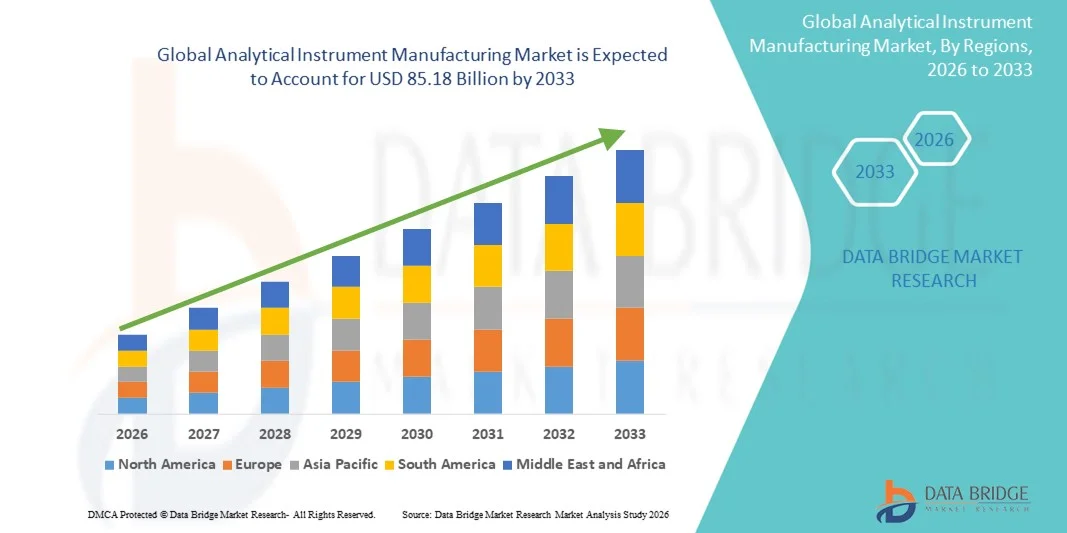
- De acordo com Data Bridge Market Research Analysis, o tamanho global do mercado de fabricação de instrumentos analíticos foi avaliado em52,25 mil milhões de dólares em 2025e espera-se alcançar85,18 mil milhões de USD até 2033, em umaCAGR de 6,30%durante o período de previsão
- O crescimento do mercado é amplamente impulsionado pelo aumento da adoção de tecnologias de laboratório avançadas e pela crescente necessidade de soluções analíticas precisas e automatizadas nas indústrias farmacêutica, química e de biotecnologia
- Além disso, a crescente demanda por testes de alto desempenho, controle de qualidade e pesquisa e desenvolvimento está impulsionando investimentos em instrumentos analíticos inovadores, aumentando a eficiência, precisão e reprodutibilidade, o que está acelerando a adoção de soluções de fabricação de instrumentos analíticos, aumentando significativamente o crescimento da indústria
Tamanho e previsão do mercado
Valor de mercado global (2025):52,25 mil milhões de USD
Valor de mercado previsto (2033):85,18 mil milhões de USD
Previsões CAGR (2026-2033):6.30%
Quais são as principais rotas do mercado de fabricação de instrumentos analíticos
- Os instrumentos analíticos, incluindo espectrômetros, cromatógrafos e sistemas de automação de laboratório, são componentes cada vez mais vitais nas indústrias farmacêutica, química, biotecnologia e de alimentos, devido à sua maior precisão, eficiência e capacidade de suportar testes de alto rendimento e fluxos de trabalho de P&D
- A crescente demanda por instrumentos analíticos é alimentada principalmente pela crescente ênfase no controle de qualidade, conformidade regulatória e adoção de soluções laboratoriais automatizadas e integradas, bem como a necessidade de resultados precisos e reprodutíveis em pesquisas e aplicações industriais
- A América do Norte dominou o mercado de fabricação de instrumentos analíticos com a maior parcela de receita de 38,7% em 2025, impulsionada pela adoção precoce de tecnologias de laboratório avançadas, forte infraestrutura de P&D, alto investimento em ciências da vida e indústrias químicas, e a presença de principais fabricantes de instrumentos analíticos
- Espera-se que a Ásia-Pacífico seja a região de crescimento mais rápido no mercado de fabricação de instrumentos analíticos durante o período previsto, registrando um CAGR de 8,5%, devido à rápida industrialização, expansão dos setores farmacêutico e de biotecnologia, aumento dos investimentos governamentais em pesquisa e crescente demanda por instrumentos laboratoriais de alta precisão
- O segmento de cromatografia dominou a maior quota de receita de mercado de 47,5% em 2025, impulsionada pela sua adoção generalizada em laboratórios de testes farmacêuticos, biotecnológicos e ambientais
Âmbito de aplicação do relatório e segmentação do mercado de fabrico de instrumentos analíticos
|
Atributos |
Instrumento analítico Manufacturing Key Market Insights |
|
Segmentos Cobertos |
|
|
Países abrangidos |
América do Norte
Europa
Ásia- Pacífico
Médio Oriente e África
América do Sul
|
|
Jogadores do mercado chave |
|
|
Oportunidades de Mercado |
|
|
Informações sobre o Valor Adicionado |
Além dos insights sobre cenários de mercado, como valor de mercado, taxa de crescimento, segmentação, cobertura geográfica e grandes atores, os relatórios de mercado curados pela Data Bridge Market Research também incluem análise de especialistas em profundidade, epidemiologia de pacientes, análise de pipelines, análise de preços e marco regulatório. |
Qual é a tendência chave no mercado de fabricação de instrumentos analíticos
Adoção crescente de instrumentos analíticos automatizados e de alto desempenho
- Uma tendência fundamental no mercado global de fabricação de instrumentos analíticos é a adoção crescente de instrumentos automatizados de alto rendimento em laboratórios de testes farmacêuticos, biotecnológicos e ambientais
- Automação reduz o erro humano, melhora a reprodutibilidade e acelera fluxos de trabalho experimentais, tornando instrumentos como sistemas de cromatografia líquida, espectrômetros de massa e máquinas de PCR automatizadas altamente desejáveis
- Por exemplo, em junho de 2024, a Agilent Technologies lançou seu sistema 1290 Infinity II UHPLC com capacidades de automação integradas, aumentando significativamente a produtividade do laboratório
- A tendência também é impulsionada pela crescente necessidade de análise multiparâmetros e pela integração de instrumentos com sistemas de gestão de informação de laboratório (LIMS) para a gestão de dados
- Os laboratórios estão cada vez mais focados na precisão, velocidade e eficiência, alimentando a demanda de instrumentos capazes de análise de alta resolução
- Avanços tecnológicos, como sistemas microfluídicos miniaturizados e plataformas modulares de instrumentos, estão permitindo fluxos de trabalho flexíveis e personalizáveis
- Aplicações crescentes na descoberta de medicamentos, monitoramento ambiental e diagnóstico clínico estão apoiando ainda mais a adoção
- Empresas como Thermo Fisher Scientific e Shimadzu estão investindo em P&D para desenvolver instrumentos de próxima geração que combinam automação, sensibilidade e versatilidade
- A mudança para sistemas analíticos automatizados é particularmente pronunciada na P&D farmacêutica, onde precisão e reprodutibilidade são fundamentais para a conformidade regulatória
- Nos mercados emergentes, as iniciativas de modernização de laboratórios estão a acelerar a utilização de instrumentos automatizados
- Capacidades de alto rendimento e multi-análise permitem a detecção simultânea de vários biomarcadores, economizando tempo e recursos
- No geral, a tendência para automação e integração na instrumentação analítica está reformulando as operações laboratoriais globalmente, melhorando a eficiência e a qualidade da saída
Dinâmica do mercado de fabricação de instrumentos analíticos
Controlador
Aumento da demanda por pesquisas farmacêuticas, biotecnológicas e acadêmicas
- O mercado global de fabricação de instrumentos analíticos está sendo significativamente impulsionado pelo aumento das atividades de I&D em farmacêuticos, biotecnologia e instituições de pesquisa acadêmica
- Por exemplo: Em março de 2025, a Waters Corporation expandiu seu portfólio de instrumentos analíticos para apoiar o rastreamento de drogas de alto rendimento, ilustrando o aumento da demanda da indústria
- A necessidade de medidas analíticas precisas, sensíveis e reprodutíveis na descoberta de medicamentos, controle de qualidade e diagnóstico é a adoção de instrumentos de combustível
- Os instrumentos analíticos são fundamentais para caracterização molecular, detecção de biomarcadores e garantia de qualidade em produtos farmacêuticos e biológicos
- Aumentar a prevalência de doenças crônicas e aumentar o foco na medicina personalizada estão impulsionando a demanda por instrumentos capazes de análise de alta resolução
- Os laboratórios de ensaios ambientais e de segurança alimentar também contribuem para o crescimento do mercado, exigindo instrumentos como cromatógrafos a gás e espectrómetros
- Avanços tecnológicos que melhoram a sensibilidade, o rendimento e a facilidade de uso incentivam ainda mais a adoção
- Instituições de investigação e organizações de investigação (OCR) estão a investir cada vez mais em instrumentos de ponta para melhorar as suas capacidades
- O aumento dos projetos de pesquisa financiados pelo governo e o aumento das colaborações entre a academia e a indústria são fatores de crescimento adicionais
- Expansão de centros de biotecnologia na América do Norte, Europa e Ásia-Pacífico reforça a demanda de instrumentos
- Globalmente, a necessidade crescente de ferramentas analíticas confiáveis, precisas e avançadas em vários setores está impulsionando o crescimento sustentado do mercado
Restrição/Desafio
Altos custos e requisitos de manutenção
- Apesar da forte procura, o elevado custo inicial dos instrumentos analíticos avançados constitui uma restrição significativa ao crescimento do mercado.
- Por exemplo, a cromatografia líquida de alta eficiência (UHPLC) e sistemas de espectrometria de massa de alta resolução custam muitas centenas de mil dólares, tornando-os inacessíveis para laboratórios menores
- Os requisitos de manutenção, calibração e serviço contínuos aumentam ainda mais as despesas operacionais, dissuadindo alguns usuários finais. Nas regiões em desenvolvimento, orçamentos limitados e lacunas de infra-estruturas restringem a adopção generalizada de sistemas analíticos sofisticados
- A complexidade dos instrumentos exige frequentemente pessoal treinado para a operação, aumentando os custos de pessoal e a dependência de conhecimentos especializados. Atrasos em serviço ou suporte técnico podem afetar fluxos de trabalho de laboratório, afetando a produtividade e ROI
- Consumíveis, reagentes e atualizações de software aumentam o custo total de propriedade, desencorajando a adoção em pequena escala. Os custos elevados podem também retardar a substituição de instrumentos legados, limitando a penetração de novas tecnologias
- Alguns laboratórios contam com testes de terceirização para CROs para evitar gastos de capital, impactando indiretamente as vendas de instrumentos. Enfrentar estes desafios através de modelos acessíveis, instrumentos modulares e contratos de serviços alargados é essencial para o crescimento do mercado
- Empresas como Agilent e Shimadzu começaram a oferecer opções de locação e locação para melhorar a acessibilidade para laboratórios menores. A gestão dos custos iniciais elevados e das despesas operacionais continua a ser um obstáculo fundamental, em especial para as instituições com restrições orçamentais
Como é segmentado o mercado de fabricação de instrumentos analíticos
O mercado é segmentado com base no tipo, usuário final e aplicação.
- Por Tipo
Com base no tipo, o mercado de fabricação de instrumentos analíticos é segmentado em cromatografia e espectrômetros. O segmento de cromatografia dominou a maior quota de receita de mercado de 47,5% em 2025, impulsionada pela sua ampla adoção em laboratórios de testes farmacêuticos, biotecnológicos e ambientais. Instrumentos de cromatografia como HPLC, GC e UHPLC são altamente valorizados por sua precisão, sensibilidade e capacidade de separar e quantificar misturas complexas. O domínio do segmento é ainda mais apoiado pela crescente demanda na descoberta de drogas, controle de qualidade e conformidade regulatória. Inovações tecnológicas contínuas, incluindo cromatografia de ultra-alta eficiência e manuseio automatizado de amostras, melhorar a eficiência e reprodutibilidade do laboratório. A América do Norte e a Europa representam os maiores mercados devido à alta prevalência de I&D farmacêutica e exigências regulatórias rigorosas. A integração de instrumentos de cromatografia com sistemas laboratoriais de gestão da informação (LIMS) e plataformas de automação aumenta a eficiência operacional e a precisão dos dados. Instituições acadêmicas, organizações de pesquisa de contratos (OCR) e empresas de biotecnologia também contribuem significativamente para a receita do mercado. Além disso, aumentar o monitoramento ambiental e os testes de segurança alimentar ampliam ainda mais a adoção do segmento. A versatilidade do segmento em aplicações, incluindo proteômica, metabolômica e análise clínica, cimenta sua liderança de mercado. Em geral, a cromatografia continua sendo a técnica analítica preferida devido à precisão, confiabilidade e aceitação regulatória.
Espera-se que o segmento de espectrômetros testemunhe o CAGR mais rápido de 22,3% de 2026 a 2033, impulsionado pela crescente demanda por caracterização molecular avançada, elucidação estrutural e análise de alto rendimento. Espectrômetros de massa, espectrômetros UV-Vis e espectrômetros de absorção atômica são cada vez mais adotados em laboratórios farmacêuticos, biotecnológicos e ambientais. Espectrômetros oferecem análise rápida, sensível e precisa, tornando-os ideais para o desenvolvimento de drogas, proteômica e pesquisa metabolômica. A crescente necessidade de controle de qualidade e monitoramento em tempo real na produção farmacêutica acelera a adoção. Avanços tecnológicos, como miniaturização, portabilidade e espectrometria de massa de alta resolução, impulsionam ainda mais o crescimento do mercado. As economias emergentes estão adotando espectrômetros devido ao aumento das iniciativas de modernização laboratorial. A integração com ferramentas automatizadas de manipulação de amostras e análise de dados aumenta a eficiência do fluxo de trabalho. Além disso, os espectrômetros são cada vez mais utilizados em pesquisas acadêmicas e governamentais para análise avançada de materiais e químicos. O segmento beneficia do aumento dos investimentos em biotecnologia e medicina personalizada. O gerenciamento e conectividade de dados baseados em nuvem melhoram a eficiência operacional, apoiando a adoção mais ampla. No geral, os espectrômetros estão ganhando rapidamente tração à medida que os laboratórios buscam ferramentas analíticas mais versáteis e de alto desempenho.
- Por Usuário Final
Com base no usuário final, o mercado é segmentado em farmácia e biotecnologia, industrial e aplicada, academia e governo, entre outros. O segmento farmacêutico e biotecnológico representou a maior parcela de receita de mercado de 49,1% em 2025, impulsionada por altos gastos em P&D, rigoroso cumprimento regulatório e crescente foco em biologia e medicina personalizada. Os instrumentos analíticos são fundamentais para a descoberta de drogas, desenvolvimento de formulações e garantia de qualidade. Inovação contínua em tecnologias analíticas, incluindo cromatografia e espectrometria, demanda de acionamentos. O segmento beneficia com o aumento da terceirização para organizações de pesquisa contratadas (OCRs), expansão de hubs farmacêuticos e a necessidade de testes de alto rendimento. Instrumentos analíticos automatizados estão ganhando tração para melhorar a eficiência, reprodutibilidade e gerenciamento de dados. América do Norte e Europa dominam devido a indústrias farmacêuticas maduras e quadros regulatórios fortes. O aumento da prevalência de doenças crônicas e a ênfase na medicina de precisão reforçam ainda mais a adoção. O aumento das colaborações entre a academia e a indústria também contribui para a demanda. Globalmente, a farmaco e a biotecnologia continuam a ser os principais utilizadores finais, devido ao investimento sustentado em requisitos analíticos de investigação e de conformidade.
Espera-se que o segmento industrial e aplicado testemunhe o CAGR mais rápido de 20,9% de 2026 a 2033, impulsionado pela crescente demanda por instrumentos analíticos em testes ambientais, segurança alimentar, fabricação química e análise de materiais. As indústrias adotam cada vez mais instrumentos de alta precisão para monitorar a qualidade do produto, conformidade regulatória e otimização de processos. O foco crescente na fabricação sustentável, monitoramento da poluição e adoção de combustíveis de teste de segurança. Instrumentos analíticos automatizados que reduzem o erro humano e aumentam a reprodutibilidade são particularmente favorecidos. As economias emergentes estão modernizando laboratórios para atender às normas internacionais, apoiando ainda mais o crescimento do mercado. A integração de instrumentos com análises de dados e plataformas de nuvem permite monitoramento remoto e manutenção preditiva. Setores industriais se beneficiam de testes rápidos, capacidades de análise múltipla e fluxos de trabalho flexíveis. No geral, aplicações industriais e aplicadas são o segmento de crescimento mais rápido devido ao aumento da pressão regulatória e da demanda por saídas analíticas de alta qualidade.
- Por Aplicação
Com base na aplicação, o mercado é segmentado em aplicações de pesquisa, aplicações clínicas, aplicações de diagnóstico, entre outros. O segmento de aplicações de pesquisa deteve o maior percentual de receita de mercado de 45,8% em 2025, impulsionado pelo uso extensivo em pesquisas acadêmicas, farmacêuticas e de biotecnologia. Instrumentos analíticos suportam a descoberta de drogas, biologia molecular, genômica, proteômica e estudos metabolômicos. Tecnologias analíticas avançadas, de triagem de alto desempenho e automação aumentam a eficiência da pesquisa. A crescente ênfase na medicina personalizada, na nova terapêutica e na inovação da pesquisa biológica impulsiona a adoção. América do Norte e Europa dominam o segmento devido à infraestrutura avançada de pesquisa e financiamento. A integração de instrumentos com sistemas laboratoriais de gestão da informação (LIMS) melhora a eficiência do fluxo de trabalho. CROs, startups de biotecnologia e universidades são contribuintes significativos para a receita. O segmento beneficia com o aumento da colaboração entre instituições de pesquisa públicas e privadas. Globalmente, as aplicações de investigação continuam a ser o principal motor da procura de instrumentos analíticos.
O segmento de aplicações diagnósticas é projetado para testemunhar o CAGR mais rápido de 21,4% de 2026 a 2033, alimentado pela crescente demanda por testes clínicos, diagnósticos moleculares e atendimento personalizado. Os instrumentos analíticos permitem a detecção precisa de biomarcadores, patógenos e mutações genéticas. Hospitais, centros de diagnóstico e laboratórios clínicos estão cada vez mais adotando instrumentos automatizados e de alto rendimento para resultados mais rápidos e confiáveis. A pandemia de COVID-19 acelerou os investimentos em infraestrutura de diagnóstico, reforçando a adoção a longo prazo. Os avanços tecnológicos em espectrometria e cromatografia permitem testes precisos e rápidos. A integração com os registos electrónicos de saúde (EHR) e os sistemas de informação de laboratório (LIS) melhora a eficiência operacional. Regiões emergentes estão expandindo as capacidades diagnósticas para melhorar o acesso à saúde. O aumento da sensibilização para a detecção precoce de doenças e cuidados de saúde preventivos apoia a adoção. Em geral, o segmento de aplicações diagnósticas é o que cresce mais rapidamente devido à expansão dos requisitos de testes clínicos e moleculares.
Qual é a região que detém a maior parte do mercado de fabricação de instrumentos analíticos
- América do Norte dominou o mercado de fabricação de instrumentos analíticos com a maior parcela de receita de 38,7% em 2025
- Impulsionado pela adoção precoce de tecnologias de laboratório avançadas, forte infraestrutura de I&D, alto investimento em ciências da vida e indústrias químicas, e a presença de principais fabricantes de instrumentos analíticos
- Os setores farmacêutico, biotecnológico e químico da região são os principais contribuintes para o crescimento do mercado
U.S. Analytical Instrument Manufacturing Market Insight
O mercado de fabricação de instrumentos analíticos dos EUA captou a maior participação de receita na América do Norte em 2025, alimentada pela alta adoção de sistemas de laboratório automatizados e de alto rendimento. Centros de pesquisa acadêmica e industrial dependem cada vez mais de instrumentos analíticos avançados para aplicações químicas, biológicas e farmacêuticas, impulsionando a expansão do mercado.
Europe Analytical Instrument Manufacturing Market Insight
Prevê-se que o mercado europeu de fabrico de instrumentos analíticos se expanda num CAGR substancial durante o período de previsão, impulsionado pela crescente automatização industrial, por sectores fortes de produtos farmacêuticos e biotecnológicos e por uma procura crescente de instrumentos analíticos de alta qualidade.
U.K. Analytical Instrument Manufacturing Market Insight
Espera-se que o mercado de fabricação de instrumentos analíticos do Reino Unido cresça constantemente devido ao aumento dos investimentos em pesquisas científicas, ao aumento da adoção de instrumentos laboratoriais avançados e à crescente demanda por soluções automatizadas em laboratórios acadêmicos e industriais.
Alemanha Analytical Instrument Manufacturing Market Insight
O mercado de fabricação de instrumentos analíticos da Alemanha está definido para expandir significativamente, impulsionado pela infraestrutura industrial e farmacêutica bem estabelecida do país. O crescimento do mercado é ainda apoiado pela forte ênfase da Alemanha na inovação e precisão na fabricação, juntamente com a adoção crescente de instrumentos analíticos ecológicos, eficientes em termos energéticos e integrados digitalmente em laboratórios. O crescente foco no controle de qualidade, conformidade regulatória e pesquisas avançadas em produtos farmacêuticos e químicos continua a impulsionar a demanda por soluções analíticas de alto desempenho.
Visão do mercado de instrumentos analíticos da Ásia-Pacífico
O mercado de fabricação de instrumentos analíticos Ásia-Pacífico está preparado para crescer no mais rápido CAGR de 8,5% durante o período de previsão, alimentado pela rápida industrialização e pela expansão dos setores farmacêutico e de biotecnologia na região. O aumento dos investimentos governamentais em pesquisa científica, o crescente enfoque nas ciências da vida e indústrias químicas e a adoção crescente de instrumentos de laboratório automatizados de alta precisão são fatores fundamentais para o crescimento do mercado. Além disso, as iniciativas de pesquisa acadêmica e industrial em expansão da região estão contribuindo para uma maior demanda por soluções analíticas avançadas.
Japão Analytical Instrument Manufacturing Market Insight
O mercado de fabricação de instrumentos analíticos do Japão está ganhando ímpeto devido à adoção precoce de tecnologias de laboratório avançadas, fortes atividades industriais e acadêmicas de I&D e crescente demanda por sistemas analíticos de alto desempenho em pesquisas farmacêuticas, químicas e biotecnológicas. A crescente ênfase na precisão, eficiência e inovação nos laboratórios, juntamente com o apoio governamental à infraestrutura de pesquisa, está fortalecendo ainda mais a trajetória de crescimento do mercado.
China Analytical Instrument Manufacturing Market Insight
O mercado de fabricação de instrumentos analíticos da China representou a maior participação de receita na Ásia-Pacífico em 2025, impulsionada pela rápida industrialização, forte apoio do governo à pesquisa científica e alta adoção de instrumentos laboratoriais analíticos avançados. As indústrias farmacêuticas e de biotecnologia em expansão do país, juntamente com o crescente investimento em P&D e a presença de fabricantes de instrumentos nacionais fortes, são os principais contribuintes para o crescimento do mercado. Além disso, as crescentes iniciativas de investigação académica e os requisitos de controlo da qualidade industrial continuam a aumentar a procura de soluções analíticas sofisticadas.
Quais são as principais empresas no mercado de fabricação de instrumentos analíticos
A indústria de fabricação de instrumentos analíticos é liderada principalmente por empresas bem estabelecidas, incluindo:
- Tecnologias Agilent(EUA)
- Thermo Fisher Scientific(EUA)
- Shimadzu Corporation(Japão)
- PerkinElmer(EUA)
- Waters Corporation (EUA)
- Bruker Corporation (EUA)
- Danaher Corporation (EUA)
- Mettler-Toledo International (Suíça)
- HORIBA, Ltd. (Japão)
- JEOL Ltd. (Japão)
- Hitachi High-Technologies Corporation (Japão)
- Bio-Rad Laboratories (EUA)
- Analytik Jena (Alemanha)
- Malvern Painalytic (U.K.)
- Oxford Instruments (U.K.)
- Metrohm AG (Suíça)
- Eppendorf AG (Alemanha)
- Thermo Electron Corporation (EUA)
- Waters India Pvt. Ltd. (Índia)
- Agilent Technologies India Pvt. Ltd. (Índia)
Quais são as últimas evoluções no mercado de fabricação de instrumentos analíticos
- Em junho de 2021, a Agilent Technologies, Inc. lançou novos espectrômetros de massa quádruplos LC/MS e GC/MS equipados com inteligência de instrumentos embutidos para simplificar as operações laboratoriais e melhorar o desempenho analítico em análises complexas de amostras
- Em março de 2022, Sartorius AG anunciou a aquisição da divisão de cromatografia da Novasep, acrescentando sistemas de cromatografia inovadores para análise de biomoléculas ao seu portfólio de instrumentos analíticos – ampliando suas ofertas de fluxo de trabalho contínuo de produção biológica
- Em fevereiro de 2022, Thermo Fisher Scientific expandiu seu portfólio de consumíveis de cromatografia e espectrometria de massa, visando melhorar o desempenho analítico e o manuseio de amostras para cromatografia e fluxos de trabalho de MS em laboratórios de pesquisa e rotina
- Em junho de 2023, Malvern Panalytical Ltd lançou o sistema de análise de rastreamento de nanopartículas NanoSight Pro, oferecendo medições de ultra-alta resolução com melhorias de aprendizado de máquina para fornecer análise de partículas mais rápida para aplicações de pesquisa e ciência de materiais
- Em abril de 2024, a Agilent Technologies introduziu o Sistema de Diluição Avançada (ADS 2) para fluxos de trabalho ICP-MS e ICP-OES, projetados para melhorar a produtividade laboratorial e simplificar a preparação de amostras em testes ambientais, farmacêuticos e industriais
- Em julho de 2024, a Malvern Painalytics adquiriu a Micromerititics Instrument Corporation, com o objetivo de expandir seu portfólio de soluções analíticas em dimensionamento de partículas, área superficial e medição de porosidade — reforçando suas capacidades de caracterização de materiais
SKU-
Obtenha acesso online ao relatório sobre a primeira nuvem de inteligência de mercado do mundo

- Painel interativo de análise de dados
- Painel de análise da empresa para oportunidades de elevado potencial de crescimento
- Acesso de analista de pesquisa para personalização e customização. consultas
- Análise da concorrência com painel interativo
- Últimas notícias, atualizações e atualizações Análise de tendências
- Aproveite o poder da análise de benchmark para um rastreio abrangente da concorrência
Metodologia de Investigação
A recolha de dados e a análise do ano base são feitas através de módulos de recolha de dados com amostras grandes. A etapa inclui a obtenção de informações de mercado ou dados relacionados através de diversas fontes e estratégias. Inclui examinar e planear antecipadamente todos os dados adquiridos no passado. Da mesma forma, envolve o exame de inconsistências de informação observadas em diferentes fontes de informação. Os dados de mercado são analisados e estimados utilizando modelos estatísticos e coerentes de mercado. Além disso, a análise da quota de mercado e a análise das principais tendências são os principais fatores de sucesso no relatório de mercado. Para saber mais, solicite uma chamada de analista ou abra a sua consulta.
A principal metodologia de investigação utilizada pela equipa de investigação do DBMR é a triangulação de dados que envolve a mineração de dados, a análise do impacto das variáveis de dados no mercado e a validação primária (especialista do setor). Os modelos de dados incluem grelha de posicionamento de fornecedores, análise da linha de tempo do mercado, visão geral e guia de mercado, grelha de posicionamento da empresa, análise de patentes, análise de preços, análise da quota de mercado da empresa, normas de medição, análise global versus regional e de participação dos fornecedores. Para saber mais sobre a metodologia de investigação, faça uma consulta para falar com os nossos especialistas do setor.
Personalização disponível
A Data Bridge Market Research é líder em investigação formativa avançada. Orgulhamo-nos de servir os nossos clientes novos e existentes com dados e análises que correspondem e atendem aos seus objetivos. O relatório pode ser personalizado para incluir análise de tendências de preços de marcas-alvo, compreensão do mercado para países adicionais (solicite a lista de países), dados de resultados de ensaios clínicos, revisão de literatura, mercado remodelado e análise de base de produtos . A análise de mercado dos concorrentes-alvo pode ser analisada desde análises baseadas em tecnologia até estratégias de carteira de mercado. Podemos adicionar quantos concorrentes necessitar de dados no formato e estilo de dados que procura. A nossa equipa de analistas também pode fornecer dados em tabelas dinâmicas de ficheiros Excel em bruto (livro de factos) ou pode ajudá-lo a criar apresentações a partir dos conjuntos de dados disponíveis no relatório.











