


Segmentação do mercado de têxteis médicos antimicrobianos, por tecido (Cotton, Poliamida, Poliéster, Outros), agentes (Metal & Metallic Salts, compostos orgânicos sintéticos, agentes baseados em bio), aplicação (Uniformidade médica e aparelhos, estofamento, têxteis cirúrgicos, roupas de cuidados de incontinência, tratamento de feridas, outros) - Tendências industriais e previsão para 2033
Qual é o tamanho e a taxa de crescimento do mercado de têxteis médicos antimicrobianos
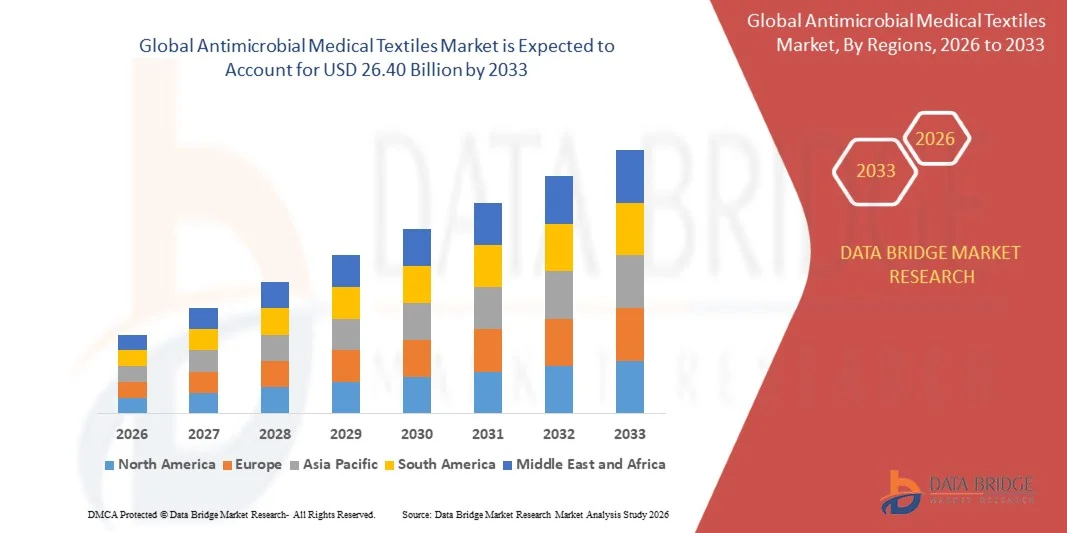
- De acordo com a análise de mercado, os têxteis médicos antimicrobianos globais foram avaliados em aproximadamente13,80 mil milhões de dólares em 2025e é projetado para alcançar26,40 mil milhões de USD até 2033, crescendo emCAGR de 7,5% de 2026 a 2033.
- O mercado está a assistir a um forte crescimento, impulsionado pelo aumento da prevalência de infecções associadas aos cuidados de saúde (IRAS), pelo aumento dos gastos com os cuidados de saúde, pela crescente ênfase na prevenção de infecções e higiene hospitalar e pela crescente adopção de tecidos antimicrobianos nos serviços de saúde. Tecidos médicos antimicrobianos são cada vez mais usados em vestidos de hospital, cortinas cirúrgicas, roupa de cama, cortinas de privacidade, curativos de feridas e outros produtos de saúde para inibir o crescimento microbiano e apoiar ambientes higiênicos.
- O aumento da procura de têxteis antimicrobianos não tecidos, agentes antimicrobianos à base de prata e metal, tecidos médicos reutilizáveis e têxteis capazes de suportar repetidas lavagens e esterilizações está a criar novas oportunidades de crescimento. Produtos de saúde e higiene e bens não implantáveis estão ganhando força à medida que os hospitais usam cada vez mais têxteis antimicrobianos para proteção do paciente, aplicações cirúrgicas, cuidados com feridas, cama e outras aplicações de controle de infecção. Os avanços tecnológicos em acabamentos antimicrobianos, nanotecnologia e o desenvolvimento de tratamentos antimicrobianos duráveis estão apoiando ainda mais a expansão do mercado.
Tamanho e previsão do mercado
- Valor de mercado (2025): 13,80 mil milhões de USD
- Valor de mercado previsto (2033): 26,40 milhões de USD
- Previsões CAGR (2026-2033): 7,5%
- Região líder em 2025: América do Norte
- Região de crescimento mais rápido: Ásia-Pacífico
Quais são as principais rotas do mercado de têxteis médicos antimicrobianos
- A América do Norte dominou o Mercado de Têxteis Médicos Antimicrobiais, representando 41,2% de receita em 2025, apoiado por infraestrutura de saúde avançada, rigorosos requisitos de controle de infecção, alto gasto em saúde e crescente adoção de têxteis antimicrobianos em hospitais e unidades de saúde. Forte demanda por produtos de prevenção de infecções, incluindo roupa de cama antimicrobiana, têxteis cirúrgicos, vestidos e cortinas, apoiou ainda mais a posição líder do mercado da região.
- Espera-se que a Ásia Pacífico testemunhe o crescimento mais rápido do Mercado de Têxteis Médicos Antimicrobiais, registrando um CAGR de mais de 5,5% durante o período previsto, apoiado pela expansão da infraestrutura de saúde, aumento dos gastos com saúde, aumento da conscientização das práticas de controle de infecções e crescente demanda por têxteis médicos higiênicos em toda a China, Índia, Japão e Coreia do Sul.
- Os sais prateados e metálicos dominaram o mercado por agentes ativos, representando 47,8% de receita em 2025, apoiados pelas propriedades antimicrobianas de amplo espectro de tratamentos à base de prata e sua aplicação em vestidos de hospital, cortinas, lençóis e outros têxteis de saúde. Espera-se também que o segmento mantenha forte crescimento durante o período de previsão, pois os profissionais de saúde continuam priorizando a proteção antimicrobiana duradoura.
- Os vestidos e cortinas cirúrgicos dominaram o mercado por tipo de produto, representando 34,6% de receita em 2025, impulsionado pela crescente ênfase na prevenção de infecções durante procedimentos cirúrgicos e pela necessidade de têxteis médicos que combinam proteção antimicrobiana com desempenho de barreira de fluidos. Espera-se que os curativos de cuidados com feridas testemunhem forte crescimento durante o período de previsão, devido à crescente demanda por soluções de infecção-controle no manejo da ferida.
- Tecidos não tecidos dominaram o mercado por tipo de tecido, representando 58,3% de renda em 2025, apoiados pelo seu uso extensivo em têxteis médicos descartáveis e de uso limitado, incluindo cortinas cirúrgicas, vestidos, lenços e outros produtos de controle de infecção. O segmento também está posicionado para um forte crescimento, pois os serviços de saúde adotam cada vez mais produtos de uso único para apoiar a prevenção de infecções e simplificar as exigências de esterilização e lavagem.
- Hospitais e clínicas dominavam o mercado pelo uso final, representando 61,7% de receita em 2025, apoiada por elevados volumes de pacientes, rigorosos protocolos de prevenção de infecção e uso extensivo de aventais antimicrobianos, cortinas cirúrgicas, roupa de cama, roupa de cama e produtos para feridas. Espera-se que as instalações de cuidados de longa duração testemunhem um crescimento mais rápido à medida que os têxteis antimicrobianos se expandem para além dos hospitais de cuidados agudos para ambientes de enfermagem e de cuidados de longa duração.
Segmentação do Mercado de Têxteis Médicos Antimicrobiais
|
Atributos |
Antimicrobial Médicos Têxteis Principais Insights Mercado |
|
Segmentos Cobertos |
|
|
Países abrangidos |
América do Norte
Europa
Ásia- Pacífico
Médio Oriente e África
América do Sul
|
|
Jogadores do mercado chave |
|
|
Oportunidades de Mercado |
|
|
Informações sobre o Valor Adicionado |
Além dos insights sobre cenários de mercado, como valor de mercado, taxa de crescimento, segmentação, cobertura geográfica e principais atores, os relatórios de mercado curados pela Data Bridge Market Research também incluem análise de importação, visão geral da capacidade de produção, análise do consumo de produção, análise de tendências de preços, cenário de mudança climática, análise da cadeia de suprimentos, análise da cadeia de valor, visão geral da matéria-prima/consumíveis, critérios de seleção de fornecedores, Análise de PESTLE, Análise de Porter e quadro regulatório. |
Qual é a tendência chave no mercado de têxteis médicos antimicrobianos
- Os fabricantes de têxteis médicos antimicrobianos estão cada vez mais focados em tratamentos antimicrobianos duráveis e nanotecnologia avançada, integrando prata, óxido de cobre, óxido de zinco e outros agentes antimicrobianos em fibras, revestimentos e acabamentos têxteis para proporcionar proteção duradoura contra bactérias, fungos e outros microrganismos.
- O desenvolvimento de têxteis médicos antimicrobianos sustentáveis e multifuncionais vem ganhando força, pois fabricantes e pesquisadores buscam alternativas que combinem desempenho antimicrobiano com biocompatibilidade, compatibilidade ambiental, propriedades de autolimpeza e durabilidade.
- Por exemplo, em setembro de 2025, a ICAR-CIRCOT assinou um MoU com Mega Bags, Pune, para licenciamento de tecnologia antimicrobiana de algodão nanoprata. A tecnologia oferece propriedades antimicrobianas para tecidos de algodão através do acabamento de nanoprata, demonstrando a crescente atividade de comercialização e transferência de tecnologia em torno de tratamentos têxteis antimicrobianos. Embora a aplicação inicial anunciada no âmbito do acordo fosse a embalagem de flores, o desenvolvimento demonstra o movimento mais amplo em direção às tecnologias têxteis antimicrobianas em escala comercial.
- O desenvolvimento de têxteis médicos antimicrobianos também está avançando para a prevenção e validação clínica de infecções baseadas em evidências, com fabricantes e pesquisadores avaliando a eficácia dos têxteis tratados em condições reais de saúde, em vez de confiar apenas em testes antimicrobianos laboratoriais.
Quais são os principais condutores do mercado de têxteis médicos antimicrobianos
- O aumento da prevalência de infecções associadas aos cuidados de saúde (IRAS) e a crescente ênfase na prevenção de infecções estão impulsionando a demanda de têxteis médicos antimicrobianos em hospitais, clínicas, centros cirúrgicos ambulatoriais e instalações de cuidados prolongados. Vestidos cirúrgicos, cortinas, roupa de cama, cortinas de privacidade, vestidos de paciente e uniformes de equipe estão cada vez mais incorporando tratamentos antimicrobianos para inibir o crescimento microbiano e apoiar ambientes de saúde mais seguros.
- O aumento do gasto em saúde e a modernização da infraestrutura de saúde estão incentivando os serviços de saúde a adotar tecidos médicos avançados que proporcionam proteção antimicrobiana, mantendo a durabilidade, conforto e resistência à lavagem.
- Avanços em agentes antimicrobianos, nanotecnologia e tecnologias duráveis de acabamento têxtil estão criando têxteis médicos de maior desempenho com maior eficácia antimicrobiana e durabilidade. Os fabricantes estão cada vez mais desenvolvendo tratamentos antimicrobianos à base de prata, metálicos, bio-baseados, e outros, enquanto pesquisas também estão mudando para tecnologias antimicrobianas não-leaching e mais sustentáveis para manter a proteção enquanto abordam considerações ambientais.
- Por exemplo, em junho de 2025, Heraeus Precious Metals e RUDOLF firmaram uma parceria estratégica para trazer tecnologia antimicrobiana AGXX para a indústria têxtil. A tecnologia utiliza uma reação catalítica envolvendo dois metais preciosos para gerar espécies reativas de oxigênio na presença de umidade do ar, proporcionando atividade antimicrobiana através de um mecanismo de regeneração contínua.
- A crescente demanda por soluções antimicrobianas sustentáveis e duradouras também está influenciando o desenvolvimento de produtos, com fabricantes focando em agentes antimicrobianos que podem manter o desempenho após lavagem repetida, reduzindo o impacto ambiental.
Que fatores estão desafiando o crescimento do mercado de têxteis médicos antimicrobianos
- Altos custos associados ao tratamento antimicrobiano, tecnologias avançadas de acabamento e tecidos especializados de grau médico podem desafiar a expansão do mercado, especialmente para os prestadores de cuidados de saúde e fabricantes sensíveis ao custo. A necessidade de manter a eficácia antimicrobiana ao mesmo tempo que atende aos requisitos de durabilidade, conforto, resistência à lavagem e biocompatibilidade pode aumentar os custos de desenvolvimento e fabricação do produto.
- Os requisitos regulamentares e as preocupações com a segurança e durabilidade dos agentes antimicrobianos continuam a ser importantes desafios para os fabricantes. Os produtos que utilizam prata, óxido de zinco, nanopartículas e outras substâncias antimicrobianas precisam demonstrar proteção microbiana efetiva, ao mesmo tempo que abordam potenciais preocupações relacionadas à migração química, exposição cutânea, impacto ambiental e desempenho após lavagem e esterilização repetidas.
- Por exemplo, em 19 de setembro de 2025, a ICAR-CIRCOT assinou um memorando com Mega Bags, Pune, para licenciar a tecnologia antimicrobiana de algodão nanoprata. A tecnologia fornece propriedades antimicrobianas para tecidos de algodão através de acabamento de nanoprata, demonstrando o desenvolvimento contínuo e comercialização de tecnologias avançadas de produtos têxteis antimicrobianos. A necessidade de validar o desempenho antimicrobiano e traduzir tecnologias de laboratório em produção comercial escalável destaca os desafios técnicos e de comercialização dentro do mercado.
- Manter o desempenho antimicrobiano após lavagem repetida e uso prolongado continua a ser um desafio técnico fundamental para os fabricantes de têxteis médicos. Têxteis de saúde, como lençóis de cama, vestidos, cortinas e cortinas passam por lavagem frequente, esterilização e desgaste mecânico, o que pode reduzir a eficácia dos tratamentos antimicrobianos aplicados à superfície.
Como é segmentado o mercado de têxteis médicos antimicrobianos
O mercado é segmentado com base em Tecido, Agentes e Aplicação.
- Por Tecido
Com base no tecido, o mercado de têxteis médicos antimicrobianos é segmentado em algodão, poliamida, poliéster e outros. O segmento Cotton detinha a maior quota de receita de mercado de 48,23% em 2025, apoiada pelas suas propriedades relevantes e aplicações médico-têxteis. O segmento é ainda apoiado pelo aumento da demanda por tecidos antimicrobianos em todo o vestuário hospitalar, têxteis cirúrgicos, produtos para feridas e outras aplicações de saúde.
Espera-se que o segmento de poliéster testemunhe o crescimento mais rápido durante o período de previsão, registrando um CAGR de 7,98% de 2026 a 2033, impulsionado pelo aumento da demanda por [durezabilidade/gestão de umidade/respirabilidade/desempenho de antimicrobianos] em aplicações médicas e têxteis de saúde.
- Por Agentes
Com base em agentes, o mercado de têxteis médicos antimicrobianos é segmentado em sais metálicos, compostos orgânicos sintéticos e agentes biobaseados. O segmento Metal & Metallic Salts teve a maior parte de receita de mercado de 38,73% em 2025, apoiada pelo uso generalizado de prata, cobre, zinco e outros agentes antimicrobianos metálicos devido às suas propriedades antimicrobianas de amplo espectro e aplicação em tecidos médicos.
Espera-se que o segmento de Agentes Biobaseados testemunhe o crescimento mais rápido durante o período de previsão, registrando um CAGR de 6,37% de 2026 a 2033, impulsionado pelo aumento da demanda por soluções antimicrobianas sustentáveis, crescentes preocupações ambientais associadas aos antimicrobianos convencionais e crescente interesse em tratamentos têxteis naturalmente derivados e biodegradáveis.
- Por Aplicação
Com base na aplicação, o mercado de têxteis médicos antimicrobianos é segmentado em uniforme médico & Apparels, estofamento, têxteis cirúrgicos, vestuário de cuidados de incontinência, tratamento de feridas, e outros. O segmento Medical Uniform & Apparels teve a maior parcela de receita de mercado de 65,98% em 2025, apoiada pela crescente ênfase na prevenção de infecções, higiene e proteção microbiana em todos os serviços de saúde.
Espera-se que o segmento de Têxteis Cirúrgicos testemunhe o crescimento mais rápido durante o período previsto, registrando um CAGR de 6,75% de 2026 a 2033, impulsionado pelo aumento do gasto em saúde, aumento da prevalência de feridas crônicas e condições relacionadas à incontinência, e adoção crescente de produtos têxteis antimicrobianos para aplicações de cuidados ao paciente e controle de infecção.
Qual região detém a maior parte do mercado de têxteis médicos antimicrobianos
- A América do Norte dominou o mercado de têxteis médicos antimicrobianos com a maior parte de receita de 38,50% em 2025, apoiada por forte infraestrutura de saúde, crescente foco na prevenção de infecções, rigorosos padrões de higiene hospitalar e crescente adoção de têxteis antimicrobianos em vestidos cirúrgicos, cortinas, lençóis hospitalares, uniformes e outras aplicações médicas. A região é ainda apoiada por elevados gastos em saúde, redes hospitalares estabelecidas, crescente conscientização sobre infecções associadas à saúde e demanda por soluções têxteis antimicrobianas duradouras e reutilizáveis.
- Espera-se que a Ásia-Pacífico testemunhe o crescimento mais rápido durante o período de previsão, apoiado pelo rápido desenvolvimento de infraestrutura de saúde, expansão das redes hospitalares, aumento dos gastos com saúde, aumento da conscientização sobre a prevenção de infecções e adoção crescente de tecidos antimicrobianos em hospitais e instituições de saúde. China, Índia, Japão, Coreia do Sul e outras economias asiáticas emergentes estão contribuindo para o crescimento regional através da modernização da saúde, aumento da capacidade hospitalar e crescente demanda por soluções têxteis higiênicas e de controle de infecções.
U.S. Antimicrobial Medical Textiles Market Insight
O mercado de têxteis médicos antimicrobianos dos EUA está experimentando forte crescimento, impulsionado pelo aumento dos esforços de prevenção de infecções associadas à saúde, infraestrutura hospitalar avançada e adoção crescente de tecidos antimicrobianos em vestidos cirúrgicos, cortinas, roupas de cama, cortinas, uniformes e aplicações de cuidados com feridas. A demanda é ainda apoiada pela crescente conscientização das práticas de controle de infecções e avanços tecnológicos em têxteis tratados com prata, cobre e outros antimicrobianos. Pesquisas clínicas também relataram reduções em determinados indicadores de infecção associados à saúde com têxteis impregnados com óxido de cobre. No entanto, a orientação do CDC enfatiza que os têxteis antimicrobianos devem complementar, em vez de substituir, as práticas estabelecidas de limpeza, lavagem e controle de infecção.
Europa Antimicrobial Medical Textiles Market Insight
A Europa representa um mercado significativo para os têxteis médicos antimicrobianos, apoiado pelas infra-estruturas de cuidados de saúde bem desenvolvidas da região, por normas de higiene rigorosas e por uma maior concentração na prevenção de infecções associadas aos cuidados de saúde. A demanda é sustentada pelo aumento do gasto em saúde, pelo envelhecimento da população e pela adoção crescente de têxteis antimicrobianos em roupas cirúrgicas, curativos de feridas, lençóis hospitalares, lençóis, cortinas e outras aplicações de saúde. A Alemanha continua a ser um mercado importante na Europa devido ao seu sistema de saúde e às suas capacidades técnicas de fabrico têxtil, enquanto o Reino Unido, a França e a Itália continuam a apoiar a procura regional através de investimentos em instalações de saúde e práticas de controlo de infecções.
U.K. Antimicrobial Medical Textiles Market Insight
O mercado de produtos têxteis médicos antimicrobianos do Reino Unido é apoiado por fortes infra-estruturas de saúde, com ênfase crescente na prevenção de infecções e na adoção crescente de soluções têxteis higiênicas em hospitais e instalações de saúde. O setor de saúde do país continua se concentrando na redução de infecções associadas à saúde, criando demanda por têxteis antimicrobianos usados em vestidos cirúrgicos, uniformes médicos, produtos para feridas, lençóis, cortinas e outras aplicações de saúde. O Reino Unido também mantém mecanismos de avaliação baseados em evidências para produtos inovadores de prevenção de infecções através do Painel de Revisão Rápida focado no NHS, apoiando a avaliação de novas tecnologias e materiais.
Alemanha Antimicrobial Medical Textiles Market Insight
A Alemanha representa um mercado significativo para os têxteis médicos antimicrobianos na Europa, apoiado pela sua infra-estrutura de cuidados de saúde avançada, sistemas de aquisição de hospitais fortes e ênfase na prevenção de infecções e segurança do paciente. A adoção de têxteis antimicrobianos está aumentando em todo o vestuário cirúrgico, roupa de cama hospitalar, estofamento, cortinas, produtos para feridas, e outras aplicações de saúde onde o controle microbiano é importante. A indústria de têxteis e materiais da Alemanha também apoia a inovação em acabamentos antimicrobianos duráveis, fibras funcionais e soluções têxteis sustentáveis. Os requisitos regulamentares europeus rigorosos estão a incentivar os fabricantes a concentrarem-se em tratamentos antimicrobianos seguros, eficazes e ambientalmente responsáveis.
Asia-Pacific Antimicrobial Medical Textiles Market Insight
Espera-se que a Ásia-Pacífico testemunhe um crescimento significativo no mercado dos têxteis médicos antimicrobianos, impulsionado pela expansão da infraestrutura de saúde, aumento dos gastos com saúde e ênfase crescente na prevenção de infecções em hospitais e serviços de saúde. Países como China, Índia, Japão e Coreia do Sul estão apoiando a demanda regional através do desenvolvimento de hospitais, clínicas, serviços de longa duração e centros de saúde avançados. Aumentar a conscientização em relação às infecções associadas à saúde está incentivando os profissionais de saúde a adotar têxteis antimicrobianos em vestidos cirúrgicos, cortinas, uniformes médicos, lençóis de cama, produtos para feridas e outras aplicações de saúde. Além disso, os avanços em sal metálico à base de prata, sal metálico, bio-base e outros tratamentos antimicrobianos estão melhorando o desempenho funcional e durabilidade dos têxteis médicos.
Japão Antimicrobial Medical Textiles Market Insight
O mercado de têxteis médicos antimicrobianos do Japão é apoiado pela infraestrutura avançada de saúde do país, forte ênfase na higiene hospitalar e crescente foco na prevenção de infecções associadas à saúde. Têxteis médicos usados na cama hospitalar, aventais de pacientes, uniformes médicos, têxteis cirúrgicos e outras aplicações de saúde estão ganhando importância à medida que os profissionais de saúde buscam medidas eficazes para controlar a contaminação microbiana. O foco contínuo do Japão na resistência antimicrobiana e nas práticas de controle de infecções também suporta a demanda por tecnologias têxteis funcionais. O setor de saúde japonês está cada vez mais explorando agentes antimicrobianos, como prata, cobre, óxido de zinco e outros tratamentos avançados para os têxteis de saúde, enquanto durabilidade e desempenho após a lavagem repetida permanecem considerações importantes.
China Antimicrobial Medical Textiles Market Insight
O mercado de têxteis médicos antimicrobianos da China está passando por uma demanda crescente, apoiada pela expansão da infraestrutura de saúde, aumento da conscientização sobre a prevenção de infecções e adoção crescente de padrões de higiene hospitalar. Têxteis antimicrobianos são cada vez mais utilizados em ambientes cirúrgicos, vestuário de paciente, roupa de cama hospitalar, estofados, e outras aplicações de saúde onde a contaminação microbiana é uma preocupação. As iniciativas governamentais voltadas para a qualidade da saúde e o controle da infecção, juntamente com a expansão dos hospitais e dos serviços de saúde, estão apoiando o desenvolvimento do mercado.
Quais são as principais empresas no mercado de têxteis médicos antimicrobianos
A indústria de tecidos médicos antimicrobianos é liderada principalmente por empresas bem estabelecidas, incluindo:
- Milliken & Companhia(EUA)
- DuPont de Nemours, Inc.(EUA)
- Dow Inc.(EUA)
- Herculite Products Inc.(EUA)
- BioCote Limited(U.K.)
- PurThread Technologies, Inc. (EUA)
- Noble Biomaterials, Inc. (EUA)
- Microban International (EUA)
- Sanitized AG (Suíça)
- Sciessent LLC (EUA)
- Indorama Ventures Public Company Limited (Tailândia)
- Smith+Nephew plc (U.K.)
- Unitika Ltd. (Japão)
- Toyobo Co., Ltd (Japão)
- Sinanen Zeomic Co., Ltd. (Japão)
Quais são as últimas evoluções no mercado de têxteis médicos antimicrobianos
- Em junho de 2025, a Microban International introduziu o H2O Shield, uma tecnologia de acabamento de água livre de PFAS projetada para têxteis protetores e médicos. A tecnologia está posicionada para proporcionar proteção contra umidade, ao mesmo tempo que atende aos requisitos ambientais e regulamentares para tecidos técnicos e aplicações médicas têxteis.
- Em setembro de 2025, a ICAR-CIRCOT assinou um MoU com Mega Bags para licenciar sua tecnologia antimicrobiana de algodão nanoprata. O acordo prevê o acesso da Mega Bags à tecnologia de acabamento de nanoprata da ICAR-CIRCOT para produção de têxteis antimicrobianos de algodão, apoiando a comercialização de tratamentos avançados de têxteis antimicrobianos.
- Em junho de 2025, a Microban International expandiu seu portfólio de tecnologia têxtil antimicrobiana, com desenvolvimentos focados em produtos têxteis de saúde e hospitalidade e maior durabilidade em ciclos de lavagem repetidos. O desenvolvimento reflete o crescente foco da indústria na manutenção do desempenho antimicrobiano ao longo da vida útil de tecidos médicos reutilizáveis.
- Em outubro de 2025, a Microban International apresentou uma plataforma antimicrobiana bio-baseada para tecidos de saúde Medica 2025. A tecnologia enfatizou o fornecimento e a reciclagem renováveis ao mesmo tempo em que visava o desempenho antimicrobiano comparável aos tratamentos convencionais à base de metal, destacando a mudança para soluções antimicrobianas mais sustentáveis para os têxteis de saúde.
- Em maio de 2025, a Research publicou materiais avançados biodegradáveis para aplicações em saúde. Trabalho recente tem focado em fibras à base de polihidroxialcanoato e outros materiais bio-derivados que podem fornecer funcionalidade antimicrobiana, melhorando o perfil de sustentabilidade dos têxteis médicos. Estes desenvolvimentos são relevantes para os têxteis para feridas e outras aplicações têxteis para cuidados de saúde que exigem desempenho antimicrobiano e biodegradabilidade.
SKU-
Obtenha acesso online ao relatório sobre a primeira nuvem de inteligência de mercado do mundo

- Painel interativo de análise de dados
- Painel de análise da empresa para oportunidades de elevado potencial de crescimento
- Acesso de analista de pesquisa para personalização e customização. consultas
- Análise da concorrência com painel interativo
- Últimas notícias, atualizações e atualizações Análise de tendências
- Aproveite o poder da análise de benchmark para um rastreio abrangente da concorrência
Metodologia de Investigação
A recolha de dados e a análise do ano base são feitas através de módulos de recolha de dados com amostras grandes. A etapa inclui a obtenção de informações de mercado ou dados relacionados através de diversas fontes e estratégias. Inclui examinar e planear antecipadamente todos os dados adquiridos no passado. Da mesma forma, envolve o exame de inconsistências de informação observadas em diferentes fontes de informação. Os dados de mercado são analisados e estimados utilizando modelos estatísticos e coerentes de mercado. Além disso, a análise da quota de mercado e a análise das principais tendências são os principais fatores de sucesso no relatório de mercado. Para saber mais, solicite uma chamada de analista ou abra a sua consulta.
A principal metodologia de investigação utilizada pela equipa de investigação do DBMR é a triangulação de dados que envolve a mineração de dados, a análise do impacto das variáveis de dados no mercado e a validação primária (especialista do setor). Os modelos de dados incluem grelha de posicionamento de fornecedores, análise da linha de tempo do mercado, visão geral e guia de mercado, grelha de posicionamento da empresa, análise de patentes, análise de preços, análise da quota de mercado da empresa, normas de medição, análise global versus regional e de participação dos fornecedores. Para saber mais sobre a metodologia de investigação, faça uma consulta para falar com os nossos especialistas do setor.
Personalização disponível
A Data Bridge Market Research é líder em investigação formativa avançada. Orgulhamo-nos de servir os nossos clientes novos e existentes com dados e análises que correspondem e atendem aos seus objetivos. O relatório pode ser personalizado para incluir análise de tendências de preços de marcas-alvo, compreensão do mercado para países adicionais (solicite a lista de países), dados de resultados de ensaios clínicos, revisão de literatura, mercado remodelado e análise de base de produtos . A análise de mercado dos concorrentes-alvo pode ser analisada desde análises baseadas em tecnologia até estratégias de carteira de mercado. Podemos adicionar quantos concorrentes necessitar de dados no formato e estilo de dados que procura. A nossa equipa de analistas também pode fornecer dados em tabelas dinâmicas de ficheiros Excel em bruto (livro de factos) ou pode ajudá-lo a criar apresentações a partir dos conjuntos de dados disponíveis no relatório.











