


Segmentação Global de Produtos Químicos Bio-Renováveis, por Tipo (Ácido láctico, Ácido Sucínico, Acetona, Glicerol e Outros), Aplicação (Pacote, Alimentos e Bebidas, Cuidados Pessoais e Cosméticos, Indústria Química e Outros) - Tendências e Previsão da Indústria para 2033
Qual é o Tamanho e Visão Geral do Mercado de Produtos Químicos Bio-Renováveis
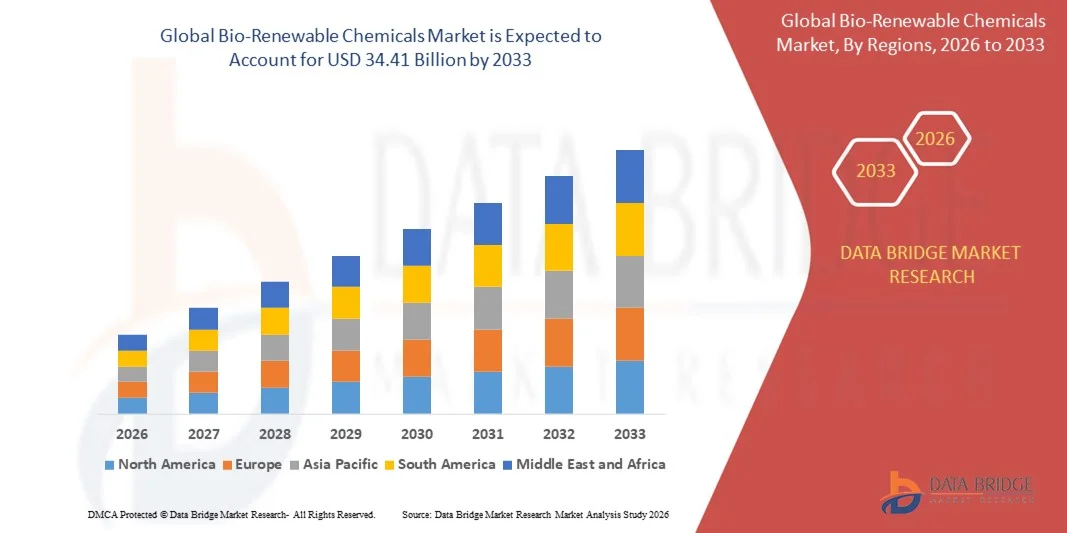
- A dimensão global do mercado de produtos químicos bio-renováveis foi avaliada emUSD 15,64 mil milhões em 2025e espera-se alcançar34,41 mil milhões de USD até 2033, em umaCAGR de 10,36%durante o período de previsão
- O crescimento do mercado é amplamente impulsionado pela crescente mudança para soluções químicas sustentáveis e ecológicas, apoiada pela crescente conscientização da redução de carbono e pela necessidade de substituir produtos químicos à base de petróleo em cadeias de valor industrial
- Além disso, a crescente demanda por materiais bio-baseados a partir de embalagens, alimentos, cuidados pessoais e aplicações industriais, combinadas com suporte regulatório para a química verde e práticas econômicas circulares, está acelerando a adoção. Estes factores convergentes estão a reforçar significativamente a dinâmica de crescimento do mercado dos produtos químicos bio-renováveis
Tamanho e previsão do mercado
- Valor de mercado global (2025):15,64 mil milhões de USD
- Valor de mercado previsto (2033):34,41 mil milhões de USD
- Previsões CAGR (2026-2033):10.36%
Quais são as principais rotas do mercado de produtos químicos bio-renováveis
- Produtos químicos bio-renováveis, derivados de biomassa e matérias-primas renováveis, estão se tornando componentes essenciais na fabricação química moderna devido ao seu menor impacto ambiental, biodegradabilidade e dependência reduzida dos recursos fósseis
- A expansão da adoção de produtos químicos bio-renováveis é impulsionada principalmente por regulamentos ambientais rigorosos, aumento dos compromissos de sustentabilidade das empresas e crescente preferência do usuário final por produtos ecológicos entre os setores de consumo e industrial
- Ásia-Pacífico domina o mercado de produtos químicos bio-renováveis com uma participação de 64,82%em 2025, devido à rápida industrialização, ampliação da capacidade de produção bio-baseada e crescente adoção de produtos químicos sustentáveis nos setores de embalagens, alimentos e bens de consumo
- Espera-se que a América do Norte seja a região de crescimento mais rápido no mercado de produtos químicos bio-renováveis durante o período de previsão devido ao aumento dos compromissos de sustentabilidade corporativa, aumento da demanda por plásticos bio-baseados e avanços na biotecnologia industrial
- O segmento ácido láctico dominou o mercado com market share de 35,5% em 2025, devido ao seu amplo uso em plásticos biodegradáveis, preservação de alimentos e formulações farmacêuticas. A sua forte procura é apoiada pelo aumento da adopção de ácido poliláctico em embalagens sustentáveis e pela crescente preferência por ingredientes bio-baseados nas indústrias de utilização final.Ácido lácticotambém se beneficia de tecnologias de produção bem estabelecidas e ampla aceitação regulatória, apoiando a comercialização em larga escala. O segmento continua ganhando tração devido à sua versatilidade e alinhamento com os objetivos globais de sustentabilidade
Âmbito do relatório e segmentação do mercado de produtos químicos bio-renováveis
|
Atributos |
Perspectivas essenciais do mercado de produtos químicos bio-renováveis |
|
Segmentos Cobertos |
|
|
Países abrangidos |
América do Norte
Europa
Ásia- Pacífico
Médio Oriente e África
América do Sul
|
|
Jogadores do mercado chave |
|
|
Oportunidades de Mercado |
|
|
Informações sobre o Valor Adicionado |
Além dos insights sobre cenários de mercado, como valor de mercado, taxa de crescimento, segmentação, cobertura geográfica e principais atores, os relatórios de mercado curados pela Data Bridge Market Research também incluem análise de importação, visão geral da capacidade de produção, análise do consumo de produção, análise de tendências de preços, cenário de mudança climática, análise da cadeia de suprimentos, análise da cadeia de valor, visão geral da matéria-prima/consumíveis, critérios de seleção de fornecedores, Análise de PESTLE, Análise de Porter e quadro regulatório. |
Qual é a tendência chave no mercado de produtos químicos bio-renováveis
Adoção crescente de alternativas químicas bio-baseadas e sustentáveis
- Uma tendência proeminente no mercado de produtos químicos bio-renováveis é a rápida adoção de alternativas bio-baseadas aos produtos petroquímicos convencionais, impulsionadas por crescentes preocupações ambientais e o impulso global para a sustentabilidade. Indústrias entre embalagens, bens de consumo e fabricação industrial estão cada vez mais integrando produtos químicos renováveis para reduzir as pegadas de carbono e melhorar o desempenho do ciclo de vida
- Por exemplo, a NatureWorks LLC ampliou o uso de seu biopolímero Ingeo derivado de matérias-primas renováveis para embalagens sustentáveis e produtos de consumo. Esta mudança apoia os compromissos da marca com a neutralidade do carbono e reforça o papel dos produtos químicos bio-renováveis em aplicações comerciais de grande escala
- O sector das embalagens está a incorporar cada vez mais produtos químicos bio-renováveis para satisfazer as exigências regulamentares destinadas a reduzir os resíduos plásticos e a promover os materiais compostáveis. Esta transição está a reforçar a procura de polímeros e intermediários bio-baseados nos segmentos de embalagem de alimentos e consumidores
- Os principais fabricantes químicos estão alinhando portfólios de produtos com estratégias renováveis de carbono para apoiar metas de sustentabilidade a longo prazo. As empresas estão investindo em rotas de produção baseadas em biorrefinação e fermentação para substituir insumos derivados de fósseis
- A tendência também é evidente nas formulações de cuidados pessoais e domiciliares, onde as marcas estão priorizando ingredientes biodegradáveis e à base de plantas para atender às expectativas de rótulo limpo. Isso está aumentando a viabilidade comercial de surfactantes bio-renováveis e produtos químicos especiais
- Globalmente, a crescente integração de alternativas de base biológica em várias indústrias está reforçando a transição para cadeias de valor químico mais verdes e posicionando produtos químicos bio-renováveis como facilitadores críticos de transformação industrial sustentável
Dinâmica do Mercado de Produtos Químicos Bio-Renováveis
Controlador
Regulamentos ambientais rigorosos e metas de redução de carbono
- Os regulamentos ambientais rigorosos que visam reduzir as emissões de gases com efeito de estufa e limitar a dependência de combustíveis fósseis são um dos principais motores do mercado de produtos químicos bio-renováveis. Governos e órgãos reguladores estão implementando políticas que incentivam a adoção de materiais renováveis e práticas sustentáveis de produção química
- Por exemplo, os regulamentos da União Europeia em matéria de comércio verde e de economia circular estão a pressionar os fabricantes a incorporar produtos químicos bio-baseados em aplicações de embalagens, automóveis e bens de consumo. Estas políticas estão a influenciar directamente as decisões em matéria de contratos públicos e a acelerar a procura do mercado
- As metas de sustentabilidade corporativa também estão reforçando esse motor, já que grandes organizações se comprometem a reduzir as emissões do Escopo 3 através de fontes renováveis. As empresas recorrem cada vez mais a produtos químicos bio-renováveis para cumprirem as normas ambientais e de conformidade
- A indústria química está respondendo através da expansão dos investimentos em tecnologias de baixo carbono e utilização de matérias-primas renováveis. Esta pressão regulamentar está a reformular as estratégias de produção e a incentivar a adopção a longo prazo de alternativas bio-baseadas
- À medida que os quadros regulamentares continuam a tornar-se mais rigorosos a nível mundial, espera-se que a dependência dos produtos químicos renováveis cresça constantemente. Esta dinâmica sustentada da política está a apoiar significativamente a expansão do mercado e o crescimento da indústria a longo prazo
Restrição/Desafio
Custos de produção elevados e economias limitadas de escala
- O mercado de produtos químicos bio-renováveis enfrenta desafios relacionados com altos custos de produção associados ao processamento de biomassa, tecnologias de fermentação e purificação a jusante. Em comparação com as rotas petroquímicas, a produção bio-baseada muitas vezes envolve maior complexidade operacional e investimento de capital
- Por exemplo, a Amyris tem enfrentado pressões de custos relacionadas com o escalonamento da produção à base de fermentação de moléculas renováveis, destacando os desafios financeiros de alcançar eficiência comercial. Estas restrições de custos podem limitar a competitividade dos preços às alternativas químicas convencionais
- Economias de escala limitadas em certos segmentos químicos bio-renováveis restringem ainda mais a otimização de custos, especialmente para produtos emergentes com volumes de produção menores. Tal afecta a rendibilidade e atrasa a penetração mais ampla no mercado
- A disponibilidade de matérias-primas e a volatilidade dos preços também contribuem para a incerteza de custos, especialmente para as empresas dependentes de matérias-primas agrícolas. A gestão da coerência da cadeia de abastecimento continua a ser um desafio operacional crítico
- Apesar dos avanços tecnológicos em curso, a obtenção de uma produção em larga escala e eficiente em termos de custos continua a ser uma restrição fundamental. Esses desafios pressionam os fabricantes a inovar, otimizar processos e garantir estratégias de longo prazo para sustentar o crescimento do mercado
Como é segmentado o mercado de produtos químicos bio-renováveis
O mercado é segmentado com base no tipo e aplicação.
- Por Tipo
Com base no tipo, o mercado de produtos químicos bio-renováveis é segmentado em ácido láctico, ácido succínico, acetona, glicerol, entre outros. O segmento de ácido láctico dominou o mercado com a maior parcela de receita de 35,5% em 2025, impulsionada pelo seu amplo uso emplásticos biodegradáveis, preservação de alimentos e formulações farmacêuticas. A sua forte procura é apoiada pelo aumento da adopção de ácido poliláctico em embalagens sustentáveis e pela crescente preferência por ingredientes bio-baseados nas indústrias de utilização final. O ácido láctico também beneficia de tecnologias de produção bem estabelecidas e ampla aceitação regulatória, apoiando a comercialização em larga escala. O segmento continua ganhando tração devido à sua versatilidade e alinhamento com as metas globais de sustentabilidade.
Espera-se que o segmento de ácido succínico testemunhe a taxa de crescimento mais rápida de 2026 a 2033, alimentado pelo aumento do uso em polímeros, resinas e solventes bio-baseados. Seu papel como uma plataforma química para a produção de materiais biodegradáveis e produtos químicos especializados está impulsionando o interesse industrial. Os crescentes investimentos em infraestrutura de bio-refinaria e avanços em tecnologias de fermentação estão apoiando ainda mais o rápido crescimento deste segmento em múltiplas aplicações.
- Por Aplicação
Com base na aplicação, o mercado de produtos químicos bio-renováveis é segmentado em embalagens, alimentos e bebidas, cuidados pessoais e cosméticos, indústria química, entre outros. O segmento de embalagens dominou o mercado em 2025, apoiado pela forte demanda por materiais sustentáveis, compostáveis e biobaseados como alternativas aos plásticos convencionais. A pressão regulatória sobre os plásticos de uso único e o aumento dos compromissos de marca em relação às embalagens eco-friendly são fatores fundamentais que reforçam a dominância do segmento. Produtos químicos bio-renováveis são amplamente utilizados em filmes, revestimentos e formatos de embalagem rígidos para reduzir o impacto ambiental. O segmento beneficia do consumo de alto volume e da inovação contínua do produto.
O segmento de cuidados pessoais e cosméticos é projetado para registrar o crescimento mais rápido durante o período de previsão, impulsionado pelo aumento da preferência do consumidor por formulações naturais, de base vegetal e de rótulo limpo. Produtos químicos bio-renováveis são cada vez mais utilizados em surfactantes, emolientes e conservantes devido à sua baixa toxicidade e biodegradabilidade. A expansão dos mercados de cosméticos premium e a regulamentação mais rigorosa em matéria de ingredientes sintéticos estão a acelerar ainda mais a adopção neste segmento de aplicação.
Que região detém a maior parte do mercado de produtos químicos bio-renováveis
- A Ásia-Pacífico dominou o mercado de produtos químicos bio-renováveis com a maior quota de receita de 64,82% em 2025, impulsionada pela rápida industrialização, pela expansão da capacidade de produção bio-baseada, e pela adoção crescente de produtos químicos sustentáveis nos setores de embalagens, alimentos e bens de consumo
- A região beneficia da disponibilidade abundante de matérias-primas agrícolas, de capacidades de produção rentáveis e de investimentos crescentes em bio-refinarias, apoiando a comercialização em larga escala de produtos químicos bio-renováveis
- As políticas governamentais de apoio à promoção da química verde, o crescimento da indústria química orientada para as exportações e o aumento da sensibilização ambiental nas economias em desenvolvimento estão a acelerar o crescimento do mercado regional
China Bio-Renewable Chemicals Market Insight
A China detinha a maior participação no mercado de produtos químicos bio-renováveis da Ásia-Pacífico em 2025, apoiado pela sua forte base de produção química e investimentos significativos em materiais bio-baseados e biotecnologia industrial. O foco do país em reduzir a dependência de petroquímicos, combinado com a produção em larga escala de plásticos biodegradáveis e intermediários bio-baseados, está impulsionando a demanda. A expansão das aplicações em embalagens, têxteis e produtos químicos industriais reforça ainda mais a posição da China no mercado.
Índia Bio-Renewable Chemicals Market Insight
A Índia está testemunhando o crescimento mais rápido na região Ásia-Pacífico, impulsionado pela crescente ênfase na sustentabilidade, o aumento da demanda de produtos químicos bio-baseados em alimentos, cuidados pessoais e agricultura, e a expansão da capacidade de fabricação doméstica. As iniciativas governamentais de apoio ao desenvolvimento da bioeconomia e à utilização de matérias-primas renováveis estão a impulsionar a produção. O crescimento é ainda apoiado pela forte produção agrícola e pelo aumento dos investimentos em tecnologias de fermentação e bioprocessamento.
Informação sobre o mercado de produtos químicos bio-renováveis na Europa
O mercado europeu de produtos químicos bio-renováveis está em constante expansão, apoiado por regulamentos ambientais rigorosos, forte ênfase nas práticas de economia circular e alta adoção de materiais sustentáveis entre as indústrias. A demanda é impulsionada por fabricantes de embalagens, automóveis e bens de consumo que procuram reduzir as pegadas de carbono. As capacidades avançadas de I&D e o apoio regulamentar à inovação baseada na biodiversidade continuam a reforçar o crescimento regional.
Alemanha Bio-Renewable Chemicals Market Insight
O mercado de produtos químicos bio-renováveis da Alemanha é impulsionado pela sua liderança em fabricação química sustentável, forte ecossistema industrial de I&D e adoção precoce de princípios de química verde. O foco do país em materiais bio-baseados de alto desempenho e integração de produtos químicos renováveis em cadeias de valor industrial suporta a demanda constante. A colaboração entre empresas químicas, instituições de pesquisa e formuladores de políticas promove a inovação contínua.
Informação sobre o mercado de produtos químicos renováveis no Reino Unido
O mercado do Reino Unido é apoiado por investimentos crescentes em desenvolvimento de bioeconomia, demanda crescente por produtos de consumo sustentáveis e forte colaboração acadêmico-indústria. O foco na redução de resíduos de plástico e na promoção de alternativas bio-baseadas em embalagens e cuidados pessoais está na condução da adoção. As metas de sustentabilidade apoiadas pelo governo e o financiamento da inovação apoiam ainda mais a expansão do mercado.
América do Norte Bio-Renewable Chemicals Market Insight
A América do Norte é projetada para crescer no CAGR mais rápido de 2026 a 2033, impulsionado pelo aumento dos compromissos de sustentabilidade corporativa, aumento da demanda por plásticos de base biológica e avanços em biotecnologia industrial. A forte preferência do consumidor por produtos ecológicos e a expansão da utilização de produtos químicos renováveis em embalagens e aplicações automotivas são os principais factores de crescimento. O aumento dos investimentos em infra-estruturas de bio-refinaria está a apoiar ainda mais a expansão regional.
Informação sobre o mercado de produtos químicos renováveis nos EUA
Os EUA representaram a maior parte do mercado norte-americano em 2025, apoiada por uma indústria química bem estabelecida, fortes capacidades de P&D e investimentos significativos em inovação baseada em bio. O foco do país em reduzir as emissões de gases com efeito de estufa e aumentar a sustentabilidade da cadeia de abastecimento está acelerando a adoção de produtos químicos bio-renováveis. A presença de grandes intervenientes da indústria e de tecnologias de produção avançadas reforça a posição de liderança dos EUA na região.
Quais são as principais empresas no mercado de produtos químicos bio-renováveis
A indústria química bio-renovável é liderada principalmente por empresas bem estabelecidas, incluindo:
- Clariant AG (Suíça)
- Gevo, Inc. (EUA)
- Unilever PLC (U.K.)
- NatureWorks LLC(EUA)
- Solvay(Bélgica)
- Amyris, Inc. (EUA)
- BASF SE(Alemanha)
- Braskem S.A.(Brasil)
- Vizag Chemical (Índia)
- Corbion N. V.(Países Baixos)
- DuPont de Nemours, Inc. (EUA)
- Cargill, Incorporated (EUA)
- Zeachem, Inc. (EUA)
- Elevance Health (EUA)
- Novozymes A/S (Dinamarca)
Quais são as últimas evoluções no mercado de produtos químicos bio-renováveis
- Em janeiro de 2026, a BioBond introduziu a BioAdhere SUP250, um adesivo industrial de alto desempenho, certificado pela USDA BioPreferred, fortalecendo a adoção de produtos químicos bio-renováveis em aplicações de ligação industrial. Este lançamento destaca a crescente mudança para a substituição de adesivos convencionais à base de petroquímica por alternativas sustentáveis e sustentáveis em casos de uso de metal e vidro, apoiando maior aceitação industrial de materiais baseados em bio
- Em dezembro de 2025, a Renaissance BioScience fez parceria com Biome Bioplásticos baseados no Reino Unido sob uma iniciativa de dois anos CAD$1,5 milhão para escalar bioplásticos renováveis, acelerando a comercialização de polímeros baseados no bio. A colaboração reflecte o aumento dos investimentos transfronteiriços destinados a aumentar a capacidade de produção e a promover a inovação em plásticos sustentáveis para embalagens e aplicações de consumo
- Em outubro de 2025, a Braskem apresentou uma nova geração de soluções de produtos de base biológica e circular em K 2025 em Düsseldorf, reforçando sua liderança na produção de biopolímeros em escala industrial. Ao revelar novos lançamentos de produtos e parcerias entre embalagens, saúde, higiene e bens de consumo, a empresa reforçou o ímpeto para a adoção em larga escala de produtos químicos bio-renováveis na indústria global de plásticos
- Em junho de 2025, a HH Chemical anunciou o lançamento do BIODEX®, a primeira marca de materiais bio-base totalmente integrada do mundo, permitindo soluções de materiais sustentáveis de ponta a ponta. Este desenvolvimento apoia o crescimento do mercado através da racionalização das cadeias de abastecimento de produtos químicos bio-renováveis e da melhoria da acessibilidade de produtos integrados de base biológica em vários sectores industriais
- Em fevereiro de 2022, a Clariant lançou uma gama de surfactantes 100% bio-baseados, apoiando a transição para o carbono renovável em produtos químicos especializados. Este movimento desempenhou um papel fundamental na condução da adoção precoce de produtos químicos bio-renováveis em cuidados pessoais, cuidados domiciliares e formulações industriais, estabelecendo uma base para a expansão de longo prazo do mercado
SKU-
Obtenha acesso online ao relatório sobre a primeira nuvem de inteligência de mercado do mundo

- Painel interativo de análise de dados
- Painel de análise da empresa para oportunidades de elevado potencial de crescimento
- Acesso de analista de pesquisa para personalização e customização. consultas
- Análise da concorrência com painel interativo
- Últimas notícias, atualizações e atualizações Análise de tendências
- Aproveite o poder da análise de benchmark para um rastreio abrangente da concorrência
Metodologia de Investigação
A recolha de dados e a análise do ano base são feitas através de módulos de recolha de dados com amostras grandes. A etapa inclui a obtenção de informações de mercado ou dados relacionados através de diversas fontes e estratégias. Inclui examinar e planear antecipadamente todos os dados adquiridos no passado. Da mesma forma, envolve o exame de inconsistências de informação observadas em diferentes fontes de informação. Os dados de mercado são analisados e estimados utilizando modelos estatísticos e coerentes de mercado. Além disso, a análise da quota de mercado e a análise das principais tendências são os principais fatores de sucesso no relatório de mercado. Para saber mais, solicite uma chamada de analista ou abra a sua consulta.
A principal metodologia de investigação utilizada pela equipa de investigação do DBMR é a triangulação de dados que envolve a mineração de dados, a análise do impacto das variáveis de dados no mercado e a validação primária (especialista do setor). Os modelos de dados incluem grelha de posicionamento de fornecedores, análise da linha de tempo do mercado, visão geral e guia de mercado, grelha de posicionamento da empresa, análise de patentes, análise de preços, análise da quota de mercado da empresa, normas de medição, análise global versus regional e de participação dos fornecedores. Para saber mais sobre a metodologia de investigação, faça uma consulta para falar com os nossos especialistas do setor.
Personalização disponível
A Data Bridge Market Research é líder em investigação formativa avançada. Orgulhamo-nos de servir os nossos clientes novos e existentes com dados e análises que correspondem e atendem aos seus objetivos. O relatório pode ser personalizado para incluir análise de tendências de preços de marcas-alvo, compreensão do mercado para países adicionais (solicite a lista de países), dados de resultados de ensaios clínicos, revisão de literatura, mercado remodelado e análise de base de produtos . A análise de mercado dos concorrentes-alvo pode ser analisada desde análises baseadas em tecnologia até estratégias de carteira de mercado. Podemos adicionar quantos concorrentes necessitar de dados no formato e estilo de dados que procura. A nossa equipa de analistas também pode fornecer dados em tabelas dinâmicas de ficheiros Excel em bruto (livro de factos) ou pode ajudá-lo a criar apresentações a partir dos conjuntos de dados disponíveis no relatório.











