Segmentação do Mercado Global de Nanoterapia para o Câncer, por Indicação (Câncer Renal, Sarcoma de Kaposi Associado ao HIV, Câncer de Ovário, Câncer de Mama, Mieloma Múltiplo, Câncer de Pulmão de Não Pequenas Células e Outros), Medicamento (Doxorrubicina, Daunorrubicina, Paclitaxel, L-Asparaginase, Vincristina e Outros), Veículo (Nanopartículas à Base de Polímeros, Nanopartículas à Base de Lipídios e Outros), Via de Administração (Intravenosa, Intramuscular e Outras), Usuários Finais (Hospitais, Clínicas Especializadas e Outros), Canal de Distribuição (Farmácia Hospitalar, Farmácia de Varejo e Outros) - Tendências e Previsões do Setor até 2033
O que é o tamanho do mercado de Nanoterapia do câncer e taxa de crescimento
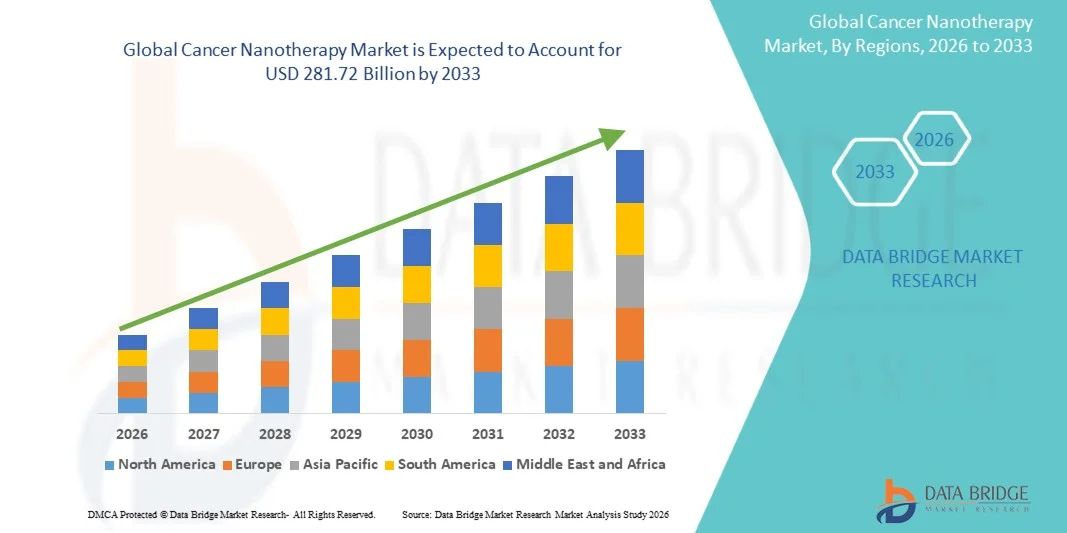
- Como por Data Bridge Market Research Analysis o tamanho global do mercado de nanoterapia do câncer foi avaliado em120,50 mil milhões de dólares em 2025e espera-se alcançarUSD 281,72 mil milhões até 2033, em umaCAGR de 11,20%durante o período de previsão
- O crescimento do mercado é, em grande medida, impulsionado pela adopção cada vez maisnanotecnologiana oncologia, possibilitando o fornecimento de medicamentos direcionados, melhoria da eficácia terapêutica e redução da toxicidade sistêmica em tratamentos de câncer em ambientes de saúde
- Além disso, a crescente prevalência global de câncer e a crescente demanda por abordagens terapêuticas mais precisas, minimamente invasivas e eficazes estão acelerando a adoção de soluções de Nanoterapia do Câncer. Estes factores convergentes estão a aumentar significativamente o crescimento do mercado da nanoterapia do cancro
Tamanho e previsão do mercado
- Valor de mercado global (2025):120,50 mil milhões de USD
- Valor de mercado previsto (2033):281,72 mil milhões de USD
- Previsões CAGR (2026-2033):11.20%
Análise do Mercado de Nanoterapia do Câncer
- A nanoterapia do câncer, que utiliza nanopartículas e sistemas de liberação de drogas baseados em nanotecnologia para diagnosticar, monitorar e tratar o câncer, está se tornando um componente cada vez mais importante da oncologia moderna devido à sua capacidade de atingir precisamente células tumorais, melhorar a biodisponibilidade do fármaco e reduzir danos a tecidos saudáveis
- A crescente demanda por nanoterapia do câncer é impulsionada, em grande parte, pelo aumento da carga global do câncer, o aumento dos investimentos em pesquisas de nanomedicina e a necessidade de alternativas de tratamento mais eficazes e menos tóxicas em comparação com quimioterapia convencional e radioterapia.
- A América do Norte dominou o mercado de nanoterapia contra o câncer com a maior parcela de receita de 38,7% em 2025, apoiada por infraestrutura avançada de saúde, fortes atividades de pesquisa e desenvolvimento em nanotecnologia e presença de grandes empresas farmacêuticas e de biotecnologia. Os EUA continuam a testemunhar um crescimento significativo na adoção da nanoterapia do câncer, particularmente através de ensaios clínicos e formulações inovadoras de drogas baseadas em nanopartículas desenvolvidas pelas principais empresas de biotecnologia e instituições de pesquisa
- Espera-se que a Ásia-Pacífico seja a região de crescimento mais rápido no mercado de nanoterapia do câncer durante o período previsto devido ao aumento dos gastos com saúde, ampliação da pesquisa em biotecnologia, aumento da incidência de câncer e crescente apoio do governo ao desenvolvimento de nanomedicina em países como China, Japão e Índia
- O segmento intravenoso dominou a maior parcela de receita de mercado de 78,9% em 2025, devido à sua capacidade de entregar medicamentos à base de nanopartículas diretamente na corrente sanguínea para rápida distribuição sistêmica.
Relatar Escopo e Nanoterapia do Câncer Segmentação do Mercado
|
Atributos |
Nanoterapia do câncer Principais perspectivas do mercado |
|
Segmentos Cobertos |
|
|
Países abrangidos |
América do Norte
Europa
Ásia- Pacífico
Médio Oriente e África
América do Sul
|
|
Jogadores do mercado chave |
•Johnson & Johnson(EUA) |
|
Oportunidades de Mercado |
|
|
Informações sobre o Valor Adicionado |
Além dos insights sobre cenários de mercado, como valor de mercado, taxa de crescimento, segmentação, cobertura geográfica e grandes atores, os relatórios de mercado curados pela Data Bridge Market Research também incluem análise de especialistas em profundidade, epidemiologia de pacientes, análise de pipelines, análise de preços e marco regulatório. |
Qual é a tendência chave no mercado de nanoterapia do câncer
“Avanços na entrega de drogas com base em nanopartícula“
- Uma tendência significativa e acelerada no mercado global de nanoterapia contra o câncer é o crescente desenvolvimento de sistemas de liberação de drogas direcionadas à nanopartícula, projetados para melhorar a precisão e a eficácia dos tratamentos contra o câncer, minimizando danos a tecidos saudáveis. Essas terapias habilitadas por nanotecnologia permitem que os fármacos sejam entregues diretamente aos sítios tumorais, melhorando os resultados terapêuticos e reduzindo a toxicidade sistêmica em comparação com a quimioterapia convencional
- Por exemplo, em agosto de 2023, a Pfizer Inc. anunciou progresso positivo no desenvolvimento de sistemas de liberação de nanopartículas lipídicas (LNP) para aplicações oncológicas, destacando o crescente interesse em plataformas de nanopartículas para entrega de drogas direcionadas na terapia do câncer
- Nanopartículas como lipossomas, nanopartículas poliméricas, dendrímeros e nanopartículas de ouro estão sendo cada vez mais exploradas para transportar drogas anticancerígenas, genes ou agentes de imagem diretamente para células malignas. Estas tecnologias aumentam a estabilidade do fármaco, melhoram a biodisponibilidade e permitem a libertação controlada do fármaco, o que contribui para melhorar a eficiência do tratamento e reduzir os efeitos secundários
- Além disso, os avanços na pesquisa da nanomedicina estão possibilitando a integração das capacidades terapêuticas e diagnósticas em uma única plataforma, muitas vezes denominada de theranostics, que permite a detecção e tratamento simultâneos do câncer. Esta abordagem está ganhando tração na oncologia de precisão
- A crescente colaboração entre empresas farmacêuticas, empresas de biotecnologia e instituições de pesquisa acadêmica está acelerando o desenvolvimento de plataformas inovadoras de nanoterapia destinadas a melhorar os resultados do tratamento em cânceres difíceis de tratar
- Uma vez que a procura de terapias contra o cancro mais eficazes e menos tóxicas continua a aumentar, espera-se que o desenvolvimento de sistemas avançados de distribuição de medicamentos baseados em nanotecnologia continue a ser uma grande tendência para o futuro do mercado da nanoterapia contra o cancro.
Nanoterapia do câncer Mercado Dinâmico
Controlador
“Crescimento da carga global de câncer e demanda por terapias direcionadas”
- A crescente prevalência global de câncer, aliada à crescente demanda por abordagens de tratamento direcionadas e personalizadas, é um dos principais fatores impulsionadores do crescimento do mercado de Nanoterapia do Câncer. Tratamentos convencionais de câncer muitas vezes causam efeitos colaterais graves devido à sua falta de seletividade, o que tem levado ao aumento do interesse em terapias baseadas em nanotecnologias capazes de entregar medicamentos mais precisamente às células tumorais
- Por exemplo, em janeiro de 2024, Johnson & Johnson anunciaram investimentos contínuos em pesquisa oncológica baseada em nanotecnologia para melhorar os sistemas de liberação de drogas direcionadas e melhorar a eficácia dos tratamentos contra o câncer. Tais iniciativas das principais empresas farmacêuticas devem acelerar a inovação e expandir a adoção de nanoterapias de câncer
- Nanoterapia permite uma melhor solubilidade do fármaco, melhoradafarmacocinética, e mecanismos de entrega direcionados que ajudam a reduzir a toxicidade, aumentando a eficácia terapêutica. Esses benefícios são particularmente importantes para pacientes submetidos a tratamentos oncológicos de longa duração.
- Além disso, o crescente investimento na pesquisa em oncologia e a expansão de ensaios clínicos avaliando terapias baseadas em nanotecnologias estão apoiando significativamente o desenvolvimento do mercado. Muitas empresas farmacêuticas estão se concentrando no desenvolvimento de sistemas de nanotransportadores para melhorar os resultados do tratamento para câncer de mama, câncer de pulmão e câncer pancreático
- A crescente ênfase na medicina de precisão, juntamente com a crescente adoção de tecnologias avançadas de entrega de medicamentos, é esperado para impulsionar ainda mais o crescimento do mercado de Nanoterapia do Câncer nos próximos anos
Restrição/Desafio
“Altos Custos de Desenvolvimento e Complexidades Regulatórias“
- Um dos grandes desafios que limitam o crescimento do mercado de Nanoterapia do Câncer é o alto custo associado ao desenvolvimento, fabricação e comercialização de terapias baseadas em nanotecnologias. Projetar e produzir nanopartículas com qualidade, segurança e eficácia consistentes requer infraestrutura avançada de pesquisa e processos de fabricação sofisticados
- Por exemplo, vários candidatos à nanomedicina têm experimentado atrasos no desenvolvimento clínico devido a complexos processos de avaliação regulatória relacionados à segurança de nanopartículas, toxicidade e efeitos biológicos de longo prazo. Estes requisitos regulamentares muitas vezes estendem prazos de aprovação para drogas baseadas em nanotecnologia
- As agências reguladoras exigem estudos toxicológicos e farmacocinéticos extensivos para garantir a segurança das formulações de nanopartículas, o que aumenta os custos de desenvolvimento e prolonga o tempo necessário para a aprovação do produto. Além disso, a falta de diretrizes regulatórias padronizadas para certos nanomateriais pode criar incerteza para fabricantes e pesquisadores
- Além disso, a fabricação em larga escala e a reprodutibilidade de formulações de nanopartículas permanecem desafiadoras, particularmente quando se mantém consistente tamanho de partículas, estabilidade e capacidade de carga de drogas durante a produção. Estes desafios técnicos podem aumentar os custos de produção e limitar a escalabilidade comercial
- Abordar estas questões através de tecnologias de fabrico melhoradas, de quadros regulamentares mais claros e de uma maior colaboração entre as autoridades reguladoras e as empresas farmacêuticas será crucial para permitir a adopção generalizada de soluções de nanoterapia para o cancro no futuro
Alcance do Mercado de Nanoterapia do Câncer
O mercado é segmentado com base na indicação, medicamento, transportador, via de administração, usuários finais e canal de distribuição.
• Por Indicação
Com base na indicação, o mercado de Nanoterapia do Câncer é segmentado em câncer renal, sarcoma de Kaposi associado ao HIV, câncer de ovário, câncer de mama, mieloma múltiplo, câncer de pulmão de não pequenas células, entre outros. O segmento de câncer de mama dominou a maior parcela de receita de mercado de 29,8% em 2025, impulsionada pela alta prevalência global de câncer de mama e pela adoção crescente de sistemas de liberação de drogas baseados em nanotecnologia. Os nanoterapêuticos são amplamente utilizados no tratamento do câncer de mama, pois aumentam a solubilidade do fármaco, melhoram a entrega direcionada às células tumorais e reduzem a toxicidade sistêmica em comparação com a quimioterapia convencional. A crescente demanda por tratamentos oncológicos de precisão e a expansão do uso de fármacos baseados em nanopartículas, como formulações lipossomais, têm apoiado ainda mais a dominância desse segmento. Além disso, o aumento dos programas de rastreamento e o aumento da conscientização sobre o diagnóstico precoce de câncer têm contribuído para as maiores taxas de tratamento para o câncer de mama globalmente. A disponibilidade de diversos nanomedicinas aprovadas para a terapia do câncer de mama e forte atividade de pesquisa clínica reforçam ainda mais a quota de mercado do segmento. As empresas farmacêuticas também estão investindo significativamente no desenvolvimento de plataformas avançadas de entrega de nanopartículas projetadas especificamente para a terapia do câncer de mama. A crescente incidência de câncer de mama em todo o mundo, particularmente entre as mulheres em economias desenvolvidas e emergentes, continua a impulsionar a demanda por opções de tratamento inovadoras. Além disso, espera-se que a integração da nanotecnologia com a imunoterapia e abordagens terapêuticas específicas aumente a eficácia do tratamento. Esses fatores apoiam coletivamente a forte dominância do mercado do segmento de câncer de mama.
Espera-se que o segmento de câncer de pulmão não-pequenas células (CNPC) testemunhe o CAGR mais rápido de 12,4% de 2026 a 2033, impulsionado pela crescente incidência global de câncer de pulmão e pela adoção crescente de terapias avançadas baseadas em nanomedicina. A CPCNP é responsável pela maioria dos casos de câncer de pulmão, gerando uma demanda substancial por soluções terapêuticas eficazes. Os sistemas de distribuição de drogas baseados em nanotecnologia estão cada vez mais sendo explorados para melhorar o direcionamento e minimizar danos a tecidos saudáveis. Essas tecnologias permitem melhorar a biodisponibilidade e a liberação controlada de medicamentos, o que pode melhorar significativamente os resultados do tratamento para pacientes com câncer de pulmão. O aumento dos investimentos de pesquisa em nanomedicina e oncologia terapêutica está acelerando o desenvolvimento de medicamentos inovadores à base de nanocarregadores para o tratamento do câncer de pulmão. Além disso, espera-se que iniciativas governamentais que apoiem a pesquisa sobre câncer e o número crescente de ensaios clínicos que avaliam terapias baseadas em nanopartículas suportem o crescimento do segmento. O desenvolvimento de terapias combinadas incorporando nanotecnologia e imunoterapia também está contribuindo para a expansão da paisagem de tratamento. O aumento das despesas com os cuidados de saúde e a crescente disponibilidade de tratamentos oncológicos avançados nos mercados emergentes estão a impulsionar ainda mais a adopção de nanoterapias para o cancro do pulmão. Esses fatores impulsionam coletivamente o rápido crescimento do segmento CPCNP.
• Por Droga
Com base na droga, o mercado de Nanoterapia do Câncer é segmentado em doxorrubicina, daunorubicina, paclitaxel, l-asparaginase, vincristina, entre outros. O segmento de doxorrubicina teve a maior parcela de receita de mercado de 31,5% em 2025, em grande parte devido ao seu uso extensivo em formulações quimioterápicos baseadas em nanopartículas, como a doxorrubicina lipossomal. A doxorrubicina tem sido amplamente utilizada no tratamento de múltiplos tipos de cancro, incluindo cancro da mama, cancro do ovário e sarcoma de Kaposi. O desenvolvimento de formulações baseadas em nanocarregadores de doxorrubicina tem melhorado significativamente o seu desempenho terapêutico, melhorando o fornecimento de droga alvo e reduzindo os efeitos colaterais cardiotóxicos. Esses avanços fizeram da nanomedicina baseada em doxorrubicina uma opção de tratamento preferencial na oncologia. A forte eficácia clínica dessa droga e sua integração em vários regimes quimioterápicos contribuem para seu uso generalizado no tratamento do câncer. Além disso, a adoção crescente de sistemas de liberação de drogas lipossomais aumentou ainda mais a demanda por doxorrubicina em aplicações de nanoterapia. As empresas farmacêuticas continuam a investir em formulações avançadas de nanopartículas para melhorar a segurança e a eficiência terapêutica da droga. O aumento da prevalência de câncer em todo o mundo e a crescente demanda por opções de quimioterapia mais efetivas apoiam ainda mais a dominância desse segmento. A disponibilidade de aprovações regulatórias bem estabelecidas para formulações lipossomais de doxorrubicina também contribui para sua forte presença no mercado.
Espera-se que o segmento paclitaxel testemunhe o CAGR mais rápido de 11,8% de 2026 a 2033, apoiado pelo aumento da pesquisa em formulações de paclitaxel à base de nanopartículas para tratamento do câncer. Paclitaxel é amplamente utilizado no tratamento de vários cânceres, incluindo cânceres de mama, ovário e pulmão. Os sistemas de distribuição baseados em nanotecnologia, como o paclitaxel ligado à albumina, melhoraram significativamente a solubilidade da droga e reduziram a necessidade de solventes tóxicos tradicionalmente utilizados na quimioterapia. Essas inovações aumentam a eficiência na entrega de medicamentos e melhoram os perfis de segurança do paciente. Prevê-se que a adopção crescente de medicamentos à base de nanotecnologia paclitaxel em protocolos de tratamento oncológico acelere o crescimento dos segmentos. Além disso, estudos clínicos crescentes que exploram novas formulações de nanopartículas paclitaxel para terapia oncológica direcionada apoiam ainda mais sua expansão. O aumento dos investimentos em saúde e a crescente procura de medicamentos avançados para quimioterapia também contribuem para o crescimento do segmento. As empresas farmacêuticas estão se concentrando no desenvolvimento de novas plataformas nanocarreiras para aumentar ainda mais a eficiência de entrega de paclitaxel. Esses fatores apoiam coletivamente o rápido crescimento do segmento paclitaxel no mercado de nanoterapia do câncer.
• Por Transportador
Com base no portador, o mercado de Nanoterapia do Câncer é segmentado em nanocarregadores à base de polímero, nanocarregadores à base de lipídios, entre outros. O segmento de nanocarregadores à base de lipídios representou a maior parcela de receita de mercado de 46,7% em 2025, impulsionada por sua forte biocompatibilidade, melhoria da estabilidade dos fármacos e fornecimento eficiente de agentes quimioterápicos. As nanopartículas à base de lípidos, como os lipossomos, são amplamente utilizadas na nanomedicina devido à sua capacidade de encapsular fármacos hidrofílicos e hidrofóbicos. Esses portadores possibilitam o fornecimento de medicamentos direcionados e a liberação controlada de medicamentos, o que aumenta significativamente a eficácia terapêutica, reduzindo a toxicidade sistêmica. Formulações lipossômicas têm sido usadas com sucesso para o fornecimento de medicamentos como a doxorrubicina e daunorrubicina no tratamento do câncer. O número crescente de aprovações regulatórias para produtos de nanomedicina à base de lipídios também apoia a dominância do segmento. Além disso, as nanopartículas lipídicas oferecem propriedades farmacocinéticas favoráveis, tornando-as ideais para sistemas de administração de medicamentos oncológicos. O aumento das atividades de pesquisa farmacêutica focadas na tecnologia de nanopartículas lipídicas e suas aplicações na terapia do câncer continuam a expandir a adoção do segmento. O sucesso das plataformas de nanopartículas lipídicas nas tecnologias de entrega de medicamentos também tem incentivado as empresas farmacêuticas a investirem muito nesse segmento. Estes factores contribuem colectivamente para a forte quota de mercado dos nanotransportadores à base de lípidos.
Espera-se que o segmento de nanocarregadores à base de polímeros testemunhe o CAGR mais rápido de 12,1% de 2026 a 2033, impulsionado pela sua versatilidade e capacidade de suportar mecanismos avançados de liberação de drogas. As nanopartículas de polímeros permitem o controle preciso sobre as taxas de liberação de fármacos e podem ser projetadas para atingir tecidos tumorais específicos. Essa capacidade melhora significativamente a eficácia do tratamento, minimizando os efeitos colaterais associados à quimioterapia convencional. O aumento das actividades de investigação e desenvolvimento em nanotecnologia de polímeros está a contribuir para o desenvolvimento de sistemas inovadores de distribuição de medicamentos para tratamentos oncológicos. Transportadores de polímeros também estão sendo explorados para uso em terapias combinadas envolvendo quimioterapia, imunoterapia e terapia genética. Além disso, a capacidade de projetar nanopartículas de polímero biodegradáveis e biocompatíveis aumenta ainda mais seu potencial clínico. Espera-se que o número crescente de ensaios clínicos que avaliam nanocarregadores à base de polímeros para tratamento do câncer acelere sua adoção. As empresas farmacêuticas estão cada vez mais investindo em plataformas de nanotecnologia de polímeros para desenvolver terapias de câncer de próxima geração. Esses fatores impulsionam coletivamente o rápido crescimento do segmento de nanocarregadores à base de polímeros.
• Por Via de Administração
Com base na via de administração, o mercado de Nanoterapia do Câncer é segmentado para intravenosa, intramuscular e outros. O segmento intravenoso dominou a maior parcela de receita de mercado de 78,9% em 2025, devido à sua capacidade de entregar drogas baseadas em nanopartículas diretamente na corrente sanguínea para rápida distribuição sistêmica. A administração intravenosa é o método mais utilizado para o fornecimento de terapias nanomedicinas em oncologia, pois garante alta biodisponibilidade e ação terapêutica imediata. Muitos nanomedicamentos aprovados, incluindo formulações lipossomais de agentes quimioterápicos, são administrados por via intravenosa em ambientes hospitalares. Esta via permite também o controlo preciso da dosagem e monitorização das respostas dos doentes durante o tratamento. Os profissionais de saúde preferem a administração intravenosa para terapias oncológicas, pois possibilita a entrega de medicamentos direcionados e otimiza os perfis farmacocinéticos. O uso crescente de formulações de nanomedicina intravenosa em quimioterapia e esquemas de tratamento combinado ainda suporta a dominância do segmento. Além disso, avanços nas tecnologias de infusão e protocolos de tratamento oncológico têm melhorado a segurança e a eficácia das terapias intravenosas. Esses fatores contribuem coletivamente para a forte participação no mercado do segmento de administração intravenosa.
Espera-se que o segmento intramuscular testemunhe o CAGR mais rápido de 10,3% de 2026 a 2033, impulsionado pela crescente pesquisa em métodos alternativos de entrega para terapias nanomedicinas. A administração intramuscular oferece vantagens como liberação sustentada de medicamentos e melhora da conveniência do paciente em determinados cenários de tratamento. Pesquisadores estão explorando cada vez mais sistemas de liberação de drogas baseados em nanopartículas que podem ser administrados por via intramuscular para aumentar a flexibilidade do tratamento. Os avanços na nanotecnologia estão possibilitando o desenvolvimento de formulações inovadoras capazes de manter concentrações terapêuticas de medicamentos por longos períodos. Esses desenvolvimentos devem expandir o uso da nanoterapia intramuscular em tratamentos oncológicos. Além disso, pesquisas clínicas em andamento investigando rotas de entrega alternativas para a nanomedicina do câncer continuam apoiando o crescimento desse segmento. O aumento dos investimentos em saúde em tecnologias avançadas de fornecimento de medicamentos contribui ainda mais para sua expansão. Esses fatores impulsionam coletivamente o crescimento antecipado do segmento da via intramuscular.
• Por Usuários Finais
Com base nos usuários finais, o mercado de Nanoterapia do Câncer é segmentado em hospitais, clínicas especializadas e outros. O segmento hospitalar teve o maior percentual de receita de mercado de 61,2% em 2025, principalmente devido ao alto volume de diagnóstico e tratamento do câncer realizado em ambiente hospitalar. Os hospitais servem como centros primários de tratamento oncológico, oferecendo tecnologias diagnósticas avançadas, departamentos especializados em oncologia e equipes médicas multidisciplinares. A administração de terapias de câncer baseadas em nanomedicina muitas vezes requer equipamento especializado e supervisão clínica, que estão prontamente disponíveis em hospitais. Além disso, os hospitais participam extensivamente em ensaios clínicos e programas de pesquisa focados em tratamentos inovadores do câncer, incluindo terapias de nanomedicina. A presença de profissionais de oncologia treinados e de serviços de atenção integral ao paciente apoia ainda mais a adoção forte de tratamentos de nanoterapia em hospitais. O aumento dos investimentos em infraestrutura de oncologia hospitalar e o crescente número de centros de tratamento do câncer em todo o mundo continuam a fortalecer a dominância do segmento. Além disso, as farmácias hospitalares garantem abastecimento confiável e administração segura de nanomedicina avançada.
Espera-se que o segmento de especialidades testemunhe o CAGR mais rápido de 10,9% de 2026 a 2033, impulsionado pela crescente demanda por serviços especializados de oncologia e tratamento ambulatorial do câncer. Clínicas especializadas oferecem programas de tratamento de câncer focado, proporcionando aos pacientes acesso a oncologistas especialistas e tecnologias de tratamento avançado. Essas clínicas estão cada vez mais adotando métodos de tratamento inovadores, incluindo terapias baseadas em nanomedicina, para melhorar os resultados dos pacientes. A expansão de clínicas privadas de oncologia e centros especializados em câncer em economias emergentes ainda suporta o crescimento do segmento. Além disso, as clínicas especializadas muitas vezes oferecem abordagens de tratamento mais personalizadas e tempos de espera mais curtos em comparação com os hospitais de grande porte. A crescente mudança para o tratamento ambulatorial do câncer e serviços de terapia direcionada também está incentivando a adoção de nanoterapia em clínicas especializadas. Esses fatores contribuem coletivamente para o rápido crescimento desse segmento.
• Por Canal de Distribuição
Com base no canal de distribuição, o mercado de Nanoterapia do Câncer é segmentado em farmácia hospitalar, farmácia de varejo, entre outros. O segmento de farmácia hospitalar representou o maior percentual de receita de mercado de 58,4% em 2025, em grande parte devido ao papel centralizado que os hospitais desempenham no tratamento do câncer e distribuição de medicamentos. A maioria dos medicamentos oncológicos baseados em nanomedicina são administrados sob supervisão médica em ambientes hospitalares, tornando as farmácias hospitalares o principal canal de distribuição. Essas farmácias garantem o adequado armazenamento, manuseio e dispensação de medicamentos de acordo com normas regulatórias rigorosas. Além disso, os farmacêuticos hospitalares desempenham um papel importante na monitorização dos regimes de tratamento e na garantia da administração segura de medicamentos. O aumento do número de programas de tratamento de câncer de base hospitalar e ensaios clínicos reforça ainda mais a demanda por serviços de farmácia hospitalar. Os investimentos crescentes em infra-estruturas hospitalares e instalações de tratamento oncológico também apoiam a forte quota de mercado deste segmento.
Espera-se que o segmento da farmácia varejista testemunhe o CAGR mais rápido de 9,6% de 2026 a 2033, apoiado pela ampliação da disponibilidade de medicamentos para o câncer de suporte e terapias de acompanhamento por meio de canais de varejo. As farmácias de varejo oferecem acesso conveniente a medicamentos para pacientes submetidos a tratamento e recuperação de câncer de longa duração. A crescente presença de farmácias especializadas em oncologia dentro das redes de varejo apoia ainda mais a distribuição de medicamentos relacionados ao câncer. Aumentar a preferência dos pacientes por serviços de saúde acessíveis e expandir as cadeias de varejo farmacêuticas também estão contribuindo para o crescimento do segmento. Além disso, os avanços na gestão da cadeia de suprimentos farmacêutica e nas redes de distribuição de medicamentos estão melhorando a disponibilidade de terapias contra o câncer através de canais de varejo. Esses fatores impulsionam coletivamente o crescimento esperado do segmento de farmácia de varejo.
Análise Regional do Mercado de Nanoterapia do Câncer
- A América do Norte dominou o mercado de nanoterapia do câncer com a maior parcela de receita de 38,7% em 2025, apoiada por infraestrutura avançada de saúde, fortes atividades de pesquisa e desenvolvimento em nanotecnologia e presença de grandes empresas farmacêuticas e de biotecnologia
- A região beneficia de ampla pesquisa clínica, rápida adoção de tecnologias inovadoras de tratamento do câncer e investimentos substanciais em medicina de precisão e sistemas de entrega de medicamentos direcionados
- Além disso, colaborações entre instituições de pesquisa, empresas de biotecnologia e empresas farmacêuticas estão acelerando o desenvolvimento de terapias baseadas em nanopartículas, fortalecendo a liderança da região no mercado de Nanoterapia do Câncer
U.S. Cancer Nanotherapy Market Insight
O mercado norte-americano de nanoterapia contra o câncer capturou a maior participação na receita da América do Norte em 2025, impulsionada pela forte inovação em biotecnologia, por extensos ensaios clínicos e pela presença de empresas farmacêuticas líderes. As instituições de pesquisa e as empresas de biotecnologia estão cada vez mais focadas em sistemas de administração de drogas baseados em nanopartículas para melhorar a eficácia do tratamento e reduzir os efeitos colaterais em terapias de câncer. Além disso, o financiamento do governo para a pesquisa de nanomedicina e a rápida adoção de tratamentos direcionados para o câncer estão apoiando ainda mais a expansão do mercado no país.
Europa Cancro Nanoterapia Mercado Visão
Prevê-se que o mercado europeu da nanoterapia contra o cancro se expanda num CAGR substancial ao longo do período de previsão, impulsionado principalmente pelo aumento dos investimentos em investigação sobre o cancro e pelo aumento do enfoque nas tecnologias terapêuticas avançadas. A região possui uma forte rede de institutos de pesquisa e empresas farmacêuticas ativamente envolvidas no desenvolvimento de tratamentos de câncer baseados em nanotecnologia. Além disso, os quadros regulamentares de apoio, as crescentes colaborações entre instituições académicas e empresas de biotecnologia e o aumento das taxas de incidência do cancro estão a incentivar a adopção de soluções de nanoterapia em toda a Europa.
U.K. Cancer Nanotherapy Market Insight
O mercado de nanoterapia do câncer do Reino Unido está previsto para crescer em um CAGR notável durante o período de previsão, impulsionado pelo aumento dos investimentos em pesquisa biomédica e o forte foco do país na inovação em oncologia. A presença de universidades de pesquisa líderes e startups de biotecnologia trabalhando em nanomedicina está promovendo avanços em sistemas de liberação de drogas baseados em nanopartículas. Além disso, as iniciativas governamentais de apoio à investigação sobre o cancro e a adopção crescente de terapias específicas estão a contribuir para o desenvolvimento do mercado no Reino Unido.
Alemanha Câncer Nanoterapia Mercado Visão
Espera-se que o mercado alemão de nanoterapia para o câncer se expanda em um considerável CAGR durante o período de previsão, alimentado por fortes capacidades de fabricação farmacêutica e crescentes investimentos em pesquisa de nanotecnologia. A bem desenvolvida infra-estrutura de cuidados de saúde da Alemanha e o foco na medicina de precisão incentivam o desenvolvimento e adoção de tratamentos avançados para o câncer. Além disso, colaborações entre instituições de pesquisa, empresas de biotecnologia e fabricantes farmacêuticos estão acelerando a comercialização de soluções inovadoras de nanoterapia.
Visão do Mercado de Nanoterapia do Câncer Ásia-Pacífico
O mercado de nanoterapia do câncer Ásia-Pacífico está preparado para crescer o mais rápido possível no CAGR durante o período de previsão, impulsionado pelo aumento dos gastos com saúde, pela expansão da pesquisa em biotecnologia e pela crescente prevalência de câncer em países como China, Japão e Índia. Os governos de toda a região estão apoiando ativamente a pesquisa de nanomedicina através de programas de financiamento e iniciativas de inovação. Além disso, a expansão das capacidades de fabricação farmacêutica e a adoção crescente de tecnologias avançadas de tratamento do câncer estão contribuindo significativamente para o crescimento regional do mercado.
Japão Cancer Nanotherapy Market Insight
O mercado japonês de nanoterapia contra o câncer está ganhando força devido às fortes capacidades tecnológicas do país e crescente foco em tratamentos avançados de oncologia. O Japão tem um ecossistema de pesquisa bem estabelecido que apoia a inovação nanomedicina, particularmente na entrega de drogas direcionadas e na terapia baseada em nanopartículas. Além disso, espera-se que a crescente carga do câncer e o apoio do governo à pesquisa de medicina de precisão impulsione a adoção de soluções de nanoterapia do câncer no país.
China Cancer Nanoterapia Mercado Visão
O mercado chinês de nanoterapia contra o câncer representou a maior parte de receita de mercado na região Ásia-Pacífico em 2025, atribuída ao setor de biotecnologia em rápida expansão do país e forte apoio governamental à pesquisa em nanotecnologia. A China está investindo fortemente em tecnologias avançadas de tratamento do câncer, incluindo sistemas de liberação de drogas baseados em nanopartículas e plataformas de nanomedicina. Além disso, o aumento da incidência de câncer, o crescimento da infraestrutura de saúde e a crescente colaboração entre instituições acadêmicas e empresas de biotecnologia estão acelerando o desenvolvimento e adoção de soluções de nanoterapia do câncer no país.
Mercado de Nanoterapia do Câncer
A indústria de Nanoterapia do Câncer é liderada principalmente por empresas bem estabelecidas, incluindo:
• Johnson & Johnson (EUA)
• Pfizer Inc. (EUA)
• Merck & Co., Inc. (EUA)
• F. Hoffmann- La Roche Ltd. (Suíça)
• Novartis AG (Suíça)
• Bristol- Myers Squibb Company (EUA)
• AbbVie Inc. (EUA)
• Amgen Inc. (EUA)
•AstraZeneca PLC (U.K.)
• Sanofi S. A. (França)
• Takeda Pharmaceutical Company Limited (Japão)
• Celgene Corporation (EUA)
• Teva Pharmaceutical Industries Ltd. (Israel)
• Ciências de Gileade, Inc. (EUA)
•Nanospectra Biosciences, Inc. (EUA)
• Nanobiotix S.A. (França)
• Arrowhead Pharmaceuticals, Inc. (EUA)
• Selecta Biosciences, Inc. (EUA)
• BlueWillow Biologics, Inc. (EUA)
•CitImmune Sciences, Inc. (EUA)
Os últimos desenvolvimentos no mercado global de nanoterapia do câncer
- Em novembro de 2022, a ImmunoGen, Inc. anunciou que o FDA dos EUA concedeu aprovação acelerada a ELahere (mirvetuximab soravtansina-gynx) para o tratamento do câncer de ovário resistente à platina positivo do receptor de folato-alfa (FRα). A terapia é um conjugado anticorpo-fármaco projetado para entregar agentes citotóxicos diretamente às células tumorais, representando uma estratégia de entrega nano-escala direcionada para melhorar a eficácia e reduzir os efeitos colaterais sistêmicos no tratamento do câncer
- Em julho de 2023, a SN Bioscience, uma empresa de biotecnologia especializada em terapia baseada em nanopartículas, anunciou que a Food and Drug Administration (FDA) dos EUA concedeu designação de medicamentos órfãos à sua terapia de câncer nanoformulada SNB-101 para o tratamento do câncer de pulmão de pequenas células (SCLC). A terapia utiliza a tecnologia de nanopartículas poliméricas para melhorar a entrega de drogas direcionadas e reduzir a toxicidade sistêmica, e a empresa também recebeu aprovação para iniciar ensaios clínicos de Fase I nos Estados Unidos e Coreia do Sul. Este desenvolvimento destaca o apoio regulatório crescente para terapias de câncer baseadas em nanopartículas e avança o pipeline clínico da nanomedicina em oncologia
- Em abril de 2023, Genentech (um membro do Grupo Roche) anunciou que a Food and Drug Administration dos EUA aprovou Polivy (polatuzumab vedotina) em combinação com quimioterapia como um tratamento de primeira linha para linfoma difuso de grandes células B (DLBCL). Polivy é um conjugado anticorpo-droga que fornece agentes citotóxicos diretamente às células cancerígenas usando mecanismos de entrega direcionados, refletindo contínua inovação em plataformas avançadas de entrega de drogas utilizadas em tratamentos oncológicos habilitados para nanotecnologia
- Em dezembro de 2024, Bristol Myers Squibb anunciou que o FDA dos EUA aprovou Opdivo Qvantig (nivolumab e hialuronidase-nvhy) para injeção subcutânea em várias indicações de tumores sólidos, incluindo melanoma, câncer de pulmão, carcinoma de células renais e câncer colorretal. A terapia incorpora tecnologia avançada de entrega de medicamentos que permite a administração rápida subcutânea e melhoria da eficiência de entrega, contribuindo para avanços contínuos em plataformas de tratamento oncológico direcionadas e inovadoras
- Em abril de 2025, Akeso Biopharma anunciou que o FDA dos EUA aprovou penpulimab-kcqx, uma terapia monoclonal de anticorpos para o tratamento do carcinoma nasofaríngeo recorrente ou metastático. A aprovação reflete o progresso contínuo em terapias oncológicas direcionadas avançadas que utilizam mecanismos de entrega de medicamentos de precisão para melhorar os resultados do tratamento em oncologia
SKU-
Obtenha acesso online ao relatório sobre a primeira nuvem de inteligência de mercado do mundo
- Painel interativo de análise de dados
- Painel de análise da empresa para oportunidades de elevado potencial de crescimento
- Acesso de analista de pesquisa para personalização e customização. consultas
- Análise da concorrência com painel interativo
- Últimas notícias, atualizações e atualizações Análise de tendências
- Aproveite o poder da análise de benchmark para um rastreio abrangente da concorrência
Metodologia de Investigação
A recolha de dados e a análise do ano base são feitas através de módulos de recolha de dados com amostras grandes. A etapa inclui a obtenção de informações de mercado ou dados relacionados através de diversas fontes e estratégias. Inclui examinar e planear antecipadamente todos os dados adquiridos no passado. Da mesma forma, envolve o exame de inconsistências de informação observadas em diferentes fontes de informação. Os dados de mercado são analisados e estimados utilizando modelos estatísticos e coerentes de mercado. Além disso, a análise da quota de mercado e a análise das principais tendências são os principais fatores de sucesso no relatório de mercado. Para saber mais, solicite uma chamada de analista ou abra a sua consulta.
A principal metodologia de investigação utilizada pela equipa de investigação do DBMR é a triangulação de dados que envolve a mineração de dados, a análise do impacto das variáveis de dados no mercado e a validação primária (especialista do setor). Os modelos de dados incluem grelha de posicionamento de fornecedores, análise da linha de tempo do mercado, visão geral e guia de mercado, grelha de posicionamento da empresa, análise de patentes, análise de preços, análise da quota de mercado da empresa, normas de medição, análise global versus regional e de participação dos fornecedores. Para saber mais sobre a metodologia de investigação, faça uma consulta para falar com os nossos especialistas do setor.
Personalização disponível
A Data Bridge Market Research é líder em investigação formativa avançada. Orgulhamo-nos de servir os nossos clientes novos e existentes com dados e análises que correspondem e atendem aos seus objetivos. O relatório pode ser personalizado para incluir análise de tendências de preços de marcas-alvo, compreensão do mercado para países adicionais (solicite a lista de países), dados de resultados de ensaios clínicos, revisão de literatura, mercado remodelado e análise de base de produtos . A análise de mercado dos concorrentes-alvo pode ser analisada desde análises baseadas em tecnologia até estratégias de carteira de mercado. Podemos adicionar quantos concorrentes necessitar de dados no formato e estilo de dados que procura. A nossa equipa de analistas também pode fornecer dados em tabelas dinâmicas de ficheiros Excel em bruto (livro de factos) ou pode ajudá-lo a criar apresentações a partir dos conjuntos de dados disponíveis no relatório.