


What is the Cancer Nanotherapy Market Size and Growth Rate?
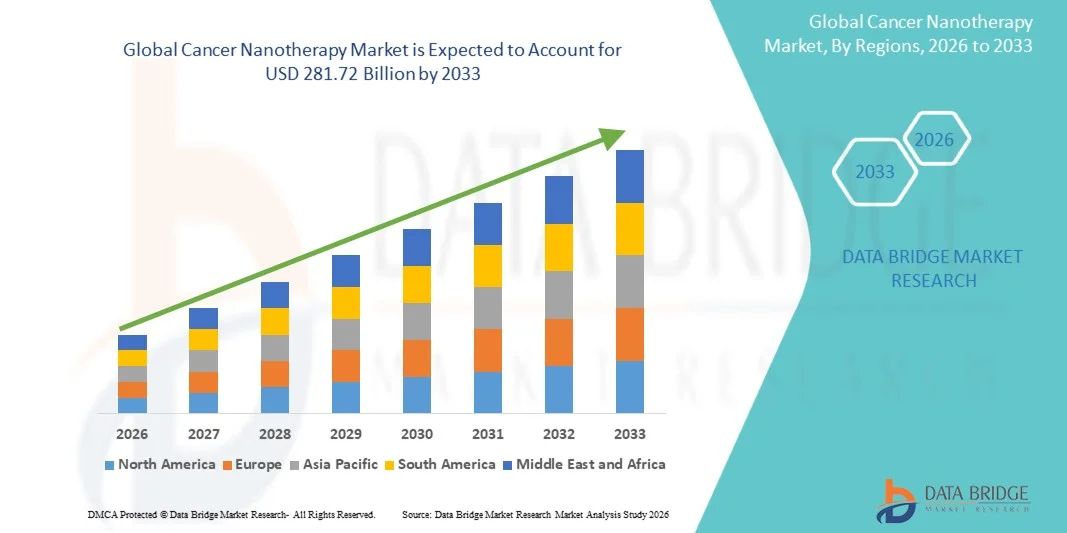
- As per Data Bridge Market Research Analysis the global cancer nanotherapy market size was valued at USD 120.50 billion in 2025 and is expected to reach USD 281.72 billion by 2033, at a CAGR of 11.20% during the forecast period
- The market growth is largely fueled by the increasing adoption of advanced nanotechnology in oncology, enabling targeted drug delivery, improved therapeutic efficacy, and reduced systemic toxicity in cancer treatments across healthcare settings
- Furthermore, the rising global prevalence of cancer and the growing demand for more precise, minimally invasive, and effective treatment approaches are accelerating the adoption of Cancer Nanotherapy solutions. These converging factors are significantly boosting the growth of the Cancer Nanotherapy market
Market Size & Forecast
- Global Market Value (2025): USD 120.50 billion
- Expected Market Value (2033): USD 281.72 billion
- Forecast CAGR (2026–2033): 11.20%
Cancer Nanotherapy Market Analysis
- Cancer nanotherapy, which utilizes nanoparticles and nanotechnology-based drug delivery systems to diagnose, monitor, and treat cancer, is becoming an increasingly important component of modern oncology due to its ability to precisely target tumor cells, improve drug bioavailability, and reduce damage to healthy tissues
- The growing demand for cancer nanotherapy is largely driven by the increasing global burden of cancer, rising investments in nanomedicine research, and the need for more effective and less toxic treatment alternatives compared to conventional chemotherapy and radiation therapy
- North America dominated the cancer nanotherapy market with the largest revenue share of 38.7% in 2025, supported by advanced healthcare infrastructure, strong research and development activities in nanotechnology, and the presence of major biotechnology and pharmaceutical companies. The U.S. continues to witness significant growth in cancer nanotherapy adoption, particularly through clinical trials and innovative nanoparticle-based drug formulations developed by leading biotech firms and research institutions
- Asia-Pacific is expected to be the fastest-growing region in the cancer nanotherapy market during the forecast period due to increasing healthcare expenditure, expanding biotechnology research, rising cancer incidence, and growing government support for nanomedicine development in countries such as China, Japan, and India
- The intravenous segment dominated the largest market revenue share of 78.9% in 2025, owing to its ability to deliver nanoparticle-based drugs directly into the bloodstream for rapid systemic distribution
Report Scope and Cancer Nanotherapy Market Segmentation
|
Attributes |
Cancer Nanotherapy Key Market Insights |
|
Segments Covered |
|
|
Countries Covered |
North America
Europe
Asia-Pacific
Middle East and Africa
South America
|
|
Key Market Players |
• Johnson & Johnson (U.S.) |
|
Market Opportunities |
|
|
Value Added Data Infosets |
In addition to the insights on market scenarios such as market value, growth rate, segmentation, geographical coverage, and major players, the market reports curated by the Data Bridge Market Research also include in-depth expert analysis, patient epidemiology, pipeline analysis, pricing analysis, and regulatory framework. |
What is the Key Trend in the Cancer Nanotherapy Market?
“Advancements in Nanoparticle-Based Targeted Drug Delivery”
- A significant and accelerating trend in the global cancer nanotherapy market is the increasing development of nanoparticle-based targeted drug delivery systems designed to improve the precision and effectiveness of cancer treatments while minimizing damage to healthy tissues. These nanotechnology-enabled therapies allow drugs to be delivered directly to tumor sites, improving therapeutic outcomes and reducing systemic toxicity compared with conventional chemotherapy
- For instance, in August 2023, Pfizer Inc. announced positive progress in the development of lipid nanoparticle (LNP) delivery systems for oncology applications, highlighting the growing interest in nanoparticle platforms for targeted drug delivery in cancer therapy
- Nanoparticles such as liposomes, polymeric nanoparticles, dendrimers, and gold nanoparticles are increasingly being explored to transport anticancer drugs, genes, or imaging agents directly to malignant cells. These technologies enhance drug stability, improve bioavailability, and allow controlled drug release, which contributes to improved treatment efficiency and reduced side effects
- Furthermore, advancements in nanomedicine research are enabling the integration of therapeutic and diagnostic capabilities into a single platform, often referred to as theranostics, which allows simultaneous cancer detection and treatment. This approach is gaining traction in precision oncology
- The growing collaboration between pharmaceutical companies, biotechnology firms, and academic research institutions is accelerating the development of innovative nanotherapy platforms aimed at improving treatment outcomes in difficult-to-treat cancers
- As the demand for more effective and less toxic cancer therapies continues to rise, the development of advanced nanotechnology-based drug delivery systems is expected to remain a major trend shaping the future of the Cancer Nanotherapy market
Cancer Nanotherapy Market Dynamics
Driver
“Rising Global Cancer Burden and Demand for Targeted Therapies”
- The increasing global prevalence of cancer, combined with the growing demand for targeted and personalized treatment approaches, is a major factor driving the growth of the Cancer Nanotherapy market. Conventional cancer treatments often cause severe side effects due to their lack of selectivity, which has led to increased interest in nanotechnology-based therapies capable of delivering drugs more precisely to tumor cells
- For instance, in January 2024, Johnson & Johnson announced continued investments in nanotechnology-based oncology research to improve targeted drug delivery systems and enhance the effectiveness of cancer treatments. Such initiatives by major pharmaceutical companies are expected to accelerate innovation and expand the adoption of cancer nanotherapies
- Nanotherapy enables improved drug solubility, enhanced pharmacokinetics, and targeted delivery mechanisms that help reduce toxicity while increasing therapeutic efficacy. These benefits are particularly important for patients undergoing long-term cancer treatments.
- In addition, the increasing investment in oncology research and the expansion of clinical trials evaluating nanotechnology-based therapies are significantly supporting market development. Many pharmaceutical companies are focusing on developing nanocarrier systems to improve treatment outcomes for cancers such as breast cancer, lung cancer, and pancreatic cancer
- The growing emphasis on precision medicine, along with the rising adoption of advanced drug delivery technologies, is expected to further propel the growth of the Cancer Nanotherapy market in the coming years
Restraint/Challenge
“High Development Costs and Regulatory Complexities”
- One of the major challenges limiting the growth of the Cancer Nanotherapy market is the high cost associated with the development, manufacturing, and commercialization of nanotechnology-based therapeutics. Designing and producing nanoparticles with consistent quality, safety, and efficacy requires advanced research infrastructure and sophisticated manufacturing processes
- For instance, several nanomedicine candidates have experienced delays in clinical development due to complex regulatory evaluation processes related to nanoparticle safety, toxicity, and long-term biological effects. These regulatory requirements often extend approval timelines for nanotechnology-based drugs
- Regulatory agencies require extensive toxicological and pharmacokinetic studies to ensure the safety of nanoparticle formulations, which increases development costs and prolongs the time required for product approval. In addition, the lack of standardized regulatory guidelines for certain nanomaterials can create uncertainty for manufacturers and researchers
- Furthermore, large-scale manufacturing and reproducibility of nanoparticle formulations remain challenging, particularly when maintaining consistent particle size, stability, and drug loading capacity during production. These technical challenges can increase production costs and limit commercial scalability
- Addressing these issues through improved manufacturing technologies, clearer regulatory frameworks, and increased collaboration between regulatory authorities and pharmaceutical companies will be crucial for enabling the widespread adoption of cancer nanotherapy solutions in the future
Cancer Nanotherapy Market Scope
The market is segmented on the basis of indication, drug, carrier, route of administration, end users, and distribution channel.
• By Indication
On the basis of indication, the Cancer Nanotherapy market is segmented into renal cancer, HIV-associated Kaposi’s sarcoma, ovarian cancer, breast cancer, multiple myeloma, non-small-cell lung cancer, and others. The breast cancer segment dominated the largest market revenue share of 29.8% in 2025, driven by the high global prevalence of breast cancer and the increasing adoption of targeted nanotechnology-based drug delivery systems. Nanotherapeutics are widely utilized in breast cancer treatment as they enhance drug solubility, improve targeted delivery to tumor cells, and reduce systemic toxicity compared with conventional chemotherapy. The growing demand for precision oncology treatments and the expanding use of nanoparticle-based drugs such as liposomal formulations have further supported the dominance of this segment. In addition, increasing screening programs and rising awareness regarding early cancer diagnosis have contributed to the higher treatment rates for breast cancer globally. The availability of several approved nanomedicine drugs for breast cancer therapy and strong clinical research activity further strengthen the segment’s market share. Pharmaceutical companies are also investing significantly in the development of advanced nanoparticle drug delivery platforms designed specifically for breast cancer therapy. The increasing incidence of breast cancer worldwide, particularly among women in developed and emerging economies, continues to drive demand for innovative treatment options. Furthermore, the integration of nanotechnology with immunotherapy and targeted therapy approaches is expected to enhance treatment effectiveness. These factors collectively support the strong market dominance of the breast cancer segment.
The non-small-cell lung cancer (NSCLC) segment is expected to witness the fastest CAGR of 12.4% from 2026 to 2033, driven by the rising global incidence of lung cancer and the growing adoption of advanced nanomedicine-based therapies. NSCLC accounts for the majority of lung cancer cases, creating a substantial demand for effective treatment solutions. Nanotechnology-based drug delivery systems are increasingly being explored to improve drug targeting and minimize damage to healthy tissues. These technologies enable improved bioavailability and controlled drug release, which can significantly enhance treatment outcomes for lung cancer patients. Increasing research investments in nanomedicine and oncology therapeutics are accelerating the development of innovative nanocarrier-based drugs for lung cancer treatment. In addition, government initiatives supporting cancer research and the growing number of clinical trials evaluating nanoparticle-based therapies are expected to further support segment growth. The development of combination therapies incorporating nanotechnology and immunotherapy is also contributing to the expanding treatment landscape. Rising healthcare expenditures and the growing availability of advanced oncology treatments across emerging markets are further boosting the adoption of nanotherapies for lung cancer. These factors collectively drive the rapid growth of the NSCLC segment.
• By Drug
On the basis of drug, the Cancer Nanotherapy market is segmented into doxorubicin, daunorubicin, paclitaxel, l-asparaginase, vincristine, and others. The doxorubicin segment held the largest market revenue share of 31.5% in 2025, largely due to its extensive use in nanoparticle-based chemotherapy formulations such as liposomal doxorubicin. Doxorubicin has been widely used for the treatment of multiple cancer types, including breast cancer, ovarian cancer, and Kaposi’s sarcoma. The development of nanocarrier-based formulations of doxorubicin has significantly improved its therapeutic performance by enhancing targeted drug delivery and reducing cardiotoxic side effects. These advancements have made doxorubicin-based nanomedicine a preferred treatment option in oncology. The strong clinical effectiveness of this drug and its integration into several chemotherapy regimens contribute to its widespread use in cancer treatment. In addition, the growing adoption of liposomal drug delivery systems has further increased the demand for doxorubicin in nanotherapy applications. Pharmaceutical companies continue to invest in advanced nanoparticle formulations to improve the drug’s safety and therapeutic efficiency. Increasing cancer prevalence worldwide and the rising demand for more effective chemotherapy options further support the dominance of this segment. The availability of well-established regulatory approvals for liposomal doxorubicin formulations also contributes to its strong market presence.
The paclitaxel segment is expected to witness the fastest CAGR of 11.8% from 2026 to 2033, supported by increasing research into nanoparticle-based paclitaxel formulations for cancer treatment. Paclitaxel is widely used for treating several cancers, including breast, ovarian, and lung cancers. Nanotechnology-based delivery systems such as albumin-bound paclitaxel have significantly improved the drug’s solubility and reduced the need for toxic solvents traditionally used in chemotherapy. These innovations enhance drug delivery efficiency and improve patient safety profiles. Growing adoption of nanotechnology-based paclitaxel drugs in oncology treatment protocols is expected to accelerate segment growth. In addition, increasing clinical trials exploring new paclitaxel nanoparticle formulations for targeted cancer therapy further support its expansion. Rising healthcare investments and increasing demand for advanced chemotherapy drugs are also contributing to the segment’s growth. Pharmaceutical companies are focusing on developing novel nanocarrier platforms to further enhance paclitaxel delivery efficiency. These factors collectively support the rapid growth of the paclitaxel segment in the cancer nanotherapy market.
• By Carrier
On the basis of carrier, the Cancer Nanotherapy market is segmented into polymer based nanocarriers, lipid based nanocarriers, and others. The lipid-based nanocarriers segment accounted for the largest market revenue share of 46.7% in 2025, driven by their strong biocompatibility, improved drug stability, and efficient delivery of chemotherapeutic agents. Lipid-based nanoparticles such as liposomes are widely used in nanomedicine due to their ability to encapsulate both hydrophilic and hydrophobic drugs. These carriers enable targeted drug delivery and controlled drug release, which significantly enhances therapeutic effectiveness while reducing systemic toxicity. Liposomal formulations have been successfully used for delivering drugs such as doxorubicin and daunorubicin in cancer treatment. The growing number of regulatory approvals for lipid-based nanomedicine products further supports the segment’s dominance. In addition, lipid nanoparticles offer favorable pharmacokinetic properties, making them ideal for oncology drug delivery systems. Increasing pharmaceutical research activities focused on lipid nanoparticle technology and its applications in cancer therapy continue to expand the segment’s adoption. The success of lipid nanoparticle platforms in drug delivery technologies has also encouraged pharmaceutical companies to invest heavily in this segment. These factors collectively contribute to the strong market share of lipid-based nanocarriers.
The polymer-based nanocarriers segment is expected to witness the fastest CAGR of 12.1% from 2026 to 2033, driven by their versatility and ability to support advanced drug delivery mechanisms. Polymer nanoparticles allow precise control over drug release rates and can be engineered to target specific tumor tissues. This capability significantly improves treatment efficacy while minimizing side effects associated with conventional chemotherapy. Increasing research and development activities in polymer nanotechnology are contributing to the development of innovative drug delivery systems for oncology treatments. Polymer-based carriers are also being explored for use in combination therapies involving chemotherapy, immunotherapy, and gene therapy. In addition, the ability to design biodegradable and biocompatible polymer nanoparticles further enhances their clinical potential. The growing number of clinical trials evaluating polymer-based nanocarriers for cancer treatment is expected to accelerate their adoption. Pharmaceutical companies are increasingly investing in polymer nanotechnology platforms to develop next-generation cancer therapies. These factors collectively drive the rapid growth of the polymer-based nanocarriers segment.
• By Route of Administration
On the basis of route of administration, the Cancer Nanotherapy market is segmented into intravenous, intramuscular, and others. The intravenous segment dominated the largest market revenue share of 78.9% in 2025, owing to its ability to deliver nanoparticle-based drugs directly into the bloodstream for rapid systemic distribution. Intravenous administration is the most commonly used method for delivering nanomedicine therapies in oncology because it ensures high bioavailability and immediate therapeutic action. Many approved nanomedicine drugs, including liposomal formulations of chemotherapy agents, are administered intravenously in hospital settings. This route also allows precise control of dosage and monitoring of patient responses during treatment. Healthcare professionals prefer intravenous administration for cancer therapies because it enables targeted drug delivery and optimized pharmacokinetic profiles. The increasing use of intravenous nanomedicine formulations in chemotherapy and combination treatment regimens further supports the segment’s dominance. In addition, advancements in infusion technologies and oncology treatment protocols have improved the safety and effectiveness of intravenous therapies. These factors collectively contribute to the strong market share of the intravenous administration segment.
The intramuscular segment is expected to witness the fastest CAGR of 10.3% from 2026 to 2033, driven by growing research into alternative delivery methods for nanomedicine therapies. Intramuscular administration offers advantages such as sustained drug release and improved patient convenience in certain treatment scenarios. Researchers are increasingly exploring nanoparticle-based drug delivery systems that can be administered intramuscularly to enhance treatment flexibility. Advances in nanotechnology are enabling the development of innovative formulations capable of maintaining therapeutic drug concentrations for extended periods. These developments are expected to expand the use of intramuscular nanotherapy in oncology treatments. In addition, ongoing clinical research investigating alternative delivery routes for cancer nanomedicine continues to support the growth of this segment. Increasing healthcare investments in advanced drug delivery technologies further contribute to its expansion. These factors collectively drive the anticipated growth of the intramuscular route segment.
• By End Users
On the basis of end users, the Cancer Nanotherapy market is segmented into hospitals, specialty clinics, and others. The hospitals segment held the largest market revenue share of 61.2% in 2025, primarily due to the high volume of cancer diagnosis and treatment performed in hospital settings. Hospitals serve as primary centers for oncology treatment, offering advanced diagnostic technologies, specialized oncology departments, and multidisciplinary medical teams. The administration of nanomedicine-based cancer therapies often requires specialized equipment and clinical supervision, which are readily available in hospitals. In addition, hospitals participate extensively in clinical trials and research programs focused on innovative cancer treatments, including nanomedicine therapies. The presence of trained oncology professionals and comprehensive patient care services further supports the strong adoption of nanotherapy treatments in hospitals. Increasing investments in hospital oncology infrastructure and the growing number of cancer treatment centers globally continue to strengthen the segment’s dominance. Moreover, hospital-based pharmacies ensure reliable supply and safe administration of advanced nanomedicine drugs.
The specialty clinics segment is expected to witness the fastest CAGR of 10.9% from 2026 to 2033, driven by the growing demand for specialized oncology care and outpatient cancer treatment services. Specialty clinics offer focused cancer treatment programs, providing patients with access to expert oncologists and advanced treatment technologies. These clinics are increasingly adopting innovative treatment methods, including nanomedicine-based therapies, to improve patient outcomes. The expansion of private oncology clinics and specialized cancer centers in emerging economies further supports segment growth. In addition, specialty clinics often provide more personalized treatment approaches and shorter waiting times compared with large hospitals. The increasing shift toward outpatient cancer treatment and targeted therapy services is also encouraging the adoption of nanotherapy in specialty clinics. These factors collectively contribute to the rapid growth of this segment.
• By Distribution Channel
On the basis of distribution channel, the Cancer Nanotherapy market is segmented into hospital pharmacy, retail pharmacy, and others. The hospital pharmacy segment accounted for the largest market revenue share of 58.4% in 2025, largely due to the centralized role hospitals play in cancer treatment and drug distribution. Most nanomedicine-based oncology drugs are administered under medical supervision in hospital settings, making hospital pharmacies the primary distribution channel. These pharmacies ensure proper drug storage, handling, and dispensing according to strict regulatory standards. In addition, hospital pharmacists play an important role in monitoring treatment regimens and ensuring safe drug administration. The increasing number of hospital-based cancer treatment programs and clinical trials further strengthens the demand for hospital pharmacy services. Growing investments in hospital infrastructure and oncology treatment facilities also support the strong market share of this segment.
The retail pharmacy segment is expected to witness the fastest CAGR of 9.6% from 2026 to 2033, supported by the expanding availability of supportive cancer medications and follow-up therapies through retail channels. Retail pharmacies provide convenient access to medications for patients undergoing long-term cancer treatment and recovery. The growing presence of specialized oncology pharmacies within retail networks further supports the distribution of cancer-related drugs. Increasing patient preference for accessible healthcare services and expanding pharmaceutical retail chains are also contributing to segment growth. In addition, advancements in pharmaceutical supply chain management and drug distribution networks are improving the availability of cancer therapies through retail channels. These factors collectively drive the expected growth of the retail pharmacy segment.
Cancer Nanotherapy Market Regional Analysis
- North America dominated the cancer nanotherapy market with the largest revenue share of 38.7% in 2025, supported by advanced healthcare infrastructure, strong research and development activities in nanotechnology, and the presence of major biotechnology and pharmaceutical companies
- The region benefits from extensive clinical research, rapid adoption of innovative cancer treatment technologies, and substantial investments in precision medicine and targeted drug delivery systems
- Moreover, collaborations between research institutions, biotechnology companies, and pharmaceutical firms are accelerating the development of nanoparticle-based therapeutics, strengthening the region’s leadership in the Cancer Nanotherapy market
U.S. Cancer Nanotherapy Market Insight
The U.S. cancer nanotherapy market captured the largest revenue share within North America in 2025, driven by strong biotechnology innovation, extensive clinical trials, and the presence of leading pharmaceutical companies. Research institutions and biotech firms are increasingly focusing on nanoparticle-based drug delivery systems to enhance treatment efficacy and reduce side effects in cancer therapies. In addition, government funding for nanomedicine research and the rapid adoption of targeted cancer treatments are further supporting market expansion in the country.
Europe Cancer Nanotherapy Market Insight
The Europe cancer nanotherapy market is projected to expand at a substantial CAGR throughout the forecast period, primarily driven by increasing investments in cancer research and the rising focus on advanced therapeutic technologies. The region has a strong network of research institutes and pharmaceutical companies actively engaged in developing nanotechnology-based cancer treatments. Moreover, supportive regulatory frameworks, growing collaborations between academic institutions and biotechnology firms, and increasing cancer incidence rates are encouraging the adoption of nanotherapy solutions across Europe.
U.K. Cancer Nanotherapy Market Insight
The U.K. cancer nanotherapy market is anticipated to grow at a noteworthy CAGR during the forecast period, driven by rising investments in biomedical research and the country’s strong focus on oncology innovation. The presence of leading research universities and biotechnology startups working on nanomedicine is fostering advancements in nanoparticle-based drug delivery systems. In addition, government initiatives supporting cancer research and the growing adoption of targeted therapies are contributing to market development in the U.K.
Germany Cancer Nanotherapy Market Insight
The Germany cancer nanotherapy market is expected to expand at a considerable CAGR during the forecast period, fueled by strong pharmaceutical manufacturing capabilities and increasing investments in nanotechnology research. Germany’s well-developed healthcare infrastructure and focus on precision medicine encourage the development and adoption of advanced cancer treatments. Furthermore, collaborations between research institutions, biotech companies, and pharmaceutical manufacturers are accelerating the commercialization of innovative nanotherapy solutions.
Asia-Pacific Cancer Nanotherapy Market Insight
The Asia-Pacific cancer nanotherapy market is poised to grow at the fastest CAGR during the forecast period, driven by increasing healthcare expenditure, expanding biotechnology research, and the rising prevalence of cancer in countries such as China, Japan, and India. Governments across the region are actively supporting nanomedicine research through funding programs and innovation initiatives. In addition, the expansion of pharmaceutical manufacturing capabilities and the growing adoption of advanced cancer treatment technologies are significantly contributing to regional market growth.
Japan Cancer Nanotherapy Market Insight
The Japan cancer nanotherapy market is gaining momentum due to the country’s strong technological capabilities and growing focus on advanced oncology treatments. Japan has a well-established research ecosystem that supports nanomedicine innovation, particularly in targeted drug delivery and nanoparticle-based therapeutics. Furthermore, the increasing burden of cancer and the government’s support for precision medicine research are expected to drive the adoption of cancer nanotherapy solutions in the country.
China Cancer Nanotherapy Market Insight
The China cancer nanotherapy market accounted for the largest market revenue share in the Asia-Pacific region in 2025, attributed to the country’s rapidly expanding biotechnology sector and strong government support for nanotechnology research. China is investing heavily in advanced cancer treatment technologies, including nanoparticle-based drug delivery systems and nanomedicine platforms. In addition, the rising incidence of cancer, growing healthcare infrastructure, and increasing collaborations between academic institutions and biotechnology companies are accelerating the development and adoption of cancer nanotherapy solutions in the country.
Cancer Nanotherapy Market Share
The Cancer Nanotherapy industry is primarily led by well-established companies, including:
• Johnson & Johnson (U.S.)
• Pfizer Inc. (U.S.)
• Merck & Co., Inc. (U.S.)
• F. Hoffmann-La Roche Ltd. (Switzerland)
• Novartis AG (Switzerland)
• Bristol-Myers Squibb Company (U.S.)
• AbbVie Inc. (U.S.)
• Amgen Inc. (U.S.)
• AstraZeneca PLC (U.K.)
• Sanofi S.A. (France)
• Takeda Pharmaceutical Company Limited (Japan)
• Celgene Corporation (U.S.)
• Teva Pharmaceutical Industries Ltd. (Israel)
• Gilead Sciences, Inc. (U.S.)
• Nanospectra Biosciences, Inc. (U.S.)
• Nanobiotix S.A. (France)
• Arrowhead Pharmaceuticals, Inc. (U.S.)
• Selecta Biosciences, Inc. (U.S.)
• BlueWillow Biologics, Inc. (U.S.)
• CytImmune Sciences, Inc. (U.S.)
Latest Developments in Global Cancer Nanotherapy Market
- In November 2022, ImmunoGen, Inc. announced that the U.S. FDA granted accelerated approval to ELahere (mirvetuximab soravtansine-gynx) for the treatment of folate receptor-alpha (FRα) positive platinum-resistant ovarian cancer. The therapy is an antibody-drug conjugate designed to deliver cytotoxic agents directly to tumor cells, representing a targeted nano-scale drug-delivery strategy aimed at improving efficacy and reducing systemic side effects in cancer treatment
- In July 2023, SN Bioscience, a biotechnology company specializing in nanoparticle-based therapeutics, announced that the U.S. Food and Drug Administration (FDA) granted orphan drug designation to its nano-formulated cancer therapy SNB-101 for the treatment of small cell lung cancer (SCLC). The therapy uses polymer nanoparticle technology to enhance targeted drug delivery and reduce systemic toxicity, and the company also received approval to initiate Phase I clinical trials in the United States and South Korea. This development highlights growing regulatory support for nanoparticle-based cancer therapies and advances the clinical pipeline of nanomedicine in oncology
- In April 2023, Genentech (a member of the Roche Group) announced that the U.S. Food and Drug Administration approved Polivy (polatuzumab vedotin) in combination with chemotherapy as a first-line treatment for previously untreated diffuse large B-cell lymphoma (DLBCL). Polivy is an antibody-drug conjugate that delivers cytotoxic agents directly to cancer cells using targeted delivery mechanisms, reflecting continued innovation in advanced drug-delivery platforms used in nanotechnology-enabled oncology treatments
- In December 2024, Bristol Myers Squibb announced that the U.S. FDA approved Opdivo Qvantig (nivolumab and hyaluronidase-nvhy) for subcutaneous injection across several solid tumor indications including melanoma, lung cancer, renal cell carcinoma, and colorectal cancer. The therapy incorporates advanced drug-delivery technology that enables rapid subcutaneous administration and improved delivery efficiency, contributing to ongoing advancements in targeted and innovative oncology treatment platforms
- In April 2025, Akeso Biopharma announced that the U.S. FDA approved penpulimab-kcqx, a PD-1 targeted monoclonal antibody therapy for the treatment of recurrent or metastatic nasopharyngeal carcinoma. The approval reflects continued progress in advanced targeted cancer therapies that utilize precision drug-delivery mechanisms to improve treatment outcomes in oncology

- Interactive Data Analysis Dashboard
- Company Analysis Dashboard for high growth potential opportunities
- Research Analyst Access for customization & queries
- Competitor Analysis with Interactive dashboard
- Latest News, Updates & Trend analysis
- Harness the Power of Benchmark Analysis for Comprehensive Competitor Tracking
Data collection and base year analysis are done using data collection modules with large sample sizes. The stage includes obtaining market information or related data through various sources and strategies. It includes examining and planning all the data acquired from the past in advance. It likewise envelops the examination of information inconsistencies seen across different information sources. The market data is analysed and estimated using market statistical and coherent models. Also, market share analysis and key trend analysis are the major success factors in the market report. To know more, please request an analyst call or drop down your inquiry.
The key research methodology used by DBMR research team is data triangulation which involves data mining, analysis of the impact of data variables on the market and primary (industry expert) validation. Data models include Vendor Positioning Grid, Market Time Line Analysis, Market Overview and Guide, Company Positioning Grid, Patent Analysis, Pricing Analysis, Company Market Share Analysis, Standards of Measurement, Global versus Regional and Vendor Share Analysis. To know more about the research methodology, drop in an inquiry to speak to our industry experts.
Data Bridge Market Research is a leader in advanced formative research. We take pride in servicing our existing and new customers with data and analysis that match and suits their goal. The report can be customized to include price trend analysis of target brands understanding the market for additional countries (ask for the list of countries), clinical trial results data, literature review, refurbished market and product base analysis. Market analysis of target competitors can be analyzed from technology-based analysis to market portfolio strategies. We can add as many competitors that you require data about in the format and data style you are looking for. Our team of analysts can also provide you data in crude raw excel files pivot tables (Fact book) or can assist you in creating presentations from the data sets available in the report.












