



Segmentação do mercado de gestão da pegada de carbono por componente (soluções e serviços), implantação (local e em nuvem) e setor vertical (manufatura, TI e telecomunicações, construção comercial, transporte, serviços públicos e outros) - Tendências e previsões do setor até 2033.
Qual é o tamanho e a taxa de crescimento do mercado de gestão da pegada de carbono
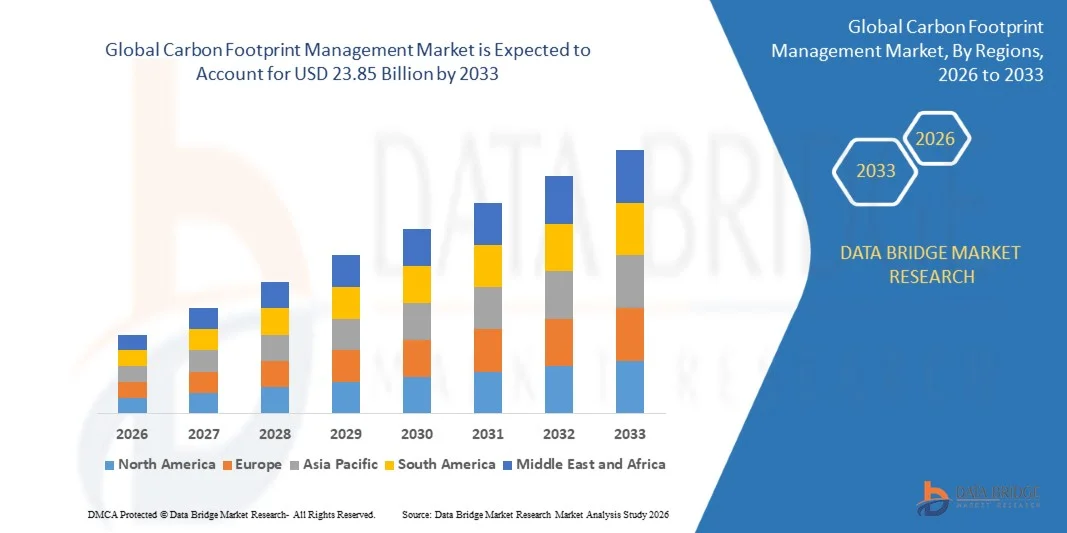
- Conforme a Data Bridge Market Research Analysis, o tamanho global do mercado de gerenciamento de pegadas de carbono foi avaliado em14,85 mil milhões de dólares em 2025e espera-se alcançar23,85 mil milhões de USD até 2033, em umaCAGR de 6,10%durante o período de previsão
- Aumentar as iniciativas das empresas para a sustentabilidade ambiental é um fator crucial para acelerar o crescimento do mercado, também aumentar a demanda por consumo de energia pelas indústrias, aumentar as iniciativas fortes das empresas em projetos de construção verde, aumentar a implementação de um quadro regulatório padronizado, aumentar as iniciativas governamentais para promover políticas de baixa emissão de carbono e crescentes preocupações com a sustentabilidade empresarial e os programas de responsabilidade social corporativa (CSR) entre as empresas são os principais fatores entre outros que impulsionam o mercado de gerenciamento de pegada de carbono
Tamanho do mercado e previsão:
- Tamanho do mercado (2025):14,85 mil milhões de USD
- Tamanho do mercado projectado (2033):23,85 mil milhões de USD
- CAGR (2026-2033):6.10%
O que são os principais takeaways do mercado de gerenciamento de pegadas de carbono
- Aumento da adopção de tecnologias avançadas, tais comoIA, IoT e big data, entre indústrias, a crescente modernização da Infraestrutura Industrial para baixas emissões de carbono, o aumento da modernização e dos avanços tecnológicos nas técnicas de produção e o aumento das atividades de pesquisa e desenvolvimento no mercado criarão novas oportunidades para o mercado de gerenciamento de pegadas de carbono
- No entanto, a crescente falta de vontade de adotar softwares de emissão de carbono entre países em desenvolvimento e não desenvolvidos é o fator vital, entre outros, que restringe o crescimento do mercado, enquanto a falta de soluções personalizadas para lidar com soluções ambientais únicas desafiará ainda mais o mercado de gerenciamento de pegadas de carbono.
- A América do Norte dominou o mercado de gerenciamento de pegadas de carbono com uma quota de receita de 41,62% em 2025, apoiada por fortes regulamentos de sustentabilidade, digitalização rápida de empresas e adoção precoce de ferramentas de contabilidade de carbono habilitadas por IA nos EUA e Canadá
- Asia-Pacific é projetado para crescer no CAGR mais rápido de 11,84% de 2026 a 2033, impulsionado pelo forte foco do governo na descarbonização, expansão industrial rápida, e adoção crescente de relatórios de sustentabilidade em toda a China, Japão, Índia, Coreia do Sul e Sudeste Asiático
- O segmento Solução dominou o mercado com uma participação de 62,4% em 2025, devido à rápida adoção de plataformas de software que automatizam o rastreamento de emissões, contabilidade de carbono, relatórios e previsão
Como é segmentado o Mercado de Gestão de Pegadas de Carbono
|
Atributos |
Gerenciamento de Pegadas de Carbono Principais Perspectivas do Mercado |
|
Segmentos Cobertos |
|
|
Países abrangidos |
América do Norte
Europa
Ásia- Pacífico
Médio Oriente e África
América do Sul
|
|
Jogadores do mercado chave |
|
|
Oportunidades de Mercado |
|
|
Informações sobre o Valor Adicionado |
Além dos insights sobre cenários de mercado, como valor de mercado, taxa de crescimento, segmentação, cobertura geográfica e principais atores, os relatórios de mercado curados pela Data Bridge Market Research também incluem análise de especialistas em profundidade, análise de preços, análise de compartilhamento de marca, inquérito ao consumidor, análise demografia, análise da cadeia de suprimentos, análise da cadeia de valor, visão geral da matéria-prima/consumíveis, critérios de seleção de fornecedores, Análise de PESTLE, Análise de Porter e marco regulatório. |
Qual é a tendência chave no mercado de gestão de pegadas de carbono
“Adoção crescente de plataformas de rastreamento de carbono conduzidas por IA, em tempo real e em nuvem“
- O mercado está constantemente mudando para plataformas de gerenciamento de carbono equipadas com IA, ricas em automação e baseadas em nuvem que oferecem monitoramento em tempo real de emissões, análise preditiva e relatórios automatizados
- As empresas estão cada vez mais integrando sensores IoT, gêmeos digitais e pipelines de dados baseados em API para coletar dados de emissões de alta frequência em fábricas, cadeias de suprimentos e ativos distribuídos
- Maior preferência por painéis centralizados de sustentabilidade, contabilidade automatizada GHG e plataformas de software que suportam requisitos globais de divulgação, como CDP, GRI e CSRD da UE
- Por exemplo, empresas como Schneider Electric, Sphera, Enablon e IHS Markit melhoraram suas plataformas com previsão orientada por IA, automação de dados Scope 1-3 e ferramentas avançadas de análise
- À medida que as indústrias aceleram os esforços de descarbonização, as plataformas de gestão de carbono alimentadas por IA continuarão a ser essenciais para a conformidade regulatória, visibilidade das emissões em toda a empresa e estratégias net-zero orientadas por dados
Quais são os Principais Drivers do Mercado de Gestão de Pegadas de Carbono
- Aumentar a necessidade de relatórios precisos, automatizados e de emissões prontas para auditoria, à medida que os regulamentos globais se reforçam em todos os EUA, Europa e Ásia-Pacífico
- Por exemplo, em 2025, empresas como Schneider Electric, Greenstone e Sphera expandiram suas capacidades de software de contabilidade de carbono para suportar modelagem aprimorada do Scope 3, ingestão automatizada de dados de energia e alinhamento global de divulgação
- Maior adoção de IoT, plataformas de nuvem e digitalização de ESG em indústrias pesadas, fabricação, varejo e logística está aumentando a demanda por soluções de rastreamento de carbono empresarial
- Avanços na análise de IA, monitoramento em tempo real, normalização de dados e gêmeos digitais estão fortalecendo a precisão, eficiência e escalabilidade das ferramentas de gerenciamento de carbono
- O rápido crescimento dos compromissos net-zero empresariais e do financiamento ligado à sustentabilidade está a levar as empresas a adoptarem plataformas de gestão de carbono de nível empresarial
- Apoiado pelo aumento das necessidades de conformidade ambiental, investimentos da ESG e o impulso global para a descarbonização, o mercado está definido para uma forte expansão a longo prazo
Que fator está desafiando o crescimento do mercado de gerenciamento de pegadas de carbono
- Elevados custos de implementação e integração associados ao software empresarial de gestão de carbono, à infraestrutura IoT e à adoção de limites de coleta de dados no âmbito 3 entre as PME
- Por exemplo, durante 2024-2025, os custos crescentes de hardware IoT, serviços de integração de dados e consultoria de sustentabilidade criaram restrições orçamentárias para várias organizações
- Complexidade na coleta de dados de emissões de alta qualidade em cadeias de suprimentos multicamadas aumenta a dependência de profissionais qualificados de sustentabilidade
- Consciência limitada e prontidão técnica nas economias emergentes dificultam a adoção de plataformas avançadas de gestão de carbono
- Competição de ferramentas genéricas ESG, software de gerenciamento de energia e planilhas internas de rastreamento de carbono reduzem a diferenciação para fornecedores especializados de soluções
- Para superar esses desafios, as empresas estão focando em plataformas SaaS econômicas, fluxos de trabalho de dados automatizados e análises orientadas por IA para expandir a acessibilidade e adoção global
Como é segmentado o Mercado de Gestão de Pegadas de Carbono
O mercado é segmentado com base emcomponente, implantação e vertical.
• Por Componente
Por componente, o mercado de gerenciamento de pegadas de carbono é segmentado em Solução e Serviços. O segmento Solução dominou o mercado com uma participação de 62,4% em 2025, devido à rápida adoção de plataformas de software que automatizam o rastreamento de emissões, contabilidade de carbono, relatórios e previsão. As empresas estão cada vez mais integrando painéis orientados por IA, ferramentas de monitoramento habilitadas por IoT e motores de cálculo automatizados do escopo 1–3 para cumprir os mandatos de conformidade, como o CSRD da UE, GRI e CDP. As soluções de gerenciamento de carbono também fornecem visualização centralizada de dados, ingestão de dados baseados em API e análise integrada em nuvem, tornando-as essenciais para relatórios de ESG, avaliações da cadeia de suprimentos e iniciativas de descarbonização em toda a empresa.
O segmento Serviços é projetado para crescer no CAGR mais rápido de 2026 para 2033, impulsionado pela crescente demanda por consultoria, integração, personalização do sistema e consultoria em sustentabilidade. A complexidade crescente na coleta de dados, avaliações do ciclo de vida e conformidade regulatória está forçando as organizações a confiar em especialistas externos para otimizar suas estratégias de redução de carbono.
• Por implantação
Com base na implantação, o mercado de gerenciamento de pegada de carbono está segmentado em On-Premises e Cloud. O segmento Cloud dominou o mercado com uma participação de 58,7% em 2025, apoiada pelo aumento da preferência empresarial por plataformas escaláveis, baseadas em assinaturas, que permitem monitoramento em tempo real de emissões, coleta automatizada de dados e relatórios multi-localizados. As soluções baseadas em nuvem oferecem custos iniciais mais baixos, ciclos de implementação mais rápidos e integração perfeita com sensores IoT, sistemas ERP e plataformas de gerenciamento de energia. Aumentar as iniciativas de transformação digital e a necessidade de relatórios de sustentabilidade centralizados em operações globais aceleram ainda mais a adoção da nuvem.
Espera-se que o segmento On-Premises cresça no CAGR mais rápido de 2026 para 2033, pois setores com estrita governança de dados, como utilitários, manufatura e indústrias pesadas, preferem sistemas localizados para maior controle, segurança e personalização. O aumento das preocupações com a privacidade dos dados, os dados de emissões industriais confidenciais e as auditorias regulamentares estão a impulsionar a procura selectiva de implantações no local.
• Por Vertical
Por vertical, o mercado de gerenciamento de pegadas de carbono é segmentado em Manufatura, TI e Telecom, Edifício Comercial, Transporte, Utilitários e Outros. O segmento Manufacturing dominou o mercado com 34,1% de participação em 2025, impulsionado por altas emissões industriais, necessidade de monitoramento contínuo e aumento da pressão regulatória para reduzir as pegadas do Escopo 1 e Escopo 2. As instalações de fabricação implementam ativamente plataformas de gerenciamento de carbono para otimizar o consumo de energia, acompanhar as emissões do processo, analisar a geração de resíduos e apoiar o cumprimento das metas climáticas nacionais e internacionais.
O segmento Transporte é projetado para crescer no CAGR mais rápido de 2026 a 2033, alimentado por eletrificação crescente, iniciativas de descarbonização da frota, regulamentos de eficiência de combustível e demanda por rastreamento em tempo real de emissões logísticas. A crescente ênfase nas cadeias de suprimentos sustentáveis, na transição EV e na mobilidade de baixo carbono está incentivando os operadores de transporte a adotarem ferramentas avançadas de contabilidade de carbono para medir e reduzir seu impacto ambiental.
Qual a região que detém a maior parte do mercado de gestão de pegadas de carbono
- A América do Norte dominou o mercado de gestão da pegada de carbono com uma quota de receita de 41,62% em 2025, apoiada por fortes regulamentos de sustentabilidade, digitalização rápida das empresas e adoção precoce de ferramentas de contabilidade de carbono habilitadas por IA nos EUA e Canadá. As grandes corporações implementam cada vez mais plataformas avançadas de gerenciamento de carbono para automatizar o relatório Scope 1-3, cumprir com as divulgações climáticas da SEC e integrar dados do ESG em operações multi-site. A expansão da infraestrutura de nuvem, a adoção forte de sensores de IoT e os investimentos em curso em iniciativas net-zero reforçam a liderança regional
- Empresas em toda a América do Norte continuam a introduzir plataformas com automação, análise preditiva e monitoramento de emissões em tempo real, fortalecendo a competitividade tecnológica
- Alta disponibilidade de profissionais qualificados em sustentabilidade, quadros de relatórios de ESG maduros e forte presença de fornecedores líderes de gerenciamento de carbono apoiam ainda mais o domínio da região
U.S. Carbon Footprint Management Market Insight
Os EUA são os principais contribuintes para o mercado norte-americano, impulsionados por regulamentos rigorosos de emissões, adoção rápida de quadros de relatórios de sustentabilidade e alto investimento em transformação digital. As empresas de fabricação, TI e telecomunicações, edifícios comerciais, transporte e serviços públicos implementam cada vez mais plataformas de gerenciamento de carbono para monitoramento contínuo, contabilidade automatizada GHG e conformidade regulatória. O crescente desenvolvimento de ecossistemas de IA, nuvem e IoT aumenta ainda mais a demanda por análises de carbono em tempo real. Forte presença de provedores globais de gerenciamento de carbono, programas de descarbonização corporativa em larga escala e compromissos net-zero acelerados continuam a fortalecer o crescimento do mercado.
Visão do mercado de gerenciamento de pegadas de carbono do Canadá
O Canadá contribui significativamente para a expansão regional devido a políticas ambientais fortes, adoção crescente de energias renováveis e ênfase crescente em relatórios precisos de GEE entre as indústrias. Empresas canadenses e organizações governamentais implementam ativamente software de gerenciamento de carbono para rastrear as emissões, otimizar a eficiência de recursos e atender às metas climáticas nacionais. Universidades, centros de pesquisa e centros de inovação estão adotando plataformas digitais para avaliações do ciclo de vida e monitoramento da sustentabilidade. Incentivos governamentais que apoiam tecnologias limpas, combinadas com engenharia qualificada e talentos ESG, continuam impulsionando a adoção de plataformas em setores de manufatura, serviços públicos, transporte e comércio.
Mercado de Gestão de Pegadas de Carbono Ásia-Pacífico
Projeta-se que a Ásia-Pacífico cresça no CAGR mais rápido de 11,84% de 2026 a 2033, impulsionado pelo forte foco governamental na descarbonização, expansão industrial rápida e adoção crescente de relatórios de sustentabilidade em toda a China, Japão, Índia, Coreia do Sul e Sudeste Asiático. A expansão da base de produção da região, os projetos de energia renovável em grande escala e os crescentes compromissos de net-zero corporativos estão aumentando a demanda por plataformas digitais de rastreamento de carbono. Emissões industriais de alto volume, grandes pegadas de cadeias de suprimentos e rápida implantação de tecnologias de IoT e nuvem estão acelerando a adoção de software de gerenciamento de carbono nas empresas.
China Carbon Footprint Management Market Insight
A China continua a ser o maior contribuinte para a região, apoiada por ampla atividade industrial, grandes emissões de cadeias de abastecimento e políticas governamentais fortes visando a neutralidade do carbono em 2060. As empresas estão adotando cada vez mais soluções de gestão de carbono para atender aos requisitos nacionais de conformidade, realizar auditorias energéticas e otimizar as emissões operacionais. Expandir ecossistemas digitais, fortes capacidades de fabricação e fornecedores de soluções competitivas aceleram ainda mais a adoção generalizada entre as indústrias.
Japão Carbon Footprint Management Market Insight
O Japão exibe crescimento constante impulsionado por fortes regulamentos ambientais, grandes programas de sustentabilidade corporativa e infraestrutura industrial avançada. Empresas japonesas priorizam sistemas de gerenciamento de carbono de alta qualidade e altamente confiáveis para apoiar o rastreamento preciso de emissões, otimização de energia e relatórios ESG. Os crescentes investimentos em fábricas inteligentes, robótica, baixa mobilidade de carbono e energias renováveis reforçam a adoção a longo prazo de plataformas digitais de gerenciamento de carbono.
Índia Pegada de Carbono Management Market Insight
A Índia está emergindo como um mercado de alto potencial devido à expansão da capacidade de energia renovável, aumento da adoção de ESG entre grandes empresas e iniciativas governamentais que promovam relatórios de carbono e conformidade com a sustentabilidade. Indústrias como fabricação, serviços de TI, automotiva e telecomunicações estão adotando plataformas de pegada de carbono para auditorias de energia, rastreamento Scope 1-3 e prontidão para divulgação de sustentabilidade. A crescente atividade de startup, a expansão da infraestrutura digital e o crescente foco do investidor no ESG aceleram a penetração no mercado.
Visão do Mercado de Gestão de Pegadas de Carbono da Coreia do Sul
A Coreia do Sul contribui fortemente para o crescimento regional, impulsionado pelo aumento da adoção de práticas de fabricação de baixo carbono, fábricas inteligentes e soluções de energia verde. As empresas nos setores de eletrônica, automotivo, semicondutores e telecomunicações estão integrando sistemas de gerenciamento de carbono para monitoramento e relatórios em tempo real. O forte apoio governamental à neutralidade do carbono, combinado com ecossistemas digitais avançados e alta capacidade de inovação, reforça a expansão sustentada do mercado.
Quais são as Principais Empresas no Mercado de Gestão de Pegadas de Carbono
A indústria de gestão da pegada de carbono é liderada principalmente por empresas bem estabelecidas, incluindo:
- ENGIE Insight Services Inc. (EUA)
- Enablon (França)
- SKV Solutions Private Limited (Índia)
- Sustent Consulting Private Limited (Índia)
- Enviance (Canadá)
- FirstCarbon Solutions (U.K.)
- Greenstone+ Ltd (U.K.)
- IHS Markit (UK)
- ProcessMAP (EUA)
- Schneider Electric (França)
- Sphera (EUA)
Quais são os Desenvolvimentos Recentes no Mercado de Gestão de Pegadas de Carbono
- Em outubro de 2025, a Ormat iniciou operações comerciais da usina de energia geotérmica Ijen 35 MW em Java Oriental, uma instalação desenvolvida através de uma joint venture com a PT Medco Power Indonesia, onde a Ormat detém 49% de capital próprio e a Medco detém 51%, e este projeto representa a primeira instalação geotérmica em Java Oriental com planos de longo prazo para expandir a capacidade para 110 MW em um PPA de 30 anos, reforçando a trajetória de crescimento de energia renovável da região
- Em julho de 2023, a IBM introduziu a IBM Cloud Carbon Calculator, uma solução movida por IA projetada para ajudar empresas a monitorar as emissões de gases de efeito estufa geradas através de serviços de nuvem, apoiando empresas na gestão e minimização de seu impacto de carbono à medida que a adoção de híbridos e multinuvens aumenta, fortalecendo esforços globais para a sustentabilidade digital
- Em fevereiro de 2023, Enablon e Makersite formaram uma colaboração estratégica para apoiar as organizações no cumprimento dos objetivos da ESG e Net Zero, possibilitando a descarbonização das cadeias de suprimentos através de uma melhor coleta de dados, modelagem, relatórios, planejamento, previsão e execução operacional em todos os três escopos de emissão de GHG, marcando um passo significativo para o gerenciamento integrado da sustentabilidade
- Em setembro de 2022, a Enviance adquiriu o Reporting 21, uma plataforma e consultoria de software de desempenho da ESG, que deverá ser integrada na Cority’s Sustainability Cloud para melhorar as capacidades dos clientes em relatórios de sustentabilidade, monitoramento de desempenho e tomada de decisão da ESG, reforçando a posição da Cority no mercado de soluções de conformidade ambiental e sustentabilidade
SKU-
Obtenha acesso online ao relatório sobre a primeira nuvem de inteligência de mercado do mundo

- Painel interativo de análise de dados
- Painel de análise da empresa para oportunidades de elevado potencial de crescimento
- Acesso de analista de pesquisa para personalização e customização. consultas
- Análise da concorrência com painel interativo
- Últimas notícias, atualizações e atualizações Análise de tendências
- Aproveite o poder da análise de benchmark para um rastreio abrangente da concorrência
Metodologia de Investigação
A recolha de dados e a análise do ano base são feitas através de módulos de recolha de dados com amostras grandes. A etapa inclui a obtenção de informações de mercado ou dados relacionados através de diversas fontes e estratégias. Inclui examinar e planear antecipadamente todos os dados adquiridos no passado. Da mesma forma, envolve o exame de inconsistências de informação observadas em diferentes fontes de informação. Os dados de mercado são analisados e estimados utilizando modelos estatísticos e coerentes de mercado. Além disso, a análise da quota de mercado e a análise das principais tendências são os principais fatores de sucesso no relatório de mercado. Para saber mais, solicite uma chamada de analista ou abra a sua consulta.
A principal metodologia de investigação utilizada pela equipa de investigação do DBMR é a triangulação de dados que envolve a mineração de dados, a análise do impacto das variáveis de dados no mercado e a validação primária (especialista do setor). Os modelos de dados incluem grelha de posicionamento de fornecedores, análise da linha de tempo do mercado, visão geral e guia de mercado, grelha de posicionamento da empresa, análise de patentes, análise de preços, análise da quota de mercado da empresa, normas de medição, análise global versus regional e de participação dos fornecedores. Para saber mais sobre a metodologia de investigação, faça uma consulta para falar com os nossos especialistas do setor.
Personalização disponível
A Data Bridge Market Research é líder em investigação formativa avançada. Orgulhamo-nos de servir os nossos clientes novos e existentes com dados e análises que correspondem e atendem aos seus objetivos. O relatório pode ser personalizado para incluir análise de tendências de preços de marcas-alvo, compreensão do mercado para países adicionais (solicite a lista de países), dados de resultados de ensaios clínicos, revisão de literatura, mercado remodelado e análise de base de produtos . A análise de mercado dos concorrentes-alvo pode ser analisada desde análises baseadas em tecnologia até estratégias de carteira de mercado. Podemos adicionar quantos concorrentes necessitar de dados no formato e estilo de dados que procura. A nossa equipa de analistas também pode fornecer dados em tabelas dinâmicas de ficheiros Excel em bruto (livro de factos) ou pode ajudá-lo a criar apresentações a partir dos conjuntos de dados disponíveis no relatório.











