



Segmentação de Mercado de Bebidas Macio Carbonadas Global, Por Flavor (Cola, Limão, Limão, Laranja, e Outros), Tipo de Embalagem (Bottles and Cans), Canal de Distribuição (Supermercados & Hipermercados, Lojas de Conveniência, Online e Outros) - Tendências e Previsão da Indústria para 2033
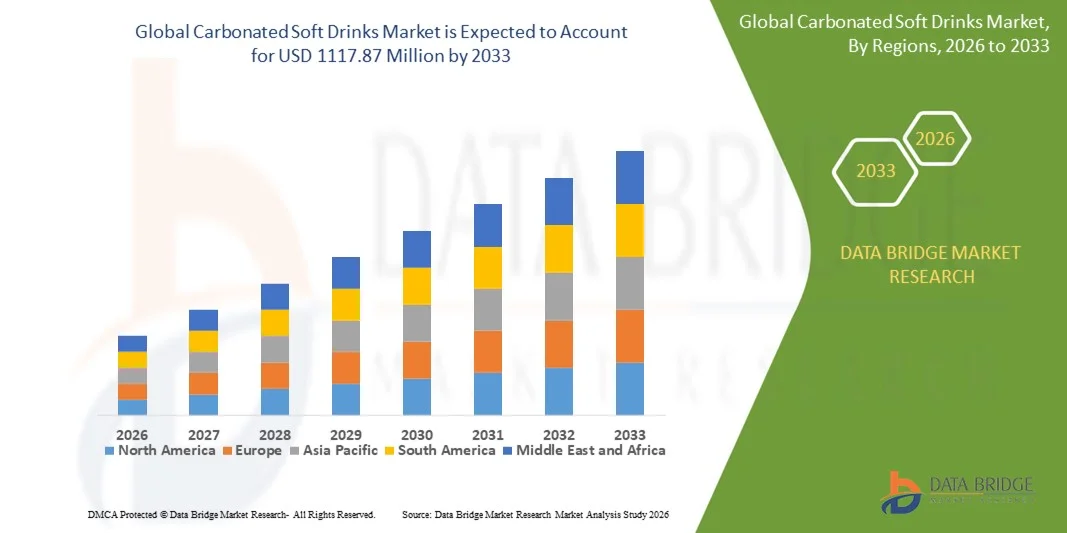
Tamanho de mercado de refrigerantes carbonatados
- A dimensão global do mercado de refrigerantes carbonatados foi avaliada em697,15 milhões de USD em 2025e espera-se alcançar1117,87 milhões de USD até 2033, em umaCAGR de 6,08%durante o período de previsão
- O crescimento do mercado é em grande parte alimentado pelo aumento do consumo global de bebidas prontas para beber, impulsionado por mudanças de estilo de vida, urbanização e preferência crescente por opções de refresco convenientes em todas as faixas etárias
- Além disso, a forte influência da marca, a inovação de sabor contínuo e a ampla disponibilidade em canais modernos de varejo e serviço alimentar estão reforçando a demanda do consumidor. Estes factores combinados estão a acelerar a frequência e o volume de consumo, apoiando significativamente o crescimento do mercado dos refrigerantes carbonatados
Análise de mercado de refrigerantes carbonatados
- Os refrigerantes carbonatados são bebidas não alcoólicas infundidas com dióxido de carbono, disponíveis em uma ampla gama de sabores e formulações, e consumidos em ambientes residenciais, comerciais e em andamento
- A crescente demanda por refrigerantes carbonatados é impulsionada principalmente pela forte lealdade da marca, estratégias de marketing agressivas, expansão das redes de distribuição e evolução das preferências do consumidor para variantes de bebidas aromatizadas e funcionais
- América do Norte domina o mercado de refrigerantes carbonatados com uma participação de 45,5%em 2025, devido ao alto consumo per capita, à forte fidelização da marca e à presença generalizada de fabricantes de bebidas
- Asia-Pacific é esperado para ser a região de crescimento mais rápido no mercado de refrigerantes carbonatados durante o período de previsão devido à urbanização rápida, aumento do rendimento disponível e expansão da população jovem demográfico
- O segmento da Cola dominou o mercado com uma quota de mercado de 45,5% em 2025, devido à sua forte presença global na marca, longa preferência do consumidor e ampla aceitação em todas as faixas etárias. As bebidas Cola beneficiam de amplos investimentos de marketing e perfis de sabor consistentes que reforçam o consumo repetido. Seu posicionamento forte em ambos os canais on-trade e off-trade suporta ainda elevados volumes de vendas. Ampla disponibilidade entre pontos de preço e tamanhos de embalagem continua a manter a demanda. O domínio da cola também é apoiado pelo seu emparelhamento com refeições e ocasiões sociais
Alcance do relatório e segmentação de mercado de refrigerantes carbonatados
| Atributos | Bebidas Macia Carbonadas Principais Insights do Mercado |
| Segmentos Cobertos |
|
| Países abrangidos | América do Norte
Europa
Ásia- Pacífico
Médio Oriente e África
América do Sul
|
| Jogadores do mercado chave |
|
| Oportunidades de Mercado |
|
| Informações sobre o Valor Adicionado | Além dos insights sobre cenários de mercado, como valor de mercado, taxa de crescimento, segmentação, cobertura geográfica e principais atores, os relatórios de mercado curados pela Data Bridge Market Research também incluem análise de especialistas em profundidade, análise de preços, análise de compartilhamento de marca, inquérito ao consumidor, análise demografia, análise da cadeia de suprimentos, análise da cadeia de valor, visão geral da matéria-prima/consumíveis, critérios de seleção de fornecedores, Análise de PESTLE, Análise de Porter e marco regulatório. |
Tendências de mercado de refrigerantes carbonatados
Aumento da demanda por bebidas carbonatadas com baixo teor de açúcar e zero calorias
- Uma grande tendência no mercado de refrigerantes carbonatados é a crescente mudança do consumidor em direção às opções de bebidas com baixo açúcar e zero calorias, impulsionadas pelo aumento da conscientização sobre a saúde e mudanças nas preferências alimentares. Os consumidores estão reduzindo a ingestão de açúcar ativamente, enquanto ainda procuram o sabor e refresco associados com bebidas carbonatadas, que está remodelando portfólios de produtos em toda a indústria
- Por exemplo, a Coca-Cola expandiu suas ofertas de Coca-Cola Zero Sugar e Diet Coke em várias regiões para atender à crescente demanda por alternativas de calorias reduzidas. Estes produtos ganharam forte tração entre os consumidores conscientes da saúde, mantendo a familiaridade da marca e consistência sabor
- A tendência é ainda apoiada por esforços de reformulação que se concentram em adoçantes alternativos e melhores perfis de sabor para atender às expectativas dos consumidores em evolução. Os fabricantes de bebidas estão investindo em pesquisa para equilibrar gosto, sensação bucal e redução de calorias sem comprometer o apelo do produto
- As prateleiras de retalho são cada vez mais dominadas por variantes de baixo e sem açúcar, reflectindo maior alocação de prateleiras e foco promocional por parte dos varejistas. Esta mudança está a incentivar uma adopção mais rápida entre os consumidores que anteriormente limitavam o consumo de refrigerantes carbonatados devido a preocupações de saúde
- Os dados demográficos mais jovens estão particularmente impulsionando essa tendência, pois mostram maior preferência pela transparência no conteúdo nutricional e nos benefícios funcionais. Seu comportamento de compra está influenciando as estratégias da marca e acelerando o lançamento de bebidas carbonatadas melhores para você
- O impulso sustentado das ofertas de baixo açúcar e zero calorias está redefinindo o posicionamento competitivo dentro do mercado. Esta tendência está a reforçar a procura a longo prazo, alinhando refrigerantes carbonatos com escolhas de estilo de vida mais saudáveis, preservando o apelo do mercado de massa
Dinâmica de mercado de refrigerantes carbonatados
Controlador
Forte Lealdade de marca e extensas redes globais de distribuição
- Forte lealdade à marca e redes de distribuição globais bem estabelecidas continuam a ser o principal motor do mercado de refrigerantes carbonatados, permitindo uma disponibilidade consistente de produtos e um consumo sustentado em todas as regiões. Marcas líderes se beneficiam de décadas de confiança e reconhecimento do consumidor, que suporta compras repetidas e demanda estável
- Por exemplo, a PepsiCo aproveita sua extensa rede global de engarrafamento e distribuição para garantir ampla disponibilidade de seu portfólio de bebidas carbonatadas em supermercados, lojas de conveniência e lojas de alimentos. Este alcance permite à empresa manter forte penetração no mercado mesmo em ambientes altamente competitivos
- Investimentos e patrocínios de marketing em larga escala reforçam ainda mais o apego à marca e a memória do consumidor. Estes esforços reforçam as ligações emocionais com os consumidores e mantêm a preferência da marca a longo prazo
- A capacidade de distribuir produtos de forma eficiente nos mercados urbano e rural apoia o crescimento orientado para o volume. Capacidades logísticas estabelecidas reduzem as rupturas de fornecimento e garantem a presença consistente de prateleiras
- Como o consumo continua intimamente ligado à familiaridade e acessibilidade da marca, este condutor desempenha um papel central no apoio à resiliência e escala do mercado de refrigerantes carbonatos
Restrição/Desafio
Aumentar as preocupações de saúde e pressão regulatória sobre o conteúdo de açúcar
- O mercado de refrigerantes carbonatados enfrenta desafios crescentes a partir da crescente preocupação com a saúde e do aumento do escrutínio regulatório relacionado ao consumo de açúcar. Governos e organizações de saúde estão destacando ativamente as relações entre consumo excessivo de açúcar e doenças relacionadas ao estilo de vida, influenciando o comportamento do consumidor e decisões políticas
- Por exemplo, a Organização Mundial de Saúde tem consistentemente recomendado reduzir a ingestão de açúcar livre, levando vários países a introduzir impostos sobre o açúcar em bebidas carbonatadas. Tais regulamentações têm impactado diretamente estratégias de preços e padrões de consumo em múltiplos mercados
- Os fabricantes são obrigados a investir fortemente em esforços de reformulação e conformidade para atender às normas regulamentares. Estas alterações envolvem frequentemente custos mais elevados relacionados com o fornecimento de ingredientes, testes e atualizações de rotulagem
- A mudança de percepção do consumidor em relação às bebidas açucaradas está reduzindo a demanda por bebidas gaseificadas tradicionais. Isso cria pressão sobre produtos legados que historicamente contribuíram com volumes de receita significativos
- Estas restrições regulamentares e de saúde estão a remodelar a dinâmica competitiva e a obrigar os intervenientes no mercado a adaptarem-se rapidamente. O desafio continua a influenciar o planeamento estratégico e as trajetórias de crescimento a longo prazo no mercado de refrigerantes carbonatados
Escopo de mercado de refrigerantes carbonatados
O mercado é segmentado com base no sabor, tipo de embalagem e canal de distribuição.
- Por Sabor
Com base no sabor, o mercado de refrigerantes carbonatados é segmentado em cola, limão, limão, laranja, e outros. O segmento da cola dominou a maior quota de receita de mercado de 45,5% em 2025, impulsionada pela sua forte presença global na marca, preferência de longa data pelo consumidor e ampla aceitação em todas as faixas etárias. As bebidas Cola beneficiam de amplos investimentos de marketing e perfis de sabor consistentes que reforçam o consumo repetido. Seu posicionamento forte em ambos os canais on-trade e off-trade suporta ainda elevados volumes de vendas. Ampla disponibilidade entre pontos de preço e tamanhos de embalagem continua a manter a demanda. O domínio da cola também é apoiado pelo seu emparelhamento com refeições e ocasiões sociais.
O segmento de limão é esperado para testemunhar a taxa de crescimento mais rápida de 2026 para 2033, apoiado pelo crescente interesse do consumidor em sabores refrescantes e à base de citrinos. As bebidas carbonatadas com sabor de limão são cada vez mais percebidas como mais leves e mais saciadoras de sede, o que atrai consumidores conscientes da saúde e mais jovens. As inovações de produtos com foco em formulações de baixo açúcar e sabor natural estão fortalecendo a adoção. A demanda sazonal durante climas mais quentes também contribui para o maior consumo. A expansão da disponibilidade nos mercados emergentes está a acelerar ainda mais o crescimento.
- Por tipo de embalagem
Com base no tipo de embalagem, o mercado de refrigerantes carbonatados é segmentado em garrafas e latas. O segmento de garrafas representou a maior quota de receita de mercado em 2025, impulsionada pela conveniência, ressealabilidade e adequação para o consumo familiar ou multiserva. Garrafas de plástico e vidro oferecem flexibilidade em variantes de tamanho, apoiando compras de uso único e a granel. As garrafas são amplamente preferidas em ambientes de varejo devido à facilidade de armazenamento e transporte. Forte penetração em supermercados e lojas de conveniência reforça ainda mais o domínio. A visibilidade da marca através da rotulagem e design de embalagens também suporta vendas mais elevadas.
Prevê-se que o segmento das latas registe a taxa de crescimento mais rápida durante o período de previsão, apoiada pelo aumento da procura de um serviço único e de consumo em curso. As latas oferecem refrigeração mais rápida, portabilidade melhorada e risco reduzido de contaminação, tornando-as populares em ambientes urbanos. O crescente foco ambiental na reciclagem está melhorando a percepção de latas de alumínio. O aumento do consumo através de máquinas de venda automática e de serviços alimentares também está a impulsionar o crescimento. Tendências de premiação estão apoiando ainda mais ofertas baseadas em can.
- Por Canal de Distribuição
Com base no canal de distribuição, o mercado de refrigerantes carbonatados é segmentado em supermercados e hipermercados, lojas de conveniência, online, entre outros. Supermercados e hipermercados dominaram a maior quota de receita de mercado em 2025, impulsionada por ampla variedade de produtos e alto nível de consumo. Estes canais permitem a compra a granel e preços promocionais, incentivando vendas de maior volume. Forte visibilidade de prateleira e marketing in-store suportam compras orientadas pela marca. As cadeias de abastecimento estabelecidas garantem uma disponibilidade consistente do produto. A preferência do consumidor por compras de uma parada reforça ainda mais o domínio.
O segmento on-line é projetado para testemunhar a taxa de crescimento mais rápida de 2026 a 2033, apoiado pelo aumento da penetração digital e evolução do comportamento de compra. As plataformas online oferecem conveniência, entrega domiciliar e acesso a uma gama mais ampla de marcas e tamanhos de embalagens. Modelos baseados em assinaturas estão incentivando as compras repetidas de bebidas. O crescimento do comércio rápido e dos serviços de mercearia baseados em aplicativos está acelerando a adoção. Descontos atraentes e recomendações personalizadas aumentam ainda mais a expansão do canal.
Análise regional do mercado de refrigerantes carbonatados
- A América do Norte dominou o mercado de refrigerantes carbonatados com a maior parcela de receita de 45,5% em 2025, impulsionada pelo alto consumo per capita, pela forte lealdade da marca e pela presença generalizada de fabricantes estabelecidos de bebidas
- Os consumidores da região mostram uma forte preferência por bebidas carbonatadas em várias ocasiões, apoiadas por marketing agressivo, inovações frequentes de produtos e ampla disponibilidade em canais de varejo e de serviços alimentares
- Este domínio é ainda apoiado por infra-estruturas de distribuição bem desenvolvidas, elevados rendimentos disponíveis e pela crescente procura de bebidas convenientes e prontas para beber, reforçando a liderança da região no mercado global
U.S. Carbonate Soft Drinks Market Insight
O mercado de refrigerantes carbonatados dos EUA captou a maior parte de receita em 2025 na América do Norte, apoiada pela forte presença de marcas globais de bebidas e um ecossistema de varejo maduro. O alto consumo de bebidas à base de cola, combinado com inovação de sabor contínuo e diversificação de embalagens, continua a impulsionar a demanda. A expansão das lojas de conveniência e dos serviços alimentares reforça ainda mais o crescimento do mercado. Além disso, as fortes atividades promocionais e a lealdade do consumidor orientada pela marca desempenham um papel fundamental na manutenção dos volumes de vendas.
Europe Carbonate Soft Drinks Market Insight
Prevê-se que o mercado europeu de refrigerantes carbonatados cresça num CAGR estável durante o período previsto, impulsionado pela alteração das preferências dos consumidores e pelo aumento da procura de bebidas gaseificadas aromatizadas e com baixo teor de açúcar. A urbanização crescente e a evolução dos estilos de vida apoiam um consumo consistente tanto na Europa Ocidental como na Europa Oriental. Os fabricantes estão cada vez mais focados na reformulação e ofertas premium para alinhar com as normas regulamentares e expectativas dos consumidores. A região apresenta um crescimento equilibrado entre os canais retalhista e comercial.
U.K. Carbonate Soft Drinks Market Insight
Espera-se que o mercado de refrigerantes carbonatados do Reino Unido registre um crescimento notável durante o período de previsão, impulsionado pela forte demanda por bebidas carbonatadas aromatizadas e sem açúcar. A sensibilização para a saúde e as medidas regulamentares relativas ao teor de açúcar estão a influenciar a inovação dos produtos e a diversificação do portfólio. Os consumidores continuam a favorecer bebidas gaseificadas para consumo social e doméstico. A forte penetração no varejo e as estratégias de preços promocionais do país apoiam ainda mais a expansão do mercado.
Alemanha Carbonado Soft Drinks Market Insight
Prevê-se que o mercado alemão de refrigerantes carbonatados se expanda em um CAGR moderado, apoiado pelo alto consumo de bebidas carbonatadas e uma forte preferência por variantes aromatizadas e à base de frutas. A base de produção de bebidas bem estabelecida da Alemanha e as redes de distribuição eficientes apoiam uma oferta consistente. O aumento da demanda por embalagens sustentáveis e latas e garrafas recicláveis está influenciando a dinâmica do mercado. O foco na qualidade e transparência dos ingredientes se alinha com as expectativas dos consumidores em evolução.
Visão de Mercado de Bebidas Macia Carbonadas Ásia-Pacífico
Espera-se que o mercado de refrigerantes carbonatos Ásia-Pacífico cresça o mais rápido possível durante o período de previsão, impulsionado pela urbanização rápida, aumento da renda disponível e expansão da população jovem demográfica. O aumento da ocidentalização das dietas e a crescente exposição às marcas globais de bebidas estão acelerando o consumo. A expansão dos formatos de varejo modernos e lojas de conveniência ainda suporta o crescimento do mercado. Os fabricantes estão introduzindo ativamente sabores específicos de região para capturar a demanda local.
Japão Carbonado Soft Drinks Market Insight
O mercado japonês de refrigerantes carbonatados está testemunhando crescimento constante devido à forte demanda do consumidor por sabores inovadores e bebidas carbonatadas premium. O mercado beneficia de tecnologias avançadas de embalagem e de um elevado nível de diferenciação dos produtos. As bebidas carbonatadas são amplamente consumidas em máquinas de venda automática, lojas de conveniência e lojas de alimentos. A preferência por tamanhos de embalagens menores e variantes funcionais de bebidas continua a moldar as tendências do mercado.
China Carbonado Soft Drinks Market Insight
O mercado de refrigerantes carbonatados da China representou a maior parte da receita da Ásia-Pacífico em 2025, impulsionada pela urbanização rápida, uma crescente população de classe média e forte penetração da marca. O aumento do consumo entre consumidores mais jovens e o aumento da procura de bebidas aromatizadas carbonatadas são os principais factores de crescimento. A expansão do comércio electrónico e dos canais de retalho modernos está a melhorar significativamente a acessibilidade dos produtos. Fortes fabricantes nacionais e estratégias de preços competitivos estão acelerando ainda mais a expansão do mercado.
Carbonado Soft Drinks Market Share
A indústria de refrigerantes carbonatados é liderada principalmente por empresas bem estabelecidas, incluindo:
- Coca-Cola (EUA)
- PepsiCo (EUA)
- Grupo Dr. Pepper Snapple (EUA)
- Nestlé S.A. (Suíça)
- Monster Beverage Corporation (EUA)
- Red Bull GmbH (Áustria)
- Britvic plc (U.K.)
- Keurig Dr Pepper Inc. (EUA)
- Fanta (EUA)
- Asahi Group Holdings, Ltd. (Japão)
- Danone S.A. (França)
- Suntory Holdings Limited (Japão)
- A Companhia Kraft Heinz (EUA)
- Tigyi Holding Corp. (China)
Mais recentes desenvolvimentos no mercado global de refrigerantes carbonatados
- Em novembro de 2025, a Coca-Cola (EUA) entrou em parceria estratégica com uma empresa líder em tecnologia para fortalecer suas capacidades de marketing digital, com impacto direto no engajamento do consumidor e no posicionamento da marca. A colaboração permite o uso de análises avançadas e personalização baseada em dados, permitindo à Coca-Cola adaptar campanhas de marketing mais precisamente às preferências do consumidor. Espera-se que esta abordagem aumente a lealdade da marca, melhore a eficiência da campanha e apoie o crescimento sustentado da quota de mercado em um cenário altamente competitivo de refrigerantes carbonatados. Insights mais profundos do consumidor também podem orientar futuras inovações de sabor e produto
- Em setembro de 2025, a PepsiCo (EUA) introduziu um novo portfólio de refrigerantes orgânicos carbonatados, reforçando seu foco estratégico nas tendências de consumo de saúde e bem-estar. Este desenvolvimento amplia a presença da PepsiCo no segmento premium e de bebidas orgânicas, que está ganhando força entre os consumidores conscientes da saúde. Ao diversificar suas ofertas de refrigerantes carbonatados, a empresa está posicionada para atrair novos segmentos de clientes, fortalecendo sua vantagem competitiva. A mudança também apoia a resiliência de portfólio de longo prazo em meio a mudanças nas preferências do consumidor
- Em agosto de 2025, Keurig Dr Pepper (EUA) anunciou investimentos em soluções de embalagem sustentáveis para seu portfólio de refrigerantes carbonatados, visando reduzir o uso de plástico e melhorar a reciclabilidade. Espera-se que esta iniciativa melhore a percepção da marca entre os consumidores ambientalmente conscientes e alinha a empresa com as crescentes expectativas regulatórias e de sustentabilidade. Uma melhor eficiência de embalagem também pode contribuir para a otimização de custos ao longo do tempo. O foco na sustentabilidade apoia a competitividade do mercado a longo prazo e a confiança dos consumidores
- Em julho de 2025, o Dr. Pepper Snapple Group (EUA) expandiu sua pegada de distribuição pelo Sudeste Asiático para capitalizar a crescente demanda por bebidas carbonatadas em economias emergentes. Essa expansão fortalece o acesso da empresa a mercados de alto crescimento caracterizados pelo aumento da urbanização e jovens populações consumidoras. Recursos de distribuição aprimorados provavelmente melhorarão a disponibilidade do produto e a visibilidade da marca em toda a região. Como resultado, a empresa está posicionada para capturar market share incremental e reforçar sua estratégia de crescimento global
- Em junho de 2025, a Coca-Cola Company (EUA) lançou bebidas carbonatadas com sabor regional em mercados selecionados Ásia-Pacífico para atender às preferências de gosto local. Espera-se que esta estratégia de produtos localizada conduza a maiores taxas de aceitação e experimentação dos consumidores em diversos mercados regionais. Adaptar sabores às preferências culturais aumenta a diferenciação competitiva e reforça a penetração regional do mercado. A iniciativa apoia o crescimento do volume e reforça a adaptabilidade da Coca-Cola em mercados globais dinâmicos
SKU-
Obtenha acesso online ao relatório sobre a primeira nuvem de inteligência de mercado do mundo

- Painel interativo de análise de dados
- Painel de análise da empresa para oportunidades de elevado potencial de crescimento
- Acesso de analista de pesquisa para personalização e customização. consultas
- Análise da concorrência com painel interativo
- Últimas notícias, atualizações e atualizações Análise de tendências
- Aproveite o poder da análise de benchmark para um rastreio abrangente da concorrência
Metodologia de Investigação
A recolha de dados e a análise do ano base são feitas através de módulos de recolha de dados com amostras grandes. A etapa inclui a obtenção de informações de mercado ou dados relacionados através de diversas fontes e estratégias. Inclui examinar e planear antecipadamente todos os dados adquiridos no passado. Da mesma forma, envolve o exame de inconsistências de informação observadas em diferentes fontes de informação. Os dados de mercado são analisados e estimados utilizando modelos estatísticos e coerentes de mercado. Além disso, a análise da quota de mercado e a análise das principais tendências são os principais fatores de sucesso no relatório de mercado. Para saber mais, solicite uma chamada de analista ou abra a sua consulta.
A principal metodologia de investigação utilizada pela equipa de investigação do DBMR é a triangulação de dados que envolve a mineração de dados, a análise do impacto das variáveis de dados no mercado e a validação primária (especialista do setor). Os modelos de dados incluem grelha de posicionamento de fornecedores, análise da linha de tempo do mercado, visão geral e guia de mercado, grelha de posicionamento da empresa, análise de patentes, análise de preços, análise da quota de mercado da empresa, normas de medição, análise global versus regional e de participação dos fornecedores. Para saber mais sobre a metodologia de investigação, faça uma consulta para falar com os nossos especialistas do setor.
Personalização disponível
A Data Bridge Market Research é líder em investigação formativa avançada. Orgulhamo-nos de servir os nossos clientes novos e existentes com dados e análises que correspondem e atendem aos seus objetivos. O relatório pode ser personalizado para incluir análise de tendências de preços de marcas-alvo, compreensão do mercado para países adicionais (solicite a lista de países), dados de resultados de ensaios clínicos, revisão de literatura, mercado remodelado e análise de base de produtos . A análise de mercado dos concorrentes-alvo pode ser analisada desde análises baseadas em tecnologia até estratégias de carteira de mercado. Podemos adicionar quantos concorrentes necessitar de dados no formato e estilo de dados que procura. A nossa equipa de analistas também pode fornecer dados em tabelas dinâmicas de ficheiros Excel em bruto (livro de factos) ou pode ajudá-lo a criar apresentações a partir dos conjuntos de dados disponíveis no relatório.











