


Segmentação do mercado global de licenças químicas, por tipo (Derivados C2, Derivados C1, Derivados C3, Derivados C4, Derivados C4 e Outros), Indústria de uso final (Petroquímicas, Petróleo e Gás, Produtos Químicos Inorgânicos, Agroquímicos, Produtos Químicos Orgânicos, Farmacêuticos e Outros)- Tendências e Previsão da Indústria para 2033
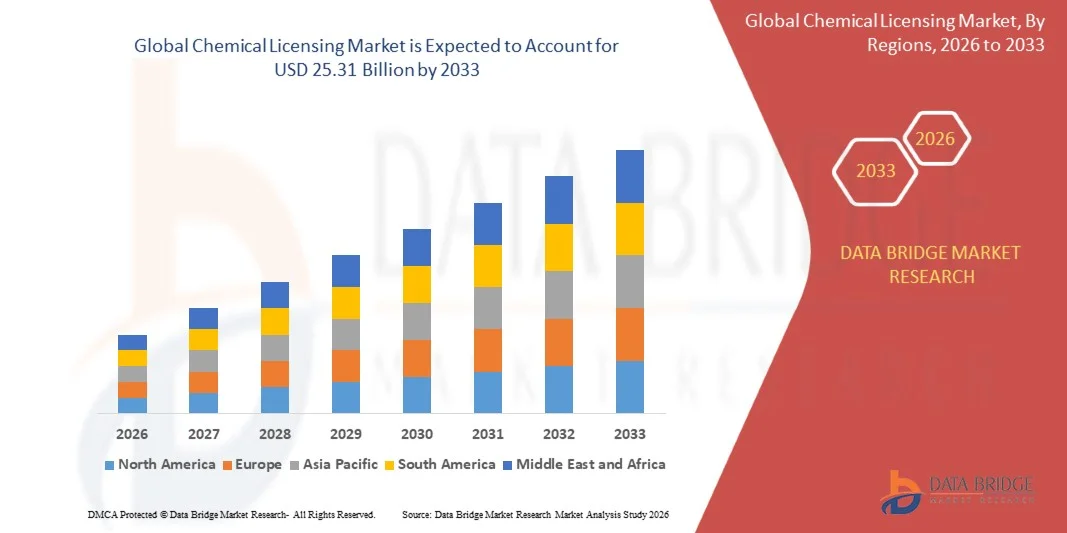
Tamanho do mercado de licenciamento químico
- A dimensão global do mercado de licenças químicas foi avaliada emUSD 14,57 mil milhões em 2025e espera-se alcançar25,31 mil milhões de USD até 2033, em umaCAGR de 7,15%durante o período de previsão
- O crescimento do mercado é amplamente alimentado pelo aumento da demanda por processos químicos avançados, tecnologias de produção sustentáveis e rápida expansão de produtos químicos de especialidade e desempenho
- Investimentos crescentes em petroquímicos, polímeros e química verde, juntamente com a necessidade de soluções de fabricação eficientes e econômicas, estão apoiando ainda mais o crescimento do mercado
Análise do mercado de licenças químicas
- O mercado de licenciamento de produtos químicos está a assistir a um crescimento constante à medida que os fabricantes dependem cada vez mais de tecnologias licenciadas para reduzir os custos de I&D, reduzir os prazos de comercialização e melhorar a eficiência operacional
- O foco crescente na sustentabilidade, conformidade regulatória e adoção de tecnologias inovadoras de processos está incentivando colaborações entre licenciantes e produtores químicos em várias indústrias de uso final
- A América do Norte dominou o mercado de licenciamento químico com a maior parte de receita em 2025, impulsionada pela forte presença de grandes produtores químicos, capacidades avançadas de P&D, e adoção precoce de tecnologias licenciadas através de petroquímicos e especialidades químicas
- A região Ásia-Pacífico deverá testemunhar a maior taxa de crescimento no mundolicenciamento químicomercado, impulsionado pelo aumento da produção química, investimentos estrangeiros e crescente demanda por tecnologias eficientes e sustentáveis
- O segmento de derivados C2 detinha a maior quota de receita de mercado em 2025, impulsionada pela grande demanda por produtos à base de etileno, como polietileno e óxido de etileno, através da fabricação de petroquímicos e plásticos. Tecnologias derivadas C2 licenciadas são amplamente adotadas devido à sua comprovada eficiência, escalabilidade e forte integração com cadeias de valor químico a jusante
Âmbito do relatório e segmentação do mercado de licenças químicas
| Atributos | Perspectivas de mercado chave de licenciamento químico |
| Segmentos Cobertos |
|
| Países abrangidos | América do Norte
Europa
Ásia- Pacífico
Médio Oriente e África
América do Sul
|
| Jogadores do mercado chave |
|
| Oportunidades de Mercado |
|
| Informações sobre o Valor Adicionado | Além dos insights sobre cenários de mercado, como valor de mercado, taxa de crescimento, segmentação, cobertura geográfica e principais atores, os relatórios de mercado curados pela Data Bridge Market Research também incluem análise de importação, visão geral da capacidade de produção, análise do consumo de produção, análise de tendências de preços, cenário de mudança climática, análise da cadeia de suprimentos, análise da cadeia de valor, visão geral da matéria-prima/consumíveis, critérios de seleção de fornecedores, Análise de PESTLE, Análise de Porter e quadro regulatório. |
Tendências do mercado de licenças químicas
“Demanda crescente de tecnologias químicas avançadas, sustentáveis e eficientes em termos de custos”
• O crescente foco na eficiência, sustentabilidade e comercialização rápida está moldando significativamente o mercado de licenciamento químico, já que os fabricantes buscam tecnologias comprovadas para reduzir as despesas de capital e os riscos operacionais. O licenciamento químico está ganhando força devido à sua capacidade de fornecer acesso a tecnologias de processo avançadas, melhorar o rendimento e garantir a conformidade regulatória sem extensa I&D interna. Essa tendência reforça a adoção em petroquímicos, produtos químicos especiais e materiais de desempenho, incentivando os licenciantes a expandir e atualizar seus portfólios de tecnologia
• A crescente ênfase na fabricação sustentável e redução de emissões acelerou a demanda por tecnologias licenciadas que apoiem a química verde, eficiência energética e menor impacto ambiental. Os produtores de produtos químicos estão cada vez mais adotando processos licenciados para atender regulamentos ambientais mais rigorosos e objetivos de sustentabilidade corporativa, levando a colaboração entre fornecedores de tecnologia e fabricantes de produtos químicos a desenvolver soluções mais limpas e eficientes
• As tendências de digitalização e otimização de processos estão influenciando as decisões de licenciamento, com licenciantes integrando ferramentas digitais, automação de processos e monitoramento de desempenho em pacotes licenciados. Esses fatores ajudam os licenciados a melhorar a eficiência operacional, minimizar o tempo de inatividade e melhorar o desempenho global da planta, ao mesmo tempo que permitem aos licenciantes diferenciar ofertas em um mercado competitivo
• Por exemplo, em 2024, os licenciadores de tecnologia nos EUA e na Europa expandiram os acordos de licenciamento de polímeros avançados, hidrogênio e processos químicos especializados para apoiar iniciativas de produção sustentáveis. Estes acordos foram impulsionados pelo aumento da procura de tecnologias de baixa emissão e de alta eficiência, com a adopção de novos projectos e iniciativas de expansão da capacidade globalmente
• Embora a procura de licenças químicas continue a crescer, a expansão sustentada do mercado depende da inovação contínua, da protecção da propriedade intelectual e da capacidade de adaptação das tecnologias às diversas matérias-primas e regulamentações regionais. Os licenciantes também estão focados em modelos de licenciamento flexíveis e suporte técnico de longo prazo para aumentar o valor dos licenciados
Dinâmica do mercado de licenças químicas
Controlador
“Crescimento da necessidade de uma produção química eficiente e sustentável”
• A crescente procura de processos químicos eficientes, escalonáveis e compatíveis com o ambiente é um dos principais motores do mercado de licenciamento de produtos químicos. Os fabricantes estão cada vez mais confiando em tecnologias licenciadas para atender às metas de produção, reduzir prazos de desenvolvimento e cumprir as normas regulatórias em evolução. Esta tendência também está impulsionando a inovação na intensificação do processo e design modular de plantas
• Expandir aplicações em petroquímicos, polímeros, fertilizantes, produtos químicos especiais e hidrogênio verde estão influenciando o crescimento do mercado. Tecnologias licenciadas permitem que os produtores otimizem a utilização de matérias-primas, melhorem a qualidade do produto e melhorem a segurança, apoiando a implantação industrial em larga escala. A mudança global para uma produção química sustentável e circular reforça ainda mais essa tendência
• Os produtores de produtos químicos estão ativamente envolvidos em parcerias de licenciamento para acessar tecnologias proprietárias, expertise técnica e suporte contínuo ao processo. Essas colaborações ajudam a reduzir o risco tecnológico e garantir uma execução mais rápida do projeto, ao mesmo tempo que incentivam relações de longo prazo entre licenciantes e licenciados
• Por exemplo, em 2023, as principais empresas químicas da Ásia e do Oriente Médio firmaram acordos de licenciamento com fornecedores de tecnologia europeus e americanos para processos petroquímicos avançados e químicos especializados. Esses acordos apoiaram expansões de capacidade e projetos de modernização alinhados com objetivos de sustentabilidade e eficiência
• Embora a forte procura apoie o crescimento do mercado, a adopção mais ampla depende de condições de investimento favoráveis, adaptabilidade tecnológica e viabilidade económica a longo prazo. O investimento contínuo em inovação, integração digital e desenvolvimento sustentável de processos será fundamental para manter a competitividade no mercado global de licenças químicas
Restrição/Desafio
“Custos de licenciamento elevados e riscos de propriedade intelectual”
• O alto custo associado às taxas de licenciamento, royalties e personalização de tecnologia continua a ser um desafio fundamental, especialmente para os pequenos e médios produtores químicos. Estes custos podem limitar a adopção em mercados sensíveis aos preços e a viabilidade dos projectos de impacto, especialmente durante períodos de incerteza económica
• As preocupações relacionadas com a protecção da propriedade intelectual e a fuga de tecnologia também limitam o crescimento do mercado. Os licenciantes devem garantir salvaguardas IP robustas, enquanto os licenciados podem enfrentar restrições à modificação de processos e transferência de tecnologia, afetando a flexibilidade operacional
• Complexidade regulatória e diferenças regionais nos requisitos de conformidade Adaptar tecnologias licenciadas a regulamentos locais, disponibilidade de matéria-prima e infraestrutura pode aumentar os prazos e custos do projeto. Muitas vezes, as empresas necessitam de suporte de engenharia e consultoria adicionais para enfrentar estes desafios.
• Por exemplo, em 2024, produtores químicos em partes do Sudeste Asiático e África relataram atrasos na adoção de licenças devido a altos custos iniciais, aprovações regulatórias e preocupações com obrigações de royalties de longo prazo. Esses fatores também influenciaram as decisões de investimento para novas plantas químicas e expansões
• Enfrentar estes desafios exigirá modelos de licenciamento flexíveis, quadros de proteção IP melhorados e uma colaboração mais forte entre licenciantes, reguladores e fabricantes. Desenvolver tecnologias eficientes em termos de custos, oferecer soluções modulares e adaptáveis e reforçar o apoio técnico será essencial para desbloquear o potencial de crescimento a longo prazo do mercado global de licenças químicas
Âmbito do mercado de licenças químicas
O mercado é segmentado com base na indústria do tipo e da utilização final
• Por tipo
Com base no tipo, o mercado de licenciamento químico é segmentado em derivados C2, derivados C1, derivados C3, derivados C4 e outros. O segmento de derivados C2 detinha a maior quota de receita de mercado em 2025, impulsionada pela grande demanda por produtos à base de etileno, como polietileno e óxido de etileno, através da fabricação de petroquímicos e plásticos. Tecnologias derivadas C2 licenciadas são amplamente adotadas devido à sua comprovada eficiência, escalabilidade e forte integração com cadeias de valor químico a jusante.
Espera-se que o segmento de derivados C1 testemunhe a taxa de crescimento mais rápida de 2026 a 2033, impulsionada pelo aumento dos investimentos em produtos químicos à base de metanol, hidrogênio e combustíveis sustentáveis. O licenciamento de derivados C1 está ganhando força devido ao crescente foco na utilização de carbono, iniciativas de transição energética e demanda por tecnologias flexíveis que possam operar em diversas matérias-primas.
• Pela indústria de utilização final
Com base na indústria de uso final, o mercado de licenciamento de produtos químicos é segmentado em petroquímicos, petróleo e gás, químicos inorgânicos, agroquímicos, químicos orgânicos, farmacêuticos, entre outros. O segmento petroquímico teve a maior participação de receita de mercado em 2025, impulsionada por expansões de capacidade contínua, modernização de plantas existentes e forte demanda por polímeros e intermediários. O licenciamento permite que os produtores petroquímicos adotem processos avançados, reduzindo os riscos de desenvolvimento e o tempo de comercialização.
Espera-se que o segmento farmacêutico testemunhe a taxa de crescimento mais rápida de 2026 a 2033, impulsionada pelo aumento da demanda por produtos químicos de alta pureza, ingredientes farmacêuticos ativos e intermediários especializados. As tecnologias licenciadas apoiam o cumprimento de normas regulatórias rigorosas e permitem uma produção farmacêutica eficiente, consistente e escalável.
Análise regional do mercado de licenças químicas
• A América do Norte dominou o mercado de licenciamento químico com a maior parte de receita em 2025, impulsionada pela forte presença de grandes produtores químicos, capacidades avançadas de I&D e adoção precoce de tecnologias licenciadas através de petroquímicos e especialidades químicas
• As empresas da região enfatizam a eficiência do processo, a conformidade regulatória e o acesso às tecnologias proprietárias para manter a competitividade e reduzir o tempo de mercado
• Esta dominância é ainda apoiada por um elevado investimento de capital, uma base industrial madura e uma inovação contínua em tecnologias de processo, posicionando o licenciamento químico como uma estratégia crítica para a produção química em larga escala e especializada
U.S. Chemical Licensing Market Insight
O mercado de licenciamento de produtos químicos dos EUA capturou a maior participação de receita em 2025 na América do Norte, apoiada por amplos investimentos em expansões de capacidade petroquímica e otimização de processos. Os fabricantes de produtos químicos dependem cada vez mais de tecnologias licenciadas para melhorar o rendimento, eficiência energética e desempenho de sustentabilidade. Forte colaboração entre fornecedores de tecnologia e produtores, juntamente com regulamentos ambientais rigorosos, continua a acelerar a adoção de processos licenciados avançados em vários segmentos químicos.
Perspectiva do mercado europeu de licenças químicas
Espera-se que o mercado europeu de licenças de produtos químicos testemunhe a taxa de crescimento mais rápida de 2026 para 2033, impulsionada principalmente por regulamentações ambientais rigorosas e pela crescente procura de processos químicos de baixa emissão e eficiência energética. Os fabricantes europeus estão a adoptar activamente tecnologias licenciadas para cumprir os objectivos de sustentabilidade, mantendo simultaneamente uma elevada eficiência de produção. A região mostra forte demanda nas indústrias de especialidades químicas, farmacêuticas e materiais avançados.
U.K. Chemical Licensing Market Insight
Espera-se que o mercado de licenciamento químico do Reino Unido testemunhe a taxa de crescimento mais rápida de 2026 para 2033, impulsionada pelo crescente foco na fabricação sustentável e na produção química liderada pela inovação. A ênfase do país em especialidades químicas, farmacêuticas e química verde está incentivando as empresas a licenciar tecnologias de processo avançadas. Iniciativas governamentais de apoio e forte colaboração acadêmico-indústria contribuem ainda mais para o crescimento do mercado.
Alemanha Perspectiva de mercado de licenças químicas
Espera-se que o mercado de licenciamento químico da Alemanha testemunhe a taxa de crescimento mais rápida de 2026 a 2033, alimentada pela sua forte base de fabricação química e liderança em engenharia de processos. As empresas alemãs priorizam tecnologias de alta eficiência, ambientalmente compatíveis, impulsionando a demanda por soluções avançadas de licenciamento. A integração de processos licenciados com iniciativas de digitalização e automação reforça ainda mais a adoção de mercado em setores industriais e químicos especializados.
Visão do mercado de licenças químicas Ásia-Pacífico
Espera-se que o mercado de licenciamento químico Ásia-Pacífico testemunhe a taxa de crescimento mais rápida de 2026 para 2033, impulsionada pela rápida industrialização, expansões de capacidade e aumento da demanda por produtos químicos nas indústrias de uso final. Países como China, Índia e Japão estão cada vez mais adotando tecnologias licenciadas para escalar a produção, melhorar a qualidade e atender aos padrões ambientais. As vantagens de custo da região e a crescente pegada de fabricação continuam a atrair licenciadores globais de tecnologia.
Visão do mercado de licenças químicas do Japão
Espera-se que o mercado de licenciamento químico do Japão testemunhe a taxa de crescimento mais rápida de 2026 a 2033, devido ao forte foco do país em produtos químicos especializados de alto valor e materiais avançados. Os fabricantes japoneses enfatizam a precisão, eficiência e sustentabilidade, levando ao aumento da adoção de processos licenciados. A integração de tecnologias licenciadas com sistemas de automação e controle digital está apoiando ainda mais o crescimento do mercado.
China Chemical Licensing Market Insight
O mercado de licenciamento químico da China representou a maior parte de receita de mercado na Ásia Pacífico em 2025, atribuída a grandes expansões de capacidade, rápido crescimento industrial e forte demanda entre petroquímicos e produtos químicos a jusante. O impulso do país para a auto-suficiência, tecnologias de produção mais limpas e modernização de plantas químicas está acelerando a adoção de processos licenciados. Forte demanda interna e parcerias com licenciantes globais continuam impulsionando a expansão do mercado na China.
Parte de mercado de licenciamento de produtos químicos
A indústria de licenças químicas é liderada principalmente por empresas bem estabelecidas, incluindo:
- Exxon Mobil Corporation (EUA)
- BASF SE (Alemanha)
- Dow Inc. (EUA)
- LyondellBasell Industries Holdings B.V. (Países Baixos)
- Mitsubishi Chemical Corporation (Japão)
- Chevron Phillips Chemical Company LLC (EUA)
- Johnson Matthey plc (U.K)
- Eastman Chemical Company (EUA)
- Mitsui Chemicals, Inc. (Japão)
- Sumitomo Chemical Co., Ltd. (Japão)
Mais recentes desenvolvimentos no mercado global de licenças químicas
- Em maio de 2025, a Mitsubishi Chemical, através da sua subsidiária MU Ionic Solutions Corporation, celebrou um acordo de licenciamento de patentes com a CATL. O tipo de desenvolvimento é a tecnologia e licenciamento de patentes focadas na inovação de baterias de íon lítio. O acordo permite que a CATL acesse a tecnologia de controle interfacial de catodo MP1 da próxima geração. Isso suporta melhor desempenho, eficiência e durabilidade da bateria. O acordo reforça a concorrência e acelera o avanço tecnológico no mercado global de veículos elétricos e armazenamento de energia
- Em maio de 2025, a Himadri Speciality Chemical assinou um acordo de licenciamento de tecnologia com a empresa australiana Sicona. O desenvolvimento envolve o licenciamento exclusivo da tecnologia de anodo silício-carbono para a Índia. Isso permite a produção local e comercialização de materiais avançados de baterias de iões de lítio. O acordo apoia as capacidades de fabrico nacionais e reduz a dependência das importações. Impacto positivo no ecossistema da bateria indiana e reforço da resiliência da cadeia de abastecimento
- Em março de 2025, o Mitsubishi Chemical Group assinou um acordo de licenciamento com o SNF Group. O tipo de desenvolvimento é o licenciamento de tecnologia de processo para a produção de N-vinilformamida. O acordo permite à SNF fabricar comercialmente NVF utilizado em polímeros funcionais. Isso aumenta a capacidade de produção de produtos químicos especializados e aplicações de polímero a jusante. O movimento apoia a expansão do mercado em segmentos industriais e químicos de alto desempenho
- Em novembro de 2024, a ExxonMobil celebrou um acordo de licenciamento com a Neuvokas Corporation. O desenvolvimento centra-se em sublicenciar a tecnologia de fabricação de barras compostas fora da América do Norte. Isso permite a adoção mais ampla de barras GFRP nos mercados globais de construção. O acordo apoia a modernização das infra-estruturas e a melhoria da durabilidade. Ele amplia o alcance da ExxonMobil em materiais avançados e soluções de construção
- Em abril de 2024, a KBR formou uma aliança com a Sumitomo Chemical para se tornar o parceiro exclusivo de licenciamento de óxido de propileno pela tecnologia de cumeno. O tipo de desenvolvimento é o licenciamento estratégico de tecnologia. Isso permite uma maior implantação de processos avançados de produção de óxido de propileno. O acordo apoia o crescimento de aplicações de poliuretano nos setores de construção e automotiva. Fortalece a difusão tecnológica e a penetração no mercado em produtos químicos especializados
SKU-
Obtenha acesso online ao relatório sobre a primeira nuvem de inteligência de mercado do mundo

- Painel interativo de análise de dados
- Painel de análise da empresa para oportunidades de elevado potencial de crescimento
- Acesso de analista de pesquisa para personalização e customização. consultas
- Análise da concorrência com painel interativo
- Últimas notícias, atualizações e atualizações Análise de tendências
- Aproveite o poder da análise de benchmark para um rastreio abrangente da concorrência
Metodologia de Investigação
A recolha de dados e a análise do ano base são feitas através de módulos de recolha de dados com amostras grandes. A etapa inclui a obtenção de informações de mercado ou dados relacionados através de diversas fontes e estratégias. Inclui examinar e planear antecipadamente todos os dados adquiridos no passado. Da mesma forma, envolve o exame de inconsistências de informação observadas em diferentes fontes de informação. Os dados de mercado são analisados e estimados utilizando modelos estatísticos e coerentes de mercado. Além disso, a análise da quota de mercado e a análise das principais tendências são os principais fatores de sucesso no relatório de mercado. Para saber mais, solicite uma chamada de analista ou abra a sua consulta.
A principal metodologia de investigação utilizada pela equipa de investigação do DBMR é a triangulação de dados que envolve a mineração de dados, a análise do impacto das variáveis de dados no mercado e a validação primária (especialista do setor). Os modelos de dados incluem grelha de posicionamento de fornecedores, análise da linha de tempo do mercado, visão geral e guia de mercado, grelha de posicionamento da empresa, análise de patentes, análise de preços, análise da quota de mercado da empresa, normas de medição, análise global versus regional e de participação dos fornecedores. Para saber mais sobre a metodologia de investigação, faça uma consulta para falar com os nossos especialistas do setor.
Personalização disponível
A Data Bridge Market Research é líder em investigação formativa avançada. Orgulhamo-nos de servir os nossos clientes novos e existentes com dados e análises que correspondem e atendem aos seus objetivos. O relatório pode ser personalizado para incluir análise de tendências de preços de marcas-alvo, compreensão do mercado para países adicionais (solicite a lista de países), dados de resultados de ensaios clínicos, revisão de literatura, mercado remodelado e análise de base de produtos . A análise de mercado dos concorrentes-alvo pode ser analisada desde análises baseadas em tecnologia até estratégias de carteira de mercado. Podemos adicionar quantos concorrentes necessitar de dados no formato e estilo de dados que procura. A nossa equipa de analistas também pode fornecer dados em tabelas dinâmicas de ficheiros Excel em bruto (livro de factos) ou pode ajudá-lo a criar apresentações a partir dos conjuntos de dados disponíveis no relatório.











