


Global Diabetes Monitors Market Segmentation, By Product Type (Self-Glucose Monitoring Devices and Continuous Glucose Monitoring Devices), Indication (Type-I Diabetes, Type-II Diabetes, and Gestational Diabetes), Approach (Invasive and Non-invasive), End-User (Hospitals, Clinics, Ambulatory Surgical Centers, Home Care Centers, and Self-Care) – Industry Trends and Forecast to 2032
Diabetes Monitors Market Analysis
The diabetes monitors market has seen significant growth, driven by the increasing prevalence of diabetes worldwide, particularly type 1 and type 2 diabetes. These devices help in monitoring blood glucose levels, providing crucial data for managing diabetes and preventing complications. Recent innovations in glucose monitoring, such as continuous glucose monitoring (CGM) devices, have revolutionized the market by offering real-time, accurate readings. These devices are more convenient and efficient than traditional self-monitoring methods. In addition, advancements in non-invasive glucose monitoring technologies are opening new opportunities for market expansion. The rising awareness about digital diabetes management, coupled with a growing number of patients adopting home care devices, is also contributing to the market's growth. Key players in the market, including companies such as Roche, Abbott, and Dexcom, are focusing on improving the accuracy, ease of use, and affordability of diabetes monitors. The increasing demand for personalized and remote healthcare solutions is expected to fuel the market further.
Diabetes Monitors Market Size
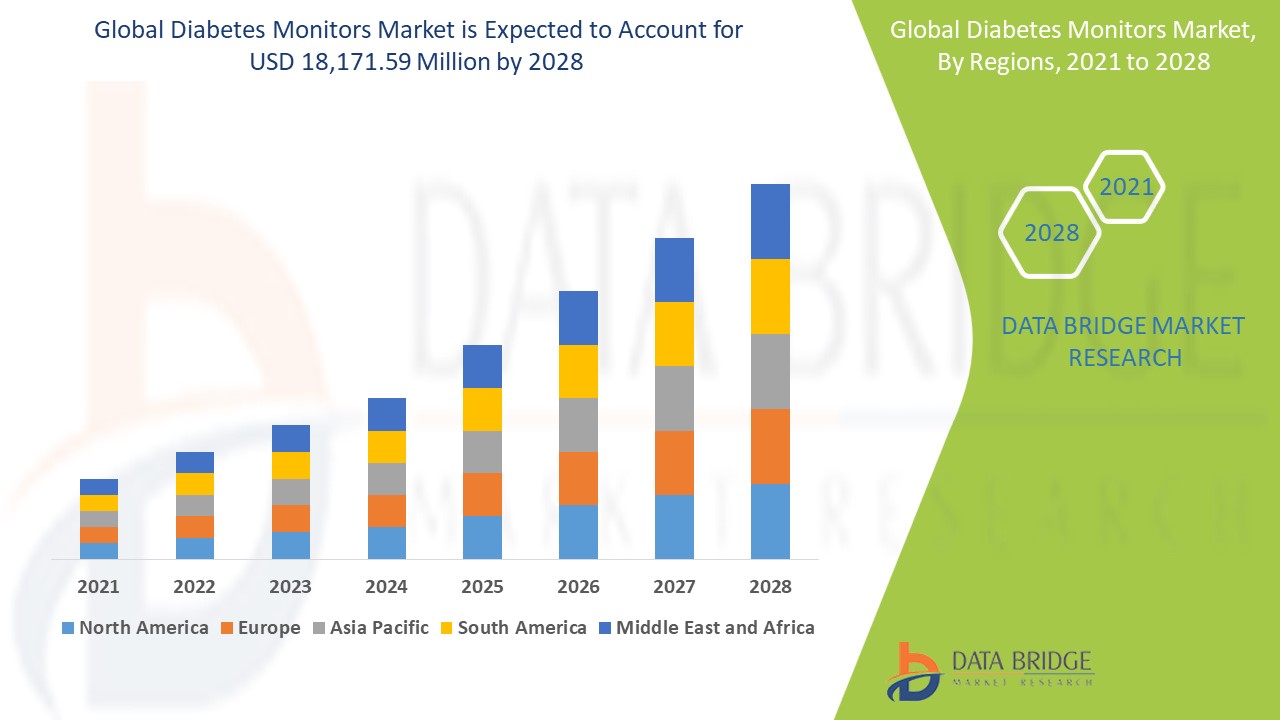
The global diabetes monitors market size was valued at USD 14.11 billion in 2024 and is projected to reach USD 23.39 billion by 2032, with a CAGR of 6.52% during the forecast period of 2025 to 2032. In addition to the insights on market scenarios such as market value, growth rate, segmentation, geographical coverage, and major players, the market reports curated by the Data Bridge Market Research also include depth expert analysis, patient epidemiology, pipeline analysis, pricing analysis, and regulatory framework.
Diabetes Monitors Market Trends
“Demand for Advanced Monitoring Systems”
The diabetes monitors market is evolving with a growing focus on innovative solutions for managing diabetes effectively. With the rising incidence of diabetes globally, there is a heightened demand for advanced monitoring systems, including continuous glucose monitors (CGM) and non-invasive devices. Innovations in CGM technology allow for real-time, accurate blood glucose monitoring system, significantly improving patient outcomes. One key trend is the integration of diabetes monitoring devices with mobile apps and cloud platforms, enabling remote monitoring and personalized treatment plans. This trend is driven by the increasing demand for connected healthcare solutions. Companies such as Abbott, Dexcom, and Medtronic are leading these innovations, shaping the future of diabetes care by improving convenience and offering more precise data to manage the condition effectively.
Report Scope and Diabetes Monitors Market Segmentation
|
Attributes |
Diabetes Monitors Key Market Insights |
|
Segments Covered |
|
|
Countries Covered |
U.S., Canada and Mexico in North America, Germany, France, U.K., Netherlands, Switzerland, Belgium, Russia, Italy, Spain, Turkey, Rest of Europe in Europe, China, Japan, India, South Korea, Singapore, Malaysia, Australia, Thailand, Indonesia, Philippines, Rest of Asia-Pacific (APAC) in the Asia-Pacific (APAC), Saudi Arabia, U.A.E., South Africa, Egypt, Israel, Rest of Middle East and Africa (MEA) as a part of Middle East and Africa (MEA), Brazil, Argentina and Rest of South America as part of South America. |
|
Key Market Players |
F. Hoffmann-La Roche Ltd (Switzerland), Johnson & Johnson Services, Inc. (U.S.), Sanofi (France), Novo Nordisk A/S (Denmark), Ypsomed AG (Switzerland), Ascensia Diabetes Care Holdings AG (Switzerland), Dexcom, Inc. (U.S.), Bayer AG (Germany), Abbott Inc. (U.S.), Medtronic (U.S.), Teva Pharmaceuticals Pvt Ltd. (Israel), Novartis AG (Switzerland), Eli Lilly and Company (U.S.), Merck & Co., Inc. (U.S.), AstraZeneca (U.K.), Boehringer Ingelheim International GmbH (Germany), Takeda Pharmaceutical Company Limited (Japan) |
|
Market Opportunities |
|
|
Value Added Data Infosets |
In addition to the insights on market scenarios such as market value, growth rate, segmentation, geographical coverage, and major players, the market reports curated by the Data Bridge Market Research also include depth expert analysis, patient epidemiology, pipeline analysis, pricing analysis, and regulatory framework. |
Diabetes Monitors Market Definition
Diabetes monitors are medical devices designed to track and manage blood glucose levels in individuals with diabetes. These devices measure the amount of glucose present in the blood or interstitial fluid, providing valuable data for monitoring and controlling blood sugar levels. Common types of diabetes monitors include traditional blood glucose meters, continuous glucose monitors (CGM), and non-invasive monitoring devices. CGMs, for instance, provide real-time glucose readings and alerts, allowing individuals to track fluctuations throughout the day without the need for fingerstick tests.
Diabetes Monitors Market Dynamics
Drivers
- Rising Diabetes Prevalence
The rising global prevalence of diabetes, particularly type 2 diabetes, is a key driver of the diabetes monitors market. As the number of individuals diagnosed with diabetes continues to increase worldwide, the need for regular blood glucose monitoring becomes essential to manage the condition effectively. Consistent monitoring helps in tracking glucose levels, adjusting insulin doses, and preventing complications such as heart disease, kidney failure, and vision problems. This growing need for constant monitoring has led to a surge in demand for advanced glucose monitoring devices, driving the expansion of the market.
- Technological Advancements
Innovations in continuous glucose monitoring (CGM) systems and non-invasive glucose monitoring devices are significant drivers of the diabetes monitors market. Recent advancements in CGM technology have greatly enhanced the accuracy and reliability of glucose measurements, providing real-time data and alerts for better disease management. In addition, non-invasive devices are gaining popularity as they eliminate the need for finger-pricking, offering a pain-free and user-friendly experience. These improvements have made glucose monitoring more convenient, especially for diabetic patients, resulting in an increased demand for these advanced solutions. As a result, innovations in glucose monitoring technology are fueling market growth.
Opportunities
- Rise of Telemedicine
The rise of telemedicine is revolutionizing healthcare, particularly for chronic disease management such as diabetes. Diabetes monitoring devices that integrate seamlessly with telemedicine platforms allow for the continuous transmission of real-time glucose data to healthcare providers. This enables doctors to monitor their patients' conditions remotely, adjust treatment plans quickly, and intervene when necessary, improving overall patient outcomes. The ability to track and analyze data remotely reduces hospital visits, enhances personalized care, and supports proactive management. This trend presents a significant market opportunity, as healthcare systems and patients increasingly prioritize convenient, efficient, and remote diabetes management solutions.
- Rise of Wearable Diabetes Devices
Wearable devices, such as smart glucose meters and patches, are becoming increasingly popular for diabetes management due to their convenience and advanced features. These devices can sync with mobile apps, enabling real-time data monitoring and providing personalized advice directly to users. The integration of AI and machine learning further enhances these devices by offering predictive analysis, which helps anticipate glucose fluctuations and optimize treatment plans. This technology improves patient engagement and compliance and empowers individuals to take proactive control of their health. As demand for more personalized and data-driven care grows, the wearable diabetes monitor market presents a significant growth opportunity.
Restraints/Challenges
- Lack of Standardization
The lack of standardization in the diabetes monitoring market is a significant challenge, as varying levels of device compatibility, data reporting formats, and quality control across different manufacturers can create confusion for both patients and healthcare professionals. Different companies may use proprietary technologies that result in discrepancies in accuracy, reliability, and ease of use, leading to a fragmented market. This inconsistency can undermine trust in these devices, as users may struggle to determine which products provide the most accurate and reliable data. The absence of universal standards may hinder widespread adoption, slowing the market's growth and limiting its potential.
- High Cost of Advanced Devices
The high upfront costs of advanced diabetes monitoring devices, such as Continuous Glucose Monitors (CGMs) and smart glucose meters, pose a significant restraint to market growth, particularly in emerging markets. These devices often require substantial financial investment, which may be prohibitive for patients with limited financial resources, especially those without adequate insurance coverage. As a result, many individuals, particularly in low-income regions, may not have access to the latest technologies for managing their diabetes. This price barrier restricts widespread adoption and limits the ability of many patients to benefit from the improved management and outcomes offered by these advanced monitoring solutions.
This market report provides details of new recent developments, trade regulations, import-export analysis, production analysis, value chain optimization, market share, impact of domestic and localized market players, analyses opportunities in terms of emerging revenue pockets, changes in market regulations, strategic market growth analysis, market size, category market growths, application niches and dominance, product approvals, product launches, geographic expansions, technological innovations in the market. To gain more info on the market contact Data Bridge Market Research for an Analyst Brief, our team will help you take an informed market decision to achieve market growth.
Diabetes Monitors Market Scope
The market is segmented on the basis of product type, indication, approach, and end-user. The growth amongst these segments will help you analyse meagre growth segments in the industries and provide the users with a valuable market overview and market insights to help them make strategic decisions for identifying core market applications.
Product Type
- Self-Glucose Monitoring Devices
- Continuous Glucose Monitoring Devices
Indication
- Type-I Diabetes
- Type-II Diabetes
- Gestational Diabetes
Approach
- Invasive
- Non-invasive
End-User
- Hospitals
- Clinics
- Ambulatory Surgical Centers
- Home Care Centers
- Self-Care
Diabetes Monitors Market Regional Analysis
The market is analysed and market size insights and trends are provided by country, product type, indication, approach, and end-user as referenced above.
The countries covered in the market report are U.S., Canada and Mexico in North America, Germany, France, U.K., Netherlands, Switzerland, Belgium, Russia, Italy, Spain, Turkey, Rest of Europe in Europe, China, Japan, India, South Korea, Singapore, Malaysia, Australia, Thailand, Indonesia, Philippines, Rest of Asia-Pacific (APAC) in the Asia-Pacific (APAC), Saudi Arabia, U.A.E., South Africa, Egypt, Israel, Rest of Middle East and Africa (MEA) as a part of Middle East and Africa (MEA), Brazil, Argentina and Rest of South America as part of South America.
North America dominates the diabetes monitors market, driven by the growing number of health awareness programs launched by various organizations. The region benefits from high healthcare spending and an increasing number of hospitals, ensuring easy access to treatment. These factors, combined with advanced healthcare infrastructure, contribute to the dominance of North America in the market.
Asia-Pacific is the fastest growing region in the diabetes monitors market, fueled by improvements in healthcare infrastructure and more favorable reimbursement policies. In addition, growing awareness about diabetes prevention and care is driving demand for monitoring devices. These factors, along with increased access to healthcare, position the Asia-Pacific region as a key area for market expansion.
The country section of the report also provides individual market impacting factors and changes in regulation in the market domestically that impacts the current and future trends of the market. Data points such as down-stream and upstream value chain analysis, technical trends and porter's five forces analysis, case studies are some of the pointers used to forecast the market scenario for individual countries. Also, the presence and availability of global brands and their challenges faced due to large or scarce competition from local and domestic brands, impact of domestic tariffs and trade routes are considered while providing forecast analysis of the country data.
Diabetes Monitors Market Share
The market competitive landscape provides details by competitor. Details included are company overview, company financials, revenue generated, market potential, investment in research and development, new market initiatives, global presence, production sites and facilities, production capacities, company strengths and weaknesses, product launch, product width and breadth, application dominance. The above data points provided are only related to the companies' focus related to market.
Diabetes Monitors Market Leaders Operating in the Market Are:
- F. Hoffmann-La Roche Ltd (Switzerland)
- Johnson & Johnson Services, Inc. (U.S.)
- Sanofi (France)
- Novo Nordisk A/S (Denmark)
- Ypsomed AG (Switzerland)
- Ascensia Diabetes Care Holdings AG (Switzerland)
- Dexcom, Inc. (U.S.)
- Bayer AG (Germany)
- Abbott Inc. (U.S.)
- Medtronic (U.S.)
- Teva Pharmaceuticals Pvt Ltd. (Israel)
- Novartis AG (Switzerland)
- Eli Lilly and Company (U.S.)
- Merck & Co., Inc. (U.S.)
- AstraZeneca (U.K.)
- Boehringer Ingelheim International GmbH (Germany)
- Takeda Pharmaceutical Company Limited (Japan)
Latest Developments in Diabetes Monitors Market
- In September 2023, Medtronic obtained CE mark approval for its Simplera CGM, a user-friendly, disposable device that integrates with the InPen smart insulin pen, offering real-time, personalized dosing guidance without the need for fingersticks or over-tape application
- In December 2022, Dexcom received U.S. FDA clearance for its next-generation Dexcom G7 continuous glucose monitoring (CGM) system, making it available for individuals aged two years and older with all types of diabetes
- In June 2022, Abbott announced the development of a new biowearable that will continuously monitor both glucose and ketone levels with a single sensor, advancing their portfolio of life-changing healthcare technologies
- In August 2022, Abbott and WW International (WeightWatchers) formed a strategic partnership to help people with diabetes better manage their condition and weight. The collaboration integrates WeightWatchers’ diabetes-specific weight management program with Abbott's FreeStyle Libre products, creating a seamless mobile experience that provides users with insights to improve glucose levels and make healthier dietary choices, ultimately giving them more control over their health
- In November 2022, Senseonics Holdings and Ascensia Diabetes Care announced a collaboration with the Nurse Practitioner Group (NPG) to enhance diabetes care. This partnership combines Senseonics’ long-term implantable CGM systems with Ascensia’s CONTOUR blood glucose monitors to offer comprehensive, multidisciplinary health services, improving diabetes management and patient outcomes
SKU-
Obtenha acesso online ao relatório sobre a primeira nuvem de inteligência de mercado do mundo

- Painel interativo de análise de dados
- Painel de análise da empresa para oportunidades de elevado potencial de crescimento
- Acesso de analista de pesquisa para personalização e customização. consultas
- Análise da concorrência com painel interativo
- Últimas notícias, atualizações e atualizações Análise de tendências
- Aproveite o poder da análise de benchmark para um rastreio abrangente da concorrência
Metodologia de Investigação
A recolha de dados e a análise do ano base são feitas através de módulos de recolha de dados com amostras grandes. A etapa inclui a obtenção de informações de mercado ou dados relacionados através de diversas fontes e estratégias. Inclui examinar e planear antecipadamente todos os dados adquiridos no passado. Da mesma forma, envolve o exame de inconsistências de informação observadas em diferentes fontes de informação. Os dados de mercado são analisados e estimados utilizando modelos estatísticos e coerentes de mercado. Além disso, a análise da quota de mercado e a análise das principais tendências são os principais fatores de sucesso no relatório de mercado. Para saber mais, solicite uma chamada de analista ou abra a sua consulta.
A principal metodologia de investigação utilizada pela equipa de investigação do DBMR é a triangulação de dados que envolve a mineração de dados, a análise do impacto das variáveis de dados no mercado e a validação primária (especialista do setor). Os modelos de dados incluem grelha de posicionamento de fornecedores, análise da linha de tempo do mercado, visão geral e guia de mercado, grelha de posicionamento da empresa, análise de patentes, análise de preços, análise da quota de mercado da empresa, normas de medição, análise global versus regional e de participação dos fornecedores. Para saber mais sobre a metodologia de investigação, faça uma consulta para falar com os nossos especialistas do setor.
Personalização disponível
A Data Bridge Market Research é líder em investigação formativa avançada. Orgulhamo-nos de servir os nossos clientes novos e existentes com dados e análises que correspondem e atendem aos seus objetivos. O relatório pode ser personalizado para incluir análise de tendências de preços de marcas-alvo, compreensão do mercado para países adicionais (solicite a lista de países), dados de resultados de ensaios clínicos, revisão de literatura, mercado remodelado e análise de base de produtos . A análise de mercado dos concorrentes-alvo pode ser analisada desde análises baseadas em tecnologia até estratégias de carteira de mercado. Podemos adicionar quantos concorrentes necessitar de dados no formato e estilo de dados que procura. A nossa equipa de analistas também pode fornecer dados em tabelas dinâmicas de ficheiros Excel em bruto (livro de factos) ou pode ajudá-lo a criar apresentações a partir dos conjuntos de dados disponíveis no relatório.











