


Global Electric Ships Market Segmentation, By Type (Fully Electric and Hybrid), Power (kW) (7,560 kW), Range (km) (1,000 km), System (Energy Storage Systems, Power Conversion, Power Generation, and Power Distribution Systems), Ship Type (Commercial and Defense), Mode of Operation (Manned, Remotely Operated, and Autonomous), End-Use (Newbuild and Line Fit and Retrofit) - Industry Trends and Forecast to 2033
Qual é o tamanho e a taxa de crescimento do mercado global de navios elétricos
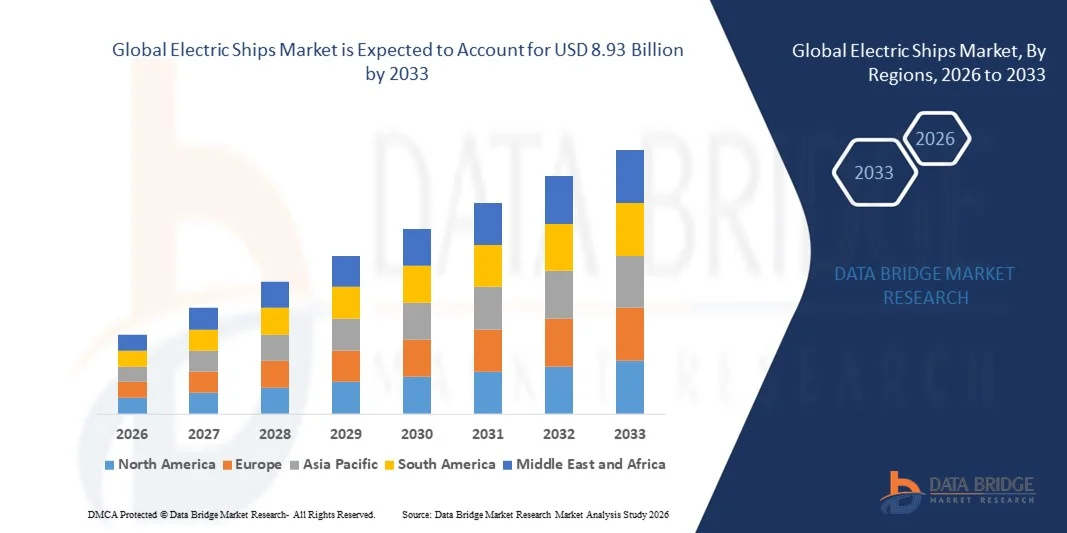
- Como por Data Bridge Market Research Analysis o tamanho global do mercado de navios elétricos foi avaliado em4,79 mil milhões de dólares em 2025e espera-se alcançarUSD 8,93 mil milhões até 2033, em umaCAGR de 8,10%durante o período de previsão
- O aumento do número de aplicações retroajustadas e a maior ênfase na redução das emissões actuam como os principais factores que impulsionam o crescimento do mercado dos navios eléctricos
- O aumento do investimento no desenvolvimento de várias fontes de energia para o setor de navegação com o objetivo de se alinhar para o objetivo de reduzir as emissões de carbono e expansão da indústria do turismo marinho acelerar o crescimento do mercado
Tamanho e previsão do mercado
- Valor de mercado global (2025): USD 4,79 Bilhões
- Valor de mercado previsto (2033): 8,93 milhões de dólares
- Previsões CAGR (2026-2033): 8.10%
Quais são as principais rotas do mercado de navios elétricos
- O aumento da concepção e do desenvolvimento de navios que provocam o aumento da automatização e o declínio do consumo de energia e a adopção de tecnologias de propulsão híbridas e eléctricas para a adaptação de navios influenciam ainda mais o mercado
- Além disso, a implementação da regra do enxofre 2020, o desenvolvimento de baterias de iões de lítio, o crescimento de aeronaves comerciais e o aumento da renda disponível de pessoas afetam positivamente o mercado de navios elétricos
- A América do Norte dominou o mercado de Navios Elétricos com uma quota de receita de 38,7% em 2025, impulsionada por fortes programas de modernização naval, crescente adoção de balsas híbridas elétricas e crescente investimento em transporte marítimo sustentável em todos os EUA e Canadá
- Asia-Pacific é projetado para registrar o CAGR mais rápido de 6,89% de 2026 a 2033, impulsionado pela expansão rápida da construção naval, aumento do comércio marítimo, e fortes mandatos governamentais para redução de emissões em toda a China, Japão, Coreia do Sul e Índia
- O segmento híbrido dominou o mercado com uma participação de 58,6% em 2025, devido à sua flexibilidade operacional, extensão da faixa de navegação e menores emissões em relação aos navios convencionais
Segmentação do Mercado de Navios Elétricos
|
Atributos |
Navios Elétricos Principais Perspectivas do Mercado |
|
Segmentos Cobertos |
|
|
Países abrangidos |
América do Norte
Europa
Ásia- Pacífico
Médio Oriente e África
América do Sul
|
|
Jogadores do mercado chave |
|
|
Oportunidades de Mercado |
|
|
Informações sobre o Valor Adicionado |
Além dos insights sobre cenários de mercado, como valor de mercado, taxa de crescimento, segmentação, cobertura geográfica e principais atores, os relatórios de mercado curados pela Data Bridge Market Research também incluem análise de especialistas em profundidade, análise de preços, análise de compartilhamento de marca, inquérito ao consumidor, análise demografia, análise da cadeia de suprimentos, análise da cadeia de valor, visão geral da matéria-prima/consumíveis, critérios de seleção de fornecedores, Análise de PESTLE, Análise de Porter e marco regulatório. |
Qual é a tendência chave no mercado de navios elétricos
Aumento da mudança para sistemas de propulsão totalmente elétricos e híbridos para operações marítimas sustentáveis
- O mercado de Navios Elétricos está testemunhando forte adoção de sistemas de propulsão bateria-elétrica e híbrida projetados para reduzir emissões de carbono, consumo de combustível e ruído operacional em embarcações comerciais e de defesa
- Os construtores de navios estão integrando sistemas avançados de baterias de iões de lítio, infraestrutura de carregamento em terra e plataformas inteligentes de gestão de energia para melhorar a eficiência dos navios e a conformidade regulamentar
- A crescente regulamentação ambiental dos organismos marítimos internacionais está acelerando a transição para ferries de emissão zero, embarcações de navegação interior e frotas de transporte marítimo de curta distância
- Por exemplo, empresas como Wärtsilä, KONGSBERG, Siemens e BAE Systems estão expandindo a propulsão elétrica e as capacidades integradas do sistema de energia
- O aumento da procura de navios navais eficientes em termos energéticos e de navios inteligentes equipados com sistemas digitais de monitorização conduz ainda mais à electrificação
- À medida que a descarbonização se torna central na estratégia marítima, as tecnologias de propulsão elétrica continuarão a ser fundamentais para operações de navegação sustentáveis e econômicas.
Quais são os principais motoristas do mercado de navios elétricos
- Aumentar a concentração global na redução das emissões de gases com efeito de estufa e atingir objectivos marítimos nulos conduz significativamente à adopção de navios eléctricos
- Por exemplo, em 2025, os principais jogadores como a General Electric e a MAN Energy Solutions expandiram investimentos em tecnologias de propulsão híbrida e bateria marinha
- Aumento dos custos de combustível e normas de emissão mais rigorosas estão incentivando os operadores de frota a mudarem para embarcações elétricas e híbridas eficientes em termos energéticos
- Avanços na densidade de energia da bateria, sistemas de carregamento rápido e eletrônica de energia a bordo estão melhorando o alcance e o desempenho dos navios
- Aumentar o desenvolvimento de ferries elétricos, navios de apoio offshore e navios de defesa está expandindo oportunidades de mercado
- Apoiado por incentivos governamentais, iniciativas de navegação ecológica e programas de eletrificação portuária, o mercado de Navios Elétricos deverá testemunhar um forte crescimento a longo prazo
Que fator está desafiando o crescimento do mercado de navios elétricos
- Alto investimento inicial em capital associado a sistemas de baterias, infraestrutura de carregamento e retromontagem de navios existentes limita a adoção generalizada
- Por exemplo, durante 2024-2025, as flutuações nos preços do lítio e dos minerais críticos aumentaram os custos de produção de baterias para vários fornecedores de tecnologia marinha
- Faixa limitada de bateria e longos tempos de carregamento permanecem restrições técnicas para grandes navios oceânicos
- Infra-estruturas inadequadas de tarifação costeira nas regiões em desenvolvimento retardam a penetração no mercado
- As preocupações de segurança relacionadas com a gestão térmica e a manutenção do ciclo de vida da bateria criam desafios operacionais
- Para resolver essas questões, as empresas estão focando em farmácias avançadas de bateria, sistemas modulares de armazenamento de energia e parcerias estratégicas para melhorar a escalabilidade e acelerar a adoção global de navios elétricos
Como é segmentado o mercado de navios elétricos
O mercado é segmentado com base emtipo, potência (kW), gama (km), sistema, tipo de navio, modo de operação e utilização final.
- Por Tipo
Com base no tipo, o mercado de navios elétricos é segmentado em Totalmente elétrico e híbrido. O segmento híbrido dominou o mercado com uma participação de 58,6% em 2025, devido à sua flexibilidade operacional, extensão da faixa de navegação e menores emissões em relação às embarcações convencionais. Os sistemas de propulsão híbrida permitem o consumo otimizado de combustível, o corte de pico assistido por bateria e o cumprimento de normas rigorosas de emissão marítima. Eles são amplamente implantados em ferries, navios de apoio offshore, e navios de patrulha onde a confiabilidade e resistência são fundamentais.
Projeta-se que o segmento Fully Electric cresça no CAGR mais rápido de 2026 a 2033, impulsionado pelo aumento dos investimentos em transporte marítimo de emissão zero, avanços na densidade de baterias e aumento da implantação de balsas elétricas de curta distância e embarcações de navegação interior.
- Por Potência (kW)
Com base na potência, o mercado é segmentado em <75 kW, 75–150 kW, 151–745 kW, 746–7,560 kW e >7,560 kW. O segmento de 746-7.560 kW dominou o mercado com uma participação de 34,2% em 2025, pois suporta embarcações comerciais de médio a grande porte, balsas e navios offshore que exigem alta capacidade de propulsão e uma fonte de alimentação estável a bordo. Essa faixa equilibra eficiência, resistência operacional e escalabilidade para retrofits híbridos elétricos.
Espera-se que o segmento > 7,560 kW cresça no CAGR mais rápido de 2026 para 2033, alimentado pelo aumento da eletrificação de grandes navios comerciais, embarcações navais e navios de cruzeiro exigindo propulsão de alta capacidade e sistemas de energia integrados.
- Por Intervalo (km)
Com base na gama, o mercado de Navios Elétricos é segmentado em <50 km, 50–100 km, 101–1.000 km e >1.000 km. O segmento 101-1.000 km dominou o mercado com uma participação de 41,5% em 2025, impulsionada pela sua adequação para ferries intercidades, transporte costeiro e movimentação regional de carga. Esta gama suporta o dimensionamento equilibrado da bateria e integração híbrida para uma eficiência de viagem otimizada.
O segmento >1.000 km é projetado para crescer no CAGR mais rápido de 2026 para 2033, apoiado por melhorias tecnológicas em sistemas de armazenamento de energia de alta capacidade, integração de células de combustível e crescente demanda por transporte marítimo de emissão zero de longo curso.
- Por Sistema
Com base no sistema, o mercado é segmentado em sistemas de armazenamento de energia, conversão de energia, geração de energia e sistemas de distribuição de energia. O segmento Energy Storage Systems dominou o mercado com uma participação de 37,9% em 2025, devido ao papel crítico das baterias de íon de lítio, baterias de estado sólido e módulos híbridos de armazenamento na eletrificação dos vasos. O foco crescente na segurança da bateria, gerenciamento do ciclo de vida e maior densidade energética fortalece a demanda do segmento.
Espera-se que o segmento de conversão de energia cresça no CAGR mais rápido de 2026 para 2033, impulsionado pelo aumento da integração de inversores avançados, conversores e software de gerenciamento de energia para controle otimizado de propulsão e eficiência energética.
- Por tipo de navio
Com base no tipo de navio, o mercado de Navios Elétricos é segmentado em Comercial e Defesa. O segmento comercial dominou o mercado com uma participação de 69,4% em 2025, apoiada pela eletrificação rápida de ferries, navios de cruzeiro, navios de carga e navios de serviço offshore para reduzir as emissões de carbono e custos operacionais. Incentivos governamentais e regulamentos de navegação ecológica aceleram ainda mais a adoção.
O segmento Defesa é projetado para crescer no CAGR mais rápido de 2026 para 2033, impulsionado pela crescente demanda por propulsão silenciosa, aumento da potência a bordo para sistemas avançados e programas de modernização naval.
- Por Modo de Operação
Com base no modo de operação, o mercado é segmentado em Manned, Remotely Operated, e Autônomo. O segmento Manned dominou o mercado com uma participação de 63,8% em 2025, já que a maioria das embarcações comerciais e de defesa continua operando sob sistemas convencionais de tripulação a bordo integrados com tecnologias de propulsão elétrica.
Espera-se que o segmento Autônomo cresça no CAGR mais rápido de 2026 para 2033, apoiado por avanços na navegação baseada em IA,sensores inteligentes, comunicação por satélite, e progresso regulatório para operações marítimas não tripuladas.
- Por Uso Final
Com base na utilização final, o mercado de navios elétricos é segmentado em Newbuild e Line Fit e Retrofit. O segmento Newbuild dominou o mercado com 61,7% de participação em 2025, impulsionado pelo aumento dos investimentos em embarcações elétricas de última geração projetadas com propulsão integrada, monitoramento digital e layouts otimizados de bateria desde o início.
O segmento Line Fit e Retrofit é projetado para crescer no CAGR mais rápido de 2026 para 2033, à medida que os armadores atualizam cada vez mais as frotas existentes com sistemas híbridos elétricos para cumprir os padrões de emissão e estender os ciclos de vida dos navios.
Que região detém a maior parte do mercado de navios elétricos
- A América do Norte dominou o mercado de Navios Elétricos com uma quota de receita de 38,7% em 2025, impulsionada por fortes programas de modernização naval, crescente adoção de balsas híbridas elétricas e crescente investimento em transporte marítimo sustentável nos EUA e Canadá. Regulamentação rigorosa em matéria de emissões, iniciativas de electrificação portuária e crescente implantação de navios a motor a bateria no interior e no litoral continuam a alimentar a procura regional
- Líderes em construção naval e fornecedores de tecnologia marinha estão investindo em sistemas avançados de propulsão, módulos de bateria de alta capacidade e plataformas integradas de gerenciamento de energia, fortalecendo a liderança tecnológica da América do Norte. Financiamento do governo para corredores marítimos verdes e eletrificação da frota de defesa acelera ainda mais a adoção
- Fortes capacidades de P&D, presença de empresas de engenharia marinha estabelecidas e gastos de alta defesa reforçam o domínio regional a longo prazo no desenvolvimento de embarcações elétricas e híbridas
U.S. Electric Ships Market Insight
Os EUA são os maiores contribuintes da América do Norte, apoiados por programas de eletrificação naval, modernização comercial de balsas e crescente demanda por operações portuárias de baixa emissão. O aumento da implantação de embarcações de patrulha híbrida, embarcações de apoio offshore e balsas elétricas fortalece o crescimento do mercado. Investimentos em sistemas avançados de baterias de iões de lítio, distribuição integrada de energia a bordo e tecnologias de navios autônomos aceleram ainda mais a adoção em setores marítimos comerciais e de defesa.
Canadá Electric Ships Market Insight
O Canadá contribui significativamente devido ao aumento dos investimentos em transporte marítimo sustentável, eletrificação de ferry costeira e navios híbridos compatíveis com o Ártico. Iniciativas de energia limpa apoiadas pelo governo e parcerias entre estaleiros e fornecedores de tecnologia de baterias estão expandindo a implantação. O crescente foco na redução das emissões marinhas e na modernização das frotas de envelhecimento favorece a penetração constante do mercado.
Mercado de Navios Elétricos Ásia-Pacífico
A Ásia-Pacífico deverá registrar o CAGR mais rápido de 6,89% de 2026 a 2033, impulsionado pela rápida expansão da construção naval, aumento do comércio marítimo e fortes mandatos governamentais para redução de emissões em toda a China, Japão, Coreia do Sul e Índia. O aumento da produção de ferries elétricos, navios híbridos de carga e embarcações terrestres a bateria acelera a demanda regional. A expansão da infraestrutura portuária, os corredores marítimos verdes e os avanços tecnológicos nas baterias marinhas impulsionam ainda mais o crescimento do mercado.
China Electric Ships Market Insight
A China lidera o mercado Ásia-Pacífico devido à sua indústria de construção naval dominante, capacidade de fabricação de baterias em larga escala e forte apoio do governo à mobilidade elétrica. A implantação de balsas fluviais elétricas, navios de carga costeira e navios de patrulha híbridos continua aumentando, apoiados pela inovação doméstica e capacidades de produção eficientes em termos de custos.
Japão Electric Ships Market Insight
O Japão demonstra um crescimento constante impulsionado pela avançada experiência em engenharia marinha e foca o transporte costeiro de emissões zero. O desenvolvimento de sistemas de propulsão híbrida, embarcações integradas com células de combustível e tecnologias de navios inteligentes fortalece a adoção a longo prazo em frotas comerciais.
Índia Electric Ships Market Insight
A Índia está emergindo como um mercado de alto crescimento apoiado por projetos de desenvolvimento de vias navegáveis interiores e iniciativas governamentais de promoção de ferries elétricos. A expansão da modernização dos estaleiros navais e o crescente enfoque na logística marítima sustentável aumentam a procura futura.
Visão do mercado de navios elétricos da Coreia do Sul
A Coreia do Sul contribui significativamente através de capacidades avançadas de construção naval e inovação em sistemas de propulsão e baterias marítimas de alta capacidade. A forte indústria naval orientada para as exportações e os investimentos em embarcações inteligentes e ecológicas apoiam um crescimento regional sustentado.
Quais são as principais empresas no mercado de navios elétricos
A indústria de navios elétricos é liderada principalmente por empresas bem estabelecidas, incluindo:
- Wärtsilä (Finlândia)
- KONGSBERG (Noruega)
- General Electric (EUA)
- VARD (Noruega)
- Siemens (Alemanha)
- Leclanché SA (Suíça)
- Sistemas BAE (U.K.)
- Sistemas Elétricos da Noruega (Noruega)
- MAN Soluções Energéticas (Alemanha)
- Energia Corvus (Canadá)
- Echandia (Suécia)
- General Dynamics Electric Boat (EUA)
- Anglo Belga Corporation (Bélgica)
- Grupo SCHOTTEL (Alemanha)
- Danfoss (Dinamarca)
- Eco Marine Power (Japão)
- AKASOL AG (Alemanha)
- EST-Floattech (Países Baixos)
- Saft (França)
- Duffy Electric Boat Company (EUA)
- Vision Marine Technologies (Canadá)
Quais são os recentes desenvolvimentos no mercado global de navios elétricos
- Em agosto de 2025, a GE Vernova Naval Systems garantiu um contrato de US$ 10,4 milhões da Marinha dos EUA para desenvolver e protótipo de um conversor multinível modular híbrido em escala de megawatts (HMMC) projetado para melhorar a propulsão naval e capacidades de distribuição de energia a bordo, fortalecendo o desenvolvimento da arquitetura naval elétrica de última geração
- Em agosto de 2025, Corvus Energy foi escolhida para fornecer o sistema de armazenamento de energia para o primeiro navio de construção offshore totalmente elétrico do mundo, que operará inteiramente com propulsão baseada em bateria sem suporte híbrido, marcando um marco significativo na implantação de navios offshore de emissão zero
- Em Julho de 2025, a SCHOTTEL recebeu um contrato do prestador de serviços marítimos francês Louis Dreyfus Armateurs (LDA) para fornecer oito SRP 430 D Rudder Propeller Unidades dinâmicas para dois navios de operação de serviço que estão a ser construídos para Vattenfall, reforçando a procura de tecnologias avançadas de propulsão em frotas de apoio ao vento offshore
- Em julho de 2025, Kongsberg foi adjudicado um contrato para modernizar o navio híbrido da Administração Costeira norueguesa OV Bøkfjord, integrando propulsores elétricos Rim-Drive azimuth e atualizando sua infraestrutura de propulsão híbrida, acelerando a transição para navios costeiros mais eficientes em energia
- Em junho de 2025, Wärtsilä obteve um contrato do Grupo Vertom para fornecer soluções híbridas de propulsão para quatro navios TWT tween-decker em construção em estaleiros Chowgule na Índia, incorporando motores Wärtsilä 25, sistemas de acionamento elétrico, hélices de pitch controláveis (CPP), propulsores e sistemas EcoControl para permitir velar somente com bateria em condições operacionais específicas, apoiando a expansão sustentável das operações marítimas
SKU-
Obtenha acesso online ao relatório sobre a primeira nuvem de inteligência de mercado do mundo

- Painel interativo de análise de dados
- Painel de análise da empresa para oportunidades de elevado potencial de crescimento
- Acesso de analista de pesquisa para personalização e customização. consultas
- Análise da concorrência com painel interativo
- Últimas notícias, atualizações e atualizações Análise de tendências
- Aproveite o poder da análise de benchmark para um rastreio abrangente da concorrência
Metodologia de Investigação
A recolha de dados e a análise do ano base são feitas através de módulos de recolha de dados com amostras grandes. A etapa inclui a obtenção de informações de mercado ou dados relacionados através de diversas fontes e estratégias. Inclui examinar e planear antecipadamente todos os dados adquiridos no passado. Da mesma forma, envolve o exame de inconsistências de informação observadas em diferentes fontes de informação. Os dados de mercado são analisados e estimados utilizando modelos estatísticos e coerentes de mercado. Além disso, a análise da quota de mercado e a análise das principais tendências são os principais fatores de sucesso no relatório de mercado. Para saber mais, solicite uma chamada de analista ou abra a sua consulta.
A principal metodologia de investigação utilizada pela equipa de investigação do DBMR é a triangulação de dados que envolve a mineração de dados, a análise do impacto das variáveis de dados no mercado e a validação primária (especialista do setor). Os modelos de dados incluem grelha de posicionamento de fornecedores, análise da linha de tempo do mercado, visão geral e guia de mercado, grelha de posicionamento da empresa, análise de patentes, análise de preços, análise da quota de mercado da empresa, normas de medição, análise global versus regional e de participação dos fornecedores. Para saber mais sobre a metodologia de investigação, faça uma consulta para falar com os nossos especialistas do setor.
Personalização disponível
A Data Bridge Market Research é líder em investigação formativa avançada. Orgulhamo-nos de servir os nossos clientes novos e existentes com dados e análises que correspondem e atendem aos seus objetivos. O relatório pode ser personalizado para incluir análise de tendências de preços de marcas-alvo, compreensão do mercado para países adicionais (solicite a lista de países), dados de resultados de ensaios clínicos, revisão de literatura, mercado remodelado e análise de base de produtos . A análise de mercado dos concorrentes-alvo pode ser analisada desde análises baseadas em tecnologia até estratégias de carteira de mercado. Podemos adicionar quantos concorrentes necessitar de dados no formato e estilo de dados que procura. A nossa equipa de analistas também pode fornecer dados em tabelas dinâmicas de ficheiros Excel em bruto (livro de factos) ou pode ajudá-lo a criar apresentações a partir dos conjuntos de dados disponíveis no relatório.











