


Segmentação do mercado global de sistemas de automação residencial por algoritmo (comportamental e proativo), implantação (baseada em nuvem e local), tecnologia (tecnologia de rede e tecnologia sem fio), tipo (luxo, faça você mesmo, gerenciado, convencional), aplicação (controle de iluminação, segurança e controle de acesso, controle de climatização, controle de entretenimento e outros), protocolos (tecnologias de rede, protocolos e padrões e tecnologias de comunicação sem fio) - Tendências e previsões do setor até 2033
Qual é o tamanho e a taxa de crescimento do mercado do sistema de automação doméstica
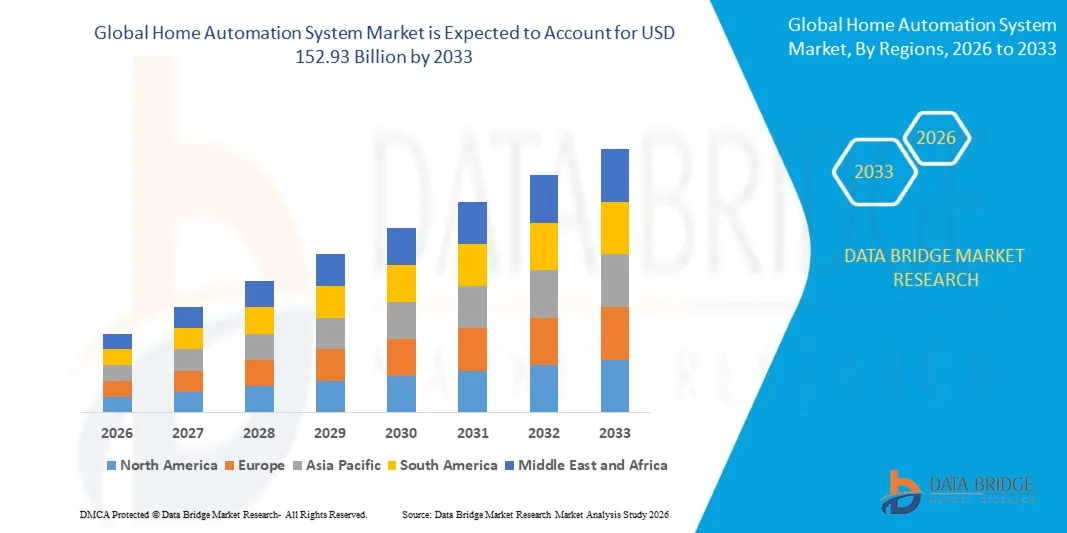
- De acordo com a Data Bridge Market Research Analysis, o tamanho global do mercado de automação doméstica foi avaliado em67,81 mil milhões de dólares em 2025e espera-se alcançar152,93 mil milhões de USD até 2033, em umaCAGR de 10,70%durante o período de previsão
- O crescimento do mercado é amplamente alimentado pela adoção crescente e avanços tecnológicos em dispositivos domésticos conectados e sistemas domésticos inteligentes, levando ao aumento da digitalização em ambientes residenciais, comerciais e industriais
- Além disso, a crescente demanda dos consumidores por soluções de automação doméstica integradas, seguras e fáceis de usar está estabelecendo sistemas domésticos inteligentes como componentes essenciais da gestão moderna da vida e do espaço de trabalho. Estes factores convergentes estão a acelerar a adopção de sistemas de automatização domiciliária, aumentando assim significativamente o crescimento da indústria
Tamanho e previsão do mercado
- Valor de Mercado Global (2025): 67,81 mil milhões de USD
- Valor de mercado previsto (2033): 152,93 mil milhões de USD
- Previsões CAGR (2026-2033): 10,70%
Quais são as principais takeaways do mercado de sistemas de automação doméstica
- Sistemas de automação domiciliar, oferecendo controle integrado de iluminação, HVAC, segurança, entretenimento e gerenciamento de energia, são cada vez mais vitais em ambientes residenciais e comerciais, devido à sua conveniência, eficiência e capacidade de melhorar o estilo de vida e gestão operacional
- A crescente demanda por soluções de automação domiciliar é impulsionada principalmente pela adoção generalizada de tecnologias inteligentes, foco crescente na eficiência energética e segurança e preferência crescente por monitoramento remoto e gestão inteligente do sistema
- América do Norte dominou o mercado de automação doméstica com uma parcela de 39,5% em 2025, devido ao aumento da adoção de dispositivos conectados, aumentando o foco na eficiência energética,
- A Ásia-Pacífico deve ser a região de crescimento mais rápido no mercado de sistemas de automação domiciliar durante o período de previsão devido à urbanização rápida, aumento de renda disponível e crescente interesse em casas inteligentes em países como China, Japão e Índia
- O segmento baseado na nuvem dominou o mercado com uma quota de mercado de 62,5% em 2025, devido à escalabilidade, acessibilidade remota e monitoramento em tempo real que ele fornece. Sistemas baseados em nuvem permitem uma integração perfeita com smartphones, assistentes de voz e plataformas de IoT, tornando-os populares para usuários residenciais e comerciais. Por exemplo, Amazon Alexa e Samsung SmartThings aproveitam a implantação da nuvem para fornecer controle e análise centralizados. A flexibilidade das atualizações de software e solução remota de problemas aumenta ainda mais a conveniência do usuário e a eficiência do sistema. A implantação baseada em nuvem é preferida em configurações multipropriedade ou comerciais onde o gerenciamento centralizado é crítico
Segmentação de Mercado de Sistema de Automação Domiciliar
|
Atributos |
Home Automation System Key Market Insights |
|
Segmentos Cobertos |
|
|
Países abrangidos |
América do Norte
Europa
Ásia- Pacífico
Médio Oriente e África
América do Sul
|
|
Jogadores do mercado chave |
|
|
Oportunidades de Mercado |
|
|
Informações sobre o Valor Adicionado |
Além dos insights sobre cenários de mercado, como valor de mercado, taxa de crescimento, segmentação, cobertura geográfica e principais atores, os relatórios de mercado curados pela Data Bridge Market Research também incluem análise de especialistas em profundidade, produção e capacidade em termos geográficos representadas pela empresa, layouts de redes de distribuidores e parceiros, análise detalhada e atualizada da tendência de preços e análise de déficit da cadeia de suprimentos e demanda. |
Qual é a tendência chave no mercado de sistemas de automação doméstica
“Adoção crescente de sistemas de automação domiciliar compatíveis com IA e preditiva”
- Uma tendência significativa no mercado de sistemas de automação doméstica é a adoção crescente de soluções de automação ativadas por IA e preditivas, impulsionadas pelo crescente interesse do consumidor em ambientes domésticos e comerciais inteligentes, responsivos e integrados. Esses sistemas analisam o comportamento do usuário, otimizam o uso de energia e fornecem controle contínuo sobre iluminação, HVAC, segurança e sistemas de entretenimento, elevando a conveniência e eficiência em aplicações residenciais e comerciais
- Por exemplo, empresas como o Google Nest e a Samsung SmartThings estão oferecendo soluções de IA que aprendem padrões de usuário, fornecem recomendações preditivas e automatizam rotinas em dispositivos conectados. Essas inovações estão aumentando a experiência do usuário, impulsionando o engajamento e reforçando o valor dos ecossistemas inteligentes na vida diária
- A integração da análise preditiva na automação doméstica está se expandindo rapidamente, pois os dispositivos podem agora antecipar as necessidades do usuário e ajustar as configurações proativamente. Isto é posicionar sistemas habilitados para IA como componentes essenciais para casas e escritórios inteligentes e eficientes em termos de energia que requerem intervenção manual mínima
- Os setores de saúde e vida assistida estão cada vez mais alavancando sistemas de automação domiciliar para monitorar as condições ambientais, controlar dispositivos médicos e garantir a segurança dos residentes. Soluções habilitadas para IA facilitam a automação personalizada, melhoram os tempos de resposta e apoiam a vida independente para idosos ou indivíduos com desafios de mobilidade
- Os ambientes comerciais e empresariais estão incorporando sistemas inteligentes de automação doméstica para gerenciamento de energia, segurança e eficiência operacional. Características preditivas e orientadas por IA permitem que as organizações reduzam os custos de energia, otimizem o uso do espaço e agilizem as operações de construção, impulsionando a adoção mais forte de tecnologias avançadas de automação
- O mercado está testemunhando crescimento sustentado em plataformas de automação multiaplicações onde sistemas habilitados para IA fornecem controle centralizado de iluminação, segurança, HVAC e entretenimento. Esta tendência reforça a transição para ambientes domésticos e de construção mais inteligentes, mais sensíveis e interligados globalmente
Dinâmica do mercado de sistemas de automação em casa
Controlador
“Crescer a demanda por soluções integradas, seguras e inteligentes para o usuário”
- A crescente necessidade de sistemas de automação domiciliar seguros, fáceis de usar e integrados é um fator chave para o crescimento do mercado. Os consumidores estão buscando soluções que forneçam controle centralizado sobre vários dispositivos, melhorem a conveniência e garantam segurança robusta em propriedades residenciais e comerciais
- Por exemplo, o Apple HomeKit e o Amazon Alexa oferecem plataformas que integram vários dispositivos inteligentes, enfatizando experiências de usuário seguras e intuitivas. Esses sistemas permitem um controle contínuo através de aplicativos móveis, comandos de voz e monitoramento remoto, fortalecendo o engajamento do usuário e incentivando a adoção generalizada
- A crescente adoção de dispositivos habilitados para IoT, juntamente com a crescente conscientização da eficiência energética e segurança, está aumentando a demanda por soluções abrangentes de automação doméstica. Sistemas integrados permitem que proprietários e empresas gerenciem iluminação, HVAC, segurança e entretenimento através de interfaces unificadas, criando um ambiente mais conectado e conveniente
- O foco na gestão inteligente de energia e automação preditiva está levando os consumidores a sistemas que otimizam o consumo e reduzem os custos operacionais. Tanto as empresas como os utilizadores residenciais estão a implementar cada vez mais tais soluções para atingir objectivos de sustentabilidade e eficiência operacional
- A preferência por interfaces intuitivas, interoperabilidade perfeita e monitoramento em tempo real continua impulsionando a adoção, o posicionamento de soluções integradas, seguras e fáceis de usar como fundamentais para o crescimento do mercado
Restrição/Desafio
“Elevados custos iniciais e integração complexa do sistema”
- O mercado de sistemas de automação doméstica enfrenta desafios devido aos elevados requisitos de investimento inicial e à complexidade envolvida na integração de vários dispositivos e plataformas. Estes factores podem limitar a adopção, nomeadamente entre consumidores sensíveis aos preços e pequenas empresas.
- Por exemplo, a instalação de sistemas de automação abrangentes de fornecedores como Crestron ou Control4 muitas vezes requer configuração profissional, equipamentos especializados e configuração de rede, que aumentam os custos e timelines de implantação
- A diversidade de dispositivos, protocolos de comunicação e plataformas de software adiciona complexidade à integração e manutenção do sistema. Garantir uma interoperabilidade perfeita entre dispositivos antigos e modernos, mantendo simultaneamente as normas de segurança, continua a ser uma barreira significativa
- Escalar soluções avançadas de automação em grandes complexos residenciais ou edifícios comerciais envolve planejamento extensivo, mão de obra qualificada e especialização técnica. Estes requisitos contribuem para períodos de execução mais longos e despesas operacionais mais elevadas
- O mercado continua a encontrar restrições no equilíbrio da funcionalidade avançada com a acessibilidade, já que os fabricantes e prestadores de serviços trabalham para oferecer soluções abrangentes, confiáveis e amigáveis sem aumentar significativamente os custos totais
Como é que o sistema de automação doméstica mercado segmentado
O mercado é segmentado com base em algoritmo, implantação, tecnologia, tipo, aplicação e protocolos.
• Por Algoritmo
Com base no algoritmo, o mercado do Sistema de Automação Domiciliar é segmentado em comportamento e proativo. O segmento comportamental dominou o mercado com a maior quota de receita em 2025, impulsionada pela sua capacidade de aprender padrões de usuário e automatizar rotinas de forma eficiente. Os proprietários e empresas preferem algoritmos comportamentais para gerenciamento de energia e conveniência, pois estes sistemas se adaptam aos padrões de uso diário sem intervenção manual constante. O segmento se beneficia da integração com sensores inteligentes e análises orientadas por IA, fornecendo insights preditivos para iluminação, HVAC e segurança. Por exemplo, empresas como o Google Nest usam algoritmos comportamentais para otimizar o uso de energia em casas inteligentes. A forte confiança dos consumidores nos sistemas de aprendizagem automatizados reforça ainda mais a dominância de algoritmos comportamentais, particularmente em aplicações residenciais e comerciais.
Espera-se que o segmento proativo testemunhe o crescimento mais rápido entre 2026 e 2033, alimentado pelo aumento da adoção em instalações avançadas e ambientes empresariais inteligentes. Algoritmos proativos podem antecipar as necessidades do usuário, oferecendo controle preventivo sobre sistemas como HVAC, iluminação e segurança. Esses algoritmos melhoram a experiência do usuário através de automação baseada em cenários e recomendações personalizadas, tornando-os altamente atraentes em soluções de automação doméstica de luxo e gerenciadas.
• Por implantação
Com base na implantação, o mercado é segmentado em nuvem e no local. O segmento baseado na nuvem dominou o mercado com a maior parcela de receita de 62,5% em 2025, impulsionada pela escalabilidade, acessibilidade remota e monitoramento em tempo real. Sistemas baseados em nuvem permitem uma integração perfeita com smartphones, assistentes de voz e plataformas de IoT, tornando-os populares para usuários residenciais e comerciais. Por exemplo, Amazon Alexa e Samsung SmartThings aproveitam a implantação da nuvem para fornecer controle e análise centralizados. A flexibilidade das atualizações de software e solução remota de problemas aumenta ainda mais a conveniência do usuário e a eficiência do sistema. A implantação baseada na nuvem é preferida em configurações multipropriedade ou comerciais onde o gerenciamento centralizado é crítico.
Espera-se que a implantação no local testemunhe o crescimento mais rápido de 2026 para 2033, devido às crescentes preocupações com a privacidade e segurança dos dados. Sistemas no local armazenam dados localmente, reduzindo a dependência de servidores externos e oferecendo maior controle sobre informações sensíveis. Empresas e usuários residenciais de ponta estão adotando cada vez mais soluções no local para aplicações críticas à missão, como segurança e controle de acesso.
• Por Tecnologia
Com base na tecnologia, o mercado do Sistema de Automação Domiciliar é segmentado em tecnologia de rede e tecnologia sem fio. O segmento de tecnologia de rede dominou o mercado com a maior participação de receita em 2025, devido à sua conectividade robusta, confiabilidade e compatibilidade com a infraestrutura com fio existente. Sistemas baseados em rede são amplamente adotados em edifícios comerciais e grandes complexos residenciais onde a comunicação ininterrupta e de alta velocidade entre dispositivos é essencial. Por exemplo, o Crestron oferece sistemas avançados de automação baseados em rede para casas de luxo e ambientes corporativos. Esses sistemas garantem desempenho consistente em vários dispositivos e fornecem monitoramento e controle centralizados.
Espera-se que a tecnologia sem fio testemunhe o crescimento mais rápido de 2026 para 2033, impulsionado pela preferência crescente por instalação flexível, custos reduzidos de fiação e proliferação de dispositivos inteligentes. Sistemas sem fio suportam dispositivos habilitados para IoT, assistentes de voz e aplicativos móveis, tornando-os ideais para projetos de retrofit e casas modernas. A conveniência da conectividade plug-and-play e a facilidade de expansão contribuem para uma adoção forte em pequenas configurações comerciais e residenciais.
• Por tipo
Com base no tipo, o mercado do Sistema de Automação Domiciliar é segmentado em luxo, DIY, gerenciado e mainstream. O segmento de luxo dominou o mercado com a maior quota de receita em 2025, impulsionado por recursos de ponta, automação personalizada e integração premium com entretenimento doméstico, HVAC e sistemas de segurança. Os consumidores que investem em automação de luxo preferem design sofisticado, experiência de usuário aprimorada e interoperabilidade perfeita com dispositivos inteligentes. Por exemplo, o Control4 oferece soluções de automação de luxo com personalização avançada e serviços de instalação profissional. A demanda é ainda reforçada por proprietários ricos que buscam segurança avançada, gestão de energia e controle de entretenimento dentro de uma plataforma unificada.
Espera-se que o segmento DIY testemunhe o crescimento mais rápido de 2026 para 2033, alimentado pelo aumento da adoção de soluções de automação caseira de fácil instalação e custo-benefício. Os sistemas DIY apelam para usuários experientes em tecnologia procurando soluções personalizáveis sem precisar de instalação profissional. O crescimento é suportado por interfaces de fácil utilização, dispositivos modulares e compatibilidade com smartphones e assistentes de voz, permitindo uma adoção mais ampla nas famílias principais.
• Por Aplicação
Com base na aplicação, o mercado é segmentado em controle de iluminação, segurança e controle de acesso, controle HVAC, controle de entretenimento, entre outros. O segmento de segurança e controle de acesso dominou o mercado com a maior parcela de receita em 2025, impulsionada por crescentes preocupações com a segurança residencial e comercial. Os usuários preferem controle de acesso automatizado, integração de vigilância e alertas em tempo real para garantir maior proteção. Por exemplo, empresas como a Honeywell fornecem sistemas abrangentes de automação domiciliar focados em segurança que integram câmeras, sensores e sistemas de alarme. Aplicações de segurança se beneficiam da integração de IA e conectividade em nuvem para monitoramento em tempo real e detecção de ameaças preditivas.
Espera-se que o segmento de controle de iluminação testemunhe o crescimento mais rápido de 2026 para 2033, devido à crescente demanda por soluções eficientes em termos energéticos e iluminação inteligente personalizável. Sistemas de iluminação inteligentes permitem aos usuários controlar o brilho, cor e horários remotamente, melhorando a conveniência e economia de energia. Recursos avançados como automação baseada em ocupação, controle de cena e integração com outros dispositivos inteligentes impulsionam a adoção em configurações residenciais, de hospitalidade e comerciais.
• Por protocolos
Com base em protocolos, o mercado do Sistema de Automação Domiciliar é segmentado em tecnologias de rede, protocolos e padrões e tecnologias de comunicação sem fio. O segmento de tecnologias de rede dominou o mercado com a maior participação de receita em 2025, devido à sua infraestrutura com fio confiável, comunicação de alta velocidade e desempenho estável para vários dispositivos conectados. As empresas e grandes configurações residenciais preferem protocolos de rede para gerenciamento centralizado, conectividade ininterrupta e compatibilidade com sistemas legados. Por exemplo, sistemas baseados em protocolos KNX são amplamente adotados em edifícios inteligentes para controle e monitoramento contínuos de iluminação, HVAC e segurança.
As tecnologias de comunicação sem fio devem testemunhar o crescimento mais rápido de 2026 para 2033, alimentado pela adoção de Wi-Fi, Zigbee, e Bluetooth-based padrões. Os protocolos sem fio oferecem flexibilidade, facilidade de instalação e integração perfeita de dispositivos, especialmente adequados para soluções de retrofit e DIY. Aumentar a penetração de dispositivos inteligentes, compatibilidade com assistentes de voz e requisitos de monitoramento remotos impulsionam ainda mais a adoção de tecnologias de comunicação sem fio em setores residenciais e comerciais.
Home Automation System Market Análise Regional
- A América do Norte dominou o mercado de sistemas de automação doméstica com a maior parcela de receita de 39,5% em 2025, impulsionada pelo aumento da adoção de dispositivos conectados, aumento do foco na eficiência energética e aumento da conscientização da tecnologia doméstica inteligente
- Os consumidores da região valorizam muito a conveniência, a automação personalizada e a integração de sistemas domésticos, como iluminação, HVAC, segurança e entretenimento
- A adoção generalizada é ainda suportada por altas rendas disponíveis, uma população experiente em tecnologia e preferência por monitoramento e controle remotos, estabelecendo sistemas de automação domiciliar como uma solução favorecida para aplicações residenciais e comerciais
U.S. Home Automation System Insight
Os EUA capturaram a maior parte de receita da América do Norte em 2025, alimentada pela rápida adoção de sistemas de automação baseados em nuvem e sem fio. Os consumidores estão cada vez mais priorizando o controle inteligente sobre iluminação, HVAC e sistemas de segurança para conveniência e economia de energia. A crescente popularidade das configurações de casas inteligentes DIY, juntamente com a integração de sistemas controlados por voz e aplicativos móveis, suporta ainda mais a expansão do mercado. Além disso, parcerias fortes com grandes plataformas domésticas inteligentes, como Amazon Alexa, Google Assistant e Apple HomeKit estão acelerando a adoção em domicílios urbanos e suburbanos.
Europe Home Automation System Market Insight
Prevê-se que o mercado europeu cresça num CAGR substancial durante todo o período de previsão, impulsionado por regulamentações rigorosas em matéria de eficiência energética e segurança, bem como por uma adopção inteligente do lar. A urbanização e a crescente demanda por dispositivos conectados estão promovendo a integração de sistemas de automação doméstica em novas construções e projetos de renovação. Os consumidores europeus são atraídos pela conveniência, gestão de energia e recursos de controle avançados, criando fortes oportunidades em aplicações residenciais, comerciais e multifamiliares.
U.K. Sistema de Automação Domótica Insight
Espera-se que o mercado do Reino Unido se expanda em um notável CAGR durante o período de previsão, alimentado pela tendência crescente de casas conectadas e demanda por maior segurança, conveniência e eficiência energética. As preocupações com a segurança e o controlo doméstico estão a levar os proprietários e as empresas a adoptarem soluções inteligentes de acesso e gestão da energia. O ecossistema de e-commerce maduro do Reino Unido e a forte consciência de dispositivos inteligentes apoiam ainda mais o crescimento do mercado.
Alemanha Home Automation System Market Insight
Espera-se que o mercado alemão cresça em um CAGR significativo, impulsionado pelo crescente foco na segurança digital, soluções eficientes em termos energéticos e inovação tecnológica. A infraestrutura bem desenvolvida da Alemanha, os elevados rendimentos disponíveis e as iniciativas de sustentabilidade incentivam a adoção de sistemas de automação em rede e sem fio. A integração com sistemas abrangentes de gerenciamento de casas e edifícios está ganhando força, apoiados pela preferência do consumidor por soluções ecoconscientes focadas na privacidade.
Asia-Pacific Sistema de Automação Domiciliar Insight
O mercado Ásia-Pacífico está preparado para registrar o CAGR mais rápido durante o período de previsão, impulsionado pela urbanização rápida, aumento de renda disponível, e crescente interesse em casas inteligentes em países como China, Japão e Índia. Iniciativas governamentais que promovem a digitalização, aliadas ao aumento da disponibilidade de soluções de automação domiciliar acessíveis, estão alimentando a adoção. Além disso, o surgimento da APAC como um centro de fabricação de dispositivos inteligentes está melhorando a acessibilidade e impulsionando a penetração do mercado entre as famílias de classe média.
Japão Home Automation System Market Insight
O crescimento do mercado do Japão é impulsionado pela cultura de alta tecnologia, urbanização e demanda por sistemas domésticos convenientes e inteligentes. A adoção de automação doméstica é suportada pela integração com dispositivos IoT, como iluminação inteligente, segurança e controles HVAC. Além disso, o envelhecimento da população do Japão provavelmente aumentará a demanda por soluções de automação amigáveis em setores residenciais e comerciais.
China Home Automation System Market Insight
A China representou a maior quota de receita de mercado na Ásia-Pacífico em 2025, apoiada por uma crescente classe média, urbanização rápida e alta adoção de tecnologias inteligentes. O país é um grande mercado para dispositivos domésticos inteligentes, e os sistemas de automação doméstica são cada vez mais adotados em propriedades residenciais, comerciais e de aluguel. O impulso para cidades inteligentes, a disponibilidade de soluções econômicas e fortes fabricantes domésticos são fatores fundamentais para a expansão do mercado na China.
Quais são as principais empresas no mercado de sistemas de automação doméstica
A indústria do sistema de automação doméstica é liderada principalmente por empresas bem estabelecidas, incluindo:
- Resideo Technologies Inc. (EUA)
- Legrand(França)
- Schneider Electric(França)
- Controles Johnson(EUA)
- Siemens(Alemanha)
- Ingersoll-Rand plc (Irlanda/EUA)
- ABB(Suíça)
- Leviton Manufacturing Co., Inc. (EUA)
- Wirepath Home Systems, LLC, dba Control4 (EUA)
- Crestron Electronics, Inc. (EUA)
- A ACUIDADE Ilumina, INC. (EUA)
- Lutron Electronics Co., Inc. (EUA)
- Remote Technologies Inc. (EUA)
- Elan Nortek Security & Control LLC (EUA)
- ADT (EUA)
- HARMAN (EUA)
- Produtos Develco (Dinamarca)
- Savant Systems, Inc. (EUA)
- Smart Things, Inc. (EUA)
- Nest Labs (EUA)
Quais são as últimas evoluções no mercado de sistemas de automação doméstica
- Em novembro de 2025, a Amazon anunciou o lançamento de uma nova linha de dispositivos domésticos inteligentes que se integram perfeitamente com seu ecossistema Alexa existente. Este desenvolvimento é significativo para o mercado de automação doméstica, pois reforça a posição da Amazon como líder de mercado e amplia sua participação no segmento de dispositivos conectados. Ao oferecer maior compatibilidade em vários produtos domésticos inteligentes, a Amazon provavelmente atrairá uma base de consumidores mais ampla e impulsionará a adoção de seu ecossistema, reforçando a preferência do consumidor por soluções caseiras inteligentes integradas e coesas. Esta acção incentiva igualmente os concorrentes a reforçar a interoperabilidade e a inovação nos seus próprios ecossistemas.
- Em setembro de 2025, a Apple introduziu novos recursos de privacidade em sua plataforma HomeKit, enfatizando a segurança do usuário. Esta iniciativa estratégica impacta o segmento premium do mercado de automação doméstica, diferenciando a Apple como um provedor confiável de soluções caseiras inteligentes seguras. Prevê-se que medidas reforçadas de privacidade de dados aumentem a confiança do consumidor, particularmente entre os utilizadores conscientes da privacidade, reforçando assim a lealdade da marca e incentivando a adopção de dispositivos compatíveis com o HomeKit. O foco da Apple na automação segura provavelmente influenciará os concorrentes a priorizar padrões similares de proteção de dados e privacidade
- Em junho de 2023, a Samsung Electronics Co., Ltd. lançou um hub familiar atualizado chamado "SmartThings Home Life", expandindo os serviços de vida conectados através do aplicativo SmartThings. Esta atualização impacta o mercado, introduzindo seis serviços integrados – SmartThings Cooking, Air Care, Clothing Care, Pet Care, Energy e Home Care – melhorando a conveniência e a gestão do estilo de vida dos consumidores. Ao ampliar seu ecossistema de serviços, a Samsung está impulsionando o engajamento do usuário e posicionando-se como um provedor abrangente de soluções, incentivando a adoção de dispositivos domésticos inteligentes em várias aplicações e aumentando a retenção de clientes
- Em dezembro de 2023, a Schneider Electric SE e a Smartworld Developers Pvt. Ltd. colaboraram para criar soluções de automação doméstica de 360 graus. Esta parceria influencia o mercado, promovendo ofertas de casa inteligentes totalmente integradas e holísticas, atendendo às necessidades residenciais e comerciais. A experiência combinada da Schneider Electric em gestão de energia e da Smartworld Developers em soluções de construção inteligentes é provável que acelere a implantação de sistemas avançados de automação, aumente a competitividade do mercado e estimule a demanda por soluções abrangentes de automação doméstica de ponta a ponta
- Em maio de 2023, a Z-Wave Alliance anunciou o lançamento de seu novo padrão Z-Wave 7.0, oferecendo maior segurança e desempenho para dispositivos domésticos inteligentes. Este avanço impacta o mercado, fornecendo aos fabricantes um protocolo robusto e interoperável para dispositivos inteligentes, aumentando a confiança do consumidor na segurança e confiabilidade. Espera-se que a introdução do Z-Wave 7.0 conduza a adoção mais rápida de dispositivos domésticos conectados, incentive uma maior integração de produtos compatíveis e reforce a posição da Z-Wave como um padrão chave no ecossistema de automação doméstica sem fio.
SKU-
Obtenha acesso online ao relatório sobre a primeira nuvem de inteligência de mercado do mundo

- Painel interativo de análise de dados
- Painel de análise da empresa para oportunidades de elevado potencial de crescimento
- Acesso de analista de pesquisa para personalização e customização. consultas
- Análise da concorrência com painel interativo
- Últimas notícias, atualizações e atualizações Análise de tendências
- Aproveite o poder da análise de benchmark para um rastreio abrangente da concorrência
Metodologia de Investigação
A recolha de dados e a análise do ano base são feitas através de módulos de recolha de dados com amostras grandes. A etapa inclui a obtenção de informações de mercado ou dados relacionados através de diversas fontes e estratégias. Inclui examinar e planear antecipadamente todos os dados adquiridos no passado. Da mesma forma, envolve o exame de inconsistências de informação observadas em diferentes fontes de informação. Os dados de mercado são analisados e estimados utilizando modelos estatísticos e coerentes de mercado. Além disso, a análise da quota de mercado e a análise das principais tendências são os principais fatores de sucesso no relatório de mercado. Para saber mais, solicite uma chamada de analista ou abra a sua consulta.
A principal metodologia de investigação utilizada pela equipa de investigação do DBMR é a triangulação de dados que envolve a mineração de dados, a análise do impacto das variáveis de dados no mercado e a validação primária (especialista do setor). Os modelos de dados incluem grelha de posicionamento de fornecedores, análise da linha de tempo do mercado, visão geral e guia de mercado, grelha de posicionamento da empresa, análise de patentes, análise de preços, análise da quota de mercado da empresa, normas de medição, análise global versus regional e de participação dos fornecedores. Para saber mais sobre a metodologia de investigação, faça uma consulta para falar com os nossos especialistas do setor.
Personalização disponível
A Data Bridge Market Research é líder em investigação formativa avançada. Orgulhamo-nos de servir os nossos clientes novos e existentes com dados e análises que correspondem e atendem aos seus objetivos. O relatório pode ser personalizado para incluir análise de tendências de preços de marcas-alvo, compreensão do mercado para países adicionais (solicite a lista de países), dados de resultados de ensaios clínicos, revisão de literatura, mercado remodelado e análise de base de produtos . A análise de mercado dos concorrentes-alvo pode ser analisada desde análises baseadas em tecnologia até estratégias de carteira de mercado. Podemos adicionar quantos concorrentes necessitar de dados no formato e estilo de dados que procura. A nossa equipa de analistas também pode fornecer dados em tabelas dinâmicas de ficheiros Excel em bruto (livro de factos) ou pode ajudá-lo a criar apresentações a partir dos conjuntos de dados disponíveis no relatório.











