



Segmentação do mercado global de sistemas de informação ao passageiro em estações ferroviárias, por componente (soluções, serviços e software), modo de transporte (ferroviário, rodoviário, aéreo e hidroviário), modelo funcional (displays multimídia, sistemas de áudio, sistemas de computação, dispositivos de rede e comunicação, videovigilância, sistema de gerenciamento de conteúdo e outros) - Tendências e previsões do setor até 2033
O que é o Sistema Global de Informação de Passageiros na Estação Tamanho do Mercado e Taxa de Crescimento
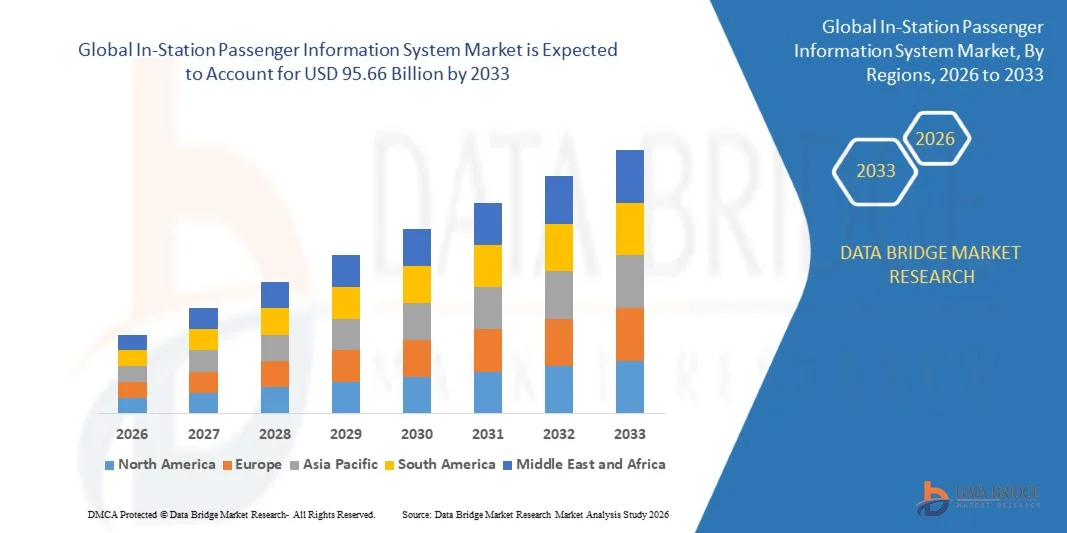
- A dimensão global do mercado do sistema de informação de passageiros na estação foi avaliada emUSD 37,01 Bilhões em 2025e espera-se alcançarUSD 95,66 Bilhões até 2033, em umaCAGR de12,60%durante o período de previsão
- A frequência crescente da viagem de passageiros através dos transportes públicos tem influenciado directamente o crescimento do mercado do sistema de informação de passageiros em estação
- Além disso, a crescente utilização de smartphones com melhor conectividade melhora a experiência de trânsito, que também está florescendo o crescimento do mercado de informação de passageiros em estação
Quais são as principais takeaways do mercado de informações de passageiros na estação
- As crescentes demandas de informações de passageiros em tempo real, consistentes e confiáveis, bem como a crescente implementação de tecnologias avançadas como big data, nuvem e IoT para o desenvolvimento de tais sistemas para melhorar a experiência geral do passageiro também estão impactando positivamente o crescimento do mercado
- Além disso, a elevada adopção de tais sistemas entre as agências de trânsito que conduzem ao desenvolvimento da satisfação e do conforto dos passageiros está também a aumentar em grande medida o crescimento do mercado de informação de passageiros no posto de trabalho
- A América do Norte dominou o mercado de sistemas de informação de passageiros na estação com uma quota de receita de 36,25% em 2025, impulsionada por investimentos em larga escala em infraestrutura de transporte inteligente, modernização generalizada de estações ferroviárias, metrôs e aeroportos, e adoção precoce de tecnologias digitais de comunicação de passageiros nos EUA e Canadá
- Asia-Pacific é projetado para registrar o CAGR mais rápido de 9,54% de 2026 a 2033, impulsionado por rápida urbanização, grandes projetos de expansão de ferrovia e metrô, e crescentes investimentos em infraestrutura de transporte inteligente em toda a China, Japão, Índia, Coreia do Sul e Sudeste Asiático
- O segmento Solutions dominou o mercado com uma participação de 46,3% em 2025, impulsionado pela implantação generalizada de hardware de display integrado, sistemas de anúncio de áudio, equipamentos de rede e unidades de controle em estações ferroviárias, centros de metrô e terminais de trânsito
Segmentação do Mercado de Informação de Passageiros no Estado e Âmbito de Relato
|
Atributos |
Sistema de Informação aos Passageiros na Estação |
|
Segmentos Cobertos |
|
|
Países abrangidos |
América do Norte
Europa
Ásia- Pacífico
Médio Oriente e África
América do Sul
|
|
Jogadores do mercado chave |
|
|
Oportunidades de Mercado |
|
|
Informações sobre o Valor Adicionado |
Além dos insights sobre cenários de mercado, como valor de mercado, taxa de crescimento, segmentação, cobertura geográfica e principais atores, os relatórios de mercado curados pela Data Bridge Market Research também incluem análise de especialistas em profundidade, análise de preços, análise de compartilhamento de marca, inquérito ao consumidor, análise demografia, análise da cadeia de suprimentos, análise da cadeia de valor, visão geral da matéria-prima/consumíveis, critérios de seleção de fornecedores, Análise de PESTLE, Análise de Porter e marco regulatório. |
Qual é a tendência chave no mercado de informações de passageiros na estação
“Mudanças rápidas para plataformas de informação de passageiros em tempo real, digitais e integradas na estação“
- O mercado de informações de passageiros na estação está testemunhando forte adoção de sistemas de exibição digital em tempo real, sinalização conectada à rede e plataformas multimídia que fornecem horários de trem precisos, atualizações de serviço e alertas de emergência
- Os operadores estão implantando cada vez mais soluções PIS baseadas em IP, integradas na nuvem e gerenciadas centralmente que permitem atualizações de conteúdo contínuas em grandes redes de estações
- A demanda crescente por monitores LED/LCD de alta resolução, integração audiovisual e suporte multilingue está melhorando a experiência dos passageiros em centros de metrô, trem e trânsito
- Por exemplo, empresas como Siemens, Alstom, Huawei e Thales estão melhorando as soluções PIS na estação com gerenciamento de conteúdo orientado por IA, alertas preditivos de interrupção e recursos de monitoramento remoto
- O foco crescente em estações inteligentes, infraestrutura ferroviária digital e mobilidade centrada nos passageiros está acelerando a adoção de plataformas PIS inteligentes
- À medida que os sistemas de transporte público se modernizam, os Sistemas de Informação de Passageiros na Estação permanecerão críticos para comunicação em tempo real, eficiência operacional e satisfação dos passageiros
Quais são os Principais Drivers do Mercado de Informação de Passageiros na Estação
- Investimentos crescentes em ferrovias urbanas, expansão de metrô e infraestrutura de transporte inteligente estão impulsionando a demanda por sistemas avançados de informação no posto
- Por exemplo, durante 2024-2025, várias autoridades ferroviárias e de metrô em toda a Europa e Ásia-Pacífico atualizaram placas de anúncio legado para displays digitais de informações de passageiros em rede
- Aumentar as expectativas dos passageiros para atualizações em tempo real, transparência de serviço e melhoria da experiência da estação estão acelerando a implantação do PIS
- Avanços na tecnologia de display, conectividade (5G, fibra), software em nuvem e sistemas de controle centralizados estão melhorando a confiabilidade e escalabilidade do sistema
- A adoção crescente de plataformas de mobilidade integradas, centros de transporte multimodais e iniciativas de cidades inteligentes está aumentando a demanda do mercado a longo prazo
- Apoiado por financiamento sustentado dos transportes públicos e iniciativas de transformação digital, espera-se que o mercado do Sistema de Informação de Passageiros na Estação registe um crescimento global constante
Que fator está desafiando o crescimento do mercado de informações de passageiros na estação
- Altos custos de instalação, integração e manutenção de soluções PIS digitais avançadas limitam a adoção em estações menores e regiões em desenvolvimento
- Por exemplo, durante 2024-2025, os preços crescentes dos painéis de exibição, equipamentos de rede e componentes eletrônicos aumentaram os custos globais de implantação do sistema
- A complexidade de integração com sistemas de sinalização ferroviária legados, software de programação e infraestrutura de estação coloca desafios técnicos
- A dependência de fonte de alimentação estável, conectividade de rede e prontidão para cibersegurança aumentam o risco operacional
- Restrições orçamentais, longos ciclos de contratação e aprovações regulamentares em projetos de transporte público
- Para superar esses desafios, os fornecedores estão focando em arquiteturas modulares, software baseado em nuvem, diagnósticos remotos e soluções de exibição otimizadas para melhorar a penetração no mercado
Como é segmentado o Sistema de Informação de Passageiros na Estação
O mercado é segmentado com base emcomponente, modo de transporte e modelo funcional.
• Por Componente
Com base no componente, o mercado de informações de passageiros na estação é segmentado em Soluções, Serviços e Software. O segmento Solutions dominou o mercado com 46,3% de participação em 2025, impulsionado pela implantação generalizada de hardware de display integrado, sistemas de anúncio de áudio, equipamentos de rede e unidades de controle em estações ferroviárias, centros de metrô e terminais de trânsito. Essas soluções fornecem informações de passageiros de ponta a ponta, incluindo atualizações de chegada em tempo real, notificações de emergência e alertas de serviço, tornando-os a escolha preferida para projetos de infraestrutura de grande escala. Alta confiabilidade, longa vida operacional e conformidade com as normas de segurança dos transportes apoiam ainda mais a adoção forte.
Espera-se que o segmento de Software cresça no CAGR mais rápido de 2026 para 2033, suportado pela crescente demanda por plataformas de gerenciamento de conteúdo baseadas em nuvem, agendamento habilitado para IA, alertas de interrupção preditiva e monitoramento centralizado do sistema. Aumentar o foco em estações inteligentes e transformação digital está acelerando as atualizações lideradas por software.
• Por Modo de Transporte
Com base no modo de transporte, o mercado de informação de passageiros na estação é segmentado em ferrovias, estradas, vias aéreas e vias navegáveis. O segmento Railways dominou o mercado com uma participação de 52,8% em 2025, devido à extensa implantação de displays de informação de passageiros, sistemas de endereços públicos e placas de programação de trens em tempo real através das redes ferroviárias de metrô, suburbano e de longa distância. Investimentos contínuos em modernização ferroviária, altos volumes de passageiros e iniciativas ferroviárias inteligentes apoiadas pelo governo têm impulsionado a adoção em larga escala de soluções PIS avançadas na estação.
Projeta-se que o segmento da Airways cresça no CAGR mais rápido de 2026 para 2033, apoiado pelo aumento das expansões aeroportuárias, aumento do tráfego aéreo de passageiros e demanda por informações dinâmicas de portas, displays multilingues e atualizações de voo em tempo real. A ênfase crescente na experiência de passageiros, eficiência operacional e integração com sistemas de gestão de aeroportos está acelerando a adoção do PIS em aeroportos globais.
• Por Modelo Funcional
Com base no modelo funcional, o mercado de informações de passageiros na estação é segmentado em telas multimídia, sistemas de áudio, sistemas de computação, dispositivos de rede e comunicação, vigilância de vídeo, sistema de gerenciamento de conteúdo e outros. O segmento Multimedia Displays dominou o mercado com uma participação de 34,7% em 2025, impulsionado pelo uso extensivo de telas LED/LCD para agendas em tempo real, informações de plataforma, wayfindering, anúncios e alertas de emergência. Alta visibilidade, melhor legibilidade e suporte para conteúdo dinâmico e multilingue tornam os displays multimídia centrais para a infraestrutura moderna da estação.
Espera-se que o segmento de Sistema de Gestão de Conteúdo (CMS) registre o CAGR mais rápido de 2026 a 2033, alimentado pela crescente demanda por controle centralizado, atualizações em tempo real, integração na nuvem e automação de conteúdo orientada por IA. Aumentar a complexidade do sistema e a necessidade de sincronização de informações em várias estações estão fortalecendo a adoção de CMS globalmente.
Qual é a região que detém a maior parte do mercado de informações de passageiros na estação
- A América do Norte dominou o mercado de sistemas de informação de passageiros na estação com uma quota de receita de 36,25% em 2025, impulsionada por grandes investimentos em infraestrutura de transporte inteligente, modernização generalizada de estações ferroviárias, metrôs e aeroportos, e adoção precoce de tecnologias digitais de comunicação de passageiros em todos os EUA e Canadá. Alta implantação de placas de exibição em tempo real, sistemas de endereços públicos, plataformas de controle centralizadas e soluções integradas de rede continuam a suportar forte demanda regional em hubs de trânsito
- Empresas líderes na América do Norte estão implementando plataformas de informação de passageiros conectadas à nuvem, sistemas de gerenciamento de conteúdo habilitados por IA e displays multimídia de alta resolução, fortalecendo a liderança da região em soluções de comunicação de trânsito inteligentes
- Forte financiamento público, redes de transporte maduras e um foco elevado na segurança dos passageiros, acessibilidade e experiência reforçam ainda mais o domínio do mercado da América do Norte
U.S. In-Station Sistema de Informação de Passageiros Insight
Os Estados Unidos são o maior contribuinte da América do Norte, apoiado por atualizações contínuas de sistemas de metrô, redes ferroviárias e terminais de aeroportos. A adoção crescente de atualizações de serviços em tempo real, sistemas de alerta de emergência e plataformas de informação multilingue de passageiros nas principais cidades impulsiona a demanda sustentada. A presença de principais integradores de sistemas, fortes orçamentos de autoridades de trânsito e iniciativas de cidades inteligentes aceleram ainda mais o crescimento do mercado.
Canadá In-Station Sistema de Informação de Passageiros Insight
O Canadá contribui significativamente devido ao crescente investimento na expansão do trânsito urbano, modernização dos corredores ferroviários e transformação digital da infraestrutura de transporte público. A adoção crescente de plataformas centralizadas de informação de passageiros em estações de metrô e centros ferroviários intermunicipais suporta o crescimento constante do mercado.
Mercado de Informação de Passageiros na Estação Ásia-Pacífico
Projeta-se que a Ásia-Pacífico registre o CAGR mais rápido de 9,54% de 2026 a 2033, impulsionado pela urbanização rápida, projetos maciços de expansão ferroviária e metropolitano, e investimentos crescentes em infraestrutura de transporte inteligente em toda a China, Japão, Índia, Coreia do Sul e Sudeste Asiático. O aumento do volume de passageiros, a demanda por informações de viagem em tempo real e a integração de monitores digitais com plataformas móveis e em nuvem estão acelerando a implantação do sistema em estações de trânsito.
China In-Station Sistema de Informação de Passageiros Insight
A China lidera o mercado Ásia-Pacífico devido a extensas redes ferroviárias de alta velocidade, desenvolvimento de metrô de grande escala e forte apoio do governo à mobilidade inteligente. A implantação de monitores multimídia avançados e sistemas de controle centralizados entre estações impulsiona a adoção generalizada.
Japão In-Station Sistema de Informação aos Passageiros Insight
O Japão mostra um crescimento constante apoiado por redes ferroviárias tecnologicamente avançadas, ênfase na confiabilidade e elevados padrões de serviço de passageiros. Atualizações contínuas para sistemas de sinalização digital e áudio suportam demanda de longo prazo.
Índia In-Station Sistema de Informação de Passageiros Insight
A Índia está emergindo como um mercado de alto crescimento, impulsionado pela expansão do metrô ferroviário, programas de redesenvolvimento da estação ferroviária e iniciativas de cidades inteligentes. A crescente concentração na segurança dos passageiros e na informação em tempo real acelera a adopção.
South Korea In-Station Passenger Information System Insight
A Coreia do Sul beneficia de sistemas avançados de trânsito urbano e de fortes infra-estruturas digitais. O uso crescente de monitores de alta definição, anúncios automatizados e plataformas integradas de gerenciamento de estações suportam o crescimento sustentado do mercado.
Quais são as principais empresas no mercado de informações de passageiros na estação
A indústria do sistema de informação de passageiros na estação é liderada principalmente por empresas bem estabelecidas, incluindo:
- Cisco (EUA)
- Siemens (Alemanha)
- Huawei Technologies Co., Ltd. (China)
- Hitachi, Ltd. (Japão)
- Alstom (França)
- Advantech Co., Ltd. (Taiwan)
- Cubic Corporation (EUA)
- Grupo Thales (França)
- Lunetta (EUA)
- Teleste Corporation (Finlândia)
- ST Engenharia (Singapura)
- Passio (EUA)
- Dysten Sp. z o. o. (Polónia)
- Televic (Bélgica)
- Wabtec Corporation (EUA)
- r2p GmbH (Alemanha)
- Indra (Espanha)
- Mitsubishi Electric Corporation (Japão)
- ICON Multimedia S.L. (Espanha)
- LANCom (Alemanha)
- Simpleway Europe a.s. (República Checa)
Quais são as últimas evoluções no mercado de informações de passageiros na estação
- Em abril de 2024, a Alstom SA assinou um Memorando de Entendimento com a Tag i Bergslagen (TiB) para desenvolver em conjunto tecnologias ferroviárias de próxima geração através de uma colaboração de dois anos liderada pela Estação de Inovação da Alstom em Estocolmo, com um forte foco em melhorar os sistemas de informação de passageiros e outras soluções ferroviárias inovadoras. Esta iniciativa destaca o compromisso da Alstom com operações ferroviárias sustentáveis, eficientes e orientadas para a tecnologia na Europa
- Em Abril de 2024, a Alstom SA entrou num Memorando de Entendimento com a Tag i Bergslagen (TiB) destinado a melhorar as tecnologias ferroviárias, incluindo melhorias significativas nos sistemas de informação de passageiros no âmbito de uma cooperação estruturada de dois anos. Esta colaboração reforça o foco estratégico da Alstom na modernização digital e na infraestrutura ferroviária centrada nos passageiros
- Em fevereiro de 2024, Toshiba anunciou grandes investimentos para expandir seu portfólio de sistemas de exibição de informações de passageiros, enfatizando soluções de comunicação audiovisual em tempo real para modernização de infraestrutura ferroviária e metro. Este movimento fortalece a posição da Toshiba em sistemas de transporte inteligentes e aumenta as capacidades de comunicação de passageiros em tempo real
- Em janeiro de 2024, a Titagarh Railway Systems, com sede em Kolkata, anunciou uma parceria estratégica com o Delhi NCR-based Amber Group para avançar na concepção e fabricação de sistemas de informação de passageiros de última geração para redes ferroviárias em rápida expansão. Esta parceria apoia a inovação interna e acelera a implantação de tecnologias avançadas de comunicação ferroviária
SKU-
Obtenha acesso online ao relatório sobre a primeira nuvem de inteligência de mercado do mundo

- Painel interativo de análise de dados
- Painel de análise da empresa para oportunidades de elevado potencial de crescimento
- Acesso de analista de pesquisa para personalização e customização. consultas
- Análise da concorrência com painel interativo
- Últimas notícias, atualizações e atualizações Análise de tendências
- Aproveite o poder da análise de benchmark para um rastreio abrangente da concorrência
Metodologia de Investigação
A recolha de dados e a análise do ano base são feitas através de módulos de recolha de dados com amostras grandes. A etapa inclui a obtenção de informações de mercado ou dados relacionados através de diversas fontes e estratégias. Inclui examinar e planear antecipadamente todos os dados adquiridos no passado. Da mesma forma, envolve o exame de inconsistências de informação observadas em diferentes fontes de informação. Os dados de mercado são analisados e estimados utilizando modelos estatísticos e coerentes de mercado. Além disso, a análise da quota de mercado e a análise das principais tendências são os principais fatores de sucesso no relatório de mercado. Para saber mais, solicite uma chamada de analista ou abra a sua consulta.
A principal metodologia de investigação utilizada pela equipa de investigação do DBMR é a triangulação de dados que envolve a mineração de dados, a análise do impacto das variáveis de dados no mercado e a validação primária (especialista do setor). Os modelos de dados incluem grelha de posicionamento de fornecedores, análise da linha de tempo do mercado, visão geral e guia de mercado, grelha de posicionamento da empresa, análise de patentes, análise de preços, análise da quota de mercado da empresa, normas de medição, análise global versus regional e de participação dos fornecedores. Para saber mais sobre a metodologia de investigação, faça uma consulta para falar com os nossos especialistas do setor.
Personalização disponível
A Data Bridge Market Research é líder em investigação formativa avançada. Orgulhamo-nos de servir os nossos clientes novos e existentes com dados e análises que correspondem e atendem aos seus objetivos. O relatório pode ser personalizado para incluir análise de tendências de preços de marcas-alvo, compreensão do mercado para países adicionais (solicite a lista de países), dados de resultados de ensaios clínicos, revisão de literatura, mercado remodelado e análise de base de produtos . A análise de mercado dos concorrentes-alvo pode ser analisada desde análises baseadas em tecnologia até estratégias de carteira de mercado. Podemos adicionar quantos concorrentes necessitar de dados no formato e estilo de dados que procura. A nossa equipa de analistas também pode fornecer dados em tabelas dinâmicas de ficheiros Excel em bruto (livro de factos) ou pode ajudá-lo a criar apresentações a partir dos conjuntos de dados disponíveis no relatório.











