



Segmentação do mercado global de Internet das Coisas (IoT) em armazéns, por solução (gestão de estoque, gestão de força de trabalho, intercâmbio eletrônico de dados e outros), serviço (seguro baseado no uso e logística terceirizada), dispositivos (dispositivos de sensoriamento, redes e gateways e outros), usuário final (varejo e logística, automotivo, alimentos e bebidas, saúde, elétrico e eletrônico e outros) - Tendências e previsões do setor até 2033
O que é a Internet das coisas (IoT) no tamanho do mercado de armazém e taxa de crescimento
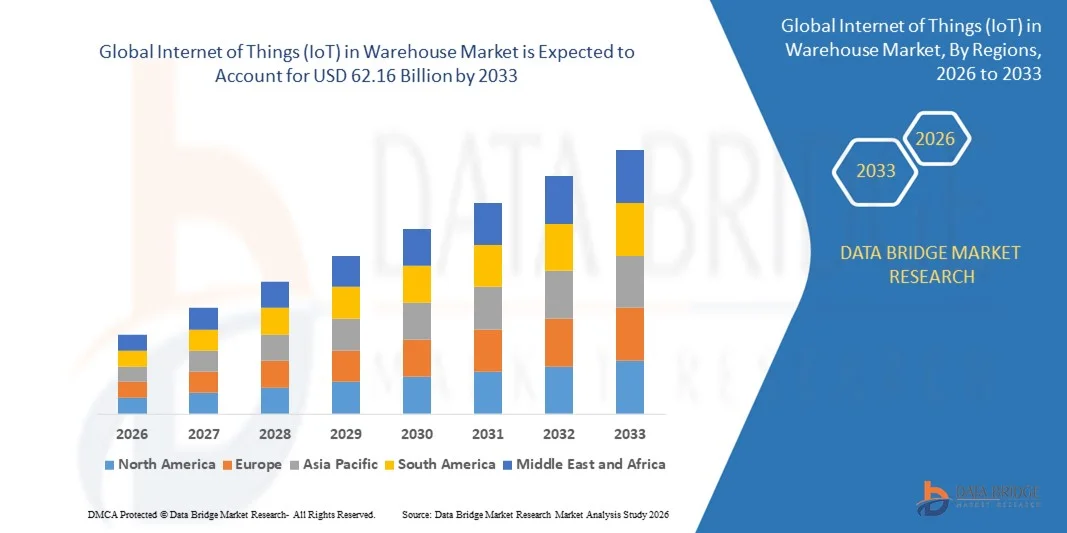
- Como por Data Bridge Market Research Analysis a internet global das coisas (IoT) em tamanho de mercado de armazém foi avaliada em12,66 mil milhões de dólares em 2025e espera-se alcançar62,16 mil milhões de USD até 2033, em umaCAGR de 22,00%durante o período de previsão
- O crescimento do mercado é, em grande medida, alimentado pela crescente adopção de tecnologias de automatização e inteligentes em armazéns
Tamanho e previsão do mercado
- Valor de mercado global (2025):12,66 mil milhões de USD
- Valor de mercado previsto (2033):62,16 mil milhões de USD
- Previsões CAGR (2026-2033):22.00%
Quais são as principais takeaways da Internet das Coisas (IoT) no Mercado de Armazéns
- A IoT permite monitoramento em tempo real, manutenção preditiva e comunicação perfeita entre dispositivos, aumentando a produtividade do armazém
- A capacidade de rastrear os ativos remotamente e otimizar a alocação de recursos melhora significativamente a eficiência operacional global
- A América do Norte dominou a IoT no mercado de armazéns com a maior quota de receita de 38,50% em 2025, impulsionada pela rápida adoção de automação, soluções de armazéns inteligentes e logística conectada.
- A região Ásia-Pacífico deverá testemunhar a maior taxa de crescimento no mundoInternet das coisas (IoT) no armazémmercado, impulsionado pela rápida industrialização, expandindoComércio electrónico, aumento do rendimento disponível e adoção crescente de tecnologias inteligentes de armazenamento e logística
- O segmento de Gestão de Inventário detinha a maior quota de receita de mercado em 2025, impulsionada pela crescente necessidade de monitoramento em tempo real dos níveis de estoque, alertas automatizados de reordenação e maior eficiência de armazém. As soluções de inventário habilitadas pela IoT ajudam as empresas a reduzir erros, otimizar o armazenamento e manter dados precisos em vários locais, tornando-os um investimento crítico para operações de armazéns modernos. Essas soluções também permitem que as análises preditivas previram a demanda, evitem estoques e melhorem a visibilidade global da cadeia de suprimentos, tornando o gerenciamento de estoque mais inteligente e econômico
Alcance do relatório e Internet das Coisas (IoT) no Mercado de Armazém Segmentação
|
Atributos |
Internet das Coisas (IoT) no Mercado Chave de Armazém |
|
Segmentos Cobertos |
|
|
Países abrangidos |
América do Norte
Europa
Ásia- Pacífico
Médio Oriente e África
América do Sul
|
|
Jogadores do mercado chave |
|
|
Oportunidades de Mercado |
|
|
Informações sobre o Valor Adicionado |
Além dos insights de mercado, como valor de mercado, taxa de crescimento, segmentos de mercado, cobertura geográfica, atores de mercado e cenário de mercado, o relatório de mercado curado pela equipe de Pesquisa do Mercado da Ponte de Dados inclui análise de especialistas em profundidade, análise de importação/exportação, análise de preços, análise de consumo de produção e análise de pilão. |
Qual é a tendência chave na Internet das coisas (IoT) no mercado de armazém
A adoção crescente de soluções de automação e armazenamento inteligente
- A crescente implementação de automação, robótica e dispositivos inteligentes está moldando significativamente a IoT no mercado de armazéns, pois as empresas se concentram cada vez mais na eficiência operacional, no rastreamento em tempo real e na análise preditiva. As soluções IoT estão ganhando força devido à sua capacidade de melhorar o gerenciamento de estoque, otimizar fluxos de trabalho e reduzir erros, incentivando armazéns a investir em tecnologias integradas
- O aumento da ênfase na visibilidade da cadeia de suprimentos e o cumprimento mais rápido da ordem aceleraram a adoção de soluções habilitadas para IoT nos setores de comércio eletrônico, varejo e logística. Os operadores de armazéns estão alavancando sensores conectados, RFID e plataformas baseadas em nuvem para monitorar ativos, rastrear remessas e melhorar a responsividade global à demanda do mercado
- Tendências tecnológicas como integração de IA, manutenção preditiva e análise de dados estão influenciando decisões de investimento, com empresas priorizando soluções que oferecem insights acionáveis e economia de custos operacionais. Os fornecedores estão desenvolvendo plataformas que combinam dados de IoT com aprendizado de máquina para prever a demanda, prevenir o tempo de inatividade e melhorar o rendimento do armazém
- Por exemplo, em 2025, a Amazon nos EUA e a DHL na Alemanha expandiram suas operações de armazém incorporando robótica e sensores habilitados para IoT para rastreamento em tempo real de inventário e manuseio automatizado de material. Essas implantações visavam melhorar a precisão, eficiência e escalabilidade em resposta ao aumento da demanda do consumidor para uma entrega mais rápida
- Enquanto a adoção da IoT em armazéns está aumentando, o crescimento sustentado do mercado depende da interoperabilidade, segurança de dados e implantação econômica. As empresas também estão focando no desenvolvimento de plataformas escaláveis, melhorando a conectividade e garantindo uma integração perfeita com sistemas de gerenciamento de armazéns existentes
Internet das Coisas (IoT) no Mercado de Armazém Dinâmica
Controlador
Necessidade crescente de eficiência operacional e monitoramento em tempo real
- A crescente demanda por operações de armazém automatizadas e conectadas é um dos principais motores da IoT no mercado de armazéns. As empresas estão substituindo cada vez mais processos manuais por soluções habilitadas para IoT para melhorar a produtividade, reduzir erros e aumentar a visibilidade em toda a cadeia de suprimentos. Esta tendência também está impulsionando a inovação em tecnologias de automação de armazéns e sistemas inteligentes de rastreamento de ativos
- Expandir aplicações no comércio eletrônico, logística, armazenamento frio e centros de realização de terceiros estão influenciando o crescimento do mercado. A IoT ajuda a melhorar a precisão do inventário, otimizar a utilização do espaço e reduzir os custos operacionais, permitindo que os armazéns atendam às demandas de cumprimento de ordem mais rápida e eficiente
- Os operadores de armazéns estão investindo ativamente em soluções de IoT integradas com IA, robótica e plataformas de nuvem para melhorar o desempenho operacional, manutenção preditiva e tomada de decisão. Estes esforços são apoiados pelo aumento das práticas da indústria 4.0 e pela necessidade de operações sustentáveis e eficientes em termos energéticos
- Por exemplo, em 2024, a FedEx nos EUA e Maersk na Dinamarca relatou aumento da incorporação de sensores de IoT e sistemas de rastreamento automatizado em armazéns e centros de distribuição. Essa expansão seguiu maior demanda por monitoramento de ativos em tempo real e entrega mais rápida, fortalecendo a eficiência operacional e a satisfação do cliente
- Embora a crescente demanda por automação suporte o crescimento, a adoção mais ampla depende da otimização de custos, segurança de dados e conectividade confiável. Investimento em plataformas de IoT escaláveis, segurança cibernética aprimorada e protocolos padronizados serão fundamentais para atender às demandas globais de armazéns e manter a vantagem competitiva
Restrição/Desafio
Altos custos de implementação e complexidade de integração
- O custo relativamente elevado da implantação de IoT em comparação com os sistemas tradicionais de armazéns continua a ser um desafio fundamental, limitando a adoção entre pequenos e médios operadores. Despesas de hardware, software e manutenção, combinadas com complexidades de integração, contribuem para elevados requisitos de investimento
- A especialização técnica limitada e a consciência desigual dos benefícios da IoT, especialmente em mercados emergentes, restringem a adoção em certas operações de armazém. Os operadores mais pequenos podem não dispor de recursos ou conhecimentos para implementar e gerir eficazmente sistemas ligados
- Os desafios de integração com sistemas de gestão de armazéns legados e questões de interoperabilidade também impactam o crescimento do mercado. Configuração complexa, requisitos de conectividade de rede e obstáculos de padronização de dados podem retardar a implantação e reduzir a eficiência operacional
- Por exemplo, em 2025, distribuidores e operadores de armazéns na Índia e no Brasil relataram menor aceitação de soluções de IoT devido a altos custos, mão-de-obra qualificada limitada e dificuldades de integração com sistemas de armazéns existentes. Isso resultou em projetos atrasados e adoção seletiva de tecnologias IoT
- Superar esses desafios exigirá soluções econômicas, programas de treinamento aprimorados e protocolos padronizados para integração perfeita. Parcerias entre fornecedores de tecnologia, operadores de armazéns e integradores de sistemas podem desbloquear o potencial de crescimento a longo prazo da IoT global no mercado de armazéns, enquanto inovações em soluções de IoT escaláveis e de baixo custo impulsionarão ainda mais a adoção
Como é a Internet das Coisas (IoT) no Mercado de Armazém Segmentado
O mercado é segmentado com base na solução, serviço, dispositivos e usuário final.
- Por Solução
Com base na solução, a IoT no mercado de armazéns é segmentada em Gestão de Inventário, Gestão de Força de Trabalho, Intercâmbio Eletrônico de Dados e Outros. O segmento de Gestão de Inventário detinha a maior quota de receita de mercado em 2025, impulsionada pela crescente necessidade de monitoramento em tempo real dos níveis de estoque, alertas automatizados de reordenação e maior eficiência de armazém. As soluções de inventário habilitadas pela IoT ajudam as empresas a reduzir erros, otimizar o armazenamento e manter dados precisos em vários locais, tornando-os um investimento crítico para operações de armazéns modernos. Essas soluções também permitem que as análises preditivas previram a demanda, evitem estoques e melhorem a visibilidade global da cadeia de suprimentos, tornando o gerenciamento de estoque mais inteligente e econômico.
Espera-se que o segmento Workforce Management testemunhe a taxa de crescimento mais rápida de 2026 a 2033, impulsionada pelo aumento da adoção de soluções IoT para rastreamento de funcionários, automação de tarefas e monitoramento de desempenho. Sistemas de gerenciamento de força de trabalho habilitados pela IoT melhoram a produtividade do trabalho, aumentam a segurança e simplificam a coordenação de fluxo de trabalho, especialmente em armazéns e centros de distribuição em grande escala. O monitoramento em tempo real das atividades dos funcionários e a programação automatizada também reduzem os gargalos operacionais, levando a uma melhor alocação de recursos e melhoria da eficiência.
- Por Serviço
Com base no serviço, o mercado é segmentado em seguros baseados em uso e 3PL. O segmento 3PL representou a maior participação em 2025, apoiada pela crescente integração de soluções de IoT em provedores de logística de terceiros para permitir o rastreamento em tempo real de remessas, otimização de rotas e operações automatizadas de armazéns. As soluções de IoT permitem que os operadores 3PL monitorem remessas, gerenciem frotas e garantam entrega oportuna, melhorem a satisfação do cliente e reduzam os custos operacionais. Maior visibilidade e insights baseados em dados também suportam planejamento de inventários e gerenciamento de riscos para provedores 3PL.
Espera-se que o segmento Seguro Baseado em Uso testemunhe a taxa de crescimento mais rápida de 2026 para 2033, já que os dispositivos de rastreamento habilitados para IoT fornecem às seguradoras dados em tempo real sobre o uso de ativos, reduzindo o risco e permitindo soluções de seguro personalizadas para operadores de armazém e logística. Estes serviços permitem que as empresas paguem prémios com base na utilização real e no desempenho operacional, promovendo a eficiência de custos e incentivando a adoção de dispositivos conectados.
- Por Dispositivos
Com base em dispositivos, o mercado é segmentado em dispositivos de detecção, redes e gateways, e outros. O segmento Sensing Devices dominou o mercado em 2025 devido à adoção generalizada de sensores IoT, etiquetas RFID e monitores ambientais para rastreamento de inventário, monitoramento de condições e manutenção preditiva. Esses dispositivos permitem que os armazéns capturem dados em tempo real sobre movimento de estoque, temperatura, umidade e localização de ativos, garantindo qualidade do produto e eficiência operacional. A crescente disponibilidade de sensores de baixo custo e alta precisão está impulsionando a adoção em várias indústrias.
Espera-se que Networking e Gateways testemunhem a taxa de crescimento mais rápida de 2026 a 2033, impulsionada pela necessidade de conectividade confiável, transmissão de dados sem costura e integração de vários dispositivos de IoT em ambientes complexos de armazéns. Soluções de rede robustas garantem uma comunicação ininterrupta entre sensores, plataformas de nuvem e sistemas de gerenciamento, permitindo o controle centralizado e a escalabilidade aprimorada. A adoção crescente de computação de 5G e borda também está facilitando a transferência de dados mais rápida e o melhor desempenho do sistema.
- Por Usuário Final
Com base no usuário final, o mercado é segmentado em varejo e logística, automotivo, alimentos e bebidas, saúde, elétrica e eletrônica, e outros. O segmento Varejo e Logística teve a maior participação em 2025, devido ao rápido crescimento do comércio eletrônico, à alta demanda por entrega rápida e à necessidade de operações eficientes de armazéns e cadeias de suprimentos. A adoção de IoT neste segmento permite o rastreamento de pedidos em tempo real, classificação automatizada e previsão de demanda preditiva, reduzindo erros e melhorando a satisfação do cliente. As empresas também estão alavancando a IoT para otimização de estoque, redução de custos e flexibilidade operacional.
Espera-se que o segmento de Alimentos e Bebidas testemunhe a taxa de crescimento mais rápida de 2026 a 2033, alimentada pela adoção de soluções de IoT para armazenamento controlado por temperatura, monitoramento de mercadorias perecíveis e conformidade com os padrões de segurança e qualidade. O monitoramento em tempo real das condições da cadeia fria, alertas de rotação de estoque e relatórios automatizados ajudam a manter a qualidade do produto e reduzir a deterioração. A crescente procura de produtos alimentares frescos, de alta qualidade e rastreáveis está a impulsionar ainda mais a implementação da IoT em armazéns que servem este sector.
Qual é a região que detém a maior parte da Internet das Coisas (IoT) no Mercado de Armazém
- A América do Norte dominou a IoT no mercado de armazéns com a maior quota de receita de 38,50% em 2025, impulsionada pela rápida adoção de automação, soluções de armazéns inteligentes e logística conectada.
- As empresas da região priorizam cada vez mais a eficiência operacional, o rastreamento do inventário em tempo real e a análise preditiva, permitindo uma gestão de armazém mais rápida e precisa.
- Esta adoção generalizada é ainda apoiada por infraestrutura avançada, alta penetração tecnológica e a crescente demanda por comércio eletrônico e logística de terceiros, estabelecendo soluções IoT como uma escolha preferencial para armazéns modernos
IoT dos EUA no Mercado de Armazém
A IoT dos EUA no mercado de armazéns capturou a maior participação de receita em 2025 na América do Norte, alimentada pela implantação acelerada de sensores habilitados para IoT, robótica e plataformas baseadas em nuvem. Armazéns estão focados em monitoramento em tempo real, controle automatizado de estoque e manutenção preditiva para reduzir custos e melhorar a eficiência operacional. A tendência crescente do e-commerce e da demanda para o cumprimento rápido da ordem impulsiona ainda mais a adoção de soluções de armazém conectadas. Integração com IA, analytics e aplicativos móveis está contribuindo significativamente para a expansão do mercado.
Europa IoT no Mercado de Armazém
Espera-se que a Europa IoT no mercado de armazéns testemunhe a taxa de crescimento mais rápida entre 2026 e 2033, impulsionada principalmente pela crescente necessidade de logística inteligente, automação e gerenciamento eficiente da cadeia de suprimentos. O aumento das iniciativas de urbanização e digitalização entre as indústrias está promovendo a adoção da IoT. Os armazéns europeus estão investindo em rastreamento de ativos em tempo real, análise preditiva e soluções eficientes em termos de energia. A região está testemunhando um crescimento significativo em armazéns de varejo, automotivos e industriais, com soluções de IoT sendo implementadas tanto em novas instalações quanto em operações melhoradas.
U.K. IoT in Warehouse Market Insight
O Reino Unido. Espera-se que a IoT no mercado de armazéns testemunhe rápido crescimento de 2026 para 2033, impulsionado pelo crescente foco na automação, visibilidade da cadeia de suprimentos e eficiência operacional. As empresas estão cada vez mais integrando plataformas IoT para rastrear ativos, monitorar a produtividade da força de trabalho e otimizar layouts de armazéns. O forte setor de comércio eletrônico do Reino Unido e a infraestrutura tecnológica apoiam ainda mais a expansão do mercado. Sistemas de armazéns conectados também estão ajudando a reduzir custos operacionais, melhorar a precisão e aumentar a satisfação do cliente.
Alemanha IoT in Warehouse Market Insight
Espera-se que a IoT da Alemanha no mercado de armazéns testemunhe um forte crescimento de 2026 para 2033, alimentado pela adoção crescente de práticas da Indústria 4.0, logística inteligente e operações de armazenamento de dados. O setor de fabricação bem estabelecido da Alemanha e a ênfase na inovação incentivam o uso de sensores habilitados para IoT, robótica e soluções de rede. A integração com sistemas de manutenção preditiva e tecnologias eficientes em termos energéticos está se tornando cada vez mais comum. Armazéns estão focados em operações seguras, automatizadas e altamente otimizadas para atender às demandas industriais e comerciais.
IoT Ásia-Pacífico no Mercado de Depósitos
Espera-se que a IoT Ásia-Pacífico no mercado de armazéns testemunhe um rápido crescimento de 2026 para 2033, impulsionado pela urbanização, expansão do comércio eletrônico e adoção crescente de tecnologias de automação em países como China, Japão e Índia. As iniciativas governamentais que apoiam a logística digital e a infraestrutura inteligente da cadeia de suprimentos estão promovendo ainda mais a adoção da IoT. Armazéns na região estão cada vez mais alavancando soluções de IoT para monitoramento de estoque, análise preditiva e eficiência operacional. A crescente base de fabricação e os crescentes investimentos em tecnologia tornam as soluções de IoT mais acessíveis e econômicas.
Japão IoT in Warehouse Market Insight
O Japão IoT no mercado de armazéns deverá testemunhar um crescimento significativo de 2026 para 2033 devido ao ecossistema tecnológico avançado do país, aumentando a automação e focando na eficiência operacional. Os armazéns japoneses estão adotando soluções de IoT para rastreamento em tempo real, integração com robótica e operações eficientes em termos de energia. A tendência para fábricas inteligentes e cadeias de abastecimento ligadas está a acelerar ainda mais a adopção. O envelhecimento da força de trabalho e as necessidades de otimização do trabalho também estão incentivando o uso de sistemas automatizados de IoT em operações de armazéns comerciais e industriais.
China IoT no Mercado de Armazém Visão
A China IoT no mercado de armazéns representou a maior participação de receita na Ásia-Pacífico em 2025, atribuída à rápida industrialização, crescente comércio eletrônico e altas taxas de adoção de tecnologia. O país é um centro para o desenvolvimento de armazéns inteligentes, com soluções de IoT sendo implantadas em setores de varejo, logística e fabricação. Dispositivos de IoT acessíveis, fornecedores de soluções nacionais e suporte do governo para cadeias de suprimentos inteligentes são fatores fundamentais para o crescimento do mercado. O impulso para cidades inteligentes e infraestrutura logística inteligente está impulsionando ainda mais a adoção em toda a região.
Quais são as Principais Empresas na Internet das Coisas (IoT) no Mercado de Armazéns
A Internet das Coisas (IoT) na indústria de Armazém é liderada principalmente por empresas bem estabelecidas, incluindo:
- Software AG (Alemanha)
- Oráculo (EUA)
- IBM (EUA)
- SAP SE (Alemanha)
- Infor (EUA)
- PSI Logistics (Alemanha)
- HCL Technologies Limited (Índia)
- Tecsys Inc. (Canada)
- Cisco Systems, Inc (EUA)
- SISTEMAS HAL (U.K.)
- Codeworks, LLC (EUA)
- Blue Yonder Group, Inc. (EUA)
- PRIMA SOLUTIONS LTD. (UK.)
- Magaya Corporation (EUA)
- Softeon (EUA)
- VANTIQ (EUA)
- Corporação Intel (EUA)
- DassaultSystèmes (França)
- Bastian Solutions, Inc. (EUA)
- Zebra Technologies Corp. (EUA)
Quais são as últimas evoluções na Internet das Coisas (IoT) no Mercado de Armazéns
- Em novembro de 2023, Tecsys (Canadá) lançou seu Sistema de Gestão de Armazéns Elite (WMS) para o setor de saúde. O sistema foi concebido para ajudar as empresas de distribuição de cuidados de saúde a cumprirem a Lei de Segurança da Cadeia de Abastecimento de Medicamentos (DSCSA) enquanto racionalizavam as operações. Ao consolidar vários programas em uma única plataforma, reduz fluxos de trabalho de dupla entrada e complexidade operacional. Este desenvolvimento aumenta a eficiência, precisão e conformidade nas operações de armazém, fortalecendo a posição da Tecsys no segmento de logística de saúde
- Em maio de 2023, o PTC (EUA) introduziu sua solução de realidade aumentada com IA, Vuforia, para inspeções visuais de armazém. A plataforma Step Check sobrepõe as instruções de inspeção de objetos físicos, fornecendo orientação em tempo real aos trabalhadores. Ele detecta erros como componentes ausentes ou montagem inadequada e registra automaticamente resultados para gerar painéis para análise de tendência. Essa inovação melhora a precisão operacional, reduz erros de inspeção e promove a adoção mais rápida de soluções avançadas de AR e IA na gestão de armazéns
SKU-
Obtenha acesso online ao relatório sobre a primeira nuvem de inteligência de mercado do mundo

- Painel interativo de análise de dados
- Painel de análise da empresa para oportunidades de elevado potencial de crescimento
- Acesso de analista de pesquisa para personalização e customização. consultas
- Análise da concorrência com painel interativo
- Últimas notícias, atualizações e atualizações Análise de tendências
- Aproveite o poder da análise de benchmark para um rastreio abrangente da concorrência
Metodologia de Investigação
A recolha de dados e a análise do ano base são feitas através de módulos de recolha de dados com amostras grandes. A etapa inclui a obtenção de informações de mercado ou dados relacionados através de diversas fontes e estratégias. Inclui examinar e planear antecipadamente todos os dados adquiridos no passado. Da mesma forma, envolve o exame de inconsistências de informação observadas em diferentes fontes de informação. Os dados de mercado são analisados e estimados utilizando modelos estatísticos e coerentes de mercado. Além disso, a análise da quota de mercado e a análise das principais tendências são os principais fatores de sucesso no relatório de mercado. Para saber mais, solicite uma chamada de analista ou abra a sua consulta.
A principal metodologia de investigação utilizada pela equipa de investigação do DBMR é a triangulação de dados que envolve a mineração de dados, a análise do impacto das variáveis de dados no mercado e a validação primária (especialista do setor). Os modelos de dados incluem grelha de posicionamento de fornecedores, análise da linha de tempo do mercado, visão geral e guia de mercado, grelha de posicionamento da empresa, análise de patentes, análise de preços, análise da quota de mercado da empresa, normas de medição, análise global versus regional e de participação dos fornecedores. Para saber mais sobre a metodologia de investigação, faça uma consulta para falar com os nossos especialistas do setor.
Personalização disponível
A Data Bridge Market Research é líder em investigação formativa avançada. Orgulhamo-nos de servir os nossos clientes novos e existentes com dados e análises que correspondem e atendem aos seus objetivos. O relatório pode ser personalizado para incluir análise de tendências de preços de marcas-alvo, compreensão do mercado para países adicionais (solicite a lista de países), dados de resultados de ensaios clínicos, revisão de literatura, mercado remodelado e análise de base de produtos . A análise de mercado dos concorrentes-alvo pode ser analisada desde análises baseadas em tecnologia até estratégias de carteira de mercado. Podemos adicionar quantos concorrentes necessitar de dados no formato e estilo de dados que procura. A nossa equipa de analistas também pode fornecer dados em tabelas dinâmicas de ficheiros Excel em bruto (livro de factos) ou pode ajudá-lo a criar apresentações a partir dos conjuntos de dados disponíveis no relatório.











