Global Neural Pain Treatment Market, By Type (Postherpetic, Trigeminal, Glossopharyngeal, Occipital, Peripheral, Intercostal, Others), Causes (Infection, Multiple Sclerosis, Nerve Pressure, Diabetes, Others), Treatment (Diagnosis, Medication, Surgery, Physical Therapy, Others), Route of Administration (Oral, Parenteral, Topical, Others), End-Users (Hospitals, Homecare, Specialty Clinics, Others), Distribution Channel (Hospital Pharmacy, Online Pharmacy, Retail Pharmacy) – Industry Trends and Forecast to 2030.
Neural Pain Treatment Market Analysis and Size
As per the records of World Health Organization, about 18.1 million new cases and 9.6 million deaths were registered because of cancer worldwide in 2018. The increasing awareness associated with neuropathic pain management, especially in fast-developing countries such as India and China, has augmented the number of pain management centers for treating neuropathic pain-related disorders.
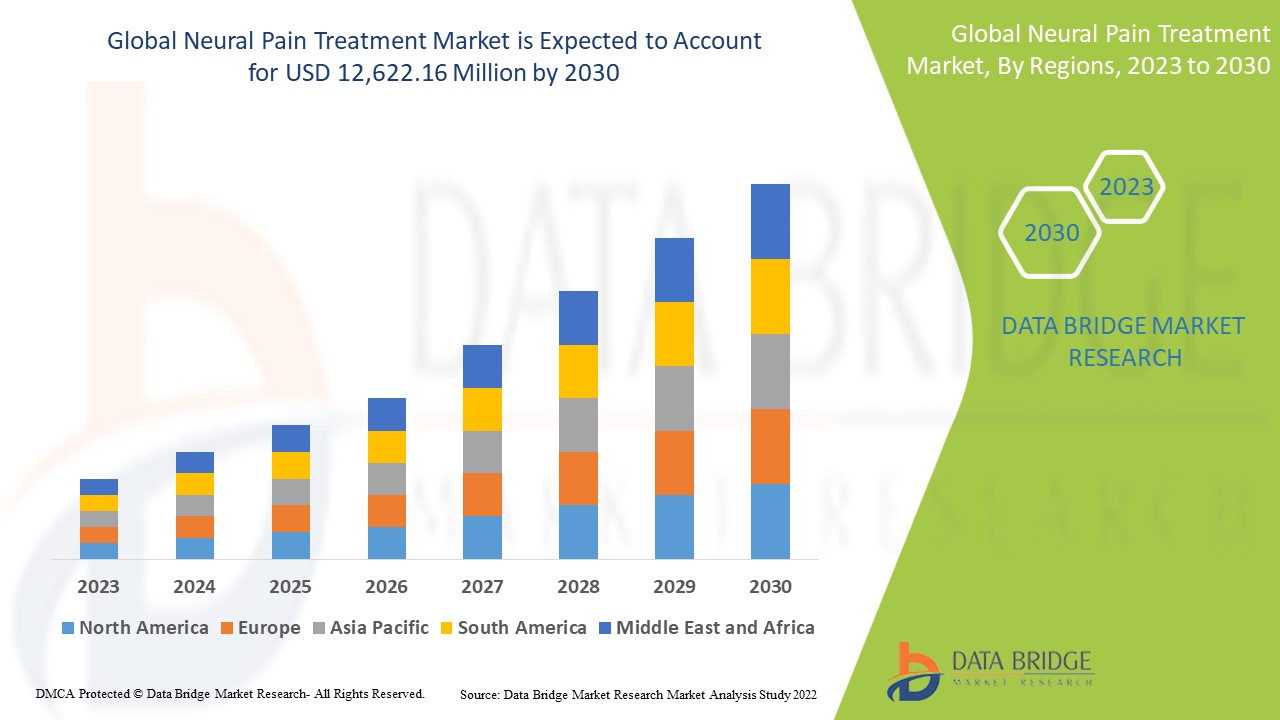
Data Bridge Market Research analyses a growth rate in the neural pain treatment market in the forecast period 2023-2030. The expected CAGR of neural pain treatment market is around 6.5% in the mentioned forecast period. The market was valued at USD 7,626.7 million in 2022, and it would grow upto USD 12,622.16 million by 2030. In addition to the market insights such as market value, growth rate, market segments, geographical coverage, market players, and market scenario, the market report curated by the Data Bridge Market Research team also includes in-depth expert analysis, patient epidemiology, pipeline analysis, pricing analysis, and regulatory framework.
Neural Pain Treatment Market Scope and Segmentation
|
Report Metric |
Details |
|
Forecast Period |
2023 to 2030 |
|
Base Year |
2022 |
|
Historic Years |
2021 (Customizable to 2015 - 2020) |
|
Quantitative Units |
Revenue in USD Million, Volumes in Units, Pricing in USD |
|
Segments Covered |
Type (Postherpetic, Trigeminal, Glossopharyngeal, Occipital, Peripheral, Intercostal, Others), Causes (Infection, Multiple Sclerosis, Nerve Pressure, Diabetes, Others), Treatment (Diagnosis, Medication, Surgery, Physical Therapy, Others), Route of Administration (Oral, Parenteral, Topical, Others), End-Users (Hospitals, Homecare, Specialty Clinics, Others), Distribution Channel (Hospital Pharmacy, Online Pharmacy, Retail Pharmacy) |
|
Countries Covered |
U.S., Canada and Mexico in North America, Germany, France, U.K., Netherlands, Switzerland, Belgium, Russia, Italy, Spain, Turkey, Rest of Europe in Europe, China, Japan, India, South Korea, Singapore, Malaysia, Australia, Thailand, Indonesia, Philippines, Rest of Asia-Pacific (APAC) in the Asia-Pacific (APAC), Saudi Arabia, U.A.E, South Africa, Egypt, Israel, Rest of Middle East and Africa (MEA) as a part of Middle East and Africa (MEA), Brazil, Argentina and Rest of South America as part of South America |
|
Market Players Covered |
AstraZeneca (U.K.), Lilly (U.S.), F. Hoffmann-La Roche Ltd. (Switzerland), Mylan N.V. (U.S.), Teva Pharmaceutical Industries Ltd. (Israel), Sanofi (France), Novartis AG (Switzerland), Sun Pharmaceutical Industries Ltd. (India), Aurobindo Pharma (India), Lupin (India), Merck & Co., Inc. (U.S.), Pfizer Inc. (U.S.), GSK plc (U.K.), Hikma Pharmaceuticals PLC (U.K.), Cipla Inc. (India), Lupin (India), Amneal Pharmaceuticals LLC. (U.S.), Zydus Group (India), Bausch Health Companies Inc. (Canada), Intas Pharmaceuticals (India), Dr. Reddy's Laboratories Ltd (India), Fresenius SE & Co. KGaA (Germany) |
|
Market Opportunities |
|
Market Definition
Neural pain is the burning, stabbing and sometimes severe pain condition that damage or irritate the nerves. The pain related with the nerves generally damage or inflames nerves which send false signal that result in chronic pain. There are diverse types of neuropathy such as proximal neuropathy, focal neuropathy, peripheral neuropathy and autonomic neuropathy.
Neural Pain Treatment Market Dynamics
Drivers
- Increasing Incidence of Diabetic Neuropathy
As per CDC, around 60–70% of people suffering from diabetes is projected to have diabetic neuropathy. As per the records of the International Diabetes Federation (IDF), in 2019, around 463 million adults (20-79 years) were living with diabetes and by 2045 this will rise to 700 million. This rising pool of diabetic patients is leading to surge in incidences of neuropathic pain worldwide, which will ultimately boost growth of the neuropathic pain management
- Increased Clinical Research Activities
Key market players are focused on conducting clinical trials to expand their market growth. For instance, in February 2020, NoNO Inc., which is a privately-held biotechnology company, stated that nerinetide, without prior administration of alteplase, demonstrated medically important improvements in patients suffering from acute ischemic stroke, in a multicenter, randomized, study. Additionally, in March 2020, several scientists from Heidelberg University, Germany, stated evaluation of the phytochemical composition and the possible prophylactic effects of an aqueous ethanol extract of Haematoxylon campechianum flowers on peripheral neuropathic pain in a chronic constriction injury rat model.
Opportunities
- Growing Launch of Drugs
The increasing launch of drugs for treating neural pain led to the growth of the market. For instance, in March 2020, Senzer Pharmaceuticals secured the Investigational New Drug application and data package for its ongoing FDA registration program from its former U.S. strategic partner for receiving approval for its cannabinoid respiratory device for treating the side effects induced by anti-cancer treatments, especially nausea, vomiting, and neuropathic pain.
- Increasing Drug Approvals by Several Authorized Organizations
The wide approval of the drugs by various regulatory authorities of the different regions contributes to the market's growth. For instance, in July 2020, Grünenthal and its U.S. subsidiary, Averitas Pharma, Inc., received U.S. FDA approval for QUTENZA 8% patch for the treatment of neuropathic pain related with diabetic peripheral neuropathy (DPN) of the feet in adults. It is a topical, non-systemic, non-opioid pain treatment that is delivered in the form of a patch and is the first and only treatment of its kind to deliver prescription-strength capsaicin directly into the skin. Such kind of approvals of the different routes of administration of drugs are projected to boost the growth of the market.
Restraints/Challenges
- Lack Of Skilled Professionals
The absence of skilled healthcare professionals who cannot treat the patients properly with specific treatments could limit the growth of the global neural pain treatment market during the forecast period.
- Complications For Neural Pain Treatment
There are various side-effects of medications that are estimated to limit growth of the market. Wide use of opioids and steroids may lead to several complications such as heart attack, kidney failure, and lung damage. This hampers the market growth.
This neural pain treatment market report provides details of new recent developments, trade regulations, import-export analysis, production analysis, value chain optimization, market share, impact of domestic and localized market players, analyses opportunities in terms of emerging revenue pockets, changes in market regulations, strategic market growth analysis, market size, category market growths, application niches and dominance, product approvals, product launches, geographic expansions, technological innovations in the market. To gain more info on the neural pain treatment market contact Data Bridge Market Research for an Analyst Brief, our team will help you take an informed market decision to achieve market growth.
COVID-19 Impact on Global Neural Pain Treatment Market
The COVID-19 pandemic had a major impact on drug development for several neurological disorders in 2020, leading to clinical studies to be interrupted by shelter-in-place orders and making it difficult to safely collect biofluid samples. COVID-19 has considerably impacted neurological health as well. For instance, in March 2022, researchers at Washington University School of Medicine witnessed that many people who tested positive for COVID-19 in the early months of the pandemic also experienced peripheral neuropathy pain, tingling, and numbness in the hands and feet during and following their bouts with COVID-19. Such an increase in neuropathy pain because of COVID-19 has created the need for treatment amid the outbreak, thus boosting the market growth over the pandemic phase.
Recent Development
- In 2022, Daiichi Sankyo Company, Limited received approval in Japan to change the indication of the analgesic “Tarlige Tablets” (mirogabalin besilate) from “peripheral neuropathic pain” to “neuropathic pain.”
Global Neural Pain Treatment Market Scope
The neural pain treatment market is segmented on the basis of type, causes, treatment, route of administration, distribution channel and end-user. The growth amongst these segments will help you analyze meagre growth segments in the industries and provide the users with a valuable market overview and market insights to help them make strategic decisions for identifying core market applications.
Type
- Postherpetic
- Trigeminal
- Glossopharyngeal
- Occipital
- Peripheral
- Intercostal
- Others
Causes
- Infection
- Multiple Sclerosis
- Nerve Pressure
- Diabetes
- Others
Treatment
- Medication
- Surgery
- Physical Therapy
- Others
Route of Administration
- Oral
- Parenteral
- Topical
- Others
End User
- Hospitals
- Homecare
- Specialty Clinics
- Others
Distribution Channel
- Hospital Pharmacy
- Online Pharmacy
- Retail Pharmacy
Neural Pain Treatment Regional Analysis/Insights
The neural pain treatment market is analyzed and market size insights and trends are provided by type, causes, treatment, route of administration, distribution channel and end-user as referenced above.
The major countries covered in the neural pain treatment market report are the U.S., Canada and Mexico in North America, Germany, France, U.K., Netherlands, Switzerland, Belgium, Russia, Italy, Spain, Turkey, Rest of Europe in Europe, China, Japan, India, South Korea, Singapore, Malaysia, Australia, Thailand, Indonesia, Philippines, Rest of Asia-Pacific (APAC) in the Asia-Pacific (APAC), Saudi Arabia, U.A.E, South Africa, Egypt, Israel, Rest of Middle East and Africa (MEA) as a part of Middle East and Africa (MEA), Brazil, Argentina and Rest of South America as part of South America.
North America is expecting a positive growth for neural pain treatment market throughout the forecasted period because of the presence of large number of pain specialist physicians and increasing number of approvals from the FDA.
Asia-Pacific dominates the market due to the increased advancement in technology as well as growing healthcare expenditure.
The country section of the report also provides individual market impacting factors and changes in regulation in the market domestically that impacts the current and future trends of the market. Also, the presence and availability of global brands and their challenges faced due to large or scarce competition from local and domestic brands, impact of domestic tariffs and trade routes are considered while providing forecast analysis of the country data.
Competitive Landscape and Global Neural Pain Treatment Market Share Analysis
The neural pain treatment market competitive landscape provides details by competitor. Details included are company overview, company financials, revenue generated, market potential, investment in research and development, new market initiatives, global presence, production sites and facilities, production capacities, company strengths and weaknesses, product launch, product width and breadth, application dominance. The above data points provided are only related to the companies' focus related to neural pain treatment market.
Key players operating in the neural pain treatment market include:
- AstraZeneca (U.K.)
- Lilly (U.S.)
- F. Hoffmann-La Roche Ltd. (Switzerland)
- Mylan N.V. (U.S.)
- Teva Pharmaceutical Industries Ltd. (Israel)
- Sanofi (France)
- Novartis AG (Switzerland)
- Sun Pharmaceutical Industries Ltd. (India)
- Aurobindo Pharma (India)
- Lupin (India)
- Merck & Co., Inc. (U.S.)
- Pfizer Inc. (U.S.)
- GSK plc (U.K.)
- Hikma Pharmaceuticals PLC (U.K.)
- Cipla Inc. (India)
- Lupin (India)
- Amneal Pharmaceuticals LLC. (U.S.)
- Zydus Group (India)
- Bausch Health Companies Inc. (Canada)
- Intas Pharmaceuticals (India)
- Dr. Reddy's Laboratories Ltd (India)
- Fresenius SE & Co. KGaA (Germany)
SKU-
Obtenha acesso online ao relatório sobre a primeira nuvem de inteligência de mercado do mundo
- Painel interativo de análise de dados
- Painel de análise da empresa para oportunidades de elevado potencial de crescimento
- Acesso de analista de pesquisa para personalização e customização. consultas
- Análise da concorrência com painel interativo
- Últimas notícias, atualizações e atualizações Análise de tendências
- Aproveite o poder da análise de benchmark para um rastreio abrangente da concorrência
Metodologia de Investigação
A recolha de dados e a análise do ano base são feitas através de módulos de recolha de dados com amostras grandes. A etapa inclui a obtenção de informações de mercado ou dados relacionados através de diversas fontes e estratégias. Inclui examinar e planear antecipadamente todos os dados adquiridos no passado. Da mesma forma, envolve o exame de inconsistências de informação observadas em diferentes fontes de informação. Os dados de mercado são analisados e estimados utilizando modelos estatísticos e coerentes de mercado. Além disso, a análise da quota de mercado e a análise das principais tendências são os principais fatores de sucesso no relatório de mercado. Para saber mais, solicite uma chamada de analista ou abra a sua consulta.
A principal metodologia de investigação utilizada pela equipa de investigação do DBMR é a triangulação de dados que envolve a mineração de dados, a análise do impacto das variáveis de dados no mercado e a validação primária (especialista do setor). Os modelos de dados incluem grelha de posicionamento de fornecedores, análise da linha de tempo do mercado, visão geral e guia de mercado, grelha de posicionamento da empresa, análise de patentes, análise de preços, análise da quota de mercado da empresa, normas de medição, análise global versus regional e de participação dos fornecedores. Para saber mais sobre a metodologia de investigação, faça uma consulta para falar com os nossos especialistas do setor.
Personalização disponível
A Data Bridge Market Research é líder em investigação formativa avançada. Orgulhamo-nos de servir os nossos clientes novos e existentes com dados e análises que correspondem e atendem aos seus objetivos. O relatório pode ser personalizado para incluir análise de tendências de preços de marcas-alvo, compreensão do mercado para países adicionais (solicite a lista de países), dados de resultados de ensaios clínicos, revisão de literatura, mercado remodelado e análise de base de produtos . A análise de mercado dos concorrentes-alvo pode ser analisada desde análises baseadas em tecnologia até estratégias de carteira de mercado. Podemos adicionar quantos concorrentes necessitar de dados no formato e estilo de dados que procura. A nossa equipa de analistas também pode fornecer dados em tabelas dinâmicas de ficheiros Excel em bruto (livro de factos) ou pode ajudá-lo a criar apresentações a partir dos conjuntos de dados disponíveis no relatório.