


Segmentação do mercado global de sensores de posição óptica por tipo (máquinas de eletroerosão (EDM), máquinas de corte a laser e outros), tipo de sensor (unidimensional, bidimensional e multiaxial), aplicação (aeroespacial e defesa, automotivo, eletrônicos de consumo, saúde e outros) - Tendências e previsões do setor até 2033
Qual é o tamanho e visão geral do mercado do sensor de posição óptica
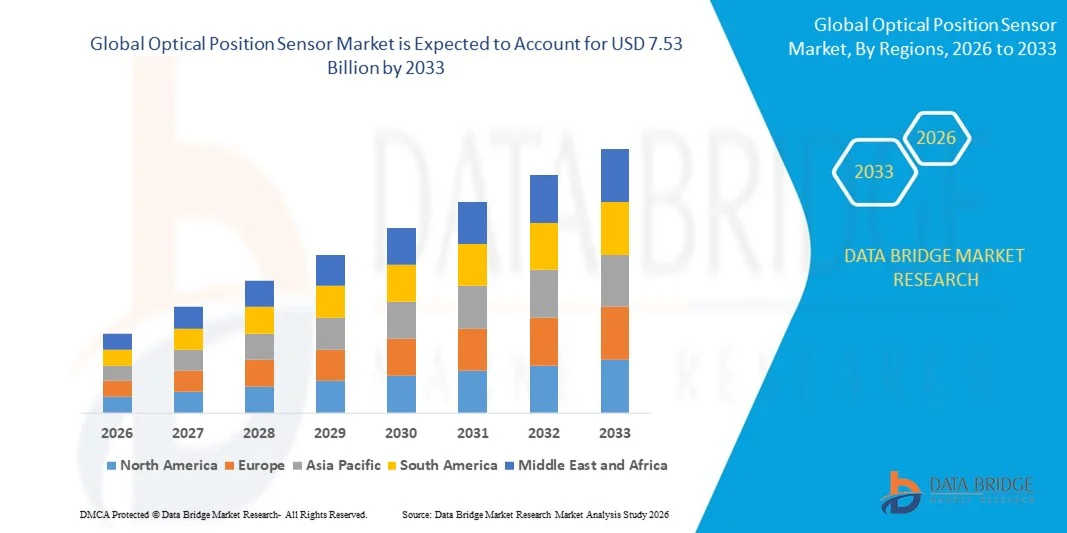
- De acordo com Data Bridge Market Research Analysis, o tamanho global do mercado de sensores de posição óptica foi avaliado emUSD 3,29 mil milhões em 2025e espera-se alcançar7,53 mil milhões de USD até 2033, em umaCAGR de 10,90%durante o período de previsão
- O crescimento do mercado é amplamente impulsionado pela crescente adoção de automação e robótica em setores industriais, automotivos, aeroespaciais e eletrônicos, impulsionando a demanda por soluções de detecção de posição confiáveis e de alta precisão
- Além disso, crescentes requisitos para monitoramento em tempo real, otimização de processos e alta precisãocontrole de movimentono fabrico e nos pedidos de inspecção estão a estabelecersensores ópticos de posiçãocomo componentes essenciais nos modernos sistemas industriais e comerciais. Esses fatores convergentes estão acelerando a implantação de sensores ópticos, aumentando significativamente o crescimento do mercado
Tamanho e previsão do mercado
- Valor de mercado global (2025):3,29 mil milhões de USD
- Valor de mercado previsto (2033):7,53 mil milhões de dólares
- Previsões CAGR (2026-2033):10.90%
Quais são as principais takeaways do mercado de sensores de posição óptica
- Sensores de posição óptica, fornecendo medição precisa de posições lineares ou rotacionais, são cada vez mais vitais para robótica, automação industrial, linhas de montagem e sistemas de controle de qualidade devido à sua alta precisão, resposta rápida e robustez em ambientes exigentes
- A crescente demanda por sensores de posição óptica é alimentada principalmente pela crescente adoção da Indústria 4.0, tecnologias de fabricação inteligentes e sistemas de produção automatizados, além da necessidade de melhoria da eficiência operacional, redução de erros e feedback em tempo real em processos industriais críticos
- América do Norte domina o mercado de sensores de posição óptica em 2025, devido à forte adoção nos setores aeroespacial, automotivo e de automação industrial
- A Ásia-Pacífico deve ser a região de crescimento mais rápido no mercado de sensores de posição óptica durante o período de previsão devido ao aumento da automação industrial, urbanização rápida e avanços tecnológicos em países como China, Japão e Índia
- O segmento bidimensional dominou o mercado com uma quota de mercado de 46,8% em 2025, devido à sua capacidade de medir movimentos horizontais e verticais com alta precisão para automotiva, eletrônica de consumo e automação industrial. A integração com sistemas robóticos permite feedback em tempo real e correções automatizadas, aumentando a eficiência e precisão. Por exemplo, a Keyence fornece sensores ópticos bidimensionais para inspeção de alta velocidade na fabricação de eletrônicos. Seu design compacto, facilidade de calibração e desempenho consistente em todas as condições suportam ainda mais sua dominância de mercado
Segmentação do Mercado de Sensor de Posição Óptica
|
Atributos |
Visão do mercado chave do sensor de posição óptica |
|
Segmentos Cobertos |
|
|
Países abrangidos |
América do Norte
Europa
Ásia- Pacífico
Médio Oriente e África
América do Sul
|
|
Jogadores do mercado chave |
|
|
Oportunidades de Mercado |
|
|
Informações sobre o Valor Adicionado |
Além dos insights sobre cenários de mercado, como valor de mercado, taxa de crescimento, segmentação, cobertura geográfica e principais atores, os relatórios de mercado curados pela Data Bridge Market Research também incluem análise de especialistas em profundidade, produção e capacidade em termos geográficos representadas pela empresa, layouts de redes de distribuidores e parceiros, análise detalhada e atualizada da tendência de preços e análise de déficit da cadeia de suprimentos e demanda. |
Qual é a tendência chave no mercado de sensores de posição óptica
Adoção crescente de sensores ópticos em automação industrial
- Uma tendência significativa no mercado de sensores de posição óptica é a adoção crescente desses sensores através da automação industrial, robótica e fabricação de precisão, impulsionada pela necessidade de controle de movimento de alta precisão e monitoramento em tempo real. Esta tendência está elevando o papel dos sensores de posição óptica como componentes essenciais para alcançar operações eficientes e automatizadas em máquinas automotivas, aeroespaciais, eletrônicas e industriais
- Por exemplo, a KEYENCE Corporation e a Micro-Epsilon fornecem sensores ópticos de alta resolução que são amplamente utilizados em braços robóticos, linhas de montagem e máquinas CNC. Tais sensores melhoram a precisão operacional, reduzem erros e permitem monitoramento contínuo sob condições industriais exigentes
- A adoção de sensores ópticos está se expandindo em sistemas de fabricação automatizados, onde a detecção de posição precisa suporta a precisão de montagem, manuseio de materiais e tarefas de inspeção. Isto é posicionar sensores de posição óptica como facilitadores críticos de fábricas inteligentes e iniciativas da Indústria 4.0 que dependem de capacidades de detecção confiáveis e de alta velocidade
- O setor automotivo está integrando sensores de posição óptica para aplicações como direção, acelerador e detecção de posição do pedal, aumentando a segurança e eficiência operacional. Essa tendência está acelerando a inovação em veículos elétricos, sistemas autônomos de condução e soluções avançadas de assistência ao motorista
- As indústrias focadas em robótica e automação industrial estão cada vez mais implementando sensores ópticos para otimizar o controle de movimento, minimizar o tempo de inatividade e melhorar a produtividade. Isso está moldando uma preferência mais forte por sensores capazes de alta precisão, resposta rápida e durabilidade em ambientes de trabalho severos
- Os setores aeroespacial e de defesa estão alavancando sensores de posição óptica para navegação, controle de voo e usinagem de alta precisão, onde a confiabilidade operacional é primordial. Esta crescente incorporação está reforçando a transição global para automação de precisão e sistemas avançados de monitoramento em aplicações críticas
Dinâmica do mercado de sensores de posição óptica
Controlador
Aumento da demanda por controle de movimento de alta precisão
- A crescente dependência na detecção de movimento preciso através da robótica, automação industrial e sistemas de fabricação está impulsionando a demanda por sensores de posição óptica que garantem medições precisas, confiáveis e em tempo real. Esses sensores aumentam a eficiência operacional, reduzem erros e suportam processos automatizados de alta velocidadePor exemplo, a Hamamatsu Photonics e a Siemens fornecem sensores de posição óptica para sistemas de fabricação robótica e automatizada que fornecem precisão submicron, permitindo montagem e inspeção de alta qualidade
- A crescente adoção de fábricas inteligentes e tecnologias da Indústria 4.0 está alimentando a necessidade de sensores capazes de feedback em tempo real, manutenção preditiva e otimização de processos. Sensores de posição óptica ajudam as indústrias a alcançar uma integração perfeita com sistemas automatizados, aumentando a produtividade e reduzindo os riscos operacionais
- Indústrias como automotiva, eletrônica e aeroespacial exigem cada vez mais sensores robustos de alta resolução para manter a qualidade de fabricação e atender aos padrões de precisão regulatória. Esta crescente ênfase na precisão e repetibilidade continua a fortalecer o motor da expansão do mercado
- A tendência para automação em instalações de produção está expandindo o escopo de aplicação de sensores de posição óptica através de rastreamento de movimento linear e rotacional, posicionando-os como componentes indispensáveis para sistemas industriais modernos
Restrição/Desafio
Altos Custos de Implementação e Complexidade de Integração
- O mercado de sensores de posição óptica enfrenta desafios devido aos altos custos associados à fabricação, calibração e integração de precisão em sistemas de automação existentes. Estes factores aumentam o investimento inicial necessário e podem limitar a adopção em aplicações sensíveis aos custos
- Por exemplo, empresas como a Sensata Technologies e a Micro-Epsilon investem fortemente na fabricação de precisão e em processos de calibração de alta resolução para garantir a confiabilidade dos sensores. A complexidade desses processos aumenta o custo total de implantação
- Integrar sensores de posição óptica em sistemas robóticos multiaxiais, máquinas industriais ou equipamentos legados requer experiência especializada, suporte a software e interfaces compatíveis, o que pode complicar a implementação e prolongar os cronogramas de implantação
- A dependência de materiais ópticos de alta qualidade, tecnologias avançadas de fabricação e rigoroso controle de qualidade aumenta a dificuldade de produção e limita a escalabilidade para alguns fabricantes
- Esses desafios exigem coletivamente que as indústrias equilibrem os benefícios do sensor de alta precisão com considerações de custo e integração, colocando pressão sobre os fornecedores para desenvolver soluções de sensores ópticos mais eficientes, acessíveis e compatíveis
Como é segmentado o mercado do sensor de posição óptica
O mercado é segmentado com base no tipo, tipo de sensor e aplicação.
- Por Tipo
Com base no tipo, o mercado de sensores de posição óptica é segmentado em máquinas de descarga elétrica (EDM), máquinas de corte a laser e outros. O segmento EDM dominou o mercado em 2025 devido ao seu papel na usinagem de precisão e produção de componentes de alta precisão. Os sensores ópticos em EDM fornecem feedback em tempo real, reduzem defeitos e melhoram a eficiência operacional. Indústrias como aeroespacial e automotiva preferem sensores integrados à EDM por sua confiabilidade e design compacto. Por exemplo, os fabricantes usam esses sensores para melhorar a precisão de usinagem e reduzir o tempo de inatividade. O segmento se beneficia de avanços tecnológicos contínuos que melhoram o desempenho, a velocidade e a durabilidade dos sensores.
Espera-se que o segmento Laser Cutting Machines testemunhe o crescimento mais rápido de 2026 para 2033, impulsionado pela adoção crescente de fabricação de metal e fabricação eletrônica. Os sensores ópticos permitem o alinhamento preciso do feixe e o controle de movimento, melhorando a precisão e eficiência do corte. Por exemplo, Trumpf integra sensores ópticos em seus sistemas de laser para precisão de nível de micron. A crescente automação e a demanda por intervenção humana reduzida apoiam a expansão deste segmento. Esses sensores também facilitam a manutenção preditiva e a otimização do processo, aumentando a produtividade global.
- Por tipo de sensor
Com base no tipo de sensor, o mercado é segmentado em uma dimensão, duas dimensões e multiaxial. O segmento de duas dimensões dominou com a maior parcela de 46,8% em 2025, impulsionado pela sua capacidade de medir movimentos horizontais e verticais com alta precisão para automotiva, eletrônica de consumo e automação industrial. A integração com sistemas robóticos permite feedback em tempo real e correções automatizadas, aumentando a eficiência e precisão. Por exemplo, a Keyence fornece sensores ópticos bidimensionais para inspeção de alta velocidade na fabricação de eletrônicos. Seu design compacto, facilidade de calibração e desempenho consistente em todas as condições suportam ainda mais o domínio do mercado.
Espera-se que o segmento multiaxial cresça mais rapidamente de 2026 a 2033, impulsionado pela necessidade de medições simultâneas de múltiplos eixos na robótica e fabricação aeroespacial. Sensores multiaxiais permitem rastreamento espacial e controle de movimento preciso. Por exemplo, Renishaw desenvolve sensores multiaxiais para usinagem e inspeção multidirecionais. A adoção é apoiada pela integração da Indústria 4.0, requisitos de alta precisão e necessidades avançadas de automação.
- Por Aplicação
Com base na aplicação, o mercado é segmentado em Aeroespacial e Defesa, Automotive, Consumer Electronics, Healthcare, e outros. O segmento Aeroespacial e Defesa dominou em 2025 devido aos rigorosos requisitos de precisão para aeronaves, satélites e sistemas de defesa. Sensores ópticos são cruciais para navegação, controle de voo e fabricação automatizada. Por exemplo, Honeywell usa sensores ópticos em sistemas de orientação de mísseis e aviônica para maior precisão e segurança. A forte resiliência ambiental apoia ainda mais a preferência deste segmento.
Espera-se que o segmento automotivo cresça mais rápido de 2026 para 2033, alimentado por veículos elétricos, tecnologias autônomas e sistemas avançados de assistência ao motorista. Sensores ópticos são usados para a detecção precisa de direção, pedal e posição do acelerador e automação da linha de montagem. Por exemplo, Bosch integra sensores ópticos em EVs para posicionamento preciso de componentes. Indústria 4.0 de fabricação inteligente habilitado a adoção de unidades adicionais.
Qual região detém a maior parte do mercado de sensores de posição óptica
- América do Norte dominou o mercado de sensores de posição óptica com a maior participação de receita em 2025, impulsionada pela forte adoção nos setores de automação aeroespacial, automotivo e industrial
- Indústrias na região valorizam muito a precisão, confiabilidade e feedback em tempo real oferecidos por sensores de posição óptica para processos críticos de fabricação e inspeção
- A adoção ampla é apoiada pela infraestrutura de fabricação avançada, alta conscientização tecnológica e pela crescente integração de sensores em sistemas automatizados, estabelecendo sensores de posição óptica como uma solução preferencial para aplicações de precisão
U.S. Optical Position Sensor Market Insight
O mercado de sensores de posição óptica dos EUA capturou a maior parte de receita em 2025 na América do Norte, alimentada pela presença de principais fabricantes aeroespaciais e automotivos e instalações de automação industrial avançadas. As empresas estão cada vez mais priorizando o sensor de posição de alta precisão para robótica, linhas de montagem e aplicações de controle de qualidade. A adoção da indústria 4.0 e sistemas de fabricação inteligentes, combinados com a demanda por manutenção preditiva e monitoramento em tempo real, impulsiona ainda mais o crescimento do mercado. Além disso, a integração de sensores ópticos em aplicações de defesa e aeroespacial para navegação, orientação e usinagem de precisão está contribuindo significativamente para a expansão do mercado.
Europe Optical Position Sensor Market Insight
Projeta-se que o mercado europeu de sensores de posição óptica se expanda em um CAGR substancial ao longo do período de previsão, impulsionado por infraestrutura industrial avançada, rigorosos padrões de qualidade e crescente automação na fabricação. A demanda por medição de precisão nos setores automotivo, aeroespacial e eletrônico está promovendo a adoção de sensores ópticos. Os fabricantes europeus são igualmente atraídos para os benefícios da monitorização em tempo real, da elevada fiabilidade e da integração com máquinas inteligentes. O mercado está testemunhando crescimento em aplicações industriais, aeroespaciais e de defesa, com sensores sendo incorporados tanto em novas configurações de produção quanto em projetos de modernização.
U.K. Optical Posição Sensor Market Insight
Espera-se que o mercado de sensores de posição óptica do Reino Unido cresça em um CAGR notável durante o período de previsão, alimentado pelo aumento da automação e pela adoção de tecnologias de fabricação de alta precisão. Os setores industriais estão adotando sensores ópticos para aplicações de robótica, montagem e inspeção para melhorar a eficiência operacional e reduzir erros. A ênfase do Reino Unido na inovação e na fabricação inteligente, juntamente com a presença de empresas aeroespaciais e automotivas líderes, continua a estimular o crescimento do mercado. A preferência por sensores confiáveis e de alta precisão em aplicações industriais e de defesa está apoiando ainda mais a expansão.
Germany Optical Position Sensor Market Insight
O mercado de sensores de posição óptica da Alemanha está projetado para expandir-se em um CAGR considerável, impulsionado pela infraestrutura de fabricação avançada, inovação tecnológica e um forte foco na engenharia de precisão. As indústrias alemãs, particularmente automotivas e aeroespaciais, dependem de sensores ópticos para feedback em tempo real e medições de alta precisão em processos de produção. A crescente integração de sensores com sistemas automatizados e robótica aumenta a eficiência e qualidade de fabricação. Além disso, o foco da Alemanha na adoção e digitalização da Indústria 4.0 promove a implantação de sensores de posição óptica em aplicações industriais e de pesquisa.
Visão do mercado de sensores de posição óptica Ásia-Pacífico
O mercado de sensores ópticos de posição Ásia-Pacífico está pronto para crescer no CAGR mais rápido durante o período de previsão de 2026 a 2033, impulsionado pelo aumento da automação industrial, urbanização rápida e avanços tecnológicos em países como China, Japão e Índia. A adoção crescente de fabricação inteligente e robótica está alimentando a demanda por sensores ópticos de alta precisão. Além disso, a APAC está emergindo como um hub de fabricação de componentes de sensores, o que melhora a acessibilidade e a acessibilidade, apoiando a expansão do mercado em diversas aplicações industriais.
Japan Optical Position Sensor Market Insight
O mercado de sensores de posição óptica do Japão está ganhando impulso devido à paisagem industrial avançada do país, ênfase na fabricação de precisão e demanda por automação. As indústrias japonesas estão adotando sensores ópticos para aplicações de robótica, montagem e inspeção para aumentar a precisão e eficiência. A integração com sistemas de fabricação inteligentes e monitoramento em tempo real está impulsionando o crescimento. Além disso, o foco em processos de produção automatizados e de alta tecnologia nos setores automotivo e eletrônico suporta a expansão do mercado.
China visão do mercado de sensor de posição óptica
O mercado de sensores de posição óptica da China representou a maior quota de receita de mercado da Ásia-Pacífico em 2025, atribuída à rápida industrialização, alta produção de fabricação e adoção de tecnologias de automação. Sensores ópticos são cada vez mais utilizados em aplicações automotivas, aeroespaciais, eletrônicas e de defesa para medição de precisão e controle de qualidade. As iniciativas governamentais que promovem a fabricação inteligente e a indústria 4.0, juntamente com as capacidades de produção nacional competitivas, são fatores fundamentais para o crescimento do mercado na China. A crescente necessidade de processos de produção eficientes e de elevada precisão continua a alimentar a procura em vários sectores industriais.
Quais são as principais empresas no mercado de sensores de posição óptica
A indústria de sensores de posição óptica é liderada principalmente por empresas bem estabelecidas, incluindo:
- SHARP Corporation (Japão)
- Hamamatsu Photonics K.K. (Japão)
- Micro-Epsilon (Alemanha)
- Sensata Technologies, Inc. (EUA)
- Panasonic Corporation(Japão)
- Illinois Tool Works Inc. (EUA)
- Siemens(Alemanha)
- Balluff Automation India Pvt. Ltd. (Índia)
- Melexis (Bélgica)
- Primeiro Sensor AG (Alemanha)
- Wolong Electric Group (China)
- Medel Elektronik (Turquia)
- Baumer (Suíça)
- AZoNetwork (Austrália)
- ALTHEN GmbH (Alemanha)
- CORPORAÇÃO DE CHAVE(Japão)
- Vishay Intertechnology, Inc. (EUA)
- ifm electronic gmbh(Alemanha)
- Endress+Hauser Group Services AG (Suíça)
- Centec GmbH (Alemanha)
- Rockwell Automation, Inc. (EUA)
- Porex (EUA)
Quais são as últimas evoluções no mercado de sensores de posição óptica
- Em setembro de 2025, a Nisshinbo Micro Devices Inc. expandiu sua formação de sensores de posição óptica incremental para melhorar a resolução e precisão, melhorando significativamente o desempenho de codificadores ópticos usados em automação industrial, robótica e equipamentos de fabricação. Este desenvolvimento fortalece o mercado oferecendo soluções mais precisas e confiáveis, permitindo aos fabricantes alcançar maior eficiência operacional, melhorar a qualidade do produto e reduzir o tempo de inatividade em processos críticos de produção. Os sensores aprimorados também suportam projetos compactos, tornando-os adequados para integração em máquinas restritas ao espaço e sistemas avançados de automação, ampliando sua adoção em diversas indústrias
- Em março de 2025, a Siemens AG entrou em uma parceria estratégica com a Sick AG para co-desenvolver codificadores lineares ópticos de alta precisão projetados para acelerar a implantação de sensores de posição em pisos de fábrica. Esta colaboração amplia o mercado, permitindo uma aplicação mais ampla de sensores de posição óptica na automação industrial, incluindo robótica, sistemas de transporte e equipamentos de manuseio de materiais. A parceria se concentra em melhorar a precisão de medição, robustez e integração do sistema, o que ajuda os fabricantes a aumentar a produtividade, otimizar processos e reduzir riscos operacionais
- Em janeiro de 2025, Renishaw plc revelou um novo codificador óptico absoluto multi-turno otimizado para aplicações robóticas restritas ao espaço. Essa inovação proporciona maior resolução e maior resistência ambiental, melhorando a adoção de sensores de posição óptica em automação industrial, robótica e equipamentos médicos. A funcionalidade multi-turno permite o rastreamento preciso de posições rotacionais sobre múltiplas revoluções, o que aumenta a precisão e reduz erros em sistemas complexos de controle de movimento. Este desenvolvimento deverá conduzir uma maior integração de sensores ópticos em processos automatizados avançados e máquinas de precisão, reforçando o seu papel na fabricação moderna
- Em agosto de 2024, a Balluff lançou uma nova série de codificadores lineares ópticos de alta resolução com proteção IP68/IP69K robusta visando ambientes exigentes na fabricação automotiva, de alimentos e farmacêutica. Este lançamento suporta o crescimento do mercado, permitindo que os sensores de posição óptica operem de forma confiável em condições difíceis, como poeira, umidade e ambientes de alta temperatura. O design de alta precisão e durável amplia o uso de sensores ópticos em aplicações industriais críticas, garantindo medições precisas de posição, necessidades de manutenção reduzidas e maior eficiência global do sistema
- Em fevereiro de 2023, a Hamamatsu Photonics K.K. começou a construção de uma nova fábrica no Japão para aumentar a capacidade de produção de pós-processamento de dispositivos opto-semicondutores, incluindo corte, montagem e inspeção. Esta expansão fortalece o mercado, permitindo maior disponibilidade de sensores ópticos de alta qualidade para atender à crescente demanda industrial. Maior capacidade de produção também facilita a entrega mais rápida, suporta escalabilidade para projetos de fabricação em larga escala e aumenta a capacidade da empresa de inovar em tecnologia de sensores
SKU-
Obtenha acesso online ao relatório sobre a primeira nuvem de inteligência de mercado do mundo

- Painel interativo de análise de dados
- Painel de análise da empresa para oportunidades de elevado potencial de crescimento
- Acesso de analista de pesquisa para personalização e customização. consultas
- Análise da concorrência com painel interativo
- Últimas notícias, atualizações e atualizações Análise de tendências
- Aproveite o poder da análise de benchmark para um rastreio abrangente da concorrência
Metodologia de Investigação
A recolha de dados e a análise do ano base são feitas através de módulos de recolha de dados com amostras grandes. A etapa inclui a obtenção de informações de mercado ou dados relacionados através de diversas fontes e estratégias. Inclui examinar e planear antecipadamente todos os dados adquiridos no passado. Da mesma forma, envolve o exame de inconsistências de informação observadas em diferentes fontes de informação. Os dados de mercado são analisados e estimados utilizando modelos estatísticos e coerentes de mercado. Além disso, a análise da quota de mercado e a análise das principais tendências são os principais fatores de sucesso no relatório de mercado. Para saber mais, solicite uma chamada de analista ou abra a sua consulta.
A principal metodologia de investigação utilizada pela equipa de investigação do DBMR é a triangulação de dados que envolve a mineração de dados, a análise do impacto das variáveis de dados no mercado e a validação primária (especialista do setor). Os modelos de dados incluem grelha de posicionamento de fornecedores, análise da linha de tempo do mercado, visão geral e guia de mercado, grelha de posicionamento da empresa, análise de patentes, análise de preços, análise da quota de mercado da empresa, normas de medição, análise global versus regional e de participação dos fornecedores. Para saber mais sobre a metodologia de investigação, faça uma consulta para falar com os nossos especialistas do setor.
Personalização disponível
A Data Bridge Market Research é líder em investigação formativa avançada. Orgulhamo-nos de servir os nossos clientes novos e existentes com dados e análises que correspondem e atendem aos seus objetivos. O relatório pode ser personalizado para incluir análise de tendências de preços de marcas-alvo, compreensão do mercado para países adicionais (solicite a lista de países), dados de resultados de ensaios clínicos, revisão de literatura, mercado remodelado e análise de base de produtos . A análise de mercado dos concorrentes-alvo pode ser analisada desde análises baseadas em tecnologia até estratégias de carteira de mercado. Podemos adicionar quantos concorrentes necessitar de dados no formato e estilo de dados que procura. A nossa equipa de analistas também pode fornecer dados em tabelas dinâmicas de ficheiros Excel em bruto (livro de factos) ou pode ajudá-lo a criar apresentações a partir dos conjuntos de dados disponíveis no relatório.











