


Segmentação do mercado global de medicamentos para hemoglobinúria paroxística noturna, por tratamento (medicamentos, suplementos, transfusão de sangue e transplante de medula óssea), medicamentos (eculizumabe, ravulizumabe e outros), via de administração (oral e parenteral), canal de distribuição (diretamente, farmácias online, varejistas e outros), usuários finais (hospitais, assistência domiciliar, clínicas especializadas e outros) - Tendências e previsões do setor até 2033
O que é a Hemoglobinúria Noturna Paroxismal Tamanho do Mercado de Drogas e Taxa de Crescimento
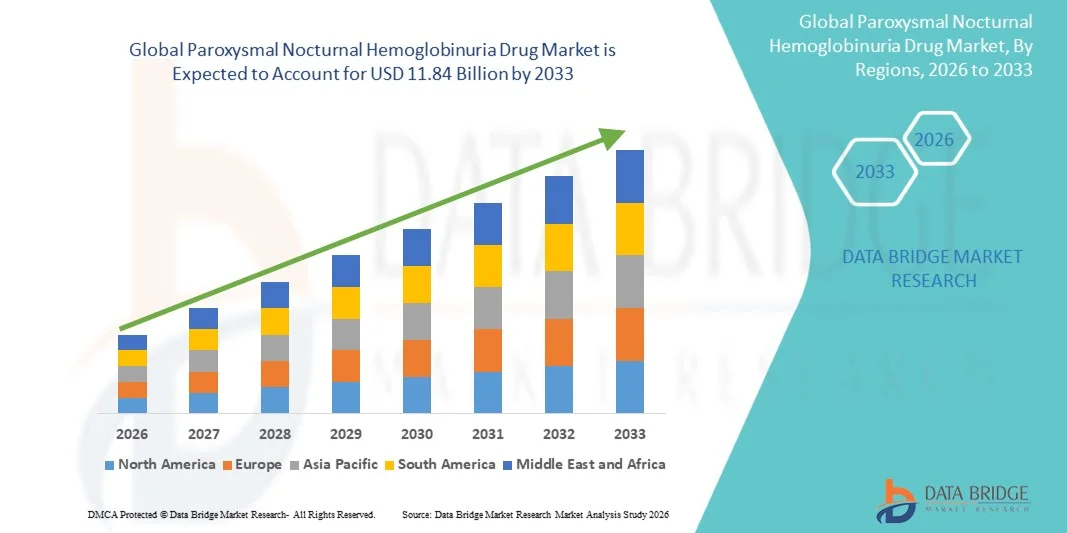
- De acordo com Data Bridge Market Research Analysis, o tamanho global da hemoglobinúria noturna paroxística foi avaliado emUSD 4,68 mil milhões em 2025e espera-se alcançar11,84 mil milhões de USD até 2033, em umaCAGR de 12,31%durante o período de previsão
- O crescimento do mercado é amplamente alimentado pela prevalência crescente de doenças sanguíneas raras, tais como hemoglobinúria paroxística noturna (PNH), juntamente com o aumento da conscientização e melhoria das capacidades diagnósticas, levando a uma maior adoção de terapias medicamentosas direcionadas que gerem hemólise e reduzem complicações da doença
- Além disso, os avanços nas terapias inibidoras do complemento, incluindo anticorpos monoclonais e novos biológicos direcionados, juntamente com o aumento do investimento em pesquisas de doenças raras, estão estabelecendo tratamentos medicamentosos de Hemoglobinúria Noturna Paroxismal (PNH) como uma abordagem terapêutica altamente eficaz. Esses fatores convergentes estão acelerando a captação de soluções de medicamentos PNH, aumentando significativamente o crescimento da indústria
Tamanho e previsão do mercado
- Valor de mercado global (2025):USD 4,68 Bilhões
- Valor de mercado previsto (2033):USD 11,84 Bilhões
- Previsões CAGR (2026-2033): 12.31%
O que são as principais takeaways do mercado de drogas paraxísmica Nocturnal Hemoglobinúria
- As terapêuticas medicamentosas para hemoglobinúria nocturna paroxística (HPN), incluindo inibidores do complemento, tais como eculizumab e ravulizumab, são fundamentais para o tratamento da hemólise crónica, prevenção de tromboses e melhoria dos resultados de sobrevivência em doentes com esta doença sanguínea rara e potencialmente fatal.
- A crescente demanda por tratamentos paroxísticos noturnos de hemoglobinúria é alimentada principalmente pela melhora do diagnóstico da doença, aumento da conscientização de condições hematológicas raras e pela crescente disponibilidade de terapias biológicas direcionadas. Avanços na investigação do sistema de complementos estão a aumentar ainda mais a eficácia do tratamento e os resultados dos doentes
- A América do Norte dominou o mercado paroxístico de hemoglobinúria noturna (PNH) com a maior parcela de receita de 42,6% em 2025, caracterizada por infraestrutura avançada de saúde, políticas de reembolso fortes, adoção precoce de novos biológicos, e a presença de empresas farmacêuticas líderes desenvolvendo ativamente terapias de doenças raras
- Espera-se que a Ásia-Pacífico seja a região de crescimento mais rápido no mercado de hemoglobinúria Noturna Paroxismal durante o período previsto devido à melhoria das capacidades de diagnóstico, aumento dos gastos com cuidados de saúde e aumento da consciência de doenças raras do sangue em países como China, Índia e Japão
- O segmento Parenteral dominou a maior parcela de receita de mercado de 78,9% em 2025, impulsionada pelo caráter intravenoso das terapias inibidoras do complemento
Relato Escopo e Segmentação do Mercado de Drogas Noturna Paroxismal
|
Atributos |
Hemoglobinúria Noturna Paroxismal |
|
Segmentos Cobertos |
|
|
Países abrangidos |
América do Norte
Europa
Ásia- Pacífico
Médio Oriente e África
América do Sul
|
|
Jogadores do mercado chave |
|
|
Oportunidades de Mercado |
|
|
Informações sobre o Valor Adicionado |
Além dos insights sobre cenários de mercado, como valor de mercado, taxa de crescimento, segmentação, cobertura geográfica e grandes atores, os relatórios de mercado curados pela Data Bridge Market Research também incluem análise de especialistas em profundidade, epidemiologia de pacientes, análise de pipelines, análise de preços e marco regulatório. |
Qual é a tendência chave no mercado de drogas da hemoglobinúria nocturnal paroxística
“Avanços nas Terapias Inibidoras de Complemento com Alvo e Biologias de Próxima Geração“
- Uma tendência significativa e acelerada no mercado global de medicamentos para hemoglobinúria nocturna Paroxismal (PNH) é a mudança contínua para terapias de inibição de complemento altamente direcionadas e biológicos de próxima geração projetados para melhorar o controle da doença, reduzir a hemólise e melhorar a qualidade de vida dos pacientes
- Por exemplo, inibidores do complemento C5, como eculizumab e ravulizumab, transformaram a paisagem do tratamento, reduzindo significativamente a hemólise intravascular e diminuindo a dependência transfusional em pacientes com HPN.
- As novas terapias estão focando na inibição proximal do complemento (inibidores C3 e fator D), oferecendo controle mais amplo da doença e melhores resultados hematológicos
- Por exemplo, as opções de tratamento oral e subcutâneo estão sendo desenvolvidas para reduzir a carga de infusões intravenosas frequentes e melhorar a conveniência do paciente
- O desenvolvimento de formulações de longa duração vem aumentando ainda mais a adesão ao tratamento e reduzindo as consultas hospitalares para o manejo crônico da PNH
- Por exemplo, o ravulizumab oferece intervalos posológicos prolongados em comparação com as terapêuticas anteriores, melhorando significativamente a complacência dos doentes
- Aumento do investimento em investigação sobre doenças raras e desenvolvimento de medicamentos órfãos está a acelerar a inovação no gasoduto terapêutico da PNH
- Essa tendência para a medicina de precisão e o melhor direcionamento da via do complemento está reformulando as estratégias de manejo de longo prazo para pacientes com HPN globalmente
Hemoglobinúria Noturna Paroxismal Dinâmica do Mercado de Medicamentos
Controlador
“Crescimento das taxas de diagnóstico e forte expansão da infra-estrutura de tratamento das doenças raras”
- O aumento da consciência e o melhor diagnóstico de doenças hematológicas raras, como a Hemoglobinúria Noturna Paroxismal, é um factor fundamental para o crescimento do mercado
- Por exemplo, avanços na citometria de fluxo e testes genéticos têm possibilitado a detecção mais precoce e precisa da HPN, levando a maiores taxas de início do tratamento.
- Ampliar o acesso a centros de cuidados especializados em hematologia está melhorando ainda mais a identificação do paciente e o manejo da doença em longo prazo
- Por exemplo, redes de referência e registros de doenças raras estão ajudando os clínicos a rastrear e diagnosticar os casos de HPN de forma mais eficiente
- Aumentar a disponibilidade de incentivos a medicamentos órfãos e aprovações regulatórias rápidas está incentivando as empresas farmacêuticas a investir no desenvolvimento de medicamentos PNH
- Por exemplo, as agências reguladoras estão a fornecer vias de aprovação rápidas para os inibidores do complemento que visam doenças raras
- Aumentar os gastos com saúde e melhorar o acesso a terapias biológicas avançadas estão apoiando ainda mais a expansão do mercado
Restrição/Desafio
“Custo elevado do tratamento, piscina limitada do paciente e preocupações de segurança relacionadas com a terapia“
- Um dos grandes desafios no mercado de medicamentos para hemoglobinúria Nocturnal Paroxismal é o custo extremamente elevado do tratamento, particularmente para terapias inibidoras do complemento, que limita a acessibilidade em regiões de baixa e média renda
- Por exemplo, o uso a longo prazo de biológicos, como o eculizumab, requer despesas significativas em saúde, criando encargos financeiros para pacientes e sistemas de saúde
- A raridade da doença resulta em uma pequena população de pacientes, o que restringe a expansão do mercado e reduz economias de escala para os fabricantes
- Por exemplo, a PNH afeta apenas um número limitado de indivíduos globalmente, tornando o desenvolvimento de drogas e os preços altamente especializados
- Preocupações de segurança tais como aumento do risco de infecções, particularmente infecções meningocócicas devido à supressão do complemento, também representam desafios clínicos
- Por exemplo, os doentes tratados com inibidores do complemento requerem frequentemente vacinação e monitorização contínua para gerir o risco de infecção.
- Enfrentar esses desafios requer melhores políticas de reembolso, desenvolvimento de terapias econômicas e inovação contínua em opções de tratamento mais seguras e direcionadas
Como é segmentado o mercado de drogas paroxística Nocturnal Hemoglobinúria
O mercado é segmentado com base no tratamento, drogas, via de administração, canal de distribuição e usuários finais.
• Por Tratamento
Com base no tratamento, o mercado de drogas Paroxismal Nocturnal Hemoglobinúria (PNH) é segmentado em medicamentos, suplementos, transfusão de sangue e transplante de medula óssea. O segmento de Medicação dominou a maior parcela de receita de mercado de 63,4% em 2025, impulsionada pela forte dependência clínica das terapias inibidoras do complemento como tratamento de primeira linha para o manejo da doença. Aumentar a prevalência de HPN e aumentar a conscientização quanto ao diagnóstico precoce demanda de apoio adicional. Os anticorpos monoclonais, tais como eculizumab e ravulizumab, melhoram significativamente a sobrevivência e a qualidade de vida dos doentes. Os hospitais adotam amplamente o tratamento medicamentoso devido à eficácia comprovada e protocolos padronizados. O crescente acesso à saúde nas economias emergentes aumenta as taxas de adoção. Os avanços contínuos em I&D estão aumentando a eficácia e os perfis de segurança dos medicamentos. Aumentar a cobertura de seguros melhora a acessibilidade e a acessibilidade. Os médicos preferem fortemente intervenções farmacológicas ao invés de procedimentos invasivos. Aumentar o pool de pacientes requer terapia de longo prazo impulsiona ainda mais a dominância do segmento. O apoio governamental aos programas de tratamento de doenças raras também contribui para o crescimento. Em geral, a medicação continua sendo o segmento dominante devido à sua eficácia e ampla aceitação clínica.
Espera-se que o segmento de Transplante de Medula Óssea testemunhe o CAGR mais rápido de 8,6% de 2026 a 2033, impulsionado pelo seu potencial de proporcionar uma abordagem curativa em casos graves. O aumento da adoção em casos refratários de HPN favorece o crescimento. Avanços nas técnicas de transplante estão melhorando os resultados de sobrevida. Aumentar a disponibilidade de centros de transplante especializados aumenta o acesso. A crescente conscientização dos médicos incentiva o encaminhamento precoce. Tecnologias de correspondência de doadores melhoradas aumentam as taxas de sucesso. Os gastos em saúde mais elevados suportam procedimentos complexos. A expansão dos hospitais terciários fortalece a adoção. O aumento da investigação em terapias com células estaminais contribui para o crescimento. Melhor cuidado pós-transplante melhora o prognóstico do paciente. Aumentar a aceitação de opções de tratamento curativo impulsiona a demanda. No geral, o transplante de medula óssea está ganhando tração como solução terapêutica de longo prazo.
• Por Drogas
Com base em drogas, o mercado de drogas PNH é segmentado em Eculizumab, Ravulizumab e Outros. O segmento Eculizumab dominou a maior parcela de receita de mercado de 54,7% em 2025, impulsionada pela sua primeira vantagem e forte eficácia clínica na inibição do complemento. É amplamente reconhecida como a terapia padrão para o manejo da HPN. Alta confiança médica e extensa evidência clínica apoiam seu uso continuado. Aumentar as taxas de diagnóstico da PNH continua a impulsionar a demanda. Uma forte cobertura de reembolso nas regiões desenvolvidas aumenta a acessibilidade. Hospitais e clínicas especiais frequentemente prescrevem eculizumab para gerenciamento de longo prazo. A contínua dependência do paciente com a terapia garante uma geração de receita estável. A ampliação das diretrizes de tratamento reforça sua adoção. O aumento da sensibilização dos profissionais de saúde reforça as taxas de utilização. A disponibilidade nos principais sistemas de saúde apoia o domínio do mercado. A comercialização farmacêutica e as redes de distribuição estabelecidas contribuem ainda mais. Globalmente, o eculizumab continua a ser o principal segmento de drogas.
Espera-se que o segmento de Ravulizumab testemunhe o CAGR mais rápido de 9,2% de 2026 a 2033, impulsionado pelo seu maior intervalo de dosagem e melhor conveniência do paciente. Reduz a frequência de perfusão em comparação com o eculizumab, aumentando a conformidade. Aumentar a preferência por terapias de longa duração apoia a adoção. Aumentar a conscientização dos médicos acelera as taxas de prescrição. A ampliação das aprovações em todas as regiões impulsiona a penetração no mercado. A melhoria da qualidade de vida dos pacientes contribui para o crescimento da demanda. O aumento da infra-estrutura de saúde apoia o acesso avançado ao tratamento. A inovação farmacêutica está impulsionando a adoção de biologics de próxima geração. Aumentar o foco nas terapias centradas no paciente fortalece a captação. A expansão dos programas de tratamento de doenças raras apoia ainda mais o crescimento. Maior custo-efetividade sobre o uso a longo prazo melhora a preferência. No geral, o ravulizumab está rapidamente emergindo como um segmento de drogas de alto crescimento.
• Por Via de Administração
Com base na via de administração, o mercado de medicamentos PNH é segmentado para oral e parenteral. O segmento Parenteral dominou a maior parcela de receita de mercado de 78,9% em 2025, impulsionada pelo caráter intravenoso das terapias inibidoras do complemento. A maioria dos biológicos da HPN requer fornecimento baseado em infusão para uma eficácia ótima. A administração hospitalar garante uma dosagem e monitorização controladas. O aumento da prevalência de casos graves que requerem terapia parenteral suporta a demanda. Fortes diretrizes clínicas recomendam a administração intravenosa para os biológicos. A expansão da infra-estrutura hospitalar aumenta a acessibilidade. Aumentar a dependência dos doentes em relação à terapia de perfusão a longo prazo estimula a adopção. Programas de reembolso do governo apoiam biológicos de alto custo. Modelos contínuos de infusão de medicamentos melhoram o controle da doença. A crescente conscientização dos médicos reforça o uso. As clínicas especializadas desempenham um papel fundamental na administração. No geral, a via parenteral domina devido às necessidades de tratamento biológico.
Espera-se que o segmento oral testemunhe o CAGR mais rápido de 7,8% de 2026 a 2033, impulsionado por pesquisas em andamento sobre inibidores do complemento oral. O aumento da demanda por terapias não invasivas suporta o crescimento. As inovações farmacêuticas estão focadas em alternativas biológicas orais. A preferência do paciente pela administração conveniente aumenta a adoção. Expansão de ensaios clínicos melhorar o desenvolvimento de gasodutos. Aumentar a acessibilidade dos cuidados de saúde nos mercados emergentes apoia a procura. Tecnologias melhoradas de entrega de medicamentos estão possibilitando formulações orais. Aumentar a ênfase no tratamento domiciliar aumenta o interesse. A redução das visitas hospitalares suporta a eficiência de custos. A expansão da sensibilização para as doenças raras impulsiona a inovação. O aumento do investimento em I&D acelera o desenvolvimento. No geral, as terapias orais estão surgindo como um segmento futuro promissor.
• Por Canal de Distribuição
Com base no canal de distribuição, o mercado de medicamentos PNH é segmentado em Farmácia Direta, Online e Varejistas. O segmento Direct dominou a maior parcela de receita de mercado de 58,1% em 2025, impulsionada por fortes sistemas de aquisição de produtos biológicos de alto custo. Os medicamentos especiais são frequentemente distribuídos directamente aos prestadores de cuidados de saúde. Garante uma cadeia de abastecimento controlada e condições de armazenamento adequadas. O aumento do uso de farmácias hospitalares apoia a demanda. Acordos de fabricantes fortes aumentam a eficiência de distribuição. Alta dependência da administração clínica fortalece as vendas diretas. Programas governamentais de saúde apoiam compras centralizadas. O aumento da prevalência de doenças raras aumenta as compras institucionais. Padrões médicos de prescrição reforçam a dominância do canal. A expansão das redes hospitalares apoia ainda mais o crescimento. Melhor monitoramento da cadeia de suprimentos garante segurança. Globalmente, a distribuição directa continua a ser dominante devido às necessidades de manipulação controlada de medicamentos.
Espera-se que o segmento Farmácia Online testemunhe o CAGR mais rápido de 10,3% de 2026 a 2033, impulsionado pelo aumento da adoção digital de cuidados de saúde e conveniência do paciente. A crescente preferência pelos serviços de entrega em domicílio apoia o crescimento. A expansão das plataformas de telemedicina aumenta o cumprimento da prescrição. O aumento da digitalização em saúde melhora a acessibilidade. Os pacientes preferem acesso discreto às opções de tratamento. A penetração do comércio eletrônico em produtos farmacêuticos aumenta a demanda. Aumentar o uso do smartphone suporta pedidos online. Redes logísticas melhoradas aumentam a eficiência de entrega. Os avanços regulamentares apoiam as vendas de drogas online. A sensibilização crescente para os tratamentos das doenças raras impulsiona a adopção. A transparência dos custos e os descontos atraem os pacientes. No geral, as farmácias online estão se expandindo rapidamente como um canal de distribuição moderno.
• Por Usuários Finais
Com base nos usuários finais, o mercado de medicamentos da PNH é segmentado para Hospitais, Homecare, Clínicas Especiais e Outros. O segmento de Hospitais dominou o maior percentual de receita de mercado de 61,2% em 2025, impulsionado por alta entrada de pacientes que necessitavam de diagnóstico avançado e terapias baseadas em infusão. Os hospitais são centros primários de administração de medicamentos biológicos. Disponibilidade de departamentos especializados de hematologia apoia a entrega de tratamento. Uma infraestrutura forte garante um monitoramento seguro da infusão. O aumento da prevalência de doenças raras aumenta a demanda. A cobertura do seguro incentiva os cuidados hospitalares. A supervisão médica melhora os resultados do tratamento. O crescente investimento do governo em saúde aumenta a capacidade. Os hospitais também participam de ensaios clínicos para novas terapias. A sensibilização para o diagnóstico precoce aumenta as visitas hospitalares. O cuidado multidisciplinar melhora o manejo da doença. Em geral, os hospitais continuam a ser o segmento dominante do usuário final.
Espera-se que o segmento de Clínicas Especiais testemunhe o CAGR mais rápido de 8,9% de 2026 a 2033, impulsionado pelo aumento da preferência por centros de tratamento de doenças raras focados. Estas clínicas oferecem especialização especializada em distúrbios hematológicos. O aumento da consciência entre os pacientes apoia o cuidado clínico. A ampliação da disponibilidade de centros de infusão biológica impulsiona a adoção. A melhoria da experiência do paciente aumenta a preferência. A crescente demanda por atendimento personalizado contribui para o crescimento. O aumento da especialização médica apoia a expansão do segmento. Uma melhor acessibilidade nas regiões urbanas impulsiona a procura. O crescimento nos serviços de infusão ambulatorial acelera a captação. Maior eficiência no manejo da doença melhora os resultados. A expansão das redes de doenças raras apoia o desenvolvimento. No geral, as clínicas especializadas estão emergindo como um centro de tratamento de rápido crescimento.
Qual é a região que detém a maior parte do mercado de drogas paraxísmicas
- A América do Norte dominou o mercado paroxístico de hemoglobinúria noturna (PNH) com a maior parcela de receita de 42,6% em 2025, caracterizada por infraestrutura de saúde avançada, políticas de reembolso fortes, adoção precoce de novos biológicos, e a presença de empresas farmacêuticas líderes desenvolvendo ativamente terapias para doenças raras. A região continua a se beneficiar da rápida captação de terapias inibidoras do complemento e do melhor acesso aos cuidados especializados em hematologia.
- Os doentes e os prestadores de cuidados de saúde na região dependem cada vez mais de terapias biológicas avançadas e terapias de inibição de complemento orientadas, apoiadas por fortes redes de investigação clínica e vias de tratamento de doenças raras bem estabelecidas
- Este crescimento é ainda apoiado por quadros regulatórios favoráveis, cobertura robusta de seguros e inovação contínua no desenvolvimento de medicamentos órfãos, tornando a América do Norte uma região fundamental para contribuir com receita no mercado global de medicamentos da PNH
Visão Paroxística Noturna do Mercado de Drogas dos EUA
O mercado de medicamentos paroxísticos noturnos de hemoglobinúria (PNH) dos EUA capturou a participação dominante na receita na América do Norte em 2025, impulsionada pela adoção precoce de terapias biológicas inovadoras e pela forte disponibilidade de serviços especializados de hematologia. O país beneficia de um sistema de saúde bem estruturado, alta consciência de doenças raras do sangue e amplo acesso aos tratamentos inibidores do complemento. Por exemplo, terapias como eculizumab e ravulizumab são amplamente utilizadas na prática clínica para o manejo da doença. Além disso, a presença de grandes empresas farmacêuticas e ensaios clínicos em curso para inibidores do complemento de próxima geração está fortalecendo ainda mais o crescimento do mercado.
Europa Hemoglobinúria Noturna Paroxismal
Prevê-se que o mercado europeu de hemoglobinúria paroxística nocturna (PNH) se expanda num CAGR estável durante o período previsto, apoiado por sistemas públicos de saúde fortes e que se concentre cada vez mais no diagnóstico e tratamento de doenças raras. Aumentar a disponibilidade de apoio ao reembolso e ampliar o acesso a terapias biológicas incentivam a adoção de tratamentos. Por exemplo, as redes europeias de doenças raras estão a melhorar o diagnóstico precoce e o encaminhamento dos doentes para cuidados especializados. A ênfase da região no acesso equitativo aos cuidados de saúde está a apoiar ainda mais o crescimento do mercado.
U.K. Paroxismal Nocturnal Hemoglobinúria Mercado de Drogas
Prevê-se que o mercado de medicamentos da hemoglobinúria paroxística noturna (PNH) do Reino Unido cresça de forma constante durante o período previsto, impulsionado pelo forte apoio do Serviço Nacional de Saúde (NSH) e pelo aumento do acesso a tratamentos biológicos avançados. Por exemplo, os programas de doenças raras da TAN estão facilitando o diagnóstico precoce e as vias de tratamento estruturadas para pacientes com HPN. Aumentar a consciência clínica e melhorar o acesso aos cuidados especializados contribuem ainda mais para a expansão do mercado.
Alemanha Hemoglobinúria Noturna Paroxismal
Espera-se que o mercado de medicamentos da hemoglobinúria paroxística noturna (PNH) da Alemanha se expanda em um considerável CAGR durante o período de previsão, alimentado por infraestrutura avançada de saúde e forte adoção de terapias biológicas inovadoras. Por exemplo, os profissionais de saúde alemães estão cada vez mais integrando inibidores do complemento em protocolos de tratamento padrão para o manejo da HPN. A ênfase do país na medicina de precisão e no forte ambiente de pesquisa clínica está impulsionando o crescimento do mercado.
Visão do Mercado de Drogas da Hemoglobinúria Noturna Paroxismal da Ásia-Pacífico
Espera-se que o mercado de medicamentos da hemoglobinúria paroxística noturna (PNH) da Ásia-Pacífico seja a região de crescimento mais rápido durante o período de previsão, devido à melhoria das capacidades diagnósticas, aumento do gasto com cuidados de saúde e aumento da consciência de doenças sanguíneas raras em países como China, Índia e Japão. Por exemplo, ampliar o acesso ao diagnóstico hematológico está possibilitando a detecção precoce de casos de HPN em centros de saúde urbanos. As iniciativas governamentais destinadas a reforçar a gestão das doenças raras e melhorar a acessibilidade ao tratamento estão a acelerar ainda mais o crescimento do mercado.
Japão Hemoglobinúria Noturna Paroxismal
O mercado japonês de hemoglobinúria paroxística noturna (PNH) está ganhando impulso devido ao seu sistema avançado de saúde, forte foco no manejo de doenças raras e alta adoção de terapias biológicas inovadoras. Por exemplo, os hospitais japoneses estão cada vez mais utilizando terapias inibidoras do complemento como cuidados padrão para pacientes com HPN. O envelhecimento populacional do país e a ênfase na medicina de precisão estão apoiando ainda mais a expansão sustentada do mercado.
China Visão Paroxismal Nocturnal Hemoglobinúria Mercado de Drogas
O mercado de drogas da hemoglobinúria noturna paroxística da China (PNH) representou uma parte significativa da receita na Ásia-Pacífico em 2025, impulsionada pela melhoria da infraestrutura diagnóstica, pelo aumento da conscientização de doenças hematológicas raras e pelo aumento do investimento em saúde. Por exemplo, hospitais terciários em grandes cidades estão adotando cada vez mais ferramentas diagnósticas avançadas para detecção precoce da PNH. Um forte apoio do governo ao tratamento das doenças raras e à ampliação do acesso às terapias biológicas estão a aumentar ainda mais o crescimento do mercado em todo o país.
Quais são as principais empresas do mercado de drogas paraoxismal Nocturnal
Hemoglobinúria Nocturna Paroxismal A indústria de drogas é liderada principalmente por empresas bem estabelecidas, incluindo:
- Alexion Pharmaceuticals (EUA)
- Novartis (Suíça)
- Amgen (EUA)
- Roche (Suíça)
- Pfizer (EUA)
- AstraZeneca (U.K.)
- Apellis Pharmaceuticals (EUA)
- BioCryst Pharmaceuticals (EUA)
- Regeneron Pharmaceuticals (EUA)
- Sobi (Suécia)
- Sanofi (França)
- Takeda Pharmaceutical (Japão)
- F. Hoffmann-La Roche (Suíça)
- Johnson & Johnson (EUA)
- Merck & Co. (EUA)
- CSL Behring (Austrália)
- Bayer (Alemanha)
- Vertex Pharmaceuticals (EUA)
- AbbVie (EUA)
- Apotex (Canada)
Quais são as últimas evoluções no mercado de drogas paraoxismal Nocturnal
- Em maio de 2021, a Administração de Alimentos e Medicamentos dos EUA (FDA) aprovou a injeção de Empaveli (pegcetacoplan) para o tratamento de adultos com hemoglobinúria paroxística noturna (PNH), representando a primeira terapia aprovada visando a proteína complementar C3 e oferecendo um novo mecanismo para além da inibição tradicional C5
- Em dezembro de 2023, o FDA dos EUA aprovou Fabhalta® (iptacopan) como a primeira monoterapia oral para adultos com HPN, marcando um avanço significativo, oferecendo uma alternativa oral que bloqueia o fator B na via do complemento e reduzindo a necessidade de tratamentos à base de infusão.
- Em abril de 2024, o FDA dos EUA aprovou o Danicopan (Vodeya), o primeiro inibidor oral do fator D da protease da serina, que complementa as terapias existentes, abordando tanto a hemólise intravascular quanto extravascular na HPN, ampliando as escolhas de tratamento oral para pacientes
- Em julho de 2025, dados clínicos emergentes de ensaios do inibidor do fator D vemircopan demonstraram aumentos clinicamente significativos nos níveis de hemoglobina em pacientes com HPN, refletindo o progresso contínuo em terapias orais de próxima geração visando melhorar o controle da doença e reduzir as necessidades transfusionais.
- Em outubro de 2025, os desenvolvimentos farmacêuticos incluíram um grande acordo de licenciamento entre Novo Nordisk e Omeros para o fármaco experimental PNH zaltenibart, um inibidor do MASP-3 visando a via alternativa do complemento; este acordo enfatiza a inovação e investimento em novos mecanismos para o tratamento da PNH além dos inibidores do complemento existentes.
SKU-
Obtenha acesso online ao relatório sobre a primeira nuvem de inteligência de mercado do mundo
- Painel interativo de análise de dados
- Painel de análise da empresa para oportunidades de elevado potencial de crescimento
- Acesso de analista de pesquisa para personalização e customização. consultas
- Análise da concorrência com painel interativo
- Últimas notícias, atualizações e atualizações Análise de tendências
- Aproveite o poder da análise de benchmark para um rastreio abrangente da concorrência
Metodologia de Investigação
A recolha de dados e a análise do ano base são feitas através de módulos de recolha de dados com amostras grandes. A etapa inclui a obtenção de informações de mercado ou dados relacionados através de diversas fontes e estratégias. Inclui examinar e planear antecipadamente todos os dados adquiridos no passado. Da mesma forma, envolve o exame de inconsistências de informação observadas em diferentes fontes de informação. Os dados de mercado são analisados e estimados utilizando modelos estatísticos e coerentes de mercado. Além disso, a análise da quota de mercado e a análise das principais tendências são os principais fatores de sucesso no relatório de mercado. Para saber mais, solicite uma chamada de analista ou abra a sua consulta.
A principal metodologia de investigação utilizada pela equipa de investigação do DBMR é a triangulação de dados que envolve a mineração de dados, a análise do impacto das variáveis de dados no mercado e a validação primária (especialista do setor). Os modelos de dados incluem grelha de posicionamento de fornecedores, análise da linha de tempo do mercado, visão geral e guia de mercado, grelha de posicionamento da empresa, análise de patentes, análise de preços, análise da quota de mercado da empresa, normas de medição, análise global versus regional e de participação dos fornecedores. Para saber mais sobre a metodologia de investigação, faça uma consulta para falar com os nossos especialistas do setor.
Personalização disponível
A Data Bridge Market Research é líder em investigação formativa avançada. Orgulhamo-nos de servir os nossos clientes novos e existentes com dados e análises que correspondem e atendem aos seus objetivos. O relatório pode ser personalizado para incluir análise de tendências de preços de marcas-alvo, compreensão do mercado para países adicionais (solicite a lista de países), dados de resultados de ensaios clínicos, revisão de literatura, mercado remodelado e análise de base de produtos . A análise de mercado dos concorrentes-alvo pode ser analisada desde análises baseadas em tecnologia até estratégias de carteira de mercado. Podemos adicionar quantos concorrentes necessitar de dados no formato e estilo de dados que procura. A nossa equipa de analistas também pode fornecer dados em tabelas dinâmicas de ficheiros Excel em bruto (livro de factos) ou pode ajudá-lo a criar apresentações a partir dos conjuntos de dados disponíveis no relatório.











