Segmentação do Mercado de Vacinas Veterinárias Recombinadas Globais, Por Tipo de Vacina Recombinante (Vacinas de Subunidade, Vacinas Geneticamente Atenuadas, Vacina Vetorizada e Vacina de DNA), Tipo Animal (Cães, Gatos e Cavalos), Via de Administração (Oral, Injetável e Temático), Canal de Distribuição (Hospitais e Clínicas Veterinárias) – Tendências e Previsão da Indústria para 2032
Análise do Mercado da Vacina Veterinária Recombinante
O mercado de vacinas veterinárias recombinantes está a registar um crescimento significativo devido ao aumento da prevalência de doenças animais e à crescente procura de medidas preventivas eficazes, tanto em animais de criação como em animais de companhia. À medida que os cuidados de saúde veterinários evoluem, as vacinas recombinantes oferecem vantagens como maior segurança, imunidade direcionada e riscos reduzidos em comparação com as vacinas tradicionais. A crescente conscientização das doenças zoonóticas e o potencial dessas doenças para se espalharem ao ser humano também impulsiona a demanda por soluções de vacinação robustas.
Os avanços tecnológicos na tecnologia de DNA recombinante e nas plataformas de partículas virais abriram caminho para o desenvolvimento de vacinas altamente específicas e eficazes. Isto é particularmente crucial em sectores como a aquicultura e a pecuária, onde doenças como a febre aftosa e a gripe aviária podem causar perdas económicas devastadoras.
O mercado é ainda reforçado pelo aumento dos investimentos em cuidados de saúde veterinários, juntamente com regulamentos mais rigorosos em matéria de bem-estar e biossegurança dos animais. As iniciativas governamentais e o financiamento também estão a impulsionar a inovação, uma vez que incentivam o desenvolvimento de novas vacinas recombinantes para doenças emergentes.
No entanto, persistem desafios, como os elevados custos de produção e as complexidades envolvidas na produção em larga escala. O processo de aprovação regulatória para vacinas recombinantes é demorado, o que pode atrasar a entrada no mercado. Apesar destes obstáculos, a perspectiva global do mercado continua a ser positiva, com um foco crescente nas soluções preventivas de saúde animal.
Tamanho do mercado da vacina veterinária recombinante
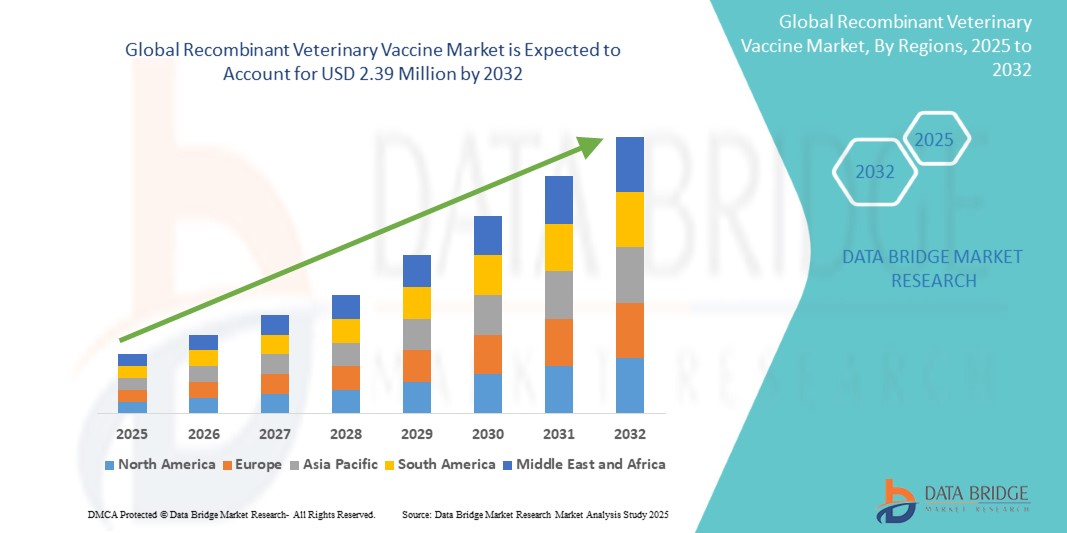
O mercado global de vacinas veterinárias recombinantes foi avaliado em 1,37 bilhões de dólares em 2024 e prevê-se atingir 2,39 bilhões de dólares em 2032, com um CAGR de 7,22% durante o período de previsão de 2025 a 2032. Além dos insights sobre cenários de mercado, como valor de mercado, taxa de crescimento, segmentação, cobertura geográfica e principais atores, os relatórios de mercado curados pela Data Bridge Market Research também incluem análise de especialistas de profundidade, epidemiologia de pacientes, análise de pipelines, análise de preços e marco regulatório.
Vacina veterinária recombinanteTendências do mercado
“Adoção crescente de sistemas de entrega de vacinas livres de agulhas”
Uma tendência proeminente no mercado da vacina veterinária recombinante é a adoção crescente de sistemas de administração de vacinas sem agulha. Esses sistemas oferecem um método mais eficiente, mais seguro e menos estressante de administrar vacinas aos animais, especialmente em operações pecuárias em larga escala. Métodos de entrega livres de agulhas, tais como injetores de jato ou vacinas orais, reduzem o risco de lesões por agulha nos trabalhadores, o que constitui uma preocupação significativa em termos de segurança nos cuidados veterinários. Eles também minimizam a necessidade de manejo, tornando a vacinação mais fácil e rápida, especialmente em ambientes agrícolas de alta densidade.
Esta tendência está particularmente a ganhar força nas indústrias de aves de capoeira e de suínos, onde é essencial uma vacinação rápida de um grande número de animais. Além disso, sistemas livres de agulha ajudam a garantir uma distribuição uniforme da vacina, o que melhora a eficácia e imunidade global do rebanho. Consequentemente, espera-se que esta tecnologia conduza ao crescimento do mercado, uma vez que aumenta a viabilidade económica e a acessibilidade das vacinas veterinárias recombinantes.
Âmbito de aplicação do relatório e vacina veterinária recombinanteSegmentação do mercado
| Atributos | Vacina veterinária recombinanteChavePerspectivas de mercado |
| Segmentos Cobertos |
|
| Países abrangidos | EUA, Canadá e México, Alemanha, França, Reino Unido, Itália, Rússia, Espanha, Dinamarca, Suécia, Noruega, Resto da Europa, China, Japão, Índia, Coreia do Sul, Austrália, Tailândia, Resto da Ásia-Pacífico (APAC), Arábia Saudita, U.A.E, África do Sul, Nigéria, Egito, Kuwait, Resto do Oriente Médio e África, Brasil, Argentina e Resto da América do Sul |
| Jogadores do mercado chave | Bayer AG (Alemanha), BioNTech SE (Alemanha), Boehringer Ingelheim International GmbH (Alemanha), Biogénesis Bagó S.A. (Argentina), Ceva (França), Elanco ou as suas filiais (EUA), FeedVax, Inc. (Argentina), HESTER BIOSCIENCES LIMITED (Índia), Heska Corporation (EUA), INOVIO Pharmaceuticals (EUA), Indian Immunologicals Ltd. (Índia), LABORATORIO AVI-MEX, SA DE CV (México), Merck & Co., Inc. (EUA), Phibro Animal Health Corporation (EUA), Virbac (França), VAKSINDO ANIMAL SAÚDE PVT. LT (Índia), Virbac (França), Vetoquinol (França), Vaccine Valley (Egypt) e Zoetis Services LLC (U.S.) |
| Oportunidades de Mercado |
|
| Informações sobre o Valor Adicionado | Além dos insights sobre cenários de mercado, como valor de mercado, taxa de crescimento, segmentação, cobertura geográfica e principais atores, os relatórios de mercado curados pela Data Bridge Market Research também incluem análise de especialistas de profundidade, epidemiologia de pacientes, análise de pipelines, análise de preços e marco regulatório. |
Vacina veterinária recombinanteMercadoDefinição
Uma vacina veterinária recombinante é um tipo de vacina desenvolvida utilizando tecnologia de ADN recombinante, onde genes de um agente patogénico (como bactérias ou vírus) são inseridos num organismo hospedeiro (como bactérias ou leveduras) para produzir proteínas ou antigénios do agente patogénico. Estas proteínas ou antígenos são então usados para estimular uma resposta imune em animais, ajudando a protegê-los de doenças específicas. Ao contrário das vacinas tradicionais, que muitas vezes utilizam formas inativadas ou atenuadas do patógeno, as vacinas recombinantes oferecem uma abordagem mais segura e direcionada utilizando apenas os componentes essenciais necessários para a imunidade. Essa tecnologia permite o desenvolvimento de vacinas com melhores perfis de segurança, maior eficácia e menos efeitos colaterais para os animais, tornando-se um importante avanço na medicina veterinária.
Dinâmica Recombinante do Mercado de Vacinas Veterinárias
Controladores
- Aumento das Doenças Zoonóticas
A incidência crescente de doenças zoonóticas, que são transmitidas de animais para seres humanos, é um motor significativo do mercado de vacinas veterinárias recombinantes. Doenças como gripe aviária, raiva e tuberculose bovina representam grandes riscos à saúde pública, levando governos e organizações de saúde a se concentrarem no controle de sua propagação através da vacinação. As vacinas veterinárias recombinantes fornecem uma abordagem mais segura e orientada para prevenir tais doenças. Por exemplo, a vacina recombinante contra a raiva tem sido crucial no controle da doença em populações selvagens, reduzindo o risco de transmissão para o ser humano. À medida que aumenta a sensibilização para as ameaças zoonóticas, espera-se que a procura de vacinas veterinárias eficazes aumente, aumentando o crescimento do mercado. A necessidade de medidas preventivas contra estas doenças não só aumenta a saúde animal, mas também ajuda a atenuar o risco de surtos humanos, reforçando a importância de investir no desenvolvimento de vacinas veterinárias recombinantes.
- Avanços em Biotecnologia
Os avanços na biotecnologia, especialmente nas tecnologias de expressão de DNA e proteínas recombinantes, levaram ao desenvolvimento de vacinas veterinárias mais eficazes e seguras. A capacidade de criar vacinas utilizando componentes patogénicos específicos, em vez de patógenos inteiros, melhora o perfil de segurança dessas vacinas. Por exemplo, as vacinas recombinantes, como a da doença de Marek em aves de capoeira, que usa um vírus modificado para estimular uma resposta imune sem causar doença, demonstraram eficácia aumentada em comparação com as vacinas tradicionais. À medida que essas inovações biotecnológicas continuam a evoluir, possibilitam a criação de vacinas para uma gama mais ampla de doenças animais, levando a maiores oportunidades de mercado. O contínuo avanço na tecnologia vacinal é susceptível de impulsionar o crescimento do mercado, oferecendo soluções mais especializadas para a saúde animal, ao mesmo tempo que melhora a produtividade nas indústrias de pecuária e aquicultura.
Oportunidades
- Expansão da indústria da aquicultura
O rápido crescimento do mundoaquiculturaa indústria apresenta uma oportunidade significativa para o mercado da vacina veterinária recombinante. À medida que aumenta a procura de frutos do mar, a piscicultura tornou-se uma importante fonte de proteínas. No entanto, a aquicultura enfrenta inúmeros desafios, incluindo surtos de doenças como vibriose e furunculose, que podem levar a perdas econômicas significativas. As vacinas recombinantes adaptadas para espécies de peixes, como as vacinas recombinantes para vibriose no salmão, oferecem uma solução altamente eficaz para prevenir estas doenças. Espera-se que o desenvolvimento e a comercialização dessas vacinas aumentem em resposta ao setor de aquicultura em expansão. À medida que as práticas de piscicultura aumentam para atender às demandas alimentares globais, a adoção de vacinas recombinantes será crucial para melhorar a saúde dos peixes de criação, aumentar a eficiência da produção e reduzir o uso de antibióticos. Esta necessidade crescente de prevenção eficaz de doenças na aquicultura impulsiona a expansão do mercado.
- Conscientização crescente da saúde animal nos mercados emergentes
À medida que os níveis de renda aumentam e as práticas de criação animal se modernizam em mercados emergentes, como Ásia-Pacífico, América Latina e África, há uma crescente conscientização da importância da saúde animal e medidas preventivas. Esta mudança está a criar novas oportunidades para vacinas veterinárias recombinantes. Por exemplo, a China e a Índia estão a adoptar cada vez mais vacinas recombinantes para aves de capoeira, que ajudam a controlar doenças como a gripe aviária e a doença de Newcastle. Esta tendência é impulsionada por uma crescente classe média exigindo produtos animais mais seguros e de alta qualidade. À medida que os mercados emergentes aumentam a sua infra-estrutura de saúde veterinária, existe um potencial significativo para a adopção de vacinas recombinantes. Espera-se que esta tendência conduza o mercado incentivando os fabricantes de vacinas a desenvolver soluções adaptadas para estas regiões, em última análise, ampliando o alcance do mercado e melhorando os resultados da saúde animal nestas áreas em rápido desenvolvimento.
Restrições/Desafios
- Alta Produção e Desenvolvimento Custos
Uma das principais restrições no mercado da vacina veterinária recombinante é o alto custo de produção e desenvolvimento. O desenvolvimento de vacinas recombinantes requer técnicas biotecnológicas avançadas, que consomem tempo e são caras. O processo envolve engenharia genética, testes rigorosos e aprovações regulatórias, todas as quais aumentam o custo global. Por exemplo, as vacinas recombinantes para doenças como a doença do pé-e-mute na pecuária requerem um investimento significativo em capacidades de pesquisa e fabricação. O elevado custo de produção pode limitar a disponibilidade destas vacinas em mercados sensíveis aos preços ou em pequenos agricultores que não lhes possam pagar. Essa barreira financeira poderia retardar a adoção de vacinas recombinantes, particularmente em regiões em desenvolvimento onde alternativas econômicas são mais atraentes. Consequentemente, o crescimento do mercado pode ser prejudicado por esses elevados custos, que limitam o uso generalizado dessas vacinas em determinadas regiões geográficas.
- Ruídos Reguladores
Um desafio significativo no mercado de vacinas veterinárias recombinantes é o longo e complexo processo de aprovação regulatória. Governos e órgãos reguladores exigem amplos ensaios de segurança e eficácia antes de aprovar novas vacinas, especialmente as produzidas com tecnologia de DNA recombinante. Por exemplo, vacinas como a vacina recombinante para a raiva requerem anos de testes e validação antes de poderem ser introduzidas no mercado. Esse cronograma ampliado de aprovação pode atrasar a introdução de novas vacinas, o que representa um desafio para os fabricantes visando atender à crescente demanda por soluções de saúde animal. A imprevisibilidade das vias regulatórias pode levar a incertezas no mercado, afetando investimentos e retardando a comercialização de produtos. Este desafio poderia ter um impacto negativo no crescimento do mercado, uma vez que a capacidade de implementar rapidamente novas e melhores vacinas é crucial para responder às doenças emergentes e atender às demandas do mercado.
Este relatório de mercado fornece detalhes de novos desenvolvimentos recentes, regulamentação comercial, análise importação-exportação, análise de produção, otimização da cadeia de valor, market share, impacto de atores de mercado nacionais e localizados, análises de oportunidades em termos de emergentes bolsas de receita, mudanças na regulamentação de mercado, análise estratégica do crescimento do mercado, tamanho do mercado, crescimentos de mercado categoria, nichos de aplicação e dominância, aprovação de produtos, lançamentos de produtos, expansões geográficas, inovações tecnológicas no mercado. Para obter mais informações sobre o contato de mercado Data Bridge Market Research for an Analyst Brief, nossa equipe irá ajudá-lo a tomar uma decisão de mercado informada para alcançar o crescimento do mercado.
Âmbito de mercado da vacina veterinária recombinante
O mercado é segmentado com base no tipo de vacina recombinante, tipo animal, via de administração e canal de distribuição. O crescimento entre esses segmentos irá ajudá-lo a analisar segmentos de crescimento escassos nas indústrias e fornecer aos usuários uma visão geral de mercado valiosa e insights de mercado para ajudá-los a tomar decisões estratégicas para identificar aplicações de mercado principais.
Tipo deVacina recombinante
- Vacinas de subunidade
- Vacinas geneticamente atenuadas
- Vacina Vectorizada
- Vetores bacterianos
- Vetores virais
- Vetores de leveduras
- Vacina de ADN
Tipo animal
- Cães
- Gatos
- Cavalos
Via de administração
- Oral
- Injetável
- Tópico
Canal de Distribuição
- Hospitais veterinários
- Clínicas
Análise regional do mercado da vacina veterinária recombinante
O mercado é analisado e as informações e tendências sobre a dimensão do mercado são fornecidas por país, tipo de vacina recombinante, tipo animal, via de administração e canal de distribuição, conforme referido acima.
Os países abrangidos pelo relatório de mercado são EUA, Canadá e México, Alemanha, França, Reino Unido, Itália, Rússia, Espanha, Dinamarca, Suécia, Noruega, Resto da Europa, China, Japão, Índia, Coreia do Sul, Austrália, Tailândia, Resto da Ásia-Pacífico (APAC), Arábia Saudita, U.A.E, África do Sul, Nigéria, Egito, Kuwait, Resto do Oriente Médio e África, Brasil, Argentina e Resto da América do Sul.
Espera-se que a América do Norte domine o mercado de vacinas veterinárias recombinantes devido à sua infraestrutura de saúde veterinária avançada, alta adoção de tecnologias inovadoras e fortes marcos regulatórios. A presença de grandes atores, investimentos significativos em pesquisa e desenvolvimento e um foco crescente na saúde animal contribuem para a liderança da região. Além disso, o aumento da sensibilização para as doenças zoonóticas e a demanda por cuidados preventivos de saúde animal favorecem o crescimento do mercado na América do Norte, impulsionando seu domínio no mercado global.
Prevê- se que a Ásia- Pacífico apresente a taxa de crescimento mais elevada no mercado da vacina veterinária recombinante. Isso é impulsionado pela rápida industrialização na pecuária, aumento da demanda por proteínas animais e aumento da conscientização sobre a saúde animal e prevenção de doenças. Países como a China e a Índia estão investindo fortemente em saúde veterinária e adotando tecnologias avançadas de vacinação. Além disso, a crescente indústria da aquicultura na região aumenta ainda mais a procura de vacinas veterinárias recombinantes, promovendo um rápido crescimento do mercado.
A secção «país» do relatório também fornece factores de impacto individuais no mercado e alterações na regulamentação no mercado nacional que afectam as tendências actuais e futuras do mercado. Pontos de dados como análise de corrente descendente e corrente ascendente da cadeia de valor, tendências técnicas e análise de cinco forças de porter, estudos de caso são alguns dos indicadores usados para prever o cenário de mercado para cada país. Além disso, a presença e disponibilidade de marcas globais e seus desafios enfrentados devido à grande ou escassa concorrência de marcas locais e nacionais, o impacto das tarifas nacionais e rotas comerciais são considerados ao fornecer análise de previsão dos dados do país.
Parte de mercado da vacina veterinária recombinante
O cenário competitivo do mercado fornece detalhes por concorrente. Detalhes incluídos são visão geral da empresa, finanças da empresa, receita gerada, potencial de mercado, investimento em pesquisa e desenvolvimento, novas iniciativas de mercado, presença global, locais de produção e instalações, capacidades de produção, pontos fortes e fracos da empresa, lançamento do produto, largura e amplitude do produto, dominância da aplicação. Os pontos de dados acima fornecidos estão relacionados apenas com o foco das empresas relacionados com o mercado.
Vacina veterinária recombinanteOs líderes de mercado que operam no mercado são:
- Bayer AG (Alemanha)
- BioNTech SE (Alemanha)
- Boehringer Ingelheim International GmbH (Alemanha)
- Biogénese Bagó S.A. (Argentina)
- Ceva (França)
- Elanco ou seus afiliados (EUA)
- FeedVax, Inc. (Argentina)
- BIOSCIÊNCIAS LIMITADAS (Índia)
- Heska Corporation (EUA)
- INOVIO Pharmaceuticals (EUA)
- Indian Immunologicals Ltd. (Índia)
- LABORATÓRIO AVI-MEX, SA DE CV (México)
- Merck & Co., Inc. (EUA)
- Phibro Animal Health Corporation (EUA)
- Virbac (França)
- VAKSINDO ANIMAL HEALTH PVT. LTD (Índia)
- Virbac (França)
- Vetoquinol (França)
- Vale da Vacina (Egito)
- Zoetis Services LLC (EUA)
Evolução recente no mercado de vacinas veterinárias recombinante
- Em setembro de 2024, a Merck Animal Health anunciou a expansão de sua recém-aprovada plataforma NOBIVAC NXT vacina para incluir uma solução de topo para proteger gatos contra o vírus da leucemia felina (FeLV), uma das mais prevalentesdoenças infecciosasem felinos. A vacina deverá estar disponível em clínicas veterinárias e hospitais em todo o país neste Outono. O NOBIVAC NXT FeLV é a primeira e única vacina para o vírus da leucemia felina desenvolvida usando a plataforma de tecnologia de RNA-partículas da Merck Animal Health, projetada para proporcionar proteção aprimorada.
- Em junho de 2024, a Merck Animal Health anunciou o lançamento e disponibilidade do portfólio NOBIVAC NXT Rabies no Canadá, que inclui a NOBIVAC NXT Feline-3 Rabies e a NOBIVAC NXT Canine-3 Rabies. Este lançamento faz parte do compromisso contínuo da empresa com a prevenção da raiva. O portfólio de raiva NOBIVAC NXT é a primeira linha de vacinas que utiliza tecnologia avançada de partículas de RNA para proteger gatos e cães da raiva.
- Em fevereiro de 2024, a Faculdade de Medicina Veterinária da Universidade da Pensilvânia (Penn Vet) revelou o lançamento de sua Iniciativa de Pesquisa mRNA. Esta iniciativa visa acelerar o desenvolvimento de vacinas veterinárias baseadas em mRNA e terapias dirigidas ao hospedeiro. Não só contribuirá significativamente para a investigação sobre o RNAm, como também ajudará a aplicar a plataforma do RNAm para criar soluções inovadoras para vacinas veterinárias.
- Em julho de 2023, a Invetx anunciou a conclusão bem sucedida do desenvolvimento de sua tecnologia de extensão de meia-vida específica para cães e gatos, resultando em uma maior duração de atividade para os anticorpos monoclonais veterinários da empresa. Esta tecnologia inovadora permite à empresa melhorar as opções de tratamento de anticorpos para doenças crônicas e graves em animais de estimação. A Invetx recebeu quatro patentes dos EUA pela sua tecnologia de extensão de meia-vida e tem patentes adicionais pendentes nos EUA, Europa e outras regiões.
- Em Setembro de 2021, a Invetx anunciou o lançamento de um estudo de campo clínico em cães destinado a uma condição crónica não revelada, utilizando o IVX-01, o seu anticorpo monoclonal (mAb) proprietário, inovador, totalmente canino, de alta afinidade e meia-vida prolongada.
SKU-
Obtenha acesso online ao relatório sobre a primeira nuvem de inteligência de mercado do mundo
- Painel interativo de análise de dados
- Painel de análise da empresa para oportunidades de elevado potencial de crescimento
- Acesso de analista de pesquisa para personalização e customização. consultas
- Análise da concorrência com painel interativo
- Últimas notícias, atualizações e atualizações Análise de tendências
- Aproveite o poder da análise de benchmark para um rastreio abrangente da concorrência
Metodologia de Investigação
A recolha de dados e a análise do ano base são feitas através de módulos de recolha de dados com amostras grandes. A etapa inclui a obtenção de informações de mercado ou dados relacionados através de diversas fontes e estratégias. Inclui examinar e planear antecipadamente todos os dados adquiridos no passado. Da mesma forma, envolve o exame de inconsistências de informação observadas em diferentes fontes de informação. Os dados de mercado são analisados e estimados utilizando modelos estatísticos e coerentes de mercado. Além disso, a análise da quota de mercado e a análise das principais tendências são os principais fatores de sucesso no relatório de mercado. Para saber mais, solicite uma chamada de analista ou abra a sua consulta.
A principal metodologia de investigação utilizada pela equipa de investigação do DBMR é a triangulação de dados que envolve a mineração de dados, a análise do impacto das variáveis de dados no mercado e a validação primária (especialista do setor). Os modelos de dados incluem grelha de posicionamento de fornecedores, análise da linha de tempo do mercado, visão geral e guia de mercado, grelha de posicionamento da empresa, análise de patentes, análise de preços, análise da quota de mercado da empresa, normas de medição, análise global versus regional e de participação dos fornecedores. Para saber mais sobre a metodologia de investigação, faça uma consulta para falar com os nossos especialistas do setor.
Personalização disponível
A Data Bridge Market Research é líder em investigação formativa avançada. Orgulhamo-nos de servir os nossos clientes novos e existentes com dados e análises que correspondem e atendem aos seus objetivos. O relatório pode ser personalizado para incluir análise de tendências de preços de marcas-alvo, compreensão do mercado para países adicionais (solicite a lista de países), dados de resultados de ensaios clínicos, revisão de literatura, mercado remodelado e análise de base de produtos . A análise de mercado dos concorrentes-alvo pode ser analisada desde análises baseadas em tecnologia até estratégias de carteira de mercado. Podemos adicionar quantos concorrentes necessitar de dados no formato e estilo de dados que procura. A nossa equipa de analistas também pode fornecer dados em tabelas dinâmicas de ficheiros Excel em bruto (livro de factos) ou pode ajudá-lo a criar apresentações a partir dos conjuntos de dados disponíveis no relatório.