Global Sexually Transmitted Infections (STIs) Market Segmentation, By Type (HIV/AIDS, Human Papilloma Virus (HPV), Gonorrhea, Syphilis, Others), Treatment (Antibiotics, Antiviral), Route of Administration (Oral, Parenteral, Others), Location of Testing (Laboratory Testing, Point-of-care (POC) Testing), End-Users (Hospitals, Specialty Clinics, Homecare, Others), Distribution Channel (Hospital Pharmacy, Retail Pharmacy, Online Pharmacy, Others) – Industry Trends and Forecast to 2032
Sexually Transmitted Infections (STIs) Market Analysis
According to World Health Organization (WHO), every day more than 1 million sexually transmitted infections (STIs) are acquired worldwide, with the majority of these infections being asymptomatic. Unprotected sexual contact is the most common way for sexually transmitted diseases (STIs) to spread. Some STIs can also be transferred by infected blood or blood products during pregnancy, childbirth, and nursing. STIs have a significant impact on one's health. They can cause catastrophic effects if left untreated, including neurological and cardiovascular disorders, infertility, ectopic pregnancy, stillbirths, and an increased chance of contracting the Human immunodeficiency virus (HIV). They're also linked to social stigma, domestic violence, and poor quality of life.
Sexually Transmitted Infections (STIs) Market Size
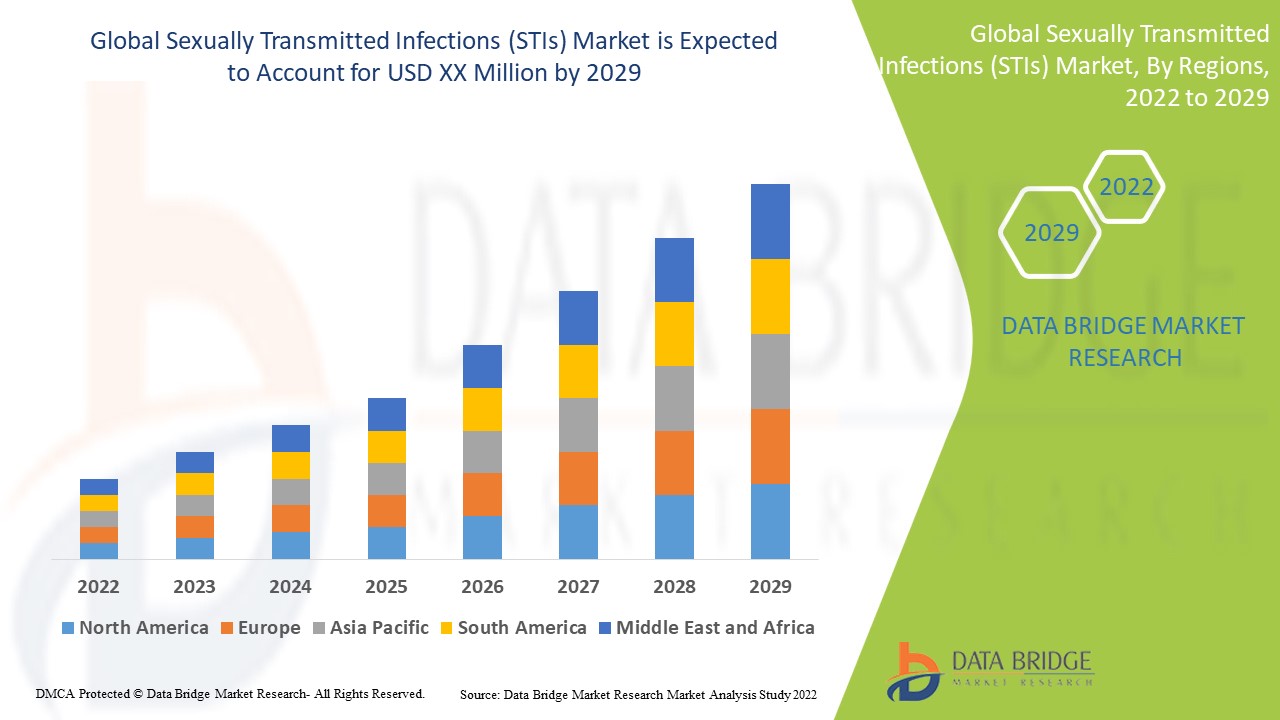
Global sexually transmitted infections (STIs) market size was valued at USD 69.63 billion in 2024 and is projected to reach USD 172.90 billion by 2032, with a CAGR of 12.04% during the forecast period of 2025 to 2032.
Report Scope and Market Segmentation
|
Attributes |
Sexually Transmitted Infections (STIs) Key Market Insights |
|
Segmentation |
|
|
Countries Covered |
U.S., Canada and Mexico in North America, Germany, France, U.K., Netherlands, Switzerland, Belgium, Russia, Italy, Spain, Turkey, Rest of Europe in Europe, China, Japan, India, South Korea, Singapore, Malaysia, Australia, Thailand, Indonesia, Philippines, Rest of Asia-Pacific (APAC) in the Asia-Pacific (APAC), Saudi Arabia, U.A.E, South Africa, Egypt, Israel, Rest of Middle East and Africa (MEA) as a part of Middle East and Africa (MEA), Brazil, Argentina and Rest of South America as part of South America |
|
Key Market Players |
Pfizer Inc. (U.S.), GlaxoSmithKline plc (U.K.), Novartis AG (Switzerland), Mylan N.V. (U.S.), Teva Pharmaceutical Industries Ltd. (Israel), Sanofi (France), AstraZeneca (U.K.), Johnson & Johnson Private Limited (U.S.), Merck & Co., Inc. (U.S.), F. Hoffmann-La Roche Ltd. (Switzerland), Cipla Inc. (U.S.), Hologic, Inc. (U.S.), BD (U.S.), Bristol-Myers Squibb Company (U.S.), Gilead Sciences, Inc. (U.S.), Bayer AG (Germany), Eli Lilly and Company (U.S.), Sun Pharmaceutical Industries Ltd. (India), Aurobindo Pharma (India), Lupin (India), Bausch Health Companies Inc. (Canada) |
|
Market Opportunities |
|
Sexually Transmitted Infections (STIs) Market Definition
Sexually transmitted infections (STIs) are infections that are spread through sexual interaction. Bacteria, viruses, and parasites that cause sexually transmitted disorders can be passed from one person to another by blood, sperm, vaginal, and other physiological fluids. Nonsexual transmission of these infections is possible, for instance, from mothers to their infants during pregnancy or childbirth, or by blood transfusions or sharing needles. Three bacterial STIs (chlamydia, gonorrhoea, and syphilis) and one parasitic STI (trichomoniasis) are all treatable with single-dose antibiotic regimens.
Sexually Transmitted Infections (STIs) Market Dynamics
Drivers
- High prevalence rate of sexually transmitted infections (STIs)
The rise in prevalence rate of sexually transmitted infections (STIs) across the globe will act as a major driver that will result in the expansion of the growth rate of the market. As per the World Health Organization (WHO) estimation approximately 374 million new infections with one of four sexually transmitted infections (STIs) will occur in 2020: gonorrhoea (82 million), chlamydia (129 million), syphilis (7.1 million), and trichomoniasis (156 million). Vaginal discharge, genital ulcers, urethral discharge or burning in males and abdominal pain are all common STI symptoms.
- Increasing investment for healthcare infrastructure
Another significant factor influencing the growth rate of sexually transmitted infections (STIs) market is the rising healthcare expenditure which helps in improving its infrastructure. Also, various government organizations aims to improve the healthcare infrastructure by increasing funding and this will further influence the market dynamics.
Furthermore, surging number of government initiatives to spread awareness will result in the expansion of sexually transmitted infections (STIs) market. Along with this, changing lifestyle of people and favourable reimbursement policies will enhance the growth rate of the market. Also, implementation of national screening programs will propel the growth rate of market.
Opportunities
- Launch of new products
The rising number of launches of new products will create new market opportunities during the forecast period of 2025-2032. For instance, Hologic, Inc. announced in June 2019 that the US Food and Drug Administration had approved their Aptima Mycoplasma genitalium assay (FDA). Aptima is the first and only FDA-approved test for sexually transmitted infections, and it's becoming more popular (STI).
Moreover, the market's growth is fueled by investment for the development of advanced technologies and increase in the number of emerging markets. These factors will provide beneficial opportunities for the sexually transmitted infections (STIs) market growth. Additionally, the market's growth is fueled by an increase in the number of research and development activities. This will provide beneficial opportunities for the sexually transmitted infections (STIs) market growth.
Restraints/Challenges
On the other hand, the high cost associated with the treatment will obstruct the growth rate of sexually transmitted infections (STIs) market during the forecast period of 2025-2032. The lack of healthcare infrastructure in developing economies and strict regulatory scenario will challenge the sexually transmitted infections (STIs) market. Additionally, lack of awareness among people and complications involved with the disease such as pregnancy complications, infertility, pelvic pain, eye inflammation, arthritis and others will act as restrain and further impede the growth rate of market during the forecast period of 2025-2032.
This sexually transmitted infections (STIs) market report provides details of new recent developments, trade regulations, import-export analysis, production analysis, value chain optimization, market share, impact of domestic and localized market players, analyses opportunities in terms of emerging revenue pockets, changes in market regulations, strategic market growth analysis, market size, category market growths, application niches and dominance, product approvals, product launches, geographic expansions, technological innovations in the market. To gain more info on the sexually transmitted infections (STIs) market contact Data Bridge Market Research for an Analyst Brief, our team will help you take an informed market decision to achieve market growth.
Patient Epidemiology Analysis
Sexually transmitted infections (STIs) market also provides you with detailed market analysis for patient analysis, prognosis and cures. Prevalence, incidence, mortality, adherence rates are some of the data variables that are available in the report. Direct or indirect impact analyses of epidemiology to market growth are analysed to create a more robust and cohort multivariate statistical model for forecasting the market in the growth period.
Sexually Transmitted Infections (STIs) Market Scope
The sexually transmitted infections (STIs) market is segmented on the basis of location of testing, type, treatment, route of administration, end-users and distribution channel. The growth amongst these segments will help you analyze meagre growth segments in the industries and provide the users with a valuable market overview and market insights to help them make strategic decisions for identifying core market applications.
Location of Testing
- Laboratory Testing
- PCR
- Immunochromatographic assays
- Flow Cytometers
- Differential Light Scattering machines
- Enzyme Linked Immunosorbent Assay (ELISA)
- Others
- Point-of-care (POC) Testing
Type
- HIV/AIDS
- Human Papilloma Virus (HPV)
- Gonorrhea
- Syphilis
- Others
Treatment
- Antibiotics
- Antiviral
Route of Administration
- Oral
- Parenteral
- Others
End-Users
- Hospitals
- Specialty Clinics
- Homecare
- Others
Distribution Channel
- Hospital Pharmacy
- Retail Pharmacy
- Online Pharmacy
- Others
Sexually Transmitted Infections (STIs) Market Regional Analysis
The sexually transmitted infections (STIs) market is analysed and market size insights and trends are provided by country, location of testing, type, treatment, route of administration, end-users and distribution channel as referenced above.
The countries covered in the sexually transmitted infections (STIs) market report are U.S., Canada and Mexico in North America, Germany, France, U.K., Netherlands, Switzerland, Belgium, Russia, Italy, Spain, Turkey, Rest of Europe in Europe, China, Japan, India, South Korea, Singapore, Malaysia, Australia, Thailand, Indonesia, Philippines, Rest of Asia-Pacific (APAC) in the Asia-Pacific (APAC), Saudi Arabia, U.A.E, South Africa, Egypt, Israel, Rest of Middle East and Africa (MEA) as a part of Middle East and Africa (MEA), Brazil, Argentina and Rest of South America as part of South America
North America dominates the sexually transmitted infections (STIs) market in terms of market share and market revenue and will continue to flourish its dominance during the forecast period. This is due to the growing demand for specific treatment and rising healthcare expenditure will further propel the market’s growth rate in this region. Additionally, presence of major key players and rise in adoption of newer technologies will further propel the market’s growth rate in this region.
Asia-Pacific is expected to be the fastest growing region during the forecast period of 2025-2032 due to growing cases of sexually transmitted infections (STIs) in this region. Also, development of healthcare infrastructure and rising government initiatives will further propel the market’s growth rate in this region.
The country section of the report also provides individual market impacting factors and changes in regulation in the market domestically that impacts the current and future trends of the market. Data points like down-stream and upstream value chain analysis, technical trends and porter's five forces analysis, case studies are some of the pointers used to forecast the market scenario for individual countries. Also, the presence and availability of global brands and their challenges faced due to large or scarce competition from local and domestic brands, impact of domestic tariffs and trade routes are considered while providing forecast analysis of the country data.
Sexually Transmitted Infections (STIs) Market Share
The sexually transmitted infections (STIs) market competitive landscape provides details by competitor. Details included are company overview, company financials, revenue generated, market potential, investment in research and development, new market initiatives, global presence, production sites and facilities, production capacities, company strengths and weaknesses, product launch, product width and breadth, application dominance. The above data points provided are only related to the companies' focus related to sexually transmitted infections (STIs) market.
Sexually Transmitted Infections (STIs) Market Leaders Operating in the Market Are:
- Pfizer Inc. (U.S.)
- GlaxoSmithKline plc (U.K.)
- Novartis AG (Switzerland)
- Mylan N.V. (U.S.)
- Teva Pharmaceutical Industries Ltd. (Israel)
- Sanofi (France)
- AstraZeneca (U.K.)
- Johnson & Johnson Private Limited (U.S.)
- Merck & Co., Inc. (U.S.)
- F. Hoffmann-La Roche Ltd. (Switzerland)
- Bayer AG (Germany)
- Eli Lilly and Company (U.S.)
- Sun Pharmaceutical Industries Ltd. (India)
- Aurobindo Pharma (India)
- Lupin (India)
- Cipla Inc. (U.S.)
- Hologic, Inc. (U.S.)
- BD (U.S.)
- Bristol-Myers Squibb Company (U.S.)
- Gilead Sciences, Inc. (U.S.)
- Bausch Health Companies Inc. (Canada)
Latest Developments in Sexually Transmitted Infections (STIs) Market
- In May 2022, Abbott announced United States Food and Drug Administration (FDA) clearance for its Alinity m STI Assay. After delays in care delivery during the pandemic contributed to a decline in routine STI screening and an increase in cases, the first-of-its-kind multiplex test will help address rising STI rates. Abbott's Alinity m system, the company's most advanced high-volume laboratory molecular equipment, is used for the test. Alinity m detects infectious infections using polymerase chain reaction (PCR) technology, which has a high sensitivity. This test can assist healthcare providers in saving time, increasing efficiency, and providing better patient care
SKU-
Obtenha acesso online ao relatório sobre a primeira nuvem de inteligência de mercado do mundo
- Painel interativo de análise de dados
- Painel de análise da empresa para oportunidades de elevado potencial de crescimento
- Acesso de analista de pesquisa para personalização e customização. consultas
- Análise da concorrência com painel interativo
- Últimas notícias, atualizações e atualizações Análise de tendências
- Aproveite o poder da análise de benchmark para um rastreio abrangente da concorrência
Metodologia de Investigação
A recolha de dados e a análise do ano base são feitas através de módulos de recolha de dados com amostras grandes. A etapa inclui a obtenção de informações de mercado ou dados relacionados através de diversas fontes e estratégias. Inclui examinar e planear antecipadamente todos os dados adquiridos no passado. Da mesma forma, envolve o exame de inconsistências de informação observadas em diferentes fontes de informação. Os dados de mercado são analisados e estimados utilizando modelos estatísticos e coerentes de mercado. Além disso, a análise da quota de mercado e a análise das principais tendências são os principais fatores de sucesso no relatório de mercado. Para saber mais, solicite uma chamada de analista ou abra a sua consulta.
A principal metodologia de investigação utilizada pela equipa de investigação do DBMR é a triangulação de dados que envolve a mineração de dados, a análise do impacto das variáveis de dados no mercado e a validação primária (especialista do setor). Os modelos de dados incluem grelha de posicionamento de fornecedores, análise da linha de tempo do mercado, visão geral e guia de mercado, grelha de posicionamento da empresa, análise de patentes, análise de preços, análise da quota de mercado da empresa, normas de medição, análise global versus regional e de participação dos fornecedores. Para saber mais sobre a metodologia de investigação, faça uma consulta para falar com os nossos especialistas do setor.
Personalização disponível
A Data Bridge Market Research é líder em investigação formativa avançada. Orgulhamo-nos de servir os nossos clientes novos e existentes com dados e análises que correspondem e atendem aos seus objetivos. O relatório pode ser personalizado para incluir análise de tendências de preços de marcas-alvo, compreensão do mercado para países adicionais (solicite a lista de países), dados de resultados de ensaios clínicos, revisão de literatura, mercado remodelado e análise de base de produtos . A análise de mercado dos concorrentes-alvo pode ser analisada desde análises baseadas em tecnologia até estratégias de carteira de mercado. Podemos adicionar quantos concorrentes necessitar de dados no formato e estilo de dados que procura. A nossa equipa de analistas também pode fornecer dados em tabelas dinâmicas de ficheiros Excel em bruto (livro de factos) ou pode ajudá-lo a criar apresentações a partir dos conjuntos de dados disponíveis no relatório.