


Global Telepathology Service Market Segmentation, By Systems (Dynamic, Static, and Hybrid), Application (Diagnosis, Education, Research, and Others), End User (Hospitals, Diagnostic Centers and Pathology Clinics, Pharmaceutical and Biotech Companies, Academic Institutes, and Research Organizations) – Industry Trends and Forecast to 2032
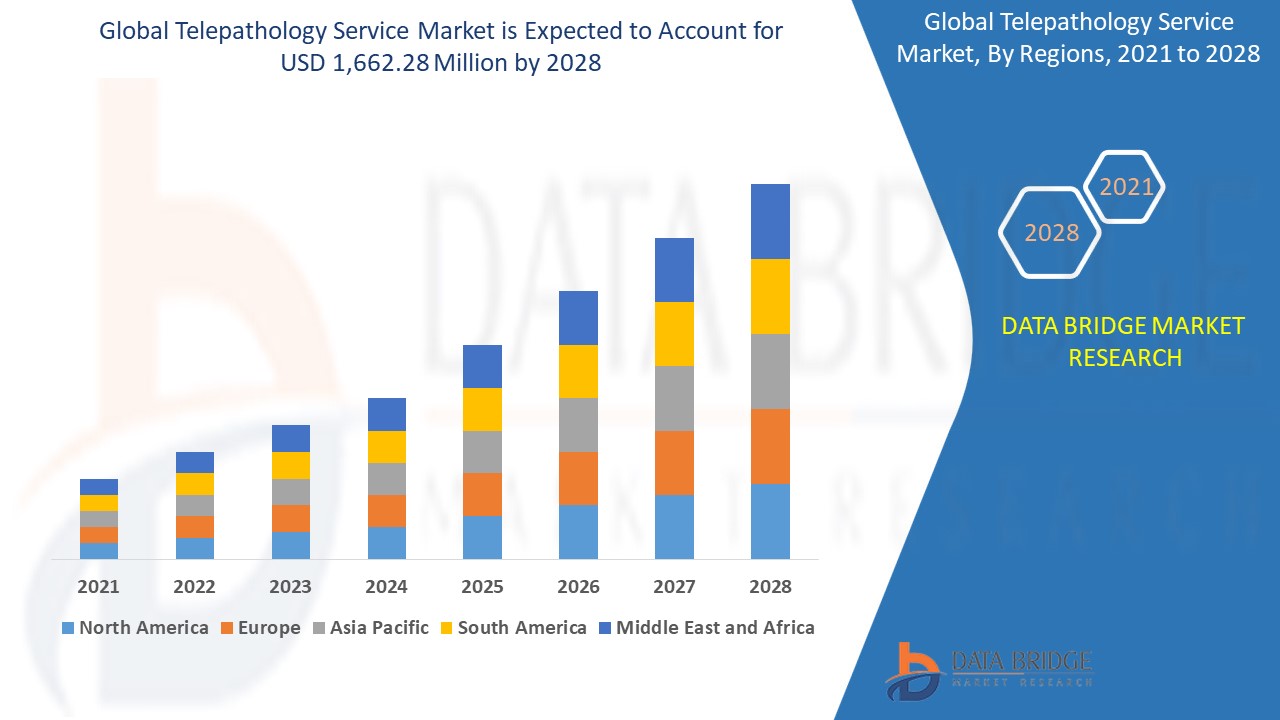
Telepathology Service Market Analysis
The telepathology service market has witnessed substantial growth, driven by advancements in digital health technologies and the increased need for remote diagnostic services. The integration of artificial intelligence (AI) and machine learning in telepathology has enhanced the accuracy and efficiency of diagnostics, enabling faster disease detection and improved patient outcomes. The adoption of cloud-based platforms has further facilitated data storage, accessibility, and seamless collaboration among healthcare professionals across regions. Innovations such as high-resolution digital imaging, automated slide scanning, and real-time video consultations are transforming traditional pathology practices, making them more adaptable to modern healthcare needs. These advancements have also enabled better access to pathology services in underserved or rural areas, bridging gaps in healthcare accessibility. The market is further bolstered by the rising demand for telemedicine services, especially post-pandemic, as patients and healthcare providers prioritize safety and convenience. Key players in the market continue to invest in research and development, enhancing the potential of telepathology for various applications, including oncology, neurology, and cardiology. As technology evolves, the telepathology service market is expected to continue expanding, improving patient care and clinical workflow.
Telepathology Service Market Size
The global telepathology service market size was valued at USD 1.08 billion in 2024 and is projected to reach USD 2.54 billion by 2032, with a CAGR of 11.24% during the forecast period of 2025 to 2032. In addition to the insights on market scenarios such as market value, growth rate, segmentation, geographical coverage, and major players, the market reports curated by the Data Bridge Market Research also include depth expert analysis, patient epidemiology, pipeline analysis, pricing analysis, and regulatory framework.
Telepathology Service Market Trends
“Growing Integration of Artificial Intelligence (AI) and Machine Learning”
One significant trend in the telepathology service market is the growing integration of artificial intelligence (AI) and machine learning to enhance diagnostic accuracy and efficiency. Advanced AI algorithms are now being employed to assist pathologists in analyzing digital slides, detecting anomalies, and providing preliminary results, which speeds up diagnosis and reduces human error. For instance, companies such as Roche and Path AI have partnered to develop AI-powered digital pathology tools that support companion diagnostics, streamlining the workflow in oncology and neurology. These technologies enable pathologists to focus on complex cases while leveraging automated image analysis for routine tasks. The shift towards AI-driven telepathology services improves the quality of diagnostics and extends the reach of specialized healthcare services to remote and underserved areas, addressing disparities in access to expert care. This trend is expected to propel the market forward, aligning with the broader move towards digital and remote healthcare solutions.
Report Scope and Telepathology Service Market Segmentation
|
Attributes |
Telepathology Service Key Market Insights |
|
Segments Covered |
|
|
Countries Covered |
U.S., Canada and Mexico in North America, Germany, France, U.K., Netherlands, Switzerland, Belgium, Russia, Italy, Spain, Turkey, Rest of Europe in Europe, China, Japan, India, South Korea, Singapore, Malaysia, Australia, Thailand, Indonesia, Philippines, Rest of Asia-Pacific (APAC) in the Asia-Pacific (APAC), Saudi Arabia, U.A.E., South Africa, Egypt, Israel, Rest of Middle East and Africa (MEA) as a part of Middle East and Africa (MEA), Brazil, Argentina and Rest of South America as part of South America |
|
Key Market Players |
Canada Health Infoway (Canada), University Health Network (Canada), MEYER INSTRUMENTS, INC. (U.S.), Telemedicine Clinic (Spain), AMD Global Telemedicine (U.S.), Nationwide Medical Licensing (U.S.), HP Development Company, L.P. (U.S.), Remote Medical Technologies, LLC (U.S.), Universal Service Administrative Co. (U.S.), WolfVision GmbH (Austria), Apollo TeleHealth (India), eVisit (U.S.), F. Hoffmann-La Roche Ltd (Switzerland), GE HealthCare (U.S.), Leica Biosystems Nussloch GmbH (Germany), Olympus Corporation (Japan), SRL Diagnostics (India), Teleconsult (U.K.), and UNILABS (Switzerland) |
|
Market Opportunities |
|
|
Value Added Data Infosets |
In addition to the insights on market scenarios such as market value, growth rate, segmentation, geographical coverage, and major players, the market reports curated by the Data Bridge Market Research also include depth expert analysis, patient epidemiology, pipeline analysis, pricing analysis, and regulatory framework. |
Telepathology Service Market Definition
Telepathology service refers to the practice of transmitting digital pathology images and data from one location to another for the purpose of remote diagnosis, consultation, and education. This service leverages digital imaging technology, advanced software, and communication networks to allow pathologists to view and analyze tissue samples from anywhere, facilitating quicker and more efficient diagnoses. Telepathology supports collaboration between medical professionals, enhances access to specialized expertise in underserved areas, and contributes to more timely patient care.
Telepathology Service Market Dynamics
Drivers
- Surging Volume of Patients Suffering from Chronic Disorders
The surging volume of patients suffering from chronic disorders is a significant driver for the telepathology service market, as these conditions often require continuous monitoring and specialized diagnostic services. For instance, chronic diseases such as cancer, neurological disorders, and cardiovascular issues are on the rise globally, with the World Health Organization (WHO) estimating that chronic diseases account for approximately 71% of all deaths worldwide. This growing patient base has increased the demand for efficient, remote diagnostic tools, making telepathology an essential service. Telepathology enables healthcare providers to rapidly share high-quality digital images and collaborate on diagnoses, which is particularly vital for chronic disease management that requires frequent and detailed pathology assessments. By facilitating timely and accurate diagnostics, telepathology supports early detection and personalized treatment plans, helping to improve patient outcomes and optimize healthcare resource allocation. This trend of increasing chronic disorder cases continues to drive the expansion of telepathology services globally.
- Increasing Workload of Healthcare Providers
The increasing workload of healthcare providers is driving the growth of the telepathology service market, as medical professionals face a surge in patient numbers and complex cases that require more efficient diagnostic solutions. With the U.S. Bureau of Labor Statistics reporting that the demand for pathologists is expected to grow by 7% from 2021 to 2031, the strain on healthcare providers is becoming more evident. Telepathology helps alleviate this burden by enabling remote consultations and collaborative diagnosis, allowing pathologists to manage more cases without compromising on quality. For instance, hospitals and clinics are increasingly integrating telepathology platforms that facilitate real-time image sharing and automated analysis, enabling quicker decision-making and reducing the time pathologists spend on routine tasks. This technology boosts workflow efficiency and helps in managing the increasing complexity of patient cases, making telepathology an essential tool in addressing the expanding workload and supporting the healthcare system's capacity to deliver timely patient care.
Opportunities
- Rising Penetration of Internet Connectivity
The rising penetration of internet connectivity is creating a significant market opportunity for telepathology services, as it enables seamless data transmission and access to digital pathology solutions, even in remote or underserved areas. With global internet usage steadily increasing, particularly in regions such as Asia-Pacific and Africa, healthcare systems can now leverage telepathology to bridge gaps in medical expertise. For instance, countries such as India have invested in expanding high-speed internet access, which supports telehealth initiatives and facilitates telepathology consultations between urban hospitals and rural clinics. This improved connectivity allows pathologists to share high-resolution digital images and collaborate with specialists worldwide, enhancing the accuracy and speed of diagnoses. The integration of telepathology services promotes efficient healthcare delivery and enables equitable access to expert pathology services, creating a strong growth potential for the market. The continuous expansion of broadband networks and mobile technology further supports the growth and adoption of telepathology solutions.
- Increasing Advancements in Digital Imaging and AI Technology
Advancements in digital imaging and AI technology have created a significant market opportunity for telepathology services by enhancing diagnostic accuracy, efficiency, and overall workflow in pathology. The integration of high-resolution digital scanners and automated slide scanning allows for clearer, more detailed imaging, which aids pathologists in identifying abnormalities with greater precision. For instance, AI-powered tools are now being used to analyze digital pathology slides and provide preliminary assessments, significantly reducing the time needed for human analysis and enabling quicker diagnosis. Companies such as Roche and Path AI are at the forefront of developing such AI-assisted platforms, which support pathologists in various fields, including oncology and neurology. This streamlines the diagnostic process and supports remote collaboration between medical experts, expanding access to specialized services. The incorporation of these cutting-edge technologies positions telepathology as a more reliable and efficient option, driving adoption and growth within the market.
Restraints/Challenges
- Regulatory and Accreditation Issues
Regulatory and accreditation issues present a significant challenge for the telepathology market, as navigating the complex landscape of medical regulations and obtaining necessary certifications can be costly and time-consuming. In the U.S., for instance, the Food and Drug Administration (FDA) enforces strict guidelines on medical devices, including digital pathology equipment, which must undergo thorough evaluation and approval before being used for clinical purposes. In addition, individual states may have their own specific telehealth and medical device regulations that providers must comply with, further complicating operations for telepathology services that aim to serve multiple regions. These regulatory hurdles can lead to increased operational costs and delays in bringing new technologies to market. Similar challenges are seen in other countries with stringent health care and data protection laws, such as those imposed by the European Union's CE marking and GDPR, which set high standards for data privacy and medical device quality. Ensuring compliance with these varied regulations requires significant resources, expertise, and time, posing a barrier to the global expansion of telepathology services and limiting their accessibility in certain regions.
- Data Security and Privacy Concerns
Data security and privacy concerns are a significant challenge for the telepathology market, as handling sensitive patient data comes with strict compliance requirements and risks. Telepathology services must adhere to regulations such as the Health Insurance Portability and Accountability Act (HIPAA) in the U.S., which mandates stringent safeguards for protected health information, or the General Data Protection Regulation (GDPR) in Europe, which emphasizes data privacy and user consent. Compliance with these laws often requires substantial investment in secure data storage, encryption protocols, and robust transmission systems to ensure patient data is protected from breaches. For instance, a healthcare provider using telepathology must implement advanced cybersecurity measures to prevent unauthorized access or data theft. Failure to meet these standards can lead to severe consequences, including hefty fines, loss of patient trust, and reputational damage. In addition, any breach or misuse of data can have significant legal and financial implications, further challenging telepathology providers to balance service efficiency and security. The high costs of maintaining compliance and the continuous need for system updates to counter evolving cyber threats make data security and privacy a persistent challenge for telepathology services.
This market report provides details of new recent developments, trade regulations, import-export analysis, production analysis, value chain optimization, market share, impact of domestic and localized market players, analyses opportunities in terms of emerging revenue pockets, changes in market regulations, strategic market growth analysis, market size, category market growths, application niches and dominance, product approvals, product launches, geographic expansions, Technological innovations in the market. To gain more info on the market contact Data Bridge Market Research for an Analyst Brief, our team will help you take an informed market decision to achieve market growth.
Telepathology Service Market Scope
The market is segmented on the basis of system, application, and end user. The growth amongst these segments will help you analyse meagre growth segments in the industries and provide the users with a valuable market overview and market insights to help them make strategic decisions for identifying core market applications.
Systems
- Dynamic
- Static
- Hybrid
Application
- Diagnosis
- Education
- Research
- Others
End User
- Hospitals
- Diagnostic Centers and Pathology Clinics
- Pharmaceutical and Biotech Companies
- Academic Institutes
- Research Organizations
Telepathology Service Market Regional Analysis
The market is analysed and market size insights and trends are provided by country, system, application, and end user as referenced above.
The countries covered in the market report are U.S., Canada and Mexico in North America, Germany, France, U.K., Netherlands, Switzerland, Belgium, Russia, Italy, Spain, Turkey, Rest of Europe in Europe, China, Japan, India, South Korea, Singapore, Malaysia, Australia, Thailand, Indonesia, Philippines, Rest of Asia-Pacific (APAC) in the Asia-Pacific (APAC), Saudi Arabia, U.A.E., South Africa, Egypt, Israel, Rest of Middle East and Africa (MEA) as a part of Middle East and Africa (MEA), Brazil, Argentina and Rest of South America as part of South America.
North America dominates the telepathology service market, driven by the growing adoption of advanced technologies and the widespread availability of modern, well-equipped infrastructure. The region’s robust healthcare sector continues to attract significant investments, further fueling the growth of telepathology services. The integration of cutting-edge digital tools and platforms in medical practices has enhanced diagnostic accuracy and efficiency. In addition, the increasing need for remote access to pathology services and improved patient care has reinforced North America's position as a dominant player in this market.
Asia-Pacific is anticipated to experience the highest growth rate in the telepathology service market during the forecast period from 2025 to 2032. This is attributed to significant investments made by various market players aimed at expanding and enhancing the region’s healthcare sector. The adoption of advanced technologies, including AI-driven tools and digital platforms, is rapidly increasing, driving improvements in diagnostic capabilities and patient care. Moreover, the region’s growing emphasis on telemedicine and remote healthcare services further supports the expansion of telepathology services.
The country section of the report also provides individual market impacting factors and changes in regulation in the market domestically that impacts the current and future trends of the market. Data points such as down-stream and upstream value chain analysis, technical trends and porter's five forces analysis, case studies are some of the pointers used to forecast the market scenario for individual countries. Also, the presence and availability of global brands and their challenges faced due to large or scarce competition from local and domestic brands, impact of domestic tariffs and trade routes are considered while providing forecast analysis of the country data.
Telepathology Service Market Share
The market competitive landscape provides details by competitor. Details included are company overview, company financials, revenue generated, market potential, investment in research and development, new market initiatives, global presence, production sites and facilities, production capacities, company strengths and weaknesses, product launch, product width and breadth, application dominance. The above data points provided are only related to the companies' focus related to market.
Telepathology Service Market Leaders Operating in the Market Are:
- Canada Health Infoway (Canada)
- University Health Network (Canada)
- MEYER INSTRUMENTS, INC. (U.S.)
- Telemedicine Clinic (Spain)
- AMD Global Telemedicine (U.S.)
- Nationwide Medical Licensing (U.S.)
- HP Development Company, L.P. (U.S.)
- Remote Medical Technologies, LLC (U.S.)
- Universal Service Administrative Co. (U.S.)
- WolfVision GmbH (Austria)
- Apollo TeleHealth (India)
- eVisit (U.S.)
- F. Hoffmann-La Roche Ltd (Switzerland)
- GE HealthCare (U.S.)
- Leica Biosystems Nussloch GmbH (Germany)
- Olympus Corporation (Japan)
- SRL Diagnostics (India)
- Teleconsult (U.K.)
- UNILABS (Switzerland)
Latest Developments in Telepathology Service Market
- In March 2024, Koninklijke Philips N.V. (Netherlands) announced an expanded collaboration with AWS to address the increasing demand for secure, scalable digital pathology solutions in the cloud. In this partnership, the goal is to enhance workflow efficiency and facilitate seamless integration with existing healthcare systems to enable comprehensive patient care
- In February 2024, Roche announced its collaboration with Path AI to develop AI-powered digital pathology algorithms for companion diagnostics. In this partnership, Roche aims to accelerate its ability to meet the needs of biopharma companies seeking AI-driven companion diagnostic solutions and end-to-end services
- In October 2023, Pramana and Gestalt introduced an integrated AI-powered platform and digital pathology solutions that combine digital pathology, AI, image analysis, and DICOM into a single comprehensive offering
- In February 2022, GlobalMedia Group, LLC announced that it had received the CE mark for its ClinicalAccess Station Lite, eNcounter telehealth software suite, and various diagnostic examination cameras. In this regulatory certification, the company was able to expand its services to the European Union and offer telehealth solutions within European markets
- In May 2020, Leica Biosystems launched the Aperio GT 450 DX, its next-generation digital pathology scanner, in the Asia-Pacific region. In this system, which features continuous packing, touch-free operation, and a 32-second scan time at 40x magnification, was registered as CE IVD and TGA. In this way, it allows healthcare organizations to scale up their digital pathology capabilities to meet increasing demands without compromising quality. In the testing phase, the Aperio GT 450 DX was evaluated by technicians and pathologists, including those at Seoul National University Hospital (SNUH), a leading digital pathology facility in South Korea, to assess its impact on workflow
SKU-
Obtenha acesso online ao relatório sobre a primeira nuvem de inteligência de mercado do mundo

- Painel interativo de análise de dados
- Painel de análise da empresa para oportunidades de elevado potencial de crescimento
- Acesso de analista de pesquisa para personalização e customização. consultas
- Análise da concorrência com painel interativo
- Últimas notícias, atualizações e atualizações Análise de tendências
- Aproveite o poder da análise de benchmark para um rastreio abrangente da concorrência
Metodologia de Investigação
A recolha de dados e a análise do ano base são feitas através de módulos de recolha de dados com amostras grandes. A etapa inclui a obtenção de informações de mercado ou dados relacionados através de diversas fontes e estratégias. Inclui examinar e planear antecipadamente todos os dados adquiridos no passado. Da mesma forma, envolve o exame de inconsistências de informação observadas em diferentes fontes de informação. Os dados de mercado são analisados e estimados utilizando modelos estatísticos e coerentes de mercado. Além disso, a análise da quota de mercado e a análise das principais tendências são os principais fatores de sucesso no relatório de mercado. Para saber mais, solicite uma chamada de analista ou abra a sua consulta.
A principal metodologia de investigação utilizada pela equipa de investigação do DBMR é a triangulação de dados que envolve a mineração de dados, a análise do impacto das variáveis de dados no mercado e a validação primária (especialista do setor). Os modelos de dados incluem grelha de posicionamento de fornecedores, análise da linha de tempo do mercado, visão geral e guia de mercado, grelha de posicionamento da empresa, análise de patentes, análise de preços, análise da quota de mercado da empresa, normas de medição, análise global versus regional e de participação dos fornecedores. Para saber mais sobre a metodologia de investigação, faça uma consulta para falar com os nossos especialistas do setor.
Personalização disponível
A Data Bridge Market Research é líder em investigação formativa avançada. Orgulhamo-nos de servir os nossos clientes novos e existentes com dados e análises que correspondem e atendem aos seus objetivos. O relatório pode ser personalizado para incluir análise de tendências de preços de marcas-alvo, compreensão do mercado para países adicionais (solicite a lista de países), dados de resultados de ensaios clínicos, revisão de literatura, mercado remodelado e análise de base de produtos . A análise de mercado dos concorrentes-alvo pode ser analisada desde análises baseadas em tecnologia até estratégias de carteira de mercado. Podemos adicionar quantos concorrentes necessitar de dados no formato e estilo de dados que procura. A nossa equipa de analistas também pode fornecer dados em tabelas dinâmicas de ficheiros Excel em bruto (livro de factos) ou pode ajudá-lo a criar apresentações a partir dos conjuntos de dados disponíveis no relatório.











