


Chronic Disease Management Market Size
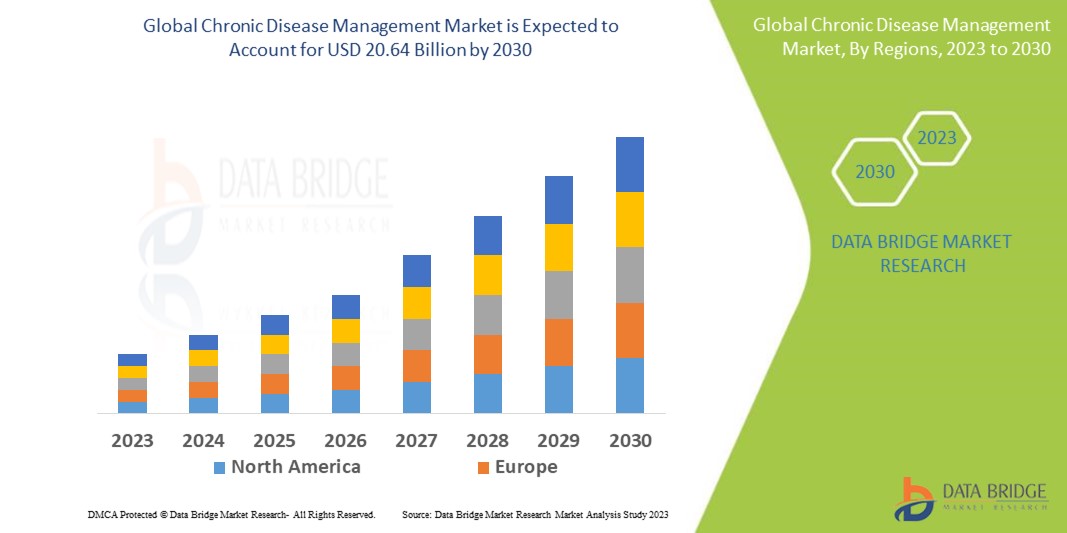
- The global chronic disease management market was valued at USD 8.33 billion in 2024 and is expected to reach USD 27.90 billion by 2032
- During the forecast period of 2025 to 2032 the market is likely to grow at a CAGR of 16.30%, primarily driven by the increasing prevalence of chronic diseases and the growing adoption of digital health solutions
- This growth is driven by factors such as advancements in healthcare technologies, rising healthcare costs, and the demand for personalized and remote monitoring tools
Chronic Disease Management Market Analysis
- The global chronic disease management market is witnessing significant growth, driven by the increasing prevalence of chronic diseases such as diabetes, hypertension, and heart disease, which require long-term care and monitoring
- Advancements in technology, particularly in telemedicine, digital health tools, and mobile applications, are playing a crucial role in improving the management of chronic conditions, offering patients better monitoring and personalized care
- Healthcare providers are increasingly adopting integrated care models that focus on patient-centred care, facilitating a more holistic and efficient approach to managing chronic diseases, resulting in better patient outcomes
- The demand for remote monitoring devices is growing, as they allow continuous tracking of patients' health conditions, improving disease management and reducing hospital visits, which also eases the burden on healthcare facilities
- Pharmaceutical companies are focusing on developing new therapies and medications that target the root causes of chronic diseases, further driving the market's growth
For instance,
- Apple Watch Series 8, with its built-in ECG feature, has gained attention for enabling users to monitor their heart health in real-time. It can alert users to irregular heart rhythms, helping with early detection and potentially preventing complications related to cardiovascular diseases
Report Scope and Chronic Disease Management Market Segmentation
|
Attributes |
Chronic Disease Management Key Market Insights |
|
Segments Covered |
|
|
Countries Covered |
North America
Europe
Asia-Pacific
Middle East and Africa
South America
|
|
Key Market Players |
|
|
|
|
Value Added Data Infosets |
In addition to the insights on market scenarios such as market value, growth rate, segmentation, geographical coverage, and major players, the market reports curated by the Data Bridge Market Research also include depth expert analysis, patient epidemiology, pipeline analysis, pricing analysis, and regulatory framework |
Chronic Disease Management Market Trends
“Growing Use of Wearable Devices to Manage Chronic Conditions”
- The growing use of wearable devices is a prominent trend in chronic disease management. Devices such as smartwatches and fitness trackers now feature health monitoring tools such as heart rate sensors, blood pressure monitors, and glucose level trackers, helping patients stay on top of their condition without constant doctor visits
- For diabetes patients, wearable devices that monitor glucose levels are increasingly popular. These devices eliminate the need for frequent finger pricks, offering a non-invasive way to monitor blood sugar levels. This constant monitoring helps in preventing complications and improving overall control of the disease
- Smartwatches with ECG capabilities are becoming valuable tools for individuals at risk of heart disease. These wearables can detect irregular heart rhythms, alerting users to potential problems, and enabling earlier interventions, which can reduce the risk of serious cardiovascular events
- Wearables also allow healthcare providers to monitor patients remotely, offering continuous data for better decision-making. This not only improves patient care but also reduces hospital visits, making healthcare more accessible and less costly
- As these devices become more affordable and feature-rich, their widespread adoption is expected to continue, significantly improving chronic disease management for patients worldwide
For instance,
- The Dexcom G7 Continuous Glucose Monitoring System is a real-time wearable device specifically designed for individuals with diabetes. It continuously tracks glucose levels and sends real-time data directly to a smartphone, alerting users to high or low blood sugar levels. This device eliminates the need for finger-prick testing and provides more accurate, timely information to help patients make better decisions about their health. The system also allows healthcare providers to monitor the patient's glucose levels remotely, facilitating more proactive care. This kind of wearable technology has been praised for improving diabetes management, reducing complications, and enhancing the overall quality of life for users
Chronic Disease Management Market Dynamics
Driver
“Increasing Prevalence of Chronic Diseases”
- The increasing prevalence of chronic diseases such as diabetes, hypertension, cardiovascular diseases, and respiratory disorders is a major driver of the chronic disease management market. These conditions are becoming more common due to aging populations, unhealthy lifestyles, and genetic factors
- Chronic diseases are responsible for a significant portion of global deaths, highlighting the urgent need for effective management solutions. The World Health Organization reports the rising burden of these diseases, pushing healthcare systems to focus on long-term care options
- As the number of individuals affected by chronic conditions grows, there is an increasing demand for tools and services that help manage these diseases over time, leading to a greater need for chronic disease management solutions
- The demand for digital health tools, remote monitoring devices, integrated care models, and personalized treatment options is on the rise, as they enable healthcare providers to manage and monitor patients’ conditions more effectively
- With more people living with chronic conditions, there is a heightened awareness of the importance of early intervention and continuous monitoring, driving the adoption of technologies aimed at improving long-term disease management and outcomes
For instance,
- The Livongo Health platform, now part of Teladoc Health, offers a real-time, integrated solution for managing chronic conditions such as diabetes, hypertension, and behavioral health issues. The platform provides users with connected devices such as a blood glucose meter for diabetes and a blood pressure cuff for hypertension. These devices automatically transmit data to healthcare providers, allowing for continuous monitoring and personalized feedback. The system also offers coaching through an app, enabling patients to receive guidance on lifestyle changes and medication adherence
Opportunity
“Advancements in Telemedicine and Digital Health Solutions”
- The rise of telemedicine provides a significant opportunity for the chronic disease management market by enabling remote consultations, reducing the need for in-person visits, and improving access to healthcare for patients with chronic conditions
- Telemedicine helps lower healthcare costs by eliminating the need for physical appointments, reducing transportation expenses, and decreasing hospital admissions, making ongoing care more affordable and accessible
- The adoption of digital health solutions, including mobile apps, wearable devices, and remote monitoring tools, is expanding rapidly, allowing patients to track their symptoms, medications, and health metrics on a daily basis
- Digital health tools, such as mobile apps for managing conditions such as diabetes and hypertension, provide users with reminders for medication, activity tracking, and symptom reporting, while offering healthcare providers real-time data for personalized care
- The integration of artificial intelligence into digital health tools enables the prediction of potential complications or exacerbations in chronic conditions, allowing for proactive interventions and better disease management as technology advances and becomes more affordable
For instance,
- Teladoc Health, a leader in telemedicine, provides a comprehensive platform for managing chronic diseases remotely. Through its virtual care services, patients can consult with healthcare professionals via video calls, phone calls, or messaging, making it easier for those with chronic conditions such as diabetes or hypertension to access care without leaving home
Restraint/Challenge
“High Costs of Technology Implementation”
- A major challenge in the chronic disease management market is the high cost of implementing advanced technologies such as wearable devices, telemedicine platforms, and digital health tools, which often require substantial initial investments
- Healthcare providers, particularly in resource-limited settings or regions with inadequate infrastructure, may find it difficult to afford the purchase, integration, and maintenance of these technologies, limiting their ability to adopt these tools for patient care
- Patients may also face financial barriers when accessing these technologies. While some devices and apps are covered by insurance, many are not, forcing individuals with chronic conditions to pay out-of-pocket, creating disparities in care accessibility
- The complexity and cost of training healthcare providers to effectively use these advanced technologies is another challenge. Healthcare systems must invest in staff education and support, diverting resources from other essential services
- The overall expense of adopting and maintaining chronic disease management solutions can slow market growth and limit the widespread use of these tools, hindering the potential for improved patient outcomes and more efficient care delivery
For instance,
- Omron Healthcare offers a series of wearable devices for managing chronic conditions such as hypertension and diabetes. While these devices provide significant health benefits by allowing patients to monitor their conditions at home, the initial cost of purchasing these devices can be a barrier, especially for individuals without adequate insurance coverage. In addition, the Omron blood pressure monitors and glucose monitoring systems, though highly effective, can cost hundreds of dollars, making them inaccessible to low-income patients who may benefit from them the most.
Chronic Disease Management Market Scope
The market is segmented on the basis of type, disease indication, deployment type, and end-user
|
Segmentation |
Sub-Segmentation |
|
By Type |
|
|
By Disease Indication |
|
|
By Deployment Types |
|
|
By End User |
|
Chronic Disease Management Market Regional Analysis
“North America is the Dominant Region in the Chronic Disease Management Market”
- North America is dominating the chronic disease management market due to its highly developed healthcare infrastructure and significant healthcare expenditures
- The region benefits from widespread access to healthcare services, with a particular focus on managing chronic diseases such as diabetes, cardiovascular conditions, and obesity.
- The presence of leading healthcare providers, market players, and pharmaceutical companies in North America contributes to its dominant market position
- High insurance coverage rates in countries such as the U.S. and Canada enable broader access to chronic disease management tools, including digital health solutions and wearable devices
- Advanced research and development in healthcare technology, along with regulatory support for digital innovations, further solidify North America's leadership in the chronic disease management market
“Asia-Pacific is Projected to Register the Highest Growth Rate”
- The Asia-Pacific region is expected to witness the highest growth rate in the chronic disease management market, driven by rapid urbanization and lifestyle changes that have led to an increase in chronic diseases such as diabetes, hypertension, and respiratory disorders
- Economic growth in countries such as China, India, and Japan have resulted in improved healthcare infrastructure, making advanced chronic disease management solutions more accessible to a larger population
- Government initiatives in several Asia-Pacific countries focus on early detection, prevention, and treatment of chronic conditions, further driving the demand for chronic disease management tools and services
- The rising adoption of mobile health applications, wearable devices, and telemedicine solutions in the region is playing a significant role in the accelerated growth of the market
- As healthcare spending continues to rise and healthcare systems evolve, the demand for personalized care and remote monitoring tools in the Asia-Pacific region is expected to expand, positioning it as the fastest-growing market for chronic disease management
Chronic Disease Management Market Share
The market competitive landscape provides details by competitor. Details included are company overview, company financials, revenue generated, market potential, investment in research and development, new market initiatives, global presence, production sites and facilities, production capacities, company strengths and weaknesses, product launch, product width and breadth, application dominance. The above data points provided are only related to the companies' focus related to market.
The Major Market Leaders Operating in the Market Are:
- WellSky (U.S.)
- ZeOmega (U.S.)
- Health Catalyst (U.S.)
- Cedar Gate Technologies (U.S.)
- Cognizant (U.S.)
- Pegasystems Inc. (U.S.)
- Epic Systems Corporation. (U.S.)
- NXGN Management, LLC. (U.S.)
- MINES & Associates, Inc. (U.S.)
- Zyter (U.S.)
- ExlService Holdings, Inc. (U.S.)
- cliexa Inc. (U.S.)
- ScienceSoft USA Corporation (U.S.)
- Optum, Inc (U.S.)
- Veradigm LLC (U.S.)
- Infosys Limited (India)
- Medecision (U.S.)
- Health Plan Alliance (U.S.)
- TATA Consultancy Services Limited (India)
Latest Developments in Global Chronic Disease Management Market
- In February 2025, Lillia, a healthcare technology company, introduced an AI-powered platform for chronic disease management. This platform uses artificial intelligence to analyze real-time patient data, providing personalized care recommendations and alerts to healthcare providers, focusing on chronic conditions such as diabetes, hypertension, and cardiovascular diseases. It aims to improve patient outcomes by enabling proactive care, reducing hospital visits, and minimizing complications. By offering continuous monitoring, the platform allows for early detection and timely interventions, ultimately enhancing the efficiency and effectiveness of treatment plans. The impact on the market is significant, as Lillia’s platform promotes the integration of AI in healthcare, driving better disease management, reducing costs, and improving long-term patient health
- In January 2023, WellSky partnered with Panoramic Health to deliver superior healthcare and improve outcomes for patients suffering from chronic kidney disease. This collaboration focuses on combining WellSky’s technology and Panoramic Health’s expertise in nephrology to create a comprehensive, data-driven solution for managing chronic kidney disease. The partnership aims to enhance patient care by leveraging advanced analytics and AI to improve decision-making, personalize treatment plans, and provide real-time monitoring. The collaboration will benefit patients by enabling more targeted care, better disease management, and reduced hospital admissions. It is expected to make a significant impact on the healthcare market by addressing the growing prevalence of chronic kidney disease, improving outcomes, and optimizing the use of healthcare resources. This partnership represents a step forward in integrating technology with specialized care to enhance chronic disease management and create a more effective healthcare delivery system
- In October 2023, CCS announced an innovative partnership with Welldoc and ZeOmega aimed at helping people with chronic conditions lead healthier lives while reducing healthcare costs. This collaboration integrates CCS’s healthcare services with Welldoc’s digital health solutions and ZeOmega’s data analytics platform. The goal is to provide comprehensive, personalized care for individuals with chronic conditions such as diabetes and hypertension. By combining digital tools, real-time data analysis, and personalized health interventions, the partnership seeks to enhance disease management, improve patient outcomes, and reduce the need for expensive emergency interventions or hospitalizations. The integration of these technologies will benefit patients by offering better, more proactive care, and empower healthcare providers with valuable insights to optimize treatment plans. This partnership is expected to significantly impact the market by addressing the rising costs associated with chronic disease management, improving efficiency, and fostering better health outcomes on a broader scale

- Interactive Data Analysis Dashboard
- Company Analysis Dashboard for high growth potential opportunities
- Research Analyst Access for customization & queries
- Competitor Analysis with Interactive dashboard
- Latest News, Updates & Trend analysis
- Harness the Power of Benchmark Analysis for Comprehensive Competitor Tracking
Data collection and base year analysis are done using data collection modules with large sample sizes. The stage includes obtaining market information or related data through various sources and strategies. It includes examining and planning all the data acquired from the past in advance. It likewise envelops the examination of information inconsistencies seen across different information sources. The market data is analysed and estimated using market statistical and coherent models. Also, market share analysis and key trend analysis are the major success factors in the market report. To know more, please request an analyst call or drop down your inquiry.
The key research methodology used by DBMR research team is data triangulation which involves data mining, analysis of the impact of data variables on the market and primary (industry expert) validation. Data models include Vendor Positioning Grid, Market Time Line Analysis, Market Overview and Guide, Company Positioning Grid, Patent Analysis, Pricing Analysis, Company Market Share Analysis, Standards of Measurement, Global versus Regional and Vendor Share Analysis. To know more about the research methodology, drop in an inquiry to speak to our industry experts.
Data Bridge Market Research is a leader in advanced formative research. We take pride in servicing our existing and new customers with data and analysis that match and suits their goal. The report can be customized to include price trend analysis of target brands understanding the market for additional countries (ask for the list of countries), clinical trial results data, literature review, refurbished market and product base analysis. Market analysis of target competitors can be analyzed from technology-based analysis to market portfolio strategies. We can add as many competitors that you require data about in the format and data style you are looking for. Our team of analysts can also provide you data in crude raw excel files pivot tables (Fact book) or can assist you in creating presentations from the data sets available in the report.













