


Transdutor Global para Segmentação do Mercado de Frequência Cardíaca Fetal, Produto (Ultrasound, Eletrodos Fetais, Dispositivos de Telemetria, Acessórios e Consumíveis, Transdutores de Monitoramento Sem Fio), Portabilidade (Sistemas Portáveis e Sistemas Portáteis), Método (Invasivo e Não Invasivo), Aplicação (Anteparto e Intraparto), Usuário Final (Hospitais, Maternidade e Clínicas Especiais) Tendências e Previsão da Indústria para 2033
Transdutor para o Mercado de Frequência Cardíaca FetalVisão geral
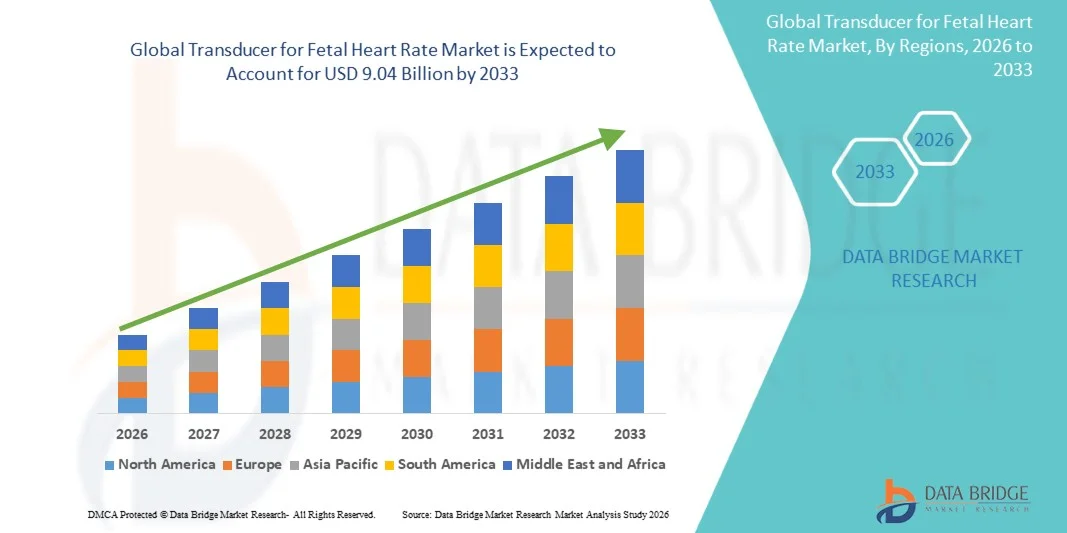
O Transdutor para o Mercado de Frequência Cardíaca Fetal foi avaliado emUSD 5,07 mil milhões em 2025e é projetado para alcançar9,04 mil milhões de USD até 2033, crescendo emCAGR de 7,50 % de 2026 a 2033O Transdutor para o Mercado de Frequência Cardíaca Fetal está experimentando crescimento constante impulsionado pelo aumento da prevalência de gestações de alto risco, aumento da demanda por monitoramento fetal precoce e preciso, e avanços contínuos nas tecnologias de ultra-sonografia obstétrica e monitoramento baseado em Doppler. A crescente ênfase na segurança materna e fetal em hospitais e maternidades está acelerando a adoção de transdutores avançados de frequência cardíaca fetal capazes de proporcionar alta sensibilidade, monitoramento em tempo real durante o pré-natal e intraparto.
Além disso, o crescente número de partos hospitalares em todo o mundo, aliado à ampliação do acesso ao pré-natal em economias emergentes, vem apoiando a expansão do mercado. Os profissionais de saúde estão adotando cada vez mais sistemas de monitoramento fetal não invasivos e de alta precisão integrados com plataformas de saúde digitais para melhorar a acurácia diagnóstica e a tomada de decisão clínica. Avanços tecnológicos como transdutores sem fio, melhor processamento de sinal e monitoramento fetal assistido por IA estão aumentando ainda mais os resultados do paciente, permitindo uma avaliação contínua, confortável e confiável da frequência cardíaca fetal em todos os ambientes de saúde.
Principais tendências do mercado e perspectivas
- A América do Norte dominou o Transdutor para o Mercado de Batimentos Cardíacos Fetais com a maior parcela de receita de 39,12% em 2025, apoiada por infraestrutura de saúde avançada, alta adoção de tecnologias de monitoramento fetal, forte presença de maternidades especializadas e hospitais neonatais e quadros de reembolso favoráveis. A região também se beneficia com o uso generalizado de sistemas de monitoramento da frequência cardíaca fetal à base de ultrassom, aumentando as gestações de alto risco que requerem vigilância fetal contínua e forte integração de soluções de monitoramento digital em serviços obstétricos hospitalares.
- O segmento não-invasivo dominou o mercado com41% de participação em 2025, devido à sua segurança, conforto do paciente e aceitação clínica generalizada no acompanhamento pré-natal.
- Espera-se que a Ásia-Pacífico seja a região de crescimento mais rápido em um CAGR de 7,9% de 2026 a 2033, alimentado pela melhoria da infraestrutura de saúde materna, aumento das taxas de natalidade em economias selecionadas, ampliação do acesso aos serviços de diagnóstico pré-natal e aumento das iniciativas governamentais para a saúde materna e infantil. A rápida expansão hospitalar e a adoção crescente de dispositivos portáteis de monitoramento fetal na China, Índia e Sudeste Asiático estão acelerando ainda mais o crescimento do mercado regional.
- O segmento Portable Systems está testemunhando um forte crescimento com uma estimativa de CAGR de 7,3% (2026-2033), impulsionado pelo aumento da demanda por acompanhamento fetal flexível, ponto de cuidado em hospitais, ambulatórios e atendimento obstétrico de emergência. A portabilidade permite o monitoramento contínuo da frequência cardíaca fetal tanto no âmbito rural quanto no urbano, melhorando os resultados maternos e ampliando a adoção em regiões limitadas por recursos.
- O segmento de aplicação do Anteparto dominou o mercado com uma participação de 46,21% de receita em 2025, sustentada pelas necessidades de acompanhamento pré-natal de rotina, detecção precoce de sofrimento fetal e uso crescente de técnicas de monitoramento não invasivo durante a gestação. A conscientização crescente da saúde materno-fetal e a crescente frequência de exames pré-natais em sistemas de saúde desenvolvidos reforçam ainda mais a liderança do segmento.
- O segmento dos Hospitais foi responsável pela maior participação do usuário final de 58,73% em 2025, impulsionada pelo alto fluxo de pacientes para assistência à maternidade, disponibilidade de infraestrutura diagnóstica avançada e presença de especialistas obstétricos qualificados. Os hospitais continuam sendo o principal cenário para a monitorização da frequência cardíaca fetal devido à sua capacidade de gerir gestações de alto risco e proporcionar vigilância fetal contínua utilizando sistemas de monitorização avançados.
Tamanho e previsão do mercado
- Valor de Mercado Global (2025): USD 5,07 Bilhões
- Valor de mercado esperado (2033): USD 9.04 Bilião
- Previsões CAGR (2026-2033): 7,50 %
- Região líder em 2025: América do Norte
- Região de crescimento mais rápido: Ásia-Pacífico
Denunciar Escopo e Transdutor para o Mercado de Frequência Cardíaca FetalSegmentação
|
Atributos |
Transdutor para a chave da frequência cardíaca fetalPerspectivas de mercado |
|
Segmentos Cobertos |
|
|
Países abrangidos |
América do Norte · U.S. · Canadá · México Europa · Alemanha · França · U.K. · Países Baixos · Suíça · Bélgica · Rússia · Itália · Espanha · Turquia · Resto da Europa Ásia- Pacífico · China · Japão · Índia · Coreia do Sul · Singapura · Malásia · Austrália · Tailândia · Indonésia · Filipinas · Resto da Ásia-Pacífico Médio Oriente e África · Arábia Saudita · U.A.E. · África do Sul · Egito · Israel · Resto do Oriente Médio e África América do Sul · Brasil · Argentina · Resto da América do Sul |
|
Jogadores do mercado chave |
• Koninklijke Philips N.V. (Países Baixos) |
|
Oportunidades de Mercado |
· Expansão de Sistemas de Monitoramento Fetal Integrados por IA · Adoção crescente de monitoramento pré-natal remoto e domiciliar · Crescimento nos mercados emergentes com a expansão da infraestrutura de saúde materna |
|
Informações sobre o Valor Adicionado |
Além dos insights sobre cenários de mercado, como valor de mercado, taxa de crescimento, segmentação, cobertura geográfica e principais atores, os relatórios de mercado curados pela Data Bridge Market Research também incluem análise de especialistas em profundidade, produção e capacidade em termos geográficos representadas pela empresa, layouts de redes de distribuidores e parceiros, análise detalhada e atualizada da tendência de preços e análise de déficit da cadeia de suprimentos e demanda. |
Transdutor para Tendências do Mercado de Frequência Cardíaca Fetal
Tendência:Crescimento no monitoramento pré-natal avançado e vigilância fetal remota
Os profissionais de saúde estão adotando cada vez mais alta precisãotransdutores para monitorização da frequência cardíaca fetalmelhorar a acurácia da assistência pré-natal e possibilitar a detecção precoce do sofrimento fetal. Hospitais e maternidades estão integrando transdutores ultrassonográficos avançados e Doppler com sistemas digitais de monitoramento fetal para garantir uma avaliação contínua e confiável durante a gestação e o trabalho de parto. A integração de transdutores de frequência cardíaca fetal sem fio e portáteis está permitindo o monitoramento em tempo real em hospitais, centros de atendimento ambulatorial e configurações de cuidados domiciliares. Esses sistemas suportam melhor mobilidade materna, mantendo a acurácia clínica, tornando-os cada vez mais importantes no manejo da gravidez de alto risco. Além disso, o uso crescente de sistemas centralizados de monitoramento fetal em enfermarias de trabalho permite que os clínicos rastreiem múltiplos pacientes simultaneamente, melhorando o tempo de resposta e a tomada de decisão clínica.
Transdutor para Dinâmica do Mercado de Frequência Cardíaca Fetal
Motor do Mercado-Chave: Prevalência crescente de gravidezes e avanços em tecnologias de monitoramento fetal
A crescente incidência de gestações de alto risco, incluindo diabetes materno, hipertensão e idade materna avançada, está impulsionando significativamente a demanda por transdutores de frequência cardíaca fetal. Esses dispositivos desempenham papel crítico na monitorização fetal contínua, permitindo a identificação precoce de hipóxia fetal, arritmias e condições de sofrimento.
De acordo com estudos globais de saúde materna, as complicações na gestação continuam sendo a principal causa de morbidade neonatal, fortalecendo a necessidade de sistemas de monitoramento fetal precisos e contínuos. Os hospitais estão implantando cada vez mais transdutores avançados de ultrassom e eletrodos do couro cabeludo fetal integrados com plataformas de monitoramento digital. As principais empresas de dispositivos médicos estão aumentando a sensibilidade do transdutor, precisão de sinal e capacidade de redução de ruído para melhorar a confiabilidade diagnóstica durante o trabalho de parto e monitoramento anteparto.
Restrição/Desafio-chave: alto custo de sistemas avançados de monitoramento fetal e acesso limitado em regiões em desenvolvimento
Um grande desafio no transdutor para o mercado de frequência cardíaca fetal é o alto custo associado aos sistemas avançados de monitoramento fetal, particularmente aqueles integrados à telemetria digital e plataformas centralizadas de monitoramento. Hospitais e maternidades em países de baixa e média renda muitas vezes enfrentam restrições orçamentárias, limitando a adoção generalizada de tecnologias avançadas de transdutores.
Além disso, os custos de manutenção, os requisitos de calibração e a necessidade de pessoal clínico treinado aumentam ainda mais o custo total de propriedade. A infraestrutura de saúde limitada nas regiões rurais e carentes também restringe o acesso ao monitoramento fetal contínuo, resultando em atraso no diagnóstico de complicações fetais. A variabilidade nas políticas de reembolso entre regiões afeta ainda mais as taxas de adoção de equipamentos avançados de monitoramento fetal.
Oportunidade chave do mercado: expansão da telessaúde, monitoramento sem fio e sistemas de vigilância fetal integrados por IA
O transdutor para o mercado de frequência cardíaca fetal apresenta oportunidades significativas através da expansão do pré-natal habilitado por telessaúde e dos sistemas de monitoramento fetal integrado a IA. Os transdutores sem fio e wearable estão sendo cada vez mais usados para o monitoramento remoto de gestações de alto risco, permitindo a transmissão contínua de dados aos prestadores de cuidados de saúde.
A inteligência artificial está sendo integrada em plataformas de monitoramento fetal para analisar padrões de frequência cardíaca, detectar sinais precoces de sofrimento fetal e apoiar a tomada de decisão clínica. Além disso, sistemas de monitoramento fetal baseados em nuvem estão permitindo o compartilhamento de dados em tempo real entre hospitais, especialistas e clínicas remotas. Os crescentes investimentos em infraestrutura de cuidados de saúde maternos na Ásia-Pacífico e no Oriente Médio estão ampliando o acesso a tecnologias avançadas de monitoramento fetal, criando forte potencial de crescimento a longo prazo para o mercado.
Transdutor para o Mercado de Frequência Cardíaca Fetal
O mercado de Transdutores para Frequência Cardíaca Fetal é segmentado com base em Produto, Portabilidade, Método, Aplicação e Usuário Final.
Por Produto
Com base no produto, o Transdutor para o Mercado de Frequência Cardíaca Fetal é segmentado em transdutores de ultrassom, eletrodos fetais, dispositivos de telemetria, acessórios e consumíveis e transdutores de monitoramento sem fio. O segmento de Transdutores Ultrassonográficos dominou o mercado com44,62% de participação em 2025, devido à sua elevada acurácia diagnóstica, capacidade de monitoramento não invasivo e forte preferência clínica em hospitais e maternidades. Esses dispositivos são amplamente utilizados para avaliação rotineira da frequência cardíaca fetal devido à detecção de sinal em tempo real e melhoria do perfil de segurança. O aumento da prevalência de gestações de alto risco e o aumento da demanda por monitoramento fetal contínuo estão apoiando ainda mais o crescimento do segmento.
A forte adoção em sistemas de saúde desenvolvidos, especialmente na América do Norte e na Europa, é impulsionada pela infraestrutura obstétrica avançada e pela disponibilidade de profissionais qualificados. A integração com sistemas de imagem digital e de informação hospitalar aumenta a eficiência do fluxo de trabalho. Além disso, melhorias na sensibilidade da sonda e na resolução da imagem estão melhorando a confiabilidade diagnóstica. Os hospitais estão cada vez mais padronizando o monitoramento por ultrassom em protocolos de pré-natal. O aumento das taxas de natalidade globais nas economias emergentes reforça ainda mais a procura. As iniciativas governamentais em matéria de cuidados de saúde maternos também apoiam a adoção. Espera-se que o segmento de Transdutores de Monitoramento sem Fio testemunhe o crescimento mais rápido emCAGR de 7,8% de 2026 a 2033, impulsionada pelo aumento da demanda por acompanhamento remoto do paciente e atendimento pré-natal baseado em telessaúde. A adoção crescente de sistemas de monitoramento fetal wearable permite o rastreamento contínuo fora das configurações clínicas. Integração crescente de smartphones e compartilhamento de dados baseado na nuvem estão aumentando a usabilidade. Esses sistemas são cada vez mais utilizados em aplicações de acompanhamento domiciliar e ambulatorial. A expansão da infraestrutura de saúde digital na Ásia-Pacífico está acelerando a adoção. Além disso, melhorias na duração da bateria e na precisão do sinal estão apoiando a confiabilidade clínica. A preferência crescente por modelos de cuidados centrados no paciente é alimentar a demanda mundial.
Por Portabilidade
Com base na portabilidade, o Transdutor para o Mercado de Frequência Cardíaca Fetal é segmentado em sistemas portáteis, sistemas portáteis e sistemas de monitoramento à beira do leito. O segmento Portable Systems dominou o mercado com52.18% de participação em 2025, impulsionado pela alta flexibilidade, facilidade de mobilidade dentro dos hospitais, e forte adoção em ambientes de emergência e enfermaria de trabalho. Esses sistemas são amplamente preferidos nas maternidades devido à rápida capacidade de implantação e integração eficiente do fluxo de trabalho. O aumento das internações e a demanda por monitoramento fetal em tempo real estão apoiando o uso. Os sistemas portáteis também reduzem a dependência de infraestrutura fixa, tornando-os ideais para serviços de saúde de médio porte. Os investimentos crescentes em infra-estruturas de cuidados de saúde maternos nas regiões em desenvolvimento estão a impulsionar ainda mais a adopção. Os avanços tecnológicos melhoraram a precisão do dispositivo e o tamanho reduzido. A integração com estações centrais de monitoramento permite uma melhor tomada de decisão clínica. A crescente preferência por dispositivos compactos e eficientes na assistência obstétrica é o fortalecimento da demanda. O financiamento governamental para programas de saúde materna está apoiando ainda mais a expansão.\
O segmento Handheld Systems deverá testemunhar o crescimento mais rápido emCAGR de 7,5% de 2026 a 2033, impulsionado pelo aumento da demanda por diagnósticos ponto de cuidado e soluções de monitoramento fetal domiciliar. Esses dispositivos estão ganhando popularidade entre os profissionais de saúde rurais devido à acessibilidade e facilidade de uso. A sensibilização para o pré-natal está a impulsionar a adopção em economias emergentes. O crescimento das plataformas de telemedicina está permitindo a integração do monitoramento remoto. Melhorias na tecnologia Doppler estão aumentando a precisão de detecção. Aumentar a disponibilidade de dispositivos de baixo custo está expandindo a penetração no mercado. A expansão das iniciativas de saúde materna na Ásia-Pacífico e África está acelerando o crescimento.
Por Método
Com base no método, o Transdutor para o Mercado de Frequência Cardíaca Fetal é segmentado em métodos invasivos, métodos não invasivos e métodos de monitoramento baseados em Doppler. O segmento não-invasivo dominou o mercado com63,41% de participação em 2025, devido à sua segurança, conforto do paciente e aceitação clínica generalizada no acompanhamento pré-natal. O monitoramento não invasivo baseado em ultrassom é a abordagem padrão em hospitais e maternidades globalmente. Reduz o risco de infecção e complicações em comparação com técnicas invasivas. A alta adoção é apoiada pela forte preferência dos profissionais de saúde pelo monitoramento fetal externo. A sensibilização para a segurança materna está a aumentar a utilização. Os hospitais estão integrando sistemas não invasivos em exames pré-natais de rotina. As melhorias tecnológicas aumentam a clareza do sinal e reduzem a interferência. A prevalência crescente de gestações de alto risco está aumentando a frequência de monitoramento. As diretrizes governamentais que promovem práticas pré-natais seguras estão apoiando a adoção. A expansão da infraestrutura de cuidados de saúde maternos vem fortalecendo ainda mais a demanda.
Prevê-se que o segmento de monitorização baseado no Doppler testemunhe o crescimento mais rápido emCAGR de 7,2% de 2026 a 2033, impulsionado pelo uso crescente de dispositivos doppler portáteis em ambiente domiciliar e ambulatorial. Estes dispositivos permitem o rastreamento da frequência cardíaca fetal em tempo real fora dos hospitais. Aumentar a procura de auto-monitorização durante a gravidez é alimentar a adopção. A integração com aplicações móveis de saúde está a melhorar a acessibilidade. Os avanços tecnológicos estão aumentando a detecção de sinal e o desempenho da bateria. A adopção crescente da telessaúde está a aumentar a utilização em regiões remotas. O aumento da conscientização do monitoramento da saúde fetal está acelerando o crescimento mundial.
Por Aplicação
Com base na aplicação, o Transdutor para o Mercado de Frequência Cardíaca Fetal é segmentado em acompanhamento de gravidez pré-parto, intraparto e de alto risco. O segmento Anteparto dominou o mercado com58,76% de participação em 2025, impulsionado pela ampla utilização no pré-natal de rotina e nas avaliações de saúde fetal. A monitorização anteparto é essencial para a detecção precoce do sofrimento fetal e anormalidades do desenvolvimento. Aumentar as taxas globais de natalidade e aumentar a consciência da triagem pré-natal estão apoiando a demanda. Hospitais e clínicas utilizam rotineiramente a monitorização da frequência cardíaca fetal durante os exames de gravidez. A forte infraestrutura de saúde nas economias desenvolvidas garante altas taxas de adoção. A integração com sistemas de imagem por ultrassom melhora a precisão diagnóstica. Programas governamentais de saúde materna estão promovendo monitoramento fetal regular. O aumento da idade materna e os riscos associados à gravidez estão a aumentar a frequência de monitorização. A expansão das maternidades nas economias emergentes está a aumentar a utilização. A integração digital da saúde está melhorando o rastreamento e o relato de dados. As tendências preventivas em saúde estão fortalecendo ainda mais a demanda.
O segmento de monitoramento de gravidez de alto risco é esperado para testemunhar o crescimento mais rápido em umCAGR de 7,9% de 2026 a 2033, impulsionado pelo aumento da prevalência de diabetes gestacional, hipertensão e gestações múltiplas. A idade materna avançada também está contribuindo para casos de maior risco globalmente. Sistemas de monitoramento fetal contínuo são cada vez mais utilizados em UTI e unidades especializadas. A adoção crescente de análises preditivas na obstetrícia está aumentando a detecção de risco. Aumentar a consciência das complicações materno-fetais está aumentando a demanda. A expansão das maternidades especializadas está acelerando o crescimento. O enfoque do governo na redução da mortalidade materna está apoiando ainda mais a adoção.
Por Usuário Final
Com base no usuário final, o Transdutor para o Mercado de Frequência Cardíaca Fetal é segmentado em hospitais, clínicas de maternidade e especialidade, centros de diagnóstico e ambulatórios. O segmento Hospitalar dominou o mercado com61,92% em 2025, devido ao alto fluxo de pacientes, infraestrutura avançada e disponibilidade de profissionais obstétricos qualificados. Os hospitais servem como centros primários de assistência pré-natal e acompanhamento fetal globalmente. Eles são equipados com sistemas avançados de diagnóstico e monitoramento. O aumento das taxas de parto nas unidades de saúde urbanas está impulsionando a demanda.
Os hospitais também se beneficiam de fortes quadros de financiamento e reembolso do governo. A integração de sistemas de monitoramento fetal com registros eletrônicos de saúde melhora a eficiência clínica. A prevalência crescente de gestações de alto risco aumenta a dependência hospitalar. A disponibilidade da assistência obstétrica de emergência reforça ainda mais a dominância. A expansão dos hospitais terciários em mercados emergentes está impulsionando a adoção. Melhorias tecnológicas contínuas na infraestrutura hospitalar apoiam o crescimento. A forte presença de equipes multidisciplinares potencializa os desfechos clínicos.
O segmento de Maternidade & Especialidade Clínicas é esperado para testemunhar o crescimento mais rápido em umCAGR de 7,4% de 2026 a 2033, impulsionada pelo aumento da preferência pelos serviços de pré-natal personalizados. Essas clínicas oferecem cuidados maternos focados com menor tempo de espera e atenção especializada. A urbanização crescente e o rendimento disponível apoiam a procura. Aumentar a consciência do bem-estar pré-natal é aumentar as consultas clínicas. A adoção de dispositivos portáteis de monitoramento fetal está ampliando o uso. A expansão das redes privadas de saúde na Ásia-Pacífico está acelerando o crescimento. A integração da telessaúde está a melhorar ainda mais a acessibilidade e a conveniência.
Transdutor para Análise Regional do Mercado de Frequência Cardíaca Fetal
A América do Norte dominou o Transdutor para o Mercado de Batimentos Cardíacos Fetais e representou a maior parcela de receita de 39,12% em 2025, apoiada pela infraestrutura de saúde avançada, alta adoção de tecnologias de monitoramento fetal, forte presença de maternidades especializadas e hospitais neonatais e quadros de reembolso favorável para assistência obstétrica. A região também se beneficia com o uso generalizado de sistemas de monitoramento da frequência cardíaca fetal à base de ultrassom, aumentando a prevalência de gestações de alto risco que requerem vigilância fetal contínua e forte integração de soluções de monitoramento digital em serviços obstétricos hospitalares. A adoção crescente de dispositivos de monitoramento fetal sem fio e habilitados para IA, juntamente com atualizações contínuas em padrões de cuidados perinatais, reforça ainda mais a posição de liderança da região no mercado global. O aumento do foco nos resultados da saúde materna e a detecção precoce do sofrimento fetal continua impulsionando a demanda em hospitais e clínicas especializadas.
Transdutor dos EUA para o Mercado de Frequências Cardíacas Fetais
O mercado de Transdutores de Frequência Cardíaca Fetal dos EUA está testemunhando forte crescimento devido ao aumento do gasto materno em saúde, aumento da prevalência de gestações de alto risco e adoção de sistemas avançados de monitoramento fetal em hospitais e maternidades. A infraestrutura de saúde bem estabelecida do país, juntamente com o uso generalizado de dispositivos de monitoramento de frequência cardíaca fetal baseados em ultrassom e habilitados por telemetria, está impulsionando a demanda em todos os departamentos obstétricos. Além disso, uma forte supervisão regulatória por parte de agências como a FDA, juntamente com políticas de reembolso favoráveis para o acompanhamento pré-natal, está acelerando a adoção. A crescente integração dos sistemas de monitoramento fetal assistido por IA e de monitoramento remoto do paciente está aumentando ainda mais a tomada de decisão clínica e melhorando os resultados fetais.
Transdutor da Europa para o Mercado de Frequências Cardíacas Fetais
O mercado europeu do Transdutor para a Frequência Cardíaca Fetal continua a ser um importante contribuinte para as receitas globais, impulsionado por sistemas públicos de saúde fortes, uma elevada sensibilização para os cuidados pré-natais e a adopção generalizada de tecnologias avançadas de monitorização obstétrica. Hospitais em toda a região estão implantando cada vez mais sistemas de monitoramento fetal baseados em ultrassom e eletrônicos para garantir a detecção precoce de complicações fetais. Programas de saúde materna apoiados pelo governo e diretrizes clínicas rigorosas para o rastreamento pré-natal apoiam o crescimento do mercado. Além disso, a presença de infra-estruturas de cuidados de maternidade bem desenvolvidas e o aumento dos investimentos em soluções digitais de saúde estão a aumentar a eficiência do controlo fetal nos serviços de saúde europeus.
Transdutor do Reino Unido para o Mercado de Frequência Cardíaca Fetal
O Transdutor do Reino Unido para o mercado de Frequência Cardíaca Fetal está experimentando crescimento constante, apoiado pelo Serviço Nacional de Saúde (NSH) foco em melhorar os resultados maternos e neonatais através do monitoramento fetal precoce. A crescente adoção de transdutores avançados de ultrassom e sistemas de monitoramento baseados em telemetria em hospitais e maternidades está contribuindo para a expansão do mercado. A sensibilização para o pré-natal e a ênfase crescente na redução das taxas de natimortos são uma demanda ainda maior. A integração de registros digitais de saúde com sistemas de monitoramento fetal está melhorando a eficiência do fluxo de trabalho e a tomada de decisão clínica em ambientes de assistência obstétrica.
Transdutor da Alemanha para o Mercado de Frequências Cardíacas Fetais
O mercado do Transdutor da Alemanha para a Frequência Cardíaca Fetal está se expandindo constantemente devido à infraestrutura hospitalar avançada do país, forte foco na qualidade da saúde materna e alta adoção de tecnologias de diagnóstico de precisão. Hospitais e maternidades estão cada vez mais utilizando sistemas de monitoramento baseados em eletrodos para avaliação fetal contínua. Fortes financiamentos em saúde, combinados com avanços tecnológicos em imagem médica e diagnóstico fetal, estão apoiando o crescimento do mercado. Além disso, a ênfase da Alemanha na eficiência clínica e detecção precoce de risco está impulsionando a adoção de soluções de monitoramento fetal de próxima geração.
Transdutor Ásia-Pacífico para Perspectiva do Mercado de Frequência Cardíaca Fetal
Espera-se que o mercado Ásia-Pacífico Transdutor para a Frequência Cardíaca Fetal testemunhe rápido crescimento, impulsionado pela melhoria da infraestrutura de saúde materna, aumento das taxas de natalidade em economias selecionadas e aumento das iniciativas governamentais voltadas para a saúde materna e infantil. A ampliação do acesso aos serviços de triagem pré-natal e o crescente investimento hospitalar em tecnologias de monitoramento fetal estão apoiando a expansão regional do mercado. Além disso, aumentar a conscientização sobre o pré-natal, juntamente com a adoção crescente de dispositivos de monitoramento fetal portáteis e econômicos em economias emergentes, como China, Índia e Sudeste Asiático, está acelerando o crescimento do mercado. A rápida modernização da saúde da região está aumentando ainda mais a demanda por sistemas avançados de monitoramento baseados em transdutores.
Transdutor do Japão para o Mercado de Frequência Cardíaca Fetal
O mercado do Transdutor do Japão para a Frequência Cardíaca Fetal está testemunhando crescimento consistente devido à forte infraestrutura de saúde, elevados padrões de cuidados maternos e crescente adoção de tecnologias avançadas de monitoramento fetal. Hospitais e maternidades estão implantando amplamente transdutores de frequência cardíaca fetal baseados em ultrassom para monitoramento preciso e contínuo. O foco do Japão no diagnóstico precoce, nas gestações de baixo risco e nas práticas obstétricas avançadas está apoiando ainda mais a expansão do mercado. Além disso, a integração de sistemas de monitoramento digital e ferramentas diagnósticas assistidas por IA está melhorando a acurácia e eficiência na avaliação da saúde fetal.
China Transdutor para o mercado de frequência cardíaca fetal
O mercado do Transdutor da China para a Frequência Cardíaca Fetal está crescendo rapidamente, impulsionado pela expansão da infraestrutura de saúde, aumento das taxas de natalidade em regiões-chave e aumento do foco governamental na melhoria dos cuidados maternos e neonatais. Os hospitais estão adotando cada vez mais sistemas de monitoramento fetal habilitados por ultrassom e telemetria para melhorar o diagnóstico pré-natal e reduzir as complicações fetais. Fortes investimentos na modernização hospitalar, juntamente com a crescente conscientização dos programas de triagem pré-natal, estão acelerando a demanda do mercado. Além disso, a rápida adoção de dispositivos portáteis de monitoramento fetal em unidades de saúde urbanas e semiurbanas está posicionando a China como um dos mercados de maior crescimento mundial.
Transdutor para o Mercado de Frequência Cardíaca Fetal
O Transdutor para a indústria de ritmo cardíaco fetal é liderado principalmente por empresas bem estabelecidas, incluindo:
- Koninklijke Philips N.V. (Países Baixos)
- GE HealthCare Technologies Inc. (EUA)
- FUJIFILM Sonosite, Inc. (EUA)
- Mindray Medical International Limited (China)
- Natus Medical Incorporated (EUA)
- Drägerwerk AG & Co. KGaA (Alemanha)
- Huntleigh Healthcare Limited (Reino Unido)
- Centros de Saúde do Espaço (EUA)
- EDAN Instruments, Inc. (China)
- Medtronic plc (Irlanda)
- Neoventa Medical AB (Suécia)
- Analogic Corporation (EUA)
- Bionet Co., Ltd (Coreia do Sul)
- Instrumentos Avançados (EUA)
- Bistos Co., Ltd. (Coreia do Sul)
- Arjo (Suécia)
- Atom Medical Corporation (Japão)
- Siemens Healthineers AG (Alemanha)
- Comen Medical Instruments Co., Ltd. (China)
- Welch Allyn (Hillrom / Baxter) (EUA)
- Criticare Technologies Inc. (EUA)
- Mediana Co., Ltd. (Coreia do Sul)
- Nonin Medical Inc. (EUA)
- Huntleigh Diagnostics (U.K.)
- Shenzhen Biocare Bio-Medical Equipment Co., Ltd. (China)
- Shantou Institute of Ultrasonic Instruments Co., Ltd. (China)
- EdanUSA (EUA)
- Pulsenmore Ltd. (Israel)
- Grupo Médico Obstetrix (EUA)
- Philips Avent (Países Baixos)
Últimos desenvolvimentos no Transdutor para o Mercado de Frequência Cardíaca Fetal
- Em julho de 2021, Huntleigh Healthcare (Arjo) melhorou seu sistema de monitoramento fetal sem fio Sonaid Freedom, melhorando a capacidade de rastreamento de frequência cardíaca fetal baseado em telemetria. A atualização fortaleceu a mobilidade no ambiente de trabalho de parto e parto, possibilitando o acompanhamento fetal contínuo sem restringir o movimento materno, apoiando a melhoria dos resultados da assistência intraparto.
- Em novembro de 2022, a Natus Medical (subsidiária Neoventa) avançou sua tecnologia de monitoramento fetal STAN (ST Analysis), aumentando a integração com sistemas de monitoramento baseados no ECG fetal usados ao lado da tradicional monitorização da frequência cardíaca baseada em transdutores. O desenvolvimento teve como objetivo melhorar a detecção de hipóxia fetal durante o trabalho de parto e fortalecer o apoio à decisão clínica nas maternidades.
- Em março de 2022, Koninklijke Philips expandiu seu ecossistema de monitoramento materno e fetal sob as plataformas Avalon CL e IntelliVue, aumentando a interoperabilidade entre transdutores de frequência cardíaca fetal e sistemas centrais de monitoramento. A atualização focou em melhorar a visualização de dados fetais em tempo real, gerenciamento de alarmes e integração com sistemas de registro médico eletrônico hospitalar (EMR) para apoiar a melhoria da tomada de decisão obstétrica
- Em maio de 2023, Mindray introduziu melhorias em suas soluções de monitoramento materno e fetal dentro das plataformas BeneVision e iF, melhorando a precisão do sinal, sensibilidade do transdutor e integração centralizada de monitoramento. Esses aprimoramentos foram projetados para apoiar o manejo da gravidez de alto risco e fortalecer as capacidades de vigilância fetal nos serviços obstétricos hospitalares.
- Em janeiro de 2023, a GE HealthCare completou seu spin-off da General Electric e começou a operar como uma empresa independente, fortalecendo seu foco em soluções avançadas de monitoramento materno e fetal, incluindo o portfólio de monitoramento fetal da Corometrics utilizado para avaliação da frequência cardíaca fetal baseada em transdutores. Essa transição aumentou a capacidade da empresa de acelerar a inovação em tecnologias de monitoramento obstétrico e expandir a implantação global em redes hospitalares.
- Em setembro de 2024, a Edan Instruments expandiu seu portfólio de monitoramento fetal da série F com melhor sensibilidade ao transdutor de ultrassom e características de interpretação de dados do CTG (cardiotocografia). A atualização teve como foco melhorar a acurácia da detecção da frequência cardíaca fetal e reduzir o ruído de sinal em ambientes obstétricos de alto risco e emergência
SKU-
Obtenha acesso online ao relatório sobre a primeira nuvem de inteligência de mercado do mundo

- Painel interativo de análise de dados
- Painel de análise da empresa para oportunidades de elevado potencial de crescimento
- Acesso de analista de pesquisa para personalização e customização. consultas
- Análise da concorrência com painel interativo
- Últimas notícias, atualizações e atualizações Análise de tendências
- Aproveite o poder da análise de benchmark para um rastreio abrangente da concorrência
Metodologia de Investigação
A recolha de dados e a análise do ano base são feitas através de módulos de recolha de dados com amostras grandes. A etapa inclui a obtenção de informações de mercado ou dados relacionados através de diversas fontes e estratégias. Inclui examinar e planear antecipadamente todos os dados adquiridos no passado. Da mesma forma, envolve o exame de inconsistências de informação observadas em diferentes fontes de informação. Os dados de mercado são analisados e estimados utilizando modelos estatísticos e coerentes de mercado. Além disso, a análise da quota de mercado e a análise das principais tendências são os principais fatores de sucesso no relatório de mercado. Para saber mais, solicite uma chamada de analista ou abra a sua consulta.
A principal metodologia de investigação utilizada pela equipa de investigação do DBMR é a triangulação de dados que envolve a mineração de dados, a análise do impacto das variáveis de dados no mercado e a validação primária (especialista do setor). Os modelos de dados incluem grelha de posicionamento de fornecedores, análise da linha de tempo do mercado, visão geral e guia de mercado, grelha de posicionamento da empresa, análise de patentes, análise de preços, análise da quota de mercado da empresa, normas de medição, análise global versus regional e de participação dos fornecedores. Para saber mais sobre a metodologia de investigação, faça uma consulta para falar com os nossos especialistas do setor.
Personalização disponível
A Data Bridge Market Research é líder em investigação formativa avançada. Orgulhamo-nos de servir os nossos clientes novos e existentes com dados e análises que correspondem e atendem aos seus objetivos. O relatório pode ser personalizado para incluir análise de tendências de preços de marcas-alvo, compreensão do mercado para países adicionais (solicite a lista de países), dados de resultados de ensaios clínicos, revisão de literatura, mercado remodelado e análise de base de produtos . A análise de mercado dos concorrentes-alvo pode ser analisada desde análises baseadas em tecnologia até estratégias de carteira de mercado. Podemos adicionar quantos concorrentes necessitar de dados no formato e estilo de dados que procura. A nossa equipa de analistas também pode fornecer dados em tabelas dinâmicas de ficheiros Excel em bruto (livro de factos) ou pode ajudá-lo a criar apresentações a partir dos conjuntos de dados disponíveis no relatório.











