



Segmentação global do mercado de embalagens de água-solúvel, por material (álcool polivinílico (PVA), polímeros baseados em surfactante, e outros), tipo de embalagem (filmes, bolsas e sacos, cápsulas e outros), aplicação (detergentes, agroquímicos, saúde, alimentos, químicos industriais, e outros) – tendências industriais e previsão para 2033
Qual é o tamanho e a taxa de crescimento do mercado de embalagens de água-solúvel
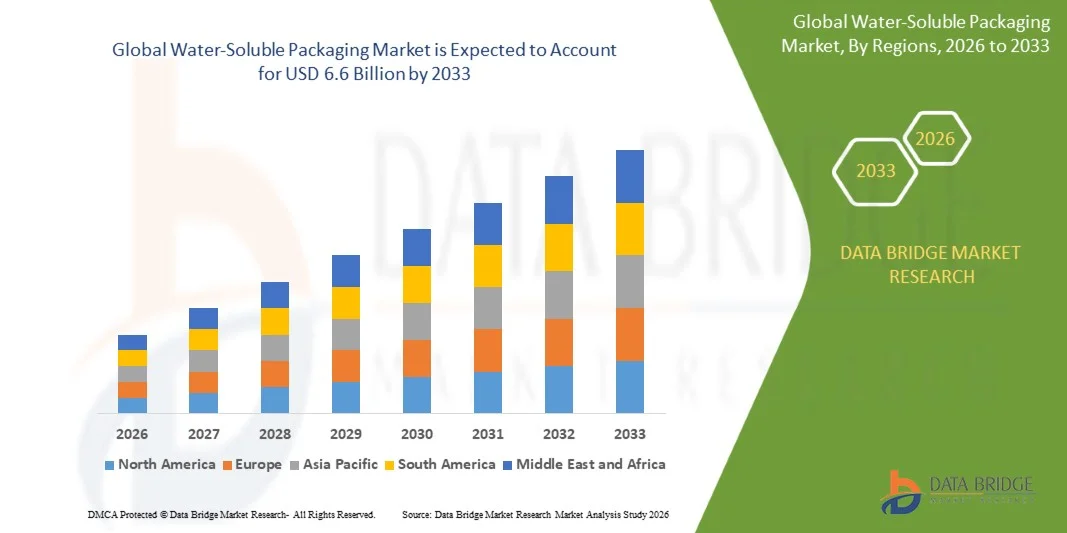
- De acordo com a análise do mercado Data Bridge Research, o mercado de embalagens de água foi avaliado em3,85 mil milhões de dólares em 2025 eprojectada para atingir6,6 mil milhões de USD até 2033,crescimento em umaCAGR de 7,10 % de 2026 a 2033
- O mercado está a registar um crescimento constante em resultado do aumento da sensibilização ambiental, de regulamentações rigorosas em matéria de plásticos de uso único e de uma crescente preferência dos consumidores por soluções de embalagem sustentáveis.
- O mercado global de embalagens solúveis em água evoluiu significativamente, com os consumidores se tornando mais ambientalmente conscientes e exigentes soluções de embalagens que se dissolvem completamente na água sem deixar resíduos nocivos. A embalagem água-solúvel refere-se a materiais de embalagem que se dissolvem completamente na água sem deixar resíduos nocivos, principalmente feitos a partir de polímeros biodegradáveis, como o álcool polivinílico (AVP). O mercado global de embalagens hidrossolúvel está pronto para uma expansão contínua nos próximos anos, impulsionado pela crescente demanda por soluções de embalagens sustentáveis e pelo rápido crescimento da indústria de embalagens ecológicas em todo o mundo.
Tamanho e previsão do mercado
- Valor de Mercado Global (2025): USD 3,85 Bilhões
- Valor de mercado esperado (2033): USD 6.6 bilhões
- Previsões CAGR (2026 a 2033): 7,10 %
- Região líder em 2025: Ásia Pacífico
- Região de crescimento mais rápido: Ásia Pacífico
Quais são os principais takeaways do mercado de embalagens de água-solúvel
- A Ásia Pacífico dominou o mercado global de embalagens hidrossolúvel, com a maior parcela de receita de 42,18% em 2025, apoiada pela profunda capacidade de fabricação, know-how técnico e forte demanda das indústrias de detergente, agroquímica e saúde em toda a região.
- Espera-se também que a Ásia-Pacífico seja a região de crescimento mais rápido durante o período de previsão, alimentada por regulamentos ambientais crescentes, sensibilização para filmes sustentáveis e investimentos crescentes em eco-embalagem em países como China e Índia. O mercado global de embalagens Water-Soluble foi avaliado em USD 4,02 bilhões em 2025 e está projetado para atingir USD 6,41 bilhões em 2034
- O segmento de filmes representou o maior market share de 48,73% em 2025, impulsionado pelo seu uso generalizado em vagens de detergente, embalagens agroquímicas e aplicações de alimentos devido à sua excelente solubilidade, capacidade de formação de filmes e compatibilidade com uma variedade de ingredientes ativos.
- O segmento de aplicação de detergentes representou o maior market share de 37,42% em 2025, impulsionado pela crescente demanda por vagens de detergente de uso único e pela conveniência que oferecem na prevenção de desperdícios, derramamentos e overdose.
- O tipo de embalagem de vagens e cápsulas é o segmento de crescimento mais rápido, projetado para registrar um CAGR de 7,40% de 2026 a 2033, impulsionado pelo aumento da demanda por soluções de embalagem de uso único e dose unitária em detergentes domésticos, cuidados pessoais e aplicações de alimentos.
Segmentação do Mercado de Embalagens Sólidas de Água
|
Atributos |
Insights sobre o mercado chave da embalagem de água-solúvel |
|
Segmentos Cobertos |
|
|
Países abrangidos |
América do Norte
Europa
Ásia- Pacífico
Médio Oriente e África
América do Sul
|
|
Jogadores do mercado chave |
|
|
Oportunidades de Mercado |
|
|
Informações sobre o Valor Adicionado |
Além dos insights sobre cenários de mercado, como valor de mercado, taxa de crescimento, segmentação, cobertura geográfica e principais atores, os relatórios de mercado curados pela Data Bridge Market Research também incluem análise de especialistas em profundidade, análise de preços, análise de compartilhamento de marca, inquérito ao consumidor, análise demografia, análise da cadeia de suprimentos, análise da cadeia de valor, visão geral da matéria-prima/consumíveis, critérios de seleção de fornecedores, Análise de PESTLE, Análise de Porter e marco regulatório. |
Qual é a tendência chave no mercado de embalagens de água-solúvel
- O mercado de embalagens com solução de água está passando por uma transformação significativa em resultado de crescentes preocupações ambientais, regulamentos rigorosos de sustentabilidade e crescente preferência dos consumidores por soluções de embalagem ecológicas. O mercado global de embalagens Water-Soluble foi avaliado em 4,02 bilhões de dólares em 2025 e está previsto para chegar a 6,41 bilhões de dólares em 2034, registrando um CAGR de 5,34% durante o período previsto (2026-2034).
- Por exemplo, em outubro de 2025, a SmartSolve lançou o PureNil 0, o primeiro substrato de embalagem 100% bio-baseado em plástico livre do mundo, projetado para ajudar as marcas a alcançar metas avançadas de sustentabilidade.
- Por exemplo, a Kuraray oferece resinas e filmes de PVA biodegradáveis para aplicações de embalagens sólidas em detergentes, agroquímicos e produtos industriais, ampliando significativamente o escopo de aplicação para além dos usos tradicionais.
- Por exemplo, em dezembro de 2025, o Grupo Navico anunciou que está usando sacos hidropol hidrossolúveis Aquapak para proteger sua eletrônica marinha durante o transporte, uma vez que a Hydropol é dissolvível, biodegradável e não tóxica para a vida marinha.
- À medida que os fabricantes continuam priorizando a sustentabilidade e investindo em tecnologias inovadoras, espera-se que a adoção de embalagens com solução de água acelere, reforçando sua posição como componente central da indústria de embalagens sustentáveis.
Quais são os principais drivers do mercado de embalagens de água-solúvel
- As crescentes preocupações ambientais e regulamentos rigorosos sobre plásticos de uso único são os principais motores da demanda de embalagens de água-solúvel. Os governos em todo o mundo estão implementando proibições sobre plásticos de uso único, incentivando as indústrias a mudar para alternativas biodegradáveis.
- Por exemplo, os quadros regulamentares, como a Directiva relativa aos plásticos de utilização única da UE e a proibição crescente de embalagens não biodegradáveis na América do Norte, são catalisadores de crescimento significativos. Os Estados Unidos mostram impulso através de endossos EPA para embalagens de pesticidas solúveis em água e leis estaduais de Responsabilidade Extendida do Produtor (EPR).
- A conveniência e eficiência que a embalagem de água-soluble proporciona em aplicação está impulsionando significativamente o crescimento do mercado. Indústrias como detergentes e agroquímicos se beneficiam da dosagem precisa e facilidade de uso que essas embalagens oferecem, o que aumenta a segurança do produto, impedindo o contato humano com substâncias potencialmente prejudiciais.
- Por exemplo, o segmento de detergentes representou a maior quota de mercado de 37,42% em 2025, impulsionada pela crescente demanda por vagens de detergente de uso único e pela conveniência que oferecem na prevenção de desperdícios, derramamentos e overdoses.
- A crescente demanda por soluções de embalagem sustentáveis em várias indústrias está impulsionando a adoção generalizada. Por exemplo, o setor agrícola atualmente domina o mercado de embalagens Água-Soluble, representando aproximadamente 38,0% da participação global em 2025, com filmes e bolsas Água-Soluble preferidos para a entrega de pesticidas, fertilizantes e sementes.
- À medida que as regulamentações ambientais continuarem a apertar e a consciência dos consumidores sobre a poluição plástica aumentar, as embalagens sólidas com água continuarão a ser indispensáveis para atingir metas de sustentabilidade em várias indústrias.
Que fatores estão desafiando o crescimento do mercado de embalagens de água-solúvel
- Os elevados custos de produção e a disponibilidade limitada de materiais e máquinas especializados constituem restrições significativas ao crescimento do mercado. A embalagem com solução de água muitas vezes requer materiais especializados e processos de fabricação, que podem ser mais caros do que as embalagens plásticas convencionais.
- Por exemplo, a fabricação de polímeros hidrossolúvel permanece 2-3 vezes mais cara do que os plásticos convencionais, criando resistência à adoção em mercados sensíveis aos preços e limitando a adoção entre consumidores sensíveis aos preços, particularmente em economias emergentes.
- A resistência e durabilidade limitada do material para todas as aplicações representam desafios significativos. Certas formulações carecem da resistência necessária à umidade, calor e estresse mecânico, afetando a usabilidade em setores específicos.
- Por exemplo, o mau desempenho da barreira gasosa limita o prazo de validade a menos de um ano, restringindo a sua utilização em aplicações que exigem estabilidade a longo prazo e limitando a sua adopção em determinadas aplicações alimentares e farmacêuticas.
- Superar esses desafios requer um maior investimento em pesquisa e desenvolvimento para melhorar o desempenho e a relação custo-efetividade, colaboração com startups para soluções de codevelop e estratégias de marketing eficazes para promover os benefícios da embalagem água-soluble.
Como é segmentado o mercado de embalagens de água-solúvel
O mercado de embalagens com solução de água é segmentado com base em material, tipo de embalagem e aplicação.
-
Por Material
Com base no material, o mercado global de embalagens de água-solúvel é segmentado em álcool polivinílico (PVOH/PVA), polímeros à base de amido, polímeros à base de celulose, entre outros. O segmento de álcool polivinílico (PVOH/PVA) dominou o mercado com uma participação de 58,50% em 2025, impulsionado por excelentes propriedades formadoras de filmes, solubilidade de água superior e adoção generalizada em detergentes, agroquímicos e aplicações industriais. Estes materiais fornecem alta resistência à tração e completa dissolução sem deixar resíduos tóxicos, tornando-os a escolha preferida para fabricantes de embalagens e indústrias de uso final.
O segmento de polímeros à base de celulose é projetado para registrar o crescimento mais rápido em um CAGR de 8,40% de 2026 para 2033, impulsionado pelo aumento da preferência do consumidor por materiais de embalagem bio-baseados e renováveis. Avanços nas tecnologias de extração de celulose, crescente conscientização ambiental e crescente demanda por soluções de embalagens sustentáveis estão acelerando a expansão do segmento.
-
Por tipo de embalagem
Com base no tipo de embalagem, o mercado global de embalagens com solução de água é segmentado em filmes e sacos, bolsas, saquetas, cápsulas, entre outros. O segmento de filmes e sacos dominou o mercado com uma participação de 41,25% em 2025, devido ao uso extensivo em aplicações industriais, produtos químicos agrícolas e embalagens unitárias para detergentes e produtos de limpeza. Esses formatos de embalagem oferecem funcionalidade superior, facilidade de manuseio e dissolução completa, tornando-os a escolha preferida para fabricantes em várias indústrias.
Espera-se que o segmento de cápsulas e cápsulas testemunhe o crescimento mais rápido em um CAGR de 7,40% de 2026 a 2033, impulsionado pelo aumento da demanda por soluções de embalagem de uso único e dose unitária em detergentes domésticos, cuidados pessoais e aplicações de alimentos. A crescente preferência do consumidor por formatos convenientes e pré-medidos e a adoção crescente de cápsulas solúveis em água estão acelerando a expansão do segmento.
-
Por Aplicação
Com base na aplicação, o mercado global de embalagens de água-solúvel é segmentado em detergentes e produtos de limpeza, agroquímicos, produtos químicos de tratamento de água, alimentos e bebidas, entre outros. O segmento de detergentes e produtos de limpeza dominou o mercado com uma participação de 39,40% em 2025, apoiada pela adoção generalizada de vagens de detergente de dose unitária e crescente demanda do consumidor por soluções de limpeza convenientes e pré-medidas. As crescentes preocupações ambientais e a preferência por alternativas de embalagem ecológicas reforçam a posição de liderança deste segmento.
Espera-se que o segmento de produtos químicos de tratamento de água testemunhe o crescimento mais rápido em um CAGR de 8,60% de 2026 a 2033, impulsionado pelo aumento da demanda por soluções de dosagem química seguras e eficientes em aplicações de tratamento de água industrial e municipal. O aumento da regulamentação ambiental em matéria de manipulação química, a crescente adoção de embalagens solúveis em água nas indústrias químicas e o aumento dos investimentos em projetos de infraestrutura hídrica estão acelerando a expansão do mercado neste segmento.
Qual é a região que detém a maior parte do mercado de embalagens com solução de água
- A Ásia Pacífico dominou o mercado global de embalagens de água-solúveis e representou a maior parcela de receita de 42,18% em 2025, apoiada por profunda capacidade de fabricação, know-how técnico e forte demanda das indústrias de detergente, agroquímica e saúde em toda a região.
- A região também beneficia com o aumento da regulamentação ambiental, o aumento da sensibilização para filmes sustentáveis e o aumento dos investimentos em eco-embalagem em países como China e Índia. O foco crescente em soluções de embalagem sustentáveis e proibições governamentais em plásticos de uso único continua a fortalecer a posição de liderança da Ásia Pacífico no mercado global.
U.S. Water-Soluble Packaging Market Insight
O mercado de embalagens de água-Soluble dos EUA está experimentando crescimento constante, apoiado por fortes regulamentos ambientais, alta consciência do consumidor sobre embalagens sustentáveis, e a adoção generalizada de cápsulas de lavanderia de dose única e tablets de máquina de lavar louça em famílias americanas. Projeta-se que o mercado continue sua trajetória de crescimento constante, impulsionada por endossos da EPA para embalagens de pesticidas solúveis em água e leis estaduais de Responsabilidade Extendida do Produtor (EPR). Além disso, a integração de tecnologias avançadas de polímeros e o aumento dos investimentos em embalagens sustentáveis estão melhorando o desempenho do produto e os benefícios ambientais, posicionando os EUA como um centro de inovação chave na indústria de embalagens de água-solúvel.
China Água-Soluble Packaging Market Insight
O mercado de embalagens de água-solúvel da China está se expandindo rapidamente devido à forte base de fabricação do país, aumentando a conscientização ambiental e aumentando o foco do governo na redução de resíduos plásticos. O governo proíbe plásticos de uso único, a modernização agrícola e a crescente presença de marcas internacionais que ampliam suas iniciativas de embalagem sustentável estão impulsionando significativamente a demanda do mercado. Avanços contínuos nas tecnologias de polímeros biodegradáveis, juntamente com forte foco governamental na sustentabilidade e inovação, estão impulsionando ainda mais o crescimento do mercado na China.
Índia Água-Soluble Packaging Market Insight
O mercado de embalagens hidrossolúvel da Índia está testemunhando um aumento na demanda, impulsionado por múltiplos fatores, incluindo a modernização agrícola, reformas de embalagens e a modernização da agricultura na Índia e no Sudeste Asiático. A sensibilização para as embalagens sustentáveis, o aumento da regulamentação ambiental e a crescente procura de soluções de embalagens ecológicas entre os sectores dos detergentes, dos agroquímicos e dos cuidados de saúde apoiam a expansão regional do mercado. Além disso, a crescente presença de marcas internacionais e a crescente penetração no comércio eletrônico estão acelerando a adoção de mercado em setores comerciais e industriais.
Japan Water-Soluble Packaging Market Insight
O mercado de embalagens de água-Soluble Japão está testemunhando crescimento consistente devido às crescentes preocupações ambientais, regulamentos rigorosos sobre plásticos de uso único, e a experiência do país em tecnologia de polímeros e desenvolvimento de produtos especiais. A forte posição do Japão em embalagens químicas e farmacêuticas especializadas, combinada com sua ênfase na inovação de produtos, continua apoiando a expansão do mercado. Além disso, a crescente integração de materiais avançados e o foco do país em soluções de embalagem sustentáveis e eficientes contribuem ainda mais para o crescimento do mercado.
Quais são as principais empresas do mercado de embalagens de água
A indústria de Embalagens Sólidas de Água é liderada principalmente por empresas bem estabelecidas, incluindo:
- Kuraray Co., Ltd. (Japão)
- MonoSol LLC (EUA)
- Sekisui Chemical Co., Ltd. (Japão)
- Mitsubishi Chemical Group Corporation (Japão)
- Aicello Corporation (Japão)
- Aquapak Polymers Ltd. (U.K.)
- Cortec Corporation (EUA)
- Arrow GreenTech Ltd. (Índia)
- Lactipas (França)
- Changzhou Water-Soluble Co., Ltd. (China)
- Nippon Synthetic Chemical Industry Co., Ltd. (Japão)
- AMC (UK) Ltd. (UK)
- Soltec Development SA (Suíça)
- Aqua Pack Technologies, Inc. (EUA)
- Lithey Inc. (EUA)
Quais são as últimas evoluções no mercado de embalagens de água-solúvel
- Em junho de 2026, Lactips (França) e SmartSolve (EUA) revelaram soluções de embalagem solúveis em água e sem microplásticos na Edição Spéciale da Luxe Pack em Paris, projetadas para os setores de beleza, cosméticos e cuidados pessoais. As aplicações são baseadas no PureNil 0, um papel funcionalizado baseado em bio-base que permite embalagens flexíveis sem plástico que se dispersam rapidamente em água sem deixar resíduos microplásticos. Esta colaboração combina a tecnologia de polímero natural da Lactips com os materiais de papel solúveis em água da SmartSolve para acelerar a adoção de embalagens sem plástico em todo o mundo.
- Em junho de 2026, a Aicello Corporation (Japão) recebeu uma patente americana para "Filme solúvel em água para cápsula de detergente líquido e cápsula de detergente líquido" (Patent No. EP4674786A1). A patente abrange uma película solúvel em água para moldagem de cápsulas de embalagem capazes de incluir agentes químicos, especialmente detergentes, com propriedades robustas de prevenção de vazamentos.
- Em maio de 2026, a TerraSafe anunciou o lançamento de dois produtos inovadores sem plástico após sua fusão com a DisSolves: lençóis de detergente solúvel em água e embalagens de vagem comestíveis, agora disponíveis para pré-encomenda. As vagens comestíveis e solúveis em água são fabricadas a partir de ingredientes naturais, seguros de alimentos que se dissolvem de forma limpa em bebidas sem resíduos de plástico ou resíduos, projetados para produtos em pó, como proteína, café e suplementos. Esta fusão une a tecnologia pioneira de filmes solúveis em água da DisSolves com a plataforma da TerraSafe para acelerar a missão de tornar os bens de consumo sem plástico a escolha mais simples e mais inteligente.
- Em março de 2026, a Kuraray America apresentou inovação em embalagens sustentáveis na Sustentabilidade em Embalagens US 2026, apresentando seus revestimentos de barreira à base de álcool polivinílico (PVOH) KURARAY POVAL e EXCEVAL. Esses revestimentos são projetados para permitir a reciclagem em embalagens flexíveis monomateriais sem comprometer o desempenho, fornecendo água, graxa e barreira de gás mesmo em condições de alta umidade. Enraizado na tecnologia PVOH, o polímero é inerentemente biodegradável e oferece soluções de alto desempenho para aplicações de papel sustentável e embalagens flexíveis.
- Em janeiro de 2026, a Aquapak Polymers Ltd. (U.K.) garantiu um investimento estratégico do fundo de private equity de Londres ADM Capital Europe's Cibus Enterprise Fund para acelerar o desenvolvimento do seu polímero Hydropol e expandir sua aplicação no setor alimentar global. Hydropol é um novo polímero biodegradável, não tóxico e solúvel em água que é três vezes mais forte do que alternativas e pode ser facilmente processado em filmes, revestimentos, laminados e moldes para injeção. O investimento permite ao Aquapak acelerar o desenvolvimento e expandir a aplicação no setor alimentar global.
- Em janeiro de 2026, a SmartSolve (EUA) anunciou o lançamento comercial do PureNil 0, o primeiro substrato de embalagem flexível sem plástico, 100% bio-baseado, imprimível e flushável. O material entrou na produção da rampa em 8 de janeiro de 2026, após validação bem sucedida e prontidão para a produção. O PureNil 0 funciona com equipamento padrão de selo de preenchimento, permitindo que os fabricantes adotem embalagens sem plástico sem modificações do equipamento, e é certificado para contato direto com alimentos. As aplicações do produto abrangem limpeza doméstica, beleza, cuidados pessoais, agricultura e aplicações específicas de saúde.
SKU-
Obtenha acesso online ao relatório sobre a primeira nuvem de inteligência de mercado do mundo

- Painel interativo de análise de dados
- Painel de análise da empresa para oportunidades de elevado potencial de crescimento
- Acesso de analista de pesquisa para personalização e customização. consultas
- Análise da concorrência com painel interativo
- Últimas notícias, atualizações e atualizações Análise de tendências
- Aproveite o poder da análise de benchmark para um rastreio abrangente da concorrência
Metodologia de Investigação
A recolha de dados e a análise do ano base são feitas através de módulos de recolha de dados com amostras grandes. A etapa inclui a obtenção de informações de mercado ou dados relacionados através de diversas fontes e estratégias. Inclui examinar e planear antecipadamente todos os dados adquiridos no passado. Da mesma forma, envolve o exame de inconsistências de informação observadas em diferentes fontes de informação. Os dados de mercado são analisados e estimados utilizando modelos estatísticos e coerentes de mercado. Além disso, a análise da quota de mercado e a análise das principais tendências são os principais fatores de sucesso no relatório de mercado. Para saber mais, solicite uma chamada de analista ou abra a sua consulta.
A principal metodologia de investigação utilizada pela equipa de investigação do DBMR é a triangulação de dados que envolve a mineração de dados, a análise do impacto das variáveis de dados no mercado e a validação primária (especialista do setor). Os modelos de dados incluem grelha de posicionamento de fornecedores, análise da linha de tempo do mercado, visão geral e guia de mercado, grelha de posicionamento da empresa, análise de patentes, análise de preços, análise da quota de mercado da empresa, normas de medição, análise global versus regional e de participação dos fornecedores. Para saber mais sobre a metodologia de investigação, faça uma consulta para falar com os nossos especialistas do setor.
Personalização disponível
A Data Bridge Market Research é líder em investigação formativa avançada. Orgulhamo-nos de servir os nossos clientes novos e existentes com dados e análises que correspondem e atendem aos seus objetivos. O relatório pode ser personalizado para incluir análise de tendências de preços de marcas-alvo, compreensão do mercado para países adicionais (solicite a lista de países), dados de resultados de ensaios clínicos, revisão de literatura, mercado remodelado e análise de base de produtos . A análise de mercado dos concorrentes-alvo pode ser analisada desde análises baseadas em tecnologia até estratégias de carteira de mercado. Podemos adicionar quantos concorrentes necessitar de dados no formato e estilo de dados que procura. A nossa equipa de analistas também pode fornecer dados em tabelas dinâmicas de ficheiros Excel em bruto (livro de factos) ou pode ajudá-lo a criar apresentações a partir dos conjuntos de dados disponíveis no relatório.











