



Middle East and Africa Data Center Busway Market Segmentation, By Product Type (Air Splicing Busway (BMC), Intensive Insulation Plug Busway (CMC), High Strength Enclosed Busway (CFW), Power Distribution Units (PDUs), and Others), Type (3-Phase 4-Wire, 3-Phase 5-Wire, and Others), Implementation (Raised Floor and Ceiling Overhead), Data Center Type (Mid-sized & Enterprise Data Center and Large Data Center), Current Ampere (Low and High), Vertical (Banking, Financial Services and Insurance (BFSI), IT & Telecom, Government & Defence, Healthcare, Retail & E-commerce, Research & Academia, Energy & Utilities, Manufacturing, and Others) - Industry Trends and Forecast to 2033
O que é o Oriente Médio e África Data Center Busway Market Tamanho e taxa de crescimento
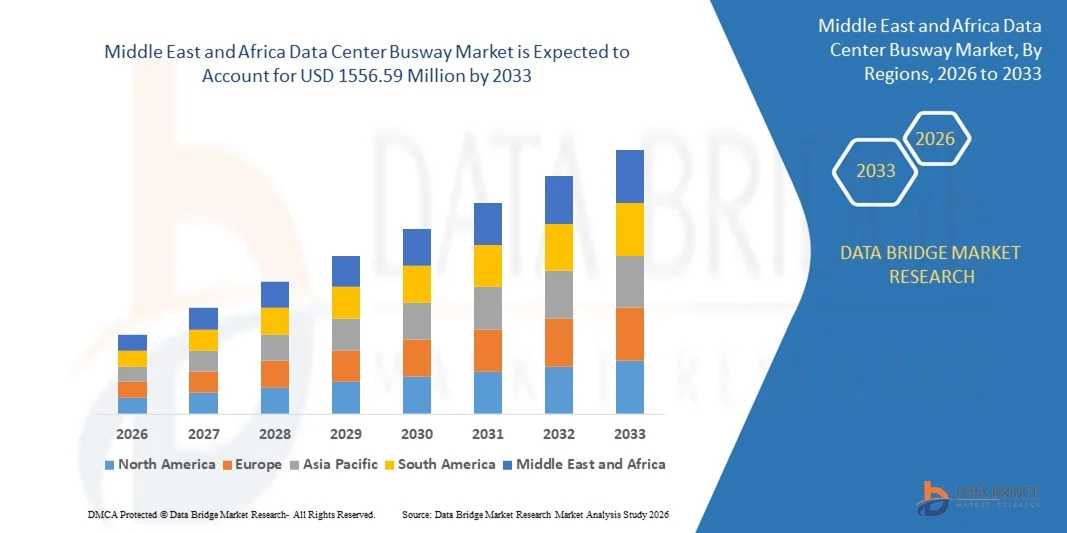
- Como por Data Bridge Market Research Analysis o Oriente Médio e África Data Center Busway tamanho do mercado foi avaliado em926,53 milhões de USD em 2025e espera-se alcançar1556,59 milhões de USD até 2033, em umaCAGR de 6,70%durante o período de previsão
- Este crescimento é impulsionado por fatores como a adoção crescente de computação em nuvem, expansão rápida de data centers e ênfase crescente na infraestrutura modular
Tamanho do mercado e previsão:
- Valor de mercado global (2025):926,53 milhões de USD
- Valor de mercado previsto (2033):1556,59 milhões de USD
- Previsões CAGR (2026-2033):6.70%
Quais são os principais takeaways do mercado de Busway Data Center
- O mercado de busways de data center está crescendo constantemente devido à crescente necessidade de distribuição de energia flexível e confiável nas modernas infraestruturas de TI
- Por exemplo, a Equinix expandiu seu data center SG5 em Cingapura em 2024 usando sistemas avançados de ônibus, e a Digital Realty integrou soluções semelhantes em seu novo campus de data center em Osaka para suportar cargas de energia de alta capacidade
- A mudança para projetos modulares e escaláveis de data centers está impulsionando a adoção de sistemas de ônibus; por exemplo, o centro de dados 2023 da Microsoft em Cheyenne, Wyoming, implementados ônibus modulares para permitir uma expansão rápida, e o centro de dados Clonee do Facebook na Irlanda usou ônibus para minimizar o tempo de inatividade durante atualizações de infraestrutura
- Os autocarros estão a ser preferidos em relação ao cabo tradicional porque reduzem o congestionamento dos cabos e melhoram a gestão do fluxo de ar em ambientes de alta densidade
- O U.A.E dominou o mercado de ônibus de centro de dados do Oriente Médio e África com a maior parte de receita de 46,8% em 2024, apoiado por fortes investimentos em instalações de hiperescala, iniciativas de cidades inteligentes e expansão de regiões de nuvem global em Dubai e Abu Dhabi
- A Arábia Saudita está presenciando a taxa de crescimento mais rápida de 8,36% na região, impulsionada por iniciativas da Visão 2030, rápida transformação digital e investimentos em larga escala em infraestrutura de data center
- O segmento Intensive Insulation Plug Busway (CMC) dominou o mercado com uma participação de 38,6% em 2024, impulsionado pelo seu desempenho de isolamento superior, estrutura compacta e elevados padrões de segurança
Denunciar Escopo e Data Center Busway Mercado Segmentação
|
Atributos |
Data Center Busway Key Market Insights |
|
Segmentos Cobertos |
|
|
Países abrangidos |
Médio Oriente e África
|
|
Jogadores do mercado chave |
|
|
Oportunidades de Mercado |
|
|
Informações sobre o Valor Adicionado |
Além dos insights sobre cenários de mercado, como valor de mercado, taxa de crescimento, segmentação, cobertura geográfica e principais atores, os relatórios de mercado curados pela Data Bridge Market Research também incluem análise de especialistas em profundidade, análise de preços, análise de compartilhamento de marca, inquérito ao consumidor, análise demografia, análise da cadeia de suprimentos, análise da cadeia de valor, visão geral da matéria-prima/consumíveis, critérios de seleção de fornecedores, Análise de PESTLE, Análise de Porter e marco regulatório. |
Qual é a tendência chave no mercado de Busway Data Center
Preferência ascendente para sistemas de distribuição de energia plug-and-Play
- Sistemas de distribuição de energia plug-and-play estão ganhando popularidade em data centers por sua instalação rápida e necessidade mínima de fiação complexa
- Por exemplo, a Digital Realty integrou soluções de busway plug-and-play em suas instalações de Cingapura para acelerar as linhas do tempo de implantação
- Esses sistemas suportam escalabilidade rápida, permitindo que os data centers expandam ou reconfigurem layouts de energia sem grande paralisação
- Por exemplo, o data center modular da Microsoft na Suécia usou componentes plug-and-play para permitir atualizações perfeitas com o aumento da demanda
- A natureza modular dos busways plug-and-play permite a troca a quente, onde as unidades de energia podem ser adicionadas ou removidas sem interromper as operações em curso, tornando-as ideais para ambientes que exigem alta disponibilidade e flexibilidade
- Os data centers se beneficiam da redução do tempo de instalação e dos custos de trabalho ao usar sistemas plug-and-play, que é especialmente valioso durante expansões ou build-outs sensíveis ao tempo
- Muitos fabricantes líderes, como Starline e Schneider Electric, estão oferecendo soluções avançadas de busway plug-and-play com recursos de segurança integrados e monitoramento inteligente, alinhados com a crescente demanda de infraestrutura de energia amigável e eficiente em centros de dados em larga escala
Quais são os Principais Drivers do Mercado de Busway Data Center
- A crescente demanda por distribuição de energia escalável e eficiente em energia é um dos principais motores do mercado de ônibus de data center, uma vez que as organizações exigem infraestrutura flexível para atender cargas de trabalho digitais em evolução
- Os sistemas tradicionais de cabeamento muitas vezes carecem da escalabilidade e eficiência de instalação necessárias para operações modernas, razão pela qual os sistemas de ônibus modulares estão sendo adotados para uma distribuição de energia mais rápida e econômica
- Por exemplo, Amazon Web Services em 2023 expandiu sua pegada de data center no norte da Virgínia usando infraestrutura modular, incluindo sistemas de ônibus, para acelerar a implantação, otimizando a eficiência energética
- Sistemas Busway ajudam a reduzir o congestionamento do cabo, melhorar o fluxo de ar e melhorar a eficiência de resfriamento, que suporta esforços de sustentabilidade e reduz custos operacionais
- Por exemplo, o data center da Microsoft na Suécia usa sistemas de busway simplificados para manter o fluxo de energia sustentável ao mesmo tempo que suporta crescentes demandas de nuvem
- Os principais fornecedores de tecnologia estão agora priorizando soluções de energia que podem escalar rapidamente e reduzir o tempo de inatividade, tornando os sistemas de ônibus uma opção preferida para centros de dados de hiperescala e nível empresarial
Que fator está desafiando o crescimento do mercado de Busway Data Center
- Um dos principais desafios na adoção de sistemas de busway data center é seu alto custo inicial, que inclui equipamentos, instalação especializada e projeto de engenharia detalhado que pode sobrecarregar os orçamentos de pequenas e médias empresas
- O requisito de layouts personalizados baseados em densidade de energia, arquitetura e objetivos operacionais torna esses sistemas complexos para projetar e implantar, especialmente para instalações que exigem configurações personalizadas
- Por exemplo, a implantação de um ônibus personalizado em um data center de nível 4 operado pela Equinix em Singapura envolveu engenharia de precisão e componentes de ponta para garantir o tempo de inatividade zero e tolerância total à falha
- A restauração de data centers existentes apresenta complicações adicionais devido às limitações espaciais e à necessidade de manutenção de serviços ininterruptos
- Por exemplo, quando uma instituição financeira em Londres actualizou o seu legado com sistemas de autocarros, a instalação teve de ser feita em fases durante as horas fora do pico para evitar perturbações de serviço
- Embora os sistemas de auto-estradas proporcionem benefícios a longo prazo em termos de eficiência e manutenção, o seu elevado investimento inicial e complexidade de concepção continuam a funcionar como grandes restrições para operações conscientes do orçamento ou em menor escala
Como é segmentado o mercado de Busway Data Center
O mercado é segmentado com base emtipo de produto, tipo, implementação, tipo de data center, ampere atual e vertical.
- Por tipo de produto
Com base no tipo de produto, o mercado de busway data center é segmentado em Air Splicing Busway (BMC), Intensive Insulation Plug Busway (CMC), High Strength Enclosed Busway (CFW), Power Distribution Units (PDUs), e Outros. O segmento Intensive Insulation Plug Busway (CMC) dominou o mercado com uma participação de 38,6% em 2024, impulsionado pelo seu desempenho de isolamento superior, estrutura compacta e elevados padrões de segurança. Esses sistemas são amplamente adotados em data centers modernos devido à sua eficiente transmissão de energia, flexibilidade em configurações de tap-off e adequação para ambientes de rack de alta densidade. Seu design modular suporta escalabilidade e simplifica a manutenção, tornando-os ideais para empresas e instalações de hiperescala.
O segmento High Strength Enclosed Busway (CFW) é projetado para testemunhar o CAGR mais rápido de 2025 a 2032, suportado pela crescente demanda por maior durabilidade mecânica, maior capacidade de carga e melhor proteção em data centers de grande escala e missão crítica.
- Por Tipo
Com base no tipo, o mercado é segmentado em 3 Phase 4-Wire, 3 Phase 5-Wire, e Outros. O segmento 3-Fase 4-Wire detinha o maior market share de 56,8% em 2024, pois continua sendo a configuração padrão para distribuição de energia eficiente e equilibrada na maioria dos data centers comerciais e empresariais. Ele fornece aterramento neutro confiável e suporta gerenciamento de carga estável em racks de servidores e equipamentos de TI. A simplicidade, a relação custo-efetividade e a compatibilidade com a infraestrutura elétrica existente contribuem ainda mais para sua dominância.
Espera-se que o segmento de 5 fios de 3 fases registre o CAGR mais rápido de 2025 a 2032, impulsionado pelo aumento da adoção em data centers de alta densidade e hiperescala que exigem maior confiabilidade de aterramento, maior segurança e suporte para cargas de TI sensíveis.
- Por Implementação
Com base na implementação, o mercado de busway data center é segmentado para o andar levantado e teto Overhead. O segmento Overhead do teto dominou o mercado com uma participação de 61,3% em 2024, devido à sua flexibilidade, facilidade de manutenção e melhor gestão do fluxo aéreo. Sistemas overhead permitem roteamento eficiente de cabos, escalabilidade simplificada e congestionamento de piso reduzido, que é crítico em ambientes de data center de alta densidade. Esta configuração também aumenta a eficiência de resfriamento e segurança operacional.
Projeta-se que o segmento de Piso Elevado cresça a um ritmo constante, particularmente em data centers legados e retrofit, onde a infraestrutura existente suporta a distribuição sob piso. No entanto, espera-se que a implementação de sobrecarga mantenha uma expansão global mais rápida devido às preferências modernas de design de data center.
- Por tipo de data center
Com base no tipo data center, o mercado é segmentado em Mid-size & Enterprise Data Center e Large Data Center. O segmento Large Data Center dominou o mercado com 64,9% de participação em 2024, impulsionado pela rápida expansão de instalações de hiperescala, provedores de serviços de nuvem e centros de colocação. Essas instalações requerem sistemas de distribuição de energia de alta capacidade, escalável e eficiente para suportar implantações maciças de servidores e altas cargas de trabalho de computação.
Espera-se que o segmento Mid-size & Enterprise Data Center testemunhe o CAGR mais rápido de 2025 a 2032, alimentado pelo aumento da transformação digital entre empresas, adoção crescente de data centers de borda e crescente investimento em infraestrutura de nuvem privada.
- Por Ampere Atual
Com base no atual ampere, o mercado é segmentado em Baixo e Alto. O segmento de alta corrente dominou o mercado com uma participação de 59,4% em 2024, apoiada pela crescente demanda por computação de alta potência, cargas de trabalho de IA e infraestrutura em nuvem de grande escala. Os data centers de hiperescala requerem sistemas de ônibus capazes de manusear cargas elétricas substanciais de forma eficiente e segura.
O segmento de baixa corrente é projetado para crescer no CAGR mais rápido de 2025 para 2032, principalmente devido à implantação crescente de data centers modulares e de borda, que operam em capacidades de energia comparativamente mais baixas, mas exigem sistemas de distribuição flexíveis e eficientes em termos de custos.
- Por Vertical
Com base na vertical, o mercado de busway data center é segmentado em Banca, Serviços Financeiros e Seguros (BFSI), TI e Telecom, Governo e Defesa, Saúde, Varejo e Comércio Eletrônico, Pesquisa & Academia, Energia & Utilitários, Fabricação e Outros. O segmento de TI e Telecom dominou o mercado com uma participação de 41,2% em 2024, impulsionado pela rápida expansão da nuvem, implantação de 5G, crescimento do tráfego de dados e crescente dependência em serviços digitais. Investimentos contínuos em hiperescala e instalações de colocação impulsionam significativamente a adoção de ônibus.
Espera-se que o segmento de varejo e comércio eletrônico registre o CAGR mais rápido de 2025 a 2032, impulsionado pelo aumento das transações on-line, ecossistemas de pagamento digital e expansão de data centers regionais para apoiar o processamento em tempo real e análise de dados do cliente.
Qual é a região que detém a maior parte do mercado de Busway Data Center
- A U.A.E dominou o mercado de ônibus de centro de dados do Oriente Médio e África com a maior parte de receita de 46,8% em 2024, apoiado por fortes investimentos em instalações de hiperescala, iniciativas de cidades inteligentes e expansão de regiões de nuvem global em Dubai e Abu Dhabi. Desenvolvimento maciço de infraestrutura de IA, ecossistemas fintech e plataformas governamentais digitais impulsionam a demanda por sistemas de ônibus modulares e de alto amperamento
- A adoção de instalações gerais eficientes em termos energéticos e tecnologias avançadas de monitoramento elétrico aumenta a confiabilidade e escalabilidade das instalações. A posição estratégica do país enquanto centro digital regional reforça ainda mais a sua posição dominante no mercado
Dados da Arábia Saudita Busway Market Insight
A Arábia Saudita está presenciando a taxa de crescimento mais rápida de 8,36% na região, impulsionada por iniciativas da Visão 2030, rápida transformação digital e investimentos em larga escala em infraestrutura de data centers. A expansão de serviços em nuvem, plataformas de comércio eletrônico e programas de digitalização do governo acelera a demanda por sistemas de ônibus escaláveis e eficientes em termos de energia. O aumento da implantação de instalações de hiperescala e de recolocação apoia ainda o forte crescimento do mercado em todo o país.
África do Sul Data Center Busway Market Insight
A África do Sul está se expandindo constantemente, apoiada por crescente infraestrutura de TI empresarial, adoção crescente de nuvem e crescente desenvolvimento de instalações de colocação. A procura de sistemas de autocarro fiáveis e eficientes em termos de custos aumenta com a modernização das redes de distribuição de energia. A implementação de sistemas superiores modulares e soluções de segurança elétrica melhoradas aumenta a eficiência operacional. Melhorias contínuas de infraestrutura posicionam a África do Sul como um mercado de crescimento emergente dentro do Oriente Médio e África Data Center Busway paisagem.
Quais são as principais empresas no mercado de Busway Data Center
A indústria de ônibus de data center é liderada principalmente por empresas bem estabelecidas, incluindo:
- Texas Instruments Incorporated (EUA)
- LIHOM XTALS (Coreia do Sul)
- Masterclock Inc. (EUA)
- Renessas Electronics Corporation (Japão)
- Infineon Technologies AG (Alemanha)
- TXC (Taiwan)
- KYOCERA Corporation (Japão)
- Murata Manufacturing Co., Ltd. (Japão)
- Abracon (EUA)
- Seiko Epson Corporation (Japão)
- Microchip Technology Inc. (EUA)
- Rakon Limited (Nova Zelândia)
- NIHON DEMPA KOGYO CO., LTD. (Japão)
- Laboratórios de Silicone (EUA)
- SiTime Corp. (EUA)
- Dispositivos analógicos, Inc. (EUA)
- Vishay Intertechnology, Inc. (EUA)
Quais são os desenvolvimentos recentes no mercado global de ônibus de data center
- Em fevereiro de 2025, a Schneider Electric anunciou a abertura de novos data centers e laboratórios de testes de microrrede em seu Global P&D Center em Massachusetts. Este desenvolvimento visa melhorar a pesquisa e inovação em soluções de energia sustentável para data centers e microgrids. Os laboratórios concentrar-se-ão em testar tecnologias avançadas de distribuição de energia, incluindo sistemas eficientes em termos energéticos e integração renovável. Espera-se que a iniciativa proporcione às empresas soluções energéticas mais confiáveis, sustentáveis e escaláveis para suas operações. Isso move a Schneider Electric como líder no avanço da infraestrutura energeticamente eficiente, impactando o mercado de data centers, impulsionando a adoção de tecnologias de energia verde e promovendo a sustentabilidade entre as indústrias
- Em abril de 2024, a Schneider Electric revelou a I-Line Track, a próxima geração de ônibus de distribuição de energia para data centers. Este desenvolvimento introduz uma solução mais flexível, escalável e eficiente em energia para alimentar data centers, projetada para atender à crescente demanda por infraestrutura de alto desempenho. A I-Line Track permite ajustes rápidos nos layouts de energia, tornando-o ideal para instalações em rápida expansão. O sistema aumenta a eficiência operacional e reduz o tempo de inatividade durante a instalação e atualizações. Essa inovação deve impactar significativamente o mercado, impulsionando a adoção de soluções de distribuição de energia mais inteligentes e adaptáveis em data centers globalmente
- Em março de 2024, Legrand anunciou a aquisição da Power Bus Way, um player chave em sistemas de distribuição de energia para data centers no Oriente Médio e África. Esta aquisição estratégica tem como objetivo melhorar o portfólio de Legrand com soluções de ônibus avançadas, posicionando a empresa para melhor atender à crescente demanda por sistemas de distribuição de energia eficientes e escaláveis no mercado de data centers. A aquisição permitirá que a Legrand expanda suas ofertas de produtos e proporcione soluções mais abrangentes aos operadores de data centers, impulsionando a inovação e apoiando a transição do setor para práticas energéticas mais sustentáveis. Espera-se que esse movimento fortaleça a presença de Legrand no mercado de data centers do Oriente Médio e Africano e contribua para seu crescimento no setor global de distribuição de energia
SKU-
Obtenha acesso online ao relatório sobre a primeira nuvem de inteligência de mercado do mundo

- Painel interativo de análise de dados
- Painel de análise da empresa para oportunidades de elevado potencial de crescimento
- Acesso de analista de pesquisa para personalização e customização. consultas
- Análise da concorrência com painel interativo
- Últimas notícias, atualizações e atualizações Análise de tendências
- Aproveite o poder da análise de benchmark para um rastreio abrangente da concorrência
Metodologia de Investigação
A recolha de dados e a análise do ano base são feitas através de módulos de recolha de dados com amostras grandes. A etapa inclui a obtenção de informações de mercado ou dados relacionados através de diversas fontes e estratégias. Inclui examinar e planear antecipadamente todos os dados adquiridos no passado. Da mesma forma, envolve o exame de inconsistências de informação observadas em diferentes fontes de informação. Os dados de mercado são analisados e estimados utilizando modelos estatísticos e coerentes de mercado. Além disso, a análise da quota de mercado e a análise das principais tendências são os principais fatores de sucesso no relatório de mercado. Para saber mais, solicite uma chamada de analista ou abra a sua consulta.
A principal metodologia de investigação utilizada pela equipa de investigação do DBMR é a triangulação de dados que envolve a mineração de dados, a análise do impacto das variáveis de dados no mercado e a validação primária (especialista do setor). Os modelos de dados incluem grelha de posicionamento de fornecedores, análise da linha de tempo do mercado, visão geral e guia de mercado, grelha de posicionamento da empresa, análise de patentes, análise de preços, análise da quota de mercado da empresa, normas de medição, análise global versus regional e de participação dos fornecedores. Para saber mais sobre a metodologia de investigação, faça uma consulta para falar com os nossos especialistas do setor.
Personalização disponível
A Data Bridge Market Research é líder em investigação formativa avançada. Orgulhamo-nos de servir os nossos clientes novos e existentes com dados e análises que correspondem e atendem aos seus objetivos. O relatório pode ser personalizado para incluir análise de tendências de preços de marcas-alvo, compreensão do mercado para países adicionais (solicite a lista de países), dados de resultados de ensaios clínicos, revisão de literatura, mercado remodelado e análise de base de produtos . A análise de mercado dos concorrentes-alvo pode ser analisada desde análises baseadas em tecnologia até estratégias de carteira de mercado. Podemos adicionar quantos concorrentes necessitar de dados no formato e estilo de dados que procura. A nossa equipa de analistas também pode fornecer dados em tabelas dinâmicas de ficheiros Excel em bruto (livro de factos) ou pode ajudá-lo a criar apresentações a partir dos conjuntos de dados disponíveis no relatório.











