



Middle East and Africa Food Ingredients (Acidulants) Market, By Type (Citric Acid, Lactic Acid, Acetic Acid, Fumaric Acid, Tartaric Acid, Malic Acid, Gluconic Acid, Phosphoric Acid and Salts, Succinic Acid, Sodium Citrate, Potassium Citrate, Tannic Acid, Formic Acid, and Others), Form (Dry, and Liquid), Function (pH Control, Acidic Flavor Enhancer, Preservatives, and Others), Distribution Channel (B2B, and B2C), End-User (Food Processing Sector, Food Service Sector, and Household/Retail) Industry Trends and Forecast to 2029.
Análise e Perspectivas de Mercado
O mercado de ingredientes alimentares do Oriente Médio e África (acidulantes) está ganhando um crescimento significativo devido ao crescente setor de alimentos e bebidas e ao aumento da demanda por bebidas aromatizadas e alimentos. O aumento da procura de acidulantes em bebidas alcoólicas, como o vinho, também aumenta o crescimento do mercado de ingredientes alimentares do Oriente Médio e África. No entanto, espera-se que regulamentos governamentais rigorosos associados a acidulantes e riscos para a saúde associados a alguns acidulantes, como o ácido fosfórico, impeçam o crescimento do mercado durante o período previsto.
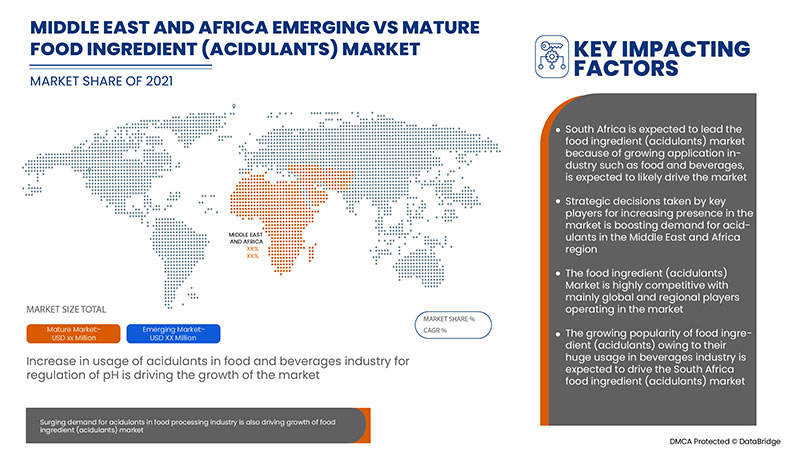
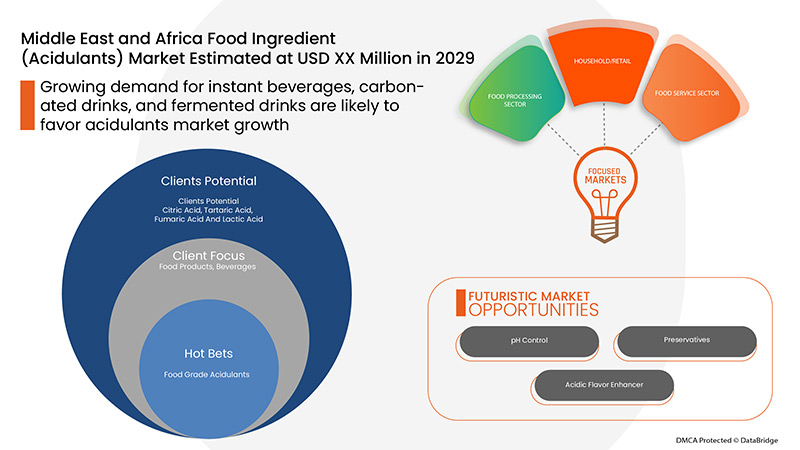
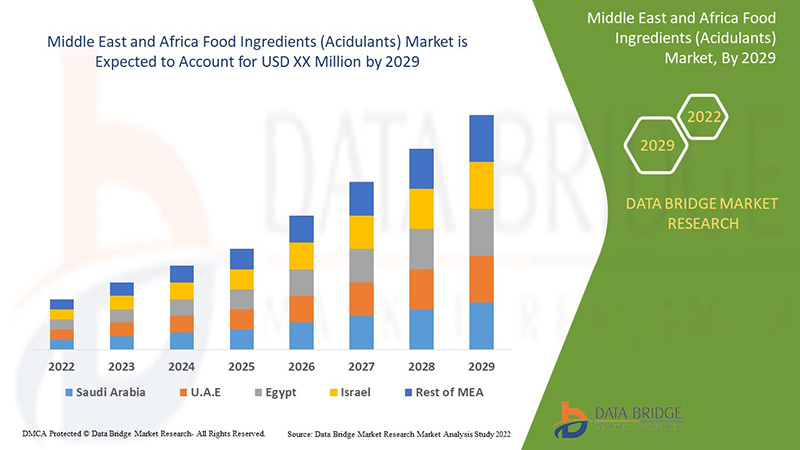
Data Bridge Market Research analisa que o mercado de ingredientes alimentares (acidulantes) do Oriente Médio e África deverá crescer em um CAGR de 5,8% durante o período de previsão de 2022 a 2029.
|
Metric de Relatório |
Detalhes |
|
Período de previsão |
2022 a 2029 |
|
Ano de base |
2021 |
|
Anos Históricos |
2020 (Alfândega 2019- 2015) |
|
Unidades quantitativas |
Receitas em USD Million, Preços em USD |
|
Segmentos Cobertos |
Por tipo (ácido cítrico, ácido láctico, ácido acético, ácido fumárico, ácido tartárico, ácido málico, ácido glucónico, ácido fosfórico e sais, ácido succínico, citrato de sódio, citrato de potássio, ácido tânico, ácido fórmico e outros), forma (seco e líquido), função (pH de controlo, aromatizante ácido, conservantes, e outros), canal de distribuição (B2B, e B2C), utilizador final (sector de transformação alimentar, sector de serviços alimentares e doméstico/retail) |
|
Países abrangidos |
Arábia Saudita, U.A.E., África do Sul, Kuwait, Omã, Catar, o Resto do Oriente Médio e África |
|
Jogadores de mercado cobertos |
Brenntag SE, Bartek Ingredients Inc., Corbion, Cargill, Incorporated, ADM, Tate & Lyle, Foodchem International Corporation, Richest Group, INDUSTRIAL TECNICA PECUARIA, S.A., entre outros |
Definição do mercado
Acidulantes são compostos químicos que dão um sabor azedo, azedo ou ácido aos alimentos ou aumentam a doçura percebida dos alimentos. Acidulantes também podem funcionar como agentes de fermento e emulsionantes em alguns tipos de alimentos processados. Embora os acidulantes possam diminuir o pH, diferem dos reguladores de acidez, que são aditivos alimentares especificamente destinados a modificar a estabilidade alimentar ou enzimas dentro dele. Acidulantes típicos são ácido acético (por exemplo, em picles) e ácido cítrico. Muitas bebidas, tais como colas, contêm ácido fosfórico. Os doces azedos muitas vezes são formulados com ácido málico. Outros acidulantes utilizados na produção de alimentos incluem ácido fumarico, ácido tartárico, ácido láctico e ácido glucónico.
Mercado dos Ingredientes Alimentares do Oriente Médio e da África (Acidulantes)Dinâmica
Controladores
- Ampla utilização de ácido cítrico e ácido málico em bebidas alcoólicas emergentes e não alcoólicas
Na maioria das bebidas, o ácido cítrico é a primeira escolha a ser usada como acidulante. Este é o azedo específico, relativamente suave a ligeiramente afiado e o efeito refrescante na maioria dos sabores de frutas. Além disso, o ácido málico é usado quando se espera um forte realce do sabor, principalmente em combinação com o ácido cítrico. Além desses acidulantes, o ácido fosfórico e succínico também é utilizado em aplicações de bebidas. Ácido fosfórico é usado principalmente em bebidas carbonatadas, como Cola para trazer um perfil de sabor específico e forte efeito sobre o pH. O ácido málico é comumente usado em bebidas alcoólicas, principalmente em refrigerantes frutados e bebidas alcoólicas baixas. O ácido succínico é utilizado apenas em bebidas instantâneas para preparação em casa.
Por exemplo,
- Em setembro de 2020, de acordo com a Associação de Comércio de Vinhos & Espíritos, a categoria de rum aromatizado e temperado cresceu de menos de 6 milhões de garrafas em 2014 para mais de 10 milhões de garrafas em 2019
- Em setembro de 2021, Svami anunciou o lançamento de 2 Cal Cola, a cola premium da Índia, e Svami Salted Limonada
Assim, para atender à demanda do consumidor, cresce a demanda por acidulantes na indústria de fabricação de bebidas pelos fabricantes de bebidas, somando-se ao crescimento do mercado.
- Aumento da demanda por acidulantes, como ácido málico, ácido láctico e lactato de sódio na indústria de confeitaria
Acidulantes usados em produtos de confeitaria, como ácido málico, ácido láctico e lactato de sódio, têm um sabor e sabor únicos. Ele também aumenta o impacto de algumas notas de sabor aromático devido à sua volatilidade. Além disso, atualmente, as combinações de acidulantes são comumente utilizadas em confeitarias. Além disso, o ácido málico e o ácido fumarico proporcionam azedo mais persistente do que outros ácidos alimentares na mesma concentração, aumentam os sabores dos frutos e aumentam o impacto dos adoçantes de alta intensidade.
Assim, o aumento da demanda por produtos de confeitaria aumenta a demanda por acidulantes, como ácido málico, ácido láctico, ácido fumarico, lactato de sódio, entre outros, por fabricantes de alimentos para atender às demandas.
Oportunidades
- Produção biológica de ácido cítrico e ácido acético
Os consumidores estão a mudar para produtos sustentáveis e a optar por produtos fabricados com a ajuda de ingredientes sustentáveis. Assim, a demanda por ingredientes alimentares sustentáveis e econômicos e biológicos (acidulantes), como ácido cítrico e ácido acético, está aumentando entre os fabricantes. No entanto, a produção de ácido bio-succínico é bastante difícil através de um produto sustentável que é a fermentação microbiana, embora seja rentável.
Assim, devido à disponibilidade de uma ampla gama de bactérias, fungos e leveduras, a produção biológica de acidulantes pode ser aumentada, e produtos bio-acidulantes sustentáveis podem ser oferecidos à indústria mundial de alimentos e bebidas, pois oferece uma enorme oportunidade para produtos alimentares e bebidas que incluem ingredientes biologicamente sustentáveis.
Restrições/Desafios
- Regras e regulamentação das entidades reguladoras alimentares relativas aos produtos acidulantes
As regras e regulamentos para a aprovação de acidulantes estabelecidos pelos organismos governamentais garantem que os acidulantes não tenham efeitos colaterais, o que pode restringir o crescimento do mercado global de ingredientes alimentares (acidulantes). A crescente preocupação relacionada com os efeitos colaterais dos acidulantes na saúde forçou o governo a estabelecer regras rigorosas para a aprovação de produtos. Os acidulantes podem levar a pressão arterial elevada, a coloração avermelhada temporária do olho, e outros. Por conseguinte, a quantidade de acidulante utilizada é devidamente verificada antes de o utilizar em qualquer produto. Assim, a regulamentação rigorosa para o processo de aprovação pode dificultar o crescimento do mercado.
Assim, a estrita regulamentação de aprovação e retirada de produtos acidulantes para evitar os riscos à saúde associados a ele pode restringir o crescimento do mercado, pois os fabricantes podem achar difícil cumprir exatamente todas as regulamentações impostas pelo governo.
- Aumentar as preocupações de saúde em relação aos acidulantes
Acidulantes são usados em várias aplicações de alimentos e bebidas, como padaria, confeitaria e bebidas alcoólicas e não alcoólicas para melhorar o sabor, textura e sabor. No entanto, tem alguns efeitos colaterais que são prejudiciais para o corpo humano.
Assim, devido a esses efeitos colaterais, o governo implantou regulamentos rigorosos para o uso de acidulantes que podem desafiar os fabricantes.
Por exemplo,
- Os Regulamentos Alimentos e Medicamentos (B.01.090, B.01.091 e B.01.092) permitem a adição de sais de fosfato e/ou água em produtos à base de carne. As formas permitidas de fosfatos são o teor máximo permitido de utilização de 0,5%, calculado como fosfato de sódio dibásico adicionado ao produto
Assim, os efeitos colaterais relacionados aos acidulantes podem desafiar o crescimento do mercado devido a regulamentações rigorosas e preocupações de segurança.
Impacto pós-COVID-19Médio Oriente e ÁfricaMercado dos Ingredientes Alimentares
Após o COVID-19, a demanda por acidulantes é aumentada devido aos padrões de compra do consumidor e uma mudança gradual para aumentar a demanda por acidulantes entre vários usuários finais, como alimentos e bebidas e outros. Devido à interrupção de muitos mandatos rigorosos e restrições, fabricantes e produtores podem atender à demanda de acidulantes na região. Além disso, a tendência crescente de experimentar novas cozinhas e refrigerantes e bebidas fermentadas entre a população jovem impulsionará o crescimento do mercado.
O aumento da demanda por bebidas fermentadas permite aos fabricantes lançar bebidas fermentadas inovadoras e aromatizadas, o que, em última análise, aumenta a demanda por acidulantes, o que tem ajudado o mercado a crescer.
Desenvolvimento recente
- Em março de 2022, a Brenntag SE adquiriu o distribuidor especializado israelense de produtos químicos Y.S. Ashkenazi Agencys Ltd, juntamente com sua subsidiária, Biochem Trading. Esta aquisição representa a entrada da Brenntag no mercado israelita. Esta aquisição aumentará o goodwill da empresa
Ingredientes Alimentares do Oriente Médio e da África (Aciduantes)MercadoÂmbito de aplicação
O mercado de ingredientes alimentares do Oriente Médio e África (acidulantes) é segmentado em tipo, forma, função, canal de distribuição e usuário final. O crescimento entre esses segmentos irá ajudá-lo a analisar segmentos de crescimento escassos nas indústrias e fornecer aos usuários uma visão geral de mercado valiosa e insights de mercado para tomar decisões estratégicas para identificar aplicações essenciais do mercado.
Tipo
- Ácido cítrico
- Citrato de sódio
- Citrato de potássio
- Ácido acético
- Ácido fórmico
- Ácido Glucónico
- Ácido fumárico
- Ácido málico
- Ácido fosfórico e sais
- Ácido tartárico
- Ácido láctico
- Ácido tânico
- Ácido succínico
- Outros
Com base no tipo, o mercado de ingredientes alimentares do Oriente Médio e África (acidulantes) é segmentado em ácido cítrico, citrato de sódio, citrato de potássio, ácido acético, ácido fórmico, ácido glucônico, ácido málico, ácido fosfórico e sais, ácido tartárico, ácido láctico, ácido tânico, ácido fumarico, ácido succínico, entre outros.
Forma
- Seco
- Líquido
Com base na forma, o Oriente Médio e África ingredientes alimentares (acidulantes) mercado é segmentado em seco e líquido.
Função
- Controlo do pH
- Melhorador de sabor ácido
- Preservativos
- Outros
Com base na função, o mercado de ingredientes alimentares do Oriente Médio e África (acidulantes) é segmentado em controle de pH, potenciador de sabor ácido, conservantes, entre outros.
Canal de Distribuição
- B2B
- B2C
Com base no canal de distribuição, o mercado de ingredientes alimentares do Médio Oriente e África (acidulantes) é segmentado em B2B e B2C.
Utilizador Final
- Família/Retalho
- Sector da transformação de alimentos
- Sector dos serviços alimentares
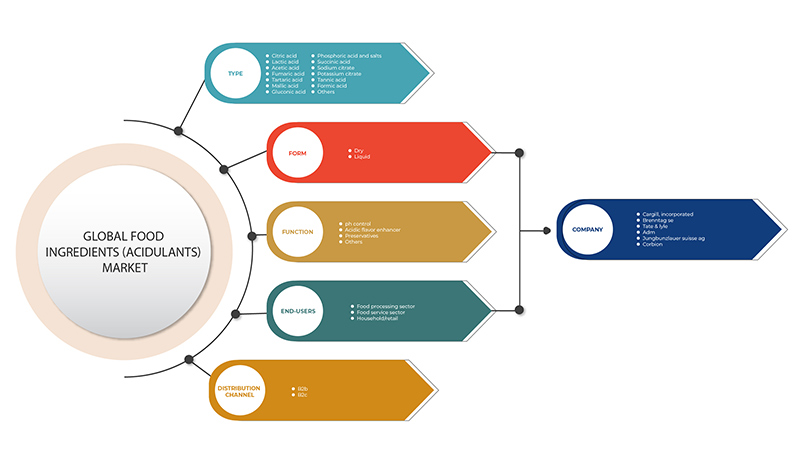
Com base no utilizador final, o mercado de ingredientes alimentares (acidulantes) do Médio Oriente e África é segmentado para o sector doméstico/retalho, do sector da transformação de alimentos e do sector dos serviços alimentares.
Mercado dos Ingredientes Alimentares do Oriente Médio e da África (Acidulantes)Análise/Insights regionais
O mercado de ingredientes alimentares do Oriente Médio e África (acidulantes) é analisado, e insights e tendências de tamanho do mercado são fornecidos pelo país, tipo, forma, função, usuário final e canal de distribuição, como referenciado acima.
Alguns dos países abrangidos pelo relatório do mercado de ingredientes alimentares (acidulantes) do Oriente Médio e África são a Arábia Saudita, a U.A.E., a África do Sul, o Kuwait, Omã, o Catar e o Resto do Oriente Médio e África.
Espera-se que a Arábia Saudita domine o mercado de ingredientes alimentares do Oriente Médio e África (acidulantes) em termos de quota de mercado e de receita, e continuará a aumentar o seu domínio durante o período de previsão. Isso se deve à crescente demanda por refrigerantes e outras bebidas, e os acidulantes são usados por proporcionarem melhor sabor e sabor aos produtos.
A secção «país» do relatório também fornece factores individuais de impacto no mercado e alterações na regulamentação do mercado que afectam as tendências actuais e futuras do mercado. Pontos de dados, como vendas novas e de substituição, dados demográficos de países, epidemiologia de doenças e tarifas de importação-exportação, são alguns dos principais indicadores utilizados para prever o cenário de mercado para cada país. Além disso, a presença e disponibilidade das marcas do Oriente Médio e Africano e seus desafios enfrentados devido à alta concorrência das marcas locais e nacionais e o impacto dos canais de vendas são considerados ao fornecer análise de previsão dos dados do país.
Paisagem competitiva eMercado dos Ingredientes Alimentares do Oriente Médio e da África (Acidulantes)Análise da Partilha
O Oriente Médio e África ingredientes alimentares (acidulantes) mercado paisagem competitiva fornece detalhes pelos concorrentes. Detalhes incluídos são visão geral da empresa, finanças da empresa, receita gerada, potencial de mercado, investimento em pesquisa e desenvolvimento, novas iniciativas de mercado, presença no Oriente Médio e África, locais de produção e instalações, capacidades de produção, pontos fortes e fracos da empresa, lançamento do produto, largura e amplitude do produto, e dominância da aplicação. Os dados acima fornecidos estão relacionados apenas com o foco das empresas no mercado de ingredientes alimentares do Oriente Médio e África (acidulantes).
Alguns dos principais atores que operam no Oriente Médio e África ingredientes alimentares (acidulantes) mercado são Brenntag SE, Bartek Ingredients Inc., Corbion, Cargill, Incorporated, ADM, Tate & Lyle, Foodchem International Corporation, Richest Group, INDUSTRIAL TECNICA PECUARIA, S.A., entre outros.
Metodologia da Pesquisa
A coleta de dados e a análise do ano de base são realizadas utilizando módulos de coleta de dados com grandes tamanhos de amostra. Os dados de mercado são analisados e estimados utilizando modelos estatísticos e coerentes de mercado. Além disso, a análise das quotas de mercado e a análise das tendências fundamentais são os principais factores de sucesso do relatório de mercado. A principal metodologia de pesquisa utilizada pela equipe de pesquisa da DBRM é a triangulação de dados que envolve a mineração de dados, análise do impacto das variáveis de dados no mercado e validação primária (perito em indústria). Além disso, os modelos de dados incluem a Grade de Posicionamento de Fornecedores, Análise de Linhas de Tempo de Mercado, Visão Geral do Mercado e Guia, Grade de Posicionamento da Empresa, Análise de Compartilhamento de Mercado da Empresa, Padrões de Medição, Oriente Médio e África Vs Regional e Análise de Compartilhamento de Fornecedor. Por favor, solicite uma chamada de analista em caso de investigação adicional.
SKU-
Obtenha acesso online ao relatório sobre a primeira nuvem de inteligência de mercado do mundo

- Painel interativo de análise de dados
- Painel de análise da empresa para oportunidades de elevado potencial de crescimento
- Acesso de analista de pesquisa para personalização e customização. consultas
- Análise da concorrência com painel interativo
- Últimas notícias, atualizações e atualizações Análise de tendências
- Aproveite o poder da análise de benchmark para um rastreio abrangente da concorrência
Índice
1 INTRODUÇÃO
1.1 OBJECTIVOS DO ESTUDO
1.2 DEFINIÇÃO DE MERCADO
1.3 Antecedentes do mercado ORIENTE E AFRICA
1.4 LIMITAÇÕES
1.5 MERCADOS ABRANGADOS
2 SEGMENTAÇÃO DO MERCADO
2.1 MERCADOS COBERTOS
2.2 ÂMBITO GEOGRÁFICO
2.3 ANOS CONSIDERADOS PARA O ESTUDO
2.4 MOEDA E PREÇOS
2.5 MODELO DE VALIDAÇÃO DE DADOS TRIPOD DBRR
2.6 MODELIZAÇÃO MULTIVARIADA
2.7 Curva de linha de vida do tipo
2.8 INTERVENÇÕES PRIMÁRIAS COM OPINIÇÕES-CHAVE
2.9 GRIDE DE POSIÇÃO DO MERCADO DE BMO
2.1 GRÁFICO DE COBERTURA DO UTILIZADOR FINAL DO MERCADO
2.11 ANÁLISE DA PARTICIPAÇÃO DOS VENDANTES
2.12 FONTES SEGUNDÁRIAS
2.13 ASSUNTOS
3 RESUMO
4 INSIGHTS PRÉMIO
4.1 ANÁLISE BRAND
4.2 FACTORES QUE INCLUIRAM A DECISÃO DE CONCORRÊNCIA
4.2.1 PRICAÇÃO DE INGREDIENTES ALIMENTÍCIOS (ACIDULANTES)
4.2.2 QUALIDADE E PURIDADE DOS ACIDULANTES
4.2.3 INGREDIENTES ALIMENTÍCIOS CERTIFICADOS (ACIDULANTES)
4.3 CAPA DE RISCO REGULAMENTAR OU JURÍDICO
4.4 NOVAS ESTRATÉGIAS DE LANÇAMENTO DO PRODUTO
4. 5 ANÁLISE PATENTE
4.6 ANÁLISE MATERIAL RAW – TOP 10 ACIDULANTES
4.6.1 ÁCIDO CÍTRICO
4.6.2 ÁCIDO ACETICO
4.6.3 CITRATO DE SÓDIO
4.6.4 ÁCIDO LÁCTICO
4.6.5 ÁCIDO FUMÁRICO
4.6.6 ÁCIDO Taric
4.6.7 ÁCIDO MÁLICO
4.6.8 ÁCIDO GLUCONICO
4.6.9 ÁCIDO E SALDO FOSFÓRICO
4.7 ANÁLISE DE RISCOS (LIQUIDIDADE) – PRINCIPAIS JOGADORES
4.8 ANÁLISE DE RISCOS DOS ACIDULANTES
4.8.1 ÁCIDO CÍTRICO
4.8.2 Citrato de sódio
4.8.3 ÁCIDO ACETICO
4.8.4 ÁCIDO SUCCINIC
4.8.5 ÁCIDO MÁLICO
4.8.6 ÁCIDO Taric
CITRATO DE POTÁSSIO 4.8.7
4.8.8 ÁCIDO GLUCONICO
4.8.9 ÁCIDO FUMÁRICO
4.8.10 ÁCIDO LÁCTICO
4.8.11 ÁCIDO TÂNNICO
4.8.12 ÁCIDO FÓRMICO
4.8.13 ÁCIDO E SALDOS FOSFÓRICOS
4.9 IMPACTO DA GUERRA RÚSSIA E UCRÂNIA
4.9.1 PAÍSES QUE PODEM SER IMPACTOS –
4.9.2 RISCO DA CIVIL UNREST
4.1 CÂMARA DE FORNECIMENTO DO MERCADO DOS INGREDIENTES ALIMENTARES DO MÉDIO ORIENTE E DA ÁFRICA
4.10.1 CONTRATOS MATERIAIS RAW
4.10.2 PRODUÇÃO/PROCESSAMENTO DE INGREDIENTES ALIMENTÍCIOS (ADIDULANTES)
4.10.3 DISTRIBUIÇÃO
4.10.4 Utilizadores finais
4.11 PROPÓSITO DE DIVULGAÇÃO – PARTE 1
4.12 ANÁLISE DAS CINCO FORÇAS PARA ÁCIDO CÍTRICO
4.13 ANÁLISE DAS CINCO FORÇAS DE PORTRO PARA ÁCIDO LÁCTICO
4.14 ANÁLISE DAS CINCO FORÇAS DO PORTRO PARA ÁCIDO ACETICO
4.15 ANÁLISE DE CINCO FORÇAS PARA ÁCIDO FUMÁRICO
4.16 ANÁLISE DAS CINCO FORÇAS PARA O ÁCIDO Taric
4.17 ANÁLISE DAS 5 FORÇAS DO PORTRO PARA ÁCIDO MÁLICO
4.18 ANÁLISE DE CINCO FORÇAS PARA ÁCIDO GLUCONICO
4.19 ANÁLISE DAS CINCO FORÇAS PARA O ÁCIDO FOSFÓRICO E O SALTO
4.2 ANÁLISE DAS CINCO FORÇAS DO PORTRO PARA O ÁCIDO SUCÍNICO
4.21 ANÁLISE DAS CINCO FORÇAS DO PORTRO PARA O CIDADO DE SÓDIO –
4.22 FORNECEDORES PROFISSIONAIS – PARTE 2
4.22.1 LOCAÇÕES DE PRODUÇÃO
4.22.2 RISCOS/OPORTUNIDADES ESPECÍFICAS DO APOIO
4.22.3 MERCADOS A QUE Vendem
4.22.4 RISCOS/OPORTUNIDADES ESPECÍFICOS DE APOIO
4.22.5 MERCADOS A QUE Vendem
4.22.6 LOCAÇÕES DE PRODUÇÃO
4.23 ADM
4.23.1 LOCAÇÕES DE PRODUÇÃO
4.23.2 RISCOS ESPECÍFICOS DE APOIO/OPORTUNIDADES
4.23.3 MERCADOS A QUE Vendem
4. 24 CORBION N. V
4.24.1 LOCAÇÕES DE PRODUÇÃO
4.24.2 RISCOS/OPORTUNIDADES ESPECÍFICOS DE APOIO
4.24.3 MERCADOS A QUE Vendem
4. 25 TATE & LYLE
4.25.1 LOCAÇÕES DE PRODUÇÃO
4.25.2 RISCOS ESPECÍFICOS DE APOIO/OPORTUNIDADES
4.25.3 MERCADOS A QUE Vendem
4.26 JUNGBUNZLAUER SUISSE AG
4.26.1 LOCAÇÕES DE PRODUÇÃO
4.26.2 RISCOS ESPECÍFICOS DE APOIO/OPORTUNIDADES
4.26.3 MERCADOS A QUE Vendem
4.27 INGREDIENTES DE BARTEK INC.
4.27.1 LOCAÇÕES DE PRODUÇÃO
4.27.2 RISCOS ESPECÍFICOS DE APOIO/OPORTUNIDADES
4.27.3 MERCADOS A QUE Vendem
4.28 DACHEM
4.28.1 LOCAÇÕES DE PRODUÇÃO
4.28.2 RISCOS ESPECÍFICOS DE APOIO
4.28.3 MERCADOS A QUE Vendem
4.29 WEIANG ENSIGN INDÚSTRIA CO., LTD.
4.29.1 LOCAÇÕES DE PRODUÇÃO
4.29.2 RISCOS ESPECÍFICOS DE APOIO/OPORTUNIDADES
4.29.3 MERCADOS A QUE Vendem
4.3 TECNICA INDUSTRIAL PECUARIA, S.A.
4.30.1 LOCAÇÕES DE PRODUÇÃO
4.30.2 RISCOS ESPECÍFICOS DE APOIO/OPORTUNIDADES
4.30.3 MERCADOS A QUE Vendem
4.31 CAPACIDADE DA PRODUÇÃO – CINCO TOP
4.32 ANÁLISE DE PRICAÇÃO DOS INGREDIENTES ALIMENTÍCIOS (ACIDULOS)
4.33 ANÁLISE SWOT – TOP 10 ACIDULANTES
4.33.1 ÁCIDO CÍTRICO –
4.33.2 ÁCIDO ACETICO –
4.33.3 Citrato de sódio –
4.33.4 ÁCIDO SUCCINIC –
4.33.5 ÁCIDO LÁCTICO –
4,33.6 ÁCIDO FUMÁRICO –
4.33.7 ÁCIDO Taric –
4. 33. 8 ÁCIDO MÁLICO –
4,33,9 ÁCIDO GLUCONICO –
4.33.10 ÁCIDO FOSFÓRICO E SALDOS
5 REGULAMENTOS:
6 VISÃO GERAL DO MERCADO
6. 1 CONDUTORES
6.1.1 CRESCIMENTO DE PRODUTOS ALIMENTÍCIOS DE CONVENIÊNCIA PROBABILIDADE DE ALIMENTOS ALIMENTÍCIOS ALIMENTÍCIOS PROBABILIDADE DE CRESCIMENTO DA INDÚSTRIA
6.1.2 Utilização do ÁCIDO CÍTRICO E DO ÁCIDO MÁLICO NO ÁLCO DE EMERGÊNCIA, bem como dos PEDIDOS DE BEVERAGENS NÃO ALCOÓLICAS
6.1.3 AUXILIO DA DEMANDA DE ACIDENTES, COMO ÁCIDO MÁLICO, ÁCIDO LÁCTICO E LACTATO DE SÓDIO NA INDÚSTRIA DE CONFECÇÃO
6.1.4 O CRESCIMENTO DE BEBÉRIAS INSTALANTES, BEBIDOS CARBONADOS E BEBIDOS FERMENTADOS É PROBABILIDADE DE FAVORAR O CRESCIMENTO DO MERCADO DOS ACIDULANTES
6. 2 RESTRUMENTOS:
6.2.1 REGRAS E REGULAMENTO DOS ÓRGÃOS REGULAMENTARES ALIMENTARES DOS PRODUTOS ALIMENTARES
6.2.2 QUESTÕES EM RISCO DE PRODUTOS BASEADOS EM FOSFATO
6.3 OPORTUNIDADES
6.3.1 AUMENTO DA DEMANDA DE ACIDULANTES DA INDÚSTRIA DE TRATAMENTO DE ALIMENTOS EM ECONOMIAS DE EMERGÊNCIA
6.3.2 PRODUÇÃO BIOLÓGICA DE ÁCIDO CÍTRICO E ÁCIDO ACETICO
6.4 DESAFIOS
6.4.1 O CRESCIMENTO DA SAÚDE RELATIVO AOS ACIDULANTES
6.4.2 PREÇOS ELEVADOS DOS ACIDULANTES
7 IMPACTO DO COVID-19 NO MERCADO DOS INGREDIENTES ALIMENTARES DO MÉDIO ORIENTE E DA ÁFRICA
7.1 IMPACTO DA CHAIN DE DEMANDA E FORNECIMENTO
7.2 IMPACTO SOBRE O PREÇO
7.3 CONCLUSÃO
8 MERCADO DOS INGREDIENTES ALIMENTÍCIOS DO MÉDIO ORIENTE E DA ÁFRICA (ADICULANTES), POR TIPO
8.1 VISÃO GERAL
8.2 ÁCIDO CÍTRICO
ÁCIDO LÁCTICO
ÁCIDO ACETICO 8.4
ÁCIDO FUMÁRICO
8.6 ÁCIDO Taric
ÁCIDO MÁLICO
8.8 ÁCIDO GLUCONICO
ÁCIDO FOSFÓRICO
8.1 ÁCIDO SUCCINIC
8.11 CIDADANIA DE SÓDIO E SALDO
8.12 CITRATO DE POTÁSSIO E SALDO
8.13 ÁCIDO TÂNNICO E SALDO
8.14 ÁCIDO FÓRMICO E SALDO
8.15 OUTROS
9 MERCADO DOS INGREDIENTES ALIMENTÍCIOS DO MÉDIO ORIENTE & ÁFRICA (ACIDULANTES), POR FORMA
9.1 VISÃO GERAL
9.2 DRY
9.3 LIQUID
10 MERCADO DOS INGREDIENTES ALIMENTÍCIOS DO MÉDIO ORIENTE E DA ÁFRICA (ACIDULANTES), POR FUNÇÃO
10.1 VISÃO GERAL
10.2 CONTROLO PH
10.3 ACESSÓRIO
10.4 PRESERVAÇÕES
10.5 OUTRAS
11 MERCADO DOS INGREDIENTES ALIMENTÍCIOS DO MÉDIO ORIENTE & ÁFRICA (ACIDULOS) POR CANAL DE DISTRIBUIÇÃO
11.1 VISÃO GERAL
11.2 B2B
11.2.1 WHLESALERS
11.2.2 ONLINE
11.3 B2C
11.3.1 SUPERMARKET
11.3.2 ONLINE
11.3.3 HIPERMARQUETA
11.3.4 Stores DEPARTMENTAIS
11.3.5 MERCADORIAS ESPECIAIS
11.3.6 OUTRAS
12 MERCADO DOS INGREDIENTES ALIMENTARES DO MÉDIO ORIENTE E DA ÁFRICA (ACIDULANTES), POR UTILIZADOR FINAL
12.1 VISÃO GERAL
12.2 SECTOR DE TRANSFORMAÇÃO DE ALIMENTOS
12.2.1 ALIMENTOS
12.2.1. PRODUTOS HORTÍCOLAS TRANSFORMADOS
12.2.1.1 POPULAÇÃO
12.2.1.1.2 PORQUE
12.2.1.1.3 CARNE
12.2.1.1.4 OUTROS
12.2.1.2 DA PRODUTOS DE ORIGEM BIOLÓGICA
12.2.1.2.1 CHEESE
12.2.1.2.2 LEITE-POWDER
12.2.1.2.3 CREME DE ICE
12.2.1.2.4 ESPÉCIES
12.2.1.2.5 OUTROS
12.2.1.3 ALIMENTOS DE CONVENIÊNCIA
12.2.1.3.1 PRONTO PARA COMER PRODUTOS
12.2.1.3.2 SOPAS E SAUDAS
12.2.1.3.3 TemporadaS E VESTIGAÇÃO
12.2.1.3.4 NOODLES & PASTA
12.2.1.3.5 OUTRAS
12.2.1.4 BAKERY
12.2.1.4.1 CAKES E PASTRIAS
12.2.1.4.2 BREAD
12.2.1.4.3 BISCUÍTOS E COOKIES
12.2.1.4.4 MUFFINS
12.2.1.4.5 OUTROS
12.2.1.5 CONFECÇÃO
COCOLATO
12.2.1.5.2 GUMS & JELLY
12.2.1.5.3 CANDIDATO AGRADÁVEL
12.2.1.5.4 COMPLEMENTOS DE CREME
12.2.1.5.5 OUTROS
12.2.1.5.6 PRODUTOS ALIMENTARES
12.2.1.5.7 ALIMENTOS TRANSFORMADOS
NUTRIÇÃO DOS ESPAÇOS
SUPLEMENTOS DIETÁRIOS
12.2.1.5.10 FORMA INFANTIOR
12.2.1.6 BEBÉGIOS
PROVAS NÃO ALCOÓLICAS 12.2.1.6.1
12.2.1.6.1. IDT
Sucos de frutas
12.2.1.6.1.3 BEBIDOS SOFT
12.2.1.6.1.4 DADINKS
12.2.1.6.1.5 BEBIDOS FLORIDOS
12.2.1.6.1.6 OUTRAS
BEBIDAS ALCOÓLICAS 12.2.1.6.1.7
12.3 SECTOR DO SERVIÇO ALIMENTAR
12.3.1 RESTAURANTES
12.3.2 CAFÉS
12.3.3 HOTELES
12.3.4 CANTÉRIOS/CAFETERIAS
12.3.5 KITCHEN
12.4 DOMÍNIO/RETALHO
13 MERCADO DOS INGREDIENTES ALIMENTÍCIOS DO MÉDIO ORIENTE & ÁFRICA (ACIDULOS) POR REGIÃO
13.1 MÉDIO ORIENTE E ÁFRICA
13.1.1 SAUDI ARÁBIA
13.1.2 U.A.E.
13.1.3 ÁFRICA DO SUL
13.1.4 KUWAIT
13.1.5 OMAN
13.1.6 QATAR
13.1.7 RESTO DO MÉDIO-ORIENTE & ÁFRICA
14 MERCADO DE INGREDIENTES ALIMENTÍCIOS DO MÉDIO ORIENTE & ÁFRICA, PAISCAPE DA EMPRESA
14.1 ANÁLISE DA COMPANHIA: MÉDIO ORIENTE & ÁFRICA
15 PERFIL DA EMPRESA
15.1 CARGILL, INCORPORADO
15.1.1 EMPRESA SNAPSHOT
15.1.2 ANÁLISE DAS RECEITAS
15.1.3 ANÁLISE PARTICIPAL
15.1.4 PRODUTO PORTFÓLIO
15.1.5 EVOLUÇÃO RECENTE
15.2 TATE & LYLE
15.2.1 EMPRESA SNAPSHOT
15.2.2 ANÁLISE DAS RECEITAS
15.2.3 ANÁLISE PARTICIPAL
15.2.4 PRODUTO PORTFÓLIO
15.2.5 EVOLUÇÃO RECENTE
15.3 ADM
15.3.1 EMPRESA SNAPSHOT
15.3.2 ANÁLISE DE RECEITAS
15.3.3 ANÁLISE PARTICIPAL
15.3.4 PRODUTO PORTFÓLIO
15.3.5 EVOLUÇÃO RECENTE
15.4 JUNGBUNZLAUER SUISSE AG
15.4.1 EMPRESA SNAPSHOT
15.4.2 ANÁLISE PARTICIPAL
15.4.3 PRODUTO PORTFÓLIO
15.4.4 EVOLUÇÃO RECENTE
15.5 BRENNTAG SE
15.5.1 EMPRESA SNAPSHOT
15.5.2 ANÁLISE DE RECEITAS
15.5.3 ANÁLISE PARTICIPAL
15.5.4 PRODUTO PORTFÓLIO
15.5.5 EVOLUÇÃO RECENTE
15.6 PRODUTOS QUÍMICOS ARIANTES
15.6.1 EMPRESA SNAPSHOT
15.6.2 PRODUTO PORTFÓLIO
15.6.3 EVOLUÇÃO RECENTE
15.7 ARSHINE FARMACÊUTICA CO.
15.7.1 EMPRESA SNAPSHOT
15.7.2 PRODUTO PORTFÓLIO
15.7.3 DESENVOLVIMENTO RECENTE
15.8 INGREDIENTES DE BARTEK INC.
15.8.1 EMPRESA SNAPSHOT
15.8.2 PRODUTO PORTFÓLIO
15.8.3 EVOLUÇÃO RECENTE
15, 9 CHEMBERA ESPECIALIDADE QUÍMICA PVT. LTD.
15.9.1 EMPRESA SNAPSHOT
15.9.2 PRODUTO PORTFOLIO
15.9.3 DESENVOLVIMENTO RECENTE
15.1 CORBION
15.10.1 EMPRESA SNAPSHOT
ANÁLISE DAS RECEITAS
15.10.3 PRODUTO PORTFÓLIO
15.10.4 EVOLUÇÃO RECENTE
15.11 DACHEM
15.11.1 EMPRESA SNAPSHOT
15.11.2 PRODUTO PORTFÓLIO
15.11.3 EVOLUÇÃO RECENTE
15.12 INGREDIENTES ALIMENTARES DIRECTOS LTD
15.12.1 EMPRESA SNAPSHOT
15.12.2 PRODUTO PORTFÓLIO
15.12.3 DESENVOLVIMENTO RECENTE
15.13 INDÚSTRIAS FBC
15.13.1 EMPRESA SNAPSHOT
15.13.2 PRODUTO PORTFÓLIO
1.13.3 DESENVOLVIMENTOS RECENTES 306
15.14 CORPORAÇÃO INTERNACIONAL DA ALIMENTAÇÃO
15.14.1 EMPRESA SNAPSHOT
15.14.2 PRODUTO PORTFOLIO
15.14.3 DESENVOLVIMENTO RECENTE
15.15 HAWKINS WATTS LIMITADOS
15.15.1 EMPRESA SNAPSHOT
15.15.2 PRODUTO PORTFÓLIO
15.15.3 DESENVOLVIMENTOS RECENTES
15.16 TECNICA INDUSTRIAL PECUARIA, S.A.
15.16.1 EMPRESA SNAPSHOT
15.16.2 PRODUTO PORTFOLIO
15.16.3 DESENVOLVIMENTO RECENTE
15.17 CORPORATO INNOVA
15.17.1 EMPRESA SNAPSHOT
15.17.2 PRODUTO PORTFÓLIO
15.17.3 EVOLUÇÃO RECENTE
15.18 GRUPO RICHEST
15.18.1 EMPRESA SNAPSHOT
15.18.2 PRODUTO PORTFÓLIO
15.18.3 DESENVOLVIMENTO RECENTE
15.19 SUNTRAN.CN
15.19.1 EMPRESA SNAPSHOT
15.19.2 PRODUTO PORTFÓLIO
15.19.3 EVOLUÇÃO RECENTE
15.2 WEIFANG ENSIGN INDÚSTRIA CO., LTD
15.20.1 EMPRESA SNAPSHOT
15.20.2 PRODUTO PORTFÓLIO
15.20.3 DESENVOLVIMENTO RECENTE
16 QUESTIONÁRIO
17 RELATÓRIOS RELACIONADOS
Lista de Tabela
QUADRO 1 REGULAMENTAÇÃO OU RISCO JURÍDICO
QUADRO 2 MICROORGANISMOS UTILIZADOS PARA A PRODUÇÃO DE ÁCIDO CÍTRICO
QUADRO 3 COMPARAÇÃO DA PRODUÇÃO DE ÁCIDO CÍTRICO DOS VÁRIOS SUBSTRADOS QUE UTILIZAM ESTRUTURAS DE Y. LIPOLYTICA
QUADRO 4 PEDIDO DE ÁCIDO CÍTRICO EM INDÚSTRIA DE ALIMENTOS E BEBÉGIOS DIFERENTES
QUADRO 5 MICROORGANISMOS UTILIZADOS PARA PRODUÇÃO DE ÁCIDO ACETICO
QUADRO 6 PEDIDO DE ÁCIDO ACETICO EM INDÚSTRIA DE ALIMENTOS E BEBÉGIOS DIFERENTES
QUADRO 7 MICROORGANISMOS UTILIZADOS PARA PRODUÇÃO DE CITRATO DE SÓDIO
QUADRO 8 PEDIDO DE CIDADANIA DE SÓDIO EM INDÚSTRIA DE ALIMENTOS E BEBÉGIOS DIFERENTES
QUADRO 9 MICROORGANISMOS UTILIZADOS PARA A PRODUÇÃO DE ÁCIDO BIO-SUCÍNICO
QUADRO 10 PEDIDO DE ÁCIDO SUCCINIC NA INDÚSTRIA DE ALIMENTOS E BEBÉGIOS
QUADRO 11
QUADRO 12 COMPARAÇÃO DE ESTRUTURAS E SUBSTRATÉRIOS DIFERENTES PARA A PRODUÇÃO DE ÁCIDOS LÁCTICOS
QUADRO 13
QUADRO 14 MICROORGANISMOS UTILIZADOS NA PRODUÇÃO DE ÁCIDO FUMÁRICO
QUADRO 15 PEDIDO DE ÁCIDO FUMÁRICO EM INDÚSTRIA DE ALIMENTOS E BEBÉGIOS DIFERENTES
QUADRO 16 PEDIDO DE ÁCIDO Taric EM INDÚSTRIA DE ALIMENTOS E BEBÉGIOS DIFERENTES
QUADRO 17 PEDIDO DE ÁCIDO MÁLICO EM INDÚSTRIA DE ALIMENTOS E BEBÉGIOS DIFERENTES
QUADRO 18 PEDIDOS DE ÁCIDO GLUCONICO EM DIFERENTES INDÚSTRIAS DE ALIMENTOS E BEBÉGIOS
QUADRO 19 ÁCIDO FOSFÓRICO E PEDIDO DE SALDOS EM INDÚSTRIA DE ALIMENTOS E BEBÉGIOS DIFERENTES
QUADRO 20 MATERIAL RAW PARA INGREDIENTES ALIMENTÍCIOS DIFERENTES (ACIDULANTES)
QUADRO 21 Parte de mercado do ÁCIDO CÍTRICO
QUADRO 22 Parte de mercado do ÁCIDO LÁCTICO
QUADRO 23 PARTE DE MERCADO DO ÁCIDO FUMÁRICO
QUADRO 24 PARTE DE MERCADO DO ÁCIDO Taric
QUADRO 25 PARTE DE MERCADO DO ÁCIDO MÁLICO
QUADRO 26 CATEGORIA E SUA FUNCIONALIDADE
QUADRO 27 ACIDULANTES NA VARIA FUNCIONALIDADE ALIMENTAR
QUADRO 28 PRODUTOS ACIDULANTES E SEUS PEDIDOS
QUADRO 29 MÉDIO ORIENTE & ÁFRICA PREÇOS DE VENDA DE ACIDULANTES
QUADRO 30 A TABELA BEM-VINDOS RELACIONA OS ACIDULANTES E OS SEUS PEDIDOS EM BEBÉGIOS
QUADRO 31
QUADRO 32 O QUADRO ABAIXO apresenta MICROORGANISMOS CÍTRICO DE PRODUÇÃO DE ÁCIDOS E SUAS ESPÉCIES:
QUADRO 33
QUADRO 34 MERCADO DOS INGREDIENTES ALIMENTÍCIOS DO MÉDIO ORIENTE & ÁFRICA (ADIDULANTES), POR TIPO 2020-2029 (USD MILHÃO)
QUADRO 35 MERCADO DOS INGREDIENTES ALIMENTÍCIOS DO MÉDIO ORIENTE & ÁFRICA (ADIDULANTES), POR TIPO 2020-2029 (Milhares de toneladas)
QUADRO 36 ÁCIDO CÍTRICO MÉDIO-ORIENTE E ÁFRICA NO MERCADO DOS INGREDIENTES ALIMENTARES (ADIDULANTES), POR REGIÃO, 2020-2029 (USD MILHÃO)
QUADRO 37 ÁCIDO LÁCTICO DO MÉDIO ORIENTE & ÁFRICA NO MERCADO DOS INGREDIENTES ALIMENTARES (ADIDULANTES), POR REGIÃO, 2020-2029 (USD MILHÃO)
QUADRO 38 ÁCIDO ACETICO DO MÉDIO ORIENTE & ÁFRICA NO MERCADO DOS INGREDIENTES ALIMENTARES (ADIDULANTES), POR REGIÃO, 2020-2029 (USD MILHÃO)
QUADRO 39 ÁCIDO FUMÁRICO DO MÉDIO ORIENTE & ÁCIDO DA ÁFRICA NO MERCADO DOS INGREDIENTES ALIMENTARES (ADIDULANTES), POR REGIÃO, 2020-2029 (USD MILHÃO)
QUADRO 40 ÁCIDO Taric MÉDIO-ORIENTE & ÁCIDO ÁFRICA NO MERCADO DOS INGREDIENTES ALIMENTÍCIOS, POR REGIÃO, 2020-2029 (USD MILHÃO)
QUADRO 41 ÁCIDO MÁLICO DO MÉDIO ORIENTE E ÁLICO ALIMENTAR, POR REGIÃO, 2020-2029 (USD MILHÃO)
QUADRO 42 ÁCIDO ORIENTE E ÁCIDO GLUCONICO DO MÉDIO DOS INGREDIENTES ALIMENTARES (ADIDULANTES), POR REGIÃO, 2020-2029 (USD MILHÃO)
QUADRO 43 MÉDIO ORIENTE & ÁCIDO FOSFÓRICO ALIMENTAR, POR REGIÃO, 2020-2029 (USD MILHÃO)
QUADRO 44 ÁCIDO SUCCINIC MÉDIO ORIENTE & ÁFRICA NO MERCADO DOS INGREDIENTES ALIMENTARES, POR REGIÃO, 2020-2029 (USD MILHÃO)
QUADRO 45 CITRATO DE SÓDIO DO MÉDIO ORIENTE & ÁFRICA E SALT NO MERCADO DOS INGREDIENTES ALIMENTÍCIOS, POR REGIÃO, 2020-2029 (USD MILHÃO)
QUADRO 46 CARACTERÍSTICAS DO MÉDIO ORIENTE & ÁFRICA DO POTÁSSIO E SALT NO MERCADO DOS INGREDIENTES ALIMENTÍCIOS (ADIDULANTES), POR REGIÃO, 2020-2029 (USD MILHÃO)
QUADRO 47 MÉDIO ORIENTE & ÁCIDO TÂNNICO ÁCIDO E SAL NO MERCADO DOS INGREDIENTES ALIMENTARES, POR REGIÃO, 2020-2029 (USD MILHÃO)
QUADRO 48 MÉDIO ORIENTE & ÁCIDO FÓRMICO E SAL NO MERCADO DOS INGREDIENTES ALIMENTARES, POR REGIÃO, 2020-2029 (USD MILHÃO)
QUADRO 49 OUTROS MÉDIO-ORIENTE E ÁFRICA NO MERCADO DOS INGREDIENTES ALIMENTARES (ADIDULANTES), POR REGIÃO, 2020-2029 (USD MILHÃO)
QUADRO 50 MERCADO DOS INGREDIENTES ALIMENTÍCIOS DO MÉDIO ORIENTE & ÁFRICA (ADIDULANTES), POR FORMA, 2020-2029 (USD MILHÃO)
QUADRO 51 O QUADRO A seguir apresentado apresenta as funções de diferentes aditivos em forma sólida:
QUADRO 52 SECTOR ORIENTE E ÁFRICA NO MERCADO DOS INGREDIENTES ALIMENTARES (ADIDULANTES), POR REGIÃO, 2020-2029 (USD MILHÃO)
QUADRO 53 O Quadro Blow mostra as funções dos aditivos líquidos na indústria alimentar:
QUADRO 54 MÉDIO ORIENTE & ÁFRICA LÍQUIDO NO MERCADO DOS INGREDIENTES ALIMENTARES (ADIDULANTES), POR REGIÃO, 2020-2029 (USD MILHÃO)
QUADRO 55 MERCADO DOS INGREDIENTES ALIMENTARES DO MÉDIO ORIENTE & ÁFRICA (AIDULANTES), POR FUNÇÃO, 2020-2029 (USD MILHÃO)
QUADRO 56 CONTROLO DO MÉDIO ORIENTE & ÁFRICA PH NO MERCADO DOS INGREDIENTES ALIMENTARES (ADIDULANTES), POR REGIÃO, 2020-2029 (USD MILHÃO)
QUADRO 57 ORIENTE DO MÉDIO & ÁFRICA ENERGIA DO FLAVOR ÁCIDO NO MERCADO DOS INGREDIENTES ALIMENTARES (ADIDULANTES), POR REGIÃO, 2020-2029 (USD MILHÃO)
QUADRO 58 PRESERVEDORES DO MÉDIO ORIENTE E DA ÁFRICA NO MERCADO DOS INGREDIENTES ALIMENTARES (ADIDULANTES), POR REGIÃO, 2020-2029 (USD MILHÃO)
QUADRO 59 OUTROS MÉDIO-ORIENTE E ÁFRICA NO MERCADO DOS INGREDIENTES ALIMENTARES (ADIDULANTES), POR REGIÃO, 2020-2029 (USD MILHÃO)
QUADRO 60 MERCADO DOS INGREDIENTES ALIMENTÍCIOS DO MÉDIO ORIENTE E DA ÁFRICA (AIDULANTES), POR CANAL DE DISTRIBUIÇÃO, 2020-2029 (USD MILHÃO)
QUADRO 61 MÉDIO ORIENTE & ÁFRICA B2B NO MERCADO DOS INGREDIENTES ALIMENTARES (ADIDULANTES), POR REGIÃO, 2020-2029 (USD MILHÃO)
QUADRO 62 MÉDIO ORIENTE & ÁFRICA B2B NO MERCADO DOS INGREDIENTES ALIMENTARES (ADIDULANTES), POR TIPO 2020-2029 (USD MILHÃO)
QUADRO 63 MÉDIO ORIENTE & ÁFRICA B2C NO MERCADO DOS INGREDIENTES ALIMENTARES (ADIDULANTES), POR REGIÃO, 2020-2029 (USD MILHÃO)
QUADRO 64 MÉDIO ORIENTE & ÁFRICA B2C NO MERCADO DOS INGREDIENTES ALIMENTARES (ADIDULANTES), POR TIPO, 2020-2029 (USD MILHÃO)
QUADRO 65 MERCADO DOS INGREDIENTES ALIMENTÍCIOS DO MÉDIO ORIENTE & ÁFRICA (ACIDULAR) POR END-USER, 2020-2029 (USD MILHÃO)
QUADRO 66 SECTOR DE TRANSFORMAÇÃO DE ALIMENTOS PARA O MÉDIO ORIENTE & ÁFRICA NO MERCADO DOS INGREDIENTES ALIMENTÍCIOS, POR REGIÃO, 2020-2029 (USD MILHÃO)
QUADRO 67 SECTOR DE TRANSFORMAÇÃO DE ALIMENTOS DO MÉDIO ORIENTE & ÁFRICA NO MERCADO DOS INGREDIENTES ALIMENTÍCIOS (ADIDULANTES), POR FIM DO UTILIZADOR, 2020-2029 (USD MILHÃO)
QUADRO 68 ALIMENTOS ORIENTAIS E ÁFRICA NO MERCADO DOS INGREDIENTES ALIMENTARES (ADIDULANTES), POR TIPO, 2020-2029 (USD MILHÃO)
QUADRO 69 PRODUTOS DE CARNE TRANSFORMADOS DO MÉDIO ORIENTE E DA ÁFRICA NO MERCADO DOS INGREDIENTES ALIMENTÍCIOS, POR TIPO 2020-2029 (USD MILHÃO)
QUADRO 70 MÉDIO ORIENTE & ÁFRICA DA PRODUTOS DA ORGANISMO NO MERCADO DOS INGREDIENTES ALIMENTARES (ADIDULANTES), POR TIPO 2020-2029 (USD MILHÃO)
QUADRO 71 ALIMENTOS PARA CONVENIÊNCIA DO MÉDIO ORIENTE E DA ÁFRICA NO MERCADO DOS INGREDIENTES ALIMENTARES (ADIDULANTES), POR TIPO 2020-2029 (USD MILHÃO)
QUADRO 72 BAKERY DO MÉDIO ORIENTE E DA ÁFRICA NO MERCADO DOS INGREDIENTES ALIMENTARES (ADIDULANTES), POR TIPO 2020-2029 (USD MILHÃO)
QUADRO 73 CONFECTIONERY DO MÉDIO ORIENTE & ÁFRICA NO MERCADO DOS INGREDIENTES ALIMENTARES (ADIDULANTES), POR TIPO 2020-2029 (USD MILHÃO)
QUADRO 74 BEBÉGIOS MÉDIO-ORIENTE E ÁFRICA NO MERCADO DOS INGREDIENTES ALIMENTÍCIOS (ADIDULANTES), POR TIPO, 2020-2029 (Milhares de USD)
QUADRO 75 MERCADO DOS INGREDIENTES ALIMENTÍCIOS (ADIDULANTES), POR TIPO 2020-2029 (USD MILHÃO)
QUADRO 76 SECTOR DE SERVIÇOS ALIMENTARES DO MÉDIO ORIENTE & ÁFRICA NO MERCADO DOS INGREDIENTES ALIMENTARES, POR REGIÃO, 2020-2029 (USD MILHÃO)
QUADRO 77 SECTOR DE SERVIÇOS ALIMENTÍCIOS DO MÉDIO ORIENTE E DA ÁFRICA NO MERCADO DOS INGREDIENTES ALIMENTÍCIOS (ADIDULANTES), POR TIPO 2020-2029 (USD MILHÃO)
QUADRO 78 DO MÉDIO ORIENTE E DA ÁFRICA
QUADRO 79 MERCADO DOS INGREDIENTES ALIMENTARES DO MÉDIO ORIENTE & ÁFRICA (ADIDULANTES), POR PAÍS, 2020-2029 (USD MILHÃO)
QUADRO 80 MERCADO DOS INGREDIENTES ALIMENTÍCIOS DO MÉDIO ORIENTE E DA ÁFRICA (ADIDULANTES), POR TIPO 2020-2029 (USD MILHÃO)
QUADRO 81 MERCADO DOS INGREDIENTES ALIMENTARES DO MÉDIO ORIENTE E DA ÁFRICA (ADIDULANTES), POR TIPO 2020-2029 (toneladas)
QUADRO 82 ORIENTE DO MÉDIO E INGREDIENTES ALIMENTÍCIOS DA ÁFRICA (ADIDULANTES), POR FORMA 2020-2029 (USD MILHÃO)
QUADRO 83 ORIENTE DO MÉDIO E INGREDIENTES ALIMENTÍCIOS DA ÁFRICA (ACIDULOS) MERCADO, POR FUNÇÃO, 2020-2029 (USD MILHÃO)
QUADRO 84 DO MÉDIO ORIENTE E DOS INGREDIENTES ALIMENTÍCIOS DA ÁFRICA (ACIDULANTES) MERCADO, POR CANAL DE DISTRIBUIÇÃO, 2020-2029 (USD MILHÃO)
QUADRO 85 MÉDIO ORIENTE E ÁFRICA B2B NO MERCADO DOS INGREDIENTES ALIMENTARES (ADIDULANTES), POR TIPO 2020-2029 (USD MILHÃO)
QUADRO 86 MÉDIO ORIENTE E ÁFRICA B2C NO MERCADO DOS INGREDIENTES ALIMENTARES (ADIDULANTES), POR TIPO 2020-2029 (USD MILHÃO)
QUADRO 87 ORIENTE DO MÉDIO E DOS INGREDIENTES ALIMENTÍCIOS DA ÁFRICA (ADIDULANTES) MERCADO, POR END-USER, 2020-2029 (USD MILHÃO)
QUADRO 88 SECTOR DE SERVIÇOS ALIMENTARES DO MÉDIO ORIENTE E DA ÁFRICA NO MERCADO DOS INGREDIENTES ALIMENTARES (ADIDULANTES), POR TIPO 2020-2029 (USD MILHÃO)
QUADRO 89 SECTOR DE TRANSFORMAÇÃO DOS PRODUTOS ALIMENTÍCIOS DO MÉDIO ORIENTE E DA ÁFRICA NO MERCADO DOS INGREDIENTES ALIMENTÍCIOS (ADIDULANTES), POR FIM DO UTILIZADOR, 2020-2029 (USD MILHÃO)
QUADRO 90 ORIENTE E ALIMENTO À ÁFRICA NO MERCADO DOS INGREDIENTES ALIMENTÍCIOS (ADIDULANTES), POR TIPO, 2020-2029 (USD MILHÃO)
QUADRO 91 MÉDIO ORIENTE E ÁFRICA DA PRODUTOS DA ORGANISMO NO MERCADO DOS INGREDIENTES ALIMENTARES (ADIDULANTES), POR TIPO 2020-2029 (USD MILHÃO)
QUADRO 92 CARACTERÍSTICA DO MÉDIO ORIENTE E DA ÁFRICA NO MERCADO DOS INGREDIENTES ALIMENTARES (ADIDULANTES), POR TIPO 2020-2029 (USD MILHÃO)
QUADRO 93 ALIMENTOS PARA CONVENIÊNCIA DO MÉDIO ORIENTE E DA ÁFRICA NO MERCADO DOS INGREDIENTES ALIMENTARES (ADIDULANTES), POR TIPO 2020-2029 (USD MILHÃO)
QUADRO 94 MÉDIO ORIENTE E PRODUTOS DE CARNE TRATADOS À ÁFRICA NO MERCADO DOS INGREDIENTES ALIMENTÍCIOS (ADIDULANTES), POR TIPO 2020-2029 (USD MILHÃO)
QUADRO 95 ORIENTE E CONFECTIONERY AFRICA NO MERCADO DOS INGREDIENTES ALIMENTARES (ADIDULANTES), POR TIPO 2020-2029 (USD MILHÃO)
QUADRO 96 BEBÉGIOS MÉDIO-ORIENTE E ÁFRICA NO MERCADO DOS INGREDIENTES ALIMENTÍCIOS (ADIDULANTES), POR TIPO 2020-2029 (Milhares de USD)
QUADRO 97 MERCADO DOS INGREDIENTES ALIMENTÍCIOS (ADIDULANTES), POR TIPO 2020-2029 (USD MILHÃO)
QUADRO 98 INGREDIENTES ALIMENTÍCIOS DE SAUDI ARABIA (ACIDULANTES) MERCADO POR TIPO 2020-2029 (USD MILHÃO)
QUADRO 99 INGREDIENTES ALIMENTARES DE SAUDI ARABIA (ACIDULANTES) MERCADO, POR FORMULÁRIO, 2020-2029 (USD MILHÃO)
QUADRO 100 INGREDIENTES ALIMENTÍCIOS SAUDIOS (ACIDULOS) MERCADO, POR FUNÇÃO, 2020-2029 (USD MILHÃO)
QUADRO 101 INGREDIENTES ALIMENTÍCIOS SAUDI ARABIA (ACIDULANTES) MERCADO, POR CANAL DE DISTRIBUIÇÃO, 2020-2029 (USD MILHÃO)
QUADRO 102 SAUDI ARABIA B2B NO MERCADO DOS INGREDIENTES ALIMENTÍCIOS (ADIDULANTES), POR TIPO 2020-2029 (USD MILHÃO)
QUADRO 103 ARÁBIA SAUDI B2C NO MERCADO DOS INGREDIENTES ALIMENTÍCIOS (ACIDULOS), POR TIPO 2020-2029 (USD MILHÃO)
QUADRO 104 INGREDIENTES ALIMENTARES DE SAUDI ARABIA (ACIDULANTES) MERCADO, POR END-USER, 2020-2029 (USD MILHÃO)
QUADRO 105 SECTOR DE SERVIÇOS ALIMENTARES DE SAUDI ARABIA NO MERCADO DOS INGREDIENTES ALIMENTÍCIOS (ACIDULOS), POR TIPO 2020-2029 (USD MILHÃO)
QUADRO 106 SECTOR DE TRANSFORMAÇÃO DE ALIMENTOS DE SAUDI ARABIA NO MERCADO DOS INGREDIENTES ALIMENTÍCIOS (ACIDULARES), POR FIM DO UTILIZADOR, 2020-2029 (USD MILHÃO)
QUADRO 107 ALIMENTOS DE ARABIA SAUDI NO MERCADO DOS INGREDIENTES ALIMENTARES (ADIDULANTES), POR TIPO 2020-2029 (USD MILHÃO)
QUADRO 108 SAUDI ARÁBIA DA PRODUTOS DE ORIGEM NO MERCADO DOS INGREDIENTES ALIMENTARES, POR TIPO 2020-2029 (USD MILHÃO)
QUADRO 109 SAUDI ARABIA BAKERY NO MERCADO DOS INGREDIENTES ALIMENTARES (ADIDULANTES), POR TIPO 2020-2029 (USD MILHÃO)
QUADRO 110 SAUDI ARABIA CONVENIÊNCIA ALIMENTOS NO MERCADO DOS INGREDIENTES ALIMENTARES (ADIDULANTES), POR TIPO 2020-2029 (USD MILHÃO)
QUADRO 111 PRODUTOS DE CARNE TRANSFORMADOS DE SAUDI ARABIA NO MERCADO DOS INGREDIENTES ALIMENTÍCIOS (ADIDULANTES), POR TIPO 2020-2029 (MILlion USD)
QUADRO 112 CONFECTIONERY SAUDI ARABIA NO MERCADO DOS INGREDIENTES ALIMENTARES (ADIDULANTES), POR TIPO 2020-2029 (USD MILHÃO)
QUADRO 113 BEVERAGENS DE ÁRABIA SAUDIA NO MERCADO DOS INGREDIENTES ALIMENTÍCIOS (ADIDULANTES), POR TIPO 2020-2029 (USD MILHÃO)
QUADRO 114 BEBIDAS SAUDI ARABIA NON-ALCOHOLIC NO MERCADO DOS INGREDIENTES ALIMENTÍCIOS (ADIDULANTES), POR TIPO 2020-2029 (USD MILHÃO)
QUADRO 115 E.U.A. INGREDIENTES ALIMENTÍCIOS (ADIDULANTES) MERCADO, POR TIPO, 2020-2029 (USD MILHÃO)
QUADRO 116 E.U.A. INGREDIENTES ALIMENTÍCIOS (ACIDULANTES) MERCADO, POR FORMULÁRIO, 2020-2029 (USD MILHÃO)
QUADRO 117 INGREDIENTES ALIMENTÍCIOS (ACIDULANTES) MERCADO, POR FUNÇÃO, 2020-2029 (USD MILHÃO)
QUADRO 118 E.U.A. INGREDIENTES ALIMENTÍCIOS (ACIDULANTES) MERCADO, POR CANAL DE DISTRIBUIÇÃO, 2020-2029 (USD MILHÃO)
QUADRO 119 E. U.A.E. B2B NO MERCADO DOS INGREDIENTES ALIMENTARES (ADIDULANTES), POR TIPO 2020-2029 (USD MILHÃO)
QUADRO 120 E.U.A. B2C NO MERCADO DOS INGREDIENTES ALIMENTARES (ADIDULANTES), POR TIPO, 2020-2029 (USD MILHÃO)
QUADRO 121 E.U.A. INGREDIENTES ALIMENTÍCIOS (ACIDULANTES) MERCADO, POR END-USER, 2020-2029 (USD MILHÃO)
QUADRO 122 E.U.A. SECTOR DE SERVIÇOS ALIMENTÍCIOS NO MERCADO DOS INGREDIENTES ALIMENTARES, POR TIPO 2020-2029 (USD MILHÃO)
QUADRO 123 E.U.A. SECTOR DE TRANSFORMAÇÃO DE ALIMENTOS NO MERCADO DOS INGREDIENTES ALIMENTÍCIOS (ADIDULANTES), POR FIM DO UTILIZADOR, 2020-2029 (USD MILHÃO)
QUADRO 124 ALIMENTOS ALIMENTARES NO MERCADO DOS INGREDIENTES ALIMENTÍCIOS (ACIDULOS), POR TIPO 2020-2029 (USD MILHÃO)
QUADRO 125 E.U.A.D. PRODUTOS DE ORIGEM NO MERCADO DOS INGREDIENTES ALIMENTARES, POR TIPO 2020-2029 (USD MILHÃO)
QUADRO 126 E.U.A.E. BAKERY NO MERCADO DOS INGREDIENTES ALIMENTARES (ADIDULANTES), POR TIPO 2020-2029 (USD MILHÃO)
QUADRO 127 A.A.E. ALIMENTOS DE CONVENIÊNCIA NO MERCADO DOS INGREDIENTES ALIMENTÍCIOS (ACIDULOS), POR TIPO 2020-2029 (USD MILHÃO)
QUADRO 128 E.U.A.E. PRODUTOS DE CARNE TRANSFORMADOS NO MERCADO DOS INGREDIENTES ALIMENTARES (ADIDULANTES), POR TIPO 2020-2029 (MILION USD)
QUADRO 129 E.U.A. CONFECTIONERY NO MERCADO DOS INGREDIENTES ALIMENTARES (ADIDULANTES), POR TIPO 2020-2029 (USD MILHÃO)
QUADRO 130 BEVERAGENS NO MERCADO DOS INGREDIENTES ALIMENTÍCIOS (ADIDULANTES), POR TIPO 2020-2029 (USD MILHÃO)
QUADRO 131 BEBIDAS NÃO ALCOLÓGICAS NO MERCADO DOS INGREDIENTES ALIMENTÍCIOS (ADIDULANTES), POR TIPO 2020-2029 (USD MILHÃO)
QUADRO 132 INGREDIENTES ALIMENTARES DA ÁFRICA DO SUL (ACIDULANTES) MERCADO POR TIPO 2020-2029 (USD MILHÃO)
QUADRO 133 INGREDIENTES ALIMENTARES DA ÁFRICA DO SUL (ACIDULANTES) MERCADO, POR FORMA, 2020-2029 (USD MILHÃO)
QUADRO 134 INGREDIENTES ALIMENTARES DA ÁFRICA DO SUL (ACIDULANTES) MERCADO, POR FUNÇÃO, 2020-2029 (USD MILHÃO)
QUADRO 135 INGREDIENTES ALIMENTARES DA ÁFRICA DO SUL (ACIDULANTES) MERCADO, POR CANAL DE DISTRIBUIÇÃO, 2020-2029 (USD MILHÃO)
QUADRO 136 ÁFRICA DO SUL B2B NO MERCADO DOS INGREDIENTES ALIMENTARES (ADIDULANTES), POR TIPO 2020-2029 (USD MILHÃO)
QUADRO 137 ÁFRICA DO SUL B2C NO MERCADO DOS INGREDIENTES ALIMENTARES (ADIDULANTES), POR TIPO 2020-2029 (USD MILHÃO)
QUADRO 138 INGREDIENTES ALIMENTARES DA ÁFRICA DO SUL (ACIDULANTES) MERCADO, POR END-USER, 2020-2029 (USD MILHÃO)
QUADRO 139 SECTOR DO SERVIÇO DE ALIMENTOS DA ÁFRICA DO SUL NO MERCADO DOS INGREDIENTES ALIMENTARES (ADIDULANTES), POR TIPO 2020-2029 (USD MILHÃO)
QUADRO 140 SECTOR DE TRANSFORMAÇÃO DE ALIMENTOS DA ÁFRICA DO SUL NO MERCADO DOS INGREDIENTES ALIMENTARES (ADIDULANTES), POR FIM DO UTILIZADOR, 2020-2029 (USD MILHÃO)
QUADRO 141 ALIMENTOS À ÁFRICA DO SUL NO MERCADO DOS INGREDIENTES ALIMENTARES (ADIDULANTES), POR TIPO 2020-2029 (USD MILHÃO)
QUADRO 142 DA ÁFRICA DO SUL NO MERCADO DOS INGREDIENTES ALIMENTÍCIOS (ADIDULANTES), POR TIPO 2020-2029 (USD MILHÃO)
QUADRO 143 BAKERY DA ÁFRICA DO SUL NO MERCADO DOS INGREDIENTES ALIMENTARES (ADIDULANTES), POR TIPO, 2020-2029 (USD MILHÃO)
QUADRO 144 ALIMENTOS DE CONVENIÊNCIA DA ÁFRICA DO SUL NO MERCADO DOS INGREDIENTES ALIMENTÍCIOS (ACIDULOS), POR TIPO, 2020-2029 (USD MILHÃO)
QUADRO 145 PRODUTOS DA CARNE TRANSFORMADOS DA ÁFRICA DO SUL NO MERCADO DOS INGREDIENTES ALIMENTARES (ADIDULANTES), POR TIPO 2020-2029 (MILION USD)
QUADRO 146 CONFECÇÃO DA ÁFRICA DO SUL NO MERCADO DOS INGREDIENTES ALIMENTÍCIOS (ADIDULANTES), POR TIPO 2020-2029 (USD MILHÃO)
QUADRO 147 BEBIDAS À ÁFRICA DO SUL NO MERCADO DOS INGREDIENTES ALIMENTÍCIOS (ADIDULANTES), POR TIPO 2020-2029 (USD MILHÃO)
QUADRO 148 BENS ÁFRICA DO SUL NÃO ALCOÓLICAS NO MERCADO DOS INGREDIENTES ALIMENTÍCIOS (ADIDULANTES), POR TIPO 2020-2029 (USD MILHÃO)
QUADRO 149 INGREDIENTES ALIMENTARES DE KUWAIT (ACIDULANTES) POR TIPO 2020-2029 (USD MILHÃO)
QUADRO 150 INGREDIENTES ALIMENTARES DE KUWAIT (ACIDULANTES) MERCADO, POR FORMULÁRIO, 2020-2029 (USD MILHÃO)
QUADRO 151 INGREDIENTES DE ALIMENTOS KUWAIT (ACIDULARIDADES) MERCADO, POR FUNÇÃO, 2020-2029 (USD MILHÃO)
QUADRO 152 INGREDIENTES ALIMENTARES DE KUWAIT (ACIDULANTES) MERCADO, POR CANAL DE DISTRIBUIÇÃO, 2020-2029 (USD MILHÃO)
QUADRO 153 KUWAIT B2B NO MERCADO DOS INGREDIENTES ALIMENTÍCIOS (ADIDULANTES), POR TIPO, 2020-2029 (USD MILHÃO)
QUADRO 154 KUWAIT B2C NO MERCADO DOS INGREDIENTES ALIMENTÍCIOS (ACIDULOS), POR TIPO, 2020-2029 (USD MILHÃO)
QUADRO 155 INGREDIENTES ALIMENTARES DE KUWAIT (ACIDULANTES)
QUADRO 156 SECTOR DE SERVIÇO DE ALIMENTOS DE KUWAIT NO MERCADO DOS INGREDIENTES ALIMENTÍCIOS (ADIDULANTES), POR TIPO 2020-2029 (USD MILHÃO)
QUADRO 157 SECTOR DE TRANSFORMAÇÃO DE ALIMENTOS DE KUWAIT NO MERCADO DOS INGREDIENTES ALIMENTÍCIOS (ADIDULANTES), POR FIM DO UTILIZADOR, 2020-2029 (USD MILHÃO)
QUADRO 158 ALIMENTOS ALIMENTÍCIOS EM INGREDIENTES ALIMENTÍCIOS (ACIDULOS), POR TIPO 2020-2029 (USD MILHÃO)
QUADRO 159 KUWAIT DAWAIT PRODUTOS DE ORIGEM NO MERCADO DOS INGREDIENTES ALIMENTÍCIOS (ADICULANTES), POR TIPO 2020-2029 (USD MILHÃO)
QUADRO 160 BAKERY DE KUWAIT NO MERCADO DOS INGREDIENTES ALIMENTARES (ADIDULANTES), POR TIPO, 2020-2029 (USD MILHÃO)
QUADRO 161 ALIMENTOS DE CONVENIÊNCIA DE KUWAIT NO MERCADO DOS INGREDIENTES ALIMENTÍCIOS (ADIDULANTES), POR TIPO, 2020-2029 (USD MILHÃO)
QUADRO 162 PRODUTOS DE CARNE TRATADOS POR KUWAIT NO MERCADO DOS INGREDIENTES ALIMENTÍCIOS (ADIDULANTES), POR TIPO 2020-2029 (MILlion USD)
QUADRO 163 CONFECTIONERY DO KUWAIT NO MERCADO DOS INGREDIENTES ALIMENTARES (ADIDULANTES), POR TIPO 2020-2029 (USD MILHÃO)
QUADRO 164 BEVERAGENS DE KUWAIT NO MERCADO DOS INGREDIENTES ALIMENTARES (ADIDULANTES), POR TIPO, 2020-2029 (USD MILHÃO)
QUADRO 165 BENEFICIÁRIOS NÃO ALCOLÓGICOS NO MERCADO DOS INGREDIENTES ALIMENTÍCIOS (ADIDULANTES), POR TIPO 2020-2029 (USD MILHÃO)
QUADRO 166 INGREDIENTES ALIMENTÍCIOS DO Omã (ADIDULANTES) MERCADO, POR TIPO, 2020-2029 (USD MILHÃO)
QUADRO 167 INGREDIENTES ALIMENTARES DE OMAN (ACIDULARIDADES) MERCADO, POR FORMULÁRIO, 2020-2029 (USD MILHÃO)
QUADRO 168 INGREDIENTES ALIMENTÍCIOS DO Omã (ACIDULOS) MERCADO, POR FUNÇÃO, 2020-2029 (USD MILHÃO)
QUADRO 169 INGREDIENTES ALIMENTÍCIOS DO Omã (ACIDULANTES) MERCADO, POR CANAL DE DISTRIBUIÇÃO, 2020-2029 (USD MILHÃO)
QUADRO 170 OMAN B2B NO MERCADO DOS INGREDIENTES ALIMENTARES (ADIDULANTES), POR TIPO 2020-2029 (USD MILHÃO)
QUADRO 171 OMAN B2C NO MERCADO DOS INGREDIENTES ALIMENTARES (ADIDULANTES), POR TIPO, 2020-2029 (USD MILHÃO)
QUADRO 172 INGREDIENTES ALIMENTARES DE OMAN (ACIDULARES) MERCADO, POR END-USER, 2020-2029 (USD MILHÃO)
QUADRO 173 SECTOR DO SERVIÇO DE ALIMENTOS DE OMAN NO MERCADO DOS INGREDIENTES ALIMENTARES, POR TIPO 2020-2029 (USD MILHÃO)
QUADRO 174 SECTOR DE TRANSFORMAÇÃO DE ALIMENTOS DO Omã NO MERCADO DOS INGREDIENTES ALIMENTÍCIOS (ADIDULANTES), POR FIM DO UTILIZADOR, 2020-2029 (USD MILHÃO)
QUADRO 175 ALIMENTOS DE OMAN NO MERCADO DOS INGREDIENTES ALIMENTÍCIOS (ACIDULOS), POR TIPO, 2020-2029 (USD MILHÃO)
QUADRO 176 PRODUTOS DE ORGANIZAÇÃO NO MERCADO DOS INGREDIENTES ALIMENTARES (ADIDULANTES), POR TIPO 2020-2029 (USD MILHÃO)
QUADRO 177 OMAN BAKERY NO MERCADO DOS INGREDIENTES ALIMENTARES (ADIDULANTES), POR TIPO, 2020-2029 (USD MILHÃO)
QUADRO 178 ALIMENTOS PARA A CONVENIÊNCIA DE OMAN NO MERCADO DOS INGREDIENTES ALIMENTARES (ADIDULANTES), POR TIPO 2020-2029 (USD MILHÃO)
QUADRO 179 PRODUTOS DE CARNE TRATADOS POR Omã NO MERCADO DOS INGREDIENTES ALIMENTARES (ADIDULANTES), POR TIPO 2020-2029 (USD MILHÃO)
QUADRO 180 CONFECTIONERY DO OMAN NO MERCADO DOS INGREDIENTES ALIMENTARES (ADIDULANTES), POR TIPO, 2020-2029 (USD MILHÃO)
QUADRO 181 BEVERAGENS NO MERCADO DOS INGREDIENTES ALIMENTÍCIOS (ADIDULANTES), POR TIPO 2020-2029 (USD MILHÃO)
QUADRO 182 BEVERAGENS NÃO-ALCOÓLICAS NO MERCADO DOS INGREDIENTES ALIMENTÍCIOS (ADIDULANTES), POR TIPO 2020-2029 (MILlion USD)
QUADRO 183 INGREDIENTES ALIMENTÍCIOS DA QATAR (ACIDULARIDADES) MERCADO, POR TIPO, 2020-2029 (milhões de USD)
QUADRO 184 INGREDIENTES ALIMENTARES DA QATAR (ACIDULANTES) MERCADO, POR FORMA, 2020-2029 (USD MILHÃO)
QUADRO 185 INGREDIENTES ALIMENTÍCIOS DA QATAR (ACIDULANTES) MERCADO, POR FUNÇÃO, 2020-2029 (USD MILHÃO)
QUADRO 186 INGREDIENTES ALIMENTÍCIOS QATAR (ACIDULANTES) MERCADO, POR CANAL DE DISTRIBUIÇÃO, 2020-2029 (USD MILHÃO)
QUADRO 187 QATAR B2B NO MERCADO DOS INGREDIENTES ALIMENTARES (ADIDULANTES), POR TIPO, 2020-2029 (USD MILHÃO)
QUADRO 188 QATAR B2C NO MERCADO DOS INGREDIENTES ALIMENTÍCIOS (ADIDULANTES), POR TIPO, 2020-2029 (USD MILHÃO)
QUADRO 189 INGREDIENTES ALIMENTARES DA QATAR (ACIDULARS) MERCADO, POR END-USER, 2020-2029 (USD MILHÃO)
QUADRO 190 SECTOR DE SERVIÇOS ALIMENTARES DA QATAR NO MERCADO DOS INGREDIENTES ALIMENTARES (ADIDULANTES), POR TIPO, 2020-2029 (USD MILHÃO)
QUADRO 191 SECTOR DE TRANSFORMAÇÃO DE ALIMENTOS DA QATAR NO MERCADO DOS INGREDIENTES ALIMENTÍCIOS (ADIDULANTES), POR FIM DO UTILIZADOR, 2020-2029 (USD MILHÃO)
QUADRO 192 ALIMENTOS QATAR NO MERCADO DOS INGREDIENTES ALIMENTARES (ADIDULANTES), POR TIPO 2020-2029 (USD MILHÃO)
QUADRO 193 QATAR DA PRODUTOS DE ORIGEM BIOLÓGICA NO MERCADO DOS INGREDIENTES ALIMENTARES (ADIDULANTES), POR TIPO 2020-2029 (USD MILHÃO)
QUADRO 194 BAKERY DA QATAR NO MERCADO DOS INGREDIENTES ALIMENTÍCIOS (ADIDULANTES), POR TIPO 2020-2029 (USD MILHÃO)
QUADRO 195 ALIMENTOS DE CONVENIÊNCIA DA QATAR NO MERCADO DOS INGREDIENTES ALIMENTARES (ADIDULANTES), POR TIPO 2020-2029 (USD MILHÃO)
QUADRO 196 PRODUTOS DA CARNE TRANSFORMADOS COM QATAR NO MERCADO DOS INGREDIENTES ALIMENTÍCIOS (ADIDULANTES), POR TIPO 2020-2029 (MILlion USD)
QUADRO 197 CONFECTIONERY DA QATAR NO MERCADO DOS INGREDIENTES ALIMENTARES (ADIDULANTES), POR TIPO, 2020-2029 (USD MILHÃO)
QUADRO 198 BEVERAGENS DE QATAR NO MERCADO DOS INGREDIENTES ALIMENTÍCIOS (ADIDULANTES), POR TIPO 2020-2029 (USD MILHÃO)
QUADRO 199 BEVERAGENS NÃO ALCOLÓGICAS DE QATAR NO MERCADO DOS INGREDIENTES ALIMENTÍCIOS (ADIDULANTES), POR TIPO 2020-2029 (MILION USD)
QUADRO 200 REST DOS INGREDIENTES ALIMENTÍCIOS DO MÉDIO ORIENTE E DA ÁFRICA (ADIDULANTES), POR TIPO 2020-2029 (USD MILHÃO)
Lista de Figura
FIGURA 1 MERCADO DE INGREDIENTES ALIMENTARES DO MÉDIO ORIENTE & ÁFRICA (ADIDULANTES): SEGMENTAÇÃO
FIGURA 2 MERCADO DOS INGREDIENTES ALIMENTARES DO MÉDIO ORIENTE E DA ÁFRICA (ADIDULANTES): TRIANGULAÇÃO DOS DADOS
FIGURA 3 MERCADO DOS INGREDIENTES ALIMENTARES DO MÉDIO ORIENTE & ÁFRICA (ADIDULANTES): ANÁLISE DE DROCOS
FIGURA 4 MERCADO DOS INGREDIENTES ALIMENTARES DO MÉDIO ORIENTE & ÁFRICA (ADIDULANTES): ANÁLISE DO MERCADO REGIONAL DO MÉDIO ORIENTE & ÁFRICA VS
FIGURA 5 MÉDIO ORIENTE & INGREDIENTES ALIMENTÍCIOS DA ÁFRICA (ADIDULANTES) MERCADO: ANÁLISE DE INVESTIGAÇÃO DA EMPRESA
FIGURA 6 MÉDIO ORIENTE & INGREDIENTES ALIMENTÍCIOS DA ÁFRICA (ADIDULANTES) MERCADO: DEMOGRÁFICOS DE ENTREVISTA
FIGURA 7 MÉDIO ORIENTE E INGREDIENTES ALIMENTÍCIOS DA ÁFRICA (ADIDULANTES) MERCADO DA DBRM
FIGURA 8 INGREDIENTES ALIMENTÍCIOS DO MÉDIO ORIENTE E ÁFRICA (ADIDULANTES) MERCADO: GRÁFICO DE COBERTURA DO FIM DO MERCADO
FIGURA 9 MERCADO DOS INGREDIENTES ALIMENTÍCIOS DO MÉDIO ORIENTE E DA ÁFRICA (ADIDULANTES): ANÁLISE DA PARTICIPAÇÃO DOS VENDANTES
FIGURA 10 MÉDIO ORIENTE E INGREDIENTES ALIMENTARES DA ÁFRICA (ADIDULANTES) MERCADO: SEGMENTAÇÃO
FIGURA 11 A AMÉRICA DO NORTE ESPERA-se DOMINAR O MERCADO DOS INGREDIENTES ALIMENTARES DO MÉDIO ORIENTE & ÁFRICA (ACIDULANTES) E CRESCE COM O CAGR MAIS ALTO NO PERÍODO PREVISTO DE 2022 A 2029
FIGURA 12 A DEMANDA DE CRESCIMENTO DE PRODUTOS ALIMENTÍCIOS DE CONVENIÊNCIA É PROBABILIDADE DE ALIMENTOS ALIMENTÍCIOS ALIMENTÍCIOS ALIMENTÍCIOS ALIMENTÍCIOS A FAVOR DO CRESCIMENTO DA INDÚSTRIA QUE DRIGA O MÉDIO ORIENTE & AFRICA INGREDIENTES ALIMENTÍCIOS (ACIDULANTES) NO PERÍODO DE FOREÇA
FIGURA 13 SEGMENTO DO ÁCIDO CÍTRICO ESPERA-SE PARA A PARTICIPAÇÃO MAIS LARGESTA DO MERCADO DOS INGREDIENTES ALIMENTÍCIOS DO MÉDIO ORIENTE & ÁFRICA (ACIDULANTES) EM 2022 e 2029
FIGURA 14 PARTICIPAÇÃO DA UCRÂNIA E DA RÚSSIA NO MÉDIO ORIENTE & ÁFRICA (2018-2020)
FIGURA 15 CARACTERÍSTICA DE FORNECIMENTO DO MERCADO DOS INGREDIENTES ALIMENTARES DO MÉDIO ORIENTE E DA ÁFRICA
FIGURA 16 DIRECTORES, RESTRANÇAS, OPORTUNIDADES E DESAFIOS DO MERCADO DOS INGREDIENTES ALIMENTARES DO MÉDIO ORIENTE & ÁFRICA
FIGURA 17 O GRÁFICO DE ABAIXO ELABORA O DIMENSÃO DO MERCADO DO MÉDIO ORIENTE E DA ÁFRICA PARA BEBÉGIOS
FIGURA 18 O GRÁFICO BEM-VINDO mostra as vendas do meio-ocidental e da áfrica não-alcóolica entre 2018 e 2022:
FIGURA 19 O GRÁFICO DE BEM-ALCOÓLICOS DE 2019 a 2021
FIGURA 20 MERCADO DE INGREDIENTES ALIMENTÍCIOS DO MÉDIO ORIENTE & ÁFRICA (ADIDULANTES): POR TIPO, 2021
FIGURA 21 MERCADO DOS INGREDIENTES ALIMENTARES DO MÉDIO ORIENTE E DA ÁFRICA (ADIDULANTES): POR FORMULÁRIO, 2021
FIGURA 22 MERCADO DOS INGREDIENTES ALIMENTARES DO MÉDIO ORIENTE E DA ÁFRICA (ADIDULANTES): POR FUNÇÃO, 2021
FIGURA 23 DO MÉDIO ORIENTE E DOS INGREDIENTES ALIMENTARES DA ÁFRICA (ACIDULANTES) MERCADO, POR CANAL DE DISTRIBUIÇÃO, 2021
FIGURA 24 MERCADO DOS INGREDIENTES ALIMENTÍCIOS DO MÉDIO ORIENTE E DA ÁFRICA (ADIDULANTES): POR FIM- UTILIZADOR, 2021
FIGURA 25 MÉDIO ORIENTE E INGREDIENTES ALIMENTÍCIOS DA ÁFRICA (ADIDULANTES) MERCADO: SNAPSHOT (2021)
FIGURA 26 MÉDIO ORIENTE E INGREDIENTES ALIMENTARES DA ÁFRICA (ADIDULANTES) MERCADO: POR PAÍS (2021)
FIGURA 27 MÉDIO ORIENTE E INGREDIENTES ALIMENTÍCIOS DA ÁFRICA (ADIDULANTES) MERCADO: POR PAÍS (2022 e 2029)
FIGURA 28 MÉDIO ORIENTE E INGREDIENTES ALIMENTÍCIOS DA ÁFRICA (ADIDULANTES) MERCADO: POR PAÍS (2021 e 2029)
FIGURA 29 MÉDIO ORIENTE E INGREDIENTES ALIMENTÍCIOS DA ÁFRICA (ADIDULANTES): POR TIPO (2022 e 2029)
FIGURA 30 MÉDIO ORIENTE & ÁFRICA INGREDIENTE ALIMENTAR (ADIDULANTES) MERCADO: COMPANHIA PARTICIPAÇÃO 2021 (%)

Metodologia de Investigação
A recolha de dados e a análise do ano base são feitas através de módulos de recolha de dados com amostras grandes. A etapa inclui a obtenção de informações de mercado ou dados relacionados através de diversas fontes e estratégias. Inclui examinar e planear antecipadamente todos os dados adquiridos no passado. Da mesma forma, envolve o exame de inconsistências de informação observadas em diferentes fontes de informação. Os dados de mercado são analisados e estimados utilizando modelos estatísticos e coerentes de mercado. Além disso, a análise da quota de mercado e a análise das principais tendências são os principais fatores de sucesso no relatório de mercado. Para saber mais, solicite uma chamada de analista ou abra a sua consulta.
A principal metodologia de investigação utilizada pela equipa de investigação do DBMR é a triangulação de dados que envolve a mineração de dados, a análise do impacto das variáveis de dados no mercado e a validação primária (especialista do setor). Os modelos de dados incluem grelha de posicionamento de fornecedores, análise da linha de tempo do mercado, visão geral e guia de mercado, grelha de posicionamento da empresa, análise de patentes, análise de preços, análise da quota de mercado da empresa, normas de medição, análise global versus regional e de participação dos fornecedores. Para saber mais sobre a metodologia de investigação, faça uma consulta para falar com os nossos especialistas do setor.
Personalização disponível
A Data Bridge Market Research é líder em investigação formativa avançada. Orgulhamo-nos de servir os nossos clientes novos e existentes com dados e análises que correspondem e atendem aos seus objetivos. O relatório pode ser personalizado para incluir análise de tendências de preços de marcas-alvo, compreensão do mercado para países adicionais (solicite a lista de países), dados de resultados de ensaios clínicos, revisão de literatura, mercado remodelado e análise de base de produtos . A análise de mercado dos concorrentes-alvo pode ser analisada desde análises baseadas em tecnologia até estratégias de carteira de mercado. Podemos adicionar quantos concorrentes necessitar de dados no formato e estilo de dados que procura. A nossa equipa de analistas também pode fornecer dados em tabelas dinâmicas de ficheiros Excel em bruto (livro de factos) ou pode ajudá-lo a criar apresentações a partir dos conjuntos de dados disponíveis no relatório.











