


Spain Plasticulture for Growing Vegetables Market, By Material (Polyethylene (PE), Polypropylene (PP), Poly-Vinyl Chloride (PVC), Ethylene-Vinyl Acetate Copolymer (EVA) and Others), Vegetable Type (Eggplant, Okra, Tomato, Bitter Gourd, Chili, Cabbage, Cauliflower, Broccoli and Others), Application (Nursery Management, Tunnels and Surface Cover) - Industry Trends and Forecast to 2029.
Espanha Plasticulture para cultivo de vegetais análise de mercado e tamanho
A plasticidade é amplamente aceita, pois ajuda a dobrar e triplicar os rendimentos e as culturas são colhidas duas a três semanas antes do que em comparação com as práticas tradicionais de cultivo. Plástico é usado na plasticidade. Protege frutas, legumes e folhas de doenças, impedindo o contato direto com o solo. Ajuda a suprimir ervas daninhas e economizar água na produção de culturas. É usado em larga escala para o cultivo de vegetais, com milhões de hectares cultivados sob massa plástica.
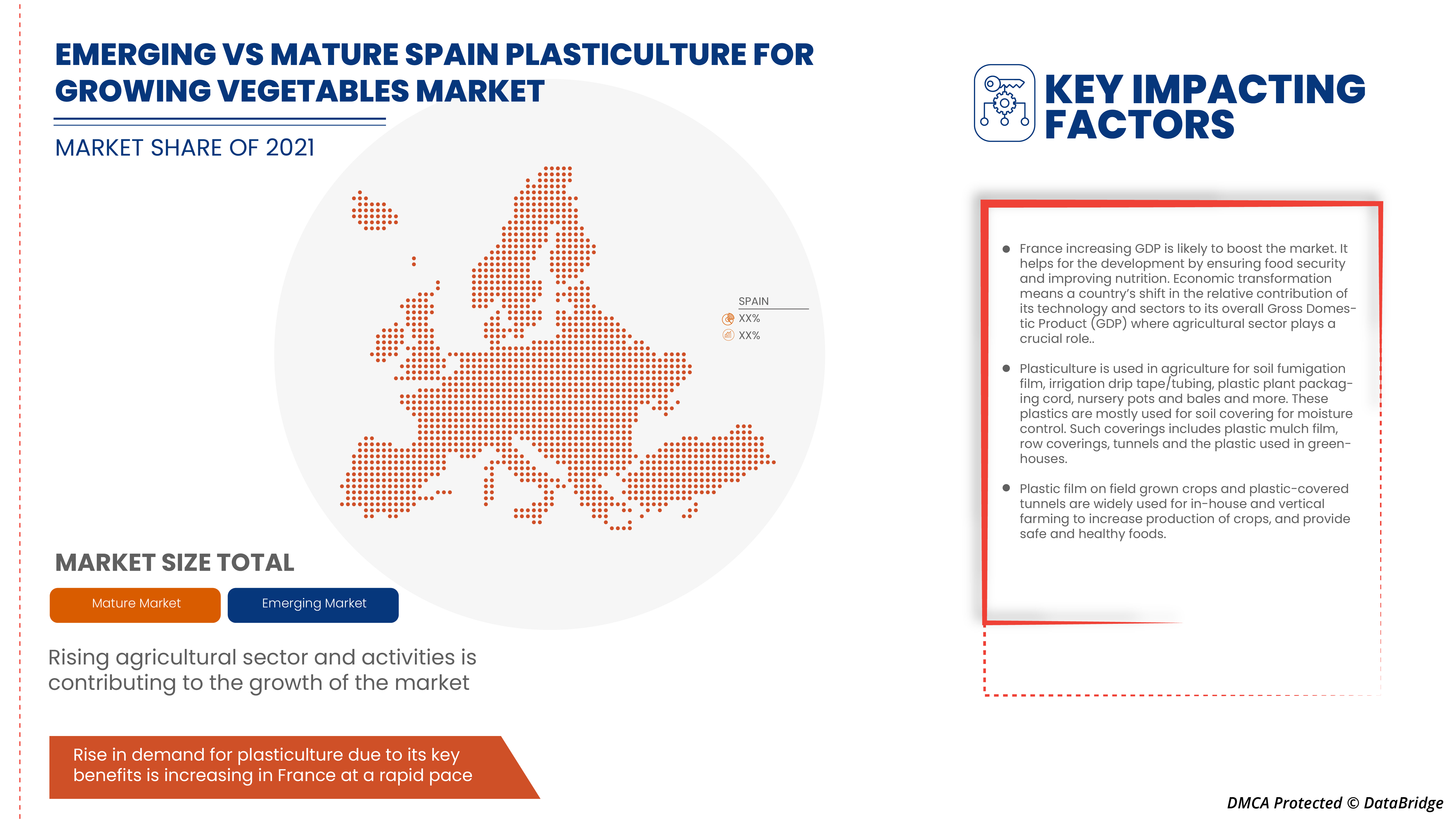
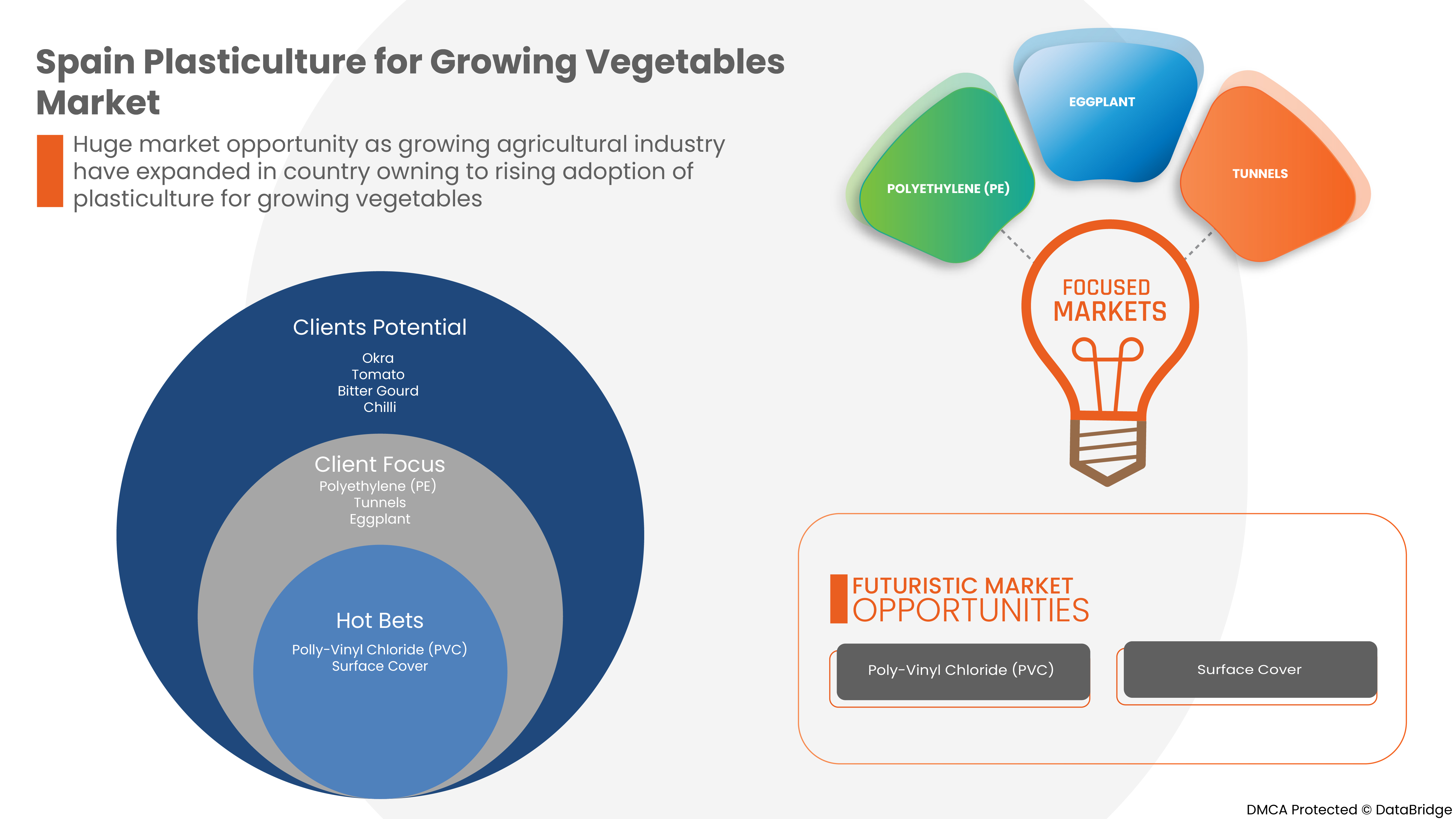
Estes produtos plásticos são utilizados na indústria agrícola para a produção precoce e de alta qualidade. Data Bridge Market Research analisa que a plasticidade espanhola para o mercado de legumes em crescimento deverá atingir o valor de 76,95 milhões de euros até 2029, num CAGR de 4,3% durante o período previsto. O relatório de mercado com curadoria da equipe de Pesquisa do Mercado Data Bridge inclui análise de especialistas em profundidade, análise de importação/exportação, análise de preços, análise de consumo de produção e cenário da cadeia climática.
|
Metric de Relatório |
Detalhes |
|
Período de previsão |
2022 a 2029 |
|
Ano de base |
2021 |
|
Anos Históricos |
2020 (Alfândega até 2019 - 2014) |
|
Unidades quantitativas |
Receitas em milhões de euros |
|
Segmentos Cobertos |
Por Material (polietileno (PE), polipropileno (PP), cloreto de polivinilo (PVC), copolímero de acetato de etileno-vinilo (EVA) e outros), tipo vegetal (planta de ovo, quiabo, tomate, cabaça amarga, chili, cablagem, couve-flor, brócolos e outros), aplicação (gestão de enfermagem, túneis e cobertura de superfície) |
|
Países abrangidos |
Espanha |
|
Jogadores de mercado cobertos |
Exxon Mobil Corporation, Berry Global Inc., Groupe Barbier, NORTENE, Solplast, NaturPláS Plásticos Agrícolas S.L, Sotrafa, PLASTIKA KRITIS S.A., entre outros |
Definição do mercado
A prática do uso de plástico para cultivo de hortaliças, frutas e em atividades agrícolas é conhecida como plasticidade. Essas práticas incluem camas levantadas, cobertura de plástico,irrigação por gotejamento, fumigação do solo, irrigação, embalagem de produtos agrícolas e proteção das colheitas da precipitação. Mulch plástico preto até ajuda a controlar ervas daninhas. O plástico também é usado como cobertura de adubo ou estufa. Sua gestão requer cuidadoso planejamento e atenção.
Dinâmicas de mercado da Spain Plasticulture for Growing Vegetals Incluem:
Controladores/ Optrunity
- Aumento do sector agrícola
Plasticulture é amplamente utilizado na agricultura para plantas e animais. Ajuda na conservação da umidade, economia de água e redução no consumo de fertilizantes para a produção de plantas. Plástica ajuda a aumentar o rendimento de vegetais, mantendo-os seguros com o uso de redes e preserva a umidade do solo. Isto contribuirá para um crescimento agrícola saudável. Assim, o crescente sector agrícola contribuirá para o crescimento da plasticidade espanhola para o crescimento do mercado dos produtos hortícolas.
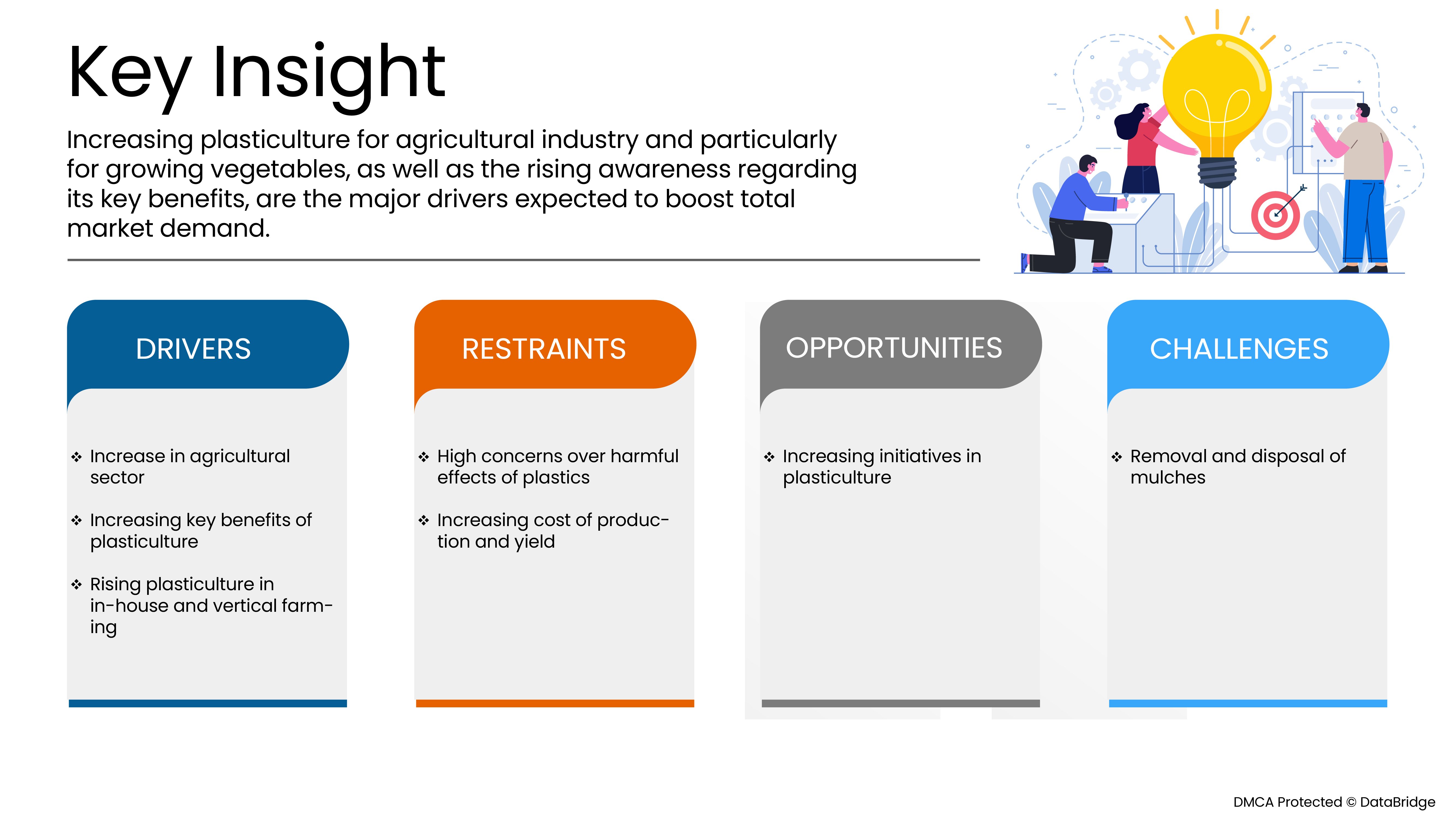
- Aumentar os principais benefícios da plasticidade
As películas plásticas e o adubo mantêm o solo hidratado e mantêm o solo solto, friável e bem arejado. Isso ajuda as raízes a tomar oxigênio. Os vegetais cultivados com a ajuda do filme são muito mais limpos. Fornece uma superfície melhor para a drenagem da água e reduz o afogamento de vegetais como excesso de água sai das fileiras cobertas de plástico e fora do campo. Assim, o aumento dos benefícios fundamentais da plasticidade contribui para o crescimento da plasticidade espanhola para o crescimento do mercado de produtos hortícolas.
- Plástica em crescimento na agricultura interna e vertical
Filmes plásticos em culturas cultivadas em campo e túneis cobertos de plástico são amplamente utilizados para a agricultura interna e vertical para aumentar a produção de culturas e fornecer alimentos seguros e saudáveis. Na agricultura vertical, os alimentos são produzidos em camadas empilhadas verticalmente, como em um armazém. Portanto, o aumento das atividades agrícolas internas e verticais na região utiliza produtos de plasticidade para cultivar seus vegetais e alimentos. As empresas que praticam a agricultura vertical e interna estão igualmente empenhadas em adoptar produtos de plasticidade e I&D para aumentar os rendimentos. O aumento do investimento na agricultura vertical também contribui para o seu crescimento do mercado.
- Aumentar iniciativas na plasticidade
A APE (Agriculture Plastics Environment) Europa é uma associação profissional que visa reunir empresas e organizações envolvidas em agroplásticos. Esta associação visa um ambiente mais limpo e maior produtividade das culturas. Promoveu a utilização de plásticos na agricultura e desenvolveu regimes nacionais de recolha (NCS) para a recuperação e reciclagem de plásticos agrícolas usados em todos os países europeus. Está a sensibilizar os agricultores e os compatriotas para as várias vantagens dos agroplásticos. Apoia projetos de I&D para uma agricultura sustentável na Europa através de agroplásticos. Para executar todos esses processos, vários esquemas e iniciativas são introduzidos.
Restrições/Desafios Espanha Plasticulture para o mercado de legumes de cultivo
- Altas preocupações com os efeitos nocivos dos plásticos
Existe uma grande possibilidade de que os plásticos possam conter os pesticidas e inseticidas utilizados nas culturas. Os filmes plásticos podem acumular pesticidas e entrar na cadeia alimentar através do consumo de gado. Os filmes plásticos são frequentemente feitos de materiais como polietileno (PE), cloreto de polivinilo (PVC) e muito mais. Eles são os materiais mais amplamente utilizados por causa de suas excelentes propriedades mecânicas e baixo custo. Estes filmes representam um risco de serem cancerígenos, o que pode ter um efeito prejudicial na saúde humana.
- Aumento do custo de produção e rendimento
As vantagens da tecnologia de plasticidade em relação às práticas de produção convencionais são a principal razão por trás do aumento do custo de produção. Os filmes plásticos conservam a umidade do solo, tornando-os soltos e friáveis, o que resulta em menor consumo de água e impulsiona a produção, onde leva menos tempo para produzir as culturas em comparação com a agricultura tradicional. A produção de plasticidade requer mais mão-de-obra e máquinas e equipamentos especializados para a aplicação de filmes plásticos e muleta necessários para o sucesso da produção da cultura, o que eventualmente aumenta o seu custo. Assim, o aumento do custo de produção e rendimento dificulta o crescimento da plasticidade espanhola para o crescimento do mercado de produtos hortícolas
- Remoção e eliminação de colchões
Plástico muching é comumente usado na produção de vegetais. Após a colheita das culturas, um dos principais problemas com o sistema de plasticidade é a remoção e descarte de adubos. A remoção da matéria plástica dos campos requer equipamento especializado, que pode ser caro e a matéria plástica é geralmente difícil de eliminar. Alguns filmes de plástico podem ser reciclados, mas alguns filmes de plástico eventualmente quebrar e pequenas peças podem permanecer no campo por vários anos. Assim, a remoção e eliminação de filmes de adubo precisa ser feita corretamente. Agricultores e pessoas envolvidas em atividades de plasticulture não são capazes de reciclar os mulches interrompidos, o que os torna resíduos. Eles enfrentam dificuldade em gerenciar o desperdício de adubos. Durante a reciclagem, as chances de rasgar filmes são elevadas, o que limita os agricultores ou a pessoa que lida com a agricultura de reutilizar os filmes como pode custar mais. Os esforços do governo para proibir os plásticos de uso único também estão criando problemas durante a eliminação dos filmes.
Esta plasticulture Espanha para o crescimento do mercado de legumes fornece detalhes de novos desenvolvimentos recentes, regulamentos comerciais, análise importação-exportação, análise de produção, otimização da cadeia de valor, market share, o impacto de jogadores nacionais e localizados do mercado, analisa oportunidades em termos de bolsas de receita emergentes, mudanças na regulamentação do mercado, análise estratégica do crescimento do mercado, tamanho do mercado, crescimentos de mercado categoria, nichos de aplicação e dominância, aprovações de produtos, lançamentos de produtos, expansões geográficas, inovações tecnológicas no mercado. Para obter mais informações sobre a plasticulture Espanha para o mercado de legumes em crescimento, entre em contato Data Bridge Market Research para um resumo do analista. Nossa equipe irá ajudá-lo a tomar uma decisão de mercado informada para alcançar o crescimento do mercado.
COVID-19 teve um impacto mínimo no mercado espanhol de plasticidade para cultivo de vegetais
A COVID-19 impactou várias indústrias transformadoras no ano 2020-2021, pois levou ao fechamento de locais de trabalho, ruptura das cadeias de suprimentos e restrições ao transporte. Devido ao bloqueio, o mercado de plasticulture teve um impacto significativo na importação e exportação de produtos plasticulture nos últimos anos. Com a crescente procura, a sensibilização para os principais benefícios da plasticidade aumentará o crescimento da plasticidade espanhola para o crescimento do mercado de produtos hortícolas.
Espanha Plasticulture para cultivo de vegetais mercado escopo
Espanha plasticulture para o mercado de legumes em crescimento é segmentado com base em material, tipo vegetal, e aplicação. O crescimento entre esses segmentos irá ajudá-lo a analisar segmentos de crescimento escassos nas indústrias e fornecer aos usuários uma visão geral de mercado valiosa e insights de mercado para ajudá-los a tomar decisões estratégicas para identificar aplicações de mercado principais.
Material
- Polietileno (PE)
- Polipropileno(PP)
- Cloreto de polivinilo (PVC)
- Copolímero de etileno e acetato de vinilo (EVA)
- Outros
Com base no material, o mercado é segmentado em polietileno (PE), polipropileno (PP), cloreto de polivinilo (PVC), copolímero de acetato de etileno-vinilo (EVA), entre outros.
Tipo vegetal
- Plantas ovícolas
- Quiabos
- Tomate
- Abóbora amarga
- Pimenta
- Repolho
- Couve-flor
- Brócolos
- Outros
Com base no tipo vegetal, o mercado é segmentado em berinjela, quiabo, tomate, cabaça amarga, chili, repolho, couve-flor, brócolis, entre outros.
Aplicação
- Gestão de creches
- Túneis
- Cobertura de Superfície
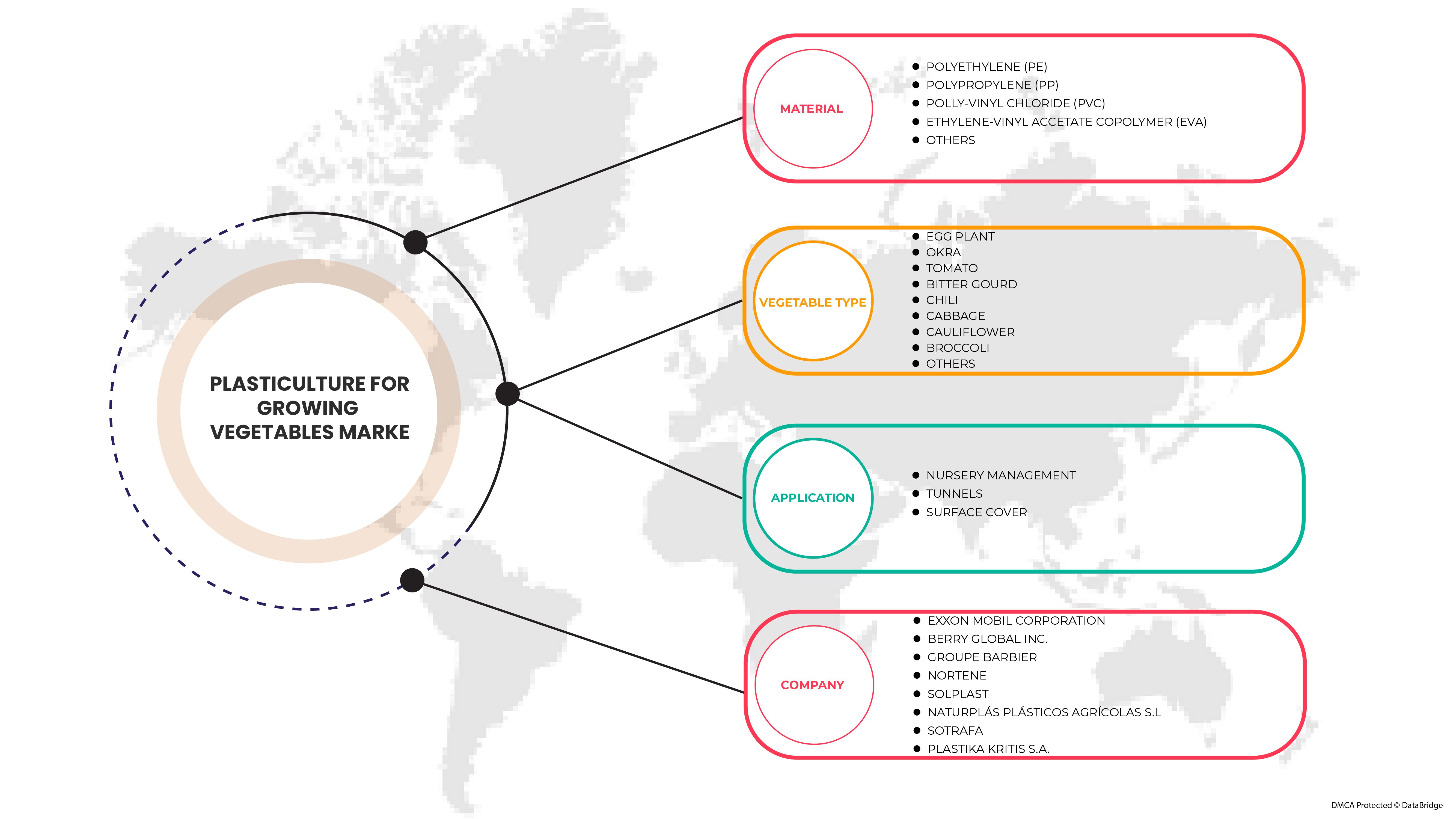
Com base na aplicação, o mercado é segmentado em gestão de berçários, túneis e cobertura de superfície.
Espanha Plasticulture for Growing Vegetals Market Análise/Insights regionais
Analisa-se a plasticidade da Espanha para o mercado de legumes em crescimento e analisam-se as tendências e os insights sobre o tamanho do mercado através do material, do tipo vegetal e da aplicação como acima referido.
A secção «país» do relatório também fornece factores de impacto individuais no mercado e alterações na regulamentação do mercado que afectam as tendências actuais e futuras do mercado. Pontos de dados como análise da cadeia de valor a jusante e a montante, tendências técnicas e análise de cinco forças de porter, e estudos de caso são alguns dos indicadores usados para prever o cenário de mercado para cada país. Além disso, a presença e a disponibilidade das marcas europeias e os seus desafios enfrentados devido à grande ou escassa concorrência das marcas locais e nacionais, ao impacto das tarifas nacionais e às rotas comerciais são considerados ao mesmo tempo que se fornece uma análise das previsões dos dados do país.
Paisagem competitiva e Espanha Plasticulture para a análise de mercado de vegetais em crescimento
A plasticulture espanhola para o cultivo de legumes mercado paisagem competitiva fornece detalhes por concorrente. Detalhes incluídos são visão geral da empresa, finanças da empresa, receita gerada, potencial de mercado, investimento em pesquisa e desenvolvimento, novas iniciativas de mercado, presença na Europa, locais de produção e instalações, capacidades de produção, pontos fortes e fracos da empresa, lançamento do produto, largura e amplitude do produto, dominância da aplicação. Os dados acima apresentados referem-se apenas ao foco das empresas relacionado com a plasticidade espanhola para o mercado de legumes em crescimento.
Alguns dos principais atores que operam no mercado espanhol de produtos hortícolas são Exxon Mobil Corporation, Berry Global Inc., Groupe Barbier, NORTENE, Solplast, NaturPláS Plásticos Agrícolas S.L, Sotrafa, e PLASTIKA Kritis S.A., entre outros.
SKU-
Obtenha acesso online ao relatório sobre a primeira nuvem de inteligência de mercado do mundo

- Painel interativo de análise de dados
- Painel de análise da empresa para oportunidades de elevado potencial de crescimento
- Acesso de analista de pesquisa para personalização e customização. consultas
- Análise da concorrência com painel interativo
- Últimas notícias, atualizações e atualizações Análise de tendências
- Aproveite o poder da análise de benchmark para um rastreio abrangente da concorrência
Índice
1 INTRODUÇÃO
1.1 OBJECTIVOS DO ESTUDO
1.2 DEFINIÇÃO DE MERCADO
1.3 PLASTICULTURA ESPANHA PARA O CRESCIMENTO DO MERCADO DOS PRODUTOS HORTÍCOLAS
1.4 LIMITAÇÃO
1.5 MERCADOS ABRANGADOS
2 SEGMENTAÇÃO DO MERCADO
2.1 MERCADOS COBERTOS
2.2 ÂMBITO GEOGRÁFICO
2.3 ANOS CONSIDERADOS PARA O ESTUDO
2.4 MOEDA E PREÇOS
2.5 MODELO DE VALIDAÇÃO DE DADOS TRIPOD DBRR
2.6 Curva de linha de tipo vegetal
2.7 MODELO MULTIVARIADO
2.8 INTERVENÇÕES PRIMÁRIAS COM OPINIÇÕES-CHAVE
2.9 GRIDE DE POSIÇÃO DO MERCADO DE BMO
2.1 PEDIDO DE RECUPERAÇÃO DO MERCADO
2.11 MATRIX DE DESAFIO DO MERCADO DE DBRR
2.12 ANÁLISE POR PARTICIPAÇÃO DOS VENDANTES DA DBRM
2.13 DADOS DE IMPORTAÇÃO-EXPORTAÇÃO
2.14 FONTES SEGUNDARIAS
2.15 ASSUNTOS
3 RESUMO
4 INSIGHTS PRÉMIO
4.1 ANÁLISE COM PARTILHAR
4. 2 ANÁLISE DOS PESTROS
4.2.1 FATORES POLÍTICOS
4.2.2 FATORES ECONÓMICOS
4.2.3 FACTORES SOCIAIS
4.2.4 FATORES TECNOLÓGICOS
4.2.5 FATORES JURÍDICOS
4.2.6 FATORES AMBIENTAIS
4.3 5 FORÇAS DO PORTRO:
4.3.1 AMEAÇA DE NOVAS ENTRADAS:
4.3.2 AMEAÇA DE SUBSTITUTOS:
4.3.3 PODER DE COMERCIALIZAÇÃO DOS CLIENTES:
4.3.4 APOIO AO COMERCIALIZAÇÃO:
4.3.5 CONCORRÊNCIA INTERNA:
4.4 CRITÉRIOS DE SELECÇÃO DE VEDOR
4.5 RESUMO REGIONAL
4.5.1 ESPANHA
4.6 CAPACIDADE DO REGULAMENTO
4.6.1 QUADRO REGULAMENTAR
5 CENÁRIO DE MUDANÇA CLIMÁTICA
5.1 RELAÇÕES AMBIENTAIS
5.2 RESPOSTA DA INDÚSTRIA
5.3 PAPEL DO GOVERNO
5.4 RECOMENDAÇÃO DE ANÁLISE
ANÁLISE DA CHAIN
6.1 VISÃO GERAL
6.2 CUSTO LOGÍSTICO
6.3 IMPORTÂNCIA DOS SERVIÇOS DE LOGÍSTICA
7 PLASTICULTURA ESPANHA PARA O CRESCIMENTO DO MERCADO DOS PRODUTOS HORTÍCOLAS, POR MATERIAL
7.1 VISÃO GERAL
7.2 POLIETILENO (PE)
7.2.1 POLIETILENO (PE), POR MATERIAL
7.2.2 PE DENSIDADE BAIXA (LDPE)
7.2.3 PE DENSIDADE ALTA (HDPE)
7.2.4 LINHAR PE DENSIDADE BAIXA (LLDPE)
7,3 CLORÍDEO POLÍTICO-VINIL (PVC)
7.4 POLIPROPILENO (PP)
7.5 COPOLÍMERO DE ACETATO DE ETILENO-VINIL (EVA)
7.6 OUTRAS
8 PLASTICULTURA ESPANHA PARA CRESCIMENTO DO MERCADO DE PRODUTOS HORTÍCOLAS, POR TIPO DE HOMOLOGAÇÃO
8.1 VISÃO GERAL
8.2 EGGPLANT
8.3 OKRA
8.4 TOMATO
8.5 BITTER GURD
8.6 CHILI
8.7 CABBAGE
8.8 CAULIFLORES
8.9 BROCCOLI
8.1 OUTRAS
9 PLASTICULTURA ESPANHA PARA O CRESCIMENTO DO MERCADO DOS PRODUTOS HORTÍCOLAS, POR APLICAÇÃO
9.1 VISÃO GERAL
9.2 TUNNELS
9.3 CAPA DE SUPERFÍCIE
9.3.1 CAPA DE SUPERFÍCIE, POR APLICAÇÃO
9.3.2 MULCHING
9.3.3 SOLARISÃO DO SOLO
9.4 GESTÃO DAS ENFERMEIRAS
9.4.1 GESTÃO DAS ENFERMEIRAS, POR PEDIDO
9.4.2 BAGES DE ENFERMEIRA
9.4.3 PRO-TRAYS
9.4.4 PLUGOS PLASTICOS
9.4.5 BASQUETAS DE PEDIDO
9.4.6 RAIA
10 PLASTICULTURA ESPANHA PARA O CRESCIMENTO DO MERCADO DOS PRODUTOS HORTÍCOLAS, PAISCAPE DA EMPRESA
10.1 ANÁLISE PARTICIPAL: ESPANHA
11 ANÁLISE SWOT
12 PROFISSÕES DAS SOCIEDADES
12.1 BERRY GLOBAL INC.
12.1.1 COMPANHIA SNAPSHOT
12.1.2 ANÁLISE DAS RECEITAS
12.1.3 PRODUTO PORTFÓLIO
12.1.4 Actualizações recentes
12.2 CORPORAÇÃO DE MOBIL EXXON
12.2.1 EMPRESA SNAPSHOT
12.2.2 ANÁLISE DAS RECEITAS
12.2.3 PRODUTO PORTFÓLIO
12.2.4 Actualizações recentes
12.3 SOTRAFA
12.3.1 EMPRESA SNAPSHOT
12.3.2 PRODUTO PORTFÓLIO
12.3.3 ACTIVIDADES RECEITAS
12. 4 SOLPLAST
12.4.1 EMPRESA SNAPSHOT
12.4.2 PRODUTO PORTFOLIO
12.4.3 ACTIVIDADES RECEITAS
12.5 NATURPLÁS PLÁSTICOS AGRÍCOLAS S.L
12.5.1 EMPRESA SNAPSHOT
12.5.2 PRODUTO PORTFÓLIO
12.5.3 ACTIVIDADES RECEITAS
12,6 BARBIER GRUPO
12.6.1 EMPRESA SNAPSHOT
12.6.2 PRODUTO PORTFÓLIO
12.6.3 ACTIVIDADES RECEITAS
12,7 NORTENE
12.7.1 EMPRESA SNAPSHOT
12.7.2 PRODUTO PORTFÓLIO
12.7.3 ACTIVIDADES RECEITAS
12, 8 PLASTIKA Kritis S. A.
12.8.1 EMPRESA SNAPSHOT
12.8.2 PRODUTO PORTFÓLIO
12.8.3 ACTIVIDADES RECEITAS
13 QUESTIONÁRIO
14 RELATÓRIOS RELACIONADOS
Lista de Tabela
QUADRO 1 DADOS DE IMPORTAÇÃO DOS ARTIGOS PARA O POLIETILENO COM GRAVIDEZ ESPECÍFICA < 0,94, EM FORMAS PRIMÁRIAS; CÓDIGO SH - 390110 (USD MIL)
QUADRO 2 DADOS DE EXPORTAÇÃO DOS ARTIGOS PARA O POLIETILENO COM GRAVIDEZ ESPECÍFICA < 0,94, EM FORMAS PRIMÁRIAS; CÓDIGO SH - 390110 (USD MIL)
QUADRO 3 PLASTICULTURA ESPANHA PARA O CRESCIMENTO DO MERCADO DOS PRODUTOS HORTÍCOLAS, POR MATERIAL, 2020-2029 (EURO MILHÃO)
QUADRO 4 POLIETILENO ESPANHA (PE) EM PLASTICULTURA PARA O MERCADO DO CRESCIMENTO DE PRODUTOS HORTÍCOLAS, POR MATERIAL, 2020-2029 (EURO MILHÃO)
QUADRO 5 PLASTICULTURA ESPANHA PARA O MERCADO DO CRESCIMENTO DE PRODUTOS HORTÍCOLAS, POR TIPO HOMOLOGÁVEL, 2020-2029 (EURO MILHÃO)
QUADRO 6 PLASTICULTURA ESPANHA PARA O CRESCIMENTO DO MERCADO DOS PRODUTOS HORTÍCOLAS, PELO PEDIDO, 2020-2029 (EURO MILHÃO)
QUADRO 7 CAPA DE SUPERFÍCIE ESPANHA NA PLASTICULTURA PARA O MERCADO DE CRESCIMENTO DE PRODUTOS HORTÍCOLAS, PELO PEDIDO 2020-2029 (EURO MILHÃO)
QUADRO 8 GESTÃO DA ENFERMEIRA ESPANHA NA PLASTICULTURA PARA O MERCADO DE CRESCIMENTO DE PRODUTOS HORTÍCOLAS, POR PEDIDO, 2020-2029 (EURO MILHÃO)
Lista de Figura
FIGURA 1 PLASTICULTURA ESPANHA PARA O CRESCIMENTO DO MERCADO DOS PRODUTOS HORTÍCOLAS: SEGMENTAÇÃO
FIGURA 2 PLASTICULTURA ESPANHA PARA CRESCIMENTO DE PRODUTOS HORTÍCOLAS: TRIANGULAÇÃO DE DADOS
FIGURA 3 PLASTICULTURA ESPANHA PARA O CRESCIMENTO DO MERCADO DOS PRODUTOS HORTÍCOLAS: ANÁLISE DROC
FIGURA 4 PLASTICULTURA ESPANHA PARA O CRESCIMENTO DO MERCADO DOS PRODUTOS HORTÍCOLAS: ANÁLISE DO MERCADO EURPE
FIGURA 5 PLASTICULTURA ESPANHA PARA O CRESCIMENTO DO MERCADO DE PRODUTOS HORTÍCOLAS: ANÁLISE DE INVESTIGAÇÃO DA EMPRESA
FIGURA 6 PLASTICULTURA ESPANHA PARA O MERCADO DE CRESCIMENTO DE PRODUTOS HORTÍCOLAS: CURVA DE LINHA DO TIPO DE VEGETÁVEL
FIGURA 7 PLASTICULTURA ESPANHA PARA CRESCIMENTO DO MERCADO DE PRODUTOS HORTÍCOLAS: MODELIZAÇÃO MULTIVARIADA
FIGURA 8 PLASTICULTURA ESPANHA PARA O CRESCIMENTO DO MERCADO DE PRODUTOS HORTÍCOLAS: DEMOGRÁFICOS INTERVISTOS
FIGURA 9 PLASTICULTURA ESPANHA PARA CRESCIMENTO DO MERCADO DOS PRODUTOS HORTÍCOLAS: GRIDE DE POSIÇÃO DO MERCADO DA DBRM
FIGURA 10 PLASTICULTURA ESPANHA PARA CRESCIMENTO DO MERCADO DE PRODUTOS HORTÍCOLAS: PEDIDO DE CAPAGENS
FIGURA 11 PLASTICULTURA ESPANHA PARA O CRESCIMENTO DO MERCADO DE PRODUTOS HORTÍCOLAS: DESAFIO DO MATRIX
FIGURA 12 PLASTICULTURA ESPANHA PARA O CRESCIMENTO DO MERCADO DE PRODUTOS HORTÍCOLAS: ANÁLISE DE PARTICIPAÇÃO DE VEDORES
FIGURA 13 PLASTICULTURA ESPANHA PARA CRESCIMENTO DE PRODUTOS HORTÍCOLAS: SEGMENTAÇÃO
FIGURA 14 A PLASTICULTURA DE RISCO NA ALIMENTAÇÃO E NA ALIMENTAÇÃO VERTICAL está prevista para conduzir a PLASTICULTURA ESPANHA PARA O CRESCIMENTO DO MERCADO DOS PRODUTOS HORTÍCOLAS NO PERÍODO ANTES DE 2022 A 2029
FIGURA 15 O SEGMENTO DE POLIETILENO (PE) está previsto para a conta da parte mais larga da plasticULTURA ESPANHA PARA O CRESCIMENTO DO MERCADO DOS PRODUTOS HORTÍCOLAS EM 2022 e 2029
FIGURA 16 PLASTICULTURA ESPANHA PARA O CRESCIMENTO DO MERCADO DOS PRODUTOS HORTÍCOLAS, POR MATERIAL, 2021
FIGURA 17 PLASTICULTURA ESPANHA PARA O MERCADO DE CRESCIMENTO DE PRODUTOS HORTÍCOLAS, POR TIPO DE HOMOLOGAÇÃO, 2021
FIGURA 18 PLASTICULTURA ESPANHA PARA O CRESCIMENTO DO MERCADO DOS PRODUTOS HORTÍCOLAS, POR PEDIDO, 2021
FIGURA 19 PLASTICULTURA ESPANHA PARA CRESCIMENTO DE PRODUTOS HORTÍCOLAS: COMPANHIA COMPARTILHE 2021 (%)

Metodologia de Investigação
A recolha de dados e a análise do ano base são feitas através de módulos de recolha de dados com amostras grandes. A etapa inclui a obtenção de informações de mercado ou dados relacionados através de diversas fontes e estratégias. Inclui examinar e planear antecipadamente todos os dados adquiridos no passado. Da mesma forma, envolve o exame de inconsistências de informação observadas em diferentes fontes de informação. Os dados de mercado são analisados e estimados utilizando modelos estatísticos e coerentes de mercado. Além disso, a análise da quota de mercado e a análise das principais tendências são os principais fatores de sucesso no relatório de mercado. Para saber mais, solicite uma chamada de analista ou abra a sua consulta.
A principal metodologia de investigação utilizada pela equipa de investigação do DBMR é a triangulação de dados que envolve a mineração de dados, a análise do impacto das variáveis de dados no mercado e a validação primária (especialista do setor). Os modelos de dados incluem grelha de posicionamento de fornecedores, análise da linha de tempo do mercado, visão geral e guia de mercado, grelha de posicionamento da empresa, análise de patentes, análise de preços, análise da quota de mercado da empresa, normas de medição, análise global versus regional e de participação dos fornecedores. Para saber mais sobre a metodologia de investigação, faça uma consulta para falar com os nossos especialistas do setor.
Personalização disponível
A Data Bridge Market Research é líder em investigação formativa avançada. Orgulhamo-nos de servir os nossos clientes novos e existentes com dados e análises que correspondem e atendem aos seus objetivos. O relatório pode ser personalizado para incluir análise de tendências de preços de marcas-alvo, compreensão do mercado para países adicionais (solicite a lista de países), dados de resultados de ensaios clínicos, revisão de literatura, mercado remodelado e análise de base de produtos . A análise de mercado dos concorrentes-alvo pode ser analisada desde análises baseadas em tecnologia até estratégias de carteira de mercado. Podemos adicionar quantos concorrentes necessitar de dados no formato e estilo de dados que procura. A nossa equipa de analistas também pode fornecer dados em tabelas dinâmicas de ficheiros Excel em bruto (livro de factos) ou pode ajudá-lo a criar apresentações a partir dos conjuntos de dados disponíveis no relatório.











