



Europe Education Personal Computer (PC) Market, By Product Type (Desktop, Laptop, Tablet, and Chromebook), Operating System (Window, Mac OS, and Others), Storage (512 GB to 1 TB, 256 GB to 512 GB, Above 1 TB, and Less than 256 GB), Memory (8 GB, 16 GB, 4 GB, and 32 GB), Screen Size (14 Inches & Above, 12 To 14 Inches, Under 12 Inches), Resolution (Full HD, HD, and Others), Age Group (Above 18, 15-18, 11 to 14, 5 to 10), Application (Digital Content Access, Video Conferencing/Remote Learning Access, Modeling and Simulation, Digital Content Creation, Programming & Coding, and Others), Price Range (Mid-Range High Range, and Low Range), Distribution Channel (Direct Sales and Resellers), End User (Colleges/Universities, Schools and Others) - Industry Trends and Forecast to 2030
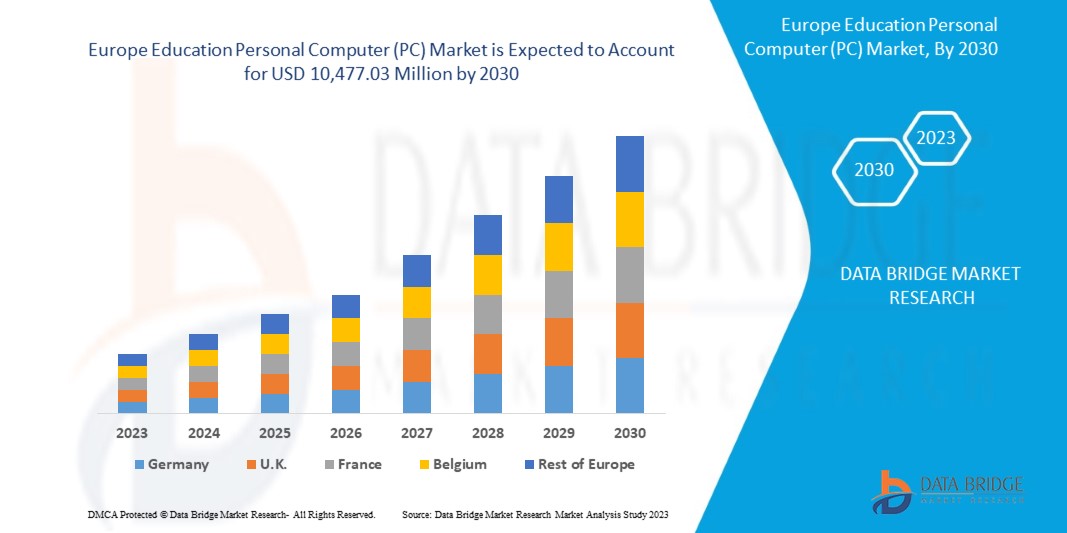
Europe Education Personal Computer (PC) Market Analysis and Size
In Europe, integration personal computers into education have been a revolutionary endeavour aiming at improving student’s learning experiences and digital literacy. The relationship between computer use in schools and academic outcomes has also been studied, revealing the favourable impact of technology on learning. Europe is actively educating its students for a future that requires technical fluency by bringing personal computers into educational environments, ensuring they well prepared to negotiate the intricacies. Major factors expected to boost the growth of the Europe education personal computer (PC) market in the forecast period are the rise in several industry applications, including aerospace, steel, power, chemical, and others. Furthermore, increase in growth of e-commerce industry is the benefit of Digital Identity Solution, which is further anticipated to propel the growth of the market.
Data Bridge Market Research analyses that Europe education personal computer (PC) market is expected to reach the value of USD 10,477.03 million by 2030, at a CAGR of 11.2% during the forecast period. The Europe education personal computer (PC) market report also covers pricing analysis, patent analysis, and technological advancements in depth.
|
Report Metric |
Details |
|
Forecast Period |
2023 to 2030 |
|
Base Year |
2022 |
|
Historic Years |
2021 (Customizable to 2015-2020) |
|
Quantitative Units |
Revenue in USD Million |
|
Segments Covered |
Product Type (Desktop, Laptop, Tablet, and Chromebook), Operating System (Window, Mac OS, and Others), Storage (512 GB to 1 TB, 256 GB to 512 GB, Above 1 TB, and Less than 256 GB), Memory (8 GB, 16 GB, 4 GB, and 32 GB), Screen Size (14 Inches & Above, 12 To 14 Inches, Under 12 Inches), Resolution (Full HD, HD, and Others), Age Group (Above 18, 15-18, 11 to 14, 5 to 10), Application (Digital Content Access, Video Conferencing/Remote Learning Access, Modeling and Simulation, Digital Content Creation, Programming & Coding, and Others), Price Range (Mid-Range High Range, and Low Range), Distribution Channel (Direct Sales and Resellers), End User (Colleges/Universities, Schools and Others) |
|
Countries Covered |
U.K., Germany, France, Spain, Italy, Russia, Netherlands, Switzerland, Denmark, Sweden, Poland, Belgium, Turkey, Norway, Finland, and Rest of Europe |
|
Market Players Covered |
Lenovo, HP Development Company LP, Dell Inc., Apple Inc., Acer Inc., ASUSTeK Computer Inc., SAMSUNG, Microsoft, Google Inc., LG Electronics, Intel Corporation, Micro-Star INT'L CO., LTD., Razer Inc., Cybernet Manufacturing, Inc. among others |
Market Definition
Personal computers play an important role in modern education, considerably improving the learning experience. These adaptable gadgets give students access to a wide range of instructional resources, from digital textbooks to interactive learning platforms, enabling personalized and dynamic learning experiences. They also encourage collaboration among students and teachers through online classrooms and virtual communication tools, breaking down geographical barriers in education. Furthermore, personal computers assist students learn critical digital literacy and problem solving abilities, preparing them for a technological driven job market.
Europe Education Personal Computer (PC) Market Dynamics
This section deals with understanding the market drivers, opportunities, restraints and challenges. All of this is discussed in detail as below:
Drivers
- Growing Demand for Digital Learning
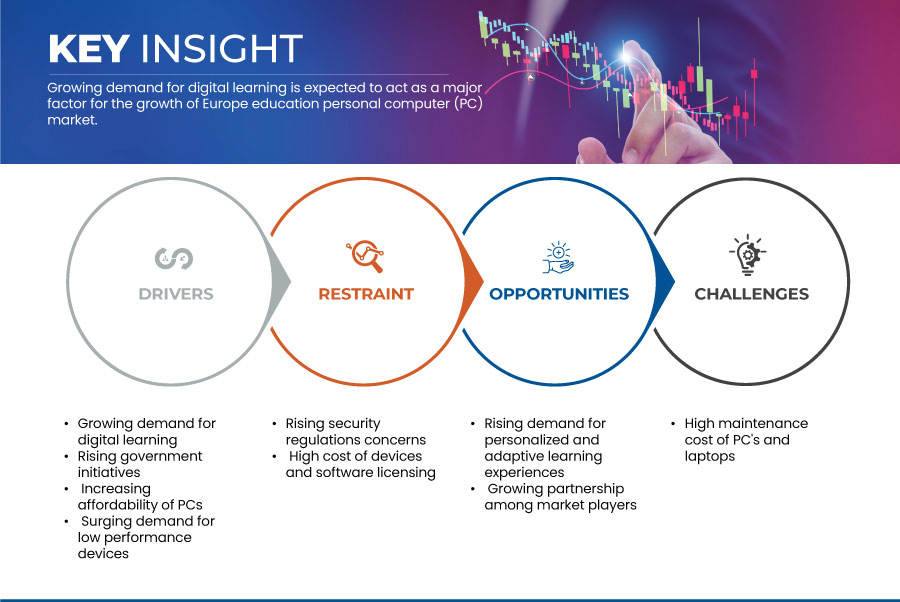
The growing demand for digital learning has undeniably become a significant driver for the Europe education personal computer (PC) market. In recent years, the education sector across Europe has undergone a rapid transformation, with an increasing emphasis on digital and remote learning methods. This shift, accelerated by factors such as the COVID-19 pandemic, has created a burgeoning demand for personal computers in educational institutions. Schools, colleges, and universities have had to invest in PCs to facilitate online classes, digital resource access, and collaborative learning platforms. In addition, students and parents have recognized the importance of personal computers for research, homework, and skill development, further boosting the demand. As digital learning becomes an integral part of the education system, the Europe education PC market is expected to witness sustained growth in the coming years.
- Rising Government Initiatives
Rising government initiatives can indeed serve as a significant driver for the Europe education personal computer (PC) market. Governments across Europe have recognized the pivotal role that digital technology plays in modern education and are increasingly investing in initiatives to promote the integration of PCs and digital tools in schools and educational institutions. These initiatives often take the form of funding programs, subsidies, or incentives aimed at providing educational institutions with the resources needed to acquire and deploy personal computers for students and educators. They may also encompass policies and regulations that promote the use of technology in the classroom.
Opportunity
- Rising Demand for Personalized and Adaptive Learning Experiences
The rising demand for personalized and adaptive learning experiences presents a significant opportunity for the Europe education personal computer (PC) market. As education continues to evolve, there is a growing recognition of the importance of tailoring learning materials and approaches to individual student needs. Personalized and adaptive learning technologies rely heavily on digital platforms, and this is where the opportunity for the PC market lies. To facilitate personalized and adaptive learning, educational institutions require a robust IT infrastructure that includes PCs capable of running educational software, accessing online resources, and supporting interactive learning experiences. These PCs need to be equipped with adequate processing power, memory, and connectivity to deliver content seamlessly. In addition, the demand for such systems extends beyond traditional classroom settings, as remote and online learning becomes more prevalent.
Restraints/Challenges
- Rising Security and Regulatory Concerns
The Europe education personal computer (PC) market has witnessed substantial growth, driven by the increasing adoption of technology in educational institutions. However, one significant restraining factor in this market is the rising security and regulatory concerns, including the General Data Protection Regulation (GDPR). Educational institutions deal with sensitive student and faculty data, making data protection a paramount concern. GDPR, a stringent data protection regulation in the European Union, imposes strict rules on the collection, storage, and processing of personal data. Compliance with GDPR necessitates robust data security measures, which can increase the cost of adopting and maintaining PC infrastructure in educational settings. Institutions need to invest in data encryption, secure storage solutions, and cybersecurity measures to ensure GDPR compliance, which can strain their budgets.
- High Cost of Devices and Software Licensing
High content and software licensing costs pose a significant constraint on the growth of the Europe education personal computer (PC) market. Educational institutions in Europe are often burdened with substantial expenses related to securing licenses for essential software and digital learning materials. This financial burden can limit their ability to invest in modern PC infrastructure, hindering the overall development of digital learning environments. Institutions are compelled to allocate a substantial portion of their budgets to software licensing, which could otherwise be directed towards upgrading hardware, expanding digital resources, or enhancing the overall quality of education.
Recent Developments
- In July 2023, HP Development Company LP successfully launched a range of versatile and affordable laptops tailored for college students, offering solutions suitable for various academic needs. This strategic move helped HP tap into the education sector, expand its customer base, and potentially boost sales by providing quality laptops designed to cater to the specific requirements of students.
- In June 2023, Lenovo launched the Legion Pro series gaming laptops, featuring Intel 13th Gen and AMD Ryzen 7000 series processors, enhanced their product offerings for the laptop segment. These laptops, equipped with advanced features like 16:10 displays and Lenovo Artificial Intelligence (LA) chips for real-time hardware optimization, catered to the needs of gaming enthusiasts, potentially increasing sales and market share in the laptop segment. Additionally, the inclusion of AI technology highlighted Lenovo's commitment to delivering cutting-edge gaming solutions.
- In April 2023, Dell Inc. introduced 11 new Latitude and Precision laptops with enhanced security features catered specifically to business users, bolstered the company's position as a provider of reliable and secure computing solutions for the corporate market. This strategic move addressed the increasing demand for remote and hybrid work solutions while reinforcing Dell's commitment to delivering efficient and secure IT solutions for businesses, potentially increasing sales and market share in the enterprise sector.
- In February 2023, Intel partnered with Croma to offer high-performance laptops from various brands, providing customers with significant discounts of up to 45 percent. The collaboration with Croma likely led to an increase in the sales of Intel-powered laptops as it made high-performance laptops more accessible and affordable to a wider range of customers.
- In November 2022, Microsoft launched Windows 11 SE and the Surface Laptop SE for students which marked a significant move by the tech giant to cater specifically to the educational sector. Windows 11 SE is a streamlined, education-focused version of its flagship operating system, designed to provide a secure, efficient, and user-friendly computing experience for students and educators. The launch of Windows 11 SE and the Surface Laptop SE for students enabled Microsoft to further solidify its presence in the education sector, offer tailored solutions, compete effectively, expand its ecosystem, and establish lasting relationships with educational institutions.
Europe Education Personal Computer (PC) Market Scope
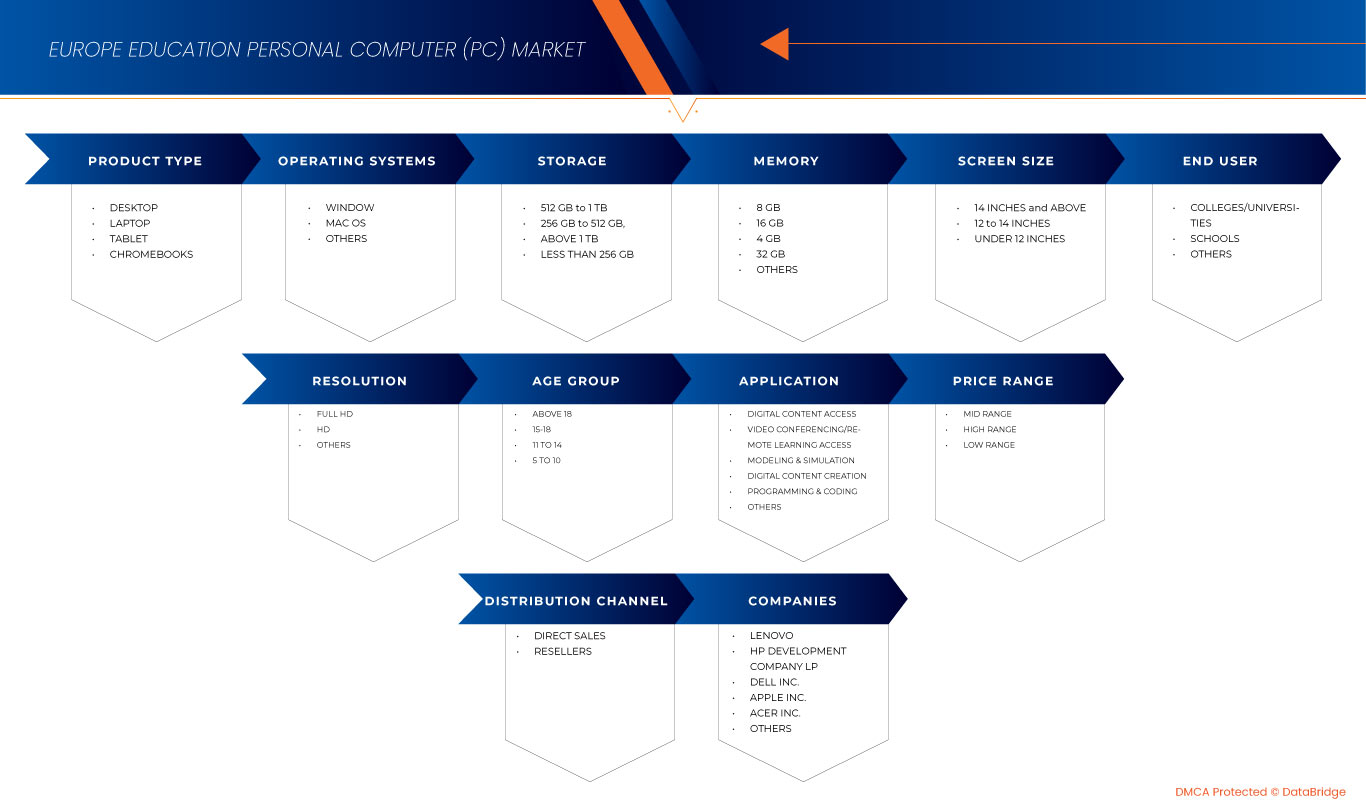
Europe education personal computer (PC) market is segmented on the basis of product type, operating system, storage, memory, screen size, resolution, age group, application, price range, distribution channel, and end user. The growth amongst these segments will help you analyze meagre growth segments in the industries and provide the users with a valuable market overview and market insights to help them make strategic decisions for identifying core market applications.
Product Type
- Laptop
- Desktop
- Tablet
- Chromebook
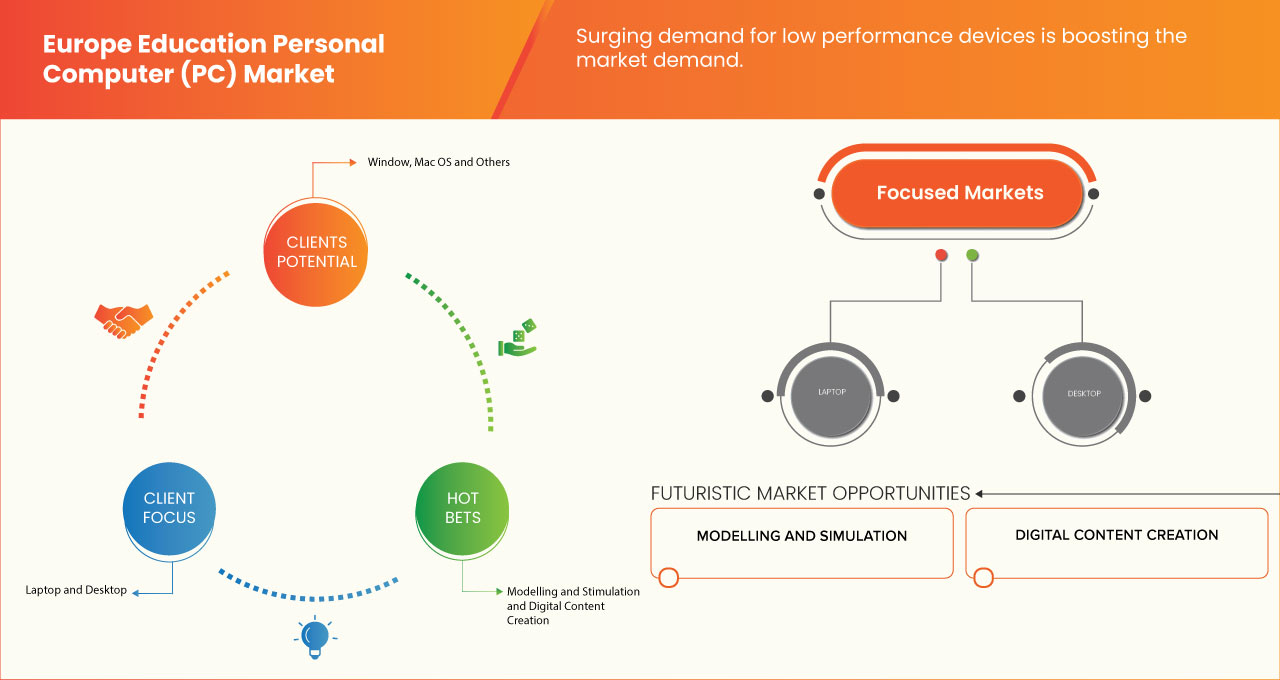
On the basis of product type, the market is segmented into laptop, desktop, tablet, and chromebooks.
Operating System
- Window
- Mac OS
- Others
On the basis of operating system, the market is segmented into window, mac OS, and others.
Storage
- 512 GB to 1 TB
- 256 GB to 512 GB
- Above 1 TB
- Less than 256 GB
On the basis of storage, the market is segmented into 512 GB to 1 TB, 256 GB to 512 GB, above 1 TB and less than 256 GB.
Memory
- 8 GB
- 16 GB
- 4 GB
- 32 GB
- Others
On the basis of memory, the market is segmented into 8 GB, 16 GB, 4 GB, 32 GB, and others.
Screen size
- 14 Inches and Above
- 12 to 14 Inches
- Under 12 Inches
On the basis of screen size, the market is segmented into 14 inches and above, 12 to 14 inches, and under 12 inches.
Resolution
- Full HD
- HD
- Others
On the basis of resolution, the market is segmented into full HD, HD, and others.
Age Group
- Above 18
- 15-18
- 11 to 14
- 5 to 10
On the basis of age group, the market is segmented into above 18, 15-18, 11 to 14, and 5 to 10.
Application
- Digital Content Access
- Video Conferencing/Remote Learning Access
- Modeling and Simulation
- Digital Content Creation
- Programming and Coding
- Others
On the basis of application, the market is segmented into digital content access, video conferencing/remote learning access, modeling and simulation, digital content creation, programming and coding, and others.
Price Range
- Mid-Range
- High Range
- Low Range
On the basis of price range, the market is segmented into mid-range, high range, and low range.
Distribution Channel
- Direct Sales
- Resellers
On the basis of distribution channel, the market is segmented into direct sales and resellers.
End User
- Colleges/Universities
- Schools
- Others
On the basis of end user, the market is segmented into colleges/universities, schools, and others.
Europe Education Personal Computer (PC) Market Regional Analysis/Insights
Europe education personal computer (PC) market is analysed and market size insights and trends are provided by country, product type, operating system, storage, memory, screen size, resolution, age group, application, price range, distribution channel, end-user as referenced above.
The countries covered in the Europe education personal computer (PC) market report are U.K., Germany, France, Spain, Italy, Russia, Netherlands, Switzerland, Denmark, Sweden, Poland, Belgium, Turkey, Norway, Finland, and Rest of Europe.
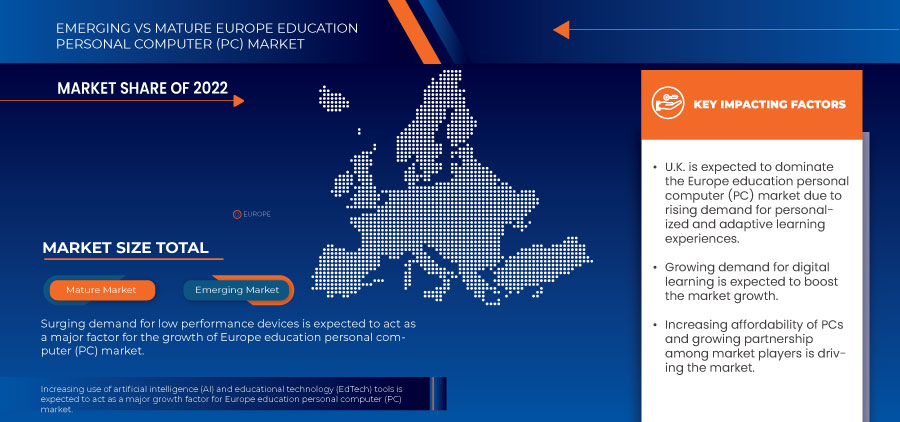
U.K. region is expected to dominate the Europe education personal computer (PC) market due to its early adoption of advanced technology, robust regulatory frameworks and presence of significant tech businesses which contributes to the increase in dominance in the Europe education personal computer (PC) market. The U.K. is expected to grow during the forecast period due to the rising cybersecurity threats and awareness of identity solutions in protecting sensitive data, resulting in high market growth in Europe region.
The country section of the report also provides individual market impacting factors and changes in market regulation that impact the current and future trends of the market. Data points such as down-stream and up-stream value chain analysis, technical trends and porter's five forces analysis, case studies are some of the pointers used to forecast the market scenario for individual countries. Also, the presence and availability of brands and their challenges faced due to large or scarce competition from local and domestic brands, impact of domestic tariffs and trade routes are considered while providing forecast analysis of the country data.
Competitive Landscape and Europe Education Personal Computer (PC) Market Share Analysis
Europe education personal computer (PC) market competitive landscape provides details by competitor. Details included are company overview, company financials, revenue generated, market potential, investment in research and development, new market initiatives, regional presence, production sites and facilities, production capacities, company strengths and weaknesses, product launch, product width and breadth, application dominance. The above data points provided are only related to the company’s focus related to Europe education personal computer (PC) market.
Some of the major players operating in Europe education personal computer (PC) market are Lenovo, HP Development Company LP, Dell Inc., Apple Inc., Acer Inc., ASUSTeK Computer Inc., SAMSUNG, Microsoft, Google Inc., LG Electronics, Intel Corporation, Micro-Star INT'L CO., LTD., Razer Inc., Cybernet Manufacturing, Inc. among others.
SKU-
Получите онлайн-доступ к отчету на первой в мире облачной платформе рыночной аналитики

- Интерактивная панель анализа данных
- Панель анализа компании для возможностей с высоким потенциалом роста
- Доступ аналитика-исследователя для настройки и запросов
- Анализ конкурентов с помощью интерактивной панели
- Последние новости, обновления и анализ тенденций
- Используйте возможности сравнительного анализа для комплексного отслеживания конкурентов
Методология исследования
Сбор данных и анализ базового года выполняются с использованием модулей сбора данных с большими размерами выборки. Этап включает получение рыночной информации или связанных данных из различных источников и стратегий. Он включает изучение и планирование всех данных, полученных из прошлого заранее. Он также охватывает изучение несоответствий информации, наблюдаемых в различных источниках информации. Рыночные данные анализируются и оцениваются с использованием статистических и последовательных моделей рынка. Кроме того, анализ доли рынка и анализ ключевых тенденций являются основными факторами успеха в отчете о рынке. Чтобы узнать больше, пожалуйста, запросите звонок аналитика или оставьте свой запрос.
Ключевой методологией исследования, используемой исследовательской группой DBMR, является триангуляция данных, которая включает в себя интеллектуальный анализ данных, анализ влияния переменных данных на рынок и первичную (отраслевую экспертную) проверку. Модели данных включают сетку позиционирования поставщиков, анализ временной линии рынка, обзор рынка и руководство, сетку позиционирования компании, патентный анализ, анализ цен, анализ доли рынка компании, стандарты измерения, глобальный и региональный анализ и анализ доли поставщика. Чтобы узнать больше о методологии исследования, отправьте запрос, чтобы поговорить с нашими отраслевыми экспертами.
Доступна настройка
Data Bridge Market Research является лидером в области передовых формативных исследований. Мы гордимся тем, что предоставляем нашим существующим и новым клиентам данные и анализ, которые соответствуют и подходят их целям. Отчет можно настроить, включив в него анализ ценовых тенденций целевых брендов, понимание рынка для дополнительных стран (запросите список стран), данные о результатах клинических испытаний, обзор литературы, обновленный анализ рынка и продуктовой базы. Анализ рынка целевых конкурентов можно проанализировать от анализа на основе технологий до стратегий портфеля рынка. Мы можем добавить столько конкурентов, о которых вам нужны данные в нужном вам формате и стиле данных. Наша команда аналитиков также может предоставить вам данные в сырых файлах Excel, сводных таблицах (книга фактов) или помочь вам в создании презентаций из наборов данных, доступных в отчете.











