


Global Adalimumab Market Segmentation, By Drug class (Antirheumatics, TNF Alfa Inhibitors, and Others), Indication (Rheumatoid Arthritis, Ankylosing Spondylitis, Chronic Plaque Psoriasis, Crohn’s Disease, Ulcerative Colitis, Psoriatic Arthritis, Juvenile Idiopathic Arthritis, Hidradenitis Suppurativa, Non-Infectious Intermediate, and Others), Type (Biologics and Biosimilars), Dosage Strength (40mg/0.4mlg, 80mg/0.8mlg, 20mg/0.2mlg, 10mg/0.1mlg, and Others), Drug Type (Branded and Generics), Route of Administration (Oral, Parenteral, and Others), Age Group (Pediatric, Injection, Solution, and Others), Dosage Form (Tablet, Specialty Clinics, Homecare, and Others),
Каков размер и темпы роста рынка Адалимумаба
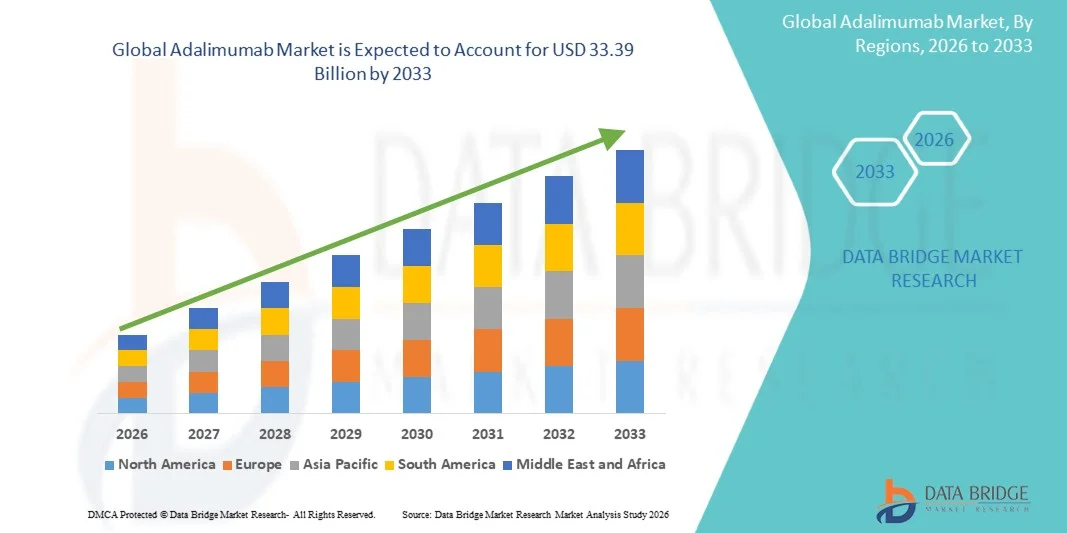
- Согласно анализу Data Bridge Market Research, глобальный размер рынка адалимумаба был оценен как22,09 млрд долларов в 2025 годуОжидается, что он достигнет33,39 млрд долларов к 2033 году, вCAGR 5,30%в течение прогнозируемого периода
- Рост рынка в значительной степени подпитывается растущей распространенностью аутоиммунных заболеваний, таких как ревматоидный артрит, псориаз и воспалительные заболевания кишечника, а также ростом осведомленности и показателей диагностики, что приводит к увеличению спроса на эффективные биологические методы лечения.
- Кроме того, растущее внедрение биоаналогов, расширение терапевтических приложений и увеличение расходов на здравоохранение ускоряют внедрение решений Adalimumab, тем самым значительно повышая рост отрасли.
Размер рынка и прогноз
Глобальная рыночная стоимость (2025):$22,09 млрд.
Ожидаемая рыночная стоимость (2033):$33,39 млрд.
Прогноз CAGR (2026–2033):5.30%
Каковы основные особенности рынка Адалимумаба
- Адалимумаб, моноклональное антитело, используемое при лечении различных аутоиммунных заболеваний, становится все более важным в современном здравоохранении благодаря своей эффективности в управлении хроническими воспалительными состояниями и улучшении качества жизни пациентов в различных терапевтических областях.
- Растущий спрос на Адалимумаб в первую очередь подпитывается растущей распространенностью аутоиммунных расстройств, растущим распространением биологических препаратов и биоаналогов и растущей осведомленностью о ранней диагностике и лечении.
- Северная Америка доминировала на рынке адалимумаба с самой большой долей дохода в 41,8% в 2025 году, что обусловлено высоким внедрением биологических препаратов, сильной инфраструктурой здравоохранения и присутствием ключевых фармацевтических компаний, причем США вносят значительный вклад за счет увеличения использования по нескольким показаниям.
- Ожидается, что Азиатско-Тихоокеанский регион станет самым быстрорастущим регионом на рынке адалимумаба в течение прогнозируемого периода, регистрируя CAGR в 13,6%, чему способствуют растущие расходы на здравоохранение, улучшение доступа к биологическим препаратам и увеличение распространенности аутоиммунных заболеваний.
- Сегмент инъекций доминировал на рынке с долей выручки 90,1% в 2025 году, что обусловлено биологической природой адалимумаба. Инъекционные составы обеспечивают эффективную доставку и быстрые действия
Сфера охвата и сегментация рынка Адалимумаба
|
Атрибуты |
Adalimumab Key Market Insights |
|
Сегменты покрыты |
|
|
Страны, охваченные |
Северная Америка
Европа
Азиатско-Тихоокеанский регион
Ближний Восток и Африка
Южная Америка
|
|
Ключевые игроки рынка |
• AbbVie (США) |
|
Рыночные возможности |
|
|
Информационные наборы данных с добавленной стоимостью |
В дополнение к информации о рыночных сценариях, таких как рыночная стоимость, темпы роста, сегментация, географическое покрытие и основные игроки, рыночные отчеты, курируемые Data Bridge Market Research, также включают углубленный экспертный анализ, эпидемиологию пациентов, анализ трубопроводов, анализ цен и нормативную базу. |
Каковы основные тенденции на рынке Адалимумаба
"Растущее применение биоаналогов и целевых биологических методов лечения"
- Значительной и ускоряющейся тенденцией на мировом рынке адалимумаба является растущее внедрение биоаналогов и передовых биологических методов лечения, направленных на повышение доступности лечения и экономической эффективности. С истечением срока действия патентов на фирменные биологические препараты на рынок поступило несколько биоаналоговых версий адалимумаба, что усилило конкуренцию и расширило доступ пациентов в различных регионах.
- Например, внедрение биоаналогов адалимумаба на ключевых рынках, таких как США и Европа, значительно снизило затраты на лечение, что позволило более широкому населению пациентов извлечь выгоду из методов лечения хронических воспалительных заболеваний, таких как ревматоидный артрит, псориаз и болезнь Крона.
- Эта тенденция также отражает растущий сдвиг в сторону персонализированных и целенаправленных подходов к лечению, где биопрепараты все более предпочтительны из-за их более высокой эффективности и способности решать специфические иммунные пути, участвующие в аутоиммунных расстройствах.
- Кроме того, фармацевтические компании сосредотачиваются на улучшении механизмов доставки лекарств, таких как предварительно заполненные шприцы и автоинжекторы, для повышения удобства пациента, минимизации ошибок дозирования и улучшения соблюдения режимов долгосрочной терапии.
- Расширение показаний для адалимумаба и его биоаналогов при множественных аутоиммунных и воспалительных заболеваниях, включая гидраденит суппуративу и увеит, еще больше усиливает спрос на рынке.
- Повышение доверия врачей к биоаналогам, подкрепленное реальными данными и клиническими данными, также ускоряет их внедрение как на развитых, так и на развивающихся рынках.
- Кроме того, стратегическое сотрудничество между фармацевтическими компаниями и поставщиками медицинских услуг способствует более широкому распространению и повышению осведомленности, тем самым поддерживая устойчивый рост рынка.
Динамика рынка Адалимумаба
водитель
Растущая распространенность аутоиммунных заболеваний и растущий спрос на биологическую терапию
- Растущая распространенность аутоиммунных и хронических воспалительных заболеваний во всем мире является основным драйвером для рынка Адалимумаба. Такие состояния, как ревматоидный артрит, язвенный колит, анкилозирующий спондилит и псориаз, становятся все более распространенными, создавая устойчивый спрос на эффективное биологическое лечение.
- Например, в 2025 году несколько систем здравоохранения расширили охват возмещением расходов на биологическую терапию, включая биоаналоги адалимумаба, что значительно улучшило доступ пациентов к лечению. Ожидается, что такие инициативы ускорят рост рынка в течение прогнозируемого периода.
- Повышение осведомленности среди пациентов и медицинских работников о ранней диагностике и своевременном лечении аутоиммунных заболеваний также способствует спросу на биологические препараты.
- Растущее предпочтение целевых методов лечения, которые предлагают улучшенную эффективность, более быстрое облегчение симптомов и снижение побочных эффектов по сравнению с обычными системными методами лечения, также поддерживает расширение рынка.
- Растущие расходы на здравоохранение, особенно в странах с развивающейся экономикой, обеспечивают лучший доступ к передовым методам лечения и поддерживают развитие инфраструктуры для биологических методов лечения.
- Кроме того, достижения в области биотехнологии, включая усовершенствованные методы разработки и повышение стабильности лекарственных средств, укрепляют конвейер инновационных биологических методов лечения.
- Растущая роль специализированных клиник и инфузионных центров в управлении биологической терапией также способствует более широкому внедрению различных групп пациентов.
- Кроме того, благоприятные правительственные инициативы и программы поддержки редких заболеваний способствуют использованию биологических препаратов в долгосрочных стратегиях борьбы с болезнями.
Сдержанность/вызов
"Высокие затраты на лечение и нормативные сложности"
- Высокая стоимость, связанная с биологической терапией, включая адалимумаб, остается серьезной проблемой, особенно в развивающихся регионах с ограниченными бюджетами на здравоохранение и механизмами возмещения расходов.
- Например, несмотря на наличие биоаналогов, доступность по-прежнему вызывает озабоченность в странах с низким и средним уровнем дохода, где излишние расходы могут ограничить доступ пациентов к долгосрочному лечению.
- Кроме того, строгие нормативные требования к одобрению биоаналогов, включая обширные клинические испытания, фармаконадзор и исследования сопоставимости, могут задержать запуск продукта и увеличить затраты на разработку для производителей.
- Сложность биологических производственных процессов, включая необходимость в передовых системах биореакторов и строгих мерах контроля качества, также способствует повышению производственных затрат и проблем в цепочке поставок.
- Кроме того, проблемы, связанные с иммуногенностью и переключением пациентов между биологическими препаратами и биоаналогами, могут повлиять на доверие врачей и медленное внедрение на определенных рынках.
- Ограниченная осведомленность и неправильные представления о биоаналогах среди пациентов и поставщиков медицинских услуг в некоторых регионах могут еще больше препятствовать проникновению на рынок.
- Логистические проблемы, включая требования к хранению и транспортировке холодильных цепей, также увеличивают общую стоимость и сложность биологического распределения.
- Решение этих проблем с помощью стратегий ценообразования, гармонизации нормативных положений, повышения уровня образования в области биоподобной безопасности и эффективности и расширения политики возмещения будет иметь важное значение для обеспечения устойчивого роста рынка.
Как сегментируется рынок Адалимумаба
Рынок сегментирован на основе класса препарата, показания, типа, прочности дозировки, типа препарата, пути введения, возрастной группы, лекарственной формы, конечных пользователей и канала распределения.
• Класс наркотиков
На основе класса лекарств рынок Адалимумаба сегментирован на антиревматические, альфа-ингибиторы TNF и другие. Сегмент TNF Alpha Inhibitors доминировал на рынке с долей выручки 62,4% в 2025 году, что обусловлено его доказанной эффективностью в лечении широкого спектра аутоиммунных заболеваний. Адалимумаб, будучи ведущим ингибитором TNF, широко назначается при хронических воспалительных состояниях, таких как ревматоидный артрит и болезнь Крона. Сильные клинические данные, одобрение регулирующих органов и предпочтения врача способствуют его доминированию. Больницы и специализированные клиники в значительной степени полагаются на ингибиторы ФНО из-за их целенаправленного действия и долгосрочных преимуществ лечения заболеваний. Растущая распространенность аутоиммунных расстройств во всем мире поддерживает спрос. Фармацевтические компании вкладывают значительные средства в развитие биопрепаратов этого класса. Благоприятная политика возмещения расходов на развитых рынках еще более усиливает процесс принятия. Приверженность пациентов также высока из-за улучшения результатов и снижения прогрессирования заболевания. Непрерывные инновации в биологической терапии повышают эффективность ингибиторов TNF. Сегмент выигрывает от сильного присутствия бренда и обширных дистрибьюторских сетей. Растущая осведомленность и ранняя диагностика способствуют росту сегмента.
Ожидается, что в сегменте антиревматических средств будет наблюдаться самый быстрый CAGR в 9,6% с 2026 по 2033 год, что обусловлено растущим спросом на комплексные решения для лечения артрита. Растущие случаи ревматоидного артрита и связанных с ним состояний способствуют принятию передовых антиревматических препаратов. Медицинские работники сосредоточены на комбинированной терапии, которая включает адалимумаб для улучшения результатов лечения пациентов. Расширение доступа к лечению на развивающихся рынках способствует росту. Технологические достижения в разработке лекарств улучшают профили эффективности и безопасности. Растущее гериатрическое население является ключевым фактором, поддерживающим спрос. Правительственные инициативы, направленные на улучшение лечения артрита, еще больше ускоряют принятие. Повышение осведомленности пациентов и доступа к медицинским услугам приводят к росту показателей диагностики. Научно-исследовательские и опытно-конструкторские работы расширяют конвейер антиревматической терапии. Стратегическое сотрудничество между фармацевтическими компаниями повышает доступность продукции. Экономическая эффективность по сравнению с другими биологическими препаратами также способствует принятию. Ожидается, что сегмент наберет сильную тягу в течение прогнозируемого периода.
• По показаниям
На основании показаний рынок сегментирован на ревматоидный артрит, анкилозирующий спондилит, хронический бляшковый псориаз, болезнь Крона, язвенный колит, псориатический артрит, ювенильный идиопатический артрит, Hidradenitis Suppurativa, неинфекционный промежуточный увеит и другие. Сегмент ревматоидного артрита доминировал на рынке с долей выручки 28,7% в 2025 году, что обусловлено высокой глобальной распространенностью заболевания. Адалимумаб широко используется в качестве биологической терапии первой линии при умеренном и тяжелом ревматоидном артрите. Больницы и клиники отдают приоритет раннему вмешательству для предотвращения повреждения суставов и инвалидности. Повышение осведомленности и улучшение диагностических возможностей способствуют раннему внедрению лечения. Сегмент выигрывает от сильных клинических доказательств, подтверждающих долгосрочную эффективность. Растущие расходы на здравоохранение и доступ к биологическим препаратам способствуют росту. Фармацевтические компании сосредоточены на расширении показаний для лечения ревматоидного артрита. Программы поддержки пациентов улучшают соблюдение режима лечения. Наличие биоаналогов также делает лечение более доступным. Правительственные инициативы по управлению артритом еще больше поддерживают спрос. Постоянные достижения в протоколах терапии улучшают результаты. Сегмент остается ключевым источником дохода на рынке.
Сегмент болезни Крона, как ожидается, будет наблюдать самый быстрый CAGR 10,2% с 2026 по 2033 год, что обусловлено увеличением заболеваемости воспалительными заболеваниями кишечника во всем мире. Растущая осведомленность о желудочно-кишечных расстройствах приводит к ранней диагностике и лечению. Адалимумаб все чаще используется для долгосрочного лечения болезни Крона из-за его целевого механизма. Растущее внедрение биологических препаратов по сравнению с традиционными методами лечения стимулирует рост. Улучшение инфраструктуры здравоохранения на развивающихся рынках поддерживает доступ. Исследовательская деятельность, направленная на желудочно-кишечные заболевания, расширяет возможности лечения. Увеличение предпочтений пациентов в отношении минимально инвазивных и эффективных методов лечения способствует росту спроса. Медицинские работники подчеркивают индивидуальные подходы к лечению. Расширение клинических показаний и утверждений еще больше ускоряет принятие. Поддерживающая политика возмещения расходов в развитых регионах способствует росту. Технологические достижения в системах доставки лекарств улучшают соблюдение требований пациентов. Сегмент готов к сильному расширению в течение прогнозируемого периода.
• По типу
По типу рынок подразделяется на биопрепараты и биоаналоги. Сегмент биопрепаратов доминировал на рынке с долей выручки 71,3% в 2025 году, чему способствовало широкое использование фирменных продуктов адалимумаб. Биологические препараты обеспечивают высокую эффективность и целенаправленное лечение, что делает их предпочтительным выбором среди поставщиков медицинских услуг. Сильное признание бренда и обширная клиническая проверка способствуют их доминированию. Фармацевтические компании продолжают инвестировать в биологические инновации и управление жизненным циклом. Больницы и специализированные клиники полагаются на биологические препараты для лечения сложных аутоиммунных состояний. Высокое доверие пациентов и установленные протоколы лечения поддерживают принятие. Сегмент выигрывает от надежных распределительных сетей и глобального присутствия. Благоприятная политика возмещения на развитых рынках еще больше повышает доступность. Постоянное улучшение биологических составов стимулирует рост. Растущая распространенность хронических заболеваний поддерживает спрос. Стратегическое партнерство и маркетинговые усилия укрепляют позиции на рынке. Сегмент остается основой рынка адалимумаба.
Ожидается, что в сегменте биоаналогов самый быстрый CAGR составит 13,4% с 2026 по 2033 год, что обусловлено экономической эффективностью и увеличением разрешений регулирующих органов. Биоаналоги предлагают доступные альтернативы фирменным биологическим препаратам, расширяя доступ к лечению. Правительства и системы здравоохранения продвигают биоаналоги для сокращения расходов на здравоохранение. Растущее признание среди врачей и пациентов поддерживает усыновление. На развивающихся рынках наблюдается высокий спрос из-за чувствительности цен. Фармацевтические компании запускают несколько биоподобных версий, что усиливает конкуренцию. Регулирующие пути для биоаналогов становятся все более упорядоченными. Повышение внимания к доступности медицинских услуг способствует проникновению на рынок. Технологические достижения улучшают биоподобное качество и эффективность. Стратегическое сотрудничество способствует глобальному распространению. Информационные кампании повышают доверие к биоаналогам. Ожидается, что сегмент значительно изменит конкурентный ландшафт.
• Конечными пользователями
На основе конечных пользователей рынок сегментирован на больницы, специализированные клиники, домашнюю помощь и другие. Сегмент больниц доминировал на рынке с долей выручки 48,9% в 2025 году, что обусловлено высоким притоком пациентов и наличием передовых лечебных учреждений. Больницы служат основными центрами диагностики, начала лечения и лечения аутоиммунных заболеваний. Сегмент выигрывает от квалифицированных медицинских работников и междисциплинарных подходов к уходу. Доступ к передовым диагностическим инструментам и биологической терапии способствует росту. Больницы играют ключевую роль в введении инъекционных биопрепаратов, таких как адалимумаб. Все большее число госпитализаций и хронических заболеваний вызывают спрос. Сильные системы закупок и страхового покрытия способствуют доминированию сегмента. Государственное финансирование и развитие инфраструктуры здравоохранения способствуют дальнейшему росту. Больницы также участвуют в клинических испытаниях и исследовательской деятельности. Доверие пациентов к стационарному лечению высокое. Интеграция передовых технологий улучшает результаты лечения. Сегмент продолжает лидировать на рынке.
Ожидается, что в сегменте домашних услуг самый быстрый CAGR составит 11,1% с 2026 по 2033 год, что обусловлено растущим предпочтением самоуправления и удобства. Адалимумаб часто вводят с помощью подкожной инъекции, что делает его пригодным для домашнего использования. Пациенты предпочитают уход на дому, чтобы сократить посещение больницы и связанные с этим расходы. Растущая осведомленность о методах самоинъекции поддерживает принятие. Технологические достижения в устройствах доставки лекарств повышают простоту использования. Сегмент набирает обороты среди пациентов с хроническими заболеваниями, требующих длительной терапии. Решения телемедицины и дистанционного мониторинга также позволяют проводить лечение на дому. Правительственные инициативы по развитию домашнего здравоохранения ускоряют рост. Увеличение гериатрического населения является ключевым фактором, стимулирующим спрос. Экономическая эффективность и улучшение комфорта пациентов являются основными преимуществами. Фармацевтические компании сосредоточены на программах поддержки пациентов для ухода на дому. Ожидается, что сегмент значительно расширится в ближайшие годы.
• Сила дозы
Исходя из прочности дозировки, рынок сегментирован на 40 мг/0,4 мл, 80 мг/0,8 мл, 20 мг/0,2 мл, 10 мг/0,1 мл и другие. Сегмент 40 мг / 0,4 мл доминировал на рынке с долей дохода 52,6% в 2025 году, что обусловлено его широким использованием в качестве стандартной поддерживающей дозы для нескольких показаний, таких как ревматоидный артрит, болезнь Крона и псориаз. Врачи предпочитают эту дозировку из-за ее доказанной клинической эффективности и сбалансированного профиля безопасности. Обычно его назначают для длительной терапии, обеспечивая постоянный спрос. Больницы и специализированные клиники в значительной степени полагаются на эту дозировку для протоколов лечения. Сегмент выигрывает от сильных клинических рекомендаций, поддерживающих его использование. Высокая приверженность пациента из-за оптимизированной частоты дозирования также способствует росту. Фармацевтические компании фокусируются на этой силе как для биологических препаратов, так и для биоаналогов. Наличие предварительно заполненных шприцев повышает удобство. Увеличение распространенности хронических заболеваний поддерживает спрос. Установленные цепочки поставок обеспечивают легкую доступность. Сегмент продолжает лидировать благодаря своей универсальности по показаниям.
Ожидается, что сегмент 80 мг / 0,8 мл будет наблюдать самый быстрый CAGR 10,7% с 2026 по 2033 год, что обусловлено его растущим использованием в качестве нагрузочной дозы и в тяжелых условиях заболевания. Врачи принимают более высокие начальные дозы для более быстрого терапевтического ответа. Сегмент набирает обороты по дерматологическим и гастроэнтерологическим показаниям. Растущие случаи умеренных и тяжелых аутоиммунных заболеваний поддерживают рост. Улучшенные клинические результаты с более высокими дозами способствуют принятию. Фармацевтические компании продвигают оптимизированные схемы дозирования. Повышение осведомленности среди поставщиков медицинских услуг увеличивает использование. Сегмент выигрывает от достижений в устройствах доставки лекарств. Растущее предпочтение быстрому контролю симптомов стимулирует спрос. Расширение руководящих принципов лечения поддерживает более высокое использование дозы. Развивающиеся рынки также способствуют росту. Ожидается, что сегмент будет неуклонно расширяться в течение прогнозируемого периода.
• По типу наркотиков
На основе лекарственного типа рынок сегментирован на брендированные и дженерики. Брендовый сегмент доминировал на рынке с долей выручки 64,8% в 2025 году, чему способствовало сильное глобальное присутствие оригинальных продуктов adalimumab. Эти препараты выигрывают от установленной клинической эффективности, доверия к бренду и предпочтений врача. Больницы и специализированные клиники часто полагаются на фирменные биологические препараты для критического лечения. Сегмент поддерживается обширными клиническими испытаниями и одобрениями регулирующих органов. Высокая уверенность пациента и последовательные результаты лечения способствуют доминированию. Фармацевтические компании вкладывают значительные средства в маркетинг и управление жизненным циклом брендовых лекарств. Благоприятная политика возмещения расходов в развитых регионах способствует дальнейшему росту. Сегмент также пользуется преимуществами глобальных распределительных сетей. Растущая распространенность аутоиммунных заболеваний стимулирует спрос. Сильная патентная защита исторически поддерживала лидерство на рынке. Даже после истечения срока действия патента лояльность к бренду остается сильной. Сегмент продолжает удерживать значительную долю.
Ожидается, что сегмент дженериков будет наблюдать самый быстрый CAGR в 12,9% с 2026 по 2033 год, что обусловлено растущим вниманием к экономически эффективным вариантам лечения. Растущие расходы на здравоохранение стимулируют принятие общих альтернатив. Правительства и регулирующие органы продвигают дженерики для улучшения доступности. На развивающихся рынках наблюдается высокий спрос из-за доступности. Растущая конкуренция между производителями приводит к снижению цен. Врачи постепенно принимают дженерики для долгосрочной терапии. Расширение нормативных утверждений способствует выходу на рынок. Технологические достижения улучшают качество генерических препаратов. Растет осведомленность пациентов о доступном лечении. Стратегическое сотрудничество способствует распространению. Сегмент также поддерживается благоприятной государственной политикой. Ожидается, что в ближайшие годы Generics значительно расширит свое присутствие на рынке.
• По маршруту администрации
На основе маршрута администрирования рынок сегментирован на устный, парентеральный и другие. Парентеральный сегмент доминировал на рынке с долей выручки 88,3% в 2025 году, что обусловлено природой адалимумаба как биологического препарата, вводимого через подкожную инъекцию. Парентеральное введение обеспечивает высокую биодоступность и быстрое терапевтическое действие. Больницы и учреждения по уходу на дому широко используют этот путь для эффективного лечения заболеваний. Сегмент выигрывает от хорошо установленных клинических протоколов. Предварительно заполненные шприцы и автоинжекторы повышают удобство использования. Увеличение принятия самоинъекций поддерживает рост. Фармацевтические компании сосредоточены на улучшении инъекционных устройств. Высокое соответствие пациентов из-за удобного дозирования поддерживает спрос. Этот сегмент имеет решающее значение для управления хроническими аутоиммунными состояниями. Технологические достижения улучшают опыт пациентов. Сильные клинические данные подтверждают этот путь. Сегмент остается доминирующим благодаря своей эффективности.
Ожидается, что в устном сегменте самый быстрый CAGR составит 8,7% с 2026 по 2033 год, что обусловлено продолжающимися исследованиями альтернативных методов доставки. Хотя в настоящее время они ограничены, оральные биопрепараты привлекают внимание для улучшения удобства пациентов. Фармацевтические компании инвестируют в инновационные технологии доставки лекарств. Пациенты предпочитают неинвазивные методы введения, поддерживая будущий спрос. Достижения в области науки о рецептуре способствуют оральному биологическому развитию. Повышение внимания к уходу, ориентированному на пациента, стимулирует исследования. Ожидается, что этот сегмент будет расти по мере того, как новые продукты получат одобрение. Улучшение соответствия и снижение дискомфорта являются ключевыми преимуществами. Новые технологии преодолевают проблемы биодоступности. Рост инвестиций в НИОКР ускоряет прогресс. Сегмент обладает долгосрочным потенциалом роста. Ожидается, что в течение прогнозируемого периода число усыновлений будет постепенно увеличиваться.
• Возрастная группа
По возрастной группе рынок сегментирован на педиатрический, взрослый и гериатрический. Сегмент взрослых доминировал на рынке с долей выручки 58,2% в 2025 году, что обусловлено высокой распространенностью аутоиммунных заболеваний среди взрослого населения. Взрослые являются основными получателями лечения адалимумабом по нескольким показаниям. Увеличение расстройств, связанных с образом жизни, способствует заболеваемости. Больницы и клиники сосредоточены на уходе за взрослыми пациентами. Сегмент выигрывает от высоких показателей диагностики и доступности лечения. Фармацевтические компании нацелены на эту группу с помощью специализированных методов лечения. Повышение осведомленности в области здравоохранения способствует раннему лечению. Страховое покрытие более доступно для взрослых пациентов. Сегмент поддерживается обширными клиническими исследованиями. Увеличение стресса, связанного с работой, и факторов окружающей среды способствуют бремени болезней. Постоянный мониторинг и долгосрочная терапия стимулируют спрос. Сегмент остается крупнейшим вкладчиком.
Ожидается, что в гериатрическом сегменте будет наблюдаться самый быстрый CAGR в 10,3% с 2026 по 2033 год, обусловленный быстро стареющим глобальным населением. Пожилые люди более подвержены хроническим воспалительным заболеваниям. Увеличение продолжительности жизни способствует повышению спроса на лечение. Медицинские работники сосредоточены на специализированной помощи пожилым пациентам. Достижения в области биологической терапии улучшают профили безопасности для гериатрического использования. В этом сегменте усыновление на дому выше. Государственные программы здравоохранения поддерживают лечение пожилых людей. Повышение осведомленности об управлении болезнями стимулирует рост. Улучшение доступа к медицинским услугам способствует. Технологические достижения улучшают мониторинг пациентов. Сегмент привлекает внимание из-за неудовлетворенных медицинских потребностей. Ожидается, что рост останется сильным в течение прогнозируемого периода.
• по форме дозировки
На основе лекарственной формы рынок сегментирован на таблетки, инъекции, растворы и другие. Сегмент инъекций доминировал на рынке с долей выручки 90,1% в 2025 году, что обусловлено биологической природой адалимумаба. Инъекционные составы обеспечивают эффективную доставку и быстрые действия. В больницах и учреждениях по уходу за домом широко используются предварительно заполненные шприцы и автоинжекторы. Сегмент выигрывает от сильной клинической проверки. Растущее внедрение самоинъекционных устройств поддерживает рост. Фармацевтические компании сосредоточены на улучшении технологии инъекций. Высокая приверженность пациента из-за удобства является ключевым фактором. Этот сегмент имеет решающее значение для лечения хронических заболеваний. Регулятивные одобрения поддерживают широкое использование. Передовые упаковочные решения повышают удобство использования. Сильный спрос со стороны поставщиков медицинских услуг стимулирует рост. Сегмент остается доминирующим из-за необходимости.
Ожидается, что в сегменте решений самый быстрый CAGR составит 9,1% с 2026 по 2033 год, что обусловлено достижениями в технологиях разработки. Решения обеспечивают улучшенную стабильность и простоту управления. Фармацевтические компании сосредоточены на разработке готовых к использованию рецептур. Растущий спрос на удобные для пользователя поставки лекарств поддерживает рост. Сегмент выигрывает от инноваций в биологических составах. Улучшенный срок хранения и условия хранения улучшают принятие. Медицинские работники предпочитают решения для точного дозирования. Растущее внимание к удобству пациентов стимулирует спрос. Технологические достижения улучшают качество рецептуры. Исследовательская деятельность расширяет предложения продуктов. Сегмент постепенно набирает обороты. Ожидается, что со временем рост ускорится.
• Распределительный канал
На основе канала дистрибуции рынок сегментирован в Больничную аптеку, Розничную аптеку, Онлайн-аптеку и другие. Сегмент больничных аптек доминировал на рынке с долей выручки 54,3% в 2025 году, что обусловлено высоким притоком пациентов и прямым введением лекарств в больницах. Больницы служат основными центрами для начала биологического лечения. Сегмент выигрывает от сильных систем закупок и массовых закупок. Медицинские работники обеспечивают правильное обращение и администрирование. Страховое покрытие часто связано с больничными аптеками. Увеличение спроса на госпитализацию. Сегмент поддерживается государственными программами здравоохранения. Передовые средства хранения и обработки обеспечивают качество лекарств. Больницы играют ключевую роль в лечении хронических заболеваний. Сильные сети цепочки поставок поддерживают доступность. Сегмент продолжает лидировать благодаря надежности.
Ожидается, что сегмент онлайн-аптек будет наблюдать самый быстрый CAGR в 13,2% с 2026 по 2033 год, что обусловлено ростом цифровизации и внедрения электронной коммерции в здравоохранении. Пациенты предпочитают онлайн-платформы для удобства и доставки на дом. Растущее проникновение интернета поддерживает расширение рынка. Фармацевтические компании сотрудничают с онлайн-платформами. Сегмент выигрывает от конкурентных цен и скидок. Растущее внедрение телемедицины повышает спрос. Регулятивная поддержка электронных ферм улучшает доступность. Пациенты, получающие помощь на дому, в значительной степени зависят от онлайн-дистрибуции. Технологические достижения обеспечивают безопасные транзакции. Повышение осведомленности о цифровом здравоохранении стимулирует рост. Сегмент быстро расширяется на развивающихся рынках. Ожидается, что он будет играть важную роль в будущем распределении.
В каком регионе находится наибольшая доля рынка Адалимумаба
- Северная Америка доминировала на рынке адалимумаба с самой большой долей дохода в 41,8% в 2025 году, что обусловлено высоким внедрением биологических методов лечения, сильной инфраструктурой здравоохранения и присутствием ведущих фармацевтических компаний. Регион извлекает выгоду из хорошо зарекомендовавших себя механизмов возмещения, широко распространенной осведомленности об аутоиммунных заболеваниях и раннего внедрения передовых биологических методов лечения по нескольким показаниям.
- Медицинские работники и пациенты в регионе уделяют значительное внимание эффективному лечению заболеваний с помощью целевых методов лечения, что способствует устойчивому спросу на адалимумаб и его биоаналоги. Наличие передовых диагностических средств, увеличение клинической исследовательской деятельности и сильные распределительные сети еще больше поддерживают рост рынка.
- Высокие расходы региона на здравоохранение в сочетании с постоянными инновациями в области биологии и биоподобного развития продолжают укреплять лидирующие позиции Северной Америки на мировом рынке.
Американский Adalimumab Market Insight
Американский рынок адалимумаба занял самую большую долю доходов в Северной Америке в 2025 году, чему способствовало широкое использование биологических методов лечения в широком спектре аутоиммунных состояний. Наличие крупных фармацевтических компаний, продолжающиеся клинические испытания и благоприятная политика возмещения значительно способствуют расширению рынка. Кроме того, повышение осведомленности пациентов, ранняя диагностика и растущее внедрение биоаналогов способствуют доступности лечения. Расширение специализированных аптек и инфузионных центров еще больше усиливает внедрение терапии адалимумабом по всей стране.
Европа Adalimumab Market Insight
Европейский рынок адалимумаба, по прогнозам, в течение прогнозируемого периода будет расширяться при существенном CAGR, что обусловлено сильной государственной поддержкой биоаналогов, устоявшимися системами здравоохранения и растущим акцентом на экономически эффективные решения для лечения. Регион стал свидетелем широкого внедрения биоаналогических продуктов адалимумаб, что улучшило доступ пациентов и снизило общие затраты на лечение. Растущая осведомленность об аутоиммунных заболеваниях, а также увеличение инвестиций в инфраструктуру здравоохранения и клинические исследования способствуют дальнейшему росту рынка.
Великобритания Adalimumab Market Insight
Ожидается, что рынок адалимумаба в Великобритании будет расти на примечательном CAGR, поддерживаемом ростом распространенности аутоиммунных расстройств и увеличением принятия биоаналогов через национальные программы здравоохранения. Правительственные инициативы по сокращению расходов на здравоохранение и поощрению использования биоаналогов значительно ускорили проникновение на рынок. Кроме того, наличие передовых медицинских учреждений и мощных программ поддержки пациентов повышает доступность и приверженность лечению.
Германия Adalimumab Market Insight
Ожидается, что рынок адалимумаба в Германии будет расширяться при значительном CAGR, обусловленном надежной системой здравоохранения, высокой осведомленностью о биологических методах лечения и сильным акцентом на исследования и инновации. Германия представляет собой один из крупнейших рынков биоаналогов в Европе, поддерживаемый благоприятной политикой возмещения расходов и приемом врачей. Растущий спрос на таргетную терапию и присутствие ведущих фармацевтических производителей способствуют устойчивому росту рынка.
Азиатско-Тихоокеанский рынок Адалимумаб
Рынок адалимумаба в Азиатско-Тихоокеанском регионе в течение прогнозируемого периода будет расти на самом быстром CAGR в 13,6%, чему способствуют растущие расходы на здравоохранение, улучшение доступа к биологическим препаратам и увеличение распространенности аутоиммунных заболеваний. Быстрая урбанизация, увеличение численности населения среднего класса и постоянное улучшение инфраструктуры здравоохранения в таких странах, как Китай, Япония и Индия, способствуют расширению рынка. Кроме того, растущая осведомленность о ранней диагностике и лечении аутоиммунных заболеваний наряду с растущими правительственными инициативами по улучшению доступа к передовым методам лечения еще больше ускоряет рост рынка в регионе.
Япония Adalimumab Market Insight
Японский рынок адалимумаба набирает обороты благодаря передовой инфраструктуре здравоохранения, высокому внедрению инновационных методов лечения и сильной нормативной поддержке биологических препаратов и биоаналогов. Старение населения страны и увеличение распространенности хронических воспалительных заболеваний вносят значительный вклад в спрос. Кроме того, постоянные достижения в области клинических исследований и наличие хорошо зарекомендовавших себя фармацевтических компаний поддерживают устойчивый рост рынка.
Китай Adalimumab Market Insight
Китайский рынок адалимумаба составил самую большую долю рынка в Азиатско-Тихоокеанском регионе в 2025 году, что объясняется большим количеством пациентов в стране, увеличением расходов на здравоохранение и быстрым расширением инфраструктуры здравоохранения. Растущая доступность экономически эффективных биоаналогов, наряду с поддерживающей государственной политикой, способствующей доступу к биологической терапии, стимулирует рост рынка. Кроме того, повышение осведомленности об аутоиммунных заболеваниях и улучшение диагностических возможностей способствуют дальнейшему внедрению как в городских, так и в сельских районах.
Какие компании занимают лидирующие позиции на рынке Адалимумаба
Индустрия Адалимумаб в основном возглавляется хорошо зарекомендовавшими себя компаниями, в том числе:
• AbbVie (США)
•Амген (США)
Pfizer (США)
Samsung Bioepis (Южная Корея)
• Сандоз (Швейцария)
• Boehringer Ingelheim (Германия)
• Fresenius Kabi (Германия)
•Майлан (США)
Biocon Biologics (Индия)
Zydus Lifesciences (Индия)
Torrent Pharmaceuticals (Индия)
•Alvotech (Исландия)
Coherus BioSciences (США)
• Целлтрион (Южная Корея)
Momenta Pharmaceuticals (США)
Hikma Pharmaceuticals (Великобритания)
Ауробиндо Фарма (Индия)
•Люпин (Индия)
Teva Pharmaceutical Industries (Израиль)
Reliance Life Sciences (Индия)
Каковы последние события на рынке Адалимумаба
- В декабре 2021 года FDA США одобрило adalimumab-aqvh (Yusimry), биоаналог Humira, расширив пул одобренных альтернатив для лечения воспалительных заболеваний, таких как ревматоидный артрит и болезнь Крона. Это одобрение стало ключевым шагом на пути к повышению конкуренции и улучшению доступа пациентов к биологической терапии.
- В феврале 2021 года Celltrion Healthcare получила европейское разрешение на маркетинг для своего биоаналога адалимумаба с высокой концентрацией без цитрата (позже названного Yuflyma), предназначенного для повышения комфорта пациента и удобства дозирования. Это развитие отражало растущие инновации в биоподобных составах.
- В январе 2023 года Amgen запустила Amjevita (биоаналог адалимумаба) в Соединенных Штатах после истечения срока действия патента Humira, что ознаменовало первый ввод биоаналога в США и начало крупномасштабной конкуренции на рынке адалимумаба.
- В июле 2023 года несколько биоаналогов адалимумаба, включая Hyrimoz, Hadlima и Cyltezo, были запущены в Соединенных Штатах после того, как Humira потеряла эксклюзивность рынка, значительно увеличив конкуренцию и снизив цены в сегменте биологических препаратов.
- В мае 2024 года Celltrion USA объявила о доступности своего биоаналога адалимумаба с высокой концентрацией без цитратов по значительно более низкой цене по сравнению с Humira, подчеркнув агрессивные стратегии ценообразования, направленные на повышение доступности и ускорение внедрения биоаналогов.
- В мае 2024 года Boehringer Ingelheim получил одобрение FDA США для высококонцентрированной, без цитратной композиции Cyltezo (adalimumab-adbm), улучшающей удобство лечения и согласующейся с меняющимися предпочтениями пациентов и поставщиков для улучшенных систем биологической доставки.
SKU-
Получите онлайн-доступ к отчету на первой в мире облачной платформе рыночной аналитики
- Интерактивная панель анализа данных
- Панель анализа компании для возможностей с высоким потенциалом роста
- Доступ аналитика-исследователя для настройки и запросов
- Анализ конкурентов с помощью интерактивной панели
- Последние новости, обновления и анализ тенденций
- Используйте возможности сравнительного анализа для комплексного отслеживания конкурентов
Методология исследования
Сбор данных и анализ базового года выполняются с использованием модулей сбора данных с большими размерами выборки. Этап включает получение рыночной информации или связанных данных из различных источников и стратегий. Он включает изучение и планирование всех данных, полученных из прошлого заранее. Он также охватывает изучение несоответствий информации, наблюдаемых в различных источниках информации. Рыночные данные анализируются и оцениваются с использованием статистических и последовательных моделей рынка. Кроме того, анализ доли рынка и анализ ключевых тенденций являются основными факторами успеха в отчете о рынке. Чтобы узнать больше, пожалуйста, запросите звонок аналитика или оставьте свой запрос.
Ключевой методологией исследования, используемой исследовательской группой DBMR, является триангуляция данных, которая включает в себя интеллектуальный анализ данных, анализ влияния переменных данных на рынок и первичную (отраслевую экспертную) проверку. Модели данных включают сетку позиционирования поставщиков, анализ временной линии рынка, обзор рынка и руководство, сетку позиционирования компании, патентный анализ, анализ цен, анализ доли рынка компании, стандарты измерения, глобальный и региональный анализ и анализ доли поставщика. Чтобы узнать больше о методологии исследования, отправьте запрос, чтобы поговорить с нашими отраслевыми экспертами.
Доступна настройка
Data Bridge Market Research является лидером в области передовых формативных исследований. Мы гордимся тем, что предоставляем нашим существующим и новым клиентам данные и анализ, которые соответствуют и подходят их целям. Отчет можно настроить, включив в него анализ ценовых тенденций целевых брендов, понимание рынка для дополнительных стран (запросите список стран), данные о результатах клинических испытаний, обзор литературы, обновленный анализ рынка и продуктовой базы. Анализ рынка целевых конкурентов можно проанализировать от анализа на основе технологий до стратегий портфеля рынка. Мы можем добавить столько конкурентов, о которых вам нужны данные в нужном вам формате и стиле данных. Наша команда аналитиков также может предоставить вам данные в сырых файлах Excel, сводных таблицах (книга фактов) или помочь вам в создании презентаций из наборов данных, доступных в отчете.











