


Global Anti Foaming Agents Market Segmentation, By Type (Water-Based Antifoaming Agent, Oil-Based Antifoaming Agent, Silicone–Based Antifoaming Agent, Non-Silicone Based Antifoaming Agent, Alkyl Based, Polymer, and Other) Function (Emulsifier, Thickener, Stabilizer, Texturizer, and Others), Application (Pulp and Paper, Oil and Gas, Paints and Coatings, Water Treatment, Pharmaceutical, Food and Beverage, Detergents, Textiles, and Others), End Use (Oil and Gas, Paint and Coatings, Food and Beverages, Pharmaceuticals, Textile, Pulp and Paper, Industrial, and Others) - Industry Trends and Forecast to 2033
Каковы размеры и темпы роста глобального рынка антипенных агентов
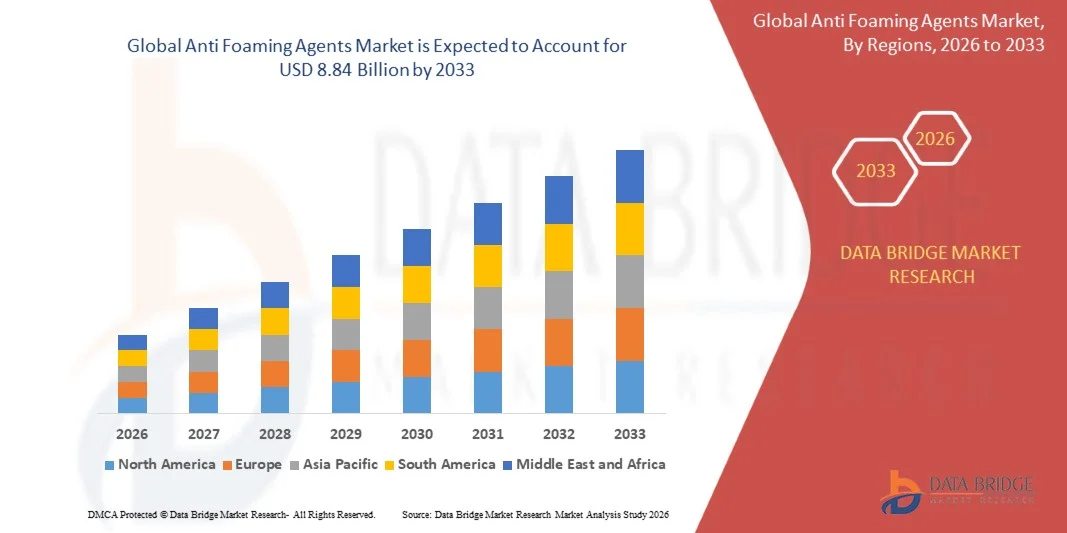
- Объем мирового рынка антипенообразующих агентов был оценен в$6,17 млрд. в 2025 годуОжидается, что он достигнет8,84 млрд долларов к 2033 году, вCAGR 4,60%в течение прогнозируемого периода
- Высокий спрос со стороны индустрии продуктов питания и напитков по всему миру является одним из основных факторов, стимулирующих рост рынка антипенных агентов.
- Быстрое расширение отраслей применения, таких как фармацевтическая промышленность, текстильная промышленность и упакованная пищевая промышленность, а также инициативы, касающиеся контроля выбросов ЛОС, ускоряют рост рынка.
Размер рынка и прогноз
- Глобальная рыночная стоимость (2025):$6,17 млрд.
- Ожидаемая рыночная стоимость (2033):$8,84 млрд.
- Прогноз CAGR (2025–2033):4.60%
Каковы основные выводы рынка антипенных агентов
- Реализация нормативно-правовой политики, связанной с выпуском сточных вод через различные отрасли промышленности, а также опасения относительно дальнейшего влияния на рынок
- Кроме того, рост инвестиций, общая осведомленность потребителей, а также научно-исследовательская деятельность положительно влияют на рынок антипенных агентов. Кроме того, развитие новых и передовых производственных мощностей для расширения бизнеса и инноваций в составе и производительности пенопластов расширяет выгодные возможности для игроков рынка.
- Северная Америка доминировала на рынке антипенных агентов со значительной долей доходов 35,59% в 2025 году, что обусловлено высоким спросом на очистку сточных вод, переработку продуктов питания и напитков, фармацевтические препараты и нефтегазовую промышленность в США и Канаде.
- Ожидается, что Азиатско-Тихоокеанский регион зарегистрирует самый быстрый CAGR в 7,45% с 2026 по 2033 год, что обусловлено быстрой индустриализацией, расширением производственной деятельности и увеличением спроса со стороны ключевых отраслей, таких как целлюлоза и бумага, текстиль, моющие средства, пищевая промышленность и очистка воды в Китае, Индии, Японии, Южной Корее и Юго-Восточной Азии.
- Сегмент антипенообразующих агентов на основе силикона доминировал на рынке с предполагаемой долей около 38,6% в 2025 году благодаря своей превосходной эффективности, быстрой способности к детонации пены, термической стабильности и совместимости в различных промышленных процессах, таких как краски, покрытия и очистка сточных вод.
Сфера охвата и сегментация рынка антипенных агентов
|
Атрибуты |
Анти-Foaming Агенты Ключевое понимание рынка |
|
Сегменты покрыты |
|
|
Страны, охваченные |
Северная Америка
Европа
Азиатско-Тихоокеанский регион
Ближний Восток и Африка
Южная Америка
|
|
Ключевые игроки рынка |
|
|
Рыночные возможности |
|
|
Информационные наборы данных с добавленной стоимостью |
|
Каковы основные тенденции на рынке антипенных агентов
"Растущий переход к устойчивым, высокопроизводительным и специализированным антипенным агентам"
- Рынок анти-пенообразующих агентов становится свидетелем все более широкого внедрения экологически чистых, низко-ЛОС и биоразлагаемых составов, предназначенных для соблюдения строгих экологических норм в таких отраслях, как пищевая промышленность, очистка сточных вод и фармацевтика.
- Производители фокусируются на высокоэффективных силиконовых и несиликоновых дефомерах, которые обеспечивают превосходный контроль пены, стабильность и совместимость в различных промышленных процессах.
- Растущий спрос на оптимизацию процессов, повышение производительности и сокращение простоев в работе стимулирует использование передовых антипенных решений в целлюлозно-бумажной промышленности, красках и покрытиях и химическом производстве.
- Например, такие компании, как BASF SE, Evonik Industries AG и Dow Inc. внедряют устойчивые и высокоэффективные пенообразователи, предназначенные для промышленного и экологического применения.
- Увеличение потребности в эффективности очистки воды, подавление пены в процессах ферментации и повышение качества продукции ускоряет внедрение антипенных технологий следующего поколения.
- Поскольку отрасли сосредоточены на устойчивости и операционной эффективности, антипенообразующие агенты будут по-прежнему необходимы для контроля процессов, согласованности продукции и соблюдения экологических требований.
Каковы основные драйверы рынка антипенных агентов
- Растущий спрос на эффективные решения для контроля пены в таких отраслях, как очистка сточных вод, продукты питания и напитки, фармацевтические препараты и переработка нефти и газа, является основным драйвером роста.
- Например, в 2025 году ведущие компании, такие как Air Products и Chemicals Inc., Kemira и Ashland, расширили свои портфели пенопластов с улучшенными составами для промышленных и водоочистных применений.
- Растущая индустриализация и расширение целлюлозно-бумажной промышленности, красок и покрытий, агрохимикатов и моющих средств повышают спрос на антипенообразующие агенты во всем мире.
- Достижения в силиконовых эмульсиях, полимерных дефомерах и масляных составах улучшили эффективность, долговечность и совместимость в нескольких приложениях
- Растущее внимание к сохранению водных ресурсов, управлению сточными водами и устойчивым промышленным процессам увеличивает потребность в высокоэффективных решениях для дефомирования.
- Ожидается, что благодаря постоянным инвестициям в промышленную переработку и управление окружающей средой на рынке антипенных агентов будет наблюдаться сильный долгосрочный рост.
Какой фактор препятствует росту рынка анти-фейминговых агентов
- Высокие затраты, связанные с передовыми силиконовыми и специализированными пенопластами, ограничивают внедрение среди малых и средних отраслей промышленности.
- Например, в течение 2024-2025 годов колебания цен на сырье, такие как силиконы и специальные химические вещества, наряду с перебоями в цепочке поставок, увеличили издержки производства для глобальных производителей.
- Сложность в выборе правильной формулировки для конкретных промышленных процессов и требований к совместимости увеличивает потребность в технической экспертизе и тестировании.
- Ограниченная осведомленность об оптимальном использовании, уровнях дозировки и преимуществах производительности на развивающихся рынках замедляет принятие.
- Конкуренция со стороны альтернативных технологий управления пеной и методов оптимизации процессов создает ценовое давление и ограничивает дифференциацию продукта.
- Чтобы решить эти проблемы, компании сосредоточены на экономически эффективных формулах, инновациях продуктов и услугах технической поддержки, которые будут способствовать глобальному внедрению антипенных агентов.
Как сегментируется рынок антипенных агентов
Рынок сегментирован на основеТип, функция, применение и конечное использование.
• По типу
В зависимости от типа, рынок антипенообразующих агентов сегментирован на антипенообразующий агент на водной основе, антипенообразующий агент на масляной основе, антипенообразующий агент на силиконовой основе, антипенообразующий агент на основе не силикона, антипенообразующий агент на основе алкила, полимер и другие. Сегмент антипенообразующих агентов на основе силикона доминировал на рынке с предполагаемой долей около 38,6% в 2025 году благодаря своей превосходной эффективности, быстрой способности к детонации пены, термической стабильности и совместимости в различных промышленных процессах, таких как краски, покрытия и очистка сточных вод. Эти агенты обеспечивают длительную производительность и широко предпочтительны в высокопроизводительных приложениях.
Сегмент антипенных агентов на водной основе, как ожидается, будет расти самыми быстрыми темпами с 2026 по 2033 год, что обусловлено растущим спросом на экологически чистые, низко-ЛОС и биоразлагаемые решения. Жесткие экологические нормы и растущее внедрение в пищевой промышленности и водоочистке ускоряют спрос на устойчивые составы.
• Функциональность
На основе функции рынок сегментирован на Emulsifier, Thickener, Stabilizer, Texturizer и другие. Сегмент Stabilizer доминировал на рынке с долей около 34,2% в 2025 году, поскольку антипенообразующие агенты широко используются для поддержания консистенции продукта, предотвращения переформирования пены и обеспечения стабильности процессов в промышленных операциях. Их способность повышать эффективность и уменьшать производственные перебои делает их очень ценными во многих секторах.
Сегмент Emulsifier, по прогнозам, будет расти самыми быстрыми темпами с 2026 по 2033 год, что обусловлено растущим спросом в пищевой промышленности, фармацевтике и химической промышленности. Растущая потребность в улучшенной дисперсии, консистенции состава и улучшенной производительности продукта поддерживает рост сегмента.
• Подача заявки
На основе применения рынок антипенных агентов сегментирован наПульп и бумагаНефть и газ,Краски и покрытия, обработка воды, фармацевтика, еда и напитки, детергенты, текстиль и другие. Сегмент водоочистки доминировал на рынке с долей около 36,8% в 2025 году, чему способствовало увеличение глобального внимания к управлению сточными водами, промышленной очистке стоков и инициативам по сохранению воды. Антипенообразующие агенты играют решающую роль в повышении эффективности аэрации и предотвращении проблем переполнения в очистных сооружениях.
Ожидается, что сегмент продуктов питания и напитков будет расти самыми быстрыми темпами с 2026 по 2033 год, чему будет способствовать растущий спрос на переработанные продукты питания, напитки и продукты на основе ферментации. Повышение внимания к качеству продукции, гигиене и соблюдению нормативных требований способствует дальнейшему внедрению.
• Конец использования
На основе конечного использования рынок сегментирован на нефть и газ, краску и покрытия, продукты питания и напитки,Фармацевтические препаратыТекстиль, целлюлозно-бумажные, промышленные и другие. Сегмент целлюлозы и бумаги доминировал на рынке с долей около 35,5% в 2025 году, поскольку антипенообразующие агенты широко используются для контроля пены во время процессов производства бумаги, повышения производительности и качества продукции. Высокое потребление воды и непрерывные операции по переработке приводят к постоянному спросу в этом секторе.
Фармацевтический сегмент, по прогнозам, будет расти самыми быстрыми темпами с 2026 по 2033 год, что обусловлено увеличением производства лекарств, строгими стандартами качества и растущим спросом на эффективный контроль пены в процессах ферментации и приготовления. Растущие инвестиции в здравоохранение способствуют дальнейшему расширению сегмента.
В каком регионе самая большая доля рынка антипенных агентов
- Северная Америка доминировала на рынке антипенных агентов со значительной долей доходов в 35,59% в 2025 году, что обусловлено высоким спросом на очистку сточных вод, переработку продуктов питания и напитков, фармацевтику и нефтегазовую промышленность в США и Канаде. Повышение внимания к соблюдению экологических требований, эффективности контроля пены и высокопроизводительным решениям для промышленной обработки значительно ускоряет внедрение передовых антипенообразующих средств в нескольких секторах.
- Ведущие компании Северной Америки инвестируют в устойчивые технологии дефомирования с низким содержанием ЛОС и высокой эффективностью, укрепляя конкурентное преимущество региона. Непрерывные достижения в области химических составов в сочетании с растущими инвестициями в промышленную автоматизацию и инфраструктуру очистки воды способствуют долгосрочному расширению рынка.
- Сильная нормативно-правовая база, высокая осведомленность об оптимизации процессов и присутствие крупных производителей химических веществ еще больше укрепляют лидерство Северной Америки на мировом рынке антипенных агентов.
Американские анти-фейминговые агенты Market Insight
США являются крупнейшим донором в Северной Америке, чему способствует широкое использование антипенных агентов на очистных сооружениях, в пищевой промышленности, фармацевтическом производстве и нефтеперерабатывающих операциях. Увеличение спроса на эффективный контроль пены при ферментации, химической обработке и промышленном производстве стимулирует рост рынка. Присутствие крупных производителей, сильные возможности НИОКР и широкое внедрение передовых химических решений еще больше укрепляют рынок.
Канадский рынок антипенных агентов Insight
Канада вносит значительный вклад в региональный рост, обусловленный ростом инвестиций в инфраструктуру водоочистки, расширением пищевой промышленности и увеличением спроса со стороны целлюлозно-бумажного и промышленного секторов производства. Растущий акцент на экологической устойчивости и соблюдении нормативных требований способствует принятию экологически чистых антипенообразующих средств. Сильная промышленная база и государственная поддержка зеленых технологий способствуют дальнейшему расширению рынка
Азиатско-Тихоокеанский рынок антипенных агентов
Ожидается, что Азиатско-Тихоокеанский регион зарегистрирует самый быстрый CAGR в 7,45% с 2026 по 2033 год, что обусловлено быстрой индустриализацией, расширением производственной деятельности и увеличением спроса со стороны ключевых отраслей, таких как целлюлозно-бумажная промышленность, текстиль, моющие средства, пищевая промышленность и очистка воды в Китае, Индии, Японии, Южной Корее и Юго-Восточной Азии. Рост инвестиций в промышленную инфраструктуру и управление сточными водами значительно повышает спрос на рынке. Рост химического производства, растущая урбанизация и растущая потребность в эффективных решениях для управления технологическими процессами продолжают ускорять внедрение антипенных агентов в различных областях применения.
Китайский рынок антипенных агентов Insight
Китай является крупнейшим вкладчиком в Азиатско-Тихоокеанский регион из-за его огромной промышленной базы, сильного присутствия в химическом производстве и растущего спроса на очистку воды, текстильную и бумажную промышленность. Повышение внимания к охране окружающей среды и управлению сточными водами способствует внедрению передовых решений против пены. Конкурентные производственные возможности и крупномасштабные промышленные операции способствуют дальнейшему росту рынка.
Японский рынок антипенных агентов Insight
Япония демонстрирует устойчивый рост, поддерживаемый передовыми производственными процессами, сильным присутствием химической и фармацевтической промышленности и высоким спросом на точные составы. Повышение внимания к высококачественным, эффективным и устойчивым пенообразователям способствует долгосрочному расширению рынка. Технологические инновации и строгие стандарты качества способствуют дальнейшему внедрению
Индия Anti Foaming Agents Market Insight
Индия становится крупным центром роста, чему способствует расширение промышленных секторов, таких как текстиль, пищевая промышленность и очистка сточных вод. Растущие правительственные инициативы в области чистой воды, промышленного развития и программы «Делай в Индии» ускоряют спрос на рынке. Растущее внедрение экономически эффективных и экологически чистых антипенообразующих средств еще больше способствует росту
Южная Корея Anti Foaming Agents Market Insight
Южная Корея вносит значительный вклад из-за сильного спроса со стороны электроники, химических веществ и промышленного производства. Расширение использования антипенных агентов в высокопроизводительных производственных процессах и очистке сточных вод способствует расширению рынка. Технологические достижения, сильная промышленная инфраструктура и растущий акцент на устойчивость поддерживают долгосрочный рост.
Какие компании являются ведущими на рынке антипенных агентов
Индустрия антипенных агентов в основном возглавляется хорошо зарекомендовавшими себя компаниями, в том числе:
- Левако (Германия)
- Jiangsu Jiahua Advanced Materials Technology Co. Ltd. (Китай)
- Wacker Chemie AG (Германия)
- Ecolab (США)
- Elementis Plc (Великобритания)
- Evonik Industries AG (Германия)
- BASF SE (Германия)
- GUANGDONG ZILIBON CHEMICAL CO. LTD. (Китай)
- K.K. Chempro India Pvt. Ltd. (Индия)
- PennWhite (Великобритания)
- Air Products and Chemicals Inc. (США)
- Sanco Industries Inc. (США)
- Кемира (Финляндия)
- Shin-Etsu Chemical Co. Ltd (Япония)
- Ashland (США)
- COVENTYA International (Франция)
- Dow Inc. (США)
- Экологические лаборатории (США)
- TRANS-CHEMCO, INC (США)
- Elkay Chemicals Private Limited (Индия)
- Лаборатории HiMedia (Индия)
- AB Specialty Silicones (США)
- BarthHaas GmbH & Co. KG (Германия)
- Performance Chemicals LLC (США)
- Merck & Co. (США)
Каковы последние события на мировом рынке антипенных агентов
- В июне 2025 года Evonik Industries AG Coating Additives запустила TEGO® Foamex 8051, дефомер на основе полиэтерилоксана для декоративных покрытий на водной основе, предлагающий экономически эффективный и долговечный контроль пены с нулевым добавлением минеральных масел при соблюдении глобальных экологических стандартов, тем самым укрепляя устойчивые инновации в решениях против пенообразования.
- В феврале 2024 года корпорация DIC представила антипенное средство без PFAS для смазочных масел EV с производительностью, сопоставимой с обычными продуктами на основе PFAS, отличающимся превосходной стабильностью при высоких температурах и нацеленным на сильный будущий рост продаж, тем самым улучшая экологически чистые решения в передовых автомобильных приложениях.
- В феврале 2024 года корпорация DIC представила антипенное средство без PFAS, специально разработанное для смазочных масел для электромобилей, обеспечивающее исключительную производительность и термостабильность, тем самым поддерживая переход к устойчивым и высокоэффективным технологиям смазки.
- В ноябре 2023 года BASF SE расширила производственные мощности по производству пенопласта на своем заводе в Диловаси в Турции, чтобы удовлетворить растущий спрос в Юго-Восточной Европе, на Ближнем Востоке и в Африке, одновременно сократив время свинца и выбросы, тем самым укрепив свою региональную цепочку поставок и портфель продуктов.
- В феврале 2021 года BYK Additives & Instruments представила две новые добавки для пенопласта, BYK-329 и BYK-092, предназначенные для повышения производительности как в растворителях, так и в растворителях, тем самым повышая эффективность состава и расширяя область применения в покрытиях и промышленных процессах.
SKU-
Получите онлайн-доступ к отчету на первой в мире облачной платформе рыночной аналитики

- Интерактивная панель анализа данных
- Панель анализа компании для возможностей с высоким потенциалом роста
- Доступ аналитика-исследователя для настройки и запросов
- Анализ конкурентов с помощью интерактивной панели
- Последние новости, обновления и анализ тенденций
- Используйте возможности сравнительного анализа для комплексного отслеживания конкурентов
Методология исследования
Сбор данных и анализ базового года выполняются с использованием модулей сбора данных с большими размерами выборки. Этап включает получение рыночной информации или связанных данных из различных источников и стратегий. Он включает изучение и планирование всех данных, полученных из прошлого заранее. Он также охватывает изучение несоответствий информации, наблюдаемых в различных источниках информации. Рыночные данные анализируются и оцениваются с использованием статистических и последовательных моделей рынка. Кроме того, анализ доли рынка и анализ ключевых тенденций являются основными факторами успеха в отчете о рынке. Чтобы узнать больше, пожалуйста, запросите звонок аналитика или оставьте свой запрос.
Ключевой методологией исследования, используемой исследовательской группой DBMR, является триангуляция данных, которая включает в себя интеллектуальный анализ данных, анализ влияния переменных данных на рынок и первичную (отраслевую экспертную) проверку. Модели данных включают сетку позиционирования поставщиков, анализ временной линии рынка, обзор рынка и руководство, сетку позиционирования компании, патентный анализ, анализ цен, анализ доли рынка компании, стандарты измерения, глобальный и региональный анализ и анализ доли поставщика. Чтобы узнать больше о методологии исследования, отправьте запрос, чтобы поговорить с нашими отраслевыми экспертами.
Доступна настройка
Data Bridge Market Research является лидером в области передовых формативных исследований. Мы гордимся тем, что предоставляем нашим существующим и новым клиентам данные и анализ, которые соответствуют и подходят их целям. Отчет можно настроить, включив в него анализ ценовых тенденций целевых брендов, понимание рынка для дополнительных стран (запросите список стран), данные о результатах клинических испытаний, обзор литературы, обновленный анализ рынка и продуктовой базы. Анализ рынка целевых конкурентов можно проанализировать от анализа на основе технологий до стратегий портфеля рынка. Мы можем добавить столько конкурентов, о которых вам нужны данные в нужном вам формате и стиле данных. Наша команда аналитиков также может предоставить вам данные в сырых файлах Excel, сводных таблицах (книга фактов) или помочь вам в создании презентаций из наборов данных, доступных в отчете.











