Global Anti-Inflammatory Therapeutics Market Segmentation, By Drug Class (Anti-Inflammatory Biologics, Corticosteroids, and Nonsteroidal Anti-Inflammatory Drugs(NSAIDs), and Others), Indications (Arthritis, Respiratory Diseases, Multiple Sclerosis, Psoriasis, Inflammatory Bowel Disease, and Others), End-Users (Hospitals, Homecare, Speciality Centres, and Others), Distribution Channel (Hospital Pharmacy, Online Pharmacy, and Retail Pharmacy) - Industry Trends and Forecast to 2033
Anti-Inflammatory Therapeutics Market Size
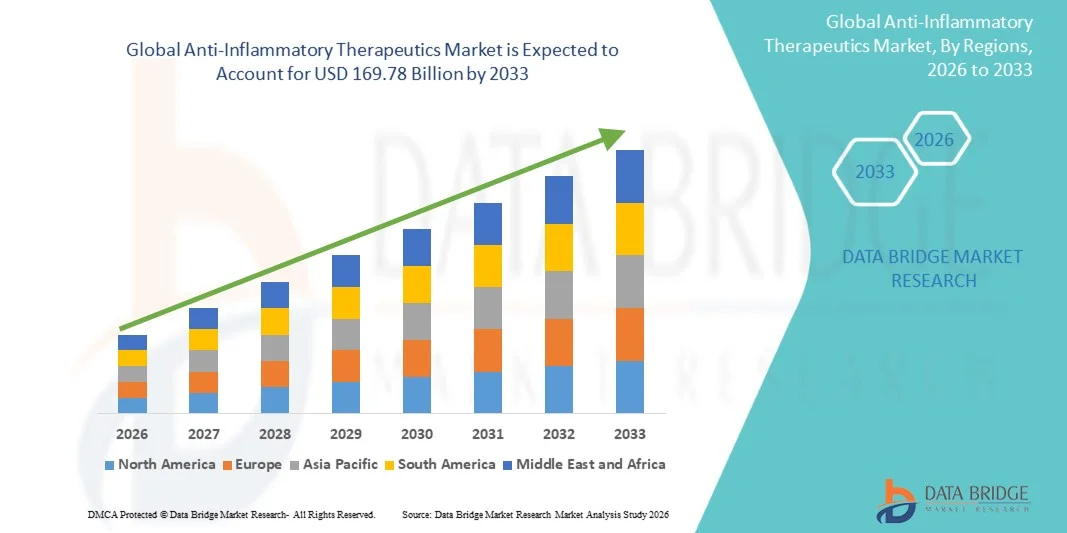
- The global anti-inflammatory therapeutics market size was valued at USD 102.59 billion in 2025 and is expected to reach USD 169.78 billion by 2033, at a CAGR of 6.50% during the forecast period
- The market growth is largely fueled by the rising prevalence of chronic inflammatory and autoimmune diseases, such as rheumatoid arthritis, asthma, inflammatory bowel disease, and psoriasis, coupled with a growing aging population that is more susceptible to long-term inflammatory conditions. Advances in drug development, including biologics, biosimilars, and targeted small-molecule therapies, are further accelerating treatment innovation in the Global Anti-Inflammatory Therapeutics Market
- Furthermore, increasing healthcare expenditure and improving access to advanced treatment options, along with rising demand for safer, more effective, and personalized anti-inflammatory therapies, are driving adoption across healthcare systems. The growing focus on reducing side effects associated with conventional NSAIDs and corticosteroids is also pushing the shift toward novel targeted and precision-based therapeutic approaches, thereby significantly boosting the industry's growth
Anti-Inflammatory Therapeutics Market Analysis
- Anti-Inflammatory Therapeutics, encompassing a broad range of treatments such as non-steroidal anti-inflammatory drugs (NSAIDs), corticosteroids, biologics, and targeted small-molecule inhibitors, play a critical role in managing pain, inflammation, and autoimmune disorders across both acute and chronic conditions. These therapies are increasingly central to modern treatment protocols due to their improved efficacy and expanding clinical applications in conditions such as rheumatoid arthritis, asthma, inflammatory bowel disease, and psoriasis
- The market growth is primarily driven by the rising global burden of chronic inflammatory and autoimmune diseases, coupled with an aging population and increasing awareness of early disease diagnosis and long-term disease management. In addition, ongoing advancements in biologics, biosimilars, and precision medicine approaches are significantly improving treatment outcomes, while the demand for safer therapies with fewer side effects compared to conventional corticosteroids and NSAIDs is further accelerating market expansion
- North America dominated the anti-inflammatory therapeutics market with the largest revenue share in 2025, supported by a well-established healthcare infrastructure, high adoption of advanced biologic therapies, strong presence of key pharmaceutical companies, and favorable reimbursement frameworks. The region continues to witness strong uptake of innovative anti-inflammatory drugs, particularly in the U.S., driven by continuous R&D investments and rapid clinical adoption of next-generation targeted therapies
- Asia-Pacific is expected to be the fastest-growing region in the anti-inflammatory therapeutics market during the forecast period, driven by increasing urbanization, rising healthcare expenditure, improving access to advanced treatments, and a growing patient pool suffering from chronic inflammatory conditions. Expanding pharmaceutical manufacturing capabilities and increasing clinical trial activity in countries such as China and India are further supporting regional market growth
- The NSAIDs segment dominated the market with the largest revenue share of 41.6% in 2025, driven by widespread use in pain management, fever reduction, and inflammation control across multiple chronic and acute conditions
Report Scope and Anti-Inflammatory Therapeutics Market Segmentation
|
Attributes |
Anti-Inflammatory Therapeutics Key Market Insights |
|
Segments Covered |
|
|
Countries Covered |
North America
Europe
Asia-Pacific
Middle East and Africa
South America
|
|
Key Market Players |
• Pfizer (U.S.) |
|
Market Opportunities |
|
|
Value Added Data Infosets |
In addition to the insights on market scenarios such as market value, growth rate, segmentation, geographical coverage, and major players, the market reports curated by the Data Bridge Market Research also include in-depth expert analysis, patient epidemiology, pipeline analysis, pricing analysis, and regulatory framework. |
Anti-Inflammatory Therapeutics Market Trends
“Rising Adoption of Targeted, Biologic, and Precision-Based Anti-Inflammatory Therapies”
- A major and rapidly accelerating trend in the global anti-inflammatory therapeutics market is the shift from conventional broad-spectrum anti-inflammatory drugs toward highly targeted therapies, including biologics, biosimilars, and small-molecule inhibitors. This transition is fundamentally transforming treatment approaches by focusing on specific inflammatory pathways rather than generalized immune suppression
- Biologic drugs such as monoclonal antibodies targeting TNF-α, IL-4, IL-5, IL-6, and IL-17 are increasingly being adopted for the treatment of complex chronic conditions like rheumatoid arthritis, psoriasis, ankylosing spondylitis, and inflammatory bowel disease. These therapies offer improved clinical outcomes, longer remission periods, and reduced disease progression compared to traditional therapies
- For instance, adalimumab (Humira) and secukinumab (Cosentyx) are widely used in clinical practice for rheumatoid arthritis and psoriasis management, demonstrating strong efficacy in reducing inflammatory flare-ups
- In addition, the growing use of JAK inhibitors (Janus kinase inhibitors) represents a significant advancement, enabling oral administration with targeted intracellular signaling modulation. This has improved patient compliance while maintaining high efficacy in managing autoimmune and inflammatory conditions
- Precision medicine is also emerging as a key trend, where treatment decisions are guided by genetic markers, cytokine profiling, and disease endotypes. This enables clinicians to tailor therapies based on individual inflammatory mechanisms, thereby improving response rates and minimizing adverse effects
- The increasing integration of companion diagnostics with anti-inflammatory drugs is further strengthening this trend, allowing better patient stratification and optimized treatment selection
- Pharmaceutical companies are heavily investing in next-generation biologics with improved safety profiles, longer half-lives, and reduced immunogenicity, which is expanding treatment options for chronic inflammatory diseases
- Moreover, the development and commercialization of biosimilars are improving affordability and expanding access to biologic therapies in emerging economies, thereby accelerating market penetration
- Overall, the market is witnessing a clear shift toward mechanism-based, personalized, and long-acting therapies, which is reshaping the global treatment landscape for inflammatory disorders
Anti-Inflammatory Therapeutics Market Dynamics
Driver
“Rising Global Burden of Chronic Inflammatory and Autoimmune Diseases”
• The increasing prevalence of chronic inflammatory and autoimmune diseases is one of the strongest drivers of the Anti-Inflammatory Therapeutics market. Conditions such as rheumatoid arthritis, asthma, psoriasis, Crohn’s disease, ulcerative colitis, lupus, and multiple sclerosis are rising steadily across both developed and developing regions.
- Aging populations are particularly vulnerable to chronic inflammation due to immune system dysregulation, leading to higher incidence rates of inflammatory disorders and increasing long-term treatment demand
- For instance, elderly populations in countries like Japan and Germany show significantly higher rates of rheumatoid arthritis and osteoarthritis, driving sustained demand for anti-inflammatory therapies
- Lifestyle factors such as poor dietary habits, sedentary behavior, obesity, smoking, and rising environmental pollution are contributing significantly to the global increase in inflammatory diseases
- Improved diagnostic capabilities and increased awareness among patients and healthcare providers are leading to earlier detection and longer treatment duration, thereby expanding the overall treated patient pool
- The growing availability of advanced diagnostic tools, including biomarker-based testing and imaging technologies, is enabling more accurate disease classification and treatment planning
- Pharmaceutical innovation, including continuous pipeline expansion of biologics, JAK inhibitors, and interleukin inhibitors, is enhancing therapeutic outcomes and encouraging greater adoption of prescription anti-inflammatory drugs
- Increasing healthcare expenditure across emerging economies such as India, China, and Brazil is improving access to specialty care and advanced therapies, significantly contributing to market growth
- Expansion of healthcare infrastructure, including specialty clinics and infusion centers, is also facilitating wider adoption of advanced anti-inflammatory treatments
- In addition, rising patient preference for long-term disease control rather than symptomatic relief is driving demand for disease-modifying anti-inflammatory therapies instead of conventional pain-relief medications
- The growing role of pharmaceutical collaborations, clinical trials, and regulatory approvals for novel therapies is further accelerating market expansion globally
Restraint/Challenge
“High Cost of Advanced Therapies and Safety Concerns Associated with Long-Term Immunomodulation”
- A key challenge limiting the growth of the Anti-Inflammatory Therapeutics market is the high cost associated with advanced biologics, monoclonal antibodies, and targeted small-molecule therapies. These treatments often require long-term or lifelong administration, resulting in significant financial burden for patients and healthcare systems
- In many regions, limited reimbursement coverage and uneven insurance penetration further restrict patient access to high-cost therapies, particularly in low- and middle-income countries
- For instance, biologic treatments for rheumatoid arthritis remain unaffordable for a large proportion of patients in developing markets such as parts of South Asia and Africa due to limited insurance support
- Although biosimilars are gradually improving affordability, adoption remains uneven due to physician hesitation, regulatory variability, and concerns regarding interchangeability and efficacy equivalence
- Another major restraint is the safety risk associated with long-term immunosuppression. Many anti-inflammatory therapies, especially biologics and JAK inhibitors, can increase susceptibility to infections such as tuberculosis, pneumonia, and opportunistic infections
- There is also a documented risk of potential long-term adverse outcomes, including malignancies, cardiovascular complications, and liver toxicity in certain patient populations, which raises concerns among prescribers and patients
- Corticosteroids, though widely used and cost-effective, are associated with severe long-term side effects such as osteoporosis, weight gain, diabetes, hypertension, and adrenal suppression, limiting their prolonged use
- Treatment adherence is also affected due to chronic therapy requirements, injection-based administration for some biologics, and frequent monitoring needs, which can reduce patient compliance over time
- High research and development costs, coupled with stringent regulatory approval pathways for biologics and novel immunotherapies, further increase market entry barriers for new players
- In addition, pricing pressures from healthcare payers and government cost-containment policies are forcing pharmaceutical companies to balance innovation with affordability, slowing down market expansion in certain regions
Anti-Inflammatory Therapeutics Market Scope
The market is segmented on the basis of drug class, indications, end-users, and distribution channel.
• By Drug Class
On the basis of drug class, the Anti-Inflammatory Therapeutics market is segmented into Anti-Inflammatory Biologics, Corticosteroids, Nonsteroidal Anti-Inflammatory Drugs (NSAIDs), and Others. The NSAIDs segment dominated the market with the largest revenue share of 41.6% in 2025, driven by widespread use in pain management, fever reduction, and inflammation control across multiple chronic and acute conditions. NSAIDs are highly preferred due to their over-the-counter availability, cost-effectiveness, and rapid symptom relief. Their extensive use in arthritis, musculoskeletal disorders, and post-surgical inflammation further strengthens demand. Physicians frequently prescribe NSAIDs as first-line therapy due to their well-established efficacy and safety profile. Increasing prevalence of lifestyle-related inflammatory conditions supports market expansion. Strong penetration in both developed and emerging economies enhances accessibility. Continuous innovation in selective COX-2 inhibitors improves gastrointestinal safety and patient compliance. High prescription volume in hospitals and clinics reinforces dominance. Overall, NSAIDs remain the backbone of anti-inflammatory therapy globally.
The Anti-Inflammatory Biologics segment is expected to witness the fastest CAGR of 14.8% from 2026 to 2033, driven by rising adoption of targeted therapies for chronic autoimmune and inflammatory diseases. Biologics offer high specificity by targeting immune pathways, improving treatment outcomes in conditions like rheumatoid arthritis and psoriasis. Increasing clinical preference for precision medicine supports growth. Strong pipeline of monoclonal antibodies and biosimilars enhances accessibility. Higher efficacy in patients unresponsive to conventional drugs accelerates adoption. Expanding approvals for new indications further boost demand. Rising healthcare expenditure and insurance coverage improvements support affordability. Biologics also reduce long-term disease progression and hospitalizations. Pharmaceutical innovation and R&D investments are rapidly expanding this segment. Overall, Anti-Inflammatory Biologics represent the fastest-growing drug class segment.
• By Indications
On the basis of indications, the Anti-Inflammatory Therapeutics market is segmented into Arthritis, Respiratory Diseases, Multiple Sclerosis, Psoriasis, Inflammatory Bowel Disease, and Others. The Arthritis segment dominated the market with a revenue share of 38.9% in 2025, driven by the high global prevalence of osteoarthritis and rheumatoid arthritis, particularly among the aging population. Increasing joint degeneration cases and lifestyle-related musculoskeletal disorders contribute significantly to demand. NSAIDs, corticosteroids, and biologics are widely used for symptom management and disease control. Rising geriatric population globally further accelerates market growth. Improved diagnostic rates enable early detection and treatment initiation. Strong prescription patterns in hospitals and specialty clinics support dominance. Continuous development of advanced biologic therapies enhances treatment outcomes. Patient awareness regarding pain management options also fuels adoption. Government healthcare initiatives improve access to anti-inflammatory therapies. Overall, arthritis remains the largest indication segment in the market.
The Inflammatory Bowel Disease (IBD) segment is expected to witness the fastest CAGR of 15.2% from 2026 to 2033, driven by rising incidence of Crohn’s disease and ulcerative colitis worldwide. Increasing awareness and improved diagnostic capabilities are contributing to early disease identification. Biologic therapies targeting immune pathways are increasingly preferred for moderate to severe cases. Lifestyle changes, dietary patterns, and genetic predisposition contribute to rising prevalence. Strong pipeline of advanced monoclonal antibodies and biosimilars supports rapid adoption. Growing demand for long-term disease management solutions boosts therapeutic usage. Hospital and specialty center adoption is increasing due to complex treatment requirements. Expanding healthcare access in emerging economies further accelerates growth. Patient preference for targeted and effective therapies enhances market penetration. Overall, IBD is the fastest-growing indication segment.
• By End-Users
On the basis of end-users, the Anti-Inflammatory Therapeutics market is segmented into Hospitals, Homecare, Speciality Centres, and Others. The Hospitals segment dominated the market with a revenue share of 52.4% in 2025, driven by high patient inflow for acute and chronic inflammatory conditions requiring supervised treatment. Hospitals serve as primary centers for diagnosis, prescription, and administration of advanced anti-inflammatory therapies, including biologics and corticosteroids. Availability of skilled healthcare professionals ensures effective disease management. Strong adoption of hospital-based infusion therapies for biologics supports dominance. Integration of advanced diagnostic tools improves treatment accuracy. Government funding and reimbursement systems enhance accessibility. Hospitals also act as key centers for clinical trials and innovative drug adoption. High inpatient and outpatient volumes further strengthen market share. Multidisciplinary care models improve patient outcomes. Overall, hospitals remain the leading end-user segment globally.
The Homecare segment is expected to witness the fastest CAGR of 16.4% from 2026 to 2033, driven by rising preference for convenient, patient-centric treatment approaches. Increasing adoption of self-administered biologics and oral anti-inflammatory drugs supports growth. Technological advancements in drug delivery devices enable safe home administration. Growing elderly population and chronic disease burden fuel demand for home-based care. Cost-effectiveness compared to hospital visits encourages adoption. Telemedicine and remote patient monitoring further enhance treatment adherence. Patients increasingly prefer comfort and flexibility in long-term therapy. Healthcare systems are actively promoting homecare to reduce hospital burden. Insurance coverage expansion supports accessibility. Overall, homecare represents the fastest-growing end-user segment.
• By Distribution Channel
On the basis of distribution channel, the Anti-Inflammatory Therapeutics market is segmented into Hospital Pharmacy, Online Pharmacy, and Retail Pharmacy. The Hospital Pharmacy segment dominated the market with a revenue share of 46.7% in 2025, driven by high prescription volumes for acute inflammatory conditions and hospital-based treatment protocols. Hospital pharmacies ensure immediate availability of critical anti-inflammatory drugs, including biologics and corticosteroids. Integration with inpatient and outpatient services supports efficient drug dispensing. Strong procurement systems and bulk purchasing agreements enhance availability and cost efficiency. Physicians prefer hospital pharmacies for controlled and monitored dispensing. Government healthcare infrastructure further strengthens dominance. Hospital pharmacies also manage specialized storage requirements for biologics. High patient turnover in hospitals ensures consistent demand. Clinical supervision ensures adherence to treatment guidelines. Overall, hospital pharmacies remain the primary distribution channel.
The Online Pharmacy segment is expected to witness the fastest CAGR of 17.1% from 2026 to 2033, driven by increasing digitalization of healthcare and rising consumer preference for convenient medication access. Expanding internet penetration and smartphone usage support rapid adoption. Online platforms offer home delivery, subscription models, and discounted pricing. Growing acceptance of e-pharmacy regulations enhances credibility. Patients with chronic inflammatory conditions prefer recurring online purchases for convenience. Integration with telemedicine platforms further strengthens demand. Digital payment systems improve transaction ease. Expanding logistics infrastructure supports timely delivery even in remote areas. Increasing awareness of digital health services accelerates market penetration. Overall, online pharmacies are the fastest-growing distribution channel.
Anti-Inflammatory Therapeutics Market Regional Analysis
- North America dominated the anti-inflammatory therapeutics market with the largest revenue share in 2025, supported by a well-established healthcare infrastructure, high adoption of advanced biologic therapies, strong presence of key pharmaceutical companies, and favorable reimbursement frameworks
- The region benefits from widespread use of biologics, monoclonal antibodies, and targeted therapies for conditions such as rheumatoid arthritis, psoriasis, and inflammatory bowel disease. For instance, the high adoption of TNF inhibitors and interleukin inhibitors across the U.S. and Canada has significantly contributed to improved disease management outcomes
- This dominance is further reinforced by continuous R&D investments, early access to innovative drugs, strong regulatory support, and increasing awareness regarding chronic inflammatory diseases, establishing advanced anti-inflammatory therapeutics as a standard of care across both hospital and outpatient settings
U.S. Anti-Inflammatory Therapeutics Market Insight
The U.S. anti-inflammatory therapeutics market captured the largest revenue share in 2025 within North America, fueled by strong adoption of advanced biologics and targeted therapies. The country’s robust pharmaceutical ecosystem, presence of leading market players, and high healthcare spending significantly contribute to market growth. Consumers and healthcare providers are increasingly prioritizing early diagnosis and long-term disease management, leading to higher prescription rates of immunomodulators and biologics. In addition, favorable reimbursement policies and rapid approval of novel therapies further accelerate market expansion. Moreover, continuous innovation in drug development, including JAK inhibitors and biosimilars, along with increasing clinical trials, is significantly contributing to the growth of the Anti-Inflammatory Therapeutics market in the U.S.
Europe Anti-Inflammatory Therapeutics Market Insight
The Europe Anti-Inflammatory Therapeutics market is projected to expand at a substantial CAGR throughout the forecast period, primarily driven by increasing prevalence of chronic inflammatory diseases and strong government support for healthcare systems. The region is witnessing growing adoption of biosimilars as cost-effective alternatives to biologics. For instance, countries such as Germany and France have implemented policies encouraging biosimilar uptake, improving patient access to advanced therapies. In addition, rising aging population, increasing healthcare awareness, and expanding access to specialty treatments are supporting market growth across both Western and Eastern Europe.
U.K. Anti-Inflammatory Therapeutics Market Insight
The U.K. anti-inflammatory therapeutics market is anticipated to grow at a noteworthy CAGR during the forecast period, driven by increasing burden of autoimmune diseases and rising demand for effective long-term treatment solutions. The presence of structured healthcare systems and reimbursement support for biologics and specialty drugs is encouraging adoption. Furthermore, initiatives by public health bodies to improve early diagnosis and treatment accessibility are contributing to market expansion. The country is also witnessing increased use of biosimilars and cost-effective treatment alternatives, supporting sustainable healthcare delivery while maintaining treatment quality.
Germany Anti-Inflammatory Therapeutics Market Insight
The Germany anti-inflammatory therapeutics market is expected to expand at a considerable CAGR during the forecast period, fueled by advanced healthcare infrastructure and strong emphasis on pharmaceutical innovation. Germany is one of the leading adopters of biologics and biosimilars in Europe. For instance, widespread use of biosimilar TNF inhibitors has improved treatment accessibility for patients with chronic inflammatory diseases. In addition, increasing investments in research, strong regulatory frameworks, and growing focus on precision medicine are driving the adoption of advanced anti-inflammatory therapies in the country.
Asia-Pacific Anti-Inflammatory Therapeutics Market Insight
The Asia-Pacific anti-inflammatory therapeutics market is expected to be the fastest-growing region during the forecast period, driven by increasing urbanization, rising healthcare expenditure, improving access to advanced treatments, and a rapidly growing patient population suffering from chronic inflammatory conditions. The region is witnessing expanding pharmaceutical manufacturing capabilities and increasing clinical trial activity. For instance, countries such as China and India are emerging as key hubs for biologics production and clinical research, enhancing the availability of cost-effective therapies. Furthermore, improving healthcare infrastructure, government initiatives supporting healthcare access, and growing awareness regarding autoimmune diseases are significantly contributing to market growth across the region.
Japan Anti-Inflammatory Therapeutics Market Insight
The Japan Anti-Inflammatory Therapeutics market is gaining momentum due to its advanced healthcare system, aging population, and increasing prevalence of chronic inflammatory diseases. The country has a strong focus on innovative drug development and rapid adoption of advanced biologics. For instance, Japan has seen increased use of targeted therapies for rheumatoid arthritis and inflammatory bowel diseases, supported by favorable regulatory pathways. In addition, rising healthcare spending and emphasis on improving patient outcomes are driving demand for next-generation anti-inflammatory treatments.
China Anti-Inflammatory Therapeutics Market Insight
The China anti-inflammatory therapeutics market accounted for the largest market revenue share in Asia Pacific in 2025, attributed to rapid urbanization, expanding middle-class population, and increasing healthcare investments. The country is witnessing strong growth in domestic pharmaceutical manufacturing and biosimilar development. For instance, local companies are actively producing cost-effective biologics, improving accessibility to advanced anti-inflammatory treatments.
Government initiatives promoting healthcare reforms, expansion of insurance coverage, and increasing clinical research activities are further propelling the Anti-Inflammatory Therapeutics market in China.
Anti-Inflammatory Therapeutics Market Share
The Anti-Inflammatory Therapeutics industry is primarily led by well-established companies, including:
• Pfizer (U.S.)
• AbbVie (U.S.)
• Roche (Switzerland)
• Johnson & Johnson (U.S.)
• Novartis (Switzerland)
• Sanofi (France)
• Bristol Myers Squibb (U.S.)
• Amgen (U.S.)
• Merck & Co. (U.S.)
• Eli Lilly and Company (U.S.)
• AstraZeneca (U.K.)
• GlaxoSmithKline (U.K.)
• Teva Pharmaceutical Industries (Israel)
• Bayer (Germany)
• Boehringer Ingelheim (Germany)
• UCB Pharma (Belgium)
• Takeda Pharmaceutical Company (Japan)
• Sun Pharmaceutical Industries (India)
• Lupin (India)
• Dr. Reddy’s Laboratories (India)
Latest Developments in Global Anti-Inflammatory Therapeutics Market
- In July 2024, community-reported industry news highlighted early-stage progress by Ensho Therapeutics with oral anti-inflammatory candidate NSHO-101, aimed at improving therapeutic options for inflammatory bowel disease, illustrating ongoing innovation in small-molecule approaches
- In July 2025, Novartis entered a major collaboration agreement with U.S. biotech Matchpoint Therapeutics, committing up to $1 billion to develop new oral anti-inflammatory therapies that target pro-inflammatory signaling pathways, with Matchpoint leading research and Novartis holding an option for global rights to develop and commercialize resulting treatments
- In October 2025, the U.S. Food and Drug Administration (FDA) expanded the approved use of Tezspire (tezepelumab-ekko) — a biologic developed by Amgen and AstraZeneca — to include treatment for chronic rhinosinusitis with nasal polyps, a chronic inflammatory condition, reflecting broader regulatory recognition of anti-inflammatory biologics beyond their original indications
- In December 2025, Kymera Therapeutics reported promising Phase 1b clinical trial results for its oral anti-inflammatory drug candidate KT-621, which targets STAT6 — a key transcription factor in Type 2 inflammatory diseases such as atopic dermatitis and asthma — leading to strong investor interest and a notable stock surge
- In May 2025, according to industry community reports, Abivax completed enrollment of approximately 1,275 participants in its Phase 3 ABTECT trial for a novel therapy targeting ulcerative colitis, an inflammatory bowel disease, marking a significant clinical development milestone in anti-inflammatory therapeutic research
- In May 2025, the European Commission approved TREMFYA (guselkumab) for adults with moderately to severely active ulcerative colitis, expanding the use of this anti-inflammatory biologic and enhancing treatment options for patients with chronic inflammatory bowel disease in Europe.
SKU-
Получите онлайн-доступ к отчету на первой в мире облачной платформе рыночной аналитики
- Интерактивная панель анализа данных
- Панель анализа компании для возможностей с высоким потенциалом роста
- Доступ аналитика-исследователя для настройки и запросов
- Анализ конкурентов с помощью интерактивной панели
- Последние новости, обновления и анализ тенденций
- Используйте возможности сравнительного анализа для комплексного отслеживания конкурентов
Методология исследования
Сбор данных и анализ базового года выполняются с использованием модулей сбора данных с большими размерами выборки. Этап включает получение рыночной информации или связанных данных из различных источников и стратегий. Он включает изучение и планирование всех данных, полученных из прошлого заранее. Он также охватывает изучение несоответствий информации, наблюдаемых в различных источниках информации. Рыночные данные анализируются и оцениваются с использованием статистических и последовательных моделей рынка. Кроме того, анализ доли рынка и анализ ключевых тенденций являются основными факторами успеха в отчете о рынке. Чтобы узнать больше, пожалуйста, запросите звонок аналитика или оставьте свой запрос.
Ключевой методологией исследования, используемой исследовательской группой DBMR, является триангуляция данных, которая включает в себя интеллектуальный анализ данных, анализ влияния переменных данных на рынок и первичную (отраслевую экспертную) проверку. Модели данных включают сетку позиционирования поставщиков, анализ временной линии рынка, обзор рынка и руководство, сетку позиционирования компании, патентный анализ, анализ цен, анализ доли рынка компании, стандарты измерения, глобальный и региональный анализ и анализ доли поставщика. Чтобы узнать больше о методологии исследования, отправьте запрос, чтобы поговорить с нашими отраслевыми экспертами.
Доступна настройка
Data Bridge Market Research является лидером в области передовых формативных исследований. Мы гордимся тем, что предоставляем нашим существующим и новым клиентам данные и анализ, которые соответствуют и подходят их целям. Отчет можно настроить, включив в него анализ ценовых тенденций целевых брендов, понимание рынка для дополнительных стран (запросите список стран), данные о результатах клинических испытаний, обзор литературы, обновленный анализ рынка и продуктовой базы. Анализ рынка целевых конкурентов можно проанализировать от анализа на основе технологий до стратегий портфеля рынка. Мы можем добавить столько конкурентов, о которых вам нужны данные в нужном вам формате и стиле данных. Наша команда аналитиков также может предоставить вам данные в сырых файлах Excel, сводных таблицах (книга фактов) или помочь вам в создании презентаций из наборов данных, доступных в отчете.