



Global Application Release Automation (ARA) Market Segmentation, By Component (Solutions and Services), Organization Size (Large Enterprise and SMEs), Deployment Type (Cloud and On-Premises), Vertical (Healthcare, Media and Entertainment, Manufacturing, Retail & Consumer Goods and Consumer Goods, ITES and Telecommunications, Banking, Financial Services, and Insurance, and Others), Model (Software Prototyping, Incremental Model, Agile Model, Waterfall Model, and Spiral Model) - Industry Trends and Forecast to 2033
Каков размер и темпы роста рынка глобальной автоматизации выпуска приложений (ARA)
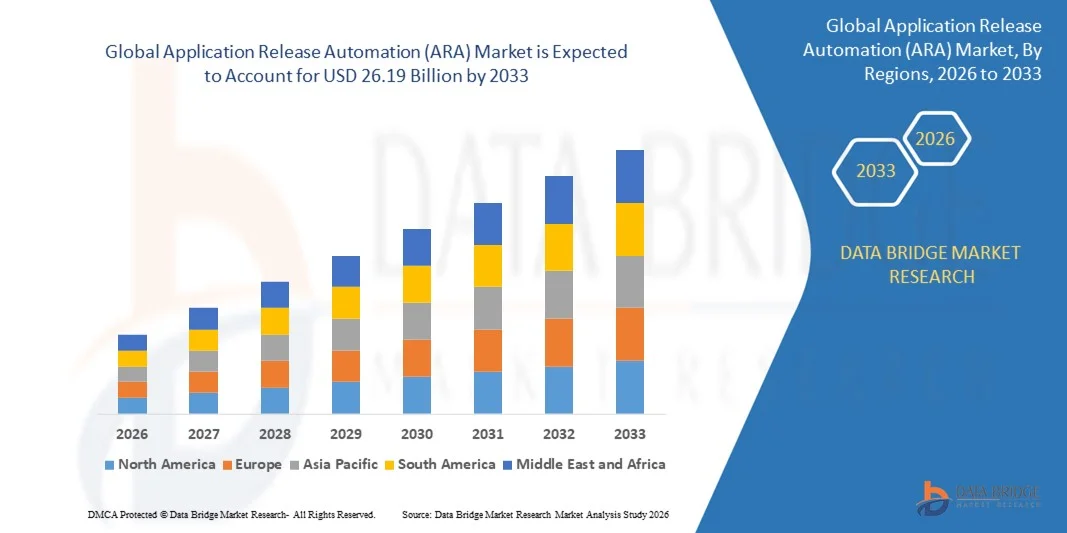
- Размер рынка глобальной автоматизации выпуска приложений (ARA) был оценен как$6,21 млрд. в 2025 годуОжидается, что он достигнет$26,19 млрд к 2033 году, вCAGR 19,70%в течение прогнозируемого периода
- Рост числа приложений, работающих в динамическом режиме Это среда является решающим фактором, ускоряющим рост рынка, а также рост оптимизированного использования ресурсов, увеличение спроса на рынок автоматизации выпуска приложений, увеличение вовлеченности пользователей в цифровые платформы, растущий акцент на конкурентный интеллект, вместе и рост потребности в улучшении опыта аудитории являются основными факторами, среди прочего, повышая рынок автоматизации выпуска приложений (ARA).
Размер рынка и прогноз
Глобальная рыночная стоимость (2025) $6,21 млрд.
Ожидаемая рыночная стоимость (2033): $26,19 млрд
Прогноз CAGR (2026–2033): 19,70%
Каковы основные выводы рынка автоматизации выпуска приложений (ARA)
- Рост достижений в области ИИ и его использование в разработке приложений и облачных платформах, создающих благоприятную среду для разработки приложений, еще больше создаст новые возможности для рынка автоматизации выпуска приложений (ARA).
- Тем не менее, тяжелая зависимость от унаследованных процессов выступает в качестве основных факторов, сдерживающих рост рынка, и еще больше поставит под сомнение рынок автоматизации выпуска приложений.
- Северная Америка доминировала на рынке автоматизации выпуска приложений (ARA) с долей выручки 41,6% в 2025 году, что обусловлено быстрым внедрением методов DevOps, облачным развитием и крупномасштабными инициативами цифровой трансформации в США и Канаде.
- Ожидается, что Азиатско-Тихоокеанский регион зарегистрирует самый быстрый CAGR в 9,62% с 2026 по 2033 год, чему способствуют расширение отраслей ИТ-услуг, быстрое внедрение облачных технологий и сильный рост цифровой банковской, электронной коммерции и телекоммуникационной инфраструктуры в Китае, Японии, Индии, Южной Корее и Юго-Восточной Азии.
- Сегмент решений доминировал на рынке с долей 68,5% в 2025 году, поскольку предприятия все чаще используют интегрированные платформы ARA для автоматизации конвейеров развертывания, управления рабочими процессами выпуска и обеспечения соответствия гибридным ИТ-средам.
Отчет о масштабах и автоматизации выпуска приложений (ARA) сегментация рынка
|
Атрибуты |
Автоматизация выпуска приложений (ARA) Key Market Insights |
|
Сегменты покрыты |
|
|
Страны, охваченные |
Северная Америка
Европа
Азиатско-Тихоокеанский регион
Ближний Восток и Африка
Южная Америка
|
|
Ключевые игроки рынка |
|
|
Рыночные возможности |
|
|
Информационные наборы данных с добавленной стоимостью |
В дополнение к информации о рыночных сценариях, таких как рыночная стоимость, темпы роста, сегментация, географическое покрытие и основные игроки, рыночные отчеты, курируемые Data Bridge Market Research, также включают углубленный экспертный анализ, анализ цен, анализ доли бренда, опрос потребителей, анализ демографии, анализ цепочки поставок, анализ цепочки создания стоимости, обзор сырья / расходных материалов, критерии выбора поставщиков, анализ PESTLE, анализ Porter и нормативную базу. |
Каковы основные тенденции на рынке автоматизации выпуска приложений (ARA)
Ускорение внедрения облачных, DevOps-интегрированных и управляемых ИИ платформ автоматизации выпуска
- Рынок автоматизации выпуска приложений (ARA) демонстрирует сильное внедрение облачных, контейнерных и микросервисных платформ развертывания, предназначенных для поддержки трубопроводов DevOps, сред Kubernetes и гибридных ИТ-инфраструктур.
- Продавцы внедряют возможности оркестровки на основе искусственного интеллекта, автоматизации, основанной на политике, и низкокодовых рабочих процессов, которые повышают скорость развертывания, уменьшают ручное вмешательство и улучшают согласованность выпуска в многооблачных экосистемах.
- Растущий спрос на более быстрые сроки выхода на рынок, непрерывную интеграцию / непрерывное развертывание (CI / CD) и выпуски с нулевым временем простоя ускоряет переход предприятия от ручного управления выпуском к автоматизированным решениям.
- Например, такие компании, как IBM, Microsoft, Red Hat, Inc. и CloudBees, Inc. улучшают свои платформы ARA с помощью интеграции Kubernetes, рабочих процессов GitOps и расширенной аналитики.
- Растущая сложность распределенных приложений, архитектур на основе API и развертываний в различных средах стимулирует спрос на масштабируемые и централизованные системы автоматизации.
- Поскольку предприятия отдают приоритет цифровой трансформации, платформы ARA по-прежнему будут иметь важное значение для оптимизации доставки программного обеспечения, обеспечения соблюдения и оперативной гибкости.
Каковы основные драйверы рынка автоматизации выпуска приложений (ARA)
- Растущее внедрение методов DevOps, гибких методологий разработки и конвейеров CI/CD значительно повышает спрос на автоматизированные решения для управления выпуском.
- Например, в 2025 году ведущие компании, такие как VMware, Inc., Digital.ai и Progress Software Corporation, расширили свои возможности автоматизации с помощью улучшенных средств управления безопасностью, поддержки развертывания в нескольких облаках и инструментов мониторинга в реальном времени.
- Растущее развертывание гибридных облаков, платформ SaaS и корпоративных приложений в банковском, телекоммуникационном, медицинском и розничном секторах ускоряет внедрение ARA во всем мире.
- Достижения в тестировании на основе ИИ, автоматизированных механизмах отката, управлении конфигурацией и отслеживании соответствия повысили надежность выпуска и снизили операционные риски
- Повышение внимания к модернизации приложений, оркестровке контейнеров и инфраструктуре в коде (IaC) создает высокий спрос на интегрированные инструменты автоматизации.
- Ожидается, что благодаря устойчивым корпоративным ИТ-расходам, инициативам в области цифровых инноваций и требованиям к соблюдению требований к кибербезопасности рынок ARA будет устойчиво расти в долгосрочной перспективе.
Какой фактор препятствует росту рынка автоматизации выпуска приложений (ARA)
- Высокие затраты на внедрение и интеграцию, связанные с платформами ARA корпоративного уровня, ограничивают внедрение среди малых и средних организаций.
- Например, в течение 2024-2025 годов предприятия сообщили об увеличении расходов на облачную инфраструктуру, соблюдение требований к кибербезопасности и инструментарий DevOps, что повлияло на общее распределение ИТ-бюджета для решений автоматизации.
- Сложность интеграции платформ ARA с устаревшими системами, многооблачными средами и различными инструментальными цепочками увеличивает проблемы развертывания
- Нехватка квалифицированных инженеров и специалистов по автоматизации DevOps замедляет эффективное внедрение и оптимизацию.
- Конкуренция со стороны инструментов CI/CD с открытым исходным кодом и нативных облачных сервисов создает ценовое давление и снижает дифференциацию между поставщиками.
- Для решения этих проблем компании сосредотачиваются на моделях ценообразования на основе подписки, упрощенных пользовательских интерфейсах, рабочих процессах развертывания с использованием ИИ и повышенной совместимости, тем самым улучшая доступность и глобальное внедрение решений для автоматизации выпуска приложений (ARA).
Как сегментируется рынок автоматизации выпуска приложений (ARA)
Рынок сегментирован на основекомпонент, размер организации, тип развертывания, вертикаль и модель.
- Компонент
На основе компонента рынок автоматизации выпуска приложений (ARA) сегментирован на решения и услуги. Сегмент решений доминировал на рынке с долей 68,5% в 2025 году, поскольку предприятия все чаще используют интегрированные платформы ARA для автоматизации конвейеров развертывания, управления рабочими процессами выпуска и обеспечения соответствия гибридным ИТ-средам. Эти решения обеспечивают централизованные приборные панели, автоматизированные возможности отката, обеспечение среды и интеграцию инструментария DevOps, что делает их необходимыми для крупномасштабных инициатив цифровой трансформации. Сильный спрос на оркестровку CI/CD, автоматизацию развертывания Kubernetes и управление многооблачным выпуском еще больше укрепляет лидерство в сегменте.
Сегмент услуг, по прогнозам, будет расти самыми быстрыми темпами с 2026 по 2033 год, что обусловлено растущим спросом на консалтинг, внедрение, управляемые услуги и поддержку обучения. По мере того, как организации модернизируют устаревшие системы и переходят на облачные архитектуры, поставщики услуг играют решающую роль в настройке, интеграции и постоянной оптимизации платформ ARA.
- По размеру организации
Исходя из размера организации, рынок сегментирован на крупные предприятия и МСП. Сегмент крупных предприятий доминировал на рынке с долей 61,2% в 2025 году, поддерживаемый сложными ИТ-инфраструктурами, многорегиональными средами развертывания и высокой частотой выпуска программного обеспечения. Крупным организациям требуются передовые инструменты автоматизации для управления микросервисами, обеспечения соблюдения правил управления и снижения рисков простоя. Сильные инвестиции в трансформацию DevOps и соответствие требованиям кибербезопасности еще больше способствуют внедрению ARA среди глобальных предприятий.
Сегмент МСП, как ожидается, будет расти самыми быстрыми темпами с 2026 по 2033 год, чему способствует увеличение доступности подписных облачных платформ ARA. Растущая осведомленность о преимуществах автоматизации, экономически эффективных моделях развертывания SaaS и растущем внедрении цифровых технологий среди средних компаний ускоряют проникновение на рынок в этом сегменте.
- Режим развертывания
На основе режима развертывания рынок автоматизации выпуска приложений (ARA) сегментирован на Cloud и On-Premieses. Сегмент облачных вычислений доминировал на рынке с долей 57,8% в 2025 году, что обусловлено быстрым внедрением инструментов DevOps на основе SaaS, преимуществами масштабируемости, более низкими первоначальными затратами и бесшовной интеграцией с общедоступными и гибридными облачными инфраструктурами. Облачное развертывание обеспечивает более быструю реализацию, автоматизированные обновления и удаленную доступность, что делает его предпочтительным вариантом для современных предприятий.
Ожидается, что сегмент On-Premiess будет расти устойчивыми темпами, особенно среди регулируемых отраслей, требующих строгого контроля данных и соблюдения требований безопасности. Тем не менее, ожидается, что облачные платформы ARA будут демонстрировать самый быстрый рост с 2026 по 2033 год из-за ускорения стратегий миграции корпоративных облаков.
- Вертикальный
На вертикальной основе рынок сегментирован на здравоохранение; СМИ и развлечения; производство; розничная торговля и потребительские товары; ITES и телекоммуникации; банковское дело, финансовые услуги и страхование (BFSI); и другие. Сегмент ITES и телекоммуникаций доминировал на рынке с долей 29,6% в 2025 году, поддерживаемый непрерывными обновлениями программного обеспечения, виртуализацией сети и требованиями быстрого развертывания услуг. Операторы связи и поставщики ИТ-услуг в значительной степени полагаются на автоматизированные конвейеры выпуска для поддержания времени безотказной работы и управления крупномасштабными распределенными приложениями.
Ожидается, что сегмент банковского дела, финансовых услуг и страхования (BFSI) будет расти самыми быстрыми темпами с 2026 по 2033 год, что обусловлено трансформацией цифрового банкинга, соблюдением нормативных требований, требованиями к кибербезопасности и высокими обновлениями приложений на основе транзакций.
- По модели
На основе модели рынок автоматизации выпуска приложений (ARA) сегментирован на Software Prototyping, Incremental Model, Agile Model, Waterfall Model и Spiral Model. Сегмент Agile Model доминировал на рынке с долей в 46,4% в 2025 году, поскольку организации все чаще применяют методы Agile и DevOps для обеспечения непрерывной интеграции и быстрых циклов выпуска. Гибкие методологии требуют автоматизированного тестирования, развертывания и механизмов отката, что делает инструменты ARA незаменимыми для итеративной разработки.
Сегмент Incremental Model, по прогнозам, будет расти на самом быстром CAGR с 2026 по 2033 год при поддержке предприятий, переходящих от традиционных водопадных структур к поэтапным модульным подходам к доставке программного обеспечения. Увеличение внимания к гибкости, снижению риска и более быстрому развертыванию функций продолжает ускорять внедрение в командах разработчиков по всему миру.
В каком регионе находится наибольшая доля рынка автоматизации выпуска приложений (ARA)
- Северная Америка доминировала на рынке автоматизации выпуска приложений (ARA) с долей выручки 41,6% в 2025 году, чему способствовало быстрое внедрение методов DevOps, развитие облачных технологий и крупномасштабные инициативы цифровой трансформации в США и Канаде. Высокая концентрация корпоративных ИТ-компаний, поставщиков SaaS, финтех-компаний и операторов связи продолжает стимулировать спрос на автоматизированную оркестровку выпуска и оптимизацию трубопроводов CI / CD.
- Ведущие компании, такие как IBM, Microsoft и Red Hat, Inc. расширяют автоматизацию развертывания на основе ИИ, инструменты выпуска Kubernetes и возможности интеграции в несколько облаков, укрепляя технологическое лидерство региона.
- Сильное венчурное финансирование, высокие корпоративные ИТ-расходы, зрелая облачная инфраструктура и передовые рамки кибербезопасности еще больше укрепляют доминирование Северной Америки на рынке.
Американская автоматизация выпуска приложений (ARA) Market Insight
США являются крупнейшим поставщиком в Северной Америке, чему способствует широкое внедрение трубопроводов DevOps, гибридных облачных сред и архитектур микросервисов в секторах BFSI, здравоохранения, розничной торговли и телекоммуникаций. Растущее внедрение мониторинга с поддержкой ИИ, автоматизированных систем отката и практик «инфраструктура как код» усиливает спрос на передовые платформы ARA. Наличие крупных поставщиков облачных услуг, новаторов корпоративного программного обеспечения и сильных экосистем стартапов ускоряет непрерывные инновации и широкомасштабное внедрение автоматизации развертывания.
Канадская автоматизация выпуска приложений (ARA) Market Insight
Канада вносит значительный вклад в региональный рост, обусловленный ростом инвестиций в цифровые государственные услуги, финтех-платформы и модернизацию телекоммуникаций. Растущее внимание к безопасному развертыванию программного обеспечения, управлению соответствием и автоматизированному тестированию усиливает спрос на решения ARA. Поддерживающая нормативно-правовая база, квалифицированные специалисты DevOps и расширение внедрения облачных технологий еще больше расширяют проникновение на рынок предприятий и организаций государственного сектора.
Азиатско-Тихоокеанский рынок автоматизации выпуска приложений (ARA)
Ожидается, что Азиатско-Тихоокеанский регион зарегистрирует самый быстрый CAGR в 9,62% с 2026 по 2033 год, чему способствуют расширение отраслей ИТ-услуг, быстрое внедрение облачных технологий и сильный рост цифровой банковской, электронной коммерции и телекоммуникационной инфраструктуры в Китае, Японии, Индии, Южной Корее и Юго-Восточной Азии. Растущий спрос на более быстрые циклы доставки приложений и масштабируемые многооблачные среды развертывания ускоряет внедрение ARA в регионе.
Китайская автоматизация выпуска приложений (ARA) Market Insight
Китай лидирует на рынке Азиатско-Тихоокеанского региона благодаря быстрому расширению отечественных облачных платформ, финтех-экосистем и масштабной модернизации корпоративного программного обеспечения. Поддерживаемые правительством инициативы по цифровой трансформации и сильные инвестиции в платформы разработки на основе ИИ стимулируют спрос на передовые решения для автоматизации выпуска. Растущее внедрение SaaS и развертывание крупных предприятий еще больше укрепляют рост рынка.
Японская автоматизация выпуска приложений (ARA) Market Insight
Япония демонстрирует устойчивый рост, поддерживаемый модернизацией предприятий, стратегиями облачной миграции и растущим внедрением гибких методологий. Упор на операционную эффективность, соответствие нормативным требованиям и кибербезопасность способствует интеграции автоматизированных платформ управления выпуском в секторах финансовых услуг, производства и телекоммуникаций.
Индийская автоматизация выпуска приложений (ARA) Market Insight
Индия становится быстрорастущим рынком благодаря расширению ITES-индустрии, экосистемам стартапов и быстрой цифровизации банковского и розничного секторов. Расширение внедрения фреймворков DevOps, платформ SaaS и облачных сред разработки ускоряет внедрение ARA на предприятиях.
Южнокорейская автоматизация выпуска приложений (ARA) Market Insight
Южная Корея вносит значительный вклад благодаря сильной телекоммуникационной инфраструктуре, расширенным возможностям ИТ-услуг и быстрому развертыванию корпоративных облачных решений. Растущее внимание к цифровым инновациям, разработке программного обеспечения на основе ИИ и эффективности автоматизации продолжает поддерживать устойчивое расширение рынка.
Каковы основные компании на рынке автоматизации выпуска приложений (ARA)
Индустрия автоматизации выпуска приложений (ARA) в основном возглавляется хорошо зарекомендовавшими себя компаниями, в том числе:
- IBM(США)
- Microsoft (США)
- Фуджитсу(Япония)
- Red Hat, Inc.(США)
- VMware, Inc. (США)
- BMC Software, Inc. (США)
- CA Technologies (США)
- Micro Focus (Великобритания)
- Кофорж (Индия)
- Attunity (США)
- ARCAD Software (Франция)
- Progress Software Corporation (США)
- Clarive (Испания)
- CloudBees, Inc. (США)
- CollabNet (США)
- Datical (США)
- Flexagon LLC (США)
- Инедо (США)
- MidVision Ltd (Великобритания)
- Octopus Deploy (Австралия)
- Плутонра (США)
- Кукла (США)
- Rocket Software, Inc. (США)
- Digital.ai (США)
SKU-
Получите онлайн-доступ к отчету на первой в мире облачной платформе рыночной аналитики

- Интерактивная панель анализа данных
- Панель анализа компании для возможностей с высоким потенциалом роста
- Доступ аналитика-исследователя для настройки и запросов
- Анализ конкурентов с помощью интерактивной панели
- Последние новости, обновления и анализ тенденций
- Используйте возможности сравнительного анализа для комплексного отслеживания конкурентов
Методология исследования
Сбор данных и анализ базового года выполняются с использованием модулей сбора данных с большими размерами выборки. Этап включает получение рыночной информации или связанных данных из различных источников и стратегий. Он включает изучение и планирование всех данных, полученных из прошлого заранее. Он также охватывает изучение несоответствий информации, наблюдаемых в различных источниках информации. Рыночные данные анализируются и оцениваются с использованием статистических и последовательных моделей рынка. Кроме того, анализ доли рынка и анализ ключевых тенденций являются основными факторами успеха в отчете о рынке. Чтобы узнать больше, пожалуйста, запросите звонок аналитика или оставьте свой запрос.
Ключевой методологией исследования, используемой исследовательской группой DBMR, является триангуляция данных, которая включает в себя интеллектуальный анализ данных, анализ влияния переменных данных на рынок и первичную (отраслевую экспертную) проверку. Модели данных включают сетку позиционирования поставщиков, анализ временной линии рынка, обзор рынка и руководство, сетку позиционирования компании, патентный анализ, анализ цен, анализ доли рынка компании, стандарты измерения, глобальный и региональный анализ и анализ доли поставщика. Чтобы узнать больше о методологии исследования, отправьте запрос, чтобы поговорить с нашими отраслевыми экспертами.
Доступна настройка
Data Bridge Market Research является лидером в области передовых формативных исследований. Мы гордимся тем, что предоставляем нашим существующим и новым клиентам данные и анализ, которые соответствуют и подходят их целям. Отчет можно настроить, включив в него анализ ценовых тенденций целевых брендов, понимание рынка для дополнительных стран (запросите список стран), данные о результатах клинических испытаний, обзор литературы, обновленный анализ рынка и продуктовой базы. Анализ рынка целевых конкурентов можно проанализировать от анализа на основе технологий до стратегий портфеля рынка. Мы можем добавить столько конкурентов, о которых вам нужны данные в нужном вам формате и стиле данных. Наша команда аналитиков также может предоставить вам данные в сырых файлах Excel, сводных таблицах (книга фактов) или помочь вам в создании презентаций из наборов данных, доступных в отчете.











