Global Autoimmune Lymphoproliferative Syndrome (ALPS) Market Segmentation, By Diagnosis (Defective lymphocyte apoptosis, Lymph node pathology, and Others), Distribution Channel (Hospital Pharmacy, Retail Pharmacy, online Pharmacies and Others)- Industry Trends and Forecast to 2033
Что такое аутоиммунный лимфопролиферативный синдром (АЛПС) Размер рынка и темпы роста
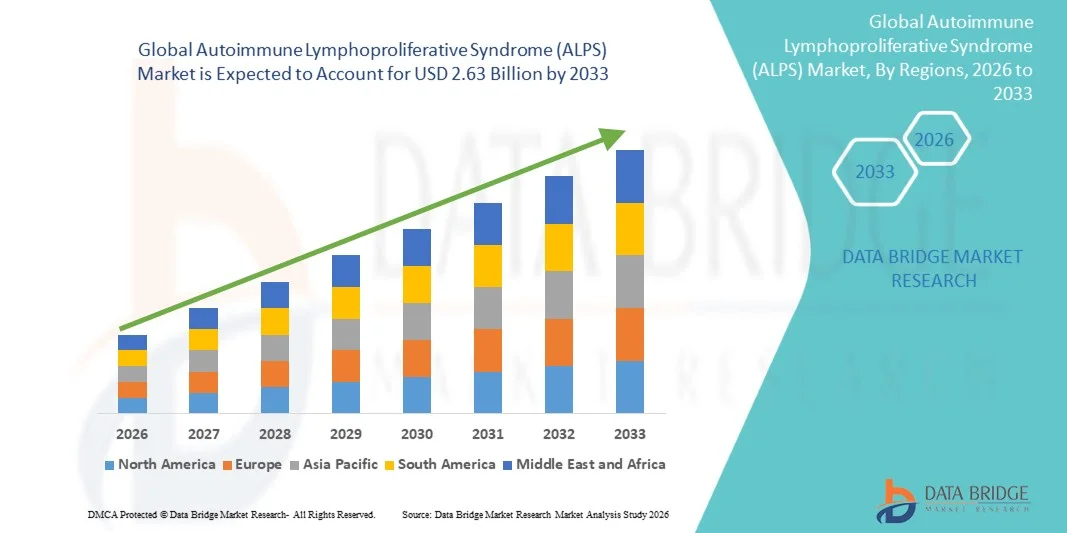
- Согласно анализу рынка Data Bridge Market Research, глобальный размер рынка аутоиммунного лимфопролиферативного синдрома (ALPS) был оценен как1,33 млрд долларов в 2025 годуОжидается, что он достигнет$2,63 млрд. к 2033 году, вCAGR 8,9%в течение прогнозируемого периода
- Рост рынка в значительной степени зависит от растущего внимания к диагностике редких заболеваний, исследованиям иммунологических расстройств и достижениям в адресной иммунотерапии, которые улучшают клиническое понимание и выявление случаев ALPS во всем мире.
- Кроме того, растущее внедрение подходов точной медицины расширилогенетическое тестированиеРастущая осведомленность о первичных нарушениях иммунной дисрегуляции поддерживает раннюю диагностику и лучшее управление заболеваниями, тем самым постепенно способствуя развитию рынка.
Размер рынка и прогноз
- Глобальная рыночная стоимость (2025):$1,33 млрд.
- Ожидаемая рыночная стоимость (2033):$2,63 млрд.
- Прогноз CAGR (2026–2033): 8.9%
Каковы основные выводы рынка аутоиммунного лимфопролиферативного синдрома (АЛПС)
- Аутоиммунный лимфопролиферативный синдром (АЛПС), редкое генетическое иммунное расстройство, характеризующееся дефектным апоптозом лимфоцитов, приводящим к хронической лимфопролиферации и аутоиммунным осложнениям, все чаще привлекает клиническое внимание благодаря достижениям в диагностике редких заболеваний и расширению доступа к генетическому и иммунологическому тестированию в глобальных системах здравоохранения.
- Рост рынка в первую очередь обусловлен растущим внедрением передовых диагностических методов, таких как анализы апоптоза лимфоцитов, генетическое секвенирование и оценка патологии лимфатических узлов, которые улучшают показатели раннего выявления и обеспечивают более точную классификацию заболеваний и стратегии управления.
- Ожидается, что Северная Америка будет доминировать на рынке ALPS, на который приходится наибольшая доля в 45,2% в 2025 году из-за сильной инфраструктуры здравоохранения, высокого проникновения тестирования на редкие заболевания и активных программ клинических исследований.
- Ожидается, что Азиатско-Тихоокеанский регион станет самым быстрорастущим регионом на рынке ALPS в течение прогнозируемого периода, что обусловлено увеличением расходов на здравоохранение, улучшением диагностических возможностей и расширением доступа к генетическому тестированию.
- Дефектный сегмент апоптоза лимфоцитов доминирует на рынке ALPS, на него приходится наибольшая доля в 60,3%, поскольку он представляет собой фундаментальный патологический механизм заболевания и остается основным направлением диагностических подтверждений, клинических исследований и целевых стратегий терапевтического развития.
Сфера охвата и аутоиммунный лимфопролиферативный синдром (ALPS) сегментация рынка
|
Атрибуты |
Аутоиммунный лимфопролиферативный синдром (ALPS) - ключевые рыночные идеи |
|
Сегменты покрыты |
|
|
Страны, охваченные |
Северная Америка
Европа
Азиатско-Тихоокеанский регион
Ближний Восток и Африка
Южная Америка
|
|
Ключевые игроки рынка |
|
|
Рыночные возможности |
|
|
Информационные наборы данных с добавленной стоимостью |
В дополнение к информации о рыночных сценариях, таких как рыночная стоимость, темпы роста, сегментация, географический охват и основные игроки, рыночные отчеты, курируемые Data Bridge Market Research, также включают углубленный экспертный анализ, эпидемиологию пациентов, анализ трубопроводов, анализ цен и нормативную базу. |
Каковы основные тенденции на рынке аутоиммунного лимфопролиферативного синдрома (АЛПС)
«Продвижение точной диагностики с помощью геномного и иммунологического профиля»
- Значительной и новой тенденцией на мировом рынке аутоиммунного лимфопролиферативного синдрома (ALPS) является растущая зависимость от передовых методов геномного секвенирования и иммунного профилирования, что позволяет более точно идентифицировать генетические мутации, ответственные за дефектный апоптоз лимфоцитов, и повысить диагностическую точность при редких иммунных расстройствах.
- Например, секвенирование целых экзомов и иммунологические панели следующего поколения все чаще используются в клинических лабораториях для обнаружения мутаций гена FAS, связанных с ALPS, что подтверждает более раннюю и более окончательную диагностику по сравнению с традиционными методами клинической оценки.
- Интеграция современной молекулярной диагностики сбиоинформатика tools позволяет клиницистам лучше стратифицировать пациентов с ALPS на основе типа мутации и тяжести заболевания, тем самым улучшая персонализированное планирование лечения и долгосрочные результаты лечения заболеваний.
- Кроме того, расширение реестров редких заболеваний и совместных исследовательских сетей способствует централизованному обмену данными, что помогает исследователям выявлять закономерности заболеваний и улучшать понимание прогрессирования ALPS и изменчивости терапевтического ответа.
- Растущее исследование целевых иммунотерапий, включая специфичные для путей биологические препараты, направленные на иммунную регуляцию, еще больше расширяет инновационные схемы лечения для управления ALPS в специализированных клинических условиях.
- Растущее использование систем поддержки диагностики, основанных на искусственном интеллекте, в иммунологии улучшает раннее распознавание редких аутоиммунных синдромов, таких как ALPS, уменьшает задержки диагностики и повышает точность принятия клинических решений.
Аутоиммунный лимфопролиферативный синдром (ALPS) Динамика рынка
водитель
Растущая потребность, обусловленная расширением диагностики редких заболеваний и целевым развитием иммунотерапии
- Растущее признание редких нарушений иммунной дисрегуляции в сочетании с расширением доступа к генетическому тестированию и иммунологической диагностике является важным фактором роста мирового рынка ALPS.
- Например, в апреле 2025 года несколько клинических исследовательских институтов расширили программы скрининга редких заболеваний, интегрируя расширенные анализы апоптоза лимфоцитов для улучшения раннего выявления ALPS и связанных с ним аутоиммунных лимфопролиферативных состояний.
- По мере того, как медицинские работники все больше узнают о неправильно диагностированных случаях хронической лимфопролиферации, тестирование ALPS все чаще включается в рабочие процессы дифференциальной диагностики, улучшая показатели идентификации и возможности клинического вмешательства.
- Кроме того, продолжающаяся разработка целевых иммуномодулирующих терапий и биологических препаратов, направленных на регулирование аномальных путей выживания лимфоцитов, ускоряет инвестиции в исследования подходов к лечению ALPS.
- Растущее внедрение прецизионной медицины и персонализированных стратегий иммунотерапии еще больше поддерживает спрос на специализированные диагностические и терапевтические решения для ALPS в основных системах здравоохранения.
- Расширение сотрудничества между академическими исследовательскими институтами и биотехнологическими компаниями ускоряет клинические испытания, направленные на модуляцию иммунного пути, что еще больше укрепляет терапевтический конвейер ALPS.
Сдержанность/вызов
«Ограниченная осведомленность о заболеваниях и высокая сложность в диагностическом подтверждении»
- Ограниченная осведомленность среди поставщиков медицинских услуг в отношении аутоиммунного лимфопролиферативного синдрома и его перекрывающихся симптомов с другими аутоиммунными или гематологическими расстройствами остается серьезной проблемой, ограничивающей своевременную диагностику и начало лечения.
- Например, многие случаи ALPS изначально ошибочно диагностируются как хроническая лимфаденопатия или другие иммунные расстройства, что приводит к задержкам в генетическом тестировании и соответствующем клиническом вмешательстве.
- Сложность и высокая стоимость подтверждающих диагностических процедур, включая генетическое секвенирование и анализы функционального апоптоза, еще больше ограничивают широкое распространение, особенно в условиях ограниченных ресурсов здравоохранения.
- Кроме того, редкость заболевания приводит к ограниченным данным клинических испытаний и небольшому пулу пациентов, что затрудняет для фармацевтических компаний разработку и коммерциализацию таргетной терапии в масштабе.
- Отсутствие стандартизированных глобальных диагностических рекомендаций для ALPS также способствует непоследовательной идентификации заболеваний и отчетности в различных системах здравоохранения.
- Преодоление этих проблем за счет повышения уровня образования врачей, расширения программ скрининга редких заболеваний и повышения доступности передовой генетической диагностики будет иметь важное значение для устойчивого развития рынка ALPS.
Как сегментируется рынок аутоиммунного лимфопролиферативного синдрома (АЛПС)
Рынок сегментирован на основе диагностического и распределительного каналов.
- По диагнозу
На основании диагностики рынок ALPS сегментирован на дефектный апоптоз лимфоцитов, патологию лимфоузлов и другие. Дефектный сегмент апоптоза лимфоцитов доминировал на рынке с наибольшей долей 60,3% в 2025 году, что обусловлено его ролью в качестве основного биологического механизма, лежащего в основе патогенеза ALPS. Этот сегмент широко используется в подтверждающих диагностических рабочих процессах, поскольку он непосредственно идентифицирует функциональные аномалии в запрограммированных путях гибели клеток, особенно с участием мутаций гена FAS. Клинические лаборатории и специализированные иммунологические центры все чаще полагаются на анализы на основе апоптоза для ранней и точной идентификации заболеваний. Сегмент также выигрывает от растущего внедрения передовых методов проточной цитометрии и молекулярной диагностики, которые улучшают чувствительность и диагностическую точность.
Ожидается, что в сегменте патологии лимфатических узлов будет наблюдаться самый быстрый темп роста с 2026 по 2033 год, обусловленный увеличением использования гистопатологической оценки у пациентов с необъяснимой лимфаденопатией. Этот диагностический подход набирает обороты, поскольку он помогает отличить ALPS от лимфомы и других лимфопролиферативных расстройств с перекрывающимися клиническими особенностями. Растущая доступность минимально инвазивных методов биопсии и улучшенных инструментов иммуногистохимии повышает точность диагностики и скорость принятия. Патологические лаборатории все чаще интегрируют молекулярные маркеры с традиционной гистологией, улучшая характеристику заболевания. Кроме того, растущие направления из онкологических и иммунологических отделов для оценки лимфатических узлов поддерживают расширение сегмента. Растущая потребность в дифференциальной диагностике при сложных иммунных расстройствах еще больше ускоряет спрос на тестирование на основе патологии лимфатических узлов.
- Дистрибьюторский канал
На базе канала дистрибуции рынок ALPS сегментирован в больничную аптеку, розничную аптеку, интернет-аптеки и другие. Сегмент больничных аптек доминировал на рынке с наибольшей долей в 2025 году, что обусловлено централизованным характером диагностики и лечения ALPS в больницах и специализированных учреждениях. Поскольку ALPS является редким и сложным расстройством, пациенты обычно диагностируются и управляются в больницах третичного ухода, где имеются отделения иммунологии и гематологии. Больничные аптеки обеспечивают немедленный доступ к иммунодепрессантам, кортикостероидам и поддерживающей терапии, используемой в управлении ALPS. Сегмент также выигрывает от сильной интеграции с диагностическими лабораториями и службами стационарной помощи, что позволяет координировать планирование лечения.
Ожидается, что в сегменте онлайн-аптек будут наблюдаться самые быстрые темпы роста с 2026 по 2033 год, обусловленные растущей цифровизацией здравоохранения и растущим внедрением платформ электронной аптеки для доступа к лекарствам от хронических заболеваний. Хотя ALPS является редким заболеванием, долгосрочное лечение часто требует повторных рецептов, что делает онлайн-каналы все более привлекательными для пациентов и лиц, осуществляющих уход. Улучшение нормативно-правовой базы и расширение телемедицинских услуг поддерживают выполнение рецептов онлайн. Кроме того, растущее удобство, услуги по доставке на дом и улучшенные инструменты приверженности пациентов способствуют принятию. Растущее проникновение цифровых экосистем здравоохранения на развитых и развивающихся рынках еще больше ускоряет рост этого сегмента.
В каком регионе находится наибольшая доля рынка аутоиммунного лимфопролиферативного синдрома (АЛПС)
- Ожидается, что Северная Америка будет доминировать на рынке ALPS, на который приходится наибольшая доля в 45,2% в 2025 году из-за сильной инфраструктуры здравоохранения, высокого проникновения тестирования на редкие заболевания и активных программ клинических исследований.
- Системы здравоохранения в регионе широко используют секвенирование следующего поколения и расширенные анализы апоптоза лимфоцитов, обеспечивая раннюю и точную идентификацию случаев ALPS и поддерживая своевременное управление заболеваниями и начало лечения.
- Это доминирование также поддерживается хорошо зарекомендовавшим себя финансированием исследований редких заболеваний, присутствием ведущих академических медицинских центров и тесным сотрудничеством между биотехнологическими компаниями и клиническими учреждениями, что делает Северную Америку ключевым центром диагностики и терапевтического развития ALPS.
Аутоиммунный лимфопролиферативный синдром США (ALPS) Market Insight
Американский рынок ALPS занял самую большую долю доходов в Северной Америке в 2025 году, чему способствовала развитая инфраструктура диагностики редких заболеваний и широкое внедрение технологий генетического секвенирования. Пациенты и врачи все чаще полагаются на секвенирование следующего поколения, анализы апоптоза лимфоцитов и специализированные иммунологические центры для ранней и точной идентификации заболеваний. Наличие ведущих академических больниц, сильное финансирование клинических исследований и активные реестры редких заболеваний также поддерживают доминирование на рынке. Кроме того, продолжающееся развитие методов адресной иммунотерапии и прецизионной медицины вносит значительный вклад в расширение рынка.
Европейский аутоиммунный лимфопролиферативный синдром (ALPS) Market Insight
Европейский рынок ALPS, по прогнозам, будет расширяться при существенном CAGR в течение прогнозируемого периода, в основном за счет структурированных рамок редких заболеваний и растущей интеграции технологий молекулярной диагностики в клиническую практику. Растущая доступность генетического тестирования и улучшение доступа к специалистам по иммунологии способствуют раннему выявлению заболеваний во всем регионе. Европейские системы здравоохранения также все больше внимания уделяют стандартизированным протоколам лечения редких заболеваний. Кроме того, растущее сотрудничество между научно-исследовательскими учреждениями и организациями общественного здравоохранения способствует лучшему пониманию и диагностике БАС.
Аутоиммунный лимфопролиферативный синдром (ALPS) Market Insight
Ожидается, что в течение прогнозируемого периода рынок ALPS в Великобритании будет расти с заметным CAGR, что обусловлено высокой осведомленностью о редких заболеваниях и расширенными диагностическими возможностями в рамках Национальной службы здравоохранения. Расширение применения геномного тестирования и улучшение систем направления для оценки иммунологии поддерживают раннюю идентификацию случаев ALPS. Кроме того, растущие инвестиции в исследования редких заболеваний и расширение доступа к специализированным лечебным центрам усиливают рост рынка. Ориентация страны на точную медицину еще больше повышает точность диагностики и результаты лечения пациентов.
Немецкий аутоиммунный лимфопролиферативный синдром (ALPS) Market Insight
Ожидается, что в течение прогнозируемого периода рынок ALPS в Германии будет расширяться на значительном CAGR, чему будет способствовать сильная инфраструктура здравоохранения и растущий акцент на цифровую и молекулярную диагностику. Повышение осведомленности о нарушениях иммунной дисрегуляции способствует более раннему диагностическому вмешательству в подозрительных случаях. Передовые лабораторные системы Германии и сосредоточение внимания на высококачественных медицинских исследованиях способствуют улучшению показателей выявления заболеваний. Кроме того, интеграция генетического тестирования с услугами клинической иммунологии повышает диагностическую эффективность во всех учреждениях здравоохранения.
Азиатско-Тихоокеанский аутоиммунный лимфопролиферативный синдром (ALPS) Market Insight
Азиатско-тихоокеанский рынок ALPS будет расти самыми быстрыми темпами в течение прогнозируемого периода, что обусловлено улучшением инфраструктуры здравоохранения, повышением осведомленности о редких генетических нарушениях и расширением доступа к передовым диагностическим технологиям. Расширение применения геномного секвенирования и иммунологического тестирования способствует более ранней и точной диагностике в регионе. Правительственные инициативы, способствующие модернизации здравоохранения и информированию о редких заболеваниях, еще больше ускоряют рост рынка. Кроме того, растущие инвестиции в точную медицину укрепляют региональные диагностические возможности.
Японский аутоиммунный лимфопролиферативный синдром (ALPS) Market Insight
Японский рынок ALPS набирает обороты благодаря передовым системам здравоохранения, сильному акценту на точную медицину и высокому внедрению генетической диагностики. Старение населения страны и увеличение числа сложных иммунных расстройств стимулируют спрос на раннюю и точную идентификацию заболеваний. Интеграция передовой молекулярной диагностики с иммунологическими исследованиями улучшает клиническое понимание ALPS. Кроме того, мощная технологическая инфраструктура способствует эффективному лечению и мониторингу заболеваний.
Аутоиммунный лимфопролиферативный синдром Индии (ALPS) Market Insight
На индийский рынок ALPS приходится наибольшая доля в Азиатско-Тихоокеанском регионе в 2025 году, что объясняется расширением доступа к здравоохранению, повышением осведомленности о редких заболеваниях и увеличением доступности услуг генетического тестирования. Растущее внедрение передовых диагностических инструментов в больницах и специализированных лабораториях высшего звена улучшает показатели выявления нарушений иммунной дисрегуляции. Растущее присутствие частных диагностических сетей способствует дальнейшему расширению рынка. Кроме того, правительственные инициативы, направленные на модернизацию здравоохранения и информирование о редких заболеваниях, укрепляют общий рост рынка.
Каковы ведущие компании на рынке аутоиммунного лимфопролиферативного синдрома (АЛПС)
Индустрия аутоиммунного лимфопролиферативного синдрома (АЛПС) в основном возглавляется хорошо зарекомендовавшими себя компаниями, в том числе:
- Merck & Co., Inc. (США)
- F. Hoffmann-La Roche Ltd (Швейцария)
- Novartis AG (Швейцария)
- Bristol-Myers Squibb Company (США)
- Pfizer Inc. (США)
- Санофи (Франция)
- AstraZeneca (Великобритания)
- AbbVie Inc. (США)
- Takeda Pharmaceutical Company Limited (Япония)
- Amgen Inc. (США)
- Gilead Sciences, Inc. (США)
- Regeneron Pharmaceuticals, Inc. (США)
- Biogen Inc. (США)
- Horizon Therapeutics (Ирландия)
- Kyowa Kirin Co., Ltd. (Япония)
- BioMarin Pharmaceutical Inc. (США)
- Vertex Pharmaceuticals Incorporated (США)
- Illumina, Inc. (США)
- QIAGEN (Нидерланды)
Каковы последние события на рынке аутоиммунного лимфопролиферативного синдрома (АЛПС)
- В октябре 2025 года серия клинических случаев выявила текущие диагностические проблемы в дифференциации ALPS от других нарушений иммунной дисрегуляции (спектр ALPID). В исследовании подчеркивается, что ALPS часто неправильно диагностируется из-за перекрытия симптомов с другими лимфопролиферативными и аутоиммунными заболеваниями, задерживая надлежащее лечение.
- В октябре 2025 года исследования показали, что FAS-генная терапия на основе липидных наночастиц является потенциальным подходом к лечению ALPS. Доклинические результаты показали, что восстановление передачи сигналов ФАС с использованием систем доставки генов может подавлять накопление аномальных лимфоцитов.
- В июле 2025 года Institut Imagine (Франция) идентифицировал новые мутации гена FADD, связанные с ALPS, такие как болезнь, расширяя известный генетический ландшафт аутоиммунных лимфопролиферативных расстройств. Исследователи сообщили, что мутации FADD могут вызывать симптомы ALPS даже у пациентов без классических мутаций FAS, улучшая диагностическое понимание атипичных случаев ALPS.
- В июле 2025 года клиническое исследование сообщило о подробной функциональной и молекулярной характеристике пациентов с ALPS, несущих патогенные варианты гена FAS, укрепляющие корреляцию генотипа и фенотипа в заболевании.
- В январе 2023 года исследования выявили расширение использования секвенирования следующего поколения (NGS) для выявления не-FAS генных мутаций в диагностике ALPS. Исследования показали, что расширение применения NGS позволяет выявить мутации в генах, таких как CASP10 и FASLG, помогая более точно классифицировать ранее не диагностированных пациентов, подобных ALPS.
SKU-
Получите онлайн-доступ к отчету на первой в мире облачной платформе рыночной аналитики
- Интерактивная панель анализа данных
- Панель анализа компании для возможностей с высоким потенциалом роста
- Доступ аналитика-исследователя для настройки и запросов
- Анализ конкурентов с помощью интерактивной панели
- Последние новости, обновления и анализ тенденций
- Используйте возможности сравнительного анализа для комплексного отслеживания конкурентов
Методология исследования
Сбор данных и анализ базового года выполняются с использованием модулей сбора данных с большими размерами выборки. Этап включает получение рыночной информации или связанных данных из различных источников и стратегий. Он включает изучение и планирование всех данных, полученных из прошлого заранее. Он также охватывает изучение несоответствий информации, наблюдаемых в различных источниках информации. Рыночные данные анализируются и оцениваются с использованием статистических и последовательных моделей рынка. Кроме того, анализ доли рынка и анализ ключевых тенденций являются основными факторами успеха в отчете о рынке. Чтобы узнать больше, пожалуйста, запросите звонок аналитика или оставьте свой запрос.
Ключевой методологией исследования, используемой исследовательской группой DBMR, является триангуляция данных, которая включает в себя интеллектуальный анализ данных, анализ влияния переменных данных на рынок и первичную (отраслевую экспертную) проверку. Модели данных включают сетку позиционирования поставщиков, анализ временной линии рынка, обзор рынка и руководство, сетку позиционирования компании, патентный анализ, анализ цен, анализ доли рынка компании, стандарты измерения, глобальный и региональный анализ и анализ доли поставщика. Чтобы узнать больше о методологии исследования, отправьте запрос, чтобы поговорить с нашими отраслевыми экспертами.
Доступна настройка
Data Bridge Market Research является лидером в области передовых формативных исследований. Мы гордимся тем, что предоставляем нашим существующим и новым клиентам данные и анализ, которые соответствуют и подходят их целям. Отчет можно настроить, включив в него анализ ценовых тенденций целевых брендов, понимание рынка для дополнительных стран (запросите список стран), данные о результатах клинических испытаний, обзор литературы, обновленный анализ рынка и продуктовой базы. Анализ рынка целевых конкурентов можно проанализировать от анализа на основе технологий до стратегий портфеля рынка. Мы можем добавить столько конкурентов, о которых вам нужны данные в нужном вам формате и стиле данных. Наша команда аналитиков также может предоставить вам данные в сырых файлах Excel, сводных таблицах (книга фактов) или помочь вам в создании презентаций из наборов данных, доступных в отчете.