



Global Bathroom - Toilet Assist Devices Market Segmentation, By Product Type (Commodes, Shower Chairs and Stools, Bath Lifts, Toilet Seat Raisers, Bath Aids, Handgrips and Grab Bars), Distribution Channel (Online and Offline) - Industry Trends and Forecast to 2033
Bathroom - Toilet Assist Devices Market Size
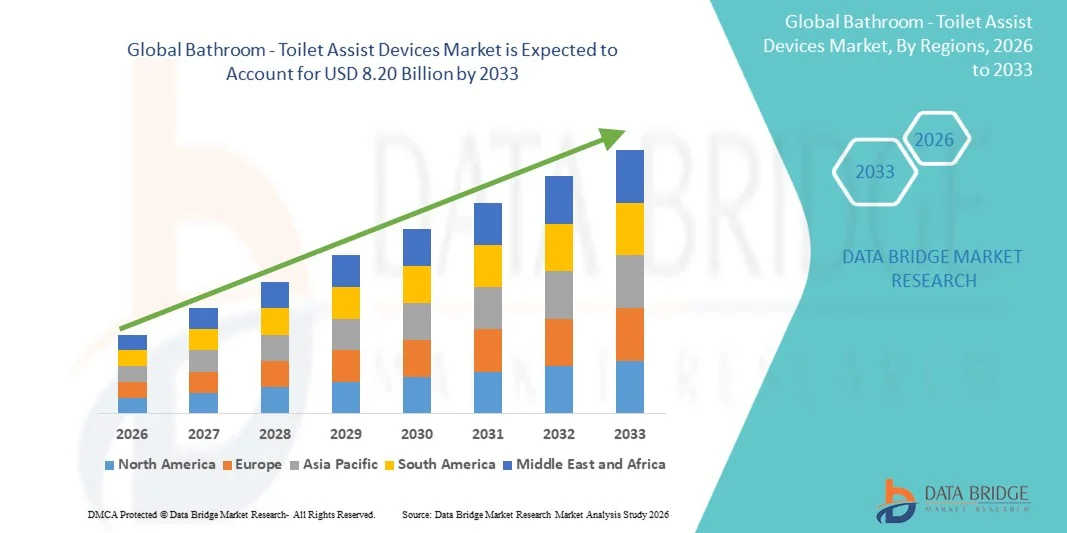
- The global bathroom - toilet assist devices market size was valued at USD 4.92 billion in 2025 and is expected to reach USD 8.20 billion by 2033, at a CAGR of 6.60% during the forecast period
- The market growth is largely fueled by increasing awareness about elderly care and patient safety, along with advancements in ergonomic and supportive bathroom assistive technologies, leading to enhanced adoption in both residential and healthcare settings
- Furthermore, rising demand for user-friendly, safe, and accessible bathroom solutions for seniors and physically challenged individuals is driving the uptake of Bathroom - Toilet Assist Devices solutions, thereby significantly boosting the industry's growth
Bathroom - Toilet Assist Devices Market Analysis
- Bathroom assist devices, including toilet support frames, grab bars, and safety rails, are increasingly essential in both residential and healthcare environments, offering enhanced safety, accessibility, and independence for elderly and physically challenged individuals
- The escalating demand for these devices is primarily fueled by rising awareness of elderly care, growing patient safety concerns, and a preference for ergonomic, user-friendly solutions
- North America dominated the bathroom - toilet assist devices market with the largest revenue share of 44.5% in 2025, driven by advanced healthcare infrastructure, high adoption of safety and accessibility solutions, and a strong presence of key industry players, with the U.S. experiencing significant growth in installations across homes, assisted living facilities, and hospitals
- Asia-Pacific is expected to be the fastest-growing region in the bathroom - toilet assist devices market during the forecast period, with a projected CAGR of 12.8%, fueled by increasing urbanization, rising disposable incomes, and growing awareness of elderly care and accessibility solutions
- The Commodes segment dominated the market with a 38.7% share in 2025, due to their critical role in providing independence and ease of use for elderly and mobility-impaired individuals
Report Scope and Bathroom - Toilet Assist Devices Market Segmentation
|
Attributes |
Bathroom - Toilet Assist Devices Key Market Insights |
|
Segments Covered |
|
|
Countries Covered |
North America
Europe
Asia-Pacific
Middle East and Africa
South America
|
|
Key Market Players |
• Drive DeVilbiss Healthcare (U.S.) |
|
Market Opportunities |
|
|
Value Added Data Infosets |
In addition to the insights on market scenarios such as market value, growth rate, segmentation, geographical coverage, and major players, the market reports curated by the Data Bridge Market Research also include in-depth expert analysis, patient epidemiology, pipeline analysis, pricing analysis, and regulatory framework. |
Bathroom - Toilet Assist Devices Market Trends
“Enhanced Convenience Through Ergonomic and Accessibility Features”
- A significant and accelerating trend in the global Bathroom - Toilet Assist Devices market is the increasing focus on ergonomics, accessibility, and safety for users, particularly the elderly, disabled, and post-operative patients. Manufacturers are developing products such as grab bars, raised toilet seats, shower chairs, and support frames that ensure stability, reduce the risk of falls, and enhance independence in daily hygiene routines
- For instance, some premium bathroom assistive devices offer adjustable heights and foldable designs, making them suitable for both residential and healthcare facility applications. Similarly, multi-functional shower chairs combine seating with handrails to improve safety and user comfort
- The emphasis on product durability, comfort, and ease of use is driving innovation in materials and designs, including lightweight but strong construction and anti-slip surfaces. Furthermore, growing awareness of home healthcare and rehabilitation needs is encouraging wider adoption of these devices in households, clinics, and assisted living facilities
- Manufacturers are also introducing aesthetically appealing designs that integrate seamlessly into modern bathrooms, enhancing user satisfaction while maintaining functional utility
- This trend toward more ergonomic, safe, and user-friendly bathroom assistive devices is fundamentally reshaping consumer expectations, prompting companies to invest in research, design, and customization for diverse user requirements
- The demand for accessible and reliable bathroom assistive devices is growing rapidly across both homecare and clinical sectors, as consumers increasingly prioritize safety, convenience, and quality in hygiene-related equipment
Bathroom - Toilet Assist Devices Market Dynamics
Driver
“Growing Need Due to Aging Population and Rising Homecare Awareness”
- The increasing elderly population worldwide, along with a growing emphasis on fall prevention and in-home rehabilitation, is driving strong demand for Bathroom - Toilet Assist Devices. Healthcare facilities, rehabilitation centers, and assisted living institutions are adopting these devices to enhance patient safety and comfort
- For instance, hospitals in Japan have begun installing shower chairs with integrated anti-slip surfaces and adjustable heights in patient bathrooms to reduce fall incidents and improve mobility during post-surgery recovery. Such initiatives demonstrate how ergonomic designs directly improve patient outcomes and stimulate market adoption
- Rising disposable incomes, coupled with government programs promoting accessible facilities in both residential and commercial spaces, further support market expansion
- The convenience, safety, and independence offered by grab bars, raised seats, and shower chairs are key factors driving adoption in households and healthcare environments alike
- In addition, the growing focus on preventive care and patient-centric homecare solutions encourages consumers and caregivers to integrate these devices into daily routines, expanding market penetration across both developed and emerging regions
Restraint/Challenge
“High Costs and Limited Awareness in Developing Regions”
- Concerns regarding the relatively high cost of advanced Bathroom - Toilet Assist Devices can limit adoption, particularly in developing countries or among price-sensitive consumers.
- For instance, in some rural areas of India, households often rely on traditional toilet designs without accessibility aids due to cost constraints, limiting awareness and adoption of ergonomic devices. This highlights the gap between availability and accessibility in emerging markets.
- Inconsistent product quality and insufficient adherence to safety standards may create consumer hesitation, especially for first-time buyers unfamiliar with certified devices.
- While basic devices are increasingly affordable, premium models with enhanced stability, multi-functionality, and ergonomic designs often carry higher price tags, restricting widespread use.
- Addressing these challenges through targeted consumer education, cost-effective product development, and standardization of safety certifications will be vital for sustained growth in the market.
Bathroom - Toilet Assist Devices Market Scope
The market is segmented on the basis of Product Type and Distribution Channel.
• By Product Type
On the basis of product type, the Bathroom - Toilet Assist Devices market is segmented into Commodes, Shower Chairs and Stools, Bath Lifts, Toilet Seat Raisers, Bath Aids, Handgrips, and Grab Bars. The Commodes segment dominated the market with a 38.7% share in 2025, due to their critical role in providing independence and ease of use for elderly and mobility-impaired individuals. Hospitals, rehabilitation centers, and homecare users heavily rely on commodes for patient comfort. Rising awareness of assisted living solutions enhances adoption. Designs with adjustable height, foldable options, and built-in safety features improve convenience. Clinical guidelines recommend commodes for post-surgery and long-term care. Healthcare facilities and homecare providers prioritize sturdy and easy-to-clean commodes. Urban and semi-urban adoption is higher due to accessibility and affordability. E-commerce channels increase product reach. Insurance coverage for mobility aids supports revenue. Technological enhancements, such as ergonomic designs, increase user compliance. Manufacturers focus on lightweight materials for ease of movement. Telehealth programs highlight home use for patient independence.
The Shower Chairs and Stools segment is expected to witness the fastest CAGR of 16.2% from 2026 to 2033, driven by growing awareness of fall prevention and safer bathing solutions for seniors. Homecare adoption increases due to the convenience of shower seating. Adjustable and foldable designs improve accessibility. Hospitals and rehabilitation centers recommend shower chairs for patient safety. E-commerce platforms expand reach to remote and semi-urban users. Occupational therapists and physiotherapists emphasize safe bathing practices. Integration with preventive care programs boosts awareness. Lightweight and water-resistant materials enhance comfort. Government initiatives promoting elderly care encourage adoption. Product innovation in ergonomic seating increases compliance. Caregivers prefer chairs that reduce strain during bathing. Rising elderly populations globally strengthen market growth. Insurance coverage in some regions supports purchases. Homecare rehabilitation programs increase recurring usage.
• By Distribution Channel
On the basis of distribution channel, the market is segmented into Online and Offline. The Offline segment dominated with a 62.3% share in 2025, owing to the preference of hospitals, clinics, and elderly care facilities for direct evaluation and purchase. Offline sales allow physical inspection for durability, stability, and comfort. Retailers and medical supply stores provide personalized guidance. Healthcare facilities prioritize immediate availability for patient care. Training and demonstrations at retail outlets increase adoption. Brand visibility through offline channels enhances trust. Bulk purchases by hospitals and rehab centers boost revenue. Urban adoption is higher due to accessibility. Repeat purchases are easier in retail channels. Staff recommendations at hospitals and care centers influence adoption. Insurance support facilitates affordability. Multi-brand availability at offline stores encourages choice.
The Online segment is expected to witness the fastest CAGR of 17.5% from 2026 to 2033, driven by increasing digital penetration, e-commerce growth, and home delivery convenience. Telehealth and virtual consultations recommend online purchases for homecare users. E-commerce platforms provide wide product variety and price comparisons. Subscription-based programs for mobility aids support recurring sales. Rural and semi-urban areas benefit from online availability. Product reviews and social media influence consumer decisions. Online platforms enable personalized recommendations for ergonomic and adjustable devices. Digital awareness campaigns promote safety and independence. Convenience and contactless delivery increase adoption during pandemic periods. Insurance coverage via digital pharmacies supports purchases. Integration with home rehabilitation programs encourages online adoption. Logistics improvements reduce delivery times. Online platforms also facilitate access to innovative designs not locally available.
Bathroom - Toilet Assist Devices Market Regional Analysis
- North America dominated the bathroom – toilet assist devices market with the largest revenue share of 44.5% in 2025, driven by advanced healthcare infrastructure, high adoption of safety and accessibility solutions, and a strong presence of key industry players
- The market growth is supported by increasing awareness of elderly care, rehabilitation needs, and accessibility standards in homes, assisted living facilities, and hospitals
- Consumers in the region prioritize devices that enhance independence, reduce the risk of falls, and improve overall hygiene and comfort. For instance, several assisted living centers in the U.S. have introduced ergonomic shower chairs and raised toilet seats with built-in support handles, ensuring safety and convenience for elderly residents while meeting regulatory requirements
U.S. Bathroom - Toilet Assist Devices Market Insight
The U.S. bathroom – toilet assist devices market captured the largest revenue share within North America, fueled by widespread adoption of in-home accessibility solutions and increasing investments in eldercare infrastructure. Hospitals, rehabilitation centers, and residential care facilities are increasingly incorporating grab bars, adjustable-height toilets, and shower seats into bathrooms to ensure patient safety and compliance with ADA standards. In addition, awareness campaigns and partnerships between healthcare providers and manufacturers have promoted the adoption of advanced assistive devices. For example, a major U.S. hospital network has implemented smart, adjustable-height toilets with anti-slip surfaces for post-operative patients, helping to reduce incidents of falls and improve recovery outcomes.
Europe Bathroom - Toilet Assist Devices Market Insight
The Europe bathroom – toilet assist devices market is projected to expand at a substantial CAGR throughout the forecast period, primarily driven by stringent safety regulations and the growing demand for accessible solutions in both homes and commercial facilities. Increasing urbanization and the desire for safe, independent living among elderly populations are further fueling growth. Consumers are attracted to products that combine functionality, hygiene, and energy efficiency. For instance, several residential renovation projects in Germany now include shower chairs with foldable handrails and anti-slip flooring, catering to elderly and mobility-impaired residents while maintaining aesthetic appeal.
U.K. Bathroom - Toilet Assist Devices Market Insight
The U.K. bathroom – toilet assist devices market is expected to grow at a noteworthy CAGR during the forecast period, driven by rising concerns about safety, burglary, and accessibility in residential and commercial properties. Both homeowners and institutions are increasingly adopting devices that enhance comfort and independence for elderly and differently-abled users. The growing e-commerce infrastructure in the U.K. also facilitates easy access to advanced assistive devices. For example, a leading U.K. rehabilitation clinic now offers custom-fitted raised toilet seats with padded armrests for patients recovering from orthopedic surgery, highlighting the trend toward personalized safety solutions.
Germany Bathroom - Toilet Assist Devices Market Insight
The Germany bathroom – toilet assist devices market is expected to expand at a considerable CAGR, fueled by increasing awareness of accessibility, digital safety, and technologically advanced solutions. Germany’s strong focus on sustainability and innovation promotes the adoption of eco-friendly materials and ergonomic designs. Residential and commercial buildings are increasingly integrating safety features into bathroom infrastructure. For instance, a German assisted-living facility recently installed lightweight, foldable shower chairs with corrosion-resistant coatings and built-in support rails, demonstrating a balance between durability, safety, and user convenience.
Asia-Pacific Bathroom - Toilet Assist Devices Market Insight
The Asia-Pacific bathroom – toilet assist devices market is poised to grow at the fastest CAGR of 12.8% during the forecast period, driven by rapid urbanization, rising disposable incomes, and growing awareness of elderly care and accessibility solutions. Government initiatives promoting aging-in-place and healthcare accessibility are boosting market adoption across the region. For instance, in Japan, smart, ergonomically designed toilet frames and shower chairs with adjustable heights are increasingly being adopted in both homes and senior care facilities, helping elderly users maintain independence and safety. In addition, the region is emerging as a manufacturing hub for bathroom assistive devices, making high-quality products more affordable and accessible.
Japan Bathroom - Toilet Assist Devices Market Insight
The Japan bathroom – toilet assist devices market is gaining momentum due to a combination of high-tech culture, an aging population, and increasing focus on safety and convenience. The demand for user-friendly, secure access solutions is growing in residential, hospital, and senior-care environments. For example, Japanese homecare providers are now offering adjustable shower stools with integrated safety handles, which allow elderly residents to safely bathe independently, reflecting the country’s commitment to accessibility and quality-of-life improvements.
China Bathroom - Toilet Assist Devices Market Insight
The China bathroom – toilet assist devices market accounted for the largest revenue share in Asia-Pacific in 2025, supported by a rapidly growing middle class, urbanization, and heightened awareness of eldercare and accessibility solutions. Smart and ergonomic assistive devices, such as raised toilet seats with padded handles and foldable shower chairs, are increasingly used in homes, hospitals, and rehabilitation centers. For instance, several urban residential complexes in Beijing have incorporated anti-slip shower chairs and adjustable-height toilets in common bathroom facilities, promoting safety and independence among elderly residents while reflecting the government’s smart home and urban healthcare initiatives.
Bathroom - Toilet Assist Devices Market Share
The Bathroom - Toilet Assist Devices industry is primarily led by well-established companies, including:
• Drive DeVilbiss Healthcare (U.S.)
• Etac AB (Sweden)
• Arjo AB (Sweden)
• Invacare Corporation (U.S.)
• Medline Industries (U.S.)
• Sunrise Medical (U.K.)
• Permobil AB (Sweden)
• Moen Incorporated (U.S.)
• Hugo Mobility (U.S.)
• Carex Health Brands (U.S.)
• Armedica (Australia)
• AquaSense (U.S.)
• Stander Inc. (U.S.)
• Drive Medical (U.S.)
• Essential Medical Supply (U.S.)
• ProMed Products (U.S.)
• Aqua Assist (Germany)
• Bathsafe Solutions (U.K.)
• Homecraft (U.K.)
• TOTO Ltd. (Japan)
Latest Developments in Global Bathroom - Toilet Assist Devices Market
- In January 2021, TOTO LTD introduced an innovative smart commode device at the Consumer Electronics Show (CES 2021) that could sense and analyze user body movements and interaction patterns, then provide personalized dietary and wellness insights via a connected smartphone app — marking an early step toward smart bathroom assistive technologies in the market
- In April 2023, TIDI Products LLC, a U.S. medical product manufacturer, launched the Posey Wireless Toilet Sensor, a battery‑powered sensor system that detects when an individual stands up from the toilet and sends alerts via sound or messages to caregivers to help prevent bathroom falls, improving safety in healthcare and home care environments
- In March 2023, Invacare Corporation launched a new line of raised toilet seats with adjustable height options to enhance user comfort and safety, specifically addressing the needs of the elderly and individuals with reduced mobility
- In October 2024, Sunrise Medical, a provider of mobility products, acquired Nuprodx Inc., a supplier of bathroom mobility aids such as bath transfer benches and shower/commode chairs. This acquisition expanded Sunrise Medical’s bathroom and toilet assist device portfolio to include additional products tailored for seniors and people with physical impairments
- In December 2024, Hollister Inc. announced the acquisition of Ostomy Supplies, broadening its product offerings in home‑care solutions including bathroom safety and continence care devices, supporting the holistic management of mobility and hygiene needs for disabled and elderly users
- In April 2025, Carex Health Brands launched a new raised toilet seat with integrated safety rails, offering enhanced stability and support for elderly users and individuals with limited mobility. The product aimed to promote safer and more independent bathroom use at home
- In March 2025, Arjo announced a strategic partnership with Medline Industries to co‑develop and co‑market advanced toilet accessibility and safety devices for the disabled and elderly population, expanding product reach in institutional and home care segments
- In August 2025, Drive DeVilbiss Healthcare announced the establishment of a new manufacturing facility in Mexico to reduce production costs and improve supply chain efficiency for its bathroom and toilet assist device lineup, enhancing responsiveness to market demand and strengthening its competitive position in North America and LATAM
SKU-
Получите онлайн-доступ к отчету на первой в мире облачной платформе рыночной аналитики

- Интерактивная панель анализа данных
- Панель анализа компании для возможностей с высоким потенциалом роста
- Доступ аналитика-исследователя для настройки и запросов
- Анализ конкурентов с помощью интерактивной панели
- Последние новости, обновления и анализ тенденций
- Используйте возможности сравнительного анализа для комплексного отслеживания конкурентов
Методология исследования
Сбор данных и анализ базового года выполняются с использованием модулей сбора данных с большими размерами выборки. Этап включает получение рыночной информации или связанных данных из различных источников и стратегий. Он включает изучение и планирование всех данных, полученных из прошлого заранее. Он также охватывает изучение несоответствий информации, наблюдаемых в различных источниках информации. Рыночные данные анализируются и оцениваются с использованием статистических и последовательных моделей рынка. Кроме того, анализ доли рынка и анализ ключевых тенденций являются основными факторами успеха в отчете о рынке. Чтобы узнать больше, пожалуйста, запросите звонок аналитика или оставьте свой запрос.
Ключевой методологией исследования, используемой исследовательской группой DBMR, является триангуляция данных, которая включает в себя интеллектуальный анализ данных, анализ влияния переменных данных на рынок и первичную (отраслевую экспертную) проверку. Модели данных включают сетку позиционирования поставщиков, анализ временной линии рынка, обзор рынка и руководство, сетку позиционирования компании, патентный анализ, анализ цен, анализ доли рынка компании, стандарты измерения, глобальный и региональный анализ и анализ доли поставщика. Чтобы узнать больше о методологии исследования, отправьте запрос, чтобы поговорить с нашими отраслевыми экспертами.
Доступна настройка
Data Bridge Market Research является лидером в области передовых формативных исследований. Мы гордимся тем, что предоставляем нашим существующим и новым клиентам данные и анализ, которые соответствуют и подходят их целям. Отчет можно настроить, включив в него анализ ценовых тенденций целевых брендов, понимание рынка для дополнительных стран (запросите список стран), данные о результатах клинических испытаний, обзор литературы, обновленный анализ рынка и продуктовой базы. Анализ рынка целевых конкурентов можно проанализировать от анализа на основе технологий до стратегий портфеля рынка. Мы можем добавить столько конкурентов, о которых вам нужны данные в нужном вам формате и стиле данных. Наша команда аналитиков также может предоставить вам данные в сырых файлах Excel, сводных таблицах (книга фактов) или помочь вам в создании презентаций из наборов данных, доступных в отчете.











