



Global Behavioural Biometrics Market Segmentation, By Component (Software and Services), Type (Signature Analysis, Keystroke Dynamics, Voice Recognition, Gait Analysis, and Others), Deployment Model (On-premise and Cloud), Application (Identity Proofing, Continuous Authentication, Risk & Compliance Management, Fraud Detection and Prevention, and Others), Organization Size (SMBs and Large Enterprises), Industry Vertical (BFSI, Retail & E-commerce, Healthcare, Government & Public Sector, IT & Telecom, and Others)- Industry Trends and Forecast to 2033
Каков размер рынка биометрии и темпы роста
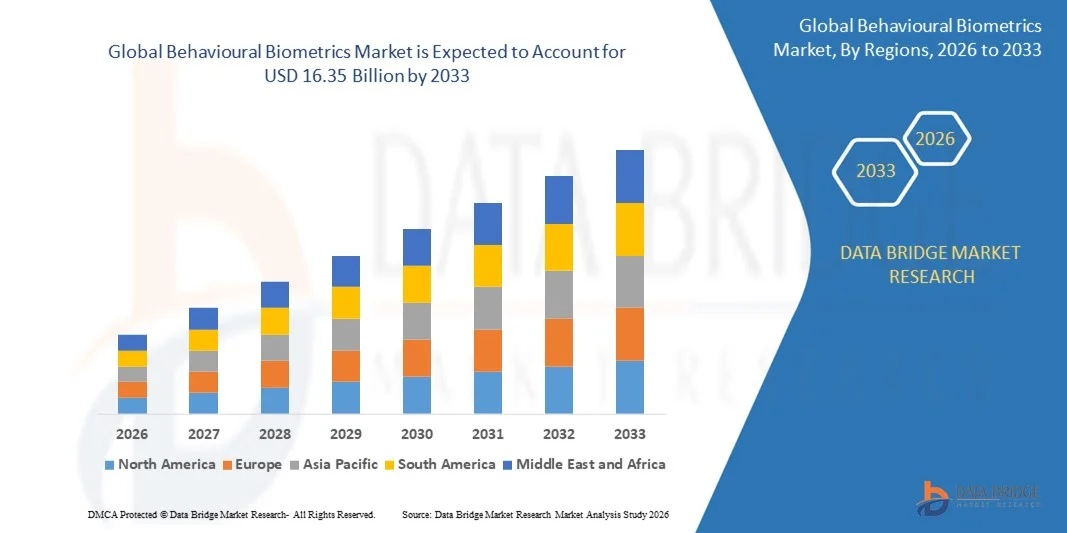
- Согласно анализу Data Bridge Market Research, глобальный размер рынка биометрии оценивался как3,00 млрд долларов в 2025 годуОжидается, что он достигнет16,35 млрд долларов к 2033 году, вCAGR 23,60%в течение прогнозируемого периода
- Рост рынка в значительной степени обусловлен растущей потребностью в расширенном обнаружении мошенничества и непрерывной аутентификации на цифровых платформах.
- Растущее внедрение онлайн-банкинга, электронной коммерции и мобильных приложений ускоряет спрос на поведенческие биометрические решения.
Размер рынка и прогноз
- Глобальная рыночная стоимость (2025):USD 3 млрд.
- Ожидаемая рыночная стоимость (2033):16,35 млрд долларов
- Прогноз CAGR (2026–2033):23.60%
Каковы основные выводы рынка поведенческой биометрии
- Рынок быстро расширяется благодаря растущей интеграции ИИ и технологий машинного обучения, которые повышают точность и позволяют в режиме реального времени контролировать поведение пользователей.
- Растущие инициативы по цифровой трансформации в разных отраслях, наряду с переходом к аутентификации без паролей и системам безопасности с нулевым доверием, значительно поддерживают рост рынка.
- Северная Америка доминировала на рынке поведенческой биометрии с самой большой долей доходов в 2025 году, что обусловлено ростом числа киберугроз, внедрением передовых технологий аутентификации и присутствием крупных поставщиков технологий.
- Ожидается, что в Азиатско-Тихоокеанском регионе будут наблюдаться самые высокие темпы роста в мире.Биометрия поведениярынок, обусловленный расширением экосистем цифровых платежей, растущим проникновением в Интернет, правительственными инициативами в области цифровой идентификации и повышением осведомленности о кибербезопасности среди предприятий и финансовых учреждений
- Сегмент программного обеспечения занимал самую большую долю рынка в 2025 году, чему способствовало увеличение развертывания поведенческих биометрических платформ для обнаружения мошенничества, проверки личности и непрерывной аутентификации по цифровым каналам. Поведенческое биометрическое программное обеспечение обеспечивает мониторинг в режиме реального времени и расширенные возможности аналитики, что делает его предпочтительным выбором для организаций, стремящихся повысить безопасность и улучшить пользовательский опыт.
Область охвата и поведенческая биометрия сегментация рынка
|
Атрибуты |
Биометрия ключевых рынков |
|
Сегменты покрыты |
|
|
Страны, охваченные |
Северная Америка
Европа
Азиатско-Тихоокеанский регион
Ближний Восток и Африка
Южная Америка
|
|
Ключевые игроки рынка |
|
|
Рыночные возможности |
|
|
Информационные наборы данных с добавленной стоимостью |
В дополнение к рыночным идеям, таким как рыночная стоимость, темпы роста, сегменты рынка, географический охват, игроки рынка и рыночный сценарий, отчет о рынке, курируемый командой Data Bridge Market Research, включает углубленный экспертный анализ, анализ импорта / экспорта, анализ цен, анализ потребления продукции и анализ пестле. |
Каковы основные тенденции на рынке биометрии
Рост популярности непрерывной и невидимой аутентификации
- Растущая потребность в бесшовной и беспроблемной безопасности значительно формирует рынок поведенческой биометрии, поскольку организации все чаще предпочитают методы аутентификации, которые работают пассивно, не нарушая пользовательский опыт. Поведенческая биометрия анализирует такие шаблоны, как ритм ввода текста, движение мыши и взаимодействия с сенсорным экраном, чтобы постоянно проверять личность. Эта тенденция усиливает внедрение на платформах банковских услуг, электронной коммерции и цифровых услуг, побуждая поставщиков разрабатывать передовые поведенческие модели, основанные на ИИ, которые повышают точность и удобство пользователей.
- Растущая цифровая трансформация и расширение онлайн-сервисов ускорили спрос на поведенческую биометрию в секторах финансовых услуг, здравоохранения и розничной торговли. Компании активно внедряют эти решения для предотвращения мошенничества, поглощения учетных записей и кражи личных данных, сохраняя при этом плавное взаимодействие с клиентами. Это также стимулировало партнерские отношения между поставщиками услуг безопасности и предприятиями в целях расширения возможностей аутентификации и обеспечения соответствия меняющимся стандартам кибербезопасности.
- Повышение осведомленности потребителей о безопасности и конфиденциальности данных влияет на инвестиции предприятий в передовые технологии аутентификации. Организации подчеркивают многоуровневые стратегии безопасности, которые интегрируют поведенческую биометрию с существующими системами аутентификации. Эти факторы помогают предприятиям укреплять механизмы обнаружения мошенничества, уменьшать ложные срабатывания и повышать доверие клиентов, а также поощрять инновации в адаптивных и основанных на рисках технологиях аутентификации.
- Например, в 2024 году Mastercard в США и BioCatch в Израиле расширили возможности обнаружения биометрического мошенничества для цифровых банковских платформ. Эти усовершенствования были введены для усиления предотвращения мошенничества в режиме реального времени и повышения точности аутентификации пользователей. Решения были развернуты в глобальных банковских сетях, улучшая безопасность транзакций и повышая доверие клиентов к цифровым платежным системам.
- В то время как внедрение поведенческой биометрии растет, долгосрочный рост рынка зависит от постоянного улучшения точности алгоритмов, защиты конфиденциальности и возможностей интеграции. Компании сосредоточены на улучшении моделей ИИ, обеспечении соответствия нормативным требованиям и повышении масштабируемости для поддержки крупномасштабных развертываний в различных цифровых средах.
Поведенческая биометрия динамика рынка
водитель
Растущая потребность в расширенном обнаружении мошенничества и проверке личности
- Растущие случаи кибер-мошенничества, поглощения учетных записей и кражи личных данных являются основными факторами для рынка поведенческой биометрии. Организации все чаще используют поведенческую аутентификацию для укрепления систем безопасности и выявления подозрительных действий в режиме реального времени. Эта тенденция стимулирует инвестиции в поведенческую аналитику на основе ИИ, поддерживая расширение передовых решений для проверки личности.
- Расширение внедрения цифрового банкинга, удаленной работы и онлайн-транзакций влияет на рост рынка. Поведенческая биометрия обеспечивает непрерывную и пассивную аутентификацию без необходимости дополнительного оборудования или пользовательского ввода, улучшая безопасность и пользовательский опыт. Эта возможность помогает организациям предотвращать мошенничество при сохранении операционной эффективности и удовлетворенности клиентов.
- Финансовые учреждения, поставщики технологий и предприятия активно продвигают поведенческие биометрические решения посредством интеграции платформы и инноваций в продуктах. Эти усилия поддерживаются растущими нормативными требованиями для надежной аутентификации клиентов и предотвращения мошенничества. Партнерские отношения между поставщиками услуг безопасности и предприятиями также помогают повысить точность аутентификации и производительность системы.
- Например, в 2023 году IBM в США и Nuance Communications в США расширили поведенческие биометрические возможности в рамках своих платформ аутентификации и предотвращения мошенничества. Эта разработка последовала за увеличением корпоративного спроса на безопасные и бесшовные решения для аутентификации, повышением эффективности обнаружения мошенничества и укреплением инфраструктуры корпоративной кибербезопасности.
- Хотя спрос на поведенческую биометрию растет, более широкое внедрение зависит от повышения прозрачности алгоритмов, минимизации ложных отказов и обеспечения бесшовной интеграции с существующими системами безопасности. Инвестиции в разработку ИИ и масштабируемые платформы аутентификации будут необходимы для поддержки долгосрочного расширения рынка.
Сдержанность/вызов
Конфиденциальность и интеграционная сложность
- Проблемы конфиденциальности, связанные со сбором поведенческих данных, остаются ключевой проблемой, ограничивая принятие среди организаций и регионов, чувствительных к конфиденциальности. Биометрия поведения включает в себя постоянный мониторинг активности пользователей, что вызывает обеспокоенность в отношении защиты данных и соблюдения нормативных требований. Организации должны обеспечить безопасное хранение данных и прозрачную политику использования данных для решения этих проблем.
- Сложность интеграции с устаревшими системами также ограничивает внедрение на определенных предприятиях. Многие организации сталкиваются с техническими проблемами при внедрении поведенческих биометрических решений в существующую инфраструктуру аутентификации. Это может увеличить затраты на внедрение и отсрочить сроки развертывания, особенно для больших и сложных ИТ-сред.
- Ограниченная осведомленность и технический опыт на развивающихся рынках также влияют на рост рынка. Некоторые организации продолжают полагаться на традиционные методы аутентификации из-за отсутствия понимания поведенческих биометрических преимуществ. Это замедляет внедрение и снижает темпы инноваций в отдельных регионах.
- Например, в 2024 году поставщики финансовых услуг в Юго-Восточной Азии, работающие с Experian в Ирландии и LexisNexis Risk Solutions в США, сообщили о замедлении внедрения из-за проблем конфиденциальности данных и интеграции. Требования к соблюдению нормативных требований и проблемы совместимости систем увеличили сроки развертывания и сложность эксплуатации
- Преодоление этих проблем потребует укрепления нормативно-правовой базы, улучшения совместимости систем и повышения осведомленности о поведенческих биометрических преимуществах. Сотрудничество между поставщиками технологий, предприятиями и регулирующими органами будет способствовать безопасному внедрению и раскрытию долгосрочного потенциала роста глобального рынка поведенческой биометрии.
Как сегментируется рынок биометрии
Рынок поведенческой биометрии сегментирован на основе компонента, типа, модели развертывания, приложения, размера организации и отраслевой вертикали.
- Компонент
На основе компонента рынок биометрии подразделяется на программное обеспечение и услуги. Сегмент программного обеспечения занимал самую большую долю рынка в 2025 году, чему способствовало увеличение развертывания поведенческих биометрических платформ для обнаружения мошенничества, проверки личности и непрерывной аутентификации по цифровым каналам. Поведенческое биометрическое программное обеспечение обеспечивает мониторинг в режиме реального времени и расширенные возможности аналитики, что делает его предпочтительным выбором для организаций, стремящихся повысить безопасность и улучшить пользовательский опыт.
Ожидается, что в сегменте услуг будут наблюдаться самые высокие темпы роста с 2026 по 2033 год, что обусловлено растущим спросом на консультационные, интеграционные и вспомогательные услуги для обеспечения эффективного внедрения и эксплуатации. Организации все больше полагаются на поставщиков услуг для настройки поведенческих биометрических решений и обеспечения бесперебойной интеграции с существующей инфраструктурой безопасности.
- По типу
На основе типа рынок поведенческой биометрии подразделяется на анализ подписей, динамику нажатия клавиш, распознавание голоса, анализ походки и другие. Сегмент динамики нажатия клавиш занимал самую большую долю рынка в 2025 году, чему способствовало его широкое использование в непрерывной аутентификации для онлайн-банкинга и корпоративных систем. Это позволяет организациям отслеживать шаблоны ввода и обнаруживать аномалии, обеспечивая дополнительный уровень невидимой безопасности.
Ожидается, что в сегменте распознавания голоса будут наблюдаться самые быстрые темпы роста с 2026 по 2033 год, что обусловлено его растущим внедрением в колл-центрах и мобильных приложениях для безопасной и удобной аутентификации. Голосовой поведенческий анализ улучшает проверку клиентов, одновременно повышая операционную эффективность и удобство пользователей.
- Модель развертывания
На основе модели развертывания рынок поведенческой биометрии сегментирован на локальный и облачный. Сегмент облачных вычислений занимал самую большую долю рынка в 2025 году благодаря своей масштабируемости, гибкости и простоте интеграции с цифровыми платформами. Облачные решения позволяют проводить поведенческий анализ в режиме реального времени и поддерживать удаленный доступ, что делает их очень подходящими для современных предприятий.
Ожидается, что локальный сегмент станет свидетелем значительного роста с 2026 по 2033 год, обусловленного растущим спросом со стороны организаций, требующих более высокого контроля данных и соблюдения строгих правил безопасности и конфиденциальности. Эти решения особенно предпочтительны для правительственных и финансовых учреждений, занимающихся конфиденциальной информацией.
- С помощью приложения
На основе применения рынок поведенческой биометрии сегментирован на удостоверение личности, непрерывную аутентификацию, управление рисками и соблюдением требований, обнаружение и предотвращение мошенничества и другие. Сегмент обнаружения и предотвращения мошенничества занимал самую большую долю рынка в 2025 году, чему способствовала растущая потребность в предотвращении поглощения счетов, мошенничества с платежами и кражи личных данных. Биометрия поведения позволяет в режиме реального времени оценивать риски, помогая организациям эффективно выявлять подозрительные действия.
Ожидается, что в сегменте непрерывной аутентификации будут наблюдаться самые быстрые темпы роста с 2026 по 2033 год, обусловленные растущим спросом на бесшовные и неинтрузивные методы аутентификации. Постоянный мониторинг обеспечивает постоянную проверку личности, улучшая безопасность без ущерба для пользовательского опыта.
- По размеру организации
Исходя из размера организации, рынок поведенческой биометрии сегментирован на малые и средние предприятия. Сегмент крупных предприятий занимал самую большую долю рынка в 2025 году, что обусловлено их более высоким инвестиционным потенциалом и растущим вниманием к передовым решениям в области кибербезопасности. Эти организации используют поведенческую биометрию для защиты больших объемов конфиденциальных данных клиентов и бизнеса.
Ожидается, что в сегменте малых и средних предприятий будут наблюдаться самые быстрые темпы роста с 2026 по 2033 год, обусловленные повышением осведомленности об угрозах кибербезопасности и растущей доступностью экономически эффективных поведенческих биометрических решений. Малые и средние предприятия используют эти технологии для укрепления безопасности и предотвращения финансовых потерь.
- Вертикальная промышленность
На основе отраслевой вертикали рынок поведенческой биометрии сегментирован на BFSI, розничную и электронную торговлю, здравоохранение, государственный и государственный сектор, ИТ и телекоммуникации и другие. Сегмент BFSI занимал самую большую долю рынка в 2025 году, чему способствовало растущее внедрение поведенческой биометрии для защиты цифровых банковских транзакций и предотвращения мошенничества. Финансовые учреждения полагаются на эти решения для повышения аутентификации клиентов и соблюдения нормативных требований.
Ожидается, что в сегменте розничной торговли и электронной коммерции будут наблюдаться самые быстрые темпы роста с 2026 по 2033 год, обусловленные быстрым ростом онлайн-покупок и растущей необходимостью предотвращения мошенничества с платежами и инцидентов с поглощением счетов. Поведенческая биометрия помогает розничным торговцам повысить безопасность транзакций, сохраняя при этом бесшовный опыт работы с клиентами.
В каком регионе находится наибольшая доля рынка биометрии
- Северная Америка доминировала на рынке поведенческой биометрии с самой большой долей доходов в 2025 году, что обусловлено ростом числа киберугроз, внедрением передовых технологий аутентификации и присутствием крупных поставщиков технологий.
- Организации в регионе уделяют первоочередное внимание непрерывной аутентификации, предотвращению мошенничества и бесперебойному пользовательскому опыту, поощряя развертывание поведенческой биометрии в банковских, электронных и корпоративных приложениях.
- Это широкое распространение также поддерживается высоким цифровым проникновением, строгими нормативными требованиями и растущими инвестициями в кибербезопасность, устанавливая поведенческую биометрию в качестве важнейшего компонента современных стратегий проверки личности.
Поведенческая биометрия рынка США
Рынок поведенческой биометрии США занял самую большую долю доходов в 2025 году в Северной Америке, чему способствовало растущее кибермошенничество, быстрая цифровая трансформация и широкое внедрение онлайн-банкинга и цифровых услуг. Предприятия все больше сосредотачиваются на укреплении систем безопасности с помощью передовых решений для аутентификации поведения. Растущая интеграция искусственного интеллекта и машинного обучения в платформы безопасности, наряду с высоким спросом со стороны финансовых учреждений и государственных учреждений, еще больше ускоряет рост рынка. Кроме того, присутствие ведущих фирм по кибербезопасности и непрерывные технологические инновации вносят значительный вклад в расширение рынка поведенческой биометрии в стране.
Поведенческая биометрия Европейского рынка
Ожидается, что на европейском рынке биометрии будет наблюдаться самый быстрый рост с 2026 по 2033 год, в первую очередь благодаря строгим правилам защиты данных и растущему спросу на безопасную проверку цифровой идентификации. Растущее внедрение онлайн-финансовых услуг и цифровых платформ побуждает организации внедрять передовые решения для аутентификации. Европейские предприятия также сосредоточены на улучшении качества обслуживания клиентов при соблюдении нормативных требований. Регион переживает значительный рост в банковском, медицинском и государственном секторах, а поведенческая биометрия становится важным инструментом для предотвращения мошенничества и обеспечения безопасного доступа.
Поведенческая биометрия рынка Insight
Ожидается, что на рынке поведенческой биометрии Великобритании будут наблюдаться самые быстрые темпы роста с 2026 по 2033 год, что обусловлено растущим внедрением цифрового банкинга, увеличением числа инцидентов с киберпреступностью и уделением особого внимания аутентификации клиентов. Финансовые учреждения и предприятия все чаще внедряют поведенческую биометрию для улучшения выявления мошенничества и проверки пользователей. Кроме того, передовая цифровая инфраструктура страны и нормативная поддержка технологий безопасной аутентификации еще больше способствуют расширению рынка.
Поведенческая биометрия Германии Insight
Ожидается, что на рынке поведенческой биометрии Германии будут наблюдаться самые быстрые темпы роста с 2026 по 2033 год, чему способствует повышение осведомленности о рисках кибербезопасности и растущий спрос на решения для аутентификации, ориентированные на конфиденциальность. Сильная промышленная база Германии и упор на безопасную цифровую трансформацию способствуют внедрению на предприятиях и в государственных организациях. Интеграция поведенческой биометрии в корпоративные системы безопасности становится все более распространенной, обеспечивая безопасный доступ и соблюдение нормативных требований.
Азиатско-Тихоокеанский рынок поведенческой биометрии
Ожидается, что на Азиатско-Тихоокеанском рынке поведенческой биометрии будут наблюдаться самые высокие темпы роста с 2026 по 2033 год, обусловленные быстрой цифровизацией, расширением онлайн-сервисов и ростом киберугроз в таких странах, как Китай, Япония и Индия. Растущее внедрение мобильных банковских услуг, электронной коммерции и цифровых платежных платформ ускоряет спрос на передовые технологии аутентификации. Кроме того, правительственные инициативы по продвижению цифровой идентичности и кибербезопасности поддерживают широкое распространение в различных отраслях.
Поведенческий рынок биометрии Японии
Ожидается, что на японском рынке биометрии будет наблюдаться самый быстрый рост с 2026 по 2033 год из-за передовой технологической инфраструктуры страны и сильного внимания к кибербезопасности. Организации все чаще используют поведенческую аутентификацию для защиты цифровых услуг и конфиденциальной информации. Интеграция поведенческой биометрии с платформами безопасности на основе ИИ способствует дальнейшему росту. Кроме того, растущее внедрение цифровых услуг в финансовом и корпоративном секторах способствует расширению рынка.
Поведенческий рынок биометрии Китая
Китайский рынок биометрии поведения составил самую большую долю доходов рынка в Азиатско-Тихоокеанском регионе в 2025 году, что объясняется быстрой цифровой трансформацией, расширением сектора финтеха и растущими проблемами кибербезопасности. Китай представляет собой одну из крупнейших цифровых экономик с широким использованием онлайн-банкинга и мобильных платежных платформ. Растущее внимание к предотвращению мошенничества, наряду с сильной государственной поддержкой технологий кибербезопасности, стимулирует внедрение поведенческой биометрии во многих отраслях.
Какие компании занимают ведущие позиции на рынке биометрии
Индустрия поведенческой биометрии в основном возглавляется хорошо зарекомендовавшими себя компаниями, в том числе:
- IBM (США)
- BioCatch (Израиль)
- Nuance Communications, Inc. (США)
- SecureAuth Corporation (США)
- Mastercard (США)
- BehavioSec Inc (Швеция)
- SecuredTouch Inc (Израиль)
- ThreatMark (Чехия)
- Plurilock Security Inc (Канада)
- Зигра (Канада)
- FICO (США)
- One Identity LLC (США)
- Callsign Inc (Великобритания)
- UnifyID (США)
- AuthenWare Corporation (Канада)
- TypingDNA (Румыния)
- NoPassword (США)
- ID Finance (Испания)
- Adjust GmbH (Германия)
Каковы последние тенденции на рынке биометрии
- В июне 2023 года BioCatch совместно с Microsoft интегрировала свои решения для биометрического интеллекта в платформу Microsoft Cloud for Financial Services. Эта инициатива направлена на расширение глобальной доступности возможностей обнаружения мошенничества и укрепление механизмов безопасности финансовых учреждений. Интеграция позволяет банкам более эффективно выявлять мошеннические действия, одновременно повышая доверие клиентов за счет расширенной защиты. Этот шаг укрепляет глобальное присутствие BioCatch и ускоряет внедрение поведенческой биометрии в финансовые услуги. Разработка улучшает конкурентное позиционирование и поддерживает более широкое проникновение на рынок облачных решений для предотвращения мошенничества.
- В феврале 2023 года BioCatch, расширяясь, создала свою региональную штаб-квартиру в Австралии вместе с новыми офисами в Сингапуре для укрепления своего присутствия в Азиатско-Тихоокеанском регионе. Это расширение предназначено для поддержки региональных клиентов локализованными услугами и ускорения внедрения поведенческих биометрических решений. Этот шаг улучшает взаимодействие с клиентами и операционные возможности на быстрорастущих рынках. Это повышает способность компании использовать новые возможности в развивающихся цифровых экономиках. Это расширение способствует усилению конкуренции и росту регионального рынка.
- В феврале 2023 года компания Liminal назвала BioCatch «Компанией по наблюдению в 2023 году», признав ее инновации и лидерство в предотвращении поведенческого биометрического мошенничества. Это признание укрепляет доверие к бренду и узнаваемость рынка среди финансовых учреждений и заинтересованных сторон в области цифровой идентификации. Признание поддерживает повышенное доверие среди клиентов и инвесторов. Он позиционирует компанию для ускоренного роста бизнеса и возможностей партнерства. Это признание усиливает конкурентную динамику и инновационную направленность на рынке биометрии.
- В декабре 2022 года ValidSoft представила новое решение для аутентификации голоса, предназначенное для защиты корпоративных приложений удаленного доступа, таких как ZTNA, PAM и IAM. Решение использует голосовую верификацию на основе цифр для повышения уверенности в личности и снижения рисков несанкционированного доступа. Это помогает организациям укреплять основы кибербезопасности и улучшать безопасные удаленные операции. Этот запуск расширяет доступность передовых технологий биометрической аутентификации. Он поддерживает более широкое внедрение голосовой биометрии в корпоративных средах безопасности.
- В мае 2022 года LexisNexis Risk Solutions приобрела BehavioSec, подразделение RELX, для улучшения своей цифровой идентификации и выявления мошенничества. Интеграция усиливает возможности биометрии поведения и дополняет существующие решения ThreatMetrix. Это позволяет улучшить предотвращение мошенничества и проверку личности для корпоративных клиентов. Приобретение улучшает технологическое лидерство и предложения услуг. Это повышает конкуренцию и стимулирует инновации на рынке цифровой идентификации и поведенческой биометрии.
SKU-
Получите онлайн-доступ к отчету на первой в мире облачной платформе рыночной аналитики

- Интерактивная панель анализа данных
- Панель анализа компании для возможностей с высоким потенциалом роста
- Доступ аналитика-исследователя для настройки и запросов
- Анализ конкурентов с помощью интерактивной панели
- Последние новости, обновления и анализ тенденций
- Используйте возможности сравнительного анализа для комплексного отслеживания конкурентов
Методология исследования
Сбор данных и анализ базового года выполняются с использованием модулей сбора данных с большими размерами выборки. Этап включает получение рыночной информации или связанных данных из различных источников и стратегий. Он включает изучение и планирование всех данных, полученных из прошлого заранее. Он также охватывает изучение несоответствий информации, наблюдаемых в различных источниках информации. Рыночные данные анализируются и оцениваются с использованием статистических и последовательных моделей рынка. Кроме того, анализ доли рынка и анализ ключевых тенденций являются основными факторами успеха в отчете о рынке. Чтобы узнать больше, пожалуйста, запросите звонок аналитика или оставьте свой запрос.
Ключевой методологией исследования, используемой исследовательской группой DBMR, является триангуляция данных, которая включает в себя интеллектуальный анализ данных, анализ влияния переменных данных на рынок и первичную (отраслевую экспертную) проверку. Модели данных включают сетку позиционирования поставщиков, анализ временной линии рынка, обзор рынка и руководство, сетку позиционирования компании, патентный анализ, анализ цен, анализ доли рынка компании, стандарты измерения, глобальный и региональный анализ и анализ доли поставщика. Чтобы узнать больше о методологии исследования, отправьте запрос, чтобы поговорить с нашими отраслевыми экспертами.
Доступна настройка
Data Bridge Market Research является лидером в области передовых формативных исследований. Мы гордимся тем, что предоставляем нашим существующим и новым клиентам данные и анализ, которые соответствуют и подходят их целям. Отчет можно настроить, включив в него анализ ценовых тенденций целевых брендов, понимание рынка для дополнительных стран (запросите список стран), данные о результатах клинических испытаний, обзор литературы, обновленный анализ рынка и продуктовой базы. Анализ рынка целевых конкурентов можно проанализировать от анализа на основе технологий до стратегий портфеля рынка. Мы можем добавить столько конкурентов, о которых вам нужны данные в нужном вам формате и стиле данных. Наша команда аналитиков также может предоставить вам данные в сырых файлах Excel, сводных таблицах (книга фактов) или помочь вам в создании презентаций из наборов данных, доступных в отчете.











