



Global Bio-Implants Market Segmentation, By Product Type (Orthopaedics and Trauma, Pacing Devices, Stents and Related Implants, Spinal Implants, Ophthalmic Implants, Structural Cardiac Implants, Dental Implants, Neurostimulators Implants and Prosthetic Implants), Type (Allograft, Autograft, Xenograft and Synthetic), Material (Biomaterial Metal, Alloy, Polymer, Ceramics and Acrylic Hydrogel), Mode of Administration (Surgical and Non-Surgical), End-User (Clinics, Hospitals and Ambulatory Surgical Centres) - Industry Trends and Forecast to 2033
Каковы размеры и темпы роста рынка биозаводов
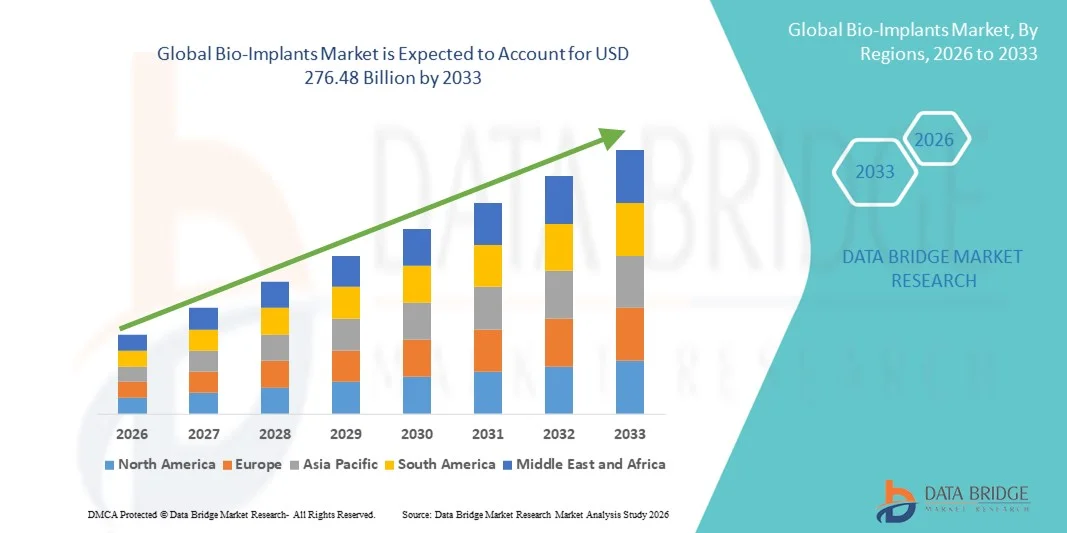
- Согласно анализу рынка Data Bridge Market Research, размер мирового рынка биоимплантатов был оценен как146,10 млрд долларов в 2025 годуОжидается, что он достигнет$276,48 млрд к 2033 году, вCAGR 8,30%в течение прогнозируемого периода
- Рост рынка в значительной степени подпитывается растущей распространенностью хронических заболеваний, растущим числом хирургических процедур и постоянными достижениями в области биоматериалов и технологий имплантации, что приводит к более широкому внедрению биоимплантатов в ортопедических, стоматологических, сердечно-сосудистых и косметических применениях. Быстрый прогресс в области 3D-печати, биорезорбируемых материалов и тканевой инженерии еще больше ускоряет инновации и расширяет клиническое использование биоимплантационных решений как на развитых, так и на развивающихся рынках здравоохранения.
- Кроме того, растущий спрос на минимально инвазивные процедуры, улучшенные результаты лечения пациентов и долговечные биосовместимые материалы делает биоимплантаты важнейшим компонентом современного медицинского лечения. Увеличение гериатрического населения, расширение инфраструктуры здравоохранения и увеличение инвестиций в исследования и разработки ускоряют освоение решений для биоимплантатов, тем самым значительно повышая общий рост отрасли.
Размер рынка и прогноз
- Глобальная рыночная стоимость (2025):146,10 млрд долларов
- Ожидаемая рыночная стоимость (2033):276,48 млрд долларов
- Прогноз CAGR (2026–2033): 8.30%
Каковы основные выводы рынка био-растений
- Биоимплантаты, предназначенные для замены, поддержки или улучшения биологических структур в организме человека, становятся все более важными компонентами современного здравоохранения в рамках ортопедических, стоматологических, сердечно-сосудистых, спинальных и косметических процедур из-за их высокой биосовместимости, долговечности и способности восстанавливать физиологические функции. Постоянные достижения в области биоматериалов, таких как титановые сплавы, керамика, полимеры и биорезорбируемые материалы, еще больше повышают безопасность имплантатов и долгосрочные характеристики.
- Растущий спрос на биоимплантаты в первую очередь подпитывается ростом распространенности дегенеративных заболеваний, увеличением частоты травм и ортопедических травм, расширением гериатрической популяции и растущим предпочтением минимально инвазивных хирургических процедур. Технологические инновации, включая 3D-печатные имплантаты, индивидуальную настройку пациента и улучшенные поверхностные покрытия, ускоряют принятие продукта и улучшают клинические результаты.
- Северная Америка доминировала на рынке биоимплантатов с самой большой долей доходов примерно 39,4% в 2025 году, характеризующейся передовой инфраструктурой здравоохранения, сильными структурами возмещения, высокими объемами хирургических процедур и присутствием ведущих производителей медицинских устройств. США продолжают наблюдать значительный рост ортопедических, стоматологических и спинальных имплантатов, что обусловлено технологическими инновациями и растущим спросом на операции по замене суставов.
- Ожидается, что Азиатско-Тихоокеанский регион станет самым быстрорастущим регионом на рынке биоимплантатов в течение прогнозируемого периода, прогнозируемого для регистрации CAGR примерно в 10,6%-11,4%, что обусловлено увеличением расходов на здравоохранение, расширением медицинского туризма, улучшением доступа к передовым хирургическим методам лечения и повышением осведомленности о методах лечения на основе имплантатов в развивающихся странах, таких как Китай и Индия.
- Сегмент хирургии доминировал с долей выручки 81,5% в 2025 году, что обусловлено необходимостью оперативных процедур для размещения имплантатов. Большинство ортопедических, сердечных, спинальных и зубных имплантатов требуют хирургического вмешательства.
Сфера охвата и сегментация рынка биозаводов
|
Атрибуты |
Био-имплантаты ключевые рыночные идеи |
|
Сегменты покрыты |
|
|
Страны, охваченные |
Северная Америка
Европа
Азиатско-Тихоокеанский регион
Ближний Восток и Африка
Южная Америка
|
|
Ключевые игроки рынка |
|
|
Рыночные возможности |
|
|
Информационные наборы данных с добавленной стоимостью |
В дополнение к информации о рыночных сценариях, таких как рыночная стоимость, темпы роста, сегментация, географическое покрытие и основные игроки, рыночные отчеты, курируемые Data Bridge Market Research, также включают углубленный экспертный анализ, эпидемиологию пациентов, анализ трубопроводов, анализ цен и нормативную базу. |
Каковы основные тенденции на рынке биозаводов
Инновации в биосовместимых, биоактивных и индивидуальных имплантационных решениях
- Выдающейся глобальной тенденцией на рынке биоимплантатов является постоянное продвижение высоко биосовместимых и биоактивных материалов, которые повышают долгосрочную производительность имплантатов и безопасность пациентов.
- Производители все больше сосредотачиваются на имплантатах, которые способствуют более быстрому заживлению, улучшению интеграции тканей и снижению воспалительной реакции.
- Использование передовых титановых сплавов, керамических композитов, биоматериалов на основе полимеров и биорезорбируемых имплантатов значительно трансформирует ортопедические, стоматологические, спинальные и сердечно-сосудистые процедуры.
- Например, Zimmer Biomet разработала передовые системы реконструкции суставов, предназначенные для улучшения долговечности имплантатов и поддержки естественного роста костей, снижая вероятность ревизионных операций. Такие технологические разработки укрепляют доверие хирургов и расширяют клиническое внедрение во всем мире.
- Кроме того, рост 3D-печати и настройка имплантата для конкретного пациента меняет хирургическое планирование. Индивидуальные имплантаты, разработанные с использованием цифровой визуализации и компьютерного моделирования, обеспечивают лучшую анатомическую форму, улучшенную функциональность и более короткие периоды восстановления.
- Растущий спрос на минимально инвазивные операции и более быстрые сроки реабилитации еще больше ускоряет переход к технологиям биоимплантата следующего поколения как на развитых, так и на развивающихся рынках.
Динамика рынка биоимплантатов
водитель
Увеличение бремени дегенеративных заболеваний и расширение хирургических объемов
- Растущая глобальная распространенность дегенеративных расстройств, травм и хронических заболеваний является основным фактором, стимулирующим рост рынка биоимплантатов. Возрастные заболевания, такие как остеоартрит, остеопороз, сердечно-сосудистые блокады и ухудшение состояния зубов, значительно увеличиваются из-за более длительной продолжительности жизни и сидячего образа жизни.
- Эта тенденция приводит к увеличению числа замен суставов, процедур фиксации позвоночника, операций по имплантации зубов и размещения сердечных имплантатов во всем мире.
- Например, данные Всемирной организации здравоохранения подчеркивают быстрый рост пожилого населения во всем мире, что напрямую коррелирует с повышенным спросом на ортопедические и сердечно-сосудистые имплантаты.
- По мере того, как системы здравоохранения расширяют свои хирургические возможности, объем вмешательства на основе имплантатов продолжает неуклонно расти.
- Кроме того, улучшение инфраструктуры здравоохранения в Азиатско-Тихоокеанском регионе и Латинской Америке, расширение охвата медицинским страхованием и повышение осведомленности о раннем хирургическом вмешательстве способствуют повышению уровня лечения.
- Технологические достижения, которые улучшают долговечность имплантатов и хирургическую точность, еще больше побуждают врачей и пациентов выбирать терапевтические решения на основе имплантатов.
Сдержанность/вызов
Высокие затраты на лечение, нормативные сложности и факторы риска
- Несмотря на высокий потенциал роста, мировой рынок биоимплантатов сталкивается с проблемами, связанными с высокими процедурными издержками и строгими нормативными требованиями.
- Операции по имплантации часто требуют специализированного оборудования, квалифицированных хирургов и расширенной реабилитации, что приводит к значительным расходам на лечение. Эти финансовые барьеры могут ограничивать доступность, особенно в странах с низким и средним уровнем дохода, где системы возмещения могут быть недостаточно развитыми.
- Например, сложные процедуры, такие как общие операции по замене тазобедренного или коленного сустава, могут включать значительные расходы на госпитализацию и имплантацию, ограничивая доступность для определенных групп пациентов. Такие экономические ограничения могут задержать выборочные процедуры имплантации на чувствительных к затратам рынках.
- Кроме того, потенциальные осложнения, такие как инфекция, ослабление имплантата, аллергические реакции или отказ устройства, представляют клинические риски. Регулирующие органы устанавливают строгие пути утверждения и требования к послепродажному надзору для обеспечения безопасности пациентов, что может продлить сроки разработки продукта и увеличить затраты на соблюдение требований для производителей.
- Решение этих проблем за счет экономически эффективного производства, повышения безопасности биоматериалов, обучения хирургов и улучшения согласования нормативных требований будет иметь решающее значение для поддержания долгосрочного расширения глобального рынка.
Как сегментируется рынок биозаводов
Рынок сегментирован на основе типа продукта, типа, материала, способа администрирования и конечного пользователя.
- Тип продукта
На основе типа продукта глобальный рынок биоимплантатов сегментирован на ортопедические и травматические устройства, дорожные устройства, стенты и связанные с ними имплантаты, спинальные имплантаты, офтальмологические имплантаты, структурные сердечные имплантаты, зубные имплантаты, имплантаты нейростимуляторов и протезы. Сегмент ортопедии и травматологии доминировал на рынке с самой большой долей доходов в 28,6% в 2025 году, что обусловлено ростом распространенности остеопороза, переломов и спортивных травм во всем мире. Увеличение гериатрической популяции и растущий спрос на процедуры замены суставов значительно способствуют росту сегмента. Технологические достижения в минимально инвазивных ортопедических операциях повышают показатели процедурного успеха и восстановления. Повышение осведомленности о раннем лечении опорно-двигательного аппарата поддерживает усыновление. Благоприятная политика возмещения в развитых странах усиливает проникновение на рынок. Расширение инфраструктуры здравоохранения в развивающихся странах еще больше ускоряет рост. Увеличение внедрения роботизированных операций повышает точность. Растущий медицинский туризм для ортопедических процедур увеличивает доходы. Постоянные инновации в долговечности имплантатов и биоматериалов улучшают результаты лечения пациентов. Рост числа дорожно-транспортных происшествий во всем мире стимулирует спрос на имплантаты. Увеличение клинических испытаний и процедурных рекомендаций еще больше укрепляют долю рынка.
Ожидается, что сегмент стоматологических имплантатов будет наблюдать самый быстрый CAGR в 9,8% с 2026 по 2033 год, что обусловлено ростом осведомленности о здоровье полости рта и растущим спросом на косметические стоматологические процедуры. Рост поддерживается стареющим населением и малоподвижными пациентами, требующими восстановительного лечения. Технологические достижения, включая 3D-визуализацию и размещение имплантатов с компьютерным управлением, повышают точность и результаты. Увеличение располагаемого дохода в странах с развивающейся экономикой поддерживает доступность. Расширение частных стоматологических клиник во всем мире ускоряет их внедрение. Рост медицинского туризма для экономически эффективных стоматологических процедур способствует быстрому росту. Непрерывные инновации в биоматериалах и конструкциях имплантатов улучшают долговечность и показатели успеха. Расширение доступа к стоматологическому страхованию в отдельных странах способствует расширению рынка. Минимально инвазивные методы имплантации сокращают время восстановления и улучшают комфорт пациента. Информационные кампании по уходу за полостью рта способствуют дальнейшему усыновлению. Расширение сотрудничества между производителями и стоматологическими ассоциациями способствует проникновению на рынок. Расширение исследований в регенеративной стоматологии способствует долгосрочному росту.
- По типу
По типу, глобальный рынок био-имплантатов сегментирован на Allograft, Autograft, Xenograft и Synthetic. Сегмент Autograft доминировал на рынке с долей выручки 34,2% в 2025 году, что объясняется его высокой биосовместимостью и минимальным риском иммунного отторжения. Аутотрансплантаты широко используются в ортопедических, спинальных и стоматологических процедурах из-за более высоких показателей клинического успеха. Более быстрое заживление и интеграция с тканью хозяина поддерживают процедурные предпочтения. Восходящая травма и спинальные операции во всем мире способствуют усыновлению. Повышение осведомленности хирургов о долгосрочных преимуществах повышает эффективность использования. Более низкий риск заражения по сравнению с другими типами трансплантатов усиливает клиническое признание. Технологические улучшения в сборе трансплантата еще больше повышают процессуальную эффективность. Растущее количество процедур реконструкции костей способствует росту доходов. Расширение хирургических возможностей в развивающихся регионах поддерживает доминирование сегмента. Непрерывные исследования жизнеспособности трансплантата улучшают результаты. Государственное финансирование в передовых хирургических центрах усиливает усыновление. Доступность высококачественных донорских материалов поддерживает глобальную долю рынка.
Ожидается, что в сегменте Synthetic самый быстрый CAGR составит 10,4% с 2026 по 2033 год, чему будет способствовать растущий спрос на готовые настраиваемые заменители трансплантата. Синтетические трансплантаты устраняют осложнения донорского сайта и сокращают время операции. Достижения в области биоматериалов, биоактивных и биорезорбируемых заменителей стимулируют инновации. Увеличение количества одобрений регулирующих органов и клинических проверок ускоряет коммерциализацию. Растущее предпочтение предсказуемому и последовательному качеству повышает признание рынка. Расширение ортопедических, стоматологических и спинальных процедур поддерживает усыновление. Непрерывные исследования и разработки в композитных полимерах и наноматериалах улучшают механические свойства. Растущий спрос на минимально инвазивные процедуры способствует росту. Растущая осведомленность о синтетических альтернативах среди хирургов еще больше стимулирует их. Наличие экономически эффективных синтетических трансплантатов на развивающихся рынках способствует расширению. Сотрудничество между производителями и больницами способствует их внедрению. Улучшение результатов лечения пациентов с помощью синтетических трансплантатов еще больше стимулирует рост.
- По материалам
На основе материала, глобальный рынок био-имплантатов сегментирован на биоматериал металла, сплава, полимера, керамики и акрилового гидрогеля. Сегмент биоматериальных металлов доминировал с долей выручки 39,7% в 2025 году из-за высокой прочности, долговечности и биосовместимости. Металлы, такие как титан и нержавеющая сталь, широко используются в ортопедических, стоматологических и спинальных имплантатах. Превосходная несущая способность делает металлы пригодными для замены суставов и фиксации травмы. Рост объемов операций по замене тазобедренного и коленного суставов во всем мире стимулирует спрос. Постоянные достижения в области коррозионной стойкости повышают долговечность имплантата. Сильный клинический послужной список и знакомство с хирургом поддерживают усыновление. Расширение инфраструктуры больниц во всем мире еще больше ускоряет их использование. Растущая распространенность дегенеративных расстройств костей способствует росту доходов. Улучшенные поверхностные покрытия и инновации в сплавах повышают производительность. Увеличение числа процедур, связанных с травмами и несчастными случаями, усиливает долю сегмента. Высокий уровень возмещения расходов в развитых странах способствует доминированию на рынке. Непрерывные инновации в металлах обеспечивают долгосрочный рост.
Сегмент Polymer, по прогнозам, станет свидетелем самого быстрого CAGR в 10,9% с 2026 по 2033 год, что обусловлено ростом использования легких и гибких имплантатов. Полимеры уменьшают помехи визуализации, что делает их пригодными для спинальных и сердечно-сосудистых имплантатов. Растущий спрос на биорезорбируемые и биоразлагаемые имплантаты стимулирует рост сегмента. Достижения в химии полимеров улучшают механическую прочность, долговечность и биосовместимость. Минимально инвазивные операции поддерживают более высокое внедрение полимерных имплантатов. Расширение нейростимулятора и сердечных процедур еще больше стимулирует рост рынка. Постоянные инвестиции в НИОКР в полимерные композиты повышают производительность. Комфорт пациента и снижение частоты осложнений способствуют предпочтениям хирурга. Наличие рентабельных полимерных имплантатов на развивающихся рынках способствует их внедрению. Сотрудничество с академическими учреждениями ускоряет материальные инновации. Растущая осведомленность о преимуществах полимеров усиливает долгосрочный рост. Проникновение рынка в Азиатско-Тихоокеанском регионе и Латинской Америке также способствует быстрому CAGR.
- По способу администрирования
На основе режима администрирования глобальный рынок биозаводов сегментирован на хирургический и нехирургический. Сегмент хирургии доминировал с долей выручки 81,5% в 2025 году, что обусловлено необходимостью оперативных процедур для размещения имплантатов. Большинство ортопедических, сердечных, спинальных и зубных имплантатов требуют хирургического вмешательства. Рост числа госпитализаций по поводу травм и хронических заболеваний способствует росту. Технологические достижения в роботизированных и минимально инвазивных операциях улучшают процедурные результаты. Увеличение числа квалифицированных хирургов во всем мире повышает доступность. Расширение инвестиций в здравоохранение на развивающихся рынках способствует процессуальному росту. Непрерывное развитие передовых хирургических инструментов усиливает принятие. Повышение осведомленности о лечении на основе имплантатов стимулирует спрос в больницах. Рост гериатрической популяции и распространенность хронических заболеваний поддерживают доминирование сегмента. Государственное финансирование в хирургической инфраструктуре еще больше увеличивает использование. Больницы остаются основными центрами усыновления из-за наличия опыта. Растущее предпочтение высокоточных процедур усиливает хирургическое внедрение имплантатов.
Ожидается, что сегмент Non-Surgical продемонстрирует самый быстрый CAGR в 8,7% с 2026 по 2033 год, что обусловлено инновациями в минимально инвазивном размещении имплантатов и процедурах с визуальным управлением. Растущее предпочтение пациентов амбулаторным процедурам с более коротким временем восстановления усиливает усыновление. Повышение осведомленности о нехирургических решениях в ортопедическом, стоматологическом и спинальном лечении ускоряет спрос. Технологические достижения в системах доставки на основе катетера и управляемых систем поддерживают рост рынка. Расширение амбулаторных учреждений по всему миру улучшает доступность. Сокращение госпитализации и снижение процедурных расходов приводят к усыновлению. Растущие нормативные разрешения на инновационные нехирургические имплантаты ускоряют коммерциализацию. Сотрудничество с частными сетями здравоохранения способствует быстрому внедрению. Удобство пациента и снижение риска осложнений еще больше укрепляют рост. Расширение в странах с развивающейся экономикой подпитывает высокий спрос. Принятие нехирургических имплантатов в косметических и стоматологических целях способствует CAGR. Непрерывные НИОКР в малоинвазивных решениях обеспечивают устойчивый рост сегмента.
- конечным пользователем
На базе конечного пользователя глобальный рынок биоимплантатов сегментирован на клиники, больницы и амбулаторные хирургические центры. Сегмент госпиталей доминировал с долей дохода 56,4% в 2025 году из-за большого объема пациентов и развитой хирургической инфраструктуры. Сложные процедуры для ортопедических, сердечных, спинальных и зубных имплантатов в основном проводятся в больницах. Наличие междисциплинарного опыта усиливает доминирование. Рост экстренной травмы и хирургического вмешательства также способствуют росту. Государственное финансирование здравоохранения и возмещение поддерживают процедурное расширение. Расширенные возможности визуализации, ICU и послеоперационного ухода повышают возможности лечения. Больницы остаются предпочтительными из-за доступа к высококвалифицированным хирургам. Растущее внедрение роботизированных и минимально инвазивных операций поддерживает лидерство в сегменте. Постоянные инновации в имплантируемых устройствах способствуют использованию больниц. Расширение инфраструктуры здравоохранения во всем мире ускоряет ее внедрение. Высокое доверие пациентов и восприятие безопасности способствуют дальнейшему росту. Больницы доминируют как в развитых, так и в развивающихся странах для имплантации.
Ожидается, что сегмент амбулаторных хирургических центров будет наблюдать самый быстрый CAGR в 9,5% с 2026 по 2033 год, что обусловлено растущим сдвигом в сторону амбулаторных хирургических процедур. Более низкие затраты по сравнению с больничными операциями повышают доступность и предпочтения пациентов. Растущее внедрение минимально инвазивных методов имплантации усиливает рост. Более короткое пребывание в больнице и более быстрое восстановление способствуют дальнейшему расширению сегмента. Расширение частных медицинских учреждений во всем мире увеличивает доступность. Благоприятные рамки возмещения на развитых рынках стимулируют принятие. Технологические инновации в процедурах имплантации на основе ASC ускоряют их внедрение. Удобство пациента и снижение риска заражения повышают привлекательность. Сотрудничество со специализированными клиниками способствует быстрому росту сегмента. Повышение осведомленности о амбулаторных вариантах подпитывает спрос. Увеличение ортопедических, стоматологических и сердечных амбулаторных процедур способствует CAGR. Расширение инфраструктуры АСК в странах с развивающейся экономикой способствует долгосрочному росту.
В каком регионе находится наибольшая доля рынка биозаводов
- Северная Америка доминировала на рынке биоимплантатов с самой большой долей доходов.39,4% в 2025 году, характеризующийся развитой инфраструктурой здравоохранения, сильными рамками возмещения, высокими объемами хирургических процедур и присутствием ведущих производителей медицинских устройств
- Регион выигрывает от раннего внедрения инновационных технологий имплантации, включая ортопедические, стоматологические и спинномозговые имплантаты. Больницы и специализированные клиники продолжают наблюдать значительный рост хирургических процедур из-за технологических достижений и растущего спроса на операции по замене суставов.
- Высокая осведомленность о минимально инвазивных процедурах поддерживает усыновление. Постоянные исследования и разработки в области биоматериалов и настройки имплантатов укрепляют рынок. Предпочтение пациентов предсказуемым хирургическим результатам и более быстрому восстановлению усиливает проникновение. Сильная клиническая подготовка и государственная политика еще больше усиливают рост. Расширенное хирургическое планирование и цифровая интеграция способствуют повышению эффективности. Рост гериатрического населения и связанных с образом жизни травм стимулирует спрос
Американский рынок биозаводов Insight
Рынок биоимплантатов США занял самую большую долю выручки2025 год в Северной АмерикеПодпитываемый растущим внедрением ортопедических, стоматологических и спинальных имплантатов, наряду с быстрыми технологическими инновациями. Больницы и амбулаторные хирургические центры являются ключевыми конечными пользователями, используя роботизированные и минимально инвазивные процедуры. Растущее гериатрическое население, рост случаев травматизма и спрос на операции по замене суставов стимулируют рынок. Продвинутые материалы, включая биорезорбируемые полимеры и индивидуальные имплантаты, улучшают хирургические результаты. Благоприятная политика возмещения поддерживает доступ пациентов. Частные клиники и амбулаторные центры расширяются, повышая доступность. Текущие программы исследований и разработок укрепляют портфель продуктов. Осведомленность хирургов и пациентов об инновационных процедурах способствует их внедрению. Правительственные инициативы по модернизации здравоохранения еще больше стимулируют рост. Клинические доказательства улучшения выздоровления и уменьшения осложнений поощряют использование. Стратегические партнерские отношения между больницами и производителями обеспечивают надежное снабжение.
Европейское исследование рынка биозаводов
Европейский рынок биоимплантатов, по прогнозам, будет расширяться при существенном CAGR в течение прогнозируемого периода, в основном за счет установленных систем здравоохранения, жестких нормативных рамок и растущих объемов хирургических операций. Больницы, частные клиники и многопрофильные центры остаются ключевыми конечными пользователями. Европейские потребители ценят передовые хирургические процедуры, минимально инвазивные методы и предсказуемые клинические результаты. Урбанизация и инвестиции в инфраструктуру здравоохранения ускоряют проникновение на рынок. Технологические инновации, в том числе роботизированные операции и 3D-печатные имплантаты, повышают эффективность процедур. Увеличение заболеваний опорно-двигательного аппарата и гериатрической популяции стимулирует спрос. Расширение частных больниц и многосемейные системы здравоохранения улучшают доступность. Повышение осведомленности о полимерных и синтетических имплантатах способствует их внедрению. Государственное финансирование и инициативы в области здравоохранения способствуют инновациям. Трансграничное здравоохранение и медицинский туризм также способствуют росту. Непрерывное развитие продукции повышает конкурентоспособность.
Британский рынок био-имплантатов
Ожидается, что в течение прогнозируемого периода рынок биоимплантатов в Великобритании будет расти с заметным CAGR, что обусловлено растущим спросом на минимально инвазивные ортопедические и стоматологические процедуры. Больницы и амбулаторные центры остаются основными конечными пользователями. Растущее гериатрическое население и растущая осведомленность о передовых хирургических методах лечения ускоряют принятие. Частные клиники и медицинский туризм расширяют доступ к терапии на основе имплантатов. Продвинутые материалы, биорезорбируемые имплантаты и решения на основе полимеров укрепляют процедурные результаты. Государственные механизмы возмещения поддерживают коммерциализацию. Расширение инфраструктуры электронной коммерции и розничной торговли обеспечивает лучшую доступность продукта. Предпочтение хирургов точным имплантатам и предсказуемым результатам способствует росту. Интеграция роботизированных операций повышает эффективность. Восходящие ортопедические, спинальные и стоматологические процедуры способствуют усыновлению. Непрерывное клиническое обучение способствует процессуальному успеху. Спрос пациентов на более быстрое восстановление способствует поглощению.
Немецкое исследование рынка биозаводов
Ожидается, что в течение прогнозируемого периода рынок биоимплантатов в Германии будет расширяться на значительном CAGR, чему будет способствовать сильная инфраструктура здравоохранения, акцент на инновации и повышение осведомленности о передовых технологиях имплантации. Больницы, многопрофильные центры и амбулаторные клиники являются ключевыми конечными пользователями. Высокие хирургические объемы в ортопедических, спинальных и стоматологических процедурах приносят доход. Технологическая интеграция, включая роботизированные процедуры и 3D-печатные имплантаты, повышает точность и результаты. Рост гериатрического населения и травм, связанных с образом жизни, поддерживают рост рынка. Сильные правительственные инициативы по модернизации здравоохранения и устойчивости способствуют принятию. Пациенты все чаще предпочитают биорезорбируемые и синтетические имплантаты. Частные больницы и клиники расширяют доступ к передовым хирургическим решениям. Клинические доказательства улучшения выздоровления способствуют усыновлению. Непрерывные исследования и разработки укрепляют портфель продуктов. Наличие рентабельного отечественного производства обеспечивает надежность поставок.
Азиатско-Тихоокеанский рынок био-имплантатов
Азиатско-тихоокеанский рынок биоимплантатов будет расти с самым быстрым CAGR.10,6% - 11,4% с 2026 по 2033 годЭто обусловлено увеличением расходов на здравоохранение, расширением медицинского туризма, улучшением доступа к передовым хирургическим методам лечения и повышением осведомленности о методах лечения на основе имплантатов в развивающихся странах, таких как Китай и Индия. Рост хирургических объемов в ортопедических, стоматологических и спинальных процедурах поддерживает рост. Расширение частных больниц и специализированных клиник ускоряет их внедрение. Урбанизация, рост располагаемого дохода и осведомленность о минимально инвазивных процедурах способствуют проникновению на рынок. Государственные инвестиции в модернизацию больниц подпитывают спрос. Больницы и амбулаторные центры остаются основными конечными пользователями. Технологические инновации, включая роботизированные и 3D-печатные имплантаты, улучшают результаты. Предпочтение пациента индивидуальным имплантатам увеличивает поглощение. Рост гериатрического населения и связанные с образом жизни травмы приводят к усыновлению. Осведомленность о биорезорбируемых и полимерных имплантатах способствует принятию. Отечественное производство в Китае и Индии обеспечивает доступность продукции. Медицинский туризм способствует росту региональных доходов.
Японский рынок биозаводов
Японский рынок биоимплантатов набирает обороты благодаря высокотехнологичной хирургической инфраструктуре страны, старению населения и принятию минимально инвазивных процедур. Больницы и клиники являются основными конечными пользователями. Растущий спрос на ортопедические, стоматологические и спинномозговые имплантаты поддерживает расширение рынка. Роботизированные операции и передовая визуализация повышают хирургическую точность. Осведомленность о полимерных, синтетических и биорезорбируемых имплантатах способствует внедрению. Государственные механизмы возмещения улучшают доступ пациентов. Амбулаторные и частные хирургические центры увеличивают доступность. Предпочтение хирургов надежным имплантатам усиливает поглощение. Рост гериатрического населения подпитывает спрос на предсказуемые результаты. Клинические данные подтверждают увеличение усыновления. Расширение отечественного производства повышает доступность. Непрерывные научно-исследовательские и учебные программы способствуют инновациям. Технологическая интеграция и осведомленность пациентов поддерживают рост.
Китайский рынок биозаводов
На китайский рынок биоимплантатов приходится наибольшая доля доходов в Азиатско-Тихоокеанском регионе.22,8% в 2025 годуЭто связано с высокими хирургическими объемами, быстрой урбанизацией, расширением инфраструктуры здравоохранения и сильными отечественными производственными возможностями. Больницы, многопрофильные центры и амбулаторные учреждения являются ключевыми конечными пользователями. Повышение осведомленности об ортопедических, спинальных и стоматологических имплантационных процедурах способствует принятию. Спрос на минимально инвазивные процедуры и передовые материалы ускоряет поглощение. Государственные инвестиции в модернизацию больниц способствуют росту рынка. Медицинский туризм способствует увеличению хирургических объемов. Технологическое внедрение, включая роботизированные операции и 3D-печать, улучшает результаты. Пациенты предпочитают биорезорбируемые и синтетические полимерные имплантаты. Расширение частных больниц улучшает доступность. Рост располагаемых доходов обеспечивает доступность. Постоянное клиническое обучение и НИОКР укрепляют портфель продуктов. Интеграция цифрового хирургического планирования поддерживает рост и увеличивает долю доходов.
Какие компании являются ведущими на рынке био-растений
Индустрия Bio-Implants в основном возглавляется хорошо зарекомендовавшими себя компаниями, в том числе:
- Stryker Corporation (США)
- Zimmer Biomet Holdings, Inc. (США)
- Johnson & Johnson (США)
- Medtronic (Ирландия)
- B. Braun S.E. (Германия)
- Smith & Nephew plc (Великобритания)
- Бостонская научная корпорация (США)
- Abbott Laboratories (США)
- NuVasive, Inc. (США)
- Globus Medical, Inc. (США)
- Arthrex, Inc. (США)
- Medicover AB (Швеция)
- LivaNova PLC (Великобритания)
- Biosensors International Group (Сингапур)
- LimaCorporate S.p.A. (Италия)
- Nuvo Group, Inc. (США)
- Orthofix Medical Inc. (США)
- Integra LifeSciences Holdings Corporation (США)
- Arjo AB (Швеция)
- Bauerfeind AG (Германия)
Каковы последние тенденции на рынке биоматериалов
- В декабре 2021 года Envista Holdings Corporation получила одобрение FDA на свою систему имплантатов Nobel Biocare N1, зубной имплантат следующего поколения, предназначенный для повышения стабильности и долгосрочной остеоинтеграции путем включения биологически управляемых компонентов имплантатов, что представляет собой значительный прогресс в решениях для зубных биоимплантатов.
- В октябре 2023 года Smith+ Nephew запустила биоиндуктивный имплантат REGENETEN на японском рынке, предназначенный для содействия заживлению ротаторной манжеты путем стимулирования регенерации сухожилий, расширяя доступ к передовой технологии биоимплантата мягких тканей в Азиатско-Тихоокеанском регионе.
- В марте 2024 года Zimmer Biomet заключила соглашение о приобретении OSSIS, компании, специализирующейся на изготовлении 3D-печатных ортопедических имплантатов для сложных реконструктивных процедур, укрепив персонализированный портфель биоимплантатов Zimmer Biomet и возможности в специализированных решениях для совместной реконструкции.
- В июле 2024 года Химед и Литоз заключили соглашение о партнерстве в области исследований материалов для разработки нового биокерамического сырья путем интеграции фосфата кальция Химеда (CaP) с керамическим связующим литоза для использования в современной 3D-печати. Это сотрудничество направлено на повышение производительности и диапазона применения биокерамических имплантатов за счет улучшения производственных материалов.
- В ноябре 2024 года Zimmer Biomet Holdings, Inc. получила одобрение FDA для своего оксфордского бесцементного частичного имплантата коленного сустава, нового ортопедического биоимплантата, предназначенного для долгосрочной эффективности и улучшения результатов лечения пациентов, сигнализируя о продолжающихся инновациях в ортопедических технологиях биоимплантата.
- В январе 2025 года ООО «БиоПоли» объявило о первом в истории использовании своего радиального имплантата BioPoly в хирургии локтя, что стало важной вехой в клиническом принятии передовых ортопедических биоимплантатов на основе полимеров и расширении вариантов лечения сложных травм суставов.
- В марте 2025 года RevBio, Inc. получила одобрение регулирующих органов в нескольких европейских странах для начала клинических испытаний своего продукта стабилизации зубных имплантатов, продвигая следующий этап основанных на фактических данных инноваций в области биоимплантатов в стоматологических приложениях.
- В июне 2025 года CollPlant Biotechnologies объявила об успешной 3D-биопечати грудных имплантатов коммерческого размера с использованием запатентованных рекомбинантных биоинков человеческого коллагена (rhCollagen), представляющих собой крупный прорыв в устойчивой технологии имплантации без животных и крупномасштабном производстве клинического класса.
SKU-
Получите онлайн-доступ к отчету на первой в мире облачной платформе рыночной аналитики

- Интерактивная панель анализа данных
- Панель анализа компании для возможностей с высоким потенциалом роста
- Доступ аналитика-исследователя для настройки и запросов
- Анализ конкурентов с помощью интерактивной панели
- Последние новости, обновления и анализ тенденций
- Используйте возможности сравнительного анализа для комплексного отслеживания конкурентов
Методология исследования
Сбор данных и анализ базового года выполняются с использованием модулей сбора данных с большими размерами выборки. Этап включает получение рыночной информации или связанных данных из различных источников и стратегий. Он включает изучение и планирование всех данных, полученных из прошлого заранее. Он также охватывает изучение несоответствий информации, наблюдаемых в различных источниках информации. Рыночные данные анализируются и оцениваются с использованием статистических и последовательных моделей рынка. Кроме того, анализ доли рынка и анализ ключевых тенденций являются основными факторами успеха в отчете о рынке. Чтобы узнать больше, пожалуйста, запросите звонок аналитика или оставьте свой запрос.
Ключевой методологией исследования, используемой исследовательской группой DBMR, является триангуляция данных, которая включает в себя интеллектуальный анализ данных, анализ влияния переменных данных на рынок и первичную (отраслевую экспертную) проверку. Модели данных включают сетку позиционирования поставщиков, анализ временной линии рынка, обзор рынка и руководство, сетку позиционирования компании, патентный анализ, анализ цен, анализ доли рынка компании, стандарты измерения, глобальный и региональный анализ и анализ доли поставщика. Чтобы узнать больше о методологии исследования, отправьте запрос, чтобы поговорить с нашими отраслевыми экспертами.
Доступна настройка
Data Bridge Market Research является лидером в области передовых формативных исследований. Мы гордимся тем, что предоставляем нашим существующим и новым клиентам данные и анализ, которые соответствуют и подходят их целям. Отчет можно настроить, включив в него анализ ценовых тенденций целевых брендов, понимание рынка для дополнительных стран (запросите список стран), данные о результатах клинических испытаний, обзор литературы, обновленный анализ рынка и продуктовой базы. Анализ рынка целевых конкурентов можно проанализировать от анализа на основе технологий до стратегий портфеля рынка. Мы можем добавить столько конкурентов, о которых вам нужны данные в нужном вам формате и стиле данных. Наша команда аналитиков также может предоставить вам данные в сырых файлах Excel, сводных таблицах (книга фактов) или помочь вам в создании презентаций из наборов данных, доступных в отчете.











