


Global Capecitabine Market Segmentation, By Indication (Colorectal Cancer, Breast Cancer, and Others), Drug Type (Branded and Generic), End-Users (Hospitals, Homecare, Speciality Centres, and Others), Distribution Channel (Hospital Pharmacy, Online Pharmacy, and Retail Pharmacy) - Industry Trends and Forecast to 2033
Каков размер рынка капецитабина и темпы роста
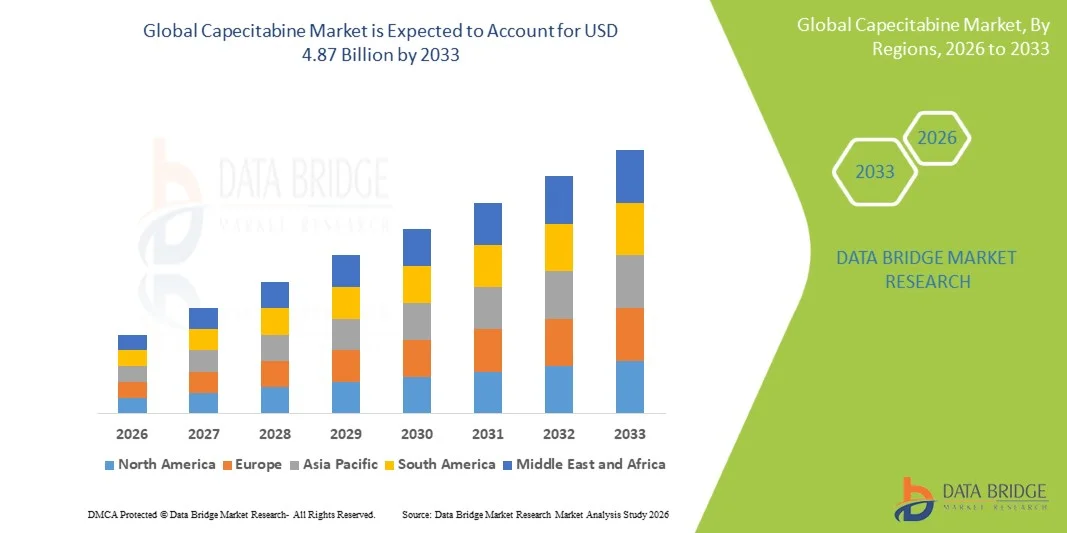
- Согласно анализу Data Bridge Market Research, размер мирового рынка капецитабина был оценен в два раза.2,43 млрд долларов в 2025 годуОжидается, что он достигнет4,87 млрд долларов к 2033 году, вCAGR 9.10%в течение прогнозируемого периода
- Рост рынка в первую очередь обусловлен растущими достижениями в онкологии и расширением использования пероральных химиотерапевтических средств, таких как капецитабин, поддерживаемых непрерывными инновациями в подходах к лечению рака и системах доставки лекарств.
- Кроме того, растущая глобальная распространенность рака и растущее предпочтение эффективных, удобных для пациентов и домашних вариантов химиотерапии усиливают принятие капецитабина, тем самым значительно способствуя общему росту рынка капецитабина.
Размер рынка и прогноз
- Глобальная рыночная стоимость (2025):$2,43 млрд.
- Ожидаемая рыночная стоимость (2033):$4,87 млрд.
- Прогноз CAGR (2026-2033):9.10%
Каковы основные выводы рынка капецитабина
- Рынок Capecitabine демонстрирует сильный рост, обусловленный растущим глобальным бременем рака, особенно колоректального рака и рака молочной железы, а также растущим внедрением пероральных химиотерапевтических агентов, которые улучшают удобство пациентов и приверженность лечению.
- Кроме того, достижения в области онкологических исследований, расширение доступа к лечению рака и растущее предпочтение целевых и удобных для пациентов вариантов химиотерапии ускоряют спрос на капецитабин, тем самым поддерживая общее расширение рынка.
- Северная Америка доминировала на рынке капецитабина с самой большой долей дохода в 40,00% в 2025 году, что обусловлено высокой распространенностью рака, сильной инфраструктурой здравоохранения, ранним внедрением передовых методов лечения онкологии и присутствием крупных фармацевтических компаний.
- Ожидается, что Азиатско-Тихоокеанский регион станет самым быстрорастущим регионом на рынке Capecitabine в течение прогнозируемого периода, чему будет способствовать рост заболеваемости раком, улучшение инфраструктуры здравоохранения, увеличение расходов на здравоохранение и расширение доступа к недорогим лекарствам для онкологии.
- Сегмент дженериков доминировал на рынке с долей выручки 63,7% в 2025 году, что обусловлено широкой доступностью недорогих альтернатив после истечения срока действия патента.
Сфера охвата и сегментация рынка капецитабина
|
Атрибуты |
Capecitabine Key Market |
|
Сегменты покрыты |
|
|
Страны, охваченные |
Северная Америка
Европа
Азиатско-Тихоокеанский регион
Ближний Восток и Африка
Южная Америка
|
|
Ключевые игроки рынка |
|
|
Рыночные возможности |
|
|
Информационные наборы данных с добавленной стоимостью |
В дополнение к информации о рыночных сценариях, таких как рыночная стоимость, темпы роста, сегментация, географическое покрытие и основные игроки, рыночные отчеты, курируемые Data Bridge Market Research, также включают углубленный экспертный анализ, эпидемиологию пациентов, анализ трубопроводов, анализ цен и нормативную базу. |
Каковы основные тенденции на рынке капецитабина
"Достижения в области оральной химиотерапии и прецизионной онкологии"
- Значительной и ускоряющейся тенденцией на мировом рынке капецитабина является растущее внедрение схем пероральной химиотерапии и подходов к лечению на основе точной онкологии.
- Капецитабин, пероральный пролекарство 5-фторурацила, широко используется в лечении различных видов рака, включая колоректальный, рак молочной железы и рака желудка, благодаря его улучшенному удобству пациента и профилю эффективности.
- Переход от внутривенной химиотерапии к пероральным противоопухолевым препаратам повышает соответствие пациентов и позволяет управлять амбулаторным раком
- Например, Капецитабин все чаще используется в комбинированной терапии и адъювантных схемах лечения для улучшения результатов выживаемости у больных раком.
- Достижения в терапии, основанной на биомаркерах, поддерживают более персонализированные стратегии лечения, оптимизируя реакцию на лекарства и минимизируя токсичность.
- Кроме того, продолжающиеся клинические исследования расширяют применение Капецитабина по нескольким онкологическим показаниям.
- Это растущее внимание к пациентоориентированной целевой терапии рака значительно формирует эволюцию рынка капецитабина.
Динамика рынка капецитабина
водитель
«Растущее глобальное бремя рака и растущее принятие химиотерапевтических методов лечения»
- Растущая глобальная заболеваемость раком является основным драйвером для рынка капецитабина.
- Растущая распространенность колоректального рака, рака молочной железы и желудка значительно увеличивает спрос на эффективные химиотерапевтические препараты.
- Растущее стареющее население также способствует повышению заболеваемости раком во всем мире.
- Капецитабин широко предпочтителен из-за его пути перорального введения, улучшения соответствия пациентов и эффективности как на ранней, так и на продвинутой стадии лечения рака.
- Расширение доступа к онкологической помощи и химиотерапии в развивающихся регионах способствует дальнейшему росту рынка.
- Например, увеличение использования комбинированных схем химиотерапии в больницах и центрах лечения рака способствует принятию препарата Капецитабин.
- Растущие расходы на здравоохранение и улучшенные показатели диагностики позволяют ранее выявлять и лечить рак.
Сдержанность/вызов
"Побочные эффекты и лекарственная устойчивость, связанные с химиотерапией"
- Одной из ключевых проблем на рынке капецитабина является возникновение значительных побочных эффектов, включая желудочно-кишечную токсичность, синдром стопы и гематологические осложнения.
- Эти побочные эффекты часто требуют коррекции дозы или прекращения лечения, ограничивая оптимальные терапевтические результаты.
- Развитие хеморезистентности у некоторых пациентов снижает эффективность долгосрочного лечения
- Вариабельность реакции пациента из-за генетических и метаболических различий еще больше усложняет стандартизацию лечения.
- Кроме того, высокая стоимость лечения рака может ограничить доступность в странах с низким и средним уровнем дохода.
- Строгие нормативные требования и обширные процессы клинических испытаний также задерживают внедрение новых рецептур и комбинированных методов лечения.
- Решение этих проблем с помощью улучшенной поддерживающей терапии, персонализированных стратегий дозирования и новых комбинаций лекарств будет иметь решающее значение для расширения рынка.
Как сегментируется рынок капецитабина
Рынок сегментирован на основе индикации, типа препарата, конечных пользователей и канала распространения.
• По показаниям
На основании показаний рынок капецитабина сегментирован на колоректальный рак, рак молочной железы и другие. Сегмент колоректального рака доминировал на крупнейшей доле рынка в 48,9% в 2025 году, что обусловлено высокой глобальной распространенностью колоректальных злокачественных новообразований и сильной клинической эффективностью капецитабина как варианта химиотерапии первой линии и адъюванта. Растущие показатели заболеваемости, связанные с изменениями образа жизни, старением населения и диетическими привычками, еще больше поддерживают рост сегмента. Капецитабин широко предпочтителен в протоколах лечения колоректального рака из-за его перорального введения и доказанной эффективности в контроле опухоли. Растущие программы информирования и инициативы по раннему скринингу рака также способствуют повышению показателей диагностики. Кроме того, сильное внедрение как в развитых, так и в новых системах здравоохранения поддерживает дальнейшее доминирование. Медицинские работники отдают предпочтение капецитабину за его улучшенное соответствие пациенту по сравнению с внутривенными альтернативами химиотерапии.
Ожидается, что сегмент рака молочной железы будет наблюдать самый быстрый CAGR в 9,4% с 2026 по 2033 год, что обусловлено растущим глобальным бременем рака молочной железы и расширением использования капецитабина в метастатическом и продвинутом лечении. Растущая осведомленность, программы раннего выявления и улучшенная диагностическая инфраструктура значительно увеличивают показатели лечения. Капецитабин все чаще используется в комбинированной терапии, повышая его клиническую значимость. Растущее принятие вариантов пероральной химиотерапии улучшает удобство и приверженность пациента. Достижения в области онкологических исследований и персонализированных подходов к медицине еще больше повышают спрос. Расширение доступа к здравоохранению в странах с развивающейся экономикой также способствует росту рынка. Ожидается, что этот сегмент будет неуклонно расти, поскольку руководящие принципы лечения все чаще включают пероральные химиотерапевтические средства.
• По типу наркотиков
Исходя из типа препарата, рынок капецитабина сегментирован на фирменные и родовые составы. Сегмент дженериков доминировал на рынке с долей выручки 63,7% в 2025 году, что обусловлено широкой доступностью недорогих альтернатив после истечения срока действия патента. Дженерик капецитабин обладает той же терапевтической эффективностью, что и фирменные версии, по значительно сниженным ценам, что делает его очень доступным как в развитых, так и в развивающихся регионах. Увеличение спроса на экономически эффективные методы лечения рака является основным фактором, поддерживающим доминирование сегмента. Системы здравоохранения и страховые компании также предпочитают дженерики для снижения общих расходов на лечение. Сильные производственные возможности дженериковых фармацевтических компаний дополнительно поддерживают доступность поставок. Кроме того, рост заболеваемости раком во всем мире продолжает стимулировать устойчивый спрос на доступные варианты лечения.
Ожидается, что в сегменте брендов самый быстрый CAGR составит 8,8% с 2026 по 2033 год, что обусловлено постоянным доверием к оригинальным препаратам и постоянными инновациями в продуктах ведущих фармацевтических компаний. Брендированные препараты часто предпочитаются в медицинских учреждениях премиум-класса из-за более высокой гарантии качества и сильной клинической проверки. Увеличение внедрения на развитых рынках с более высокими расходами на здравоохранение поддерживает рост. Фармацевтические компании инвестируют в улучшенные составы и комбинированную терапию для повышения эффективности. Кроме того, спросу способствуют сильные маркетинговые стратегии и предпочтения врачей в определенных случаях. Ожидается, что этот сегмент будет неуклонно расширяться по мере развития протоколов лечения онкологии.
• Конечными пользователями
На базе конечных пользователей рынок Capecitabine сегментирован на больницы, домашнюю помощь, специализированные центры и другие. Сегмент больниц доминировал на рынке с долей выручки 52,6% в 2025 году, поскольку больницы остаются основными центрами диагностики рака, химиотерапии и мониторинга пациентов. Они обеспечивают доступ к специалистам по онкологии, передовым диагностическим средствам и комплексной лечебной инфраструктуре. Капецитабин часто назначается в больничных условиях как для стационарной, так и для амбулаторной терапии рака. Увеличение числа случаев госпитализации по поводу рака и государственное финансирование здравоохранения еще больше укрепляют доминирование сегмента. Больницы также играют ключевую роль в администрировании комбинированной терапии и планировании лечения. Кроме того, высокий уровень возмещения расходов в развитых регионах способствует увеличению притока пациентов.
Ожидается, что сегмент домашнего ухода будет наблюдать самый быстрый CAGR в 9,6% с 2026 по 2033 год, что обусловлено растущим предпочтением пероральной химиотерапии и лечения рака на дому. Пероральный состав Капецитабина делает его очень подходящим для домашнего лечения под медицинским наблюдением. Растущее внедрение телеонкологии и дистанционного мониторинга пациентов также поддерживает эту тенденцию. Пациенты все чаще предпочитают уход на дому из-за сокращения посещений больниц и улучшения качества жизни. Растущая осведомленность о самоуправляемой химиотерапии также повышает спрос. Расширение инфраструктуры здравоохранения и вспомогательных услуг по уходу на дому способствуют росту сегмента. Ожидается, что этот сегмент будет сильно расти по мере того, как лечение рака будет смещаться в сторону моделей лечения, ориентированных на пациента.
• Распределительный канал
На основе канала дистрибуции рынок Capecitabine сегментирован в больничную аптеку, онлайн-аптеку и розничную аптеку. Сегмент больничных аптек доминировал на рынке с долей выручки 49,1% в 2025 году, чему способствовал высокий объем диспансеризации онкологических препаратов в больницах. Госпитальные аптеки обеспечивают немедленную доступность химиотерапевтических препаратов для стационарного и амбулаторного лечения рака. Сильная интеграция с протоколами лечения в больницах и онкологическими отделениями поддерживает это доминирование. Системы государственных закупок и институциональные закупки еще больше укрепляют цепочки поставок. Кроме того, больницы остаются основной точкой доступа для диагностики и начала лечения рака.
Ожидается, что в сегменте онлайн-аптек будет наблюдаться самый быстрый CAGR в 11,3% с 2026 по 2033 год, что обусловлено быстрой цифровизацией здравоохранения и растущим спросом на удобный доступ к лекарствам. Онлайн-платформы предлагают домашнюю доставку рецептурных онкологических препаратов, повышая доступность для долгосрочных пациентов. Растущее проникновение интернета и использование смартфонов являются ключевыми факторами роста. Кроме того, растущее принятие электронных рецептов поддерживает расширение цифровой аптеки. Постпандемические поведенческие сдвиги в сторону онлайн-услуг в области здравоохранения сохраняют динамику. Улучшенная логистика, нормативно-правовая база и предпочтение пациента удобству еще больше ускоряют рост. Ожидается, что этот сегмент значительно расширится по мере развития экосистем цифрового здравоохранения.
В каком регионе находится наибольшая доля рынка капецитабина
- Северная Америка доминировала на рынке капецитабина с самой большой долей дохода в 40,00% в 2025 году, что обусловлено высокой распространенностью рака, сильной инфраструктурой здравоохранения, ранним внедрением передовых методов лечения онкологии и присутствием крупных фармацевтических компаний.
- Регион также выигрывает от передовых программ скрининга рака, широкой доступности химиотерапевтических препаратов и сильных систем возмещения, которые улучшают доступ пациентов к лечению. Кроме того, широкое внедрение комбинированных схем химиотерапии и увеличение использования пероральной противораковой терапии в амбулаторных условиях еще больше поддерживают рост рынка.
- Непрерывные клинические исследования и сильная фармацевтическая инновационная экосистема еще больше укрепляют региональное доминирование. Потребители в регионе в значительной степени выигрывают от хорошо зарекомендовавших себя систем онкологического ухода, усовершенствованных протоколов лечения и улучшенного доступа к фирменным и непатентованным химиотерапевтическим препаратам. Наличие специализированных онкологических больниц, повышение осведомленности о ранней диагностике рака и растущее предпочтение дружественных пациентам вариантов пероральной химиотерапии способствуют улучшению результатов лечения и более широкому внедрению схем на основе капецитабина.
Американский рынок Capecitabine Insight
Рынок капецитабина в США занял самую большую долю доходов в Северной Америке в 2025 году, чему способствовали высокие показатели заболеваемости раком, развитая инфраструктура здравоохранения и быстрое внедрение инновационных методов лечения онкологии. Страна выигрывает от сильной фармацевтической научно-исследовательской деятельности, ранней доступности новых протоколов лечения рака и обширных сетей клинических испытаний. Кроме того, высокие расходы на здравоохранение и сильное страховое покрытие обеспечивают широкий доступ пациентов к химиотерапии на основе капецитабина. Расширение использования комбинированной терапии для лечения колоректального рака и рака молочной железы еще больше стимулирует спрос в стране.
Европейский рынок капецитабина
Европейский рынок капецитабина, по прогнозам, будет расширяться при существенном CAGR в течение прогнозируемого периода, что обусловлено ростом бремени рака, хорошо зарекомендовавшими себя системами здравоохранения и сильным вниманием правительства к программам лечения рака. Регион пользуется всеобщим охватом услугами здравоохранения во многих странах, обеспечивая более широкий доступ к химиотерапии. Растущее внедрение непатентованных онкологических препаратов наряду с сильной нормативной поддержкой доступности лечения рака еще больше стимулирует рост рынка. Кроме того, растущий акцент на ранней диагностике и стандартизированных протоколах лечения рака в европейских системах здравоохранения поддерживает спрос на капецитабин.
Великобритания Capecitabine Market Insight
Ожидается, что рынок капецитабина в Великобритании будет расти на стабильном уровне CAGR в течение прогнозируемого периода, что обусловлено увеличением распространенности рака, сильной инфраструктурой общественного здравоохранения и растущим внедрением стандартизированных путей лечения онкологии. Национальная служба здравоохранения играет ключевую роль в обеспечении доступа к химиотерапевтическим препаратам, поддерживая постоянный спрос на капецитабин. Растущее внимание к раннему выявлению рака и расширению использования пероральной химиотерапии в амбулаторной помощи также способствуют росту рынка.
Германия Capecitabine Market Insight
Ожидается, что в течение прогнозируемого периода рынок капецитабина в Германии будет расширяться при значительном CAGR, чему будет способствовать сильная инфраструктура здравоохранения, высокая осведомленность о вариантах лечения рака и передовые системы больниц. Акцент Германии на основанных на фактических данных протоколах лечения онкологии и растущее использование непатентованных химиотерапевтических препаратов являются ключевыми факторами роста. Кроме того, растущие инвестиции в исследования рака и сильные возможности фармацевтического производства еще больше укрепляют развитие рынка.
Азиатско-Тихоокеанский рынок кофеина
Ожидается, что Азиатско-Тихоокеанский рынок капецитабина станет самым быстрорастущим регионом в течение прогнозируемого периода, чему будет способствовать рост заболеваемости раком, улучшение инфраструктуры здравоохранения, увеличение расходов на здравоохранение и расширение доступа к недорогим лекарствам для онкологии. Быстрая урбанизация, растущая осведомленность о ранней диагностике рака и расширение больничных сетей способствуют дальнейшему росту рынка. Кроме того, растущее проникновение отечественных фармацевтических производителей улучшает доступность и доступность капецитабина в странах с развивающейся экономикой.
Японский рынок капецитабина
Японский рынок капецитабина набирает обороты благодаря старению населения, высокой распространенности рака и развитой системе здравоохранения. Сильное внимание к ранней диагностике и точной медицине увеличивает использование капецитабина в схемах лечения онкологии. Хорошо развитая больничная инфраструктура страны и интеграция современных протоколов химиотерапии способствуют дальнейшему росту рынка.
Китайский рынок капецитабина
Китайский рынок капецитабина составил самую большую долю доходов в Азиатско-Тихоокеанском регионе в 2025 году, чему способствовало большое количество пациентов, растущее бремя рака, быстрая урбанизация и сильное расширение инфраструктуры здравоохранения. Правительственные инициативы по улучшению доступности лечения рака и укреплению отечественного фармацевтического производства еще больше способствуют росту рынка. Увеличение доступности доступных препаратов для онкологии также значительно способствует внедрению лечения в больницах и онкологических центрах.
Какие компании находятся на рынке Capecitabine
Индустрию Capecitabine в основном возглавляют хорошо зарекомендовавшие себя компании, в том числе:
- Рош (Швейцария)
- Фармацевтическая промышленность Тева(Израиль)
- Sun Pharmaceutical Industries(Индия)
- Ципла (Индия)
- Лаборатории доктора Редди(Индия)
- Виатрис (США)
- Сандоз (Швейцария)
- Pfizer(США)
- Фресений Каби(Германия)
- Hikma Pharmaceuticals (Великобритания)
- Apotex (Канада)
- Zydus Lifesciences (Индия)
- Ауробиндо Фарма (Индия)
- Lupin Pharmaceuticals (Индия)
- Accord Healthcare (Великобритания)
- Glenmark Pharmaceuticals (Индия)
- Intas Pharmaceuticals (Индия)
- Sun Pharma Global (Индия)
- Natco Pharma (Индия)
- Torrent Pharmaceuticals (Индия)
Каковы последние события на мировом рынке капецитабина
- В декабре 2022 года Управление по контролю за продуктами и лекарствами США одобрило обновленную маркировку лекарств для таблеток капецитабина (торговая марка Xeloda) в рамках проекта «Обновление», расширение и уточнение показаний и режимов дозирования для использования в различных условиях колоректального рака, включая рак толстой кишки III стадии и неоперабельный или метастатический колоректальный рак, чтобы обеспечить клиницистов самой современной информацией о назначении на основе фактических данных.
- В декабре 2025 года предварительные клинические обновления от Processa Pharmaceuticals показали прогресс в исследовании фазы 2, сочетающем пролекарство NGC-Cap с капецитабином для метастатического рака молочной железы, что указывает на потенциальное улучшение воздействия лекарств и снижение токсичных метаболитов по сравнению со стандартным лечением капецитабином; формальный промежуточный анализ ожидался в начале 2026 года.
SKU-
Получите онлайн-доступ к отчету на первой в мире облачной платформе рыночной аналитики
- Интерактивная панель анализа данных
- Панель анализа компании для возможностей с высоким потенциалом роста
- Доступ аналитика-исследователя для настройки и запросов
- Анализ конкурентов с помощью интерактивной панели
- Последние новости, обновления и анализ тенденций
- Используйте возможности сравнительного анализа для комплексного отслеживания конкурентов
Методология исследования
Сбор данных и анализ базового года выполняются с использованием модулей сбора данных с большими размерами выборки. Этап включает получение рыночной информации или связанных данных из различных источников и стратегий. Он включает изучение и планирование всех данных, полученных из прошлого заранее. Он также охватывает изучение несоответствий информации, наблюдаемых в различных источниках информации. Рыночные данные анализируются и оцениваются с использованием статистических и последовательных моделей рынка. Кроме того, анализ доли рынка и анализ ключевых тенденций являются основными факторами успеха в отчете о рынке. Чтобы узнать больше, пожалуйста, запросите звонок аналитика или оставьте свой запрос.
Ключевой методологией исследования, используемой исследовательской группой DBMR, является триангуляция данных, которая включает в себя интеллектуальный анализ данных, анализ влияния переменных данных на рынок и первичную (отраслевую экспертную) проверку. Модели данных включают сетку позиционирования поставщиков, анализ временной линии рынка, обзор рынка и руководство, сетку позиционирования компании, патентный анализ, анализ цен, анализ доли рынка компании, стандарты измерения, глобальный и региональный анализ и анализ доли поставщика. Чтобы узнать больше о методологии исследования, отправьте запрос, чтобы поговорить с нашими отраслевыми экспертами.
Доступна настройка
Data Bridge Market Research является лидером в области передовых формативных исследований. Мы гордимся тем, что предоставляем нашим существующим и новым клиентам данные и анализ, которые соответствуют и подходят их целям. Отчет можно настроить, включив в него анализ ценовых тенденций целевых брендов, понимание рынка для дополнительных стран (запросите список стран), данные о результатах клинических испытаний, обзор литературы, обновленный анализ рынка и продуктовой базы. Анализ рынка целевых конкурентов можно проанализировать от анализа на основе технологий до стратегий портфеля рынка. Мы можем добавить столько конкурентов, о которых вам нужны данные в нужном вам формате и стиле данных. Наша команда аналитиков также может предоставить вам данные в сырых файлах Excel, сводных таблицах (книга фактов) или помочь вам в создании презентаций из наборов данных, доступных в отчете.











