


Global Cell Dissociation Market Segmentation, By Product (Enzymatic Dissociation Products, Non-Enzymatic Dissociation Products, Instruments, and Accessories), Tissue (Connective Tissue, Epithelial Tissue, and Others), Type (Tissue Dissociation and Cell Detachment), Application (Antibody Production, Veterinary Applications, Cell Culture Maintenance, and Immunoassays), End User (Pharmaceutical and Biotechnological Companies, Research and Academic Institutes, and Others) - Industry Trends and Forecast to 2033
Каков размер рынка клеточной диссоциации и темпы роста
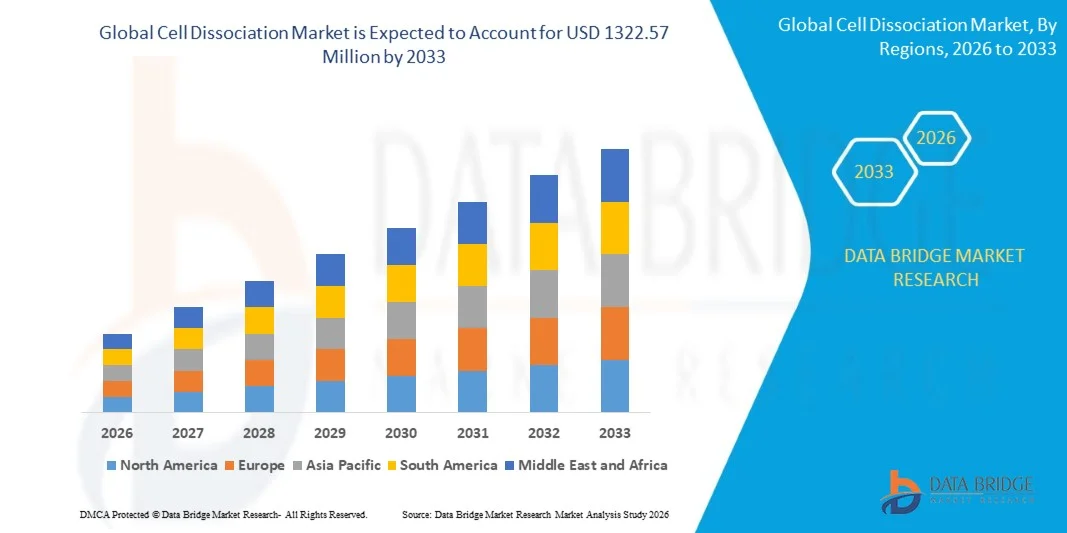
- Согласно анализу Data Bridge Market Research, размер мирового рынка клеточной диссоциации был оценен как462,01 млн долларов США в 2025 годуОжидается, что он достигнет1322,57 млн долларов США к 2033 году, вCAGR 14,05%в течение прогнозируемого периода
- Рост рынка в значительной степени обусловлен растущим спросом на эффективные методы изоляции клеток и быстрым расширением исследований на основе клеток в биотехнологической и фармацевтической промышленности, что приводит к более широкому внедрению передовых лабораторных решений в исследовательских и клинических условиях.
- Кроме того, растущие инвестиции в регенеративную медицину, исследования стволовых клеток и биофармацевтическое производство устанавливают диссоциацию клеток в качестве критического шага в рабочих процессах обработки клеток. Эти сходящиеся факторы ускоряют поглощение продуктов клеточной диссоциации, тем самым значительно повышая рост отрасли.
Размер рынка и прогноз
- Глобальная рыночная стоимость (2025):$462,01 млн.
- Ожидаемая рыночная стоимость (2033):1322,57 млн. долларов США
- Прогноз CAGR (2026–2033): 14.05%
Каковы основные выводы рынка клеточной диссоциации
- Клеточная диссоциация относится к процессу отделения клеток от тканей или прилипших культур с использованием ферментативных или неферментативных методов для получения жизнеспособных одноклеточных суспензий. Эти методы необходимы для таких применений, как поддержание клеточной культуры, открытие лекарств, иммунологические исследования и регенеративная медицина.
- Растущий спрос на решения для диссоциации клеток в первую очередь подпитывается растущим вниманием к персонализированной медицине, растущим использованием клеточных анализов и растущим внедрением передовых технологий биообработки в исследовательских и промышленных приложениях.
- Северная Америка доминирует на рынке клеточной диссоциации с долей 37,70%в 2025 году, благодаря наличию развитой биотехнологической инфраструктуры и увеличению инвестиций в исследования в области наук о жизни;
- Ожидается, что Азиатско-Тихоокеанский регион станет самым быстрорастущим регионом на рынке клеточной диссоциации в течение прогнозируемого периода из-за быстрого расширения биотехнологических отраслей и увеличения инвестиций в здравоохранение в таких странах, как Китай, Япония и Индия.
- Сегмент продуктов ферментативной диссоциации доминировал на рынке с долей рынка 48,40% в 2025 году из-за высокой эффективности разрушения внеклеточных матриц и облегчения быстрой изоляции клеток. Исследователи и биотехнологи предпочитают ферментативные продукты для поддержания жизнеспособности и функциональности клеток. Сегмент выигрывает от наличия специализированных ферментов, адаптированных к конкретным типам тканей и клеточным линиям, повышая точность экспериментальных рабочих процессов.
Сфера охвата и сегментация рынка клеточной диссоциации
|
Атрибуты |
Клеточная диссоциация Ключевые идеи рынка |
|
Сегменты покрыты |
|
|
Страны, охваченные |
Северная Америка
Европа
Азиатско-Тихоокеанский регион
Ближний Восток и Африка
Южная Америка
|
|
Ключевые игроки рынка |
|
|
Рыночные возможности |
|
|
Информационные наборы данных с добавленной стоимостью |
В дополнение к информации о рыночных сценариях, таких как рыночная стоимость, темпы роста, сегментация, географическое покрытие и основные игроки, рыночные отчеты, курируемые Data Bridge Market Research, также включают углубленный экспертный анализ, географически представленное производство и мощности компании, сетевые схемы дистрибьюторов и партнеров, подробный и обновленный анализ ценового тренда и анализ дефицита цепочки поставок и спроса. |
Каковы основные тенденции на рынке клеточной диссоциации
«Растущее внедрение автоматизированных и интегрированных в ИИ систем клеточной диссоциации»
- Значительной тенденцией на рынке диссоциации клеток является растущее внедрение автоматизированных и интегрированных в ИИ систем, предназначенных для повышения согласованности, эффективности и воспроизводимости в рабочих процессах изоляции клеток в исследованиях и биофармацевтических приложениях. Этот сдвиг превращает традиционные ручные процессы в стандартизированные высокопроизводительные операции, которые улучшают общую экспериментальную точность и масштабируемость.
- Например, Miltenyi Biotec предлагает автоматизированные системы диссоциации тканей, такие как gentleMACS, которые оптимизируют подготовку образцов и улучшают выход клеток, минимизируя изменчивость в экспериментах. Эти системы позволяют лабораториям достичь более высокой воспроизводимости и уменьшить ручные ошибки в сложных задачах обработки ячеек.
- Интеграция автоматизации в клеточной диссоциации набирает обороты в исследованиях стволовых клеток и регенеративной медицине, где поддержание жизнеспособности и целостности клеток имеет решающее значение для приложений. Это позволяет исследователям более эффективно обрабатывать чувствительные образцы при сохранении основных клеточных характеристик.
- Биофармацевтические компании все чаще внедряют технологии автоматизированной диссоциации для поддержки крупномасштабной клеточной культуры и производства биологических препаратов, где важна согласованность и масштабируемость. Эта тенденция усиливает стандартизацию процессов и уменьшает операционные узкие места в производственных средах.
- Исследовательские лаборатории также включают аналитические инструменты с поддержкой ИИ наряду с системами диссоциации для оптимизации протоколов и улучшения результатов на основе анализа данных в реальном времени. Это способствует более точным и адаптивным рабочим процессам, адаптированным к конкретным типам клеток и экспериментальным потребностям.
- Растущий акцент на автоматизацию, точность и масштабируемость усиливает роль передовых систем диссоциации клеток в качестве важных компонентов в современных исследованиях и биопроизводстве в области наук о жизни, поддерживая более широкий переход к эффективным лабораторным операциям на основе данных.
Динамика рынка клеточной диссоциации
водитель
«Рост спроса на клеточные исследования и биофармацевтическое производство»
- Растущая зависимость от клеточных исследований в области открытия лекарств, иммунологии и регенеративной медицины стимулирует спрос на эффективные и надежные решения для диссоциации клеток, которые позволяют получать высококачественные одноклеточные суспензии. Эти решения играют важную роль в обеспечении экспериментальной точности и поддержке сложных биологических анализов.
- Например, Thermo Fisher Scientific предоставляет широкий спектр ферментативных и неферментативных реагентов диссоциации, которые широко используются в клеточной культуре, биообработке и клинических исследованиях. Эти продукты помогают поддерживать жизнеспособность и функциональность клеток, поддерживая растущий спрос на передовые исследовательские процессы.
- Расширение биофармацевтического производства, особенно в моноклональных антителах и клеточной терапии, увеличивает потребность в масштабируемых и воспроизводимых методах обработки клеток. Эффективные методы диссоциации необходимы для поддержания последовательной популяции клеток во время крупномасштабного производства.
- Растущее внимание к персонализированной медицине еще больше ускоряет принятие клеточных анализов, где точная изоляция и подготовка клеток имеют решающее значение для конкретных исследований пациентов и целевой терапии. Это усиливает спрос на высокоэффективные технологии диссоциации.
- Устойчивый рост исследований в области наук о жизни и биофармацевтического развития усиливает важность диссоциации клеток как основополагающего процесса, стимулируя постоянный спрос на передовые решения, которые поддерживают эффективность, масштабируемость и надежность в различных приложениях.
Сдержанность/вызов
«Высокая стоимость и сложность передовых технологий клеточной диссоциации»
- Рынок диссоциации клеток сталкивается с проблемами из-за высокой стоимости и технической сложности, связанной с передовыми системами диссоциации и специализированными реагентами, необходимыми для эффективной изоляции клеток. Эти факторы могут ограничить доступность, особенно для небольших лабораторий и исследовательских учреждений с ограниченными бюджетами.
- Например, автоматизированные системы, разработанные такими компаниями, как Miltenyi Biotec, требуют значительных инвестиций в оборудование и техническое обслуживание, что может создать финансовые барьеры для широкого внедрения. Потребность в квалифицированном персонале для эксплуатации и оптимизации этих систем дополнительно увеличивает эксплуатационные расходы.
- Передовые ферментативные и неферментативные реагенты часто требуют точных условий обработки и хранения для поддержания эффективности, увеличивая сложность лабораторных рабочих процессов. Это может привести к изменчивости результатов, если протоколы не будут тщательно соблюдаться.
- Интеграция автоматизированных систем диссоциации с существующей лабораторной инфраструктурой может быть сложной задачей, требующей совместимости с другими инструментами и программными платформами. Это добавляет дополнительный уровень сложности для конечных пользователей, ищущих бесшовную интеграцию рабочих процессов.
- Эти комбинированные факторы создают проблемы в балансировании производительности, экономической эффективности и доступности, влияя на темпы внедрения и требуя постоянных инноваций для упрощения процессов и снижения общих расходов на рынке клеточной диссоциации.
Как сегментируется рынок клеточной диссоциации
Рынок сегментирован на основе продукта, ткани, типа, приложения и конечного пользователя.
• По продукту
На основе продукта рынок клеточной диссоциации подразделяется на продукты ферментативной диссоциации, продукты неферментативной диссоциации, инструменты и аксессуары. Сегмент ферментативных продуктов диссоциации доминировал на крупнейшей доле рынка в 48,40% в 2025 году, что обусловлено его высокой эффективностью в разрушении внеклеточных матриц и содействии быстрой изоляции клеток. Исследователи и биотехнологи предпочитают ферментативные продукты для поддержания жизнеспособности и функциональности клеток. Сегмент выигрывает от наличия специализированных ферментов, адаптированных к конкретным типам тканей и клеточным линиям, повышая точность экспериментальных рабочих процессов. Продукты ферментативной диссоциации также легко интегрируются с высокопроизводительными лабораторными процессами, уменьшая ручное вмешательство и экономя время в крупномасштабных исследованиях.
Ожидается, что в сегменте продуктов неферментной диссоциации будут наблюдаться самые быстрые темпы роста с 2026 по 2033 год, чему способствует растущий спрос на мягкие методы отслоения клеток, которые сохраняют чувствительные маркеры клеточной поверхности. Например, Thermo Fisher Scientific разработала инновационные неферментативные решения, которые минимизируют клеточный стресс, поддерживая применение в исследованиях стволовых клеток и первичной клеточной культуре. Растущее внедрение в лабораториях, подчеркивающее соответствие нормативным требованиям и воспроизводимость, также способствует росту. Неферментативные продукты набирают обороты благодаря их совместимости с различными типами клеток и снижению риска ферментативной деградации, что делает их предпочтительным выбором для специализированных исследовательских приложений.
• По тканям
На основе ткани рынок сегментирован на соединительную ткань, эпителиальную ткань и другие. Сегмент эпителиальной ткани доминировал в самой большой доле доходов в 2025 году, что обусловлено его высокой распространенностью в клеточных исследованиях и спросом на воспроизводимые методы изоляции. Эпителиальные клетки широко используются в скрининге лекарств, моделировании заболеваний и исследованиях тканевой инженерии, требуя надежных протоколов диссоциации, которые поддерживают целостность клеток. Передовые ферментативные и механические методы диссоциации широко применяются для эпителиальных тканей, поддерживая высокую жизнеспособность и функциональную сохранность. Растущее внимание к регенеративной медицине и исследованиям органоидов еще больше подпитывает спрос на продукты диссоциации эпителиальной ткани.
Ожидается, что сегмент соединительной ткани будет наблюдать самый быстрый рост с 2026 по 2033 год, чему способствует растущий интерес к исследованиям мезенхимальных стволовых клеток и фиброзным заболеваниям. Например, Miltenyi Biotec предлагает специализированные ферментативные наборы, оптимизированные для диссоциации соединительной ткани, повышения урожайности и жизнеспособности клеток. Увеличение применения в ортопедических исследованиях, восстановлении хряща и регенеративной терапии также способствует росту сегмента. Спрос на эффективные и воспроизводимые методы диссоциации соединительной ткани стимулирует инновации и внедрение в научно-исследовательских и промышленных лабораториях.
• По типу
По типу рынок сегментируется на диссоциацию тканей и отслоение клеток. Сегмент диссоциации тканей доминировал в самой большой доле доходов в 2025 году, что обусловлено его способностью эффективно обрабатывать сложные образцы тканей в одноклеточные суспензии для последующего применения. Диссоциация тканей имеет решающее значение в исследованиях стволовых клеток, органоидной культуре и высокопроизводительном скрининге, где жизнеспособность и функциональность клеток имеют первостепенное значение. Исследователи предпочитают передовые ферментативные или механические системы диссоциации, чтобы минимизировать повреждения и обеспечить воспроизводимые результаты. Внедрение сегмента также поддерживается интеграцией автоматизированных платформ диссоциации, уменьшая ручную обработку и операционные ошибки.
Ожидается, что сегмент отслоения клеток будет наблюдать самый быстрый рост с 2026 по 2033 год, что обусловлено растущей потребностью в щадящих методах отслоения для аффилированных клеток, используемых в иммуноанализах и производстве антител. Например, Corning предоставляет специализированные решения для отслоения клеток, которые поддерживают экспрессию поверхностного белка, обеспечивая эффективный сбор клеток. Растущее внедрение в биофармацевтическое производство и платформы автоматизации лабораторий поддерживает расширение сегмента. Сегмент также выигрывает от растущего спроса в области регенеративной медицины, где поддержание целостности клеток во время отслоения имеет решающее значение.
• Подача заявки
На основе применения рынок сегментирован на производство антител, ветеринарные применения, поддержание клеточной культуры и иммуноанализы. Сегмент поддержания клеточной культуры доминировал в самой большой доле доходов в 2025 году, что обусловлено необходимостью надежных и воспроизводимых методов диссоциации для поддержания здоровых клеточных линий. Эффективное поддержание клеточной культуры имеет решающее значение как в исследованиях, так и в промышленной биообработке, обеспечивая последовательный рост, морфологию и функциональность. Лаборатории предпочитают решения, которые оптимизируют жизнеспособность клеток, минимизируя стресс во время обычного прохождения и расширения. Сегмент выигрывает от растущего внедрения в регенеративной медицине, разработке лекарств и персонализированных исследованиях в области медицины.
Ожидается, что в сегменте производства антител будет наблюдаться самый быстрый рост с 2026 по 2033 год, чему способствует растущий спрос на моноклональные антитела и биотерапевтические препараты. Например, Sino Biological разработала высокоэффективные наборы для диссоциации клеток, которые повышают жизнеспособность и урожайность клеток, продуцирующих антитела. Растущие инвестиции в иммунотерапию и разработку вакцин способствуют внедрению передовых методов диссоциации, адаптированных для клеточных линий, продуцирующих антитела. Сегмент также выигрывает от растущей тенденции к автоматизированным платформам производства антител, требующим последовательных и мягких методов обработки клеток.
• Конечный пользователь
На базе конечного потребителя рынок сегментирован на фармацевтические и биотехнологические компании, научно-исследовательские и академические институты и другие. Сегмент фармацевтических и биотехнологических компаний доминировал в крупнейшей доле выручки в 2025 году, чему способствовало широкомасштабное внедрение продуктов клеточной диссоциации в разработку лекарств, регенеративную медицину и биофармацевтическое производство. Конечные пользователи отдают приоритет высокопроизводительным решениям для диссоциации, которые обеспечивают воспроизводимость, эффективность и масштабируемость критических рабочих процессов в области НИОКР. Сегмент выигрывает от нормативных требований, которые поощряют использование проверенных продуктов для поддержания экспериментальной целостности.
Ожидается, что сегмент научно-исследовательских и академических институтов будет наблюдать самый быстрый рост с 2026 по 2033 год, чему способствует увеличение числа исследований клеточной биологии, программ исследований стволовых клеток и инициатив по органоидному моделированию. Например, лаборатории Гарвардского университета внедрили передовые методы диссоциации для улучшения выхода клеток и жизнеспособности для экспериментальной воспроизводимости. Растущее государственное финансирование и гранты, поддерживающие фундаментальные исследования, также способствуют расширению сегмента. Рост сегмента поддерживается растущим спросом на удобные, универсальные и экономически эффективные решения, подходящие для различных экспериментальных установок.
В каком регионе находится наибольшая доля рынка клеточной диссоциации
- Северная Америка доминировала на рынке клеточной диссоциации с самой большой долей дохода в 37,70% в 2025 году, что обусловлено сильным присутствием передовой биотехнологической инфраструктуры и увеличением инвестиций в исследования в области наук о жизни.
- Исследователи в регионе высоко ценят эффективные и воспроизводимые методы изоляции клеток, поддерживаемые широким распространением клеточных анализов, регенеративной медицины и биофармацевтического производства.
- Этот рост также поддерживается благоприятными инициативами по финансированию, устоявшимися фармацевтическими компаниями и растущим спросом на персонализированную медицину, устанавливая решения для диссоциации клеток в качестве критических инструментов как в научных исследованиях, так и в клинических приложениях.
Американский рынок клеточной диссоциации Insight
Американский рынок клеточной диссоциации занял самую большую долю дохода в Северной Америке в 2025 году, чему способствовала обширная исследовательская деятельность в области клеточной биологии, онкологии и терапии стволовыми клетками. Присутствие ведущих биотехнологических фирм и академических учреждений стимулирует внедрение передовых технологий диссоциации. Растущий спрос на высокопроизводительные процессы скрининга и обнаружения лекарств еще больше ускоряет рост рынка. Кроме того, сильное государственное финансирование и расширение возможностей биофармацевтического производства продолжают поддерживать широкое использование продуктов клеточной диссоциации.
Европейский рынок клеточной диссоциации Insight
Европейский рынок клеточной диссоциации, по прогнозам, будет расширяться на значительном уровне CAGR в течение прогнозируемого периода, главным образом за счет увеличения внимания к регенеративной медицине и жестких нормативных рамок, поддерживающих высококачественные стандарты исследований. Растущие инвестиции в биотехнологии и исследования в области наук о жизни способствуют внедрению передовых методов диссоциации клеток. Растущий спрос на клеточную терапию и точную медицину также способствует расширению рынка. Регион стал свидетелем сильного внедрения в научно-исследовательских лабораториях, фармацевтических компаниях и академических учреждениях.
Британский рынок клеточной диссоциации Insight
Ожидается, что рынок диссоциации клеток в Великобритании будет расти в течение прогнозируемого периода, что обусловлено увеличением биомедицинских исследований и достижений в исследованиях стволовых клеток. Растущий акцент на инновационной разработке лекарств и клинических исследованиях способствует принятию эффективных решений для диссоциации клеток. Сильная академическая исследовательская база страны и государственная поддержка наук о жизни также способствуют росту. Расширение сотрудничества между научно-исследовательскими институтами и биотехнологическими фирмами также повышает спрос на передовые продукты диссоциации.
Немецкий рынок клеточной диссоциации Insight
Ожидается, что в течение прогнозируемого периода рынок диссоциации клеток в Германии будет расширяться на значительном CAGR, чему будет способствовать сильный акцент страны на биотехнологические инновации и возможности промышленных исследований. Налаженная инфраструктура здравоохранения Германии и акцент на точную медицину способствуют внедрению передовых лабораторных технологий. Растущий спрос на клеточные анализы и регенеративную терапию стимулирует использование эффективных методов диссоциации. Присутствие ведущих научно-исследовательских институтов и фармацевтических компаний еще больше усиливает рост рынка.
Азиатско-тихоокеанский рынок клеточной диссоциации
Рынок клеточной диссоциации в Азиатско-Тихоокеанском регионе будет расти самыми быстрыми темпами в период с 2026 по 2033 год, что обусловлено быстрым расширением биотехнологических отраслей и увеличением инвестиций в здравоохранение в таких странах, как Китай, Япония и Индия. Растущее внимание региона к клиническим исследованиям, открытию лекарств и регенеративной медицине ускоряет спрос на продукты клеточной диссоциации. Правительственные инициативы по содействию инновациям в области биотехнологий и повышению осведомленности о передовых методах исследований еще больше способствуют внедрению. Расширение производственных возможностей также повышает доступность продукции в странах с развивающейся экономикой.
Японский рынок клеточной диссоциации Insight
Японский рынок клеточной диссоциации набирает обороты благодаря передовой исследовательской инфраструктуре страны и сильному акценту на регенеративную медицину. Растущее внедрение исследований стволовых клеток и клеточной терапии стимулирует спрос на эффективные решения для диссоциации. Акцент Японии на технологические инновации и точное здравоохранение поддерживает интеграцию передовых лабораторных инструментов. Растущее стареющее население также поощряет исследования в области регенеративного лечения, что еще больше стимулирует рост рынка.
Китайский рынок клеточной диссоциации
Китайский рынок клеточной диссоциации составил самую большую долю рынка в Азиатско-Тихоокеанском регионе в 2025 году, что объясняется быстрым расширением исследований в области биотехнологий и увеличением государственной поддержки наук о жизни. Китай становится крупным центром фармацевтического производства и клинических исследований, стимулируя спрос на передовые методы обработки клеток. Растущее число научно-исследовательских институтов и биофармацевтических компаний ускоряет внедрение продуктов клеточной диссоциации. Доступность экономически эффективных решений и сильные внутренние производственные возможности являются ключевыми факторами, способствующими развитию рынка в Китае.
Каковы основные компании на рынке клеточной диссоциации
Индустрия клеточной диссоциации в основном возглавляется хорошо зарекомендовавшими себя компаниями, в том числе:
- BD (США)
- Thermo Fisher Scientific Inc. (США)
- F. Hoffmann-La Roche Ltd (Швейцария)
- GE Healthcare (США)
- Merck KGaA (Германия)
- ATCC (США)
- REPROCELL Inc. (Япония)
- ALSTEM (США)
- CellSystems (Германия)
- BIOCOM AG (Германия)
- Biological Industries USA, Inc. (США)
- Pelobiotech (Германия)
- BrainBits, LLC (США)
- Лабохема (Словакия)
- Himedia Laboratories (Индия)
- PAN-Biotech (Германия)
- Биопродукты Gemini (США)
- Miltenyi Biotec (Германия)
- STEMCELL Technologies, Inc. (Канада)
- Cyagen Biosciences, Inc. (США)
- PromoCell GmbH (Германия)
- Irvine Scientific (США)
- Sigma-Aldrich Co. LLC (США)
Каковы последние события на рынке клеточной диссоциации
- В июне 2025 года Thermo Fisher представила масс-спектрометры Orbitrap Astral Zoom и Excedion Pro на ASMS 2025, значительно улучшив возможности протеомного и биомолекулярного анализа с высоким разрешением и высокой пропускной способностью. Эта разработка повышает точность и скорость сложных рабочих процессов анализа клеток, позволяя исследователям получить более глубокое понимание клеточных структур и белковых взаимодействий. В результате ожидается рост спроса на высококачественные решения для диссоциации клеток, поскольку точная подготовка клеток вверх по течению имеет важное значение для достижения надежных аналитических результатов в области наук о жизни и биофармацевтических исследований.
- В мае 2025 года BD запустила FACSDiscover A8 Cell Analyzer с визуализацией в реальном времени, интегрированной со спектральной проточной цитометрией, что позволяет проводить расширенную клеточную характеристику и динамический анализ популяций гетерогенных клеток. Это нововведение улучшает способность идентифицировать редкие типы клеток и контролировать клеточные реакции в режиме реального времени, что имеет решающее значение для исследований иммунологии и онкологии. Повышенная зависимость от таких передовых аналитических платформ стимулирует потребность в высокоэффективных и щадящих методах диссоциации клеток, которые сохраняют целостность клеток и поверхностные маркеры для точного анализа.
- В мае 2025 года Сарториус представил биослойный интерферометр Octet R8e, предназначенный для быстрого обнаружения биомолекулярных взаимодействий без меток, повышения эффективности в процессах разработки лекарств. Эта система позволяет исследователям ускорить скрининг и связывание исследований с улучшенной чувствительностью и уменьшенной сложностью анализа. Ожидается, что растущее внедрение таких технологий увеличит потребность в последовательных и высокожизнеспособных образцах клеток, тем самым повышая спрос на передовые продукты диссоциации клеток, которые поддерживают воспроизводимые экспериментальные условия.
- В апреле 2025 года Thermo Fisher выпустила одноразовый биореактор 5 L DynaDrive, который улучшил продуктивность клеточной культуры на 27%, обеспечив более эффективные и масштабируемые процессы биопроизводства. Этот прогресс поддерживает более высокие урожаи в клеточных производственных системах, особенно в биопрепаратах и регенеративной медицине. По мере увеличения масштабов биообработки возрастает важность поддержания однородных и жизнеспособных популяций клеток, что приводит к большей зависимости от оптимизированных методов диссоциации клеток, которые обеспечивают согласованность и качество на этапах расширения и сбора клеток.
- В феврале 2025 года Aurora Biosynthetics расширилась в Азиатско-Тихоокеанский регион через альянс по производству РНК на сумму 200 миллионов австралийских долларов, укрепив региональную экосистему для передовых терапевтических средств и разработки лекарств на основе нуклеиновых кислот. Ожидается, что это стратегическое расширение ускорит исследовательскую и производственную деятельность в области клеточной и генной терапии на развивающихся рынках. Результирующее увеличение лабораторных и производственных рабочих процессов будет стимулировать более высокий спрос на эффективные технологии диссоциации клеток, поскольку они играют решающую роль в подготовке клеток для применения на основе РНК и крупномасштабной биообработки.
SKU-
Получите онлайн-доступ к отчету на первой в мире облачной платформе рыночной аналитики

- Интерактивная панель анализа данных
- Панель анализа компании для возможностей с высоким потенциалом роста
- Доступ аналитика-исследователя для настройки и запросов
- Анализ конкурентов с помощью интерактивной панели
- Последние новости, обновления и анализ тенденций
- Используйте возможности сравнительного анализа для комплексного отслеживания конкурентов
Методология исследования
Сбор данных и анализ базового года выполняются с использованием модулей сбора данных с большими размерами выборки. Этап включает получение рыночной информации или связанных данных из различных источников и стратегий. Он включает изучение и планирование всех данных, полученных из прошлого заранее. Он также охватывает изучение несоответствий информации, наблюдаемых в различных источниках информации. Рыночные данные анализируются и оцениваются с использованием статистических и последовательных моделей рынка. Кроме того, анализ доли рынка и анализ ключевых тенденций являются основными факторами успеха в отчете о рынке. Чтобы узнать больше, пожалуйста, запросите звонок аналитика или оставьте свой запрос.
Ключевой методологией исследования, используемой исследовательской группой DBMR, является триангуляция данных, которая включает в себя интеллектуальный анализ данных, анализ влияния переменных данных на рынок и первичную (отраслевую экспертную) проверку. Модели данных включают сетку позиционирования поставщиков, анализ временной линии рынка, обзор рынка и руководство, сетку позиционирования компании, патентный анализ, анализ цен, анализ доли рынка компании, стандарты измерения, глобальный и региональный анализ и анализ доли поставщика. Чтобы узнать больше о методологии исследования, отправьте запрос, чтобы поговорить с нашими отраслевыми экспертами.
Доступна настройка
Data Bridge Market Research является лидером в области передовых формативных исследований. Мы гордимся тем, что предоставляем нашим существующим и новым клиентам данные и анализ, которые соответствуют и подходят их целям. Отчет можно настроить, включив в него анализ ценовых тенденций целевых брендов, понимание рынка для дополнительных стран (запросите список стран), данные о результатах клинических испытаний, обзор литературы, обновленный анализ рынка и продуктовой базы. Анализ рынка целевых конкурентов можно проанализировать от анализа на основе технологий до стратегий портфеля рынка. Мы можем добавить столько конкурентов, о которых вам нужны данные в нужном вам формате и стиле данных. Наша команда аналитиков также может предоставить вам данные в сырых файлах Excel, сводных таблицах (книга фактов) или помочь вам в создании презентаций из наборов данных, доступных в отчете.











