


Global Ceramic Inks Market Segmentation, By Formulation (Solvent-based, Water-based and Oil-based), Substrate (Ceramic and Glass), Type (Decorative and Functional), Technology (Digital and Analog), End User Applications (Ceramic Tiles, Glass Printing, and Food Container Printing)- Industry Trends and Forecast to 2033
Каков размер рынка керамических чернил и темпы роста
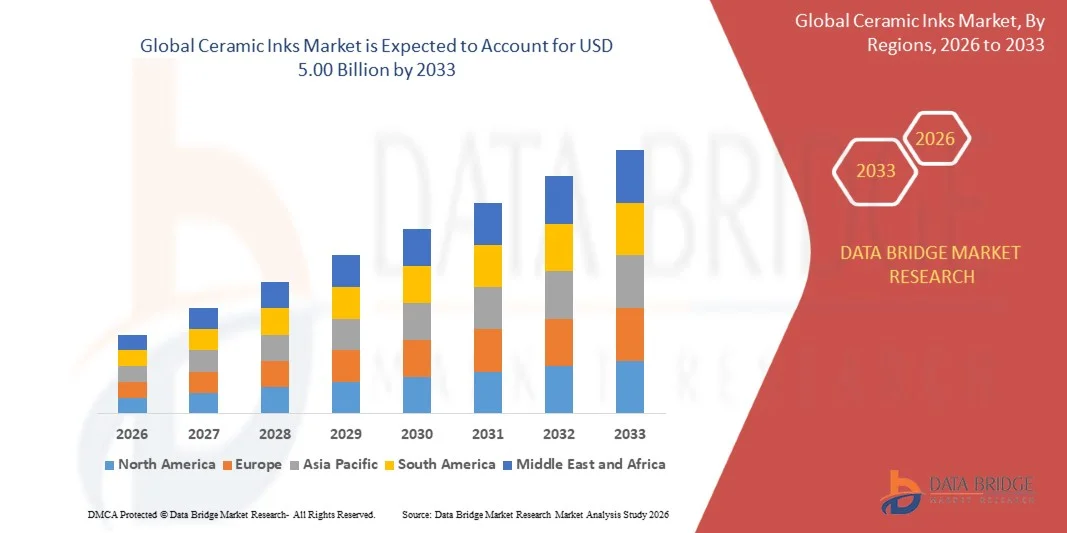
- Согласно анализу Data Bridge Market Research, глобальный размер рынка керамических чернил был оценен как2,97 млрд долларов в 2025 годуОжидается, что он достигнет5 млрд долларов США к 2033 году, вCAGR 6,70%в течение прогнозируемого периода
- Рост рынка в значительной степени обусловлен растущим спросом на высококачественную керамическую печать в плитках, посуде и декоративных приложениях, а также внедрением технологий цифровой и экранной печати.
- Рост урбанизации и строительной деятельности, особенно в странах с развивающейся экономикой, стимулирует потребность в эстетически привлекательных и долговечных керамических изделиях.
Размер рынка и прогноз
Глобальная рыночная стоимость (2025):$2,97 млрд.
Ожидаемая рыночная стоимость (2033):USD 5,00 млрд.
Прогноз CAGR (2026–2033):6.70%
Каковы основные выводы рынка керамических чернил
- Рынок демонстрирует значительный рост благодаря растущему внедрению передовых технологий печати, таких как цифровая струйная и экранная печать, которые повышают гибкость дизайна и эффективность производства.
- Расширение сектора строительства и дизайна интерьера во всем мире в сочетании с растущей популярностью индивидуальных керамических изделий создает новые возможности для роста.
- Северная Америка доминировала на рынке керамических чернил с самой большой долей дохода 38,7% в 2025 году, что обусловлено растущим спросом на передовые технологии печати и декоративные решения в керамике и стеклянной посуде.
- Ожидается, что в Азиатско-Тихоокеанском регионе будут наблюдаться самые высокие темпы роста в мире.керамические черниларынок, обусловленный растущей урбанизацией, правительственными инициативами, поддерживающими технологии цифровой печати, и растущими предпочтениями потребителей эстетически разработанных керамических изделий
- Сегмент на водной основе занимал самую большую долю рынка в 2025 году, что обусловлено его экологически чистыми свойствами, низким содержанием ЛОС и соблюдением строгих экологических норм. Керамические чернила на водной основе широко предпочтительны в промышленных и коммерческих приложениях для печати для их безопасности, простоты обработки и способности производить высококачественные отпечатки на нескольких подложках. Производители также инвестируют в инновационные составы на водной основе, которые улучшают цветовую вибрацию, время сушки и долговечность, улучшая принятие в декоративных и функциональных приложениях.
Сфера охвата и сегментация рынка керамических чернил
|
Атрибуты |
Керамические чернила Key Market Insights |
|
Сегменты покрыты |
|
|
Страны, охваченные |
Северная Америка
Европа
Азиатско-Тихоокеанский регион
Ближний Восток и Африка
Южная Америка
|
|
Ключевые игроки рынка |
|
|
Рыночные возможности |
• Расширение применения технологий цифровой печати |
|
Информационные наборы данных с добавленной стоимостью |
В дополнение к информации о рыночных сценариях, таких как рыночная стоимость, темпы роста, сегментация, географическое покрытие и основные игроки, рыночные отчеты, курируемые Data Bridge Market Research, также включают анализ экспорта импорта, обзор производственных мощностей, анализ потребления продукции, анализ ценового тренда, сценарий изменения климата, анализ цепочки поставок, анализ цепочки создания стоимости, обзор сырья / расходных материалов, критерии выбора поставщиков, анализ PESTLE, анализ Porter и нормативную базу. |
Каковы основные тенденции на рынке керамических чернил
«Рост спроса на современные печатные решения и экологически чистые чернила»
Растущее внедрение технологий цифровой печати и керамической отделки значительно формирует рынок керамических чернил, поскольку производители все чаще предпочитают чернила, которые обеспечивают высокую долговечность, точность цвета и соответствие окружающей среде. Керамические чернила набирают силу благодаря своей способности выдерживать высокие температуры и поддерживать качество печати на различных подложках. Эта тенденция усиливает их внедрение в посуду, плитку и промышленную керамику, побуждая производителей внедрять инновации с новыми составами, которые удовлетворяют меняющиеся потребительские и промышленные потребности.
Повышение осведомленности об устойчивости и соблюдении нормативных требований ускорило спрос на керамические чернила без свинца, экологически чистые и УФ-отверждаемые. Экологически сознательные производители активно ищут чернила, которые уменьшают выбросы и опасные материалы, побуждая компании уделять приоритетное внимание зеленой химии и более чистым производственным процессам. Это также привело к сотрудничеству между поставщиками чернил и поставщиками технологий печати для повышения функциональных и эстетических преимуществ.
Технологические достижения в разработке чернил, такие как высокая непрозрачность, быстрая сушка и устойчивые к царапинам чернила, влияют на решения о покупке. Производители используют эти инновации для повышения эффективности производства, сокращения отходов и соответствия строгим стандартам качества. Компании все чаще продвигают эти преимущества через маркетинг и торговые выставки, чтобы укрепить позиционирование бренда и обратиться к сознательным потребителям.
Например, в 2025 году Sun Chemical в США и Siegwerk в Германии расширили свои портфели керамических чернил, внедрив чернила без свинца для цифровой керамической печати. Эти запуски были введены в ответ на растущее нормативное давление и спрос на устойчивые высокопроизводительные чернила с распределением по промышленным, коммерческим и специализированным приложениям печати. Продукция также продавалась как экологически ответственный выбор, повышая лояльность бренда среди клиентов и повторяя заказы.
В то время как спрос на керамические чернила растет, устойчивое расширение рынка зависит от непрерывных НИОКР, экономически эффективного производства и поддержания производительности в условиях высокотемпературного обжига и истирания. Производители также сосредоточены на повышении масштабируемости, надежности цепочки поставок и разработке инновационных решений, которые уравновешивают стоимость, качество и устойчивость для более широкого внедрения.
Динамика рынка керамических чернил
Растущее предпочтение цифровой печати и экологически чистых чернил
Растущее внедрение технологий цифровой печати в керамике является основным драйвером для рынка керамических чернил. Производители все чаще заменяют обычные чернила усовершенствованными составами для повышения точности печати, сокращения времени производства и соблюдения экологических норм. Эта тенденция также подталкивает исследования в области УФ-отверждаемых, без растворителей и керамических чернил на водной основе, поддерживая диверсификацию продуктов.
Расширение применения плитки, посуды, стекла и промышленной керамики влияет на рост рынка. Керамические краски помогают улучшить эстетику поверхности, долговечность и химическую стойкость при сохранении соответствия окружающей среде, позволяя производителям соответствовать ожиданиям клиентов в отношении высококачественных, экологически чистых продуктов. Растущее использование автоматизированных процессов печати во всем мире еще больше усиливает эту тенденцию.
Производители чернил активно продвигают решения на основе керамических чернил посредством инноваций в продуктах, маркетинговых кампаний и сертификации устойчивости. Эти усилия поддерживаются растущими потребительскими и промышленными предпочтениями высокопроизводительных, экологически ответственных продуктов, а также поощряют партнерские отношения между поставщиками чернил и производителями оборудования для улучшения функциональных характеристик и сокращения операционного воздействия.
Например, в 2024 году Sun Chemical в США и Siegwerk в Германии сообщили об увеличении включения УФ-отверждаемых и не содержащих свинца керамических чернил в приложения для промышленной печати. Это расширение последовало за более высоким спросом на экологически чистые, высококачественные чернила, стимулирующие повторные покупки и дифференциацию. Обе компании также подчеркнули устойчивость, соответствие и прослеживаемость в маркетинговых кампаниях для укрепления доверия и лояльности промышленных клиентов.
Хотя растущие тенденции цифровизации и устойчивости поддерживают рост, более широкое внедрение зависит от оптимизации затрат, доступности сырья и масштабируемых производственных процессов. Инвестиции в эффективность цепочки поставок, устойчивые источники и передовые технологии чернил будут иметь решающее значение для удовлетворения глобального спроса и поддержания конкурентного преимущества.
Сдержанность/вызов
«Высокая стоимость и ограниченная осведомленность по сравнению с обычными чернилами»
Относительно более высокая стоимость современных керамических чернил по сравнению с обычными чернилами остается ключевой проблемой, ограничивая принятие среди производителей, чувствительных к затратам. Сложные составы, специальные пигменты и соблюдение экологических стандартов способствуют повышению цен. Кроме того, колебания поставок сырья могут дополнительно повлиять на стабильность затрат и проникновение на рынок.
Осведомленность и технические знания остаются неравномерными, особенно на развивающихся рынках, где цифровая печать и экологически чистые чернила все еще появляются. Ограниченное понимание функциональных преимуществ ограничивает принятие некоторых керамических приложений. Это также приводит к замедлению внедрения инноваций в странах с развивающейся экономикой, где обучение и образовательные инициативы минимальны.
Проблемы цепочки поставок и распределения также влияют на рост рынка, поскольку керамические чернила требуют привлечения специализированных поставщиков и соблюдения строгих стандартов качества. Требования к обработке, хранению и транспортировке увеличивают эксплуатационные расходы. Компании должны инвестировать в надлежащую логистику, упаковку и техническую поддержку для поддержания целостности продукта.
Например, в 2024 году дистрибьюторы в Индии и Юго-Восточной Азии, поставляющие керамические чернила производителям промышленной плитки и посуды, сообщили о более медленном поглощении из-за более высоких цен и ограниченных технических знаний об экологически чистых и ультрафиолетовых чернилах. Соответствие сертификации и совместимость оборудования были дополнительными барьерами, влияющими на видимость и продажи.
Преодоление этих проблем потребует экономически эффективного производства, расширения распределительных сетей и целенаправленных образовательных инициатив для производителей. Сотрудничество с поставщиками оборудования, производителями керамики и органами по сертификации может помочь раскрыть долгосрочный потенциал роста мирового рынка керамических чернил. Кроме того, разработка конкурентоспособных по затратам формулировок и укрепление маркетинговых стратегий в отношении эффективности и устойчивости будут иметь важное значение для широкого внедрения.
Как сегментируется рынок керамических чернил
Рынок керамических чернил сегментирован на основе состава, субстрата, типа, технологии и приложений для конечных пользователей.
• По формуле
На основе состава рынок керамических чернил сегментирован на чернила на основе растворителей, воды и масла. Сегмент на водной основе занимал самую большую долю рынка в 2025 году, что обусловлено его экологически чистыми свойствами, низким содержанием ЛОС и соблюдением строгих экологических норм. Керамические чернила на водной основе широко предпочтительны в промышленных и коммерческих приложениях для печати для их безопасности, простоты обработки и способности производить высококачественные отпечатки на нескольких подложках. Производители также инвестируют в инновационные составы на водной основе, которые улучшают цветовую вибрацию, время сушки и долговечность, улучшая принятие в декоративных и функциональных приложениях.
Ожидается, что в сегменте, основанном на растворителях, будут наблюдаться самые быстрые темпы роста с 2026 по 2033 год, что обусловлено его превосходной адгезией, быстрыми свойствами сушки и совместимостью с передовыми технологиями цифровой печати. Чернила на основе растворителя особенно популярны для высокоточных декоративных и функциональных применений, предлагая повышенную цветовую вибрацию и долговечность, что делает их пригодными для премиальной керамики и печати стекла. Кроме того, текущие исследования и разработки направлены на снижение воздействия на окружающую среду при сохранении производительности, что, вероятно, расширит внедрение чернил на основе растворителей во всем мире.
• По субстрату
На основе субстрата рынок сегментирован на керамику и стекло. Керамический сегмент доминировал в 2025 году, благодаря широкому использованию керамической плитки, посуды и промышленных компонентов, которые требуют высокотемпературных устойчивых чернил для украшения и маркировки. Керамические подложки получают выгоду от чернил, которые могут выдерживать процессы обжига при сохранении точности печати. Непрерывные инновации в химии чернил, наряду с увеличением строительной и дизайнерской деятельности, еще больше повышают спрос на чернила из керамической подложки в жилых, коммерческих и промышленных применениях.
Ожидается, что в сегменте стекла будут наблюдаться самые быстрые темпы роста с 2026 по 2033 год, обусловленные растущим спросом на стеклянную упаковку, декоративные стеклянные изделия и функциональные стеклянные поверхности. Стеклянная печать требует специализированных чернил с высокой прозрачностью, долговечностью и адгезией, стимулируя инновации в составах, адаптированных для этих применений. Кроме того, ожидается, что растущее использование печатного стекла в потребительской электронике, декоративных панелях и упаковке для напитков создаст значительные возможности для роста.
• По типу
По типу рынок сегментирован на декоративные и функциональные чернила. Декоративные чернила доминировали в 2025 году, поскольку потребители и производители все чаще требуют эстетической привлекательности, ярких цветов и индивидуальных узоров для плитки, посуды и стеклянной посуды. Растущее предпочтение домашнего декора и премиальной упаковки также поддерживает спрос на декоративные керамические чернила. Компании используют новые методы печати и цветовые технологии для удовлетворения меняющихся потребительских вкусов и сезонных тенденций дизайна, укрепляя рост рынка.
Ожидается, что функциональные чернила станут свидетелями самых быстрых темпов роста с 2026 по 2033 год, чему способствуют применения в электронике, датчиках и промышленной маркировке, где чернила необходимы для обеспечения тепловых, химических или механических характеристик. Этот сегмент выигрывает от технологических достижений и интеграции чернил в интеллектуальные керамические и стеклянные изделия. Увеличение промышленной автоматизации в сочетании с более широким внедрением функциональных покрытий в автомобильном, электронном и упаковочном секторах также способствует расширению.
• Технология
На основе технологий рынок сегментирован на цифровую и аналоговую печать. Цифровой сегмент занимал самую большую долю доходов в 2025 году из-за растущего внедрения высокоточной цифровой печати в промышленной керамике, плитке и изделиях из стекла. Цифровая печать обеспечивает гибкость, сложные конструкции и сокращение отходов материалов, что делает ее высокоэффективной для производства малых и средних партий. Участники рынка все чаще интегрируют цифровые технологии с инструментами автоматизации и проектирования на основе ИИ для повышения эффективности, скорости и возможностей настройки.
Ожидается, что аналоговая печать будет быстро расти с 2026 по 2033 год, что обусловлено ее устоявшимся использованием в крупномасштабных производственных процессах, высокоскоростных производственных линиях и экономической эффективностью для повторяющихся конструкций. Эта технология остается популярной среди производителей, которые ищут объемные продукты с постоянным качеством. Кроме того, аналоговая печать продолжает развиваться с улучшенными составами чернил, улучшенными печатными пластинами и более быстрыми процессами отверждения, поддерживая ее устойчивую актуальность.
• Приложения конечных пользователей
На основе приложений конечных пользователей рынок сегментирован на керамические плитки, стеклянную печать и печать контейнеров для пищевых продуктов. Сегмент керамической плитки доминировал в 2025 году благодаря глобальной урбанизации, росту строительства и растущему принятию декоративной и функциональной плитки для жилых и коммерческих помещений. Рост также подпитывается растущими инфраструктурными проектами, мероприятиями по обновлению и ориентированными на дизайн потребительскими предпочтениями, что стимулирует постоянный спрос на высококачественные керамические чернила.
Ожидается, что стекольная печать станет свидетелем самых быстрых темпов роста с 2026 по 2033 год, чему будет способствовать растущий спрос на контейнеры для напитков, декоративную посуду и промышленное применение. Производители разрабатывают специализированные чернила для высокоточных отпечатков, устойчивости к царапинам и защиты от ультрафиолета для удовлетворения потребностей рынка. Печать пищевых контейнеров также неуклонно растет из-за растущего предпочтения потребителей к фирменной и устойчивой упаковке, которая требует высококачественных керамических чернил для маркировки, отделки и дифференциации продукта. Инновации в области экологически чистых чернил и соблюдения нормативных требований еще больше усиливают внедрение.
В каком регионе находится самая большая доля рынка керамических чернил
- Северная Америка доминировала на рынке керамических чернил с самой большой долей дохода 38,7% в 2025 году, что обусловлено растущим спросом на передовые технологии печати и декоративные решения в керамике и стеклянной посуде.
- Потребители и предприятия в регионе высоко ценят высококачественные, долговечные и экологически чистые керамические чернила, которые обеспечивают превосходную адгезию, яркие цвета и долговечную производительность.
- Это широкое распространение поддерживается присутствием крупных производителей, технологических инноваций и растущим спросом на архитектурные, декоративные и промышленные приложения.
Американский рынок керамических чернил Insight
Американский рынок керамических чернил занял самую большую долю дохода в 2025 году в Северной Америке, чему способствовало внедрение технологий цифровой печати и автоматизации производства керамической плитки и стекла. Производители все чаще отдают приоритет чернилам, которые обеспечивают печать с высоким разрешением, соблюдение экологических требований и долгосрочную долговечность. Растущий спрос на индивидуальную декоративную керамику, наряду с растущим использованием в функциональных приложениях, таких как контейнеры для пищевых продуктов и упаковка, способствует дальнейшему росту рынка.
Европейский рынок керамических чернил Insight
Ожидается, что на европейском рынке керамических чернил будут наблюдаться самые быстрые темпы роста с 2026 по 2033 год, в основном благодаря строгим экологическим нормам и растущему спросу на устойчивые чернила без растворителей. Увеличение урбанизации, инвестиции в инфраструктуру и растущее предпочтение эстетически продвинутой керамики способствуют расширению рынка. Принятие решений цифровой печати и инноваций в функциональных чернилах также ускоряет спрос в жилых, коммерческих и промышленных приложениях.
Британский рынок керамических чернил Insight
Ожидается, что рынок керамических чернил в Великобритании будет значительно расти с 2026 по 2033 год, что обусловлено растущей тенденцией высококачественной керамической плитки, стеклянной посуды и декоративных изделий. Повышение осведомленности об экологически чистых чернилах и чернилах на водной основе в сочетании с технологическими достижениями в чернильных составах побуждает производителей внедрять инновационные решения. Хорошо зарекомендовавшая себя обрабатывающая и строительная отрасли страны продолжают стимулировать спрос на декоративные и функциональные керамические чернила.
Немецкий рынок керамических чернил Insight
Ожидается, что рынок керамических чернил в Германии будет быстро расти с 2026 по 2033 год, чему способствует спрос на энергоэффективные, экологически чистые и высокопроизводительные чернила. Сильная промышленная база страны, акцент на инновации и внедрение цифровых и автоматизированных технологий печати способствуют росту. Немецкие производители все чаще инвестируют в функциональные чернила для промышленных применений и декоративные чернила для архитектурных и интерьерных проектов, усиливая проникновение на рынок.
Азиатско-Тихоокеанский рынок керамических чернил
Ожидается, что рынок керамических чернил в Азиатско-Тихоокеанском регионе продемонстрирует самые быстрые темпы роста с 2026 по 2033 год, обусловленные ростом урбанизации, увеличением строительной активности и быстрой индустриализацией в таких странах, как Китай, Япония и Индия. Расширяющиеся производственные возможности региона в сочетании с растущим внедрением цифровых и функциональных чернил в керамической плитке, стеклянной печати и контейнерах для пищевых продуктов повышают доступность и доступность на рынке. Правительственные инициативы, способствующие устойчивому производству и экологически чистым чернильным решениям, еще больше повышают спрос на рынке.
Японский рынок керамических чернил Insight
Ожидается, что рынок керамических чернил в Японии значительно вырастет с 2026 по 2033 год, чему будут способствовать технологический прогресс, высококачественные стандарты производства и спрос на долговечные, экологически чистые чернила. Принятие цифровой печати в сочетании с растущим использованием декоративной керамики, функциональных пищевых контейнеров и промышленных применений стимулирует рост. Японские производители фокусируются на чернилах, которые обеспечивают точную окраску, долговечность и соответствие экологическим стандартам.
Китайский рынок керамических чернил Insight
Рынок керамических чернил в Китае составил самую большую долю доходов в Азиатско-Тихоокеанском регионе в 2025 году, что объясняется быстрой индустриализацией, урбанизацией и растущим средним классом. Китай является ведущим производителем керамической плитки, стеклянных изделий и функциональной керамики, что стимулирует высокий спрос на высокопроизводительные чернила. Расширение производственной инфраструктуры, акцент на экологически чистые и водные чернила, а также внутренние инновации в цифровых и функциональных чернилах являются ключевыми факторами, способствующими росту рынка.
Каковы основные компании на рынке керамических чернил
Индустрия керамических чернил в основном возглавляется хорошо зарекомендовавшими себя компаниями, в том числе:
•Ferro Corporation (США)
• ZSCHIMMER & SCHWARZ CHEMIE GMBH (Германия)
• Esmalglass-Itaca Grupo (Испания)
• Торрецид (Испания)
• Фритта (Италия)
Dip-Tech Digital Printing Technologies Ltd. (Израиль)
Sun Chemical (США)
ChangSha Six Star New Material Co., Ltd.
• KAO CHIMIGRAF SLU (Испания)
Electronics for Imaging, Inc. (США)
•единорог. (Италия))
Vaanix Industries Pvt Ltd. (Индия)
•IIMAK. (США)
• Технология UVINK. ограниченный (Китай)
Xinfeng Yele Chemical Industry Manufacturing Co., Ltd. (Китай)
Colorobbia Holding S.p.A (Италия)
Evonik Industries AG (Германия)
BASF SE (Германия)
•DuPont (США)
Каковы последние события на рынке керамических чернил
- В феврале 2025 года Sun Chemical (США) запустила свой SUNIC Inkjet Inks, разработанный через совместное предприятие с Vidres, предлагающий широкий спектр цветов и спецэффектов для керамической печати. Чернила обеспечивают отличную стабильность и согласованность цвета в нескольких керамических технологиях, повышая качество продукции и позволяя производителям соответствовать различным требованиям к дизайну. Этот запуск укрепляет позиции Sun Chemical на мировом рынке цифровых чернил для керамики, одновременно поддерживая рост высококачественных декоративных и функциональных приложений.
- В январе 2025 года Torrecid (Испания) представила ECOINKCID, керамические чернила на водной основе, которые уменьшают выбросы органического углерода и запахи на 85%, а также чернила 2LOWINKCID, достигающие 30% сокращения выбросов и 75% снижения запахов. Эти экологически чистые инновации улучшают устойчивость керамической печати и позволяют производителям соответствовать более строгим экологическим нормам, стимулируя принятие на рынке экологически безопасных решений для чернил.
- В июне 2024 года ведущая в отрасли компания представила свои струйные чернила HCR с тремя новыми интенсивными цветами: желтый, синий и бежевый. Эти чернила улучшают качество печати, обеспечивают более однородные тона и расширяют цветовой диапазон для керамической цифровой печати. Разработка позволяет производителям плитки и стекла создавать более яркие конструкции, сохраняя при этом последовательные результаты, поддерживая инновации в декоративной керамике.
- В мае 2024 года Megacolor (Италия) запустила новый ассортимент цифровых эффектных чернил, включая реактивную, матовую, глянцевую, непрозрачную и блестящую отделку. Чернила экологичны, безопасны для транспорта и сертифицированы ведущими поставщиками цифровых принтеров. Эти продукты позволяют производителям предлагать высоко персонализированные и визуально привлекательные керамические конструкции при поддержке устойчивых методов производства.
- В 2023 году компания Dip-Tech Digital Printing Technologies Ltd. (Израиль) представила цифровые керамические чернила следующего поколения для широкоформатной печати плитки. Эти чернила улучшили точность цвета, скорость сушки и уменьшили отходы материала. Инновация укрепила позиции Dip-Tech в цифровой керамической печати и способствовала внедрению более эффективных, экологически ответственных методов производства.
- В 2022 году KAO CHIMIGRAF SLU (Испания) разработала новую линейку высокопроизводительных керамических чернил для применения в стекле и плитке. Чернила обеспечивают повышенную адгезию, долговечность и стабильность цвета, что позволяет производителям производить долговечные, высококачественные керамические изделия. Этот шаг помог KAO CHIMIGRAF расширить свою долю на рынке и удовлетворить растущий спрос на решения для функциональной и декоративной керамической печати.
SKU-
Получите онлайн-доступ к отчету на первой в мире облачной платформе рыночной аналитики

- Интерактивная панель анализа данных
- Панель анализа компании для возможностей с высоким потенциалом роста
- Доступ аналитика-исследователя для настройки и запросов
- Анализ конкурентов с помощью интерактивной панели
- Последние новости, обновления и анализ тенденций
- Используйте возможности сравнительного анализа для комплексного отслеживания конкурентов
Методология исследования
Сбор данных и анализ базового года выполняются с использованием модулей сбора данных с большими размерами выборки. Этап включает получение рыночной информации или связанных данных из различных источников и стратегий. Он включает изучение и планирование всех данных, полученных из прошлого заранее. Он также охватывает изучение несоответствий информации, наблюдаемых в различных источниках информации. Рыночные данные анализируются и оцениваются с использованием статистических и последовательных моделей рынка. Кроме того, анализ доли рынка и анализ ключевых тенденций являются основными факторами успеха в отчете о рынке. Чтобы узнать больше, пожалуйста, запросите звонок аналитика или оставьте свой запрос.
Ключевой методологией исследования, используемой исследовательской группой DBMR, является триангуляция данных, которая включает в себя интеллектуальный анализ данных, анализ влияния переменных данных на рынок и первичную (отраслевую экспертную) проверку. Модели данных включают сетку позиционирования поставщиков, анализ временной линии рынка, обзор рынка и руководство, сетку позиционирования компании, патентный анализ, анализ цен, анализ доли рынка компании, стандарты измерения, глобальный и региональный анализ и анализ доли поставщика. Чтобы узнать больше о методологии исследования, отправьте запрос, чтобы поговорить с нашими отраслевыми экспертами.
Доступна настройка
Data Bridge Market Research является лидером в области передовых формативных исследований. Мы гордимся тем, что предоставляем нашим существующим и новым клиентам данные и анализ, которые соответствуют и подходят их целям. Отчет можно настроить, включив в него анализ ценовых тенденций целевых брендов, понимание рынка для дополнительных стран (запросите список стран), данные о результатах клинических испытаний, обзор литературы, обновленный анализ рынка и продуктовой базы. Анализ рынка целевых конкурентов можно проанализировать от анализа на основе технологий до стратегий портфеля рынка. Мы можем добавить столько конкурентов, о которых вам нужны данные в нужном вам формате и стиле данных. Наша команда аналитиков также может предоставить вам данные в сырых файлах Excel, сводных таблицах (книга фактов) или помочь вам в создании презентаций из наборов данных, доступных в отчете.











