



Global Commercial Seaweed Market Segmentation, By Product (Red Seaweed, Green Seaweed, and Brown Seaweed), Form (Liquid, Powdered, and Flakes), Cultivation (Onshore Cultivation, Offshore Cultivation, Nearshore Cultivation, IMTA Cultivation, and Saline Aquaculture), End User (Food & Beverages, Pharmaceuticals, Agriculture, Animal Feed, Cosmetics & Personal Care, Biofuels, and Others) - Industry Trends and Forecast to 2033
Каковы размеры и темпы роста мирового рынка морских водорослей
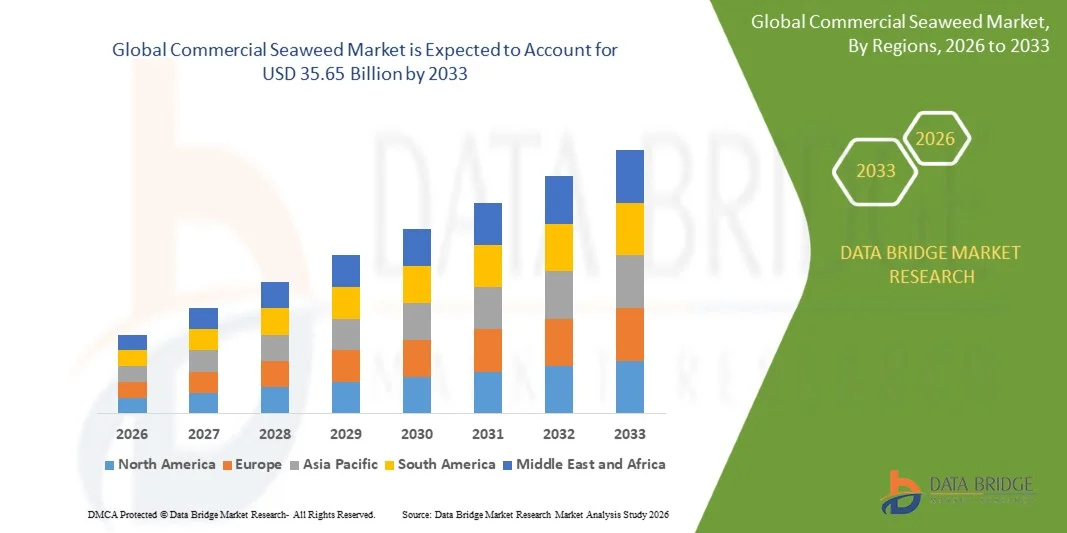
- Согласно анализу Data Bridge Market Research, размер мирового коммерческого рынка морских водорослей был оценен как20,29 млрд долларов в 2025 годуОжидается, что он достигнет35,65 млрд долларов к 2033 году, вCAGR 7,30%в течение прогнозируемого периода
- Коммерческие морские водоросли необходимы для удовлетворения потребностей потребителей в питании и снижения риска заболевания. Коммерческие водоросли помогают обеспечить лучшее качество и количество урожая в сельскохозяйственном секторе и удовлетворить растущий спрос на водоросли.гидроколлоидыв пищевой промышленности и индустрии напитков, а также в индустрии косметики и личной гигиены
- Недавние исследования также показали, что коммерческие водоросли могут бороться с вирусом COVID-19, и это имеет лучший эффект, чем существующая вакцина. Таким образом, коммерческие водоросли являются одним из важных параметров. Многие компании расширяют свои производственные мощности для удовлетворения более высокого спроса на коммерческую продукцию из морских водорослей.
Размер рынка и прогноз
- Глобальная рыночная стоимость (2025 год): 20,29 млрд долларов США
- Ожидаемая рыночная стоимость (2033): 35,65 млрд долларов США
- Прогноз CAGR (2026–2033): 7,30%
Каковы основные выводы коммерческого рынка морских водорослей
- Коммерческий рынок морских водорослей набирает значительный рост из-за увеличения использования морских водорослей для гидроколлоидов, высокой питательной ценности и пользы для здоровья морских водорослей, а также растущего спроса на морские водоросли в различных отраслях промышленности, таких как фармацевтика, личный уход, сельское хозяйство, домашнее хозяйство, корма для животных и напитки и другие во всем мире.
- Однако экологический риск, связанный с морскими водорослями и большим количеством йода и тяжелых металлов, присутствующих в них, как ожидается, будет сдерживать рост рынка коммерческих водорослей в течение прогнозируемого периода.
- Азиатско-Тихоокеанский регион доминировал на рынке коммерческих морских водорослей с долей дохода 46,80% в 2025 году, что обусловлено крупномасштабным выращиванием морских водорослей, благоприятными прибрежными условиями и сильным потреблением в пищевой, фармацевтической и сельскохозяйственной промышленности в таких странах, как Китай, Индонезия, Япония и Южная Корея.
- Ожидается, что в Северной Америке будет зарегистрирован самый быстрый CAGR в 9,21% с 2026 по 2033 год, что обусловлено растущим спросом на растительные, устойчивые и функциональные ингредиенты в пищевой, фармацевтической и косметической промышленности в США и Канаде.
- Сегмент красных водорослей доминировал на рынке с долей 45,6% в 2025 году, поскольку он широко используется для извлечения каррагинана и агара, которые являются важными гидроколлоидами в пищевой промышленности, фармацевтике и косметике.
Сфера охвата и сегментация коммерческого рынка морских водорослей
|
Атрибуты |
Коммерческий анализ рынка морских водорослей |
|
Сегменты покрыты |
|
|
Страны, охваченные |
Северная Америка
Европа
Азиатско-Тихоокеанский регион
Ближний Восток и Африка
Южная Америка
|
|
Ключевые игроки рынка |
|
|
Рыночные возможности |
|
|
Информационные наборы данных с добавленной стоимостью |
В дополнение к информации о рыночных сценариях, таких как рыночная стоимость, темпы роста, сегментация, географическое покрытие и основные игроки, рыночные отчеты, курируемые Data Bridge Market Research, также включают углубленный экспертный анализ, анализ цен, анализ доли бренда, опрос потребителей, анализ демографии, анализ цепочки поставок, анализ цепочки создания стоимости, обзор сырья / расходных материалов, критерии выбора поставщиков, анализ PESTLE, анализ Porter и нормативную базу. |
Каковы основные тенденции на рынке морских водорослей
"Увеличение перехода к устойчивым, функциональным и добавленным к стоимости коммерческим продуктам из морских водорослей"
- На коммерческом рынке морских водорослей наблюдается активное внедрение устойчиво культивируемых и переработанных продуктов из морских водорослей, что обусловлено растущими экологическими проблемами и спросом на экологически чистое сырье.
- Производители вводят ценные экстракты морских водорослей, такие как гидроколлоиды (агар, каррагинан и альгинат) и биологически активные соединения для использования в пищевых продуктах, фармацевтических препаратах, косметике и сельском хозяйстве.
- Растущий спрос на растительные, богатые питательными веществами и функциональные пищевые ингредиенты стимулирует использование в пищевой промышленности, нутрицевтике и пищевой промышленности.
- Например, такие компании, как Cargill, DuPont и Ocean Rainforest расширяют свои портфели ингредиентов на основе морских водорослей для стабилизации пищевых продуктов, растительных альтернатив и устойчивых упаковочных решений.
- Растущая потребность в натуральных загустителях, стабилизаторах и чистых ингредиентах ускоряет переход к продуктам, полученным из морских водорослей.
- Поскольку устойчивость и биоинновации приобретают все большее значение, коммерческие водоросли будут оставаться жизненно важными для зеленых материалов, продовольственной безопасности и промышленного применения.
Каковы основные драйверы коммерческого рынка морских водорослей
- Растущий спрос на натуральные, органические и растительные ингредиенты в пищевой, косметической и фармацевтической промышленности стимулирует внедрение продуктов на основе морских водорослей.
- Например, в 2025 году ведущие компании, такие как Cargill и The Seaweed Company, расширили инвестиции в устойчивое сельское хозяйство и инновации в области ингредиентов для удовлетворения глобального спроса.
- Растущее внедрение морских водорослей в удобрения, корма для животных и биостимуляторы повышает спрос в сельском хозяйстве и аквакультуре во всем мире.
- Достижения в технологиях выращивания морских водорослей, оффшорном сельском хозяйстве и методах обработки улучшили урожайность, качество и масштабируемость.
- Растущее использование морских водорослей в биоразлагаемой упаковке, биотопливе и улавливании углерода создает новые возможности для роста.
- Ожидается, что благодаря увеличению инвестиций в инициативы «голубой экономики» и устойчивые продовольственные системы рынок морских водорослей станет свидетелем сильного долгосрочного роста.
Какой фактор влияет на рост рынка морских водорослей
- Высокие затраты, связанные с крупномасштабной инфраструктурой выращивания морских водорослей, технологиями обработки и логистикой цепочки поставок, ограничивают внедрение в развивающихся регионах.
- Например, в течение 2024-2025 годов изменчивость климата, загрязнение океана и проблемы регулирования повлияли на производство морских водорослей в ключевых регионах-производителях.
- Сложность в поддержании стабильного качества, вариации видов и сезонной зависимости увеличивает эксплуатационные проблемы для производителей.
- Ограниченная осведомленность о преимуществах и применении продуктов на основе морских водорослей на развивающихся рынках замедляет их внедрение.
- Конкуренция со стороны синтетических добавок и альтернативных растительных ингредиентов создает ценовое давление и влияет на проникновение на рынок.
- Для решения этих проблем компании сосредотачиваются на устойчивых методах ведения сельского хозяйства, передовых технологиях переработки и стратегических партнерствах для расширения глобального внедрения коммерческих морских водорослей.
Как сегментируется рынок морских водорослей
Рынок сегментирован на основепродукт, форма, культивирование и конечный пользователь.
• По продукту
На основе продукта коммерческий рынок морских водорослей сегментирован на красные водоросли, зеленые водоросли и бурые водоросли. Сегмент красных водорослей доминировал на рынке с долей 45,6% в 2025 году, поскольку он широко используется для извлечения каррагинана и агара, которые являются важными гидроколлоидами в пищевой промышленности, фармацевтике и косметике. Его высокие гелеобразующие свойства, стабильность и широкое применение в молочных, хлебобулочных и обработанных пищевых продуктах вызывают высокий спрос во всем мире. Кроме того, более широкое внедрение растительных пищевых составов и чистых ингредиентов еще больше усиливает его доминирование.
Ожидается, что сегмент бурых водорослей будет расти самыми быстрыми темпами с 2026 по 2033 год, что обусловлено растущим спросом на альгинаты, биостимуляторы и функциональные ингредиенты, используемые в сельском хозяйстве, фармацевтике и промышленности. Растущее использование в устойчивой упаковке, биотопливе и инициативах по секвестрации углерода еще больше ускоряет спрос. Ожидается, что расширение исследований его биоактивных соединений и пользы для здоровья значительно расширит его коммерческий потенциал.
• по форме
На основе формы рынок сегментирован на жидкие, пороховые и хлопья. Сегмент Powdered доминировал на рынке с долей 42,3% в 2025 году, благодаря простоте хранения, более длительному сроку хранения и универсальности в нескольких приложениях, включая пищевую промышленность, нутрицевтики и косметику. Порошкообразные водоросли широко используются в приправах, диетических добавках и функциональных пищевых составах из-за их удобства и однородного состава. Его совместимость с промышленными системами обработки также поддерживает широкомасштабное внедрение на мировых рынках.
Сегмент жидкостей, как ожидается, будет расти самыми быстрыми темпами с 2026 по 2033 год, что обусловлено растущим спросом в сельском хозяйстве в качестве биоудобрений и стимуляторов роста растений. Жидкие составы обеспечивают более быстрое усвоение, простое применение и повышенную эффективность, что делает их идеальными для современных методов ведения сельского хозяйства. Ожидается, что растущее внедрение в органическое сельское хозяйство и устойчивое сельское хозяйство наряду с растущим спросом на экологически чистые сельскохозяйственные ресурсы значительно увеличит рост сегмента в течение прогнозируемого периода.
• С помощью культивирования
На основе культивирования коммерческий рынок морских водорослей сегментирован на наземное культивирование, оффшорное культивирование, околоземное культивирование, культивирование IMTA и соленую аквакультуру. Сегмент Nearshore Cultivation доминировал на рынке с долей 38,7% в 2025 году, поскольку он предлагает баланс между экономичностью, простотой доступа и благоприятными условиями роста. Он широко практикуется в крупных регионах-производителях морских водорослей из-за более низких требований к инфраструктуре и простоты технического обслуживания, поддерживая последовательные объемы производства.
Ожидается, что сегмент оффшорного культивирования будет расти самыми быстрыми темпами с 2026 по 2033 год, что обусловлено растущим спросом на крупномасштабное устойчивое сельское хозяйство морских водорослей. Оффшорные системы обеспечивают более высокую урожайность, снижение воздействия на окружающую среду и лучшую масштабируемость. Технологические достижения в морской сельскохозяйственной инфраструктуре и растущие инвестиции в инициативы «голубой экономики» ускоряют внедрение. Кроме того, выращивание на шельфе поддерживает улавливание углерода и биоразнообразие, что делает его очень привлекательным для долгосрочных стратегий устойчивого производства.
• Конечный пользователь
На основе конечного пользователя рынок сегментирован на продукты питания и напитки, фармацевтику, сельское хозяйство, корма для животных, косметику и уход за людьми, биотопливо и другие. Сегмент продуктов питания и напитков доминировал на рынке с долей 41,8% в 2025 году, чему способствовало широкое использование морских водорослей в загустителях, стабилизаторах и функциональных ингредиентах в обработанных пищевых продуктах, молочных продуктах и растительных альтернативах. Растущее предпочтение потребителей натуральных, чистых и богатых питательными веществами ингредиентов продолжает стимулировать спрос в мировой пищевой промышленности.
Сегмент сельского хозяйства, как ожидается, будет расти самыми быстрыми темпами с 2026 по 2033 год, чему способствует растущее внедрение удобрений на основе морских водорослей, биостимуляторов и кондиционеров почвы. Эти продукты повышают урожайность сельскохозяйственных культур, улучшают здоровье почвы и поддерживают устойчивые методы ведения сельского хозяйства. Растущее внимание к органическому сельскому хозяйству, экологической устойчивости и сокращению химических ресурсов еще больше стимулирует спрос, позиционируя сельское хозяйство как ключевой быстрорастущий сегмент на рынке морских водорослей.
В каком регионе находится наибольшая доля рынка морских водорослей
- Азиатско-Тихоокеанский регион доминировал на рынке коммерческих морских водорослей с долей выручки 46,80% в 2025 году, что обусловлено крупномасштабным выращиванием морских водорослей, благоприятными прибрежными условиями и сильным потреблением в пищевой, фармацевтической и сельскохозяйственной промышленности в таких странах, как Китай, Индонезия, Япония и Южная Корея. Высокое производство красных и коричневых водорослей для гидроколлоидов, таких как агар, каррагинан и альгинат, продолжает стимулировать спрос на рынке. Расширение деятельности в области аквакультуры, рост спроса на растительные пищевые ингредиенты и увеличение использования морских водорослей в удобрениях и кормах для животных еще больше укрепляют региональное господство.
- Ведущие компании Азиатско-Тихоокеанского региона инвестируют в передовые методы выращивания морских водорослей, оффшорные системы выращивания и технологии переработки с добавленной стоимостью для повышения урожайности, качества и конкурентоспособности экспорта. Государственная поддержка морского сельского хозяйства, инициатив «голубой экономики» и устойчивого развития аквакультуры ускоряет рост рынка в регионе.
- Сильные сети поставок, низкие производственные затраты, обильные морские ресурсы и растущий экспортный спрос на продукцию на основе морских водорослей еще больше укрепляют лидерство Азиатско-Тихоокеанского региона на мировом рынке.
Китайский рынок морских водорослей Insight
Китай является крупнейшим поставщиком в Азиатско-Тихоокеанском регионе, поддерживаемый обширной инфраструктурой по выращиванию морских водорослей, высоким внутренним потреблением и сильными экспортными возможностями. Страна лидирует в производстве водорослей, нори и других коммерческих сортов морских водорослей, используемых в пищевой промышленности и промышленном применении. Поддерживаемые правительством инициативы по морскому сельскому хозяйству, технологические достижения и крупномасштабные операции по аквакультуре продолжают стимулировать расширение рынка.
Японский рынок морских водорослей Insight
Япония демонстрирует устойчивый рост, обусловленный высоким потреблением морских водорослей в традиционных диетах, передовыми возможностями обработки и высоким спросом на продукты премиум-качества. Увеличение использования в функциональных продуктах питания, нутрицевтиках и косметике также поддерживает рост рынка. Инновации в ингредиентах на основе морских водорослей и акцент на стандартах качества повышают конкурентоспособность Японии.
Индийский коммерческий рынок морских водорослей Insight
Индия становится быстрорастущим рынком из-за растущей осведомленности о преимуществах морских водорослей, расширения прибрежного культивирования и правительственных инициатив, способствующих выращиванию морских водорослей. Растущий спрос в сельском хозяйстве в качестве биоудобрений и в пищевой промышленности ускоряет внедрение. Растущие инвестиции в морскую биотехнологию и инфраструктуру аквакультуры способствуют дальнейшему проникновению на рынок.
Торговый рынок морских водорослей Южной Кореи Insight
Южная Корея вносит значительный вклад из-за сильного потребления пищевых продуктов на основе морских водорослей и передовых методов аквакультуры. Высокое производство нори и других съедобных водорослей, наряду с увеличением экспорта, поддерживает рост рынка. Технологические достижения и фокус на продуктах с добавленной стоимостью укрепляют позиции компании на мировом рынке.
Североамериканский коммерческий рынок морских водорослей
Ожидается, что с 2026 по 2033 год в Северной Америке будет зарегистрирован самый быстрый CAGR в 9,21%, что обусловлено растущим спросом на растительные, устойчивые и функциональные ингредиенты в пищевой, фармацевтической и косметической промышленности в США и Канаде. Повышение осведомленности о питательных преимуществах морских водорослей и их применении в продуктах с чистой маркировкой повышает спрос на рынке. Компании в Северной Америке сосредоточены на устойчивом выращивании морских водорослей, инновационных продуктах и расширении применения в биоупаковках, биотопливе и сельскохозяйственных биостимуляторах. Растущие инвестиции в исследования, морские биотехнологии и альтернативные источники белка еще больше ускоряют рост рынка. Повышение внимания к экологической устойчивости, улавливанию углерода и решениям для сельского хозяйства на основе океана поддерживает долгосрочное расширение рынка морских водорослей в регионе.
Американский коммерческий рынок морских водорослей Insight
США являются крупнейшим поставщиком в Северной Америке, что обусловлено растущим спросом на пищевые продукты на основе морских водорослей, диетические добавки и устойчивое сырье. Растущее внедрение морских водорослей в растительные диеты, функциональные продукты и экологически чистые упаковочные решения стимулирует рост рынка. Наличие инновационных стартапов, сильные возможности в области НИОКР и увеличение инвестиций в технологии океанского земледелия еще больше способствуют расширению.
Канадский рынок морских водорослей Insight
Канада вносит значительный вклад в региональный рост, поддерживаемый расширением аквакультуры морских водорослей вдоль прибрежных районов и растущим спросом на органические и натуральные продукты. Растущее использование морских водорослей в сельском хозяйстве, кормах для животных и нутрицевтиках стимулирует усыновление. Государственная поддержка, устойчивые методы ведения сельского хозяйства и растущие экспортные возможности еще больше укрепляют перспективы рынка.
Каковы основные компании на рынке морских водорослей
Коммерческая отрасль водорослей в основном возглавляется хорошо зарекомендовавшими себя компаниями, в том числе:
- Cargill, Incorporated(США)
- Дюпон(США)
- Марсель Каррагинан (Филиппины)
- AtSeNova (Индия)
- Beijing Leili Agricultural Co., Ltd (Китай)
- Пасифик Харвест (Новая Зеландия)
- Ирландские водоросли (Ирландия)
- Океанские тропические леса (Фарерские острова)
- Indigrow Ltd (Великобритания)
- Seaweed Solutions AS (Норвегия)
- Овощи побережья Мэн (США)
- Kelp Industries Pty Ltd (Южная Африка)
- Органические ирландские водоросли - Изумрудный остров (Ирландия)
- Green Ocean Farming (Великобритания)
- Nantong Xinlang Seaweed & Foods Co., Ltd (Китай)
- Компания Seaweed(Нидерланды)
- Cascadia Seaweed (Канада)
- Кванчхон Ким (Южная Корея)
Каковы последние события на мировом коммерческом рынке морских водорослей
- В октябре 2025 года ведущие ученые-морские водоросли из Малайзии и Великобритании сотрудничали с правительственными чиновниками и более чем 50 заинтересованными сторонами в разработке нового пути управления биобезопасностью для отрасли морских водорослей, направленного на улучшение нормативной базы, борьбы с болезнями и устойчивой практики выращивания, тем самым укрепляя долгосрочную устойчивость отрасли и доверие мирового рынка.
- В сентябре 2025 года GreenWave представила Kelp CoLab, 10-месячную инициативу в области исследований и разработок в партнерстве с Unilever Foundry для расширения применения kelp в продуктах личной гигиены, способствуя сотрудничеству между брендами, поставщиками и экспертами по устойчивому развитию, в конечном итоге ускоряя инновации и коммерциализацию решений на основе морских водорослей.
- В августе 2025 года биотехнологический стартап Seadling создал свой второй перерабатывающий завод в Малайзии, чтобы масштабировать производство ферментированных функциональных ингредиентов на основе морских водорослей для питания человека и домашних животных после успешного раунда финансирования семян, тем самым повышая производственные мощности и поддерживая растущий мировой спрос на морские ингредиенты с добавленной стоимостью.
- В августе 2025 года BPH Global обеспечила финансирование торговли морскими водорослями для расширения своих операций в Индонезии, включая разработку нового перерабатывающего склада в Макассаре, Южный Сулавеси, направленного на увеличение потенциала закупок, повышение эффективности цепочки поставок и повышение экспортного потенциала, тем самым улучшая устойчивость и прослеживаемость по всей цепочке создания стоимости.
- В феврале 2025 года Ocean Rainforest приобрела контрольный пакет акций мексиканского производителя морских водорослей Alamarsa, интегрируя передовой опыт добычи с технологиями ведения сельского хозяйства в открытом океане для расширения предложений устойчивых продуктов морских водорослей и укрепления присутствия на рынке в Северной Америке, тем самым повышая глобальную конкурентоспособность и инновации на коммерческом рынке морских водорослей.
SKU-
Получите онлайн-доступ к отчету на первой в мире облачной платформе рыночной аналитики

- Интерактивная панель анализа данных
- Панель анализа компании для возможностей с высоким потенциалом роста
- Доступ аналитика-исследователя для настройки и запросов
- Анализ конкурентов с помощью интерактивной панели
- Последние новости, обновления и анализ тенденций
- Используйте возможности сравнительного анализа для комплексного отслеживания конкурентов
Методология исследования
Сбор данных и анализ базового года выполняются с использованием модулей сбора данных с большими размерами выборки. Этап включает получение рыночной информации или связанных данных из различных источников и стратегий. Он включает изучение и планирование всех данных, полученных из прошлого заранее. Он также охватывает изучение несоответствий информации, наблюдаемых в различных источниках информации. Рыночные данные анализируются и оцениваются с использованием статистических и последовательных моделей рынка. Кроме того, анализ доли рынка и анализ ключевых тенденций являются основными факторами успеха в отчете о рынке. Чтобы узнать больше, пожалуйста, запросите звонок аналитика или оставьте свой запрос.
Ключевой методологией исследования, используемой исследовательской группой DBMR, является триангуляция данных, которая включает в себя интеллектуальный анализ данных, анализ влияния переменных данных на рынок и первичную (отраслевую экспертную) проверку. Модели данных включают сетку позиционирования поставщиков, анализ временной линии рынка, обзор рынка и руководство, сетку позиционирования компании, патентный анализ, анализ цен, анализ доли рынка компании, стандарты измерения, глобальный и региональный анализ и анализ доли поставщика. Чтобы узнать больше о методологии исследования, отправьте запрос, чтобы поговорить с нашими отраслевыми экспертами.
Доступна настройка
Data Bridge Market Research является лидером в области передовых формативных исследований. Мы гордимся тем, что предоставляем нашим существующим и новым клиентам данные и анализ, которые соответствуют и подходят их целям. Отчет можно настроить, включив в него анализ ценовых тенденций целевых брендов, понимание рынка для дополнительных стран (запросите список стран), данные о результатах клинических испытаний, обзор литературы, обновленный анализ рынка и продуктовой базы. Анализ рынка целевых конкурентов можно проанализировать от анализа на основе технологий до стратегий портфеля рынка. Мы можем добавить столько конкурентов, о которых вам нужны данные в нужном вам формате и стиле данных. Наша команда аналитиков также может предоставить вам данные в сырых файлах Excel, сводных таблицах (книга фактов) или помочь вам в создании презентаций из наборов данных, доступных в отчете.











