



Global Computer Graphics Market Segmentation, By Software (Computer-Aided Design/Computer-Aided Manufacturing (CAD/CAM), Visualization, Digital Video, Imaging, Modeling/Animation, and Others), Service (Consulting, Training and Support, and Integration), End-User (Small and Medium Businesses and Enterprises), Vertical (Aerospace and Defense, Automobile, Entertainment and Advertising, Academia and Education, Healthcare, Manufacturing, Architecture, Building, and Construction and Others)- Industry Trends and Forecast to 2033
Каков размер рынка компьютерной графики и темпы роста
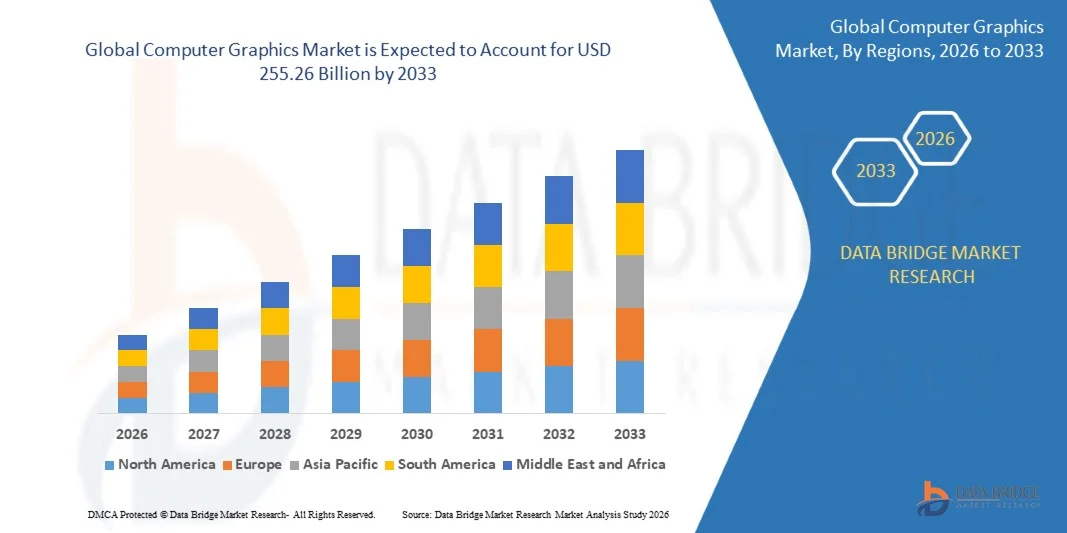
- Согласно анализу Data Bridge Market Research, размер мирового рынка компьютерной графики был оценен как158,71 млрд долларов США в 2025 годуОжидается, что он достигнет255,26 млрд долларов к 2033 году, вCAGR 6,12%в течение прогнозируемого периода
- Рост рынка в значительной степени обусловлен растущим спросом на качественный визуальный контент в играх, фильмах и приложениях виртуальной реальности.
- Быстрые достижения в графических процессорах (GPU) и технологиях рендеринга в реальном времени повышают производительность и реализм в цифровом контенте
Размер рынка и прогноз:
- Глобальная рыночная стоимость (2025):158,71 млрд долларов США
- Ожидаемая рыночная стоимость (2033):255,26 млрд долларов
- Прогноз CAGR (2026–2033):6.12%
Как анализируется рынок компьютерной графики
- Рынок стал свидетелем значительных инноваций в графике на основе ИИ, что позволяет быстрее создавать реалистичные визуальные эффекты и анимацию.
- Рост инвестиций в облачные решения для рендеринга и потоковой передачи графики повышает доступность и масштабируемость для бизнеса и потребителей.
- Северная Америка доминировала на мировом рынке компьютерной графики с самой большой долей дохода в 38,75% в 2025 году, чему способствовало присутствие крупных поставщиков программного обеспечения, широкое внедрение передовых графических решений на предприятиях и растущий спрос на высококачественную визуализацию в средствах массовой информации, развлечениях и промышленном дизайне.
- Ожидается, что в Азиатско-Тихоокеанском регионе будут наблюдаться самые высокие темпы роста на мировом рынке компьютерной графики, обусловленные быстрой урбанизацией, увеличением располагаемых доходов, расширением индустрии игр и анимации и правительственными инициативами, поддерживающими внедрение цифровых технологий.
- Сегмент визуализации занимал самую большую долю рынка в 2025 году, чему способствовало его широкое использование в творческих отраслях и его способность генерировать реалистичные изображения для моделирования, проверки дизайна и визуальной коммуникации. Инструменты визуализации часто предлагают бесшовную поддержку вывода с высоким разрешением, рендеринга в реальном времени и интеграции с облачными платформами, что делает их предпочтительным выбором для профессионалов в области медиа, развлечений и дизайна продуктов. Кроме того, программное обеспечение Visualization поддерживает рабочие процессы совместной работы, что еще больше ускоряет его внедрение среди распределенных команд.
Сфера охвата и сегментация рынка компьютерной графики
|
Атрибуты |
Компьютерный графический ключОбзор рынка |
|
Сегменты покрыты |
|
|
Страны, охваченные |
Северная Америка
Европа
Азиатско-Тихоокеанский регион
Ближний Восток и Африка
Южная Америка
|
|
Ключевые игроки рынка |
|
|
Рыночные возможности |
|
|
Информационные наборы данных с добавленной стоимостью |
В дополнение к рыночным идеям, таким как рыночная стоимость, темпы роста, сегменты рынка, географический охват, игроки рынка и рыночный сценарий, отчет о рынке, курируемый командой Data Bridge Market Research, включает углубленный экспертный анализ, анализ импорта / экспорта, анализ цен, анализ потребления продукции и анализ пестле. |
Каковы тенденции рынка компьютерной графики
«Рост спроса на качественные визуальные эффекты»
Растущий спрос на реалистичный и захватывающий визуальный контент значительно формирует рынок компьютерной графики, поскольку такие отрасли, как игры, кино и виртуальная реальность, все чаще требуют высококачественного графического рендеринга. Передовые графические решения улучшают визуальную точность, обеспечивают интерактивные среды и улучшают пользовательский опыт на разных платформах, поощряя разработчиков программного обеспечения и производителей оборудования к постоянным инновациям.
Принятие приложений виртуальной реальности (VR), дополненной реальности (AR) и смешанной реальности (MR) ускорило потребность в высокопроизводительной графике. Эти технологии в значительной степени зависят от мощных графических процессоров (GPU) и оптимизированных движков рендеринга для обеспечения бесшовного опыта, стимулирования роста рынка и стимулирования сотрудничества между разработчиками программного обеспечения, поставщиками оборудования и развлекательными компаниями.
Растущее использование компьютерной графики в моделировании, архитектурной визуализации, автомобильном дизайне и здравоохранении влияет на расширение рынка. Качественная графика позволяет точно моделировать, моделировать в реальном времени и улучшать визуализацию, позволяя отраслям оптимизировать процессы проектирования, снизить затраты и повысить эффективность.
Например, в 2024 году NVIDIA в США и Autodesk в Великобритании запустили новые графические процессоры и обновления программного обеспечения, направленные на улучшение производительности графики в реальном времени для игровых, анимационных и дизайнерских рабочих процессов. Эти решения улучшили визуальное качество, сократили время рендеринга и поддержали более сложные графические проекты, укрепив внедрение высококачественных графических технологий.
В то время как спрос на передовую компьютерную графику растет, устойчивое расширение рынка зависит от постоянных инноваций, экономически эффективных аппаратных решений и совместимости программного обеспечения на разных платформах. Производители сосредоточены на повышении производительности графического процессора, эффективности рендеринга и облачных графических решений для поддержки более широкого внедрения в различных отраслях промышленности.
Что такое динамика рынка компьютерной графики
водитель
«Растущее внедрение VR, AR и игровых приложений»
Рост потребительского и корпоративного спроса на захватывающие игры, интерактивные симуляции и виртуальные впечатления является основным драйвером рынка компьютерной графики. Разработчики все чаще используют высокопроизводительные графические процессоры, графические API и рендеринг на основе ИИ для предоставления реалистичного контента и отзывчивого опыта.
Расширение использования графических решений в производстве фильмов, архитектурной визуализации, медицинской визуализации, автомобильном дизайне и образовании способствует росту рынка. Расширенные графические возможности улучшают реализм, позволяют точно моделировать и облегчают сложные процессы проектирования, увеличивая принятие в профессиональном и потребительском сегментах.
Поставщики оборудования и программного обеспечения активно продвигают графические решения через запуск продуктов, интеграцию платформ и партнерские отношения. Эти усилия в сочетании с растущим внедрением гарнитур VR / AR и технологий облачного рендеринга побуждают отрасли перейти на передовые графические платформы для получения конкурентного преимущества.
Например, в 2023 году AMD в США и Epic Games в Великобритании сообщили о расширенном развертывании высокопроизводительных видеокарт и движков рендеринга в приложениях для игр и моделирования. Принятие привело к улучшению визуальной точности, более плавной производительности и более быстрому рендерингу, повышению вовлеченности потребителей и отраслевым стандартам.
Хотя спрос на передовую графику высок, более широкое внедрение зависит от стоимости, доступности оборудования и совместимости программного обеспечения. Инвестиции в облачный рендеринг, эффективность графического процессора и кросс-платформенные решения будут иметь решающее значение для поддержки глобального роста и поддержания конкурентного позиционирования.
Сдержанность/вызов
«Высокая стоимость оборудования и сложная интеграция программного обеспечения»
Высокая стоимость графических процессоров, специализированного графического оборудования и передового программного обеспечения для рендеринга остается ключевой проблемой, ограничивая принятие среди бюджетных потребителей и малых предприятий. Комплексные требования к интеграции еще больше влияют на сроки развертывания и эффективность работы
Проблемы совместимости между различными графическими API, программными платформами и конфигурациями оборудования могут ограничивать бесперебойную производительность. Это может привести к увеличению затрат для предприятий и разработчиков, которым необходимо поддерживать несколько графических сред для различных приложений.
Ограниченная осведомленность о передовых графических решениях и нехватка квалифицированного персонала на развивающихся рынках еще больше сдерживают рост. Компании могут столкнуться с проблемами при внедрении высококачественных графических решений для моделирования, игр и профессиональной визуализации.
Например, в 2024 году несколько небольших студий в Индии и Юго-Восточной Азии сообщили о более медленном внедрении облачного рендеринга и высокопроизводительных графических процессоров из-за повышенных затрат и проблем с интеграцией. Эти ограничения повлияли на сроки реализации проекта и помешали более широкому доступу к передовым графическим технологиям.
Преодоление этих проблем требует экономически эффективного оборудования, упрощенных программных решений и учебных инициатив для повышения квалификации и осведомленности. Сотрудничество между производителями оборудования, разработчиками программного обеспечения и учебными заведениями может помочь раскрыть долгосрочный потенциал роста мирового рынка компьютерной графики, одновременно стимулируя инновации и внедрение.
Что такое рынок компьютерной графики
Рынок сегментирован на основе программного обеспечения, сервиса, конечного пользователя и вертикали.
• Программное обеспечение
На основе программного обеспечения мировой рынок компьютерной графики сегментирован на автоматизированное проектирование / компьютерное производство (CAD / CAM), визуализацию, цифровое видео, визуализацию, моделирование / анимацию и другие. Сегмент визуализации занимал самую большую долю рынка в 2025 году, чему способствовало его широкое использование в творческих отраслях и его способность генерировать реалистичные изображения для моделирования, проверки дизайна и визуальной коммуникации. Инструменты визуализации часто предлагают бесшовную поддержку вывода с высоким разрешением, рендеринга в реальном времени и интеграции с облачными платформами, что делает их предпочтительным выбором для профессионалов в области медиа, развлечений и дизайна продуктов. Кроме того, программное обеспечение Visualization поддерживает рабочие процессы совместной работы, что еще больше ускоряет его внедрение среди распределенных команд.
Ожидается, что в сегменте моделирования / анимации будут наблюдаться самые быстрые темпы роста с 2026 по 2033 год, обусловленные растущим спросом на анимационный контент в играх, виртуальном производстве и дополненной / виртуальной реальности. Инструменты моделирования / анимации особенно востребованы за их надежные возможности в создании подробных 3D-активов и анимации персонажей, что делает их необходимыми для студий и независимых создателей, ориентированных на захватывающий цифровой контент.
• Сервис
На основе сервиса мировой рынок компьютерной графики сегментирован на консалтинговые услуги, обучение и поддержку, а также интеграцию. Интеграционный сегмент занимал самую большую долю рынка в 2025 году из-за растущей потребности в бесшовном развертывании графических решений в корпоративных системах и проектных трубопроводах. Интеграционные сервисы часто предоставляют индивидуальные рабочие процессы, которые обеспечивают совместимость с существующей ИТ-инфраструктурой и сторонними приложениями, что делает их незаменимыми для крупномасштабных реализаций. Кроме того, поставщики услуг интеграции помогают организациям оптимизировать производительность и масштабируемость графических решений, еще больше усиливая их привлекательность.
Ожидается, что в сегменте обучения и поддержки будет зафиксирован самый быстрый рост с 2026 по 2033 год, что обусловлено растущей сложностью передовых графических инструментов и растущим вниманием к повышению квалификации рабочей силы. Услуги по обучению и поддержке особенно ценятся за их роль в сокращении кривых обучения и обеспечении эффективного использования возможностей программного обеспечения, что делает их критически важными для предприятий, внедряющих передовые графические технологии.
• КонецПользователь
На базе конечного пользователя глобальный рынок компьютерной графики сегментирован на малые и средние предприятия и предприятия. Сегмент Enterprises занимал самую большую долю рынка в 2025 году благодаря значительным инвестициям в высокопроизводительные графические решения для сложных задач проектирования, моделирования и производства контента. Предприятия часто развертывают комплексные графические экосистемы, которые поддерживают межведомственное сотрудничество и высококачественную продукцию, что делает их доминирующим сегментом с точки зрения доходов. Кроме того, предприятия получают выгоду от долгосрочных соглашений об обслуживании и индивидуальной поддержки, которые повышают эффективность работы.
Ожидается, что в сегменте малого и среднего бизнеса будут наблюдаться самые быстрые темпы роста с 2026 по 2033 год, что обусловлено растущим внедрением экономичного графического программного обеспечения и услуг облачного рендеринга. Малый и средний бизнес использует доступные модели подписки и масштабируемые графические решения, чтобы конкурировать с более крупными организациями, что делает этот сегмент ключевым драйвером роста.
• Вертикальный
На основе вертикали глобальный рынок компьютерной графики сегментирован на Aerospace and Defense, Automobile, Entertainment and Advertising, Academia and Education, Healthcare, Manufacturing, Architecture, Building, and Construction and Others. В 2025 году вертикаль развлечений и рекламы занимала самую большую долю рынка в связи с высоким спросом на визуальные эффекты, анимацию и цифровые кампании на кино, телевидении и онлайн-платформах. Приложения для развлечений и рекламы часто требуют расширенных графических возможностей для повествования историй и привлечения бренда, что делает эту вертикаль основным источником дохода. Кроме того, растущее потребление цифрового медиаконтента способствовало дальнейшей интеграции технологий компьютерной графики.
Ожидается, что вертикаль архитектуры, строительства и строительства будет наблюдать самый быстрый рост с 2026 по 2033 год, обусловленный растущим использованием инструментов 3D-визуализации и информационного моделирования зданий (BIM) для планирования проектирования и коммуникации проекта. Специалисты по архитектуре и строительству все больше полагаются на компьютерную графику для создания подробной визуализации структур и облегчения обзоров заинтересованных сторон, что делает эту вертикаль значительным вкладом в расширение рынка.
В каком регионе самая большая доля рынка компьютерной графики
Северная Америка доминировала на мировом рынке компьютерной графики с самой большой долей дохода в 38,75% в 2025 году, чему способствовало присутствие крупных поставщиков программного обеспечения, широкое внедрение передовых графических решений на предприятиях и растущий спрос на высококачественную визуализацию в средствах массовой информации, развлечениях и промышленном дизайне.
Организации и творческие профессионалы в регионе высоко ценят возможности, предлагаемые программным обеспечением для компьютерной графики, включая рендеринг в реальном времени, 3D-моделирование и моделирование, а также бесшовную интеграцию с облачными и совместными платформами.
Это широкое внедрение дополнительно поддерживается высокими инвестициями в ИТ-инфраструктуру, технологичной рабочей силой и растущим акцентом на создание цифрового контента и захватывающий опыт, устанавливая компьютерную графику в качестве критического инструмента для предприятий и малых и средних предприятий.
Американский рынок компьютерной графики Insight
Американский рынок компьютерной графики получил самую большую долю доходов в 2025 году в Северной Америке, чему способствовало быстрое внедрение инструментов визуализации, моделирования и анимации в медиа, играх, аэрокосмической и автомобильной промышленности. Организации все чаще отдают приоритет высокоточным графическим решениям для проектирования, моделирования и производства цифрового контента. Растущая интеграция графического программного обеспечения с облачными сервисами, рендерингом на основе ИИ и платформами для совместной работы в режиме реального времени способствует дальнейшему росту рынка. Кроме того, расширение приложений AR/VR и производство цифровых носителей информации вносит значительный вклад в развитие рынка.
Европейский рынок компьютерной графики Insight
На европейском рынке компьютерной графики ожидается самый быстрый рост с 2026 по 2033 год, в основном за счет увеличения инвестиций в цифровые медиа, архитектурную визуализацию и передовые инструменты моделирования. Ориентация региона на инновации в сочетании с государственными стимулами для внедрения технологий способствует росту рынка. Европейские организации также обращаются к энергоэффективному программному обеспечению и инструментам, которые повышают эффективность рабочего процесса. Рынок переживает заметный рост в сфере развлечений, автомобилестроения и строительства, причем компьютерная графика все чаще интегрируется как в новые проекты, так и в существующие цифровые трубопроводы.
Обзор рынка компьютерной графики в Великобритании
Ожидается, что на рынке компьютерной графики Великобритании будут наблюдаться самые быстрые темпы роста с 2026 по 2033 год, обусловленные расширением сектора средств массовой информации и развлечений и растущей тенденцией создания цифрового контента. Кроме того, внедрение передовых инструментов проектирования и моделирования в архитектуре, производстве и автомобильной промышленности стимулирует как МСП, так и крупные предприятия инвестировать в графические решения. Ожидается, что сильная ИТ-инфраструктура Великобритании, цифровая грамотность и процветающая творческая экономика продолжат стимулировать рост рынка.
Немецкий рынок компьютерной графики Insight
Ожидается, что на рынке компьютерной графики Германии будут наблюдаться самые быстрые темпы роста с 2026 по 2033 год, чему способствует растущий спрос на высокоточные инструменты CAD / CAM, программное обеспечение для визуализации и моделирования в производственном и инженерном секторах. Акцент Германии на инновации, устойчивость и цифровизацию способствует внедрению передовых графических решений, особенно для промышленного дизайна, автомобильных и строительных проектов. Интеграция компьютерной графики с корпоративными системами и цифровыми двойниками становится все более распространенной, отвечающей высоким стандартам немецких потребителей и промышленных клиентов.
Азиатско-Тихоокеанский рынок компьютерной графики
Ожидается, что на рынке компьютерной графики Азиатско-Тихоокеанского региона будут наблюдаться самые быстрые темпы роста с 2026 по 2033 год, обусловленные быстрой урбанизацией, ростом располагаемых доходов и растущими инвестициями в цифровые медиа, игры и анимацию в таких странах, как Китай, Япония и Индия. Расширяющаяся технологическая экосистема региона в сочетании с правительственными инициативами, поддерживающими цифровизацию и инновации, стимулирует внедрение компьютерных графических решений. Кроме того, APAC становится центром разработки программного обеспечения и анимационных услуг, что делает высококачественные графические инструменты более доступными для бизнеса и творческих профессионалов.
Японский рынок компьютерной графики
Ожидается, что японский рынок компьютерной графики будет расти самыми быстрыми темпами с 2026 по 2033 год благодаря передовой технологической инфраструктуре страны, сильной игровой и развлекательной индустрии и спросу на высококачественный цифровой контент. Японские организации подчеркивают точность и реализм в графике, широко внедряя инструменты 3D-моделирования, визуализации и анимации. Интеграция с платформами IoT и AR/VR, наряду с поддержкой удаленного сотрудничества, способствует росту. Кроме того, стареющая рабочая сила Японии стимулирует спрос на удобные и эффективные графические решения для корпоративных и творческих приложений.
Китайский рынок компьютерной графики Insight
Китайский рынок компьютерной графики составил самую большую долю рынка в Азиатско-Тихоокеанском регионе в 2025 году, что объясняется быстро растущими игровыми, анимационными и цифровыми медиа отраслями страны. Китай является одним из крупнейших рынков программного обеспечения для CAD / CAM, визуализации и моделирования, с растущим внедрением в производственном, автомобильном и архитектурном секторах. Стремление к умным городам, государственная поддержка развития технологий и присутствие ведущих отечественных поставщиков программного обеспечения являются ключевыми факторами, стимулирующими рынок в Китае.
Каковы основные компании на рынке компьютерной графики
Индустрия компьютерной графики в основном возглавляется хорошо зарекомендовавшими себя компаниями, в том числе:
•Adobe(США)
•Advanced Micro Devices, Inc.(США)
•Системы Dassault(Франция)
•Autodesk Inc.(США)
•Intel Corporation(США)
• Siemens (Германия)
• Microsoft (США)
Корпорация SONY (Япония)
Siemens Product Lifecycle Management Software Inc. (США)
Imagination Technologies Limited (Великобритания)
Nvidia Corporation (США)
• ARM Ltd. (Великобритания)
Autodesk Inc. (США)
Matrox (Канада)
Mentor Graphics, Inc (США)
• Программное обеспечение, связанное с 3D PLM (разное)
Каковы последние достижения на мировом рынке компьютерной графики
- В августе 2026 года NVIDIA (США) запустила свою новейшую архитектуру GPU, предназначенную для значительного улучшения возможностей трассировки и рендеринга лучей в реальном времени. Новые графические процессоры предлагают улучшенную производительность, меньшую задержку и более высокую энергоэффективность, обслуживая как игровые, так и профессиональные сектора визуализации. Эта разработка укрепляет конкурентные позиции NVIDIA, одновременно удовлетворяя растущий спрос на реалистичные виртуальные среды. Технология также поддерживает расширенное моделирование и графические рабочие процессы на основе ИИ, обеспечивая более широкое влияние в таких отраслях, как медиа, развлечения и инженерия.
- В сентябре 2025 года Adobe (США) представила новый набор инструментов на базе ИИ в своей платформе Creative Cloud, направленных на автоматизацию повторяющихся задач проектирования и оптимизацию творческих рабочих процессов. Инструменты позволяют дизайнерам и создателям контента повысить производительность, быстрее генерировать высококачественные визуальные эффекты и сосредоточиться на инновациях, а не на ручных процессах. Эта инициатива укрепляет лидерство Adobe в области креативного программного обеспечения, одновременно отвечая растущим ожиданиям клиентов. Интегрируя возможности ИИ, Adobe позиционирует себя на переднем крае интеллектуального создания контента и передовых графических решений.
- В октябре 2024 года Unity Technologies (США) заключила стратегическое партнерство с ведущим производителем оборудования виртуальной реальности для расширения своей платформы создания контента VR. Сотрудничество предоставляет разработчикам доступ к расширенным инструментам для погружения, включая оптимизированный рендеринг, интерактивное моделирование и тестирование в реальном времени. Это партнерство поддерживает рост VR-приложений в играх, обучении, архитектуре и образовании. Расширяя свою экосистему, Unity ускоряет внедрение своей платформы и способствует инновациям на рынке контента.
- В марте 2024 года NVIDIA (США) представила свою платформу Blackwell, позволяющую организациям запускать генеративный ИИ в реальном времени на триллионах моделей языка с большими параметрами. Платформа обеспечивает в 25 раз более низкое энергопотребление и затраты по сравнению с предыдущими решениями, что делает графику и моделирование на основе ИИ более устойчивым и масштабируемым. Это позволяет предприятиям использовать генеративный ИИ для создания контента, визуализации и сложных задач моделирования. Этот запуск укрепляет роль NVIDIA в компьютерной графике с поддержкой ИИ и укрепляет ее лидерство на рынке высокопроизводительных GPU-решений.
- В мае 2023 года AMD (США) запустила видеокарту Radeon RX 7600, предлагающую производительность следующего поколения для игр, создания контента и потоковых приложений. GPU обеспечивает повышенную скорость рендеринга, более высокую частоту кадров и улучшенную энергоэффективность, обслуживая как профессиональный, так и потребительский рынки. Этот выпуск усиливает конкурентное преимущество AMD в высокопроизводительных графических решениях. Он также поддерживает растущий спрос на передовой игровой опыт, производство цифровых медиа и рабочие процессы моделирования в различных отраслях.
- В 2022 году NVIDIA (США) представила несколько достижений в технологиях рендеринга на основе ИИ и визуализации в реальном времени, направленных на ускорение производительности графики для профессионального дизайна, игр и приложений моделирования. Эти улучшения позволили ускорить рендеринг, повысить точность визуальных эффектов и интеграцию с фреймворками машинного обучения. Эти разработки укрепили доминирование NVIDIA на рынке компьютерной графики и способствовали более широкому внедрению графических решений с улучшенным ИИ. Предприятия и творческие профессионалы выиграли от повышения эффективности, снижения вычислительных затрат и расширения возможностей рабочего процесса.
SKU-
Получите онлайн-доступ к отчету на первой в мире облачной платформе рыночной аналитики

- Интерактивная панель анализа данных
- Панель анализа компании для возможностей с высоким потенциалом роста
- Доступ аналитика-исследователя для настройки и запросов
- Анализ конкурентов с помощью интерактивной панели
- Последние новости, обновления и анализ тенденций
- Используйте возможности сравнительного анализа для комплексного отслеживания конкурентов
Методология исследования
Сбор данных и анализ базового года выполняются с использованием модулей сбора данных с большими размерами выборки. Этап включает получение рыночной информации или связанных данных из различных источников и стратегий. Он включает изучение и планирование всех данных, полученных из прошлого заранее. Он также охватывает изучение несоответствий информации, наблюдаемых в различных источниках информации. Рыночные данные анализируются и оцениваются с использованием статистических и последовательных моделей рынка. Кроме того, анализ доли рынка и анализ ключевых тенденций являются основными факторами успеха в отчете о рынке. Чтобы узнать больше, пожалуйста, запросите звонок аналитика или оставьте свой запрос.
Ключевой методологией исследования, используемой исследовательской группой DBMR, является триангуляция данных, которая включает в себя интеллектуальный анализ данных, анализ влияния переменных данных на рынок и первичную (отраслевую экспертную) проверку. Модели данных включают сетку позиционирования поставщиков, анализ временной линии рынка, обзор рынка и руководство, сетку позиционирования компании, патентный анализ, анализ цен, анализ доли рынка компании, стандарты измерения, глобальный и региональный анализ и анализ доли поставщика. Чтобы узнать больше о методологии исследования, отправьте запрос, чтобы поговорить с нашими отраслевыми экспертами.
Доступна настройка
Data Bridge Market Research является лидером в области передовых формативных исследований. Мы гордимся тем, что предоставляем нашим существующим и новым клиентам данные и анализ, которые соответствуют и подходят их целям. Отчет можно настроить, включив в него анализ ценовых тенденций целевых брендов, понимание рынка для дополнительных стран (запросите список стран), данные о результатах клинических испытаний, обзор литературы, обновленный анализ рынка и продуктовой базы. Анализ рынка целевых конкурентов можно проанализировать от анализа на основе технологий до стратегий портфеля рынка. Мы можем добавить столько конкурентов, о которых вам нужны данные в нужном вам формате и стиле данных. Наша команда аналитиков также может предоставить вам данные в сырых файлах Excel, сводных таблицах (книга фактов) или помочь вам в создании презентаций из наборов данных, доступных в отчете.











