


Global Contact Adhesives Market Segmentation, By Resin Type (Neoprene, Polyurethane, Acrylic, Styrene Butadiene Copolymer (SBC), and Others), Technology (Solvent-Based, Water-Based, and Others), Application (Woodworking, Leather and Footwear, Automotive, Construction, and Packaging), Raw Material (Polychloroprene, Polyurethane, Acrylic Polymers, Styrene Butadiene Rubber, Butyl Rubber, and Natural Rubber), Mode of Application (Spraying, Curtain Coating, Roller Coating, and Brushing) - Industry Trends and Forecast to 2033
Каков размер рынка контактных клеев и темпы роста
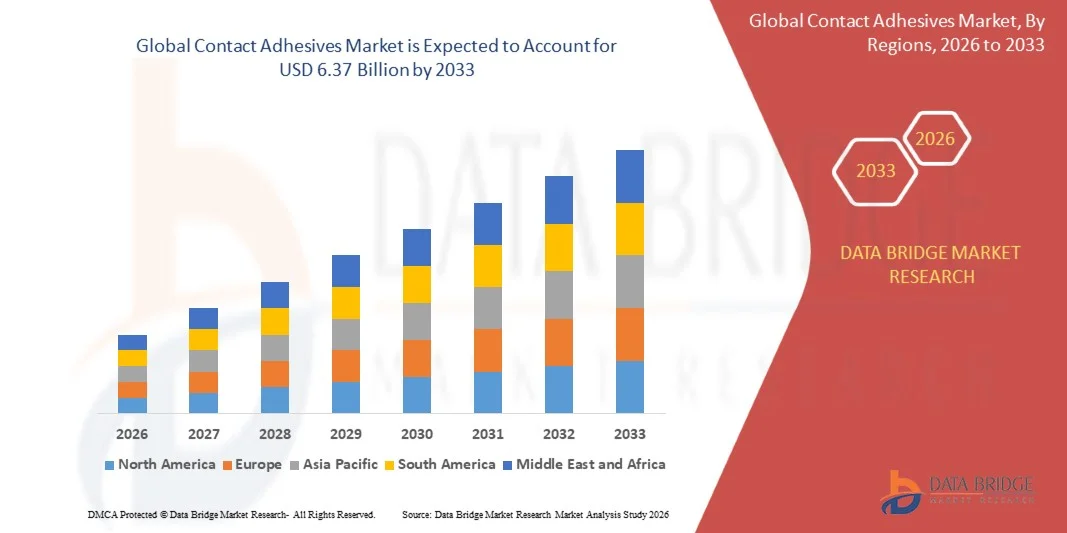
- Согласно анализу Data Bridge Market Research, размер мирового рынка контактных клеев был оценен как4,03 млрд долларов США в 2025 годуОжидается, что он достигнет$6,37 млрд. к 2033 году, вCAGR 5,90%в течение прогнозируемого периода
- Рост рынка в значительной степени обусловлен растущим спросом на долговечные высокопроизводительные решения для связывания в таких отраслях, как автомобилестроение, строительство, упаковка и мебель, которые требуют сильной адгезии и долговечной надежности.
- Кроме того, растущий акцент на устойчивые и экологически чистые клеевые составы, наряду с соблюдением нормативных требований для промышленных и потребительских приложений, побуждает производителей внедрять инновации и расширять свои предложения контактных клеев. Эти факторы ускоряют внедрение контактных клеев, тем самым значительно повышая рост отрасли.
Размер рынка и прогноз
- Глобальная рыночная стоимость (2025) $4,03 млрд
- Ожидаемая рыночная стоимость (2033): $6,37 млрд.
- Прогноз CAGR (2026–2033): 5,90%
Каковы основные выводы рынка контактных клеев
- Контактные клеи представляют собой быстро связывающиеся клеи на основе растворителей или воды, которые обеспечивают мгновенную адгезию между поверхностями, такими как дерево, металл, пластмассы, резина и ламинаты. Они широко используются в промышленных, коммерческих и бытовых приложениях из-за их универсальности, прочности и простоты применения.
- Растущий спрос на контактные клеи в первую очередь подпитывается быстрой индустриализацией, ростом в автомобильном и строительном секторах, увеличением использования ламинированных и композитных материалов и растущей потребностью в специализированных клеях, которые отвечают высоким стандартам производительности и устойчивости.
- Азиатско-Тихоокеанский регион доминировал на рынке контактных клеев с долей 39,1% в 2025 году из-за расширения строительной, автомобильной и упаковочной промышленности, а также сильного присутствия центров клеевого производства.
- Ожидается, что Северная Америка станет самым быстрорастущим регионом на рынке контактных клеев в течение прогнозируемого периода из-за высокого спроса в автомобильной, строительной, мебельной и упаковочной промышленности.
- Сегмент неопрена доминировал на рынке с долей рынка 44% в 2025 году, благодаря превосходной адгезии к различным субстратам, включая металлы, пластмассы и резину. Клеи на основе неопрена обеспечивают отличную термостойкость и химическую стойкость, что делает их пригодными для промышленного применения, автомобильного связывания и строительных проектов. Их универсальность и длительное присутствие на рынке сделали их предпочтительным выбором среди производителей, стремящихся к надежности и долговечности.
Сфера охвата и сегментация рынка контактных клеев
|
Атрибуты |
Контактные клеи Key Market Insights |
|
Сегменты покрыты |
|
|
Страны, охваченные |
Северная Америка
Европа
Азиатско-Тихоокеанский регион
Ближний Восток и Африка
Южная Америка
|
|
Ключевые игроки рынка |
|
|
Рыночные возможности |
|
|
Информационные наборы данных с добавленной стоимостью |
В дополнение к информации о рыночных сценариях, таких как рыночная стоимость, темпы роста, сегментация, географическое покрытие и основные игроки, рыночные отчеты, курируемые Data Bridge Market Research, также включают анализ экспорта импорта, обзор производственных мощностей, анализ потребления продукции, анализ ценового тренда, сценарий изменения климата, анализ цепочки поставок, анализ цепочки создания стоимости, обзор сырья / расходных материалов, критерии выбора поставщиков, анализ PESTLE, анализ Porter и нормативную базу. |
Каковы основные тенденции на рынке контактных клеев
«Растущее внедрение устойчивых и экологически чистых клеевых решений»
- Значительной тенденцией на рынке контактных клеев является растущее внимание к устойчивым и экологически чистым клеевым решениям, обусловленное повышением осведомленности об окружающей среде и нормативным давлением во всех отраслях. Производители разрабатывают клеи с низким содержанием ЛОС, на водной основе и без растворителей, чтобы минимизировать экологическое воздействие и повысить безопасность на рабочем месте.
- Например, Henkel предлагает экологически чистые клеевые диапазоны Loctite и Pritt, которые обслуживают промышленные и потребительские приложения, способствуя сокращению химических выбросов при сохранении высокой производительности склеивания. Эти продукты широко используются в автомобильной сборке, производстве мебели и упаковках.
- Спрос на клеи с улучшенными эксплуатационными характеристиками, такими как быстрое отверждение, высокая прочность связи и долговечность, формирует инновации продукта. Эта тенденция стимулирует разработку многофункциональных клеев, которые могут работать в различных эксплуатационных и экологических условиях.
- Строительная и деревообрабатывающая отрасли все чаще выбирают клеи, которые обеспечивают прочные, долговечные связи без ущерба для стандартов устойчивости. Это позиционирует экологически ответственные клеи как предпочтительный выбор для крупномасштабных проектов строительства и реконструкции.
- Растущее предпочтение зеленых продуктов в упаковке и потребительских товарах побуждает производителей предлагать клеи, которые соответствуют экологическим этикеткам и международным сертификатам устойчивости. Такое принятие оказывает влияние на политику закупок и выбор поставщиков как в промышленном, так и в коммерческом сегментах.
- На рынке наблюдается растущее сотрудничество между производителями клея и поставщиками сырья для обеспечения устойчивых источников и практики круговой экономики. Этот фокус усиливает долгосрочный переход к экологически сознательным клеевым решениям в глобальных отраслях промышленности.
Контактные клеи Динамика рынка
водитель
«Рост спроса со стороны автомобильной, строительной и упаковочной промышленности»
- Растущие требования к надежным и высокопроизводительным решениям для связывания в автомобильном, строительном и упаковочном секторах стимулируют рынок контактных клеев. Клеи обеспечивают гибкость, структурную целостность и эффективность в процессах сборки в этих отраслях.
- Например, 3M поставляет широкий ассортимент контактных клеев, которые широко используются в автомобильной сборке интерьера и производстве мебели, что позволяет быстрее производить и укреплять склеивание, уменьшая зависимость от механических креплений. Это способствует производительности и гибкости дизайна.
- Растущие инфраструктурные проекты во всем мире повышают спрос на строительные клеи, которые могут заменить традиционные методы соединения, обеспечивая скорость и долговечность в древесине, металле и композитах. Эта тенденция стимулирует более широкое внедрение контактных клеев в жилом и коммерческом строительстве.
- Упаковочная промышленность охватывает контактные клеи для гибкой упаковки, картонных коробок и приложений для маркировки, где сильные свойства адгезии и быстрой установки имеют решающее значение. Это усиливает потребность в специализированных клеях, адаптированных к различным упаковочным материалам.
- Растущий акцент на легких материалах и эффективности сборки, особенно в автомобильном и аэрокосмическом сегментах, поддерживает внедрение контактных клеев в качестве альтернативы механическим креплениям. Это позиционирование клеев как неотъемлемых компонентов в современных производственных стратегиях.
Сдержанность/вызов
«Высокая стоимость сырья и строгие экологические правила»
- Рынок контактных клеев сталкивается с проблемами из-за колебаний затрат на сырье, которые влияют на производственные расходы и стратегии ценообразования. Основные ингредиенты, такие как полимеры, смолы и растворители, часто испытывают волатильность цен, влияя на общую динамику рынка.
- Например, Г.Б. Фуллер выделил давление на себестоимость, возникающее в результате повышения цен на смолу и полимер, что влияет на бюджеты и маржу производства клеев. Компании принимают стратегии оптимизации затрат и изучают альтернативные формулировки для смягчения этой проблемы.
- Строгие экологические правила, касающиеся выбросов ЛОС, использования химических веществ и безопасности на рабочем месте, налагают на производителей затраты на соблюдение. Для выполнения этих требований требуются инвестиции в исследования, корректировки производства и процессы сертификации.
- Ограниченная доступность экологически приемлемого сырья может сдерживать цепочки поставок и задерживать графики производства, особенно для клеев на водной основе или без растворителей. Эта зависимость от специализированных ресурсов увеличивает сложность операций и влияет на доступность рынка.
- Необходимость сбалансировать производительность, устойчивость и экономическую эффективность продолжает бросать вызов производителям. Эти ограничения коллективно заставляют компании внедрять инновации в составы и производственные процессы, сохраняя при этом приверженность нормативным стандартам.
Каковы последние события на рынке контактных клеев
Рынок сегментирован на основе типа смолы, технологии, применения, сырья и способа применения.
• По типу смолы
На основе типа смолы рынок контактных клеев сегментирован на неопрен, полиуретан, акрил, бутадиеновый сополимер стирола (SBC) и другие. Сегмент неопрена доминировал на крупнейшей доле рынка в 44% в 2025 году, чему способствовала его превосходная адгезия к различным субстратам, включая металлы, пластмассы и резину. Клеи на основе неопрена обеспечивают отличную термостойкость и химическую стойкость, что делает их пригодными для промышленного применения, автомобильного связывания и строительных проектов. Их универсальность и длительное присутствие на рынке сделали их предпочтительным выбором среди производителей, стремящихся к надежности и долговечности. Неопреновые клеи также хорошо интегрируются с составами на основе растворителей и воды, что еще больше повышает их признание на рынке и широкое использование.
Ожидается, что в сегменте полиуретана будут наблюдаться самые быстрые темпы роста с 2026 по 2033 год, чему способствует растущий спрос в автомобильном, строительном и упаковочном секторах. Например, такие компании, как Henkel, представили передовые контактные клеи на основе полиуретана с высокой гибкостью и прочностью соединения, подходящие для легких и композитных материалов. Полиуретановые клеи пользуются популярностью благодаря своим превосходным механическим свойствам, ударопрочности и долговечности окружающей среды, что способствует внедрению в высокопроизводительных приложениях. Их совместимость с современными автоматизированными прикладными системами также способствует ускоренному росту сегмента.
• Технология
На основе технологии рынок контактных клеев сегментирован на основе растворителей, на водной основе и другие. Сегмент, основанный на растворителях, занимал самую большую долю дохода в 2025 году, что объясняется его быстрой прочностью связи, универсальностью субстратов и широким использованием в промышленном производстве. Клеи на основе растворителей обеспечивают высокую производительность в условиях высокой температуры и высокой влажности, что делает их очень подходящими для строительных и автомобильных сборочных линий. Производители предпочитают композиции на основе растворителей для тяжелых применений из-за их предсказуемого времени лечения и сильных адгезионных свойств. Эти клеи также обеспечивают превосходную стабильность срока годности и совместимость с различными типами смол, увеличивая их присутствие на рынке.
Сегмент на водной основе, по прогнозам, станет свидетелем самого быстрого CAGR с 2026 по 2033 год, что обусловлено повышением экологических норм и переходом к экологически чистым клеям. Например, компания 3M разработала высокоэффективные контактные клеи на водной основе, которые уменьшают выбросы ЛОС при сохранении прочности соединения для деревообработки и упаковки. Водные технологии предлагают более низкий запах, более легкую очистку и улучшенную безопасность для конечных пользователей, что способствует внедрению в жилых и коммерческих приложениях. Их рост дополнительно поддерживается достижениями в области химии полимеров, которые повышают адгезию и долговечность в составах на водной основе.
• Подача заявки
На основе применения рынок контактных клеев сегментирован на деревообработку, кожу и обувь, автомобильную, строительную и упаковочную. Сегмент деревообработки доминировал в самой большой доле доходов в 2025 году из-за постоянного спроса со стороны мебельного производства и проектов дизайна интерьера. Контактные клеи в деревообработке обеспечивают прочную начальную стойку, быстрое связывание и долгосрочную долговечность для ламинатов, шпонов и композитных панелей. Компании предпочитают эти клеи для обеспечения точного выравнивания, зазорных свойств и устойчивости к экологическим нагрузкам в мебели и шкафах. Надежность и простота использования контактных клеев для деревянных подложек со временем укрепили позиции на рынке.
Ожидается, что в автомобильном сегменте будет наблюдаться самый быстрый рост с 2026 по 2033 год, обусловленный увеличением производства легких транспортных средств и ростом использования композитных материалов. Например, Sika представила передовые контактные клеи для автомобильной сборки, которые обеспечивают сильную адгезию к пластмассам, металлам и пене при одновременном улучшении аварийных характеристик. Автомобильные контактные клеи ценятся за их вибростойкость, гибкость и совместимость с автоматизацией на сборочных линиях. Растущий спрос на салоны автомобилей, сцепление отделки и приложения под капотом еще больше подпитывает траекторию роста сегмента.
• Сырой материал
На основе сырья рынок контактных клеев сегментирован на полихлорпрен, полиуретан, акриловые полимеры, стиролбутадиеновый каучук, бутиловый каучук и натуральный каучук. Сегмент полихлорпрена занимал самую большую долю рынка в 2025 году, что объясняется его сильной адгезией, химической стойкостью и термической стабильностью. Клеи на основе полихлорпрена обычно используются в автомобильной промышленности, обуви и строительстве из-за их способности эффективно связывать различные материалы. Их долговечность, водостойкость и высокая прочность на растяжение делают их надежным выбором для промышленных нужд. Производители также используют полихлорпреновые клеи для модернизации и ремонта, увеличивая общее проникновение на рынок.
Ожидается, что сегмент полиуретанового сырья будет испытывать самые быстрые темпы роста с 2026 по 2033 год, чему способствует его универсальность по гибким и жестким подложкам и растущий спрос в высокопроизводительных приложениях. Например, BASF разработала клеи на основе полиуретана с отличной эластичностью и ударопрочностью для автомобильной и упаковочной промышленности. Полиуретановые клеи обеспечивают превосходные механические свойства, долговечность и химическую стойкость, что приводит к принятию в приложениях, требующих прочных и гибких связей. Повышение осведомленности об экологически чистых составах полиуретана также способствует расширению рынка.
• По способу применения
На основе режима применения рынок контактных клеев сегментирован на распыление, занавесное покрытие, роликовое покрытие и щетку. Сегмент распыления доминировал на крупнейшей доле рынка в 2025 году, чему способствовала его эффективность в крупномасштабных промышленных операциях и равномерное распределение клея. Применение спрея обеспечивает высокоскоростную связь, точное покрытие и совместимость с автоматизированными производственными линиями, что делает его идеальным для деревообрабатывающей, автомобильной и упаковочной промышленности. Компании предпочитают применение спрея за его способность уменьшать потери клея, обеспечивать постоянную производительность и повышать общую производительность. Универсальность распыления через несколько клеевых составов еще больше усиливает его доминирование.
Сегмент прокатных покрытий, по прогнозам, станет свидетелем самого быстрого роста с 2026 по 2033 год, чему способствует растущее внедрение в строительном и упаковочном секторах для крупномасштабных непрерывных операций склеивания. Например, Henkel предлагает контактные клеи, наносимые роликами, которые обеспечивают прочную начальную стойку и последовательное покрытие для ламинатов, пленок и листов. Роликовое покрытие обеспечивает точную толщину клея, снижает ручной труд и поддерживает интеграцию с автоматизированными системами. Его растущее использование в промышленных масштабах значительно способствует ускоренному росту сегмента.
Контактные клеи Региональный анализ рынка
- Азиатско-Тихоокеанский регион доминировал на рынке контактных клеев с самой большой долей дохода в 39,1% в 2025 году, чему способствовало расширение строительной, автомобильной и упаковочной промышленности, а также сильное присутствие центров клеевого производства.
- Экономичный производственный ландшафт региона, увеличение инвестиций в специализированные клеи и рост экспорта промышленных и потребительских клеев ускоряют расширение рынка.
- Наличие квалифицированной рабочей силы, благоприятная государственная политика и быстрая индустриализация в развивающихся странах способствуют увеличению потребления контактных клеев как в промышленном, так и в коммерческом секторах.
Китай контактирует с рынком клеев
Китай занимал самую большую долю на рынке контактных клеев в Азиатско-Тихоокеанском регионе в 2025 году благодаря своей установленной химической производственной базе и лидерству в производстве клеев для автомобильной, строительной и мебельной отраслей. Страна выигрывает от благоприятной государственной политики, поддерживающей промышленный рост, обширную производственную инфраструктуру и сильные экспортные возможности. Рост внутреннего спроса на высокоэффективные клеи и продолжающиеся инвестиции в НИОКР для инновационных клеевых составов еще больше укрепляют рост рынка.
Индия Контактные клеи Market Insight
Индия является свидетелем самого быстрого роста в Азиатско-Тихоокеанском регионе, чему способствуют быстрая индустриализация, расширение автомобильного и строительного секторов и растущее внедрение современных производственных технологий. Правительственные инициативы, такие как «Make in India» и увеличение инвестиций в химическую и специализированную клеевую инфраструктуру, усиливают спрос. Кроме того, растущая упаковочная, мебельная и обувная промышленность, наряду с увеличением экспорта клеевых продуктов, способствуют устойчивому расширению рынка.
Европа Контактные клеи Market Insight
Рынок контактных клеев в Европе неуклонно расширяется, чему способствуют строгие нормативные стандарты, высокий спрос на долговечные и экологически безопасные клеи и растущие инвестиции в специализированные и устойчивые клеевые технологии. В регионе особое внимание уделяется качеству, производительности и соблюдению экологических норм, особенно в автомобильной, строительной и упаковочной промышленности. Расширение использования контактных клеев в современном производстве и промышленной автоматизации еще больше увеличивает рост рынка.
Германия Контактные клеи Market Insight
Рынок контактных клеев в Германии обусловлен его лидерством в автомобильной и промышленной промышленности, сильной инфраструктурой химической промышленности и акцентом на инновации и НИОКР. Налаженное сотрудничество между академическими учреждениями и производителями химических веществ способствует постоянному развитию высокопроизводительных и специализированных клеев. Спрос особенно высок в автомобильной сборке, промышленном оборудовании и точном инженерном применении.
Великобритания Контактные клеи Market Insight
Рынок Великобритании поддерживается зрелыми производственными и строительными отраслями, растущим спросом на специализированные клеи в автомобильном и упаковочном секторах и повышенным вниманием к устойчивости и соблюдению нормативных требований. Инвестиции в исследования и разработки, сотрудничество в академической отрасли и внедрение экологически чистых клеевых составов стимулируют рост рынка. Страна продолжает играть значительную роль на высокоценных промышленных рынках клея благодаря инновациям и технологическому внедрению.
Североамериканский контактный клей Market Insight
Прогнозируется, что Северная Америка будет расти самыми быстрыми темпами с 2026 по 2033 год, что обусловлено устойчивым спросом в автомобильной, строительной, мебельной и упаковочной промышленности. Упор на промышленную автоматизацию, высокоэффективные адгезивные технологии и перепрофилирование производственных операций повышают спрос. Кроме того, растущее внимание к экологически чистым клеям, технологическим инновациям и стратегическому сотрудничеству между ключевыми игроками способствует расширению рынка.
Американские контактные клеи Market Insight
На долю США приходится наибольшая доля на рынке Северной Америки в 2025 году, подкрепленная сильной промышленной базой, обширной инфраструктурой исследований и разработок и значительными инвестициями в специальность и высокопроизводительные клеи. Растущий спрос со стороны автомобильной, строительной и упаковочной промышленности, в сочетании с акцентом на устойчивость и соответствие нормативным требованиям, стимулирует принятие. Присутствие ключевых игроков рынка, передовые производственные возможности и зрелая дистрибьюторская сеть еще больше укрепляют лидирующие позиции США в регионе.
Какие компании находятся на рынке контактных клеев
Индустрия контактных клеев в основном возглавляется хорошо зарекомендовавшими себя компаниями, в том числе:
- 3М(США)
- Аркема (Франция)
- Sika AG(Швейцария)
- Компания Henkel Adhesives Technologies India Private Limited(Индия)
- Компания H.B. Fuller(США)
- Illinois Tool Works Inc. (США)
- Huntsman International LLC(США)
- Pidilite Industries Ltd (Индия)
- Jubilant Industries Ltd (Индия)
- Royal Adhesives & Sealants LLC (США)
- Permabond LLC (США)
- Hernon Manufacturing, Inc. (США)
- Master Bond Inc. (США)
- Delo Industrial Adhesives, LLC (США)
- Scott Bader Company Ltd. (США)
- Dymax Corporation (США)
- Loxeal S.r.l. (Италия)
- Mapei S.p.A (Италия)
- Uniseal Inc. (США)
Каковы последние события на рынке контактных клеев
- В марте 2026 года Henkel запустила новую оловянную плиту для упаковки своих клеевых решений на основе стали со сниженным содержанием CO2, что стало значительным шагом на пути к устойчивому производству. Это нововведение поддерживает растущий глобальный акцент на экологически чистую упаковку, позволяя производителям уменьшить углеродный след при сохранении безопасности и производительности продукции. Переход на более экологичную упаковку повышает предпочтения клиентов в отношении экологически ответственных клеевых решений, стимулируя спрос на устойчивые клеи в промышленном и коммерческом секторах. Этот шаг также позиционирует Henkel как лидера в интеграции устойчивости в промышленные клеевые решения, потенциально устанавливая ориентир для конкурентов.
- В феврале 2026 года Sika AG приобрела Akkim, известного турецкого производителя клеев и герметиков, расширив свои глобальные производственные мощности и присутствие на региональном рынке. Приобретение позволяет Sika укрепить свои конкурентные позиции в Европе, на Ближнем Востоке и на развивающихся рынках, одновременно расширяя свой портфель специализированных клеев. Ожидается, что расширенные производственные возможности и распределительные сети ускорят рост доходов, улучшат проникновение на рынок и предоставят индивидуальные решения для промышленных, строительных и автомобильных приложений. Эта консолидация отражает тенденцию стратегических слияний на рынке, направленных на достижение масштаба и технологического лидерства.
- В январе 2026 года BioBond Adhesives представила BioAdhere SUP250, промышленный клей на биооснове, предназначенный для высокопроизводительной мобильности и защиты. Эта разработка подчеркивает растущий спрос на устойчивые клеи, которые сочетают в себе экологическую ответственность с превосходными механическими характеристиками. Ожидается, что запуск будет способствовать внедрению адгезивных технологий на основе растений в промышленных и специализированных приложениях, побуждая производителей переходить к экологически сознательным решениям для связывания. Это также подчеркивает, как инновации в биополимерах могут расширить функциональный охват клеев, поддерживая при этом корпоративные цели устойчивого развития.
- В мае 2024 года Dorotape запустила свой сверхвысокий глянцевый ламинат GalleryLam SL98, разработанный для защиты широкоформатных цифровых принтов от царапин, высоких температур, жира, жидкостей и бытовой химии. Этот продукт повышает производительность клеевых ламинатов, расширяя их применение на рынках вывесок, декоративной графики и высококачественной печати. Предлагая превосходную защиту и визуальную привлекательность, он укрепляет портфолио продуктов дистрибьюторов и увеличивает спрос на совместимые контактные клеи. Запуск также демонстрирует растущий акцент на высокопроизводительных специализированных клеях в потребительских и коммерческих отраслях конечного использования.
- В апреле 2024 года Aquence PS 3017 RE компании Henkel, акриловый клей, чувствительный к давлению на водной основе, получил независимую сертификацию на пригодность к вторичной переработке для упаковочных компонентов. Это признание подчеркивает растущую важность экологически устойчивых клеевых составов, которые поддерживают системы круговой упаковки. Сертификация, вероятно, будет способствовать более широкому внедрению экологически чистых клеев в упаковку, особенно для бутылок ПЭТ и олефиновых пленочных этикеток, поскольку производители стремятся к соблюдению нормативных требований и ожиданий потребителей. Эта разработка также позиционирует Henkel как пионера в области устойчивых клеевых решений, укрепляя его конкурентное преимущество.
SKU-
Получите онлайн-доступ к отчету на первой в мире облачной платформе рыночной аналитики

- Интерактивная панель анализа данных
- Панель анализа компании для возможностей с высоким потенциалом роста
- Доступ аналитика-исследователя для настройки и запросов
- Анализ конкурентов с помощью интерактивной панели
- Последние новости, обновления и анализ тенденций
- Используйте возможности сравнительного анализа для комплексного отслеживания конкурентов
Методология исследования
Сбор данных и анализ базового года выполняются с использованием модулей сбора данных с большими размерами выборки. Этап включает получение рыночной информации или связанных данных из различных источников и стратегий. Он включает изучение и планирование всех данных, полученных из прошлого заранее. Он также охватывает изучение несоответствий информации, наблюдаемых в различных источниках информации. Рыночные данные анализируются и оцениваются с использованием статистических и последовательных моделей рынка. Кроме того, анализ доли рынка и анализ ключевых тенденций являются основными факторами успеха в отчете о рынке. Чтобы узнать больше, пожалуйста, запросите звонок аналитика или оставьте свой запрос.
Ключевой методологией исследования, используемой исследовательской группой DBMR, является триангуляция данных, которая включает в себя интеллектуальный анализ данных, анализ влияния переменных данных на рынок и первичную (отраслевую экспертную) проверку. Модели данных включают сетку позиционирования поставщиков, анализ временной линии рынка, обзор рынка и руководство, сетку позиционирования компании, патентный анализ, анализ цен, анализ доли рынка компании, стандарты измерения, глобальный и региональный анализ и анализ доли поставщика. Чтобы узнать больше о методологии исследования, отправьте запрос, чтобы поговорить с нашими отраслевыми экспертами.
Доступна настройка
Data Bridge Market Research является лидером в области передовых формативных исследований. Мы гордимся тем, что предоставляем нашим существующим и новым клиентам данные и анализ, которые соответствуют и подходят их целям. Отчет можно настроить, включив в него анализ ценовых тенденций целевых брендов, понимание рынка для дополнительных стран (запросите список стран), данные о результатах клинических испытаний, обзор литературы, обновленный анализ рынка и продуктовой базы. Анализ рынка целевых конкурентов можно проанализировать от анализа на основе технологий до стратегий портфеля рынка. Мы можем добавить столько конкурентов, о которых вам нужны данные в нужном вам формате и стиле данных. Наша команда аналитиков также может предоставить вам данные в сырых файлах Excel, сводных таблицах (книга фактов) или помочь вам в создании презентаций из наборов данных, доступных в отчете.











