



Global Container Monitoring Market Segmentation, By Component (Solution and Services), Deployment Mode (Cloud and On-Premises), Operating System (Windows and Linux), Organization Size (Large Enterprises, Small and Medium Sized Enterprises), By Vertical (BFSI, Telecom and IT, Healthcare, Government, and Transportation)- Industry Trends and Forecast to 2033
Каков размер и обзор рынка контейнерного мониторинга
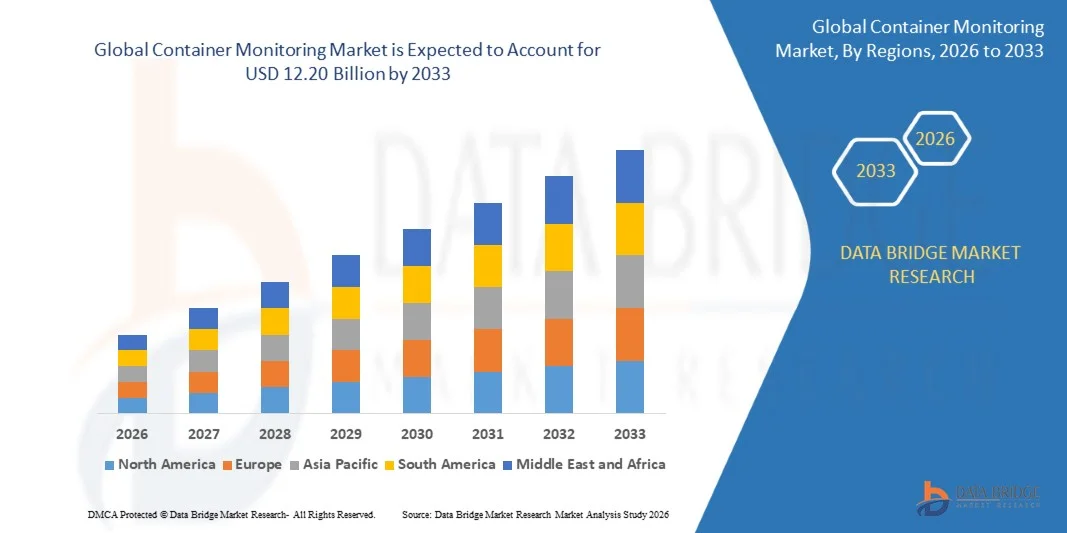
- Анализ рынка Data Bridge Market Research Мировой объем рынка контейнерного мониторинга оценивается в1,25 млрд долларов в 2025 годуОжидается, что он достигнет12,20 млрд долларов к 2033 году, вCAGR 33.00%в течение прогнозируемого периода
- Рост рынка в значительной степени обусловлен растущим спросом на отслеживание и мониторинг морских контейнеров в режиме реального времени в глобальных цепочках поставок, обеспечение безопасности и эффективности.
- Растущее внедрение датчиков с поддержкой IoT, устройств GPS-слежения и облачных платформ мониторинга стимулирует развертывание передовых решений для мониторинга контейнеров в таких отраслях, как логистика, продукты питания и напитки, фармацевтика и электронная коммерция.
Размер рынка и прогноз
- Глобальная рыночная стоимость (2025) USD1,25 млрд.
- Ожидаемая рыночная стоимость (2033): USD12,20 млрд.
- Прогноз CAGR (2026–2033):33.00%
Каковы основные выводы рынка мониторинга контейнеров
- Рынок переживает всплеск технологических достижений, таких как прогнозная аналитика на основе ИИ, отслеживание поставок на основе блокчейна и интеллектуальные датчики, способные контролировать условия окружающей среды, включая температуру, влажность и шок.
- Растущая глобализация торговли и электронной коммерции в сочетании с растущим объемом скоропортящихся и дорогостоящих поставок стимулирует принятие решений по мониторингу контейнеров для предотвращения потерь, оптимизации операций и улучшения видимости цепочки поставок.
- Северная Америка доминировала на рынке контейнерного мониторинга с самой большой долей выручки в 38,50% в 2025 году, что обусловлено растущим внедрением подключенных логистических решений, растущей цифровизацией в цепочках поставок и необходимостью отслеживания грузов в режиме реального времени.
- Ожидается, что в Азиатско-Тихоокеанском регионе будут наблюдаться самые высокие темпы роста на мировом рынке контейнерного мониторинга, обусловленные расширением ИТ-инфраструктуры, ростом экосистемы стартапов и правительственными инициативами, способствующими облачным технологиям.
- Сегмент Solution занимал самую большую долю рынка в 2025 году, чему способствовало внедрение оборудования, датчиков и программных платформ с поддержкой IoT, которые позволяют отслеживать в режиме реального времени, контролировать температуру и местоположение. Эти решения улучшают видимость по всей цепочке поставок, снижают операционные риски и повышают безопасность грузов. Они широко используются в логистике, производстве и холодных цепях для оптимизации эффективности.
Сфера охвата иСегментация рынка контейнерного мониторинга
Атрибуты |
Контейнерный мониторинг ключевых тенденций рынка |
|
Сегменты покрыты |
|
|
Страны, охваченные |
Северная Америка
Европа
Азиатско-Тихоокеанский регион
Ближний Восток и Африка
Южная Америка
|
|
Ключевые игроки рынка |
•ООО "Динатрас"(США) |
|
Рыночные возможности |
• Растущее внедрение решений для мониторинга контейнеров с поддержкой IoT |
|
Информационные наборы данных с добавленной стоимостью |
В дополнение к рыночным идеям, таким как рыночная стоимость, темпы роста, сегменты рынка, географический охват, игроки рынка и рыночный сценарий, отчет о рынке, курируемый командой Data Bridge Market Research, включает углубленный экспертный анализ, анализ импорта / экспорта, анализ цен, анализ потребления продукции и анализ пестле. |
Каковы основные тенденции на рынке контейнерного мониторинга
«Растущее внедрение решений для мониторинга IoT и в режиме реального времени»
Растущее внимание к оцифровке и видимости цепочки поставок в режиме реального времени значительно формирует рынок мониторинга контейнеров, поскольку логистические и судоходные компании все чаще предпочитают решения, которые обеспечивают безопасность грузов, предотвращают потери и повышают операционную эффективность. Решения для мониторинга контейнеров набирают обороты благодаря их способности отслеживать, оповещать и сообщать об условиях окружающей среды, усиливая внедрение в логистике, пищевой промышленности, фармацевтике и электронной коммерции.
Повышение осведомленности о оптимизации цепочки поставок, соблюдении нормативных требований и снижении рисков ускорило спрос на системы мониторинга контейнеров. Компании активно ищут решения, которые позволяют контролировать температуру, геозону и предотвращать кражи, побуждая производителей внедрять инновации с помощью интеллектуальных датчиков и облачных платформ.
Тенденции прозрачности и прослеживаемости влияют на решения в области закупок и операционной деятельности, при этом логистические компании делают акцент на оповещениях в режиме реального времени, автоматизированной отчетности и интеграции с корпоративными системами. Эти факторы помогают компаниям дифференцировать предложения услуг, снизить потери и повысить доверие клиентов.
Например, в 2024 году Maersk в Дании и DHL в Германии расширили свои портфели услуг, включив мониторинг контейнеров с поддержкой IoT на глобальных маршрутах доставки. Эти развертывания были введены в ответ на растущий спрос на безопасную и отслеживаемую логистику с интеграцией в системы управления цепочками поставок предприятия.
В то время как спрос на мониторинг контейнеров растет, устойчивое расширение рынка зависит от непрерывных исследований и разработок, экономически эффективных сенсорных технологий и бесшовной связи в отдаленных регионах. Производители также сосредоточены на улучшении возможностей анализа данных, облачной интеграции и масштабируемости системы для поддержки более широкого внедрения.
Динамика рынка контейнерного мониторинга
водитель
Растущее предпочтение для отслеживания в реальном времени и видимости цепочки поставок
Растущий спрос на мониторинг отгрузки в режиме реального времени и активное управление рисками является основным фактором для рынка мониторинга контейнеров. Компании все чаще заменяют ручное отслеживание интеллектуальными решениями на основе IoT для повышения операционной эффективности, снижения потерь грузов и соблюдения международных правил судоходства.
Расширение применения в логистике, фармацевтике, холодильных цепях и грузоперевозках оказывает влияние на рост рынка. Решения для мониторинга контейнеров помогают обеспечить контроль температуры, обнаружение ударов и отслеживание местоположения, позволяя предприятиям соответствовать нормативным стандартам и стандартам качества.
Поставщики логистических услуг и судоходные компании активно продвигают системы мониторинга контейнеров посредством улучшения услуг, аналитических платформ и дополнительных функций. Эти усилия поддерживаются растущим потребительским спросом на своевременную доставку, отслеживаемые поставки и снижение подверженности риску.
Например, в 2023 году Kuehne + Nagel в Швейцарии и FedEx в США сообщили об увеличении развертывания систем мониторинга контейнеров в своих глобальных операциях. Это расширение последовало за более высоким спросом на безопасные, отслеживаемые и контролируемые по температуре поставки, улучшив качество обслуживания и удовлетворенность клиентов.
Хотя растущий спрос на безопасный мониторинг в режиме реального времени поддерживает рост, более широкое внедрение зависит от оптимизации затрат, инфраструктуры подключения и масштабируемого развертывания IoT. Инвестиции в маломощные датчики, облачные платформы и глобальное сетевое покрытие будут иметь решающее значение для удовлетворения мирового спроса.
Сдержанность/вызов
«Высокие затраты на внедрение и ограничения подключения»
Относительно более высокая стоимость решений для мониторинга контейнеров с поддержкой IoT по сравнению с обычным ручным отслеживанием остается ключевой проблемой, ограничивая внедрение среди малых и средних логистических операторов. Стоимость датчиков, передачи данных и облачной интеграции повышает инвестиционные требования.
Проблемы с подключением, особенно на удаленных морских маршрутах и в развивающихся регионах, могут ограничить возможности мониторинга в режиме реального времени. Ограниченная сетевая инфраструктура или ненадежная спутниковая связь влияют на системы непрерывного отслеживания и оповещения.
Цепочка поставок и операционные сложности также влияют на рост рынка, поскольку решения для мониторинга контейнеров требуют интеграции с корпоративными системами и обучения персонала. Обслуживание датчиков и систем управления данными увеличивает эксплуатационные расходы
Например, в 2024 году логистические операторы в Юго-Восточной Азии и Африке сообщили о более медленном поглощении из-за высоких затрат на развертывание и ограниченного подключения к сети в удаленных портах и судоходных маршрутах. Эти барьеры влияют на эффективность мониторинга в режиме реального времени и задерживают принятие.
Для преодоления этих проблем потребуются экономичные сенсорные технологии, улучшенные решения для подключения и образовательные инициативы для логистических компаний. Сотрудничество с поставщиками телекоммуникационных услуг, операторами облачных платформ и портовыми властями может помочь раскрыть долгосрочный потенциал роста мирового рынка контейнерного мониторинга, в то время как масштабируемые и модульные решения будут способствовать более широкому внедрению.
Как сегментируется рынок контейнерного мониторинга
Рынок сегментирован на основе компонента, режима развертывания, операционной системы, размера организации и вертикали.
• по компонентам
На основе компонента рынок мониторинга контейнеров сегментирован на решения и услуги. Сегмент Solution занимал самую большую долю рынка в 2025 году, чему способствовало внедрение оборудования, датчиков и программных платформ с поддержкой IoT, которые позволяют отслеживать в режиме реального времени, контролировать температуру и местоположение. Эти решения улучшают видимость по всей цепочке поставок, снижают операционные риски и повышают безопасность грузов. Они широко используются в логистике, производстве и холодных цепях для оптимизации эффективности.
Ожидается, что в сегменте услуг будут наблюдаться самые быстрые темпы роста с 2026 по 2033 год, чему способствует растущий спрос на управляемый мониторинг, прогнозное обслуживание и аналитическую поддержку. Компании все чаще ищут услуги, которые предлагают установку, техническую поддержку и оптимизацию производительности. Это обеспечивает минимальное время простоя и более высокую надежность системы, особенно для организаций, обслуживающих скоропортящиеся или дорогостоящие грузы.
• в режиме развертывания
На основе режима развертывания рынок сегментирован на Cloud и On-Premieses. Сегмент облачных вычислений занимал самую большую долю доходов в 2025 году из-за его масштабируемости, удаленной доступности и более низких первоначальных затрат. Облачный мониторинг позволяет заинтересованным сторонам отслеживать контейнеры в режиме реального времени, получать доступ к аналитическим панелям и быстро реагировать на сбои. Его интеграция с системами управления предприятием повышает эффективность принятия оперативных решений и цепочки поставок.
Ожидается, что в сегменте On-Premiess будет наблюдаться самый быстрый рост с 2026 по 2033 год, обусловленный тем, что организации отдают приоритет безопасности данных, настройке и контролю. Компании в чувствительных отраслях, таких как здравоохранение и оборона, предпочитают локальное развертывание в соответствии с нормативными требованиями. локальные решения также обеспечивают бесшовную интеграцию с существующей инфраструктурой и индивидуальными возможностями отчетности.
• Операционная система
На базе операционной системы рынок мониторинга контейнеров сегментирован на Windows и Linux. Сегмент Windows занимал самую большую долю выручки в 2025 году благодаря внедрению в масштабах всего предприятия, простоте интеграции с различными приложениями мониторинга и совместимости с установленными ИТ-системами. Решения на базе Windows позволяют компаниям быстро внедрять мониторинг контейнеров без обширной переподготовки или модификаций системы.
Ожидается, что в сегменте Linux будет зафиксирован самый быстрый рост с 2026 по 2033 год, обусловленный предпочтениями для платформ с открытым исходным кодом, экономичностью и надежной безопасностью. Системы на базе Linux все чаще выбираются технологическими компаниями и логистическими стартапами, стремящимися к гибкости, настройке и поддержке расширенной аналитики и мониторинга с поддержкой ИИ.
• По размеру организации
Исходя из размера организации, рынок сегментирован на крупные предприятия и малые и средние предприятия (МСП). Крупнейшие предприятия получили наибольшую долю выручки в 2025 году благодаря обширным глобальным логистическим сетям и возможности инвестировать в передовые системы мониторинга. Крупные компании выигрывают от повышения прозрачности цепочки поставок, снижения рисков и операционной эффективности.
Ожидается, что в сегменте МСП будет наблюдаться самый быстрый рост с 2026 по 2033 год, обусловленный наличием доступных, масштабируемых и простых в развертывании решений для мониторинга. МСП все чаще используют облачные и подписные сервисы для улучшения отслеживания грузов, снижения потерь и поддержания конкурентоспособности без значительных капитальных затрат.
• Вертикальный
По вертикали рынок сегментирован на BFSI, Telecom и IT, Healthcare, Government и Transportation. Транспортная вертикаль занимала самую большую долю рынка в 2025 году, чему способствовал глобальный рост судоходства, расширение электронной коммерции и спрос на сквозную видимость. Отслеживание в режиме реального времени помогает предотвратить кражу, задержку и повреждение, обеспечивая своевременную доставку товаров по регионам.
Ожидается, что вертикаль здравоохранения будет наблюдать самый быстрый рост с 2026 по 2033 год из-за растущих требований к контролю температуры фармацевтических препаратов, вакцин и медицинских материалов. Жесткие правила, чувствительность к продуктам и критический характер медицинской логистики способствуют внедрению в больницах, фармацевтических производителях и дистрибьюторах.
Региональный анализ рынка контейнерного мониторинга
Северная Америка доминировала на рынке мониторинга контейнеров с самой большой долей выручки в 38,50% в 2025 году, что обусловлено растущим внедрением подключенных логистических решений, растущей цифровизацией в цепочках поставок и необходимостью отслеживания грузов в режиме реального времени.
Компании в регионе все чаще используют системы мониторинга контейнеров для оптимизации операций, снижения потерь и улучшения видимости в сетях мультимодальных перевозок.
Широкое внедрение также поддерживается сильными инвестициями в интеллектуальные порты, инфраструктуру с поддержкой IoT и правительственные инициативы, способствующие эффективной и безопасной цепочке поставок.
Мониторинг рынка контейнеров США Insight
Рынок контейнерного мониторинга США занял самую большую долю доходов в 2025 году в Северной Америке, чему способствовала передовая логистическая экосистема страны и растущий акцент на устойчивость цепочки поставок. Организации все чаще внедряют облачные и сенсорные решения для мониторинга поставок в режиме реального времени, обеспечивая безопасность грузов и эффективность работы. Растущий спрос на предиктивную аналитику, интеграцию с системами управления транспортом и соблюдение нормативных стандартов способствуют дальнейшему росту рынка. Кроме того, распространение электронной коммерции и расширение мировой торговли способствуют внедрению технологий мониторинга контейнеров в различных отраслях.
Европейский мониторинг рынка контейнеров
Ожидается, что на европейском рынке контейнерного мониторинга будут наблюдаться самые высокие темпы роста с 2026 по 2033 год, обусловленные жесткими нормативными требованиями к безопасности грузов, инициативами цифровой трансформации и необходимостью эффективного управления логистикой. Европейские заинтересованные стороны все чаще внедряют системы мониторинга на основе IoT для улучшения видимости, уменьшения краж и повреждений и оптимизации операций цепочки поставок. Рост также поддерживается внедрением интеллектуальных портов, автоматизированной обработки грузов и государственной политики, способствующей устойчивому развитию логистики.
Британский контейнерный мониторинг Market Insight
Ожидается, что на рынке контейнерного мониторинга в Великобритании будут наблюдаться самые быстрые темпы роста с 2026 по 2033 год, что обусловлено акцентом страны на модернизацию портовых операций, повышение безопасности перевозок и оптимизацию торговых процессов. Растущий спрос на решения для отслеживания в режиме реального времени в секторах электронной коммерции, розничной торговли и промышленности побуждает организации внедрять передовые системы мониторинга. Кроме того, интеграция с облачными платформами и аналитическими инструментами обеспечивает действенную информацию, поддерживая лучшее принятие решений и операционную эффективность.
Немецкий контейнерный мониторинг рынка
Ожидается, что рынок контейнерного мониторинга в Германии будет значительно расти с 2026 по 2033 год, чему способствуют растущая автоматизация логистики, внедрение IoT и облачный мониторинг, а также акцент на управление цифровыми цепочками поставок. Немецкие производители и транспортные операторы внедряют передовые датчики и решения для мониторинга, чтобы оптимизировать управление автопарком, снизить потери и соблюдать международные стандарты безопасности. Сосредоточение внимания на устойчивости, прогнозном обслуживании и операционной эффективности способствует дальнейшему расширению рынка.
Азиатско-Тихоокеанский мониторинг рынка контейнеров
Ожидается, что на рынке контейнерного мониторинга Азиатско-Тихоокеанского региона будут наблюдаться самые высокие темпы роста с 2026 по 2033 год, обусловленные быстрой урбанизацией, увеличением морской торговли и расширением инфраструктуры интеллектуальных портов в таких странах, как Китай, Япония и Индия. Растущее внедрение облачных и IoT-решений позволяет отслеживать в режиме реального времени.Прогнозная аналитикаУлучшение безопасности грузов. Растущая производственная и экспортная деятельность региона в сочетании с правительственными инициативамиЦифровая логистикаОни подпитывают рыночный спрос.
Японский контейнерный мониторинг рынка
Ожидается, что рынок контейнерного мониторинга в Японии будет расти с 2026 по 2033 год благодаря развитой портовой инфраструктуре страны, высокотехнологичному внедрению и повышению эффективности цепочки поставок. Японские логистические операторы все чаще используют датчики IoT, облачную аналитику и автоматизированные системы отчетности для мониторинга условий контейнеров, предотвращения потерь и повышения операционной прозрачности. Интеграция с интеллектуальными транспортными и прогнозными решениями по техническому обслуживанию способствует дальнейшему внедрению в коммерческом и промышленном секторах.
Китайский контейнерный мониторинг рынка
Китайский рынок контейнерного мониторинга составил самую большую долю рынка в Азиатско-Тихоокеанском регионе в 2025 году, чему способствовала быстрая индустриализация, рост экспорта и правительственные инициативы, направленные на продвижение цифровых решений в цепочке поставок. Масштабное производство в стране, рост электронной коммерции и расширение интеллектуальных портов повышают спрос на технологии мониторинга контейнеров. Доступные устройства IoT, облачные платформы и отечественные поставщики решений обеспечивают более широкую доступность, что делает Китай ключевым рынком для систем мониторинга контейнеров.
Мониторинг доли рынка контейнеров
Индустрия Контейнерного Мониторинга в основном возглавляется хорошо зарекомендовавшими себя компаниями, в том числе:
•ООО "Динатрас"(США)
•Аппдинамика(США)
New Relic Inc. (США)
•Бродком(США)
• Microsoft (США)
Datadog (США)
Sysdig Inc. (США)
Splunk Inc. (США)
BMC SOFTWARE Inc. (США)
• IBM (США)
• Речная технология (США)
• Oracle (США)
Научная логика (США)
Solarwinds Worldwide LLC (США)
• Микрофокус (Великобритания)
Zoho Corporation (Индия)
Vmare Inc. (США)
• Центрон (Франция)
Sumo Logic (США)
Intelleflex Corporation (США)
• Песслер (Германия)
Последние события на мировом рынке мониторинга контейнеров
- В ноябре 2025 года Dynatrace LLC, Financial Report, объявила результаты финансового квартала 2-2026 с годовой повторяющейся выручкой, превышающей 1,6 миллиарда долларов США, подчеркнув, что 70% новых сделок включали модули Kubernetes. Это демонстрирует растущее внедрение предприятиями решений для мониторинга контейнеров, укрепляя лидерство Dynatrace на рынке и расширяя свое присутствие в облачных средах.
- В августе 2025 года Grafana Labs, Product Launch, представила Grafana Cloud Kubernetes Monitoring, управляемый сервис, совместимый с Prometheus, с предварительно построенными приборными панелями в режиме отказа. Этот запуск упрощает наблюдение за контейнерами для предприятий, повышает проактивность обнаружения проблем и укрепляет позиции Grafana в экосистеме облачного мониторинга.
- В июне 2025 года Cloudflare, Product Launch, развернули контейнеры в публичной бета-версии, интегрируя глобальное развертывание с встроенными метриками и журналами. Это решение позволяет отслеживать производительность в режиме реального времени и эффективно масштабировать контейнерные приложения, повышая операционную эффективность для глобальных облачных клиентов.
- В мае 2025 года Microsoft выпустила агент OpenTelemetry GA вместе с панелью инструментов Aspire для Azure Container Apps, поддерживаемой агентом SRE с искусственным интеллектом. Эта разработка повышает точность мониторинга, автоматизирует обнаружение проблем и облегчает оптимизированные операции для контейнерных рабочих нагрузок, укрепляя контейнерную экосистему Microsoft.
SKU-
Получите онлайн-доступ к отчету на первой в мире облачной платформе рыночной аналитики

- Интерактивная панель анализа данных
- Панель анализа компании для возможностей с высоким потенциалом роста
- Доступ аналитика-исследователя для настройки и запросов
- Анализ конкурентов с помощью интерактивной панели
- Последние новости, обновления и анализ тенденций
- Используйте возможности сравнительного анализа для комплексного отслеживания конкурентов
Методология исследования
Сбор данных и анализ базового года выполняются с использованием модулей сбора данных с большими размерами выборки. Этап включает получение рыночной информации или связанных данных из различных источников и стратегий. Он включает изучение и планирование всех данных, полученных из прошлого заранее. Он также охватывает изучение несоответствий информации, наблюдаемых в различных источниках информации. Рыночные данные анализируются и оцениваются с использованием статистических и последовательных моделей рынка. Кроме того, анализ доли рынка и анализ ключевых тенденций являются основными факторами успеха в отчете о рынке. Чтобы узнать больше, пожалуйста, запросите звонок аналитика или оставьте свой запрос.
Ключевой методологией исследования, используемой исследовательской группой DBMR, является триангуляция данных, которая включает в себя интеллектуальный анализ данных, анализ влияния переменных данных на рынок и первичную (отраслевую экспертную) проверку. Модели данных включают сетку позиционирования поставщиков, анализ временной линии рынка, обзор рынка и руководство, сетку позиционирования компании, патентный анализ, анализ цен, анализ доли рынка компании, стандарты измерения, глобальный и региональный анализ и анализ доли поставщика. Чтобы узнать больше о методологии исследования, отправьте запрос, чтобы поговорить с нашими отраслевыми экспертами.
Доступна настройка
Data Bridge Market Research является лидером в области передовых формативных исследований. Мы гордимся тем, что предоставляем нашим существующим и новым клиентам данные и анализ, которые соответствуют и подходят их целям. Отчет можно настроить, включив в него анализ ценовых тенденций целевых брендов, понимание рынка для дополнительных стран (запросите список стран), данные о результатах клинических испытаний, обзор литературы, обновленный анализ рынка и продуктовой базы. Анализ рынка целевых конкурентов можно проанализировать от анализа на основе технологий до стратегий портфеля рынка. Мы можем добавить столько конкурентов, о которых вам нужны данные в нужном вам формате и стиле данных. Наша команда аналитиков также может предоставить вам данные в сырых файлах Excel, сводных таблицах (книга фактов) или помочь вам в создании презентаций из наборов данных, доступных в отчете.











