


Global Cryocooler Market Segmentation, By Offering (Hardware and Services), Type (Gifford-Mcmahon Cryocoolers, Pulse-Tube Cryocoolers, Stirling Cryocoolers, Stirling Cryocoolers, and Brayton Cryocoolers), Heat Exchanger Type (Recuperative Heat Exchangers and Regenerative Heat Exchangers), Operating Cycle (Open-Loop-Cycle Cryocoolers and Closed-Loop-Cycle Cryocoolers), Temperature Range (1K-5K, 5.1K-10K, 10.1K-50K, 50.1K-100K, and 100.1K-300K), End User (Military, Medical, Commercial, Environmental, Energy, Transport, Research and Development, Space, Agriculture and Biology, Mining and Metal, and Others) - Industry Trends and Forecast to 2033
Каков размер рынка криокулера и темпы роста
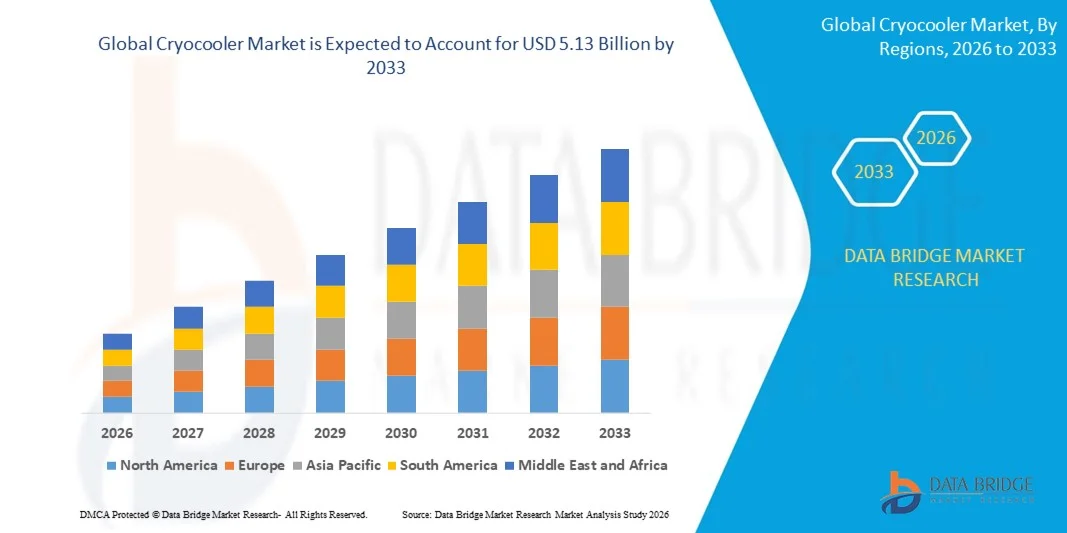
- По данным Data Bridge Market Research Analysis Объем мирового рынка криокулеров оценивается в3,26 млрд долларов в 2025 годуОжидается, что он достигнет5,13 млрд долларов к 2033 году, вCAGR 5,80%в течение прогнозируемого периода
- Рост рынка в значительной степени обусловлен растущим спросом на решения для охлаждения сверхнизкой температуры в передовых приложениях, таких как квантовые вычисления, исследования космоса, оборона и медицинская визуализация. Технологические достижения в криогенных системах обеспечивают более высокую эффективность, более низкую вибрацию и более компактные конструкции, которые расширяют применение в исследовательских, промышленных и коммерческих секторах.
- Кроме того, растут инвестиции в спутниковые программы, квантовые исследования, сверхпроводящие устройства и высокоэффективные технологии.инфракрасные датчикиОни создают высокий спрос на надежные и высокоточные криоохладители. Эти факторы ускоряют внедрение криогенных решений для охлаждения, тем самым значительно повышая потенциал роста рынка.
Размер рынка и прогноз
- Глобальная рыночная стоимость (2025):$3,26 млрд.
- Ожидаемая рыночная стоимость (2033):$5,13 млрд.
- Прогноз CAGR (2026–2033):5.80%
Анализ рынка криокулера
- Криокулеры, обеспечивающие высокоэффективное охлаждение при криогенных температурах, становятся все более важными для применения в медицинской визуализации (МРТ), космических и оборонных системах, квантовых вычислениях и лабораторных исследованиях из-за их способности поддерживать стабильные низкотемпературные среды для чувствительных инструментов и детекторов.
- Растущий спрос на криоохладители в первую очередь подпитывается достижениями в компактных и низковибрационных конструкциях, увеличением глобальных космических и оборонных инициатив, расширением исследований в квантовых и сверхпроводящих технологиях и необходимостью высоконадежного охлаждения в критически важных приложениях.
- Северная Америка доминирует на рынке криокулеров с долей в35,01% в 2025 году из-за высокого спроса на оборону, исследования космоса и передовые секторы медицинской визуализации
- Ожидается, что Азиатско-Тихоокеанский регион станет самым быстрорастущим регионом на рынке криокулеров в течение прогнозируемого периода из-за роста запусков спутников, расширения оборонных бюджетов и увеличения инвестиций в инфраструктуру здравоохранения.
- Сегмент криоохладителей замкнутого цикла доминировал на рынке с долей рынка 68,59% в 2025 году благодаря своей эффективности и способности рециркулировать работающие газы без постоянного пополнения. Системы замкнутого цикла широко используются в космических миссиях, медицинской визуализации и оборонном оборудовании из-за их надежности и контролируемой операционной среды. Их снижение эксплуатационных расходов и пригодность для долгосрочных приложений способствуют их доминирующему положению.
Сфера охвата и сегментация рынка криокулера
|
Атрибуты |
Cryocooler Key Market |
|
Сегменты покрыты |
|
|
Страны, охваченные |
Северная Америка
Европа
Азиатско-Тихоокеанский регион
Ближний Восток и Африка
Южная Америка
|
|
Ключевые игроки рынка |
|
|
Рыночные возможности |
|
|
Информационные наборы данных с добавленной стоимостью |
|
Каковы основные тенденции на рынке криокулеров
Принятие криоохладителей в квантовых вычислениях и космосе
- Ключевой тенденцией на рынке криокулеров является расширение внедрения криогенных систем охлаждения в квантовых вычислениях и космических приложениях, обусловленное растущей потребностью в средах с ультранизкой температурой для обеспечения точных экспериментальных и эксплуатационных результатов. Криокулеры становятся незаменимыми для поддержания сверхпроводящих кубитов и чувствительных космических приборов при температурах, близких к абсолютному нулю.
- Например, такие компании, как Bluefors, поставляют криогенные системы, которые широко используются в исследовательских центрах квантовых вычислений, обеспечивая стабильные низкотемпературные среды для сверхпроводящих кубитных операций. Эти системы увеличивают время согласованности и повышают экспериментальную надежность в сложных квантовых архитектурах.
- Космическая промышленность интегрирует передовые криоохладители в спутниковые полезные нагрузки и инфракрасные системы обнаружения, где для минимизации теплового шума и повышения производительности датчиков требуются чрезвычайно низкие температуры. Это позиционирует криоохладители как критически важные компоненты для спутниковой визуализации, астрономических наблюдений и миссий по исследованию космоса.
- В медицинских и научных исследованиях криоохладители все чаще используются в системах МРТ, сверхпроводящих магнитных приложениях и лабораториях физики элементарных частиц. Такие приложения, как криогенные МРТ-сканеры и детекторы частиц, полагаются на надежные низковибрационные охлаждающие решения для поддержания производительности и точности измерений.
- Промышленные сектора, специализирующиеся на точном производстве и сверхпроводящих технологиях, используют криоохладители для поддержки процессов, требующих высокостабильного контроля температуры. Эта тенденция стимулирует спрос на компактные, энергоэффективные и малообслуживаемые криогенные решения, способные работать под постоянной нагрузкой.
- На рынке наблюдается рост применения высоконадежных систем охлаждения, где криоохладители способствуют поддержанию экстремальных условий окружающей среды, необходимых для передовых исследований и космических миссий. Растущее развертывание этих систем усиливает критическую роль криоохладителей в обеспечении научно-технических достижений следующего поколения.
Динамика рынка Cryocooler
водитель
Рост спроса на сверхнизкотемпературное охлаждение
- Растущий спрос на сверхнизкотемпературное охлаждение в квантовых вычислениях, освоении космоса и передовых научных исследованиях стимулирует потребность в высокоэффективных криоохладителях. Эти системы необходимы для приложений, требующих точного регулирования температуры ниже 10 К, где обычные методы охлаждения неэффективны.
- Например, такие компании, как Sumitomo Heavy Industries, предоставляют криоохладители импульсных трубок, которые поддерживают космические телескопы и лаборатории квантовых вычислений, что позволяет расширить работу чувствительных инструментов. Эти криоохладители улучшают стабильность системы и уменьшают тепловой шум в критических приложениях.
- Растущие инвестиции в инициативы квантовых вычислений во всем мире увеличивают развертывание криогенных систем для поддержания сверхпроводящей когерентности кубитов. Стабильные низкотемпературные среды непосредственно повышают вычислительную производительность и экспериментальную надежность.
- Расширение космических миссий, в том числе спутниковых инфракрасных датчиков и зондов глубокого космоса, повышает спрос на криоохладители, способные к длительной безвибрационной работе. Эти системы обеспечивают точность тепловизионного и наблюдательного оборудования в экстремальных условиях.
- Устойчивое внимание к исследованиям и разработкам в криогенике продолжает поддерживать рост принятия криокулеров. Растущее ожидание стабильной среды с ультранизкой температурой усиливает криоохладители как незаменимые компоненты для передовых технологий и научных исследований.
Сдержанность/вызов
Высокая стоимость и сложность обслуживания
- Рынок криокулеров сталкивается с проблемами из-за высоких затрат и сложных требований к техническому обслуживанию, связанных с точными криогенными системами. Передовые криоохладители требуют специализированных материалов, точной инженерии и квалифицированной работы, что увеличивает капитальные затраты и эксплуатационные расходы.
- Например, Northrop Grumman производит криоохладители для спутниковых и оборонных приложений, которые включают строгие протоколы тестирования и обслуживания. Специализированный характер этих систем способствует повышению затрат на производство и обслуживание, ограничивая внедрение в чувствительные к затратам проекты.
- Поддержание криоохладителей требует тщательного мониторинга производительности, периодического обслуживания и строгого соблюдения эксплуатационных протоколов, чтобы избежать сбоя системы. Эта сложность может продлить время простоя и увеличить общую стоимость владения для конечных пользователей.
- Опора на передовые компоненты, такие как компрессоры с низкой вибрацией, сверхпроводящие материалы и сборки импульсных трубок, еще больше усложняет процессы производства и обслуживания. Ограничения в цепочке поставок и высокие затраты на компоненты влияют на экономическую целесообразность некоторых приложений.
- Масштабирование развертывания криокулеров при обеспечении надежности и долгосрочной операционной эффективности остается серьезной проблемой. Эти ограничения в совокупности требуют от производителей и конечных пользователей сбалансировать производительность, стоимость и устойчивость для поддержки устойчивого роста рынка.
Рынок криокулеров
Рынок сегментирован на основе предложения, типа, типа теплообменника, рабочего цикла, диапазона температур и конечного пользователя.
- Предлагая
На основе предложения рынок криокулеров сегментирован на аппаратное обеспечение и услуги. Сегмент аппаратного обеспечения доминировал на рынке с самой большой долей доходов в 2025 году, что обусловлено высоким спросом на компрессоры, холодные головки и управляющую электронику для медицинской визуализации, космических приборов и систем оборонного наблюдения. Аппаратное обеспечение Cryocooler образует основной функциональный компонент систем охлаждения, требующий точной инженерии и передовых материалов для достижения сверхнизких температур. Непрерывные закупки интегрированных блоков криокулеров для систем МРТ, инфракрасных датчиков и полезных нагрузок спутников еще больше укрепляют спрос на оборудование в развитых и развивающихся странах.
Ожидается, что в сегменте услуг будут наблюдаться самые быстрые темпы роста с 2026 по 2033 год, что обусловлено растущей потребностью в техническом обслуживании, оптимизации производительности и продлении жизненного цикла установленных криокулерных систем. Поскольку криоохладители работают в критических и удаленных средах, регулярное обслуживание и обновление системы необходимы для обеспечения надежности и минимизации простоев. Растущее развертывание в космических миссиях, исследовательских лабораториях и оборонных приложениях ускоряет спрос на долгосрочные контракты на обслуживание и решения технической поддержки.
- По типу
Исходя из типа, рынок криокулеров сегментирован на криоохладители Гиффорда-МакМахона, криоохладители импульсных трубок, криоохладители Стирлинга и криоохладители Брейтона. Сегмент криоохладителей Gifford-McMahon доминировал на рынке в 2025 году из-за его широкого использования в системах МРТ, лабораторных исследованиях и производстве полупроводников. Эти системы ценятся за их способность достигать низких температур со стабильными и непрерывными показателями охлаждения. Доказанная надежность и интеграция в медицинские и промышленные системы вносят значительный вклад в их большую базу.
Ожидается, что сегмент криоохладителей в импульсных трубках будет наблюдать самый быстрый рост с 2026 по 2033 год, что обусловлено такими преимуществами, как более низкая вибрация, более высокая надежность и снижение требований к техническому обслуживанию. Технология импульсных трубок становится все более предпочтительной в космических и военных применениях, где минимальные механические помехи и длительный срок службы имеют решающее значение. Расширение применения инфракрасных систем визуализации и спутниковых датчиков еще больше ускоряет рост сегмента.
- Тип теплообменника
На основе типа теплообменника рынок криокулера сегментирован на рекуперативные теплообменники и регенеративные теплообменники. Сегмент регенеративных теплообменников доминировал на рынке в 2025 году, поскольку большинство конструкций криокулеров, таких как системы Стирлинга и Гиффорда-МакМахона, полагаются на регенеративные процессы для достижения эффективной теплопередачи. Эти обменники повышают тепловую эффективность за счет циклического хранения и высвобождения тепла, обеспечивая эффективную низкотемпературную производительность. Их совместимость с компактными и высокопроизводительными криокулерными системами поддерживает их широкое внедрение в медицинских и оборонных секторах.
Сегмент рекуперативных теплообменников, по прогнозам, зафиксирует самый быстрый рост с 2026 по 2033 год, чему будет способствовать растущий спрос на криогенные системы непрерывного потока. Рекуперативные конструкции привлекают внимание в передовых аэрокосмических и энергетических приложениях, где требуется постоянное охлаждение и улучшенный тепловой контроль. Технологические достижения в области материалов и микроканальных конструкций еще больше укрепляют их потенциал роста.
- С помощью операционного цикла
На основе операционного цикла рынок криокулеров сегментирован на криоохладители открытого цикла и криоохладители замкнутого цикла. Сегмент криоохладителей замкнутого цикла доминировал на рынке с наибольшей долей 68,59% в 2025 году, что обусловлено его эффективностью и способностью рециркулировать рабочие газы без постоянного пополнения. Системы замкнутого цикла широко используются в космических миссиях, медицинской визуализации и оборонном оборудовании из-за их надежности и контролируемой операционной среды. Их снижение эксплуатационных расходов и пригодность для долгосрочных приложений способствуют их доминирующему положению.
Ожидается, что сегмент криоохладителей с открытым циклом будет наблюдать самый быстрый рост с 2026 по 2033 год, поддерживаемый нишевыми научными и экспериментальными приложениями, требующими расходуемых криогенных жидкостей. Эти системы являются предпочтительными в некоторых сценариях лабораторных и аэрокосмических испытаний, где сверхнизкие температуры необходимы в течение коротких периодов времени. Растущая исследовательская деятельность в области квантовых вычислений и физики частиц способствует выборочному принятию конфигураций с открытым контуром.
- в диапазоне температур
На основе температурного диапазона рынок криокулеров сегментирован на 1К-5К, 5.1К-10К, 10.1К-50К, 50.1К-100К и 100.1К-300К. Сегмент 50.1K-100K доминировал на рынке в 2025 году благодаря широкому использованию в инфракрасных детекторах, системах космической визуализации и сверхпроводящих устройствах. Этот температурный диапазон поддерживает широкий спектр коммерческих и военных требований к охлаждению при сохранении эффективности системы. Сильный спрос со стороны аэрокосмических и разведывательных приложений усиливает его ведущую долю доходов.
Ожидается, что в сегменте 1К-5К будет наблюдаться самый быстрый рост с 2026 по 2033 год, обусловленный расширением исследований в области квантовых технологий и сверхпроводящей электроники. Достижение сверхнизких температур в этом диапазоне имеет решающее значение для передовых научных экспериментов и вычислительных систем следующего поколения. Увеличение государственного финансирования и частных инвестиций в квантовые исследования ускоряют внедрение криоохладителей, работающих в этом диапазоне.
- Конечный пользователь
На базе конечного пользователя рынок криокулера сегментирован на военный, медицинский, коммерческий, экологический, энергетический, транспортный, научно-исследовательский, космический, сельскохозяйственный и биологический, горнодобывающий и металлургический и другие. Медицинский сегмент доминировал на рынке в 2025 году, в первую очередь из-за высокого внедрения криоохладителей в системах МРТ и передового диагностического оборудования для визуализации. Растущие инвестиции в инфраструктуру здравоохранения и растущий спрос на неинвазивные решения для визуализации продолжают стимулировать установки по всему миру. Постоянная потребность в надежном и эффективном охлаждении в медицинских устройствах обеспечивает устойчивое получение дохода от этого сегмента.
Космический сегмент, по прогнозам, станет свидетелем самого быстрого роста с 2026 по 2033 год, чему способствуют растущие запуски спутников и программы исследования дальнего космоса. Криокулеры необходимы для охлаждения инфракрасных датчиков, космических телескопов и бортовых научных приборов, работающих в экстремальных условиях. Расширение государственных и частных космических инициатив в значительной степени способствует быстрому росту этого сегмента.
Региональный анализ рынка криокулер
- Северная Америка доминировала на рынке криокулеров с самой большой долей дохода в 35,01% в 2025 году, что обусловлено высоким спросом со стороны оборонного, космического и современного сектора медицинской визуализации.
- Присутствие известных аэрокосмических агентств, оборонных подрядчиков и ведущих производителей медицинских устройств поддерживает непрерывные закупки криогенных систем охлаждения.
- Значительные инвестиции в инфракрасное наблюдение, спутниковые программы и сверхпроводящие исследования еще больше укрепляют рост регионального рынка.
Американский рынок Cryocooler Insight
Криокулерный рынок США занял самую большую долю доходов в Северной Америке в 2025 году, чему способствовали высокие расходы на оборону и расширение инициатив по освоению космоса. Увеличение развертывания криоохладителей в ракетных системах наведения, космических телескопах и оборудовании МРТ ускоряет внедрение. Активное присутствие аэрокосмических исследовательских организаций и поддерживаемых правительством инновационных программ продолжает поддерживать технологические достижения и коммерческий спрос.
Европейский рынок криокулеров
По прогнозам, европейский рынок криокулеров будет расширяться в течение прогнозируемого периода, в основном за счет растущих инвестиций в космические миссии, научные исследования и передовую инфраструктуру здравоохранения. Повышение внимания к мониторингу окружающей среды и энергоэффективным технологиям охлаждения способствует внедрению в научно-исследовательских институтах и промышленных приложениях. Интеграция криоохладителей в спутниковые полезные нагрузки и лабораторные аналитические инструменты еще больше способствует региональному росту.
Британский Cryocooler Market Insight
Ожидается, что рынок криокулеров в Великобритании будет расти в течение прогнозируемого периода, чему будет способствовать увеличение инвестиций в космические исследования, разработку квантовых технологий и программы модернизации обороны. Расширяющееся внимание страны к передовым сенсорным технологиям и спутниковому производству создает устойчивый спрос на компактные и надежные криогенные системы охлаждения. Сотрудничество между исследовательскими университетами и аэрокосмическими компаниями также укрепляет внутреннее принятие.
Германия Cryocooler Market Insight
Ожидается, что в течение прогнозируемого периода рынок криокулеров в Германии будет расширяться со значительным CAGR, что обусловлено сильными возможностями промышленных исследований и передовым производством медицинских технологий. Акцент Германии на точной инженерии и научных приборах поддерживает интеграцию криоохладителей в лабораторное оборудование и полупроводниковые приложения. Растущее внимание к космическим исследованиям и высокопроизводительным системам визуализации также способствует расширению рынка.
Азиатско-Тихоокеанский рынок криокулеров
Рынок криокулеров в Азиатско-Тихоокеанском регионе будет расти самыми быстрыми темпами в течение прогнозируемого периода с 2026 по 2033 год, что обусловлено ростом запусков спутников, расширением оборонных бюджетов и увеличением инвестиций в инфраструктуру здравоохранения. Быстрая индустриализация и технологические достижения в таких странах, как Китай, Япония и Индия, ускоряют внедрение криогенных систем. Расширение отечественного производственного потенциала и государственная поддержка космических и исследовательских инициатив способствуют дальнейшему росту региона.
Японский рынок криокулеров
Японский рынок криокулеров набирает обороты благодаря сильному присутствию страны в области освоения космоса, производства электроники и передовых исследований. Развитие инфракрасных датчиков, сверхпроводящих устройств и научных приборов стимулирует спрос на эффективные технологии криогенного охлаждения. Непрерывные инновации в компактных и низковибрационных криокулерных системах поддерживают внедрение в аэрокосмической и лабораторной областях.
Китайский рынок криокулеров
Китайский рынок криокулеров составил самую большую долю доходов в Азиатско-Тихоокеанском регионе в 2025 году, что объясняется быстрым расширением космического сектора, растущей модернизацией обороны и сильными исследовательскими программами, поддерживаемыми правительством. Растущее развертывание спутников и инвестиции Китая в квантовые коммуникационные технологии создают высокий спрос на передовые криогенные системы. Присутствие отечественных производителей и расширение промышленной базы еще больше укрепляют позиции страны на рынке.
Какие компании являются ведущими на рынке криокулеров
Индустрия криокулеров в основном возглавляется хорошо зарекомендовавшими себя компаниями, в том числе:
- Sumitomo Heavy Industries, Ltd. (Япония)
- Chart Industries (США)
- AMETEK, Inc. (США)
- Cryomech Inc. (США)
- Northrop Grumman (США)
- Advanced Research Systems, Inc. (США)
- РИКОР (Израиль)
- Air Liquide (Франция)
- Oxford Cryosystems (Великобритания)
- Creare (США)
- Lihan Cryogenic Technology Co., Ltd. (Китай)
- Tristan Technologies, Inc. (США)
- Vacree Technologies Co., Ltd. (Китай)
- Honeywell International LLC (США)
- Fabrum Solutions (США)
- Acme Cryogenics (США)
- Brooks Automation Inc. (США)
- Thales Cryogenics (Франция)
- L3HARRIS, INC (США)
Последние события на мировом рынке криокулеров
- В июле 2025 года Bluefors представила систему Millikelvin Cryo-CMOS, интегрирующую электронику считывания со скоростью 4 кельвина, что позволило квантовым процессорам масштабироваться более 1000 кубитов на устройство. Это значительно повышает эффективность и масштабируемость инфраструктуры квантовых вычислений за счет снижения теплового шума и улучшения целостности сигнала при сверхнизких температурах. Разработка усиливает спрос на высокоэффективные разбавляющие холодильники и передовые криогенные платформы, усиливая роль рынка криокулеров в поддержке квантовых технологий следующего поколения и крупномасштабных исследовательских объектов.
- В июле 2025 года Honeywell Aerospace получила контракты на производство от Министерства обороны США в рамках программ CRUISE и QUEST для систем квантово-сенсорной навигации. Эти контракты ускоряют развертывание технологий точной навигации, которые полагаются на стабильное криогенное охлаждение для повышения чувствительности и эксплуатационной надежности. Инициатива расширяет возможности для компактных, прочных криоохладителей в оборонных приложениях, способствуя устойчивым закупкам и долгосрочному росту в аэрокосмическом и военном сегментах.
- В марте 2025 года Bluefors и Qblox подписали меморандум о взаимопонимании по совместной разработке архитектуры управления низким рассеиванием для квантовых процессоров высокой плотности. Это сотрудничество направлено на минимизацию тепловой нагрузки в криогенных средах, что позволяет большему количеству кубитов эффективно работать в единой системе охлаждения. Соглашение способствует инновациям в интегрированных криогенных и управляющих решениях, укреплению экосистемы масштабируемых квантовых вычислений и расширению коммерческих перспектив для передовых технологий криокулеров.
- В марте 2025 года DRDO и индийская армия договорились об индигенизации криокулеров Stirling мощностью 0,5 Вт с 70% местным содержанием по стоимости. Этот шаг повышает внутренние производственные возможности и поддерживает стратегическую уверенность в критически важных оборонных технологиях. Ожидается, что инициатива будет стимулировать местные цепочки поставок, уменьшит зависимость от импорта и создаст новые возможности роста для производителей криокулеров, обслуживающих военное наблюдение и тепловизионные приложения.
- В январе 2025 года Lockheed Martin расширила свои инвестиции в инфракрасные датчики следующего поколения для программ спутникового наблюдения. Эти передовые полезные нагрузки требуют высоконадежных и контролируемых вибрацией криоохладителей для поддержания оптимальной производительности детектора в космической среде. Расширение подчеркивает растущий спрос на криогенные системы охлаждения в космосе, усиливая долгосрочный рост рынка, обусловленный увеличением запусков спутников и глобальных усилий по модернизации обороны.
SKU-
Получите онлайн-доступ к отчету на первой в мире облачной платформе рыночной аналитики

- Интерактивная панель анализа данных
- Панель анализа компании для возможностей с высоким потенциалом роста
- Доступ аналитика-исследователя для настройки и запросов
- Анализ конкурентов с помощью интерактивной панели
- Последние новости, обновления и анализ тенденций
- Используйте возможности сравнительного анализа для комплексного отслеживания конкурентов
Методология исследования
Сбор данных и анализ базового года выполняются с использованием модулей сбора данных с большими размерами выборки. Этап включает получение рыночной информации или связанных данных из различных источников и стратегий. Он включает изучение и планирование всех данных, полученных из прошлого заранее. Он также охватывает изучение несоответствий информации, наблюдаемых в различных источниках информации. Рыночные данные анализируются и оцениваются с использованием статистических и последовательных моделей рынка. Кроме того, анализ доли рынка и анализ ключевых тенденций являются основными факторами успеха в отчете о рынке. Чтобы узнать больше, пожалуйста, запросите звонок аналитика или оставьте свой запрос.
Ключевой методологией исследования, используемой исследовательской группой DBMR, является триангуляция данных, которая включает в себя интеллектуальный анализ данных, анализ влияния переменных данных на рынок и первичную (отраслевую экспертную) проверку. Модели данных включают сетку позиционирования поставщиков, анализ временной линии рынка, обзор рынка и руководство, сетку позиционирования компании, патентный анализ, анализ цен, анализ доли рынка компании, стандарты измерения, глобальный и региональный анализ и анализ доли поставщика. Чтобы узнать больше о методологии исследования, отправьте запрос, чтобы поговорить с нашими отраслевыми экспертами.
Доступна настройка
Data Bridge Market Research является лидером в области передовых формативных исследований. Мы гордимся тем, что предоставляем нашим существующим и новым клиентам данные и анализ, которые соответствуют и подходят их целям. Отчет можно настроить, включив в него анализ ценовых тенденций целевых брендов, понимание рынка для дополнительных стран (запросите список стран), данные о результатах клинических испытаний, обзор литературы, обновленный анализ рынка и продуктовой базы. Анализ рынка целевых конкурентов можно проанализировать от анализа на основе технологий до стратегий портфеля рынка. Мы можем добавить столько конкурентов, о которых вам нужны данные в нужном вам формате и стиле данных. Наша команда аналитиков также может предоставить вам данные в сырых файлах Excel, сводных таблицах (книга фактов) или помочь вам в создании презентаций из наборов данных, доступных в отчете.











