



Global Data Resiliency Market Segmentation, By Component (Solutions and Services), Deployment (On-Premises and Cloud), Organization Size (Small and Medium Enterprise and Large Enterprise), Vertical (BFSI, IT & Telecommunication, Government, Public Sector, Retail & Consumer Goods, Manufacturing, Healthcare, Media & Entertainment, and Others) - Industry Trends and Forecast to 2033
Каков размер и темпы роста рынка глобальной устойчивости к данным
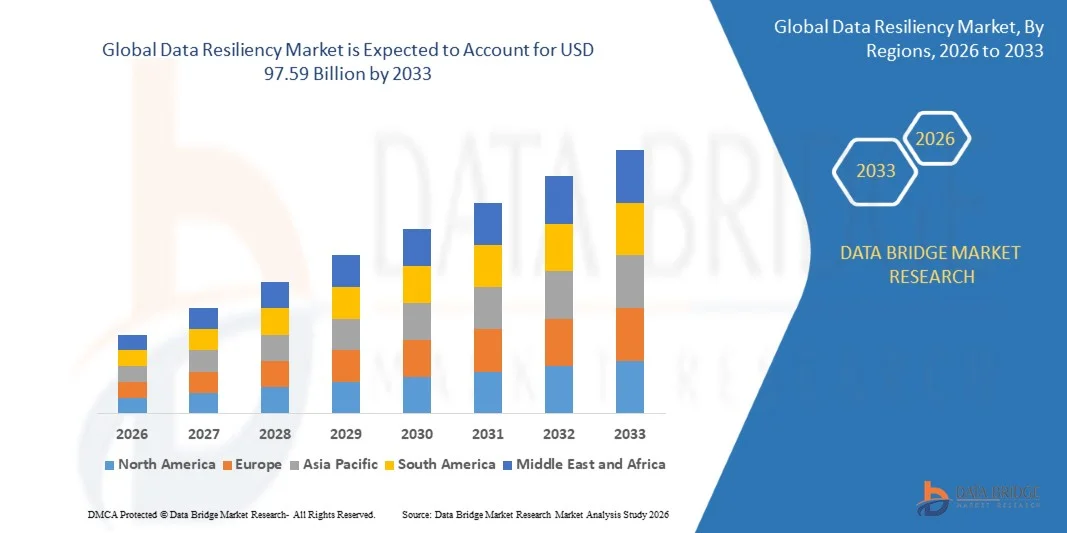
- Согласно анализу Data Bridge Market Research, глобальный размер рынка устойчивости к данным был оценен как33,97 млрд долларов США в 2025 годуОжидается, что он достигнет97,59 млрд долларов США к 2033 году, вCAGR 14,1%в течение прогнозируемого периода
- Быстрый рост информации, полученной из совершенно разных источников, является основным фактором, ускоряющим рост рынка.
- Кроме того, все больше вопросов о конфиденциальности и безопасности, и есть потребность вИнформационная безопасностьКроме того, ожидается, что растущее внедрение решений для восстановления и облачного резервного копирования информации будет стимулировать рост рынка отказоустойчивости данных.
Размер рынка и прогноз
- Глобальная рыночная стоимость (2025):$33,97 млрд.
- Ожидаемая рыночная стоимость (2033):$97,59 млрд.
- Прогноз CAGR (2026–2033):14.1%
Каковы основные выводы рынка устойчивости данных
- Управление данными, которые не находятся в запланированной форме, ограничивает рынок отказоустойчивости данных, в то время как высокая стоимость системы будет препятствовать росту рынка.
- Кроме того, растущая привлекательность блокчейн-решений создаст широкие возможности для рынка отказоустойчивости данных.
- Азиатско-Тихоокеанский регион доминировал на рынке отказоустойчивости данных с долей выручки 38,45% в 2025 году, чему способствовали быстрые темпы роста.цифровая трансформациякрупномасштабное внедрение облаков, расширение объемов корпоративных данных и увеличение воздействия вымогателей в Китае, Японии, Индии, Южной Корее и Юго-Восточной Азии
- Согласно прогнозам, Северная Америка зарегистрирует самый быстрый CAGR в 15,24% с 2026 по 2033 год, что обусловлено быстрым внедрением систем кибербезопасности на основе искусственного интеллекта, многооблачных платформ резервного копирования, неизменного хранения и архитектуры восстановления с нулевым доверием в США и Канаде.
- Сегмент решений доминировал на рынке с долей 68,4% в 2025 году, поскольку предприятия все чаще отдают приоритет передовому программному обеспечению для резервного копирования, платформам аварийного восстановления, хранилищам для кибер-восстановления, инструментам репликации данных и решениям для защиты от вымогателей для обеспечения непрерывности бизнеса.
Сегментация рынка отчетности и устойчивости к данным
|
Атрибуты |
Устойчивость к данным Key Market Insights |
|
Сегменты покрыты |
|
|
Страны, охваченные |
Северная Америка
Европа
Азиатско-Тихоокеанский регион
Ближний Восток и Африка
Южная Америка
|
|
Ключевые игроки рынка |
|
|
Рыночные возможности |
|
|
Информационные наборы данных с добавленной стоимостью |
В дополнение к информации о рыночных сценариях, таких как рыночная стоимость, темпы роста, сегментация, географическое покрытие и основные игроки, рыночные отчеты, курируемые Data Bridge Market Research, также включают углубленный экспертный анализ, анализ цен, анализ доли бренда, опрос потребителей, анализ демографии, анализ цепочки поставок, анализ цепочки создания стоимости, обзор сырья / расходных материалов, критерии выбора поставщиков, анализ PESTLE, анализ Porter и нормативную базу. |
Каковы основные тенденции на рынке устойчивости данных
"Увеличение перехода к облачным, управляемым ИИ и киберустойчивым платформам защиты данных"
- Рынок отказоустойчивости данных стал свидетелем сильного внедрения облачного резервного копирования, аварийного восстановления в качестве услуги (DRaaS), неизменного хранилища и киберхранилища восстановления, предназначенных для поддержки гибридных облачных сред, рабочих нагрузок SaaS, многооблачных архитектур и распределенных корпоративных систем.
- Производители и поставщики решений внедряют аномалии с поддержкой ИИ, автоматизированную оркестровку восстановления и устойчивые к вымогателям платформы резервного копирования, которые предлагают мониторинг в режиме реального времени, восстановление в чистой комнате и непрерывную валидацию данных.
- Растущий спрос на экономичные, масштабируемые и ориентированные на непрерывность бизнеса системы защиты данных стимулирует использование BFSI, здравоохранения, телекоммуникаций, правительственных и корпоративных ИТ-инфраструктур.
- Например, такие компании, как Microsoft, IBM, Commvault, NetApp и Acronis, обновили свои платформы отказоустойчивости с помощью ИИ обнаружения угроз, восстановления с нулевым доверием и автоматизации резервного копирования с поддержкой облачных вычислений.
- Растущая потребность в быстром восстановлении, устойчивости к кибератакам и непрерывности бизнеса ускоряет переход к интегрированным, облачным и управляемым ИИ решениям по отказоустойчивости данных.
- По мере того, как корпоративные данные становятся все более распределенными и сложными в цифровом виде, решения Data Resiliency будут оставаться жизненно важными для непрерывных операций, кибер-восстановления и соблюдения нормативных требований.
Каковы ключевые драйверы рынка устойчивости данных
- Растущий спрос на безопасные, масштабируемые и простые в развертывании платформы резервного копирования и восстановления для поддержки непрерывности бизнеса, защиты от вымогателей и соблюдения нормативных требований является основным драйвером роста рынка.
- Например, в 2025–2026 годах ведущие компании, такие как IBM, Microsoft, Veeam и Commvault, обновили свои портфели отказоустойчивости для поддержки более высокой автоматизации, более быстрых задач по восстановлению (RTO) и улучшенной защиты от многооблачных вычислений.
- Растущее внедрение облачных вычислений, рабочих нагрузок ИИ, платформ SaaS, экосистем IoT и инфраструктуры удаленной работы повышает спрос на решения для защиты данных в США, Европе и Азиатско-Тихоокеанском регионе.
- Достижения в области неизменяемых резервных копий, кибер-хранилищ, обнаружения аномалий на основе ИИ и инструментов оркестровки повысили производительность, скорость восстановления и операционную эффективность
- Растущее использование озер данных ИИ, высокоскоростных рабочих нагрузок предприятий и многооблачных сред создает спрос на платформы с высокой доступностью и автоматизированной отказоустойчивостью.
- Ожидается, что благодаря устойчивым инвестициям в кибербезопасность, облачную инфраструктуру и инициативы по цифровой трансформации рынок отказоустойчивости данных станет свидетелем сильного долгосрочного роста.
Какой фактор препятствует росту рынка отказоустойчивости данных
- Высокие затраты, связанные с премиальными решениями для кибер-восстановления, неизменяемым облачным хранилищем и платформами аварийного восстановления на основе ИИ, ограничивают внедрение среди малых предприятий и чувствительных к затратам организаций.
- Например, в течение 2024–2026 годов колебания стоимости облачной инфраструктуры,кибербезопасностиЛицензирование программного обеспечения и цены на хранение увеличили затраты на развертывание для нескольких глобальных поставщиков.
- Сложность управления многооблачными средами, гибридными инфраструктурами и нормативно-правовыми рамками повышает потребность в квалифицированных ИТ-командах и специализированной подготовке.
- Ограниченная осведомленность на развивающихся рынках в отношении рамок кибербезопасности, протоколов тестирования восстановления и стратегий резервного копирования с нулевым доверием замедляет принятие.
- Конкуренция со стороны традиционного программного обеспечения для резервного копирования, внутренних систем аварийного восстановления и устаревших решений для хранения создает ценовое давление и снижает дифференциацию продуктов.
- Чтобы решить эти проблемы, компании сосредоточены на оптимизированных по стоимости облачных предложениях, автоматизированном тестировании восстановления, аналитике на основе искусственного интеллекта и более глубокой интеграции платформы для повышения глобального внедрения решений по отказоустойчивости данных.
Как сегментируется рынок устойчивости данных
Рынок сегментирован на основекомпонент, развертывание, размер организации и вертикаль.
• по компонентам
На основе компонента рынок отказоустойчивости данных сегментирован на решения и услуги. Сегмент решений доминировал на рынке с долей 68,4% в 2025 году, поскольку предприятия все чаще отдают приоритет передовому программному обеспечению для резервного копирования, платформам аварийного восстановления, хранилищам для кибер-восстановления, инструментам репликации данных и решениям для защиты от вымогателей для обеспечения непрерывности бизнеса. Решения широко применяются в гибридных облачных, многооблачных и локальных средах благодаря их масштабируемости, возможностям автоматизации и интеграции с корпоративной ИТ-инфраструктурой. Растущий спрос на неизменяемое хранение, обнаружение угроз с помощью ИИ и непрерывную защиту данных еще больше поддерживает рост сегмента.
Ожидается, что сегмент услуг будет расти самыми быстрыми темпами с 2026 по 2033 год, что обусловлено растущей потребностью в консалтинге, управляемых услугах по восстановлению, тестировании на аварийное восстановление, поддержке соблюдения и услугах по внедрению. Растущая сложность в средах данных и нехватка квалифицированных специалистов по кибербезопасности подталкивают организации к передаче на аутсорсинг операций по обеспечению отказоустойчивости специализированным поставщикам услуг.
• При развертывании
На основе развертывания рынок Data Resiliency сегментирован на On-Premises и Cloud. Сегмент облачных вычислений доминировал на рынке с долей 57,6% в 2025 году, чему способствовал рост миграции предприятий в сторону SaaS, гибридной облачной инфраструктуры и многооблачных сред данных. Облачные платформы обеспечивают более быстрое время восстановления, более низкие первоначальные затраты, высокую масштабируемость и удаленную доступность, что делает их предпочтительными для современных предприятий. Растущая потребность в автоматизированном резервном копировании, аварийном восстановлении как услуге (DRaaS) и решениях для кибер-восстановления ускоряет внедрение. Облачное развертывание также позволяет обнаруживать аномалии на основе ИИ, восстанавливать вымогателей и обеспечивать постоянную защиту от рабочей нагрузки.
Ожидается, что сегмент On-Premiess будет расти самыми быстрыми темпами с 2026 по 2033 год в строго регулируемых отраслях, таких как BFSI, правительство и здравоохранение, где организациям требуется более сильный контроль над конфиденциальными данными, нормативными рамками и внутренней безопасностью инфраструктуры. Растущий спрос на частные облачные и безопасные центры обработки данных продолжает поддерживать рост.
• По размеру организации
Исходя из размера организации, рынок Data Resiliency сегментирован на малые и средние предприятия и крупные предприятия. Сегмент крупного предприятия доминировал на рынке с долей 63,9% в 2025 году, чему способствовали высокие объемы данных, сложные ИТ-экосистемы и увеличение инвестиций в непрерывность бизнеса и киберустойчивость. Крупные предприятия требуют передовых решений для защиты рабочей нагрузки, облачного резервного копирования, восстановления вымогателей и соблюдения нормативных требований в рамках географически распределенных операций. Такие отрасли, как BFSI, телекоммуникации, производство и здравоохранение, вносят основной вклад в доминирование этого сегмента.
Ожидается, что сегмент малых и средних предприятий будет расти самыми быстрыми темпами с 2026 по 2033 год, что обусловлено ростом цифровой трансформации, увеличением киберугроз и повышением осведомленности о решениях для аварийного восстановления. Экономически эффективные облачные платформы и управляемые сервисы, основанные на подписке, делают решения по отказоустойчивости корпоративного уровня более доступными для МСП во всем мире.
• Вертикальный
На основе вертикали рынок устойчивости данных сегментирован на BFSI, IT & Telecommunication, правительство, государственный сектор, розничные и потребительские товары, производство, здравоохранение, СМИ и развлечения и другие. Сегмент BFSI доминировал на рынке с долей 28,7% в 2025 году, что обусловлено строгими требованиями к соблюдению, высокой чувствительностью финансовых данных и растущими рисками кибератак. Банки, страховые компании и финансовые учреждения нуждаются в постоянной доступности данных, быстром восстановлении и защищенных системах резервного копирования для предотвращения сбоев в обслуживании и защиты доверия клиентов.
Ожидается, что сегмент Healthcare будет расти самыми быстрыми темпами с 2026 по 2033 год, чему будет способствовать увеличение оцифровки записей пациентов, телемедицинских платформ, подключенных медицинских устройств и растущих угроз вымогателей, нацеленных на больницы и сети здравоохранения. Растущее внимание регулирующих органов к защите данных пациентов и бесперебойным клиническим операциям значительно повышает спрос на передовые решения для защиты данных.
В каком регионе самая большая доля рынка отказоустойчивости данных
- Азиатско-Тихоокеанский регион доминировал на рынке отказоустойчивости данных с долей дохода 38,45% в 2025 году, чему способствовали быстрая цифровая трансформация, крупномасштабное внедрение облачных вычислений, расширение объемов корпоративных данных и увеличение воздействия вымогателей в Китае, Японии, Индии, Южной Корее и Юго-Восточной Азии. Высокое внедрение облачного резервного копирования, аварийного восстановления как услуги (DRaaS), киберхранилищ восстановления и платформ непрерывности бизнеса продолжает стимулировать спрос в секторах BFSI, телекоммуникаций, производства, здравоохранения и государственного сектора. Сильный рост региона в гипермасштабных центрах обработки данных, экосистемах SaaS и рабочих нагрузках предприятий под руководством ИИ еще больше укрепляет лидерство на рынке.
- Ведущие компании Азиатско-Тихоокеанского региона внедряют автоматизацию резервного копирования на основе искусственного интеллекта, неизменные рамки хранения и системы восстановления с нулевым доверием, укрепляя технологическое преимущество региона. Постоянные инвестиции в облачную инфраструктуру, кибербезопасность предприятий и непрерывность цифрового бизнеса способствуют долгосрочному расширению рынка.
- Сильная цифровизация предприятий, быстрое внедрение облачных технологий и устойчивые инвестиции в передовые экосистемы центров обработки данных еще больше укрепляют лидерство на региональном рынке.
Китайское понимание рынка устойчивости данных
Китай является крупнейшим донором в Азиатско-Тихоокеанском регионе, чему способствует масштабное расширение облачной инфраструктуры, растущая цифровизация предприятий и сильная государственная поддержка систем кибербезопасности и защиты данных. Растущее внедрение рабочих нагрузок, управляемых ИИ, финтех-платформ, экосистем электронной коммерции и промышленного IoT усиливает спрос на решения для резервного копирования с высокой доступностью, оркестровки восстановления и защиты от вымогателей. Наличие крупных дата-центров и отечественных облачных провайдеров еще больше стимулирует рост рынка.
Японский рынок устойчивости к данным
Япония вносит значительный вклад в региональный рост, обусловленный сильным внедрением корпоративной модернизации ИТ, строгими стандартами соответствия и растущими инвестициями в безопасные облачные хранилища и платформы аварийного восстановления. Финансовые учреждения, телекоммуникационные компании и производственные предприятия все чаще используют решения для обеспечения устойчивости данных для непрерывной защиты данных, кибер-восстановления и соблюдения нормативных требований. Растущий спрос на цифровые услуги с низкой задержкой и непрерывность бизнеса усиливают принятие рынка по всей стране.
Индекс устойчивости рынка данных Индии
Индия становится крупным центром роста, что обусловлено расширением облачной инфраструктуры, быстрой оцифровкой предприятий и повышением осведомленности о кибербезопасности. Растущий спрос на облачные решения для резервного копирования, DRaaS, защиту рабочей нагрузки SaaS и восстановление вымогателей в BFSI, ИТ-услугах, здравоохранении и государственных секторах подпитывает принятие рынка. Увеличение активности стартапов, рост цифровых платежей и растущие требования к локализации данных еще больше ускоряют проникновение на рынок.
Индекс устойчивости рынка данных Южной Кореи
Южная Корея вносит значительный вклад благодаря высокому спросу на корпоративные облачные платформы, телекоммуникационную инфраструктуру, среду данных ИИ и высокопроизводительные цифровые услуги. Быстрое развитие интеллектуальных заводов, экосистем 5G и бизнес-платформ на основе ИИ стимулирует принятие решений для резервного копирования, репликации и кибер-восстановления в режиме реального времени. Сильные технологические инновации и цифровая инфраструктура продолжают поддерживать устойчивый рост рынка.
Рынок устойчивости данных Северной Америки
Согласно прогнозам, Северная Америка зарегистрирует самый быстрый CAGR в 15,24% с 2026 по 2033 год, что обусловлено быстрым внедрением систем кибербезопасности на основе искусственного интеллекта, многооблачных платформ резервного копирования, неизменного хранения и архитектуры восстановления с нулевым доверием в США и Канаде. Растущие инциденты с вымогателями, строгие требования к соблюдению и растущие инвестиции в облачную инфраструктуру продолжают ускорять спрос на передовые решения для защиты данных. Рост рабочих нагрузок ИИ, корпоративных платформ SaaS и программ обеспечения непрерывности цифрового бизнеса еще больше усиливает региональную экспансию.
Индекс устойчивости рынка данных США
США являются крупнейшим поставщиком в Северной Америке, поддерживаемым сильной облачной инфраструктурой, передовыми экосистемами кибербезопасности и быстрым внедрением решений для обеспечения непрерывности бизнеса. Растущее развитие центров обработки данных ИИ, платформ финансовых технологий, систем данных здравоохранения и корпоративных сред SaaS усиливает спрос на облачное резервное копирование, кибер-хранилища и автоматизированные системы аварийного восстановления. Присутствие крупных игроков, таких как Microsoft, IBM, Commvault и NetApp, еще больше стимулирует рост рынка.
Индекс устойчивости рынка данных Канады
Канада вносит значительный вклад в региональный рост, что обусловлено расширением внедрения облачных технологий, повышением нормативных требований и увеличением инвестиций в цифровую инфраструктуру. Предприятия все чаще используют решения по отказоустойчивости данных для безопасного резервного копирования, восстановления вымогателей и защиты гибридных облаков в телекоммуникационном, BFSI, здравоохранении и государственном секторах. Доступность квалифицированной рабочей силы и сильные экосистемы цифровых инноваций усиливают принятие рынка по всей стране.
Какие компании являются ведущими на рынке устойчивости к данным
Индустрия отказоустойчивости данных в основном возглавляется хорошо зарекомендовавшими себя компаниями, в том числе:
- Акронис (Швейцария)
- Asigra Inc. (Канада)
- CA Technologies (США)
- Carbonite, Inc. (США)
- Equinix, Inc. (США)
- Digital Realty Trust (США)
- Ciena Corporation (США)
- Nokia (Финляндия)
- Huawei Technologies Co., Ltd. (Китай)
- Infinera Corporation (США)
- ADVA Optical Networking (Германия)
- Juniper Networks, Inc. (США)
- Colt Technology Services Group Limited (Великобритания)
- Extreme Networks, Inc. (США)
- Fiber Mountain, Inc. (США)
- Pluribus Networks (США)
- CenturyLink (США)
- Commvault Systems, Inc. (США)
- IBM (США)
- Micro Focus (Великобритания)
- Microsoft (США)
- NetApp (США)
- Quest Software, Inc. (США)
- Unitrends (США)
- Veeam Software (Швейцария)
- Veritas Technologies LLC (США)
- VMware (США)
Каковы последние события на мировом рынке устойчивости к данным
- В октябре 2023 года Pure Storage, Inc. расширила свой портфель Evergreen, представив новые обязательства для клиентов, которые покрывают расходы на энергопотребление и стойку для клиентов, использующих свои решения Evergreen / / OneTM Storage as a Service (STaaS) и подписку Evergreen / / Flex TM, укрепив свое ценностное предложение в услугах инфраструктуры данных на основе подписки. Ожидается, что эта разработка ускорит внедрение гибких и экономически эффективных решений для защиты данных в корпоративных облачных средах.
- В марте 2023 года IBM сотрудничала с Cohesity, Inc. для решения растущей потребности предприятия в усилении безопасности и устойчивости данных в гибридных облачных средах, что привело к запуску решения IBM Storage Defender, которое объединяет передовые возможности Cohesity по защите данных, киберустойчивости и управлению данными в качестве основного компонента. Ожидается, что это сотрудничество значительно улучшит возможности гибридного облачного резервного копирования, кибервосстановления и обеспечения непрерывности бизнеса для глобальных предприятий.
SKU-
Получите онлайн-доступ к отчету на первой в мире облачной платформе рыночной аналитики

- Интерактивная панель анализа данных
- Панель анализа компании для возможностей с высоким потенциалом роста
- Доступ аналитика-исследователя для настройки и запросов
- Анализ конкурентов с помощью интерактивной панели
- Последние новости, обновления и анализ тенденций
- Используйте возможности сравнительного анализа для комплексного отслеживания конкурентов
Методология исследования
Сбор данных и анализ базового года выполняются с использованием модулей сбора данных с большими размерами выборки. Этап включает получение рыночной информации или связанных данных из различных источников и стратегий. Он включает изучение и планирование всех данных, полученных из прошлого заранее. Он также охватывает изучение несоответствий информации, наблюдаемых в различных источниках информации. Рыночные данные анализируются и оцениваются с использованием статистических и последовательных моделей рынка. Кроме того, анализ доли рынка и анализ ключевых тенденций являются основными факторами успеха в отчете о рынке. Чтобы узнать больше, пожалуйста, запросите звонок аналитика или оставьте свой запрос.
Ключевой методологией исследования, используемой исследовательской группой DBMR, является триангуляция данных, которая включает в себя интеллектуальный анализ данных, анализ влияния переменных данных на рынок и первичную (отраслевую экспертную) проверку. Модели данных включают сетку позиционирования поставщиков, анализ временной линии рынка, обзор рынка и руководство, сетку позиционирования компании, патентный анализ, анализ цен, анализ доли рынка компании, стандарты измерения, глобальный и региональный анализ и анализ доли поставщика. Чтобы узнать больше о методологии исследования, отправьте запрос, чтобы поговорить с нашими отраслевыми экспертами.
Доступна настройка
Data Bridge Market Research является лидером в области передовых формативных исследований. Мы гордимся тем, что предоставляем нашим существующим и новым клиентам данные и анализ, которые соответствуют и подходят их целям. Отчет можно настроить, включив в него анализ ценовых тенденций целевых брендов, понимание рынка для дополнительных стран (запросите список стран), данные о результатах клинических испытаний, обзор литературы, обновленный анализ рынка и продуктовой базы. Анализ рынка целевых конкурентов можно проанализировать от анализа на основе технологий до стратегий портфеля рынка. Мы можем добавить столько конкурентов, о которых вам нужны данные в нужном вам формате и стиле данных. Наша команда аналитиков также может предоставить вам данные в сырых файлах Excel, сводных таблицах (книга фактов) или помочь вам в создании презентаций из наборов данных, доступных в отчете.











